In ecommerce, a strong brand identity isn’t just a key to success but also a critical survival tactic. At the same time, with fierce competition, it gets harder to sustain day by day. Offering a decent product is no longer enough—you must give customers a clear, valuable reason to buy from you, not your competitors. The only actionable way to do this is with a solid brand differentiation strategy that shows up in your product, customer experience, and every lifecycle message after checkout.
In this guide, we’ll go over the best tactics on how to differentiate your brand, with ecommerce examples and tips from our marketing professionals.
What Is Brand Differentiation?
Brand differentiation is the process of identifying and showing the unique qualities that set your brand apart from competitors, so customers choose you for more reasons rather than just price. To achieve it, businesses must establish a distinctive brand identity with a clear value proposition that appeals to a specific target audience.
In the current oversaturated ecommerce market, shoppers can compare dozens of similar products in seconds and hop from one offer to another if they don’t see a unique value and only decide based on price.
Differentiation is what makes your brand recognizable. But the meaning of it reaches beyond simply winning attention. A brand with good differentiation has more opportunities to improve customer retention, lower acquisition costs, and build lasting brand loyalty. For that reason, brand differentiation plays a considerable part in your retention and lifecycle marketing strategy.
Brands typically differentiate across five dimensions:
- Price. Affordable options for value-driven buyers, or premium pricing that signals luxury.
- Quality. Products or services that exceed industry quality standards.
- Service. Exceptional support or personalized customer experience.
- Innovation: New technologies, features, or solutions that competitors don’t offer.
- Target audience. Offerings tailored to the specific needs of a defined demographic or niche.
While it’s possible for a brand to focus on only one of these dimensions, the strongest differentiation strategies usually combine two or more to create value customers can’t easily find elsewhere.
Why Brand Differentiation Matters for Ecommerce
Brand differentiation matters for ecommerce because it gives shoppers a reason to choose your store over identical alternatives. It protects your margins, builds customer trust, and turns one-time buyers into loyal repeat customers. Online, competitors are one click away, and prices are easy to compare, so brands that look like everyone else are forced to compete on price alone.
5 Benefits of Brand Differentiation for Ecommerce
- A Competitive Edge
A distinct brand stands out in crowded marketplaces and search results, so you can win customers without relying on constant discounts.
- Stronger Customer Trust and Loyalty
Customers who understand what your brand stands for are more likely to trust it and buy again. This lifts repeat purchase rate and customer lifetime value.
- More Word-of-Mouth and Referrals
Your brand’s perception directly shapes purchase decisions, and satisfied customers recommend brands they trust. One widely cited figure says 68% of customers will recommend a brand to family and friends when their expectations are met.
Loyal customers and referrals reduce your reliance on paid ads, so your customer acquisition cost (CAC) falls over time.
- Clearer Internal Marketing Planning
A defined brand position guides your messaging, product decisions, and campaigns. Your team spends less time guessing and more time executing a consistent ecommerce branding strategy.
How Brand Perception Drives Ecommerce Sales
Shoppers buy from brands they recognize, understand, and trust. When your positioning is clear, customers can quickly see why you’re the right choice. That raises conversion rates, supports premium pricing, and encourages the repeat purchases that make ecommerce profitable.
What Are the Signs That You Have a Brand Differentiation Problem?
The clearest signs of a brand differentiation problem are falling returns on sales and marketing spend, a shrinking pipeline, constant price pressure, and customers who don’t stay loyal. When customers see your brand as interchangeable with competitors, you have to work harder for every lead, sale, and repeat purchase.
7 Warning Signs of Weak Brand Differentiation
- Declining returns on marketing and sales activity. You spend the same (or more) on ads, email, and outreach but get fewer results. Your marketing ROI is slipping.
- Leads and attention take more effort. Generating the right opportunities feels harder than it used to, and fewer inquiries come in on their own.
- A dwindling pipeline and declining profits. As new demand dries up, revenue growth stalls and profit margins gradually erode.
- Constant discounting and price pressure. If you rely on promotions to win sales, you’re competing on price alone. This is one of the biggest red flags.
- Low customer loyalty and weak retention. Customers buy once, then switch to a competitor. Repeat purchase rate and customer lifetime value stay flat or drop.
- Difficulty explaining what makes you different. If your team can’t state your unique value proposition in one or two sentences, customers can’t either. Clichéd, generic marketing copy is a symptom of the same problem.
- A feeling that you sound like everyone else. Many founders sense that their messaging matches their competitors’. That doubt can drain motivation and drive, and when the owner feels it, the whole team does.
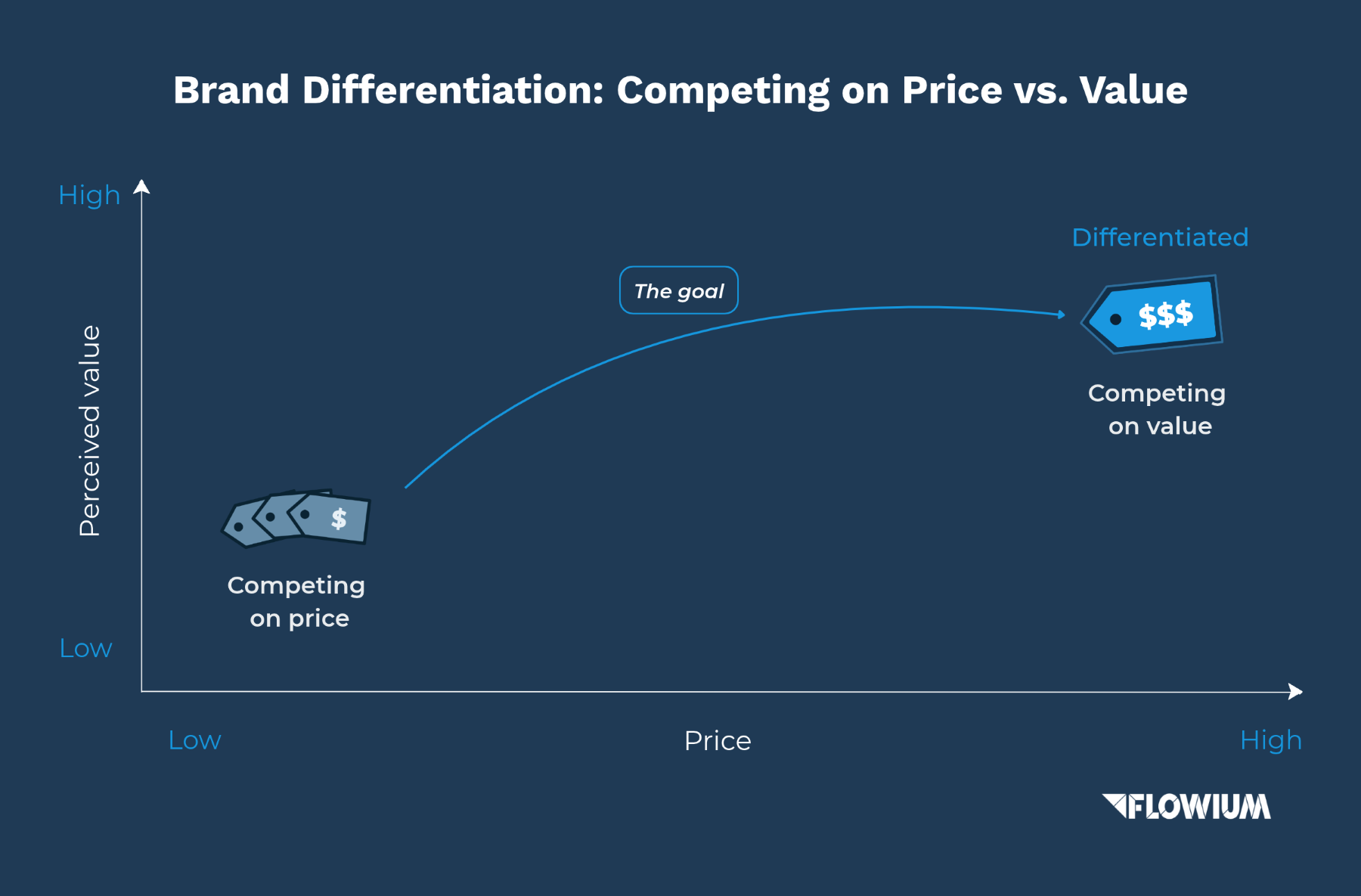
Why Undifferentiated Brands Compete on Price
Customers choose on cost when they can’t see a meaningful difference between options. Supermarket own-brand products are the classic example. They are deliberately designed with no distinctive branding or added value, so they compete with household names like Heinz or Kellogg’s on price alone. If your brand looks like the store-brand version of your category, expect the same outcome: lower margins and little loyalty.
How to Diagnose a Brand Differentiation Problem
Review your sales and customer data and ask:
- Are you consistently missing sales targets?
- How often do inbound inquiries or orders come in without a push?
- What are your profit margins, and are they shrinking?
- Are customers pushing back on price?
- What is your repeat purchase rate, and how loyal are your customers?
If several answers worry you, weak brand differentiation is likely the cause. Your next step should be building a brand differentiation strategy that gives customers a clear reason to choose you and keep coming back. We’ll gladly share step-by-step instructions on how to do exactly that.
How to Differentiate Your Brand: A 6-Step Process
To differentiate your brand, audit your competitors, find the gaps they leave open, define a unique value proposition (UVP) that customers care about, build it into your product, experience, and messaging, communicate it consistently across channels, and measure the results. The steps below work for any ecommerce brand and are designed to improve customer loyalty and retention, not just awareness.
The 6 brand differentiation steps at a glance:
- Audit competitors and find the gaps
- Identify your unique value proposition (UVP) and core strengths
- Test your point of difference with the 3 C’s framework
- Build the difference into your product, experience, and messaging
- Communicate your story consistently across channels
- Measure, test, and optimize
Step 1: Audit competitors and find the gaps
Before you can be different, you need to know what you’re being different from. Audit your main rivals and ask:
- What are they promising customers?
- What colors, fonts, and visual style do they use?
- What is their tone of voice?
- What are they not saying?
In many industries, most brands crowd around the same safe message. If everyone in your space talks about “reliability,” there may be an opening for a brand that talks about speed or adventure. Look beyond direct rivals, too. Sometimes your biggest competitor is the status quo, such as customers who don’t switch at all. Reviewing the whole market shows where everyone looks the same, and that’s where a gap worth occupying usually sits.
Action steps:
- Run surveys, interviews, or focus groups to learn customer pain points and unmet needs.
- Analyze competitors’ strengths, weaknesses, and customer reviews.
Step 2: Identify your UVP and core strengths
Next, choose a difference you can own. Start where your brand already excels, because authenticity builds credibility.
Your point of difference doesn’t need to be a technological breakthrough. It can be a new way of packaging an ordinary product or a firm commitment to values your competitors ignore.
Action steps:
- List your brand’s key strengths and capabilities.
- Define how your product solves customer problems differently or better.
- Write your UVP in one or two sentences.
Step 3: Test your point of difference with the 3 C’s
Before you commit, a strong differentiator should pass all three tests. Failing any of these weakens the strategy.
- Customer-valued: Would your target customer choose you because of this, or just shrug?
- Company-deliverable: Can your whole team demonstrate this difference consistently in daily work?
- Competitor-proof: If a well-funded competitor copied this tomorrow, how long would it take them?
Pro Tip: Avoid false differentiation. A claim that is unbelievable, irrelevant, or easy to copy isn’t differentiation. “Best customer service” is a common example, since every brand says it, so it only works if you can back it with something specific and measurable, such as a guaranteed response time. Claiming to be eco-friendly while shipping in excess plastic is another. Customers notice contradictions quickly, and that damages trust.
Step 4. Build the difference into your product, messaging, and experience
Real differentiation is built into the business, not added to the marketing. It should show up in your products, checkout, packaging, post-purchase emails, and return process. The more places customers experience your difference, the harder it is to copy and the more reason they have to come back.
Step 5. Communicate your story consistently across channels
Your position should be clear no matter where customers encounter your brand: website, social media, ads, email, packaging, or customer service. If your message varies from channel to channel, it’s harder to nurture trust and build a consistent brand image that gets recognized.
Action steps:
- Create brand guidelines covering messaging, tone, and visual elements.
- Train your team to convey unique value in every interaction with customers.
- Audit your marketing materials for consistency.
Step 6. Measure, test, and optimize
Markets, competitors, and customer preferences keep changing, so it’s best to think of differentiation as an ongoing process. Track the metrics that show whether customers value your difference:
- Customer acquisition cost
- Repeat purchase rate
- Customer retention rate
- Customer lifetime value
- Engagement metrics and reviews
Action steps:
- Collect feedback through reviews and surveys.
- Review KPIs on a regular schedule.
- Adjust your brand differentiation strategy based on the received data.
Next, we’ll look at brand differentiation examples and the strategies you can use to build a competitive edge.
Best Brand Differentiation Strategies
The best brand differentiation strategies for ecommerce are niche or segment focus, product innovation or exclusive products, customer experience and service, values and social proof, emotional storytelling, and loyalty and community. Each strategy gives shoppers a different reason to choose you over competitors. The strongest brands combine two or three of them, and the ones that build retention (service, values, community) are the hardest for competitors to copy.
1. Niche or Segment Focus
Instead of appealing to everyone, focus on a specific audience whose needs larger brands overlook. A clear niche sharpens your messaging, simplifies product decisions, and makes your lifecycle marketing more relevant.
Example: Gymshark
The UK fitness apparel brand grew by targeting gym-goers specifically, building its range and marketing around that community instead of the broader sportswear market. It worked with fitness creators early on, which made the brand feel like it came from its audience, not a corporation.

2. Product Innovation or Exclusive Products
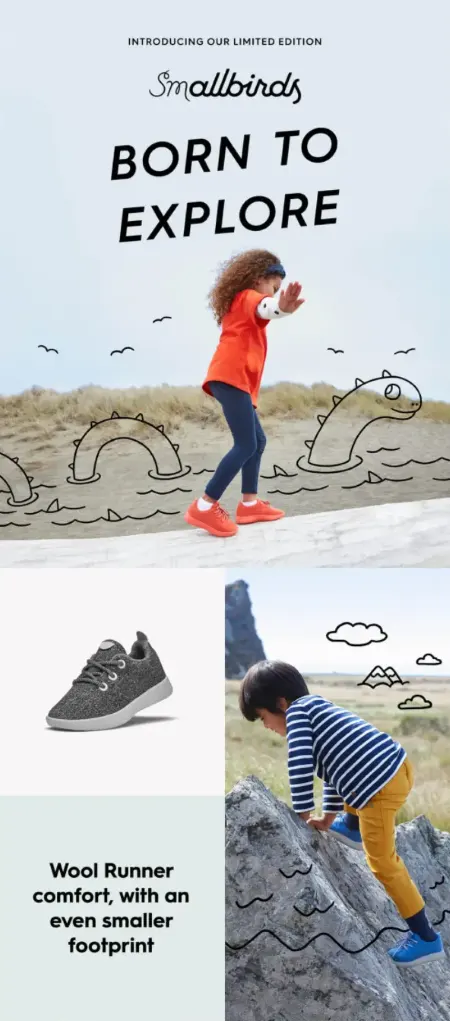
Offer something customers can’t easily find elsewhere, whether that’s new materials, a new design, or limited-edition drops. Exclusivity creates urgency, and innovation gives you a story worth telling.
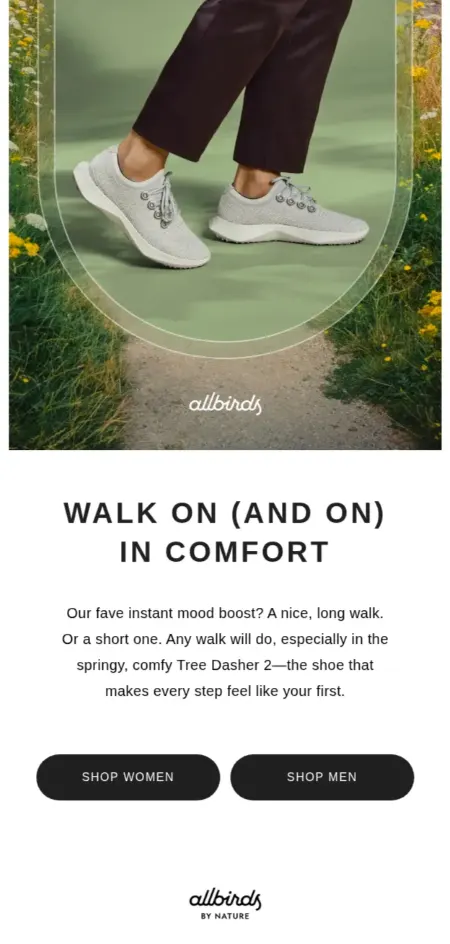
Example: Allbirds
The footwear brand made its name with sneakers built from merino wool, a material not common in shoes at the time, and later expanded into other natural and renewable materials. That product difference gave it a clear angle in a crowded category.

3. Customer Experience and Service
In ecommerce, the experience around the product (support, shipping, returns, post- purchase communication) can be the main differentiator. This is also a strong retention strategy, because customers stay loyal to brands that make buying easy and stress-free.
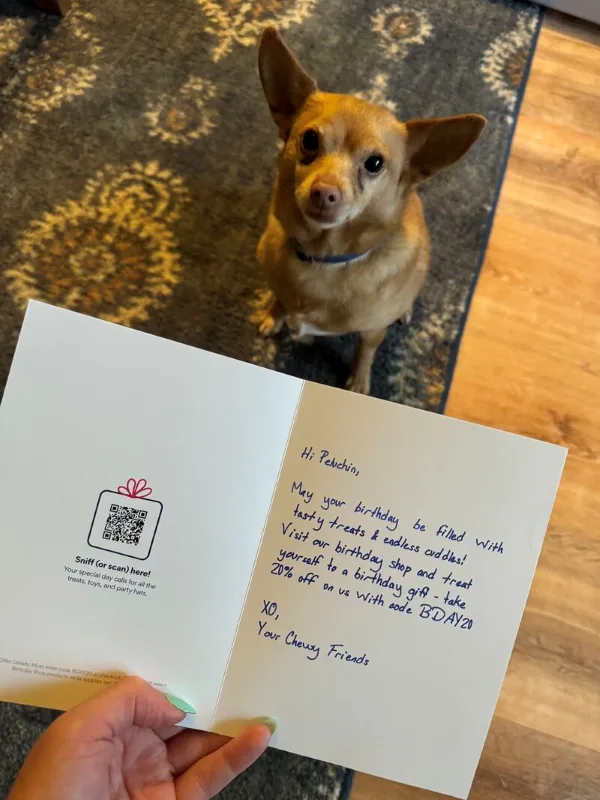
Example: Chewy
The online pet retailer is known for going beyond standard service, including sending direct mail such as handwritten cards and, in some cases, flowers to customers on different occasions. These gestures are memorable and hard for competitors to match at scale, turning satisfied customers into repeat buyers.
4. Values, Mission, and Social Proof
Customers increasingly buy from brands that stand for something. A clear mission attracts people who share your values, and social proof (reviews, user content, community advocacy) shows that other customers back up your claims.
Example: Patagonia
The outdoor clothing brand built its identity around environmental responsibility, including its well-known “Don’t Buy This Jacket” campaign and its 2022 decision to direct company ownership toward fighting climate change. Because the actions match the message, the values feel credible, not like marketing.
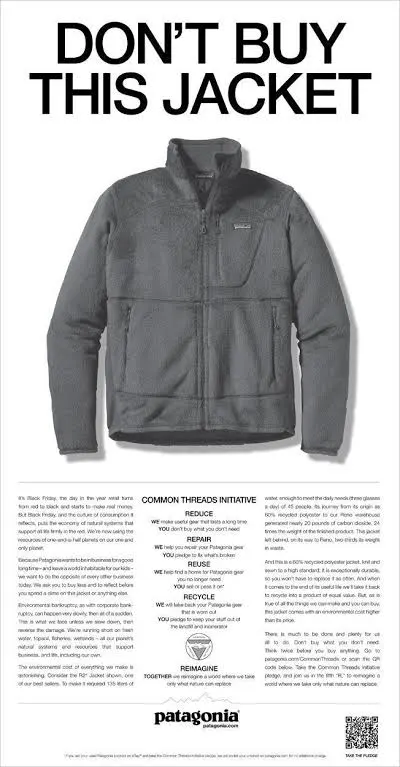
Pro Tip: Support your values with proof, such as customer reviews, certifications, or transparent reporting. Claims without evidence are easy for customers to dismiss.
5. Emotional Branding and Storytelling
People remember stories and feelings more than feature lists. Emotional branding connects your products to identity, belonging, or aspiration, so customers choose you for what you represent as well as what you sell.
Example: Dove
Its Real Beauty campaign, launched in 2004, featured everyday women instead of traditional models and shifted the brand’s positioning from a soap to a message about self-esteem. The emotional connection helped set Dove apart in a category where products are otherwise similar.

6. Loyalty and Community
Turn customers into members. Loyalty programs reward repeat purchases, while communities give customers a reason to engage with your brand beyond buying. Both lift retention and customer lifetime value.
Example: Sephora
Its Beauty Insider program offers points, tiered rewards, and an online community where members share reviews, tips, and product advice. That mix of incentives and belonging gives shoppers reasons to return even when other retailers sell the same brands.

Pro Tip: How to choose your brand differentiation strategy?
Start with the one that matches your strengths and your customers’ priorities, then add a second that reinforces it. For example, a niche brand can pair its audience focus with a loyalty program, and an innovative product brand can add storytelling to explain why it’s different.
More Brand Differentiation Examples for Ecommerce
Strong brand differentiation examples show that the most durable advantages come from combining strategies: Fenty Beauty paired inclusive representation with product innovation, Gymshark built a community-led fitness brand through creators and events, and Nike By You turned personalization into a co-creation experience. Each brand below gives customers a reason to choose it that competitors can’t easily copy.
Fenty Beauty: Inclusive Representation
Brand differentiation strategies used: niche or segment focus, product innovation, values and social proof
Fenty Beauty launched in 2017 with a foundation range of 40 shades, at a time when many beauty brands offered a much narrower selection. Founder Rihanna, already a trendsetter with a large following, put inclusivity at the center of the brand. Shoppers who had long struggled to find their shade became an underserved segment the brand served directly, and their word-of-mouth and reviews acted as strong social proof.

Why it works: The difference is built into the product itself, not just the marketing, so the brand’s values feel credible. Customers who finally find their match have a strong reason to come back for every future purchase.
Gymshark: Community-led Lifestyle Brand
Strategies used: niche or segment focus, loyalty and community, emotional branding and storytelling
Gymshark started in 2012 as a small UK fitness apparel brand and grew by building its identity around the people who train, not just the clothes. It partnered with fitness creators early on, hosted community events, and shared content about training, progress, and lifestyle. The brand stands for a mindset of commitment and self-improvement, which gives customers something to belong to beyond the product.

Why it works: Gymshark targets a psychographic profile (people who care about training and progress) instead of a generic age or income bracket. That creates a more loyal and passionate customer base. Competitors can copy a legging or a hoodie, but they can’t easily copy the community and cultural meaning the brand has built over time.
Nike By You: Personalization and Co-creation
Strategies used: product innovation or exclusive products, customer experience
Nike By You (formerly NIKEiD) lets customers design their own shoes using an interactive 3D configurator, so they can preview each choice in real time. Dell’s build-to- order computers follow a similar model. The brand sells a creative experience and a final product that is uniquely the customer’s own.
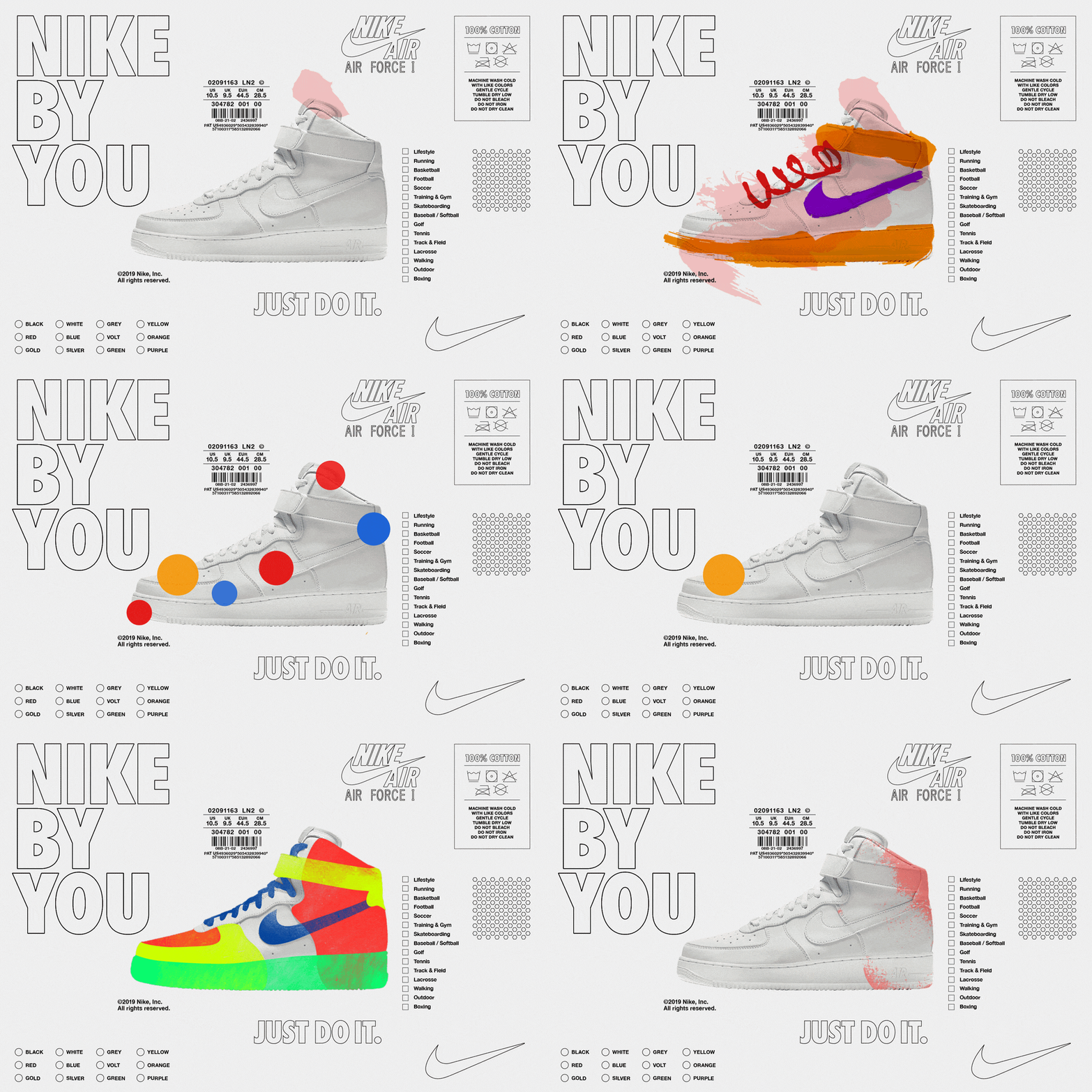
Why it works: Customers who help create a product tend to value it more, a principle known as the IKEA effect. The strategy also needs tight integration between the customer-facing interface and the back-end supply chain, which makes it hard for competitors to replicate. That sense of ownership builds loyalty and repeat purchases.
Common Brand Differentiation Mistakes
The most common brand differentiation mistakes are copying competitors, making claims customers don’t care about, differentiating on something easy to copy, and failing to deliver the promise consistently. Avoiding them helps you build a point of difference that customers believe, remember, and come back for.
8 common brand differentiation mistakes:
- Copying competitors. Following the same safe messaging as everyone else makes your brand interchangeable. If your homepage could belong to any rival, you haven’t differentiated.
- Differentiating on something customers don’t value. A difference only matters if your target audience cares about it. Test it with customer research before you build your brand around it.
- Relying on easy-to-copy claims. Features, discounts, and promises like “best quality” or “great service” are quickly matched. Strong differentiators are hard for competitors to replicate.
- Competing on price alone. Constant discounting trains customers to wait for sales and erodes margins. It builds little loyalty, because shoppers leave when someone is cheaper.
- Making promises you can’t keep. If your brand claims to be eco-friendly, fast, or premium but the experience falls short, trust drops quickly. The difference must show up in your product, shipping, support, and returns.
- Being inconsistent across channels. Different tone, visuals, or messaging on your website, emails, social media, and packaging weakens recognition. Brand guidelines keep every touchpoint aligned.
- Trying to appeal to everyone. A broad message resonates with no one. Focusing on a specific audience or niche makes your positioning sharper and your marketing more relevant.
- Setting it and forgetting it. Markets, competitors, and customer expectations change. Without regular reviews of your KPIs, such as repeat purchase rate and customer feedback, your difference can go stale.
Pro Tip: How to avoid these mistakes?
Run every differentiator through the 3 C’s principle that we mentioned: it should be customer-valued, company- deliverable, and competitor-proof. Then check that the promise is visible across the whole customer journey, including post-purchase emails and loyalty touchpoints, because that’s where retention is won or lost.
Conclusion
Brand differentiation empowers your business to stand out by highlighting unique features, benefits, and qualities that set your products or services apart from competitors. It focuses on delivering a compelling value proposition that resonates with your target audience’s needs and desires.
If you’re in need of a reliable marketing assistant to implement lifecycle marketing and retention strategies for your brand differentiation, contact Flowium. Our specialists will help you create effective campaigns to build your brand identity through your top channels.
Frequently Asked Questions
What’s the most cost-effective way to differentiate an ecommerce brand on a small budget?
Email marketing and content. Both require more time than money, and both compound in value over time. A well-maintained email list and a library of genuinely useful content position your brand as an authority while building customer relationships you own.
How does personalization improve ecommerce brand differentiation?
Personalization signals that you know your customer, their preferences, their purchase history, and what they’ve been looking at. When done well, it makes the shopping experience feel like a recommendation from someone who understands them, rather than a generic catalog. That experience is genuinely difficult for larger, less nimble competitors to replicate.