BFCM is the biggest acquisition event of the year for most Shopify brands. It’s also the biggest retention risk. If a BFCM shopper never buys again, the money spent acquiring them is gone. Most “BFCM Klaviyo setup guides” give you one flow architecture and imply it fits every brand. It doesn’t. A supplements brand with a 45-day reorder cycle, a coffee brand with a 3-week cycle, and a furniture brand whose next sale might be two years away can’t run the same flows on the same timing and expect the same results.
We’re a Klaviyo Master Elite Partner working with Shopify brands doing $5M–$300M in revenue, and we don’t give clients a template. We build the retention system around how their product actually gets repurchased. This guide lays that system out. It covers how to work out which flow architecture fits your business, the segmentation every BFCM strategy needs whatever the category, the full build for the most common case, and how to adjust it when your product works differently. If you want the broader campaign side of the season, start with our Black Friday email guide and our Black Friday Klaviyo playbook.
Why Black Friday & Cyber Monday Email Behaves Differently
Standard lifecycle email assumes predictable behavior: a gradual consideration phase, brand discovery over several touchpoints, and trust built before the purchase. BFCM breaks that pattern in four specific ways:
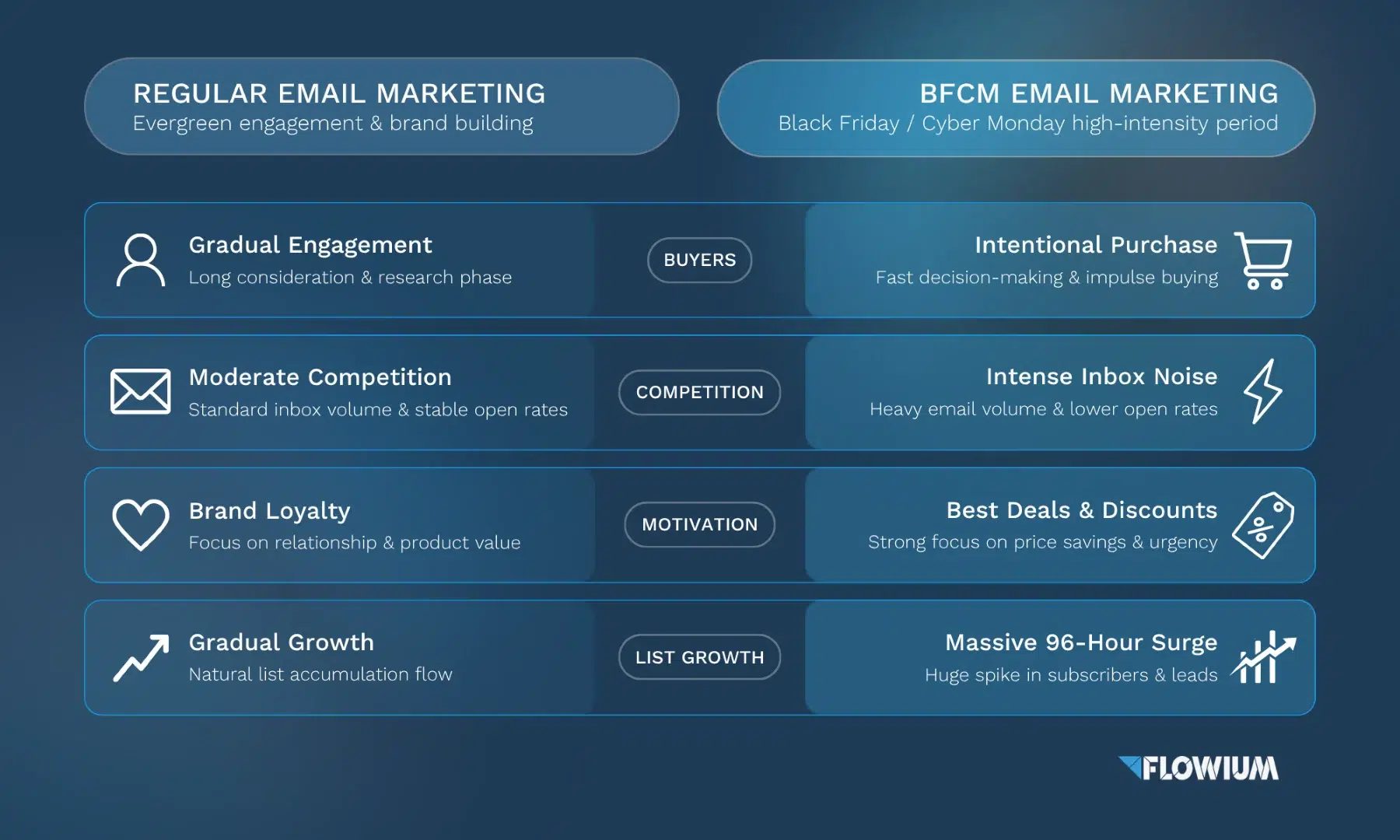
- Shoppers act immediately. A consideration phase that normally runs for weeks shrinks to hours. There’s no gradual warm-up to design for. By the time someone reads your email, they’re often already deciding.
- Inbox competition spikes. Every brand a subscriber has ever bought from or browsed sends promotional email during BFCM week, and open rates drop across the board. Subject lines and send times that worked in September won’t perform the same way in November.
- Shoppers come for the deal, not the brand. Most BFCM shoppers are there for the discount, not the brand story. They can still become loyal customers, but the retention strategy has to start from why they actually bought. It can’t assume brand affinity that doesn’t exist yet.
- Your list changes shape overnight. In a few days your list can grow by hundreds or thousands of subscribers who look nothing like your existing base. Put them into your regular welcome series and you’ll either bore people who already bought or make them feel like an afterthought.
The brands that lose the most retention value during BFCM usually don’t have weak creative. They’re running their evergreen flows unchanged through a week where the audience, the intent, and the inbox are all different from the rest of the year.
BFCM Buyer vs. Your Regular Customer
Get this distinction clear before you open Klaviyo, because it drives every segmentation and exclusion decision below.
| Criterion | Regular Customer | BFCM Buyer |
|---|---|---|
| Acquisition Channel | Organic search, social, word-of-mouth | Paid ads or deal aggregators |
| Pre-purchase email interaction | Read 1–2 emails before buying | May never have opened one |
| Average order value | Typically higher | Discount-driven, often lower baseline |
| Consideration window | Days to weeks of research | Hours, comparison shopping in real time |
| Core motivator | Story, education, brand values, community | Best price, clear benefit, urgency |
Neither profile is “better.” A BFCM shopper can become one of your highest-LTV customers, but only if the post-purchase strategy is built for who they are, not for your regular customer.
Before You Build: Diagnose Your BFCM Flow Architecture
Most BFCM guides skip this step, and it decides whether the rest of the build works for your business. Answer two questions:
1. How long is your product’s natural repurchase cycle? Pull it from Klaviyo or Shopify: the average number of days between a customer’s first and second order, or Predicted Time Between Orders if Klaviyo’s predictive analytics are available on your account. Don’t guess. A wrong assumption here breaks every timing decision that follows.
2. Is repurchase even the right near-term goal for this category? A consumable gets repurchased by definition. A $400 jacket, a mattress, or a gift product might not. For those, the customer’s next action could realistically be a referral or a review long before a second order.
Those two answers put you into one of three architectures:
- Fast-cycle consumable (repurchase cycle under ~30 days): food, beverage, some pet and beauty consumables.
- Mid-cycle repeat purchase (~30–90 days): skincare, supplements, and most of the DTC brands we work with. This is the default case, and most of this guide covers it.
- Long-cycle, durable, or occasion-driven (90+ days, or unpredictable): apparel, home goods, gifting, high-ticket items.
The rest of the guide follows the same order: one segmentation foundation that every architecture uses, a full build for the mid-cycle case, then the specific changes for the other two.
The Segmentation Layer Every BFCM Strategy Needs
Whichever architecture applies to you, none of it works unless you tag BFCM buyers at the moment they convert. (For more on getting your lists ready for the season, listen to our podcast episode on BFCM lists and flows.)
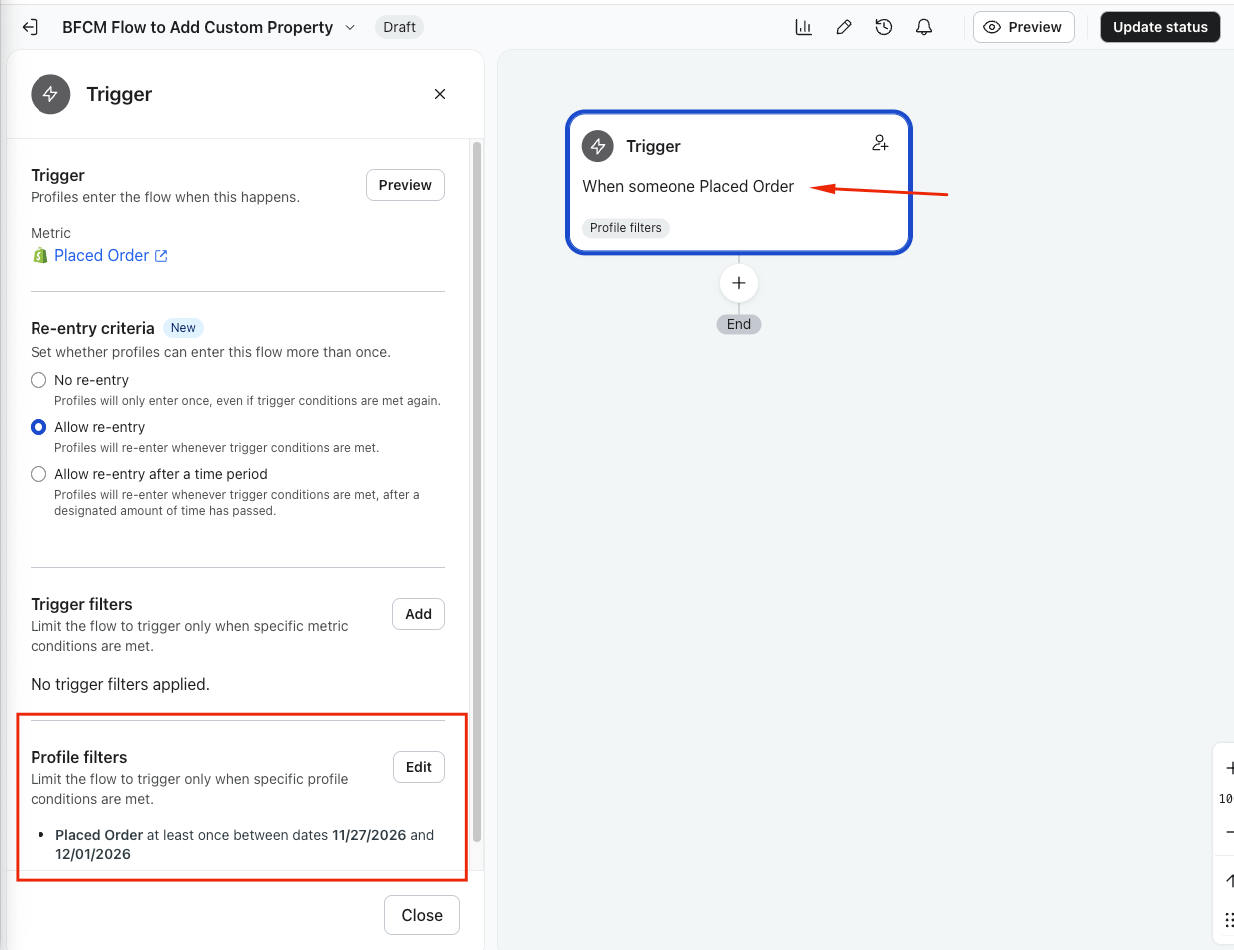
Build one flow whose only job is to set this property:
- Trigger: Metric → Placed Order.
- Profile filter: Placed Order at least once between Black Friday and the day after Cyber Monday. If your promotion starts early or runs past Cyber Monday, adjust the dates to match.
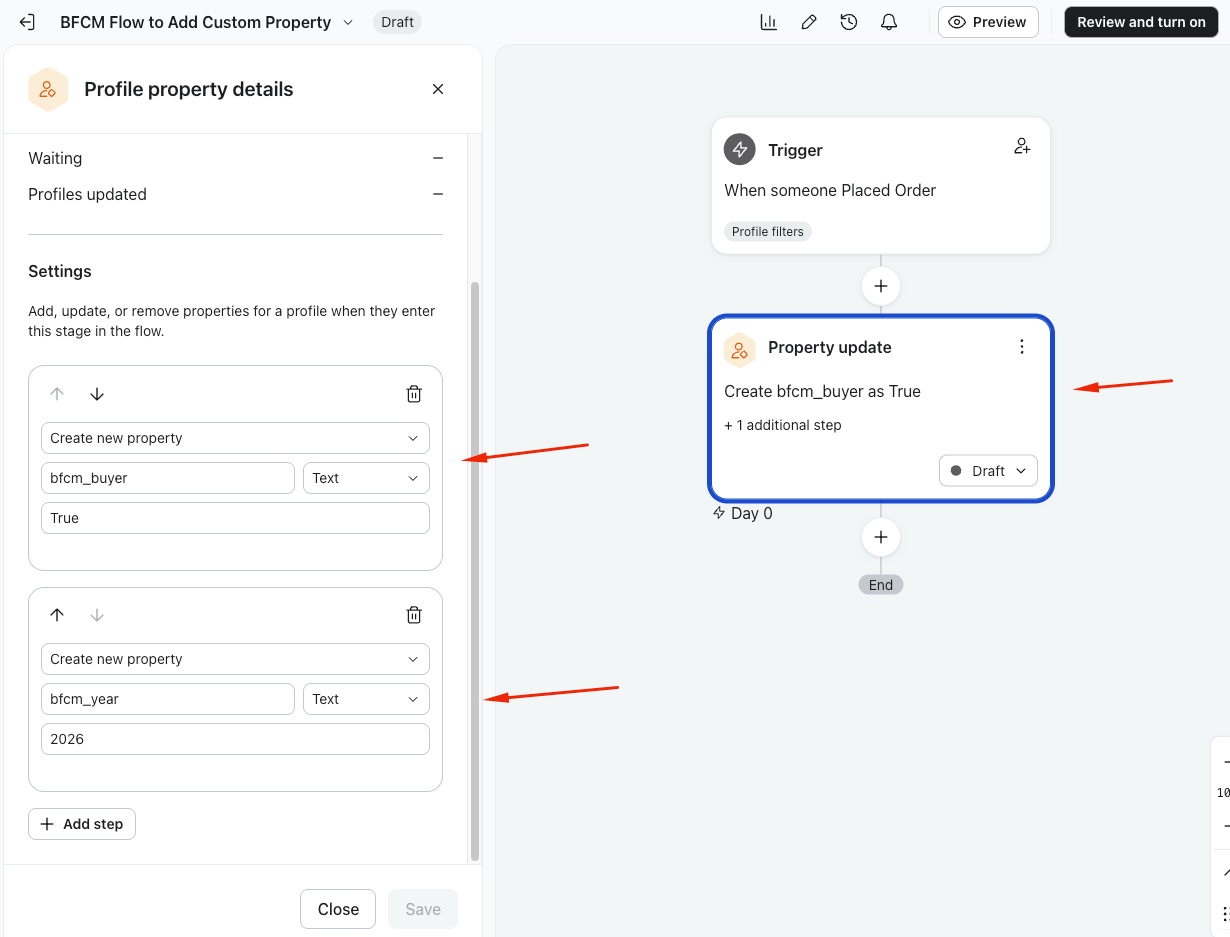
- First action: drag an Update Profile Property action into the flow, create two custom properties, bfcm_buyer: true and bfcm_year: 2026, and click Save. Tagging the year makes the logic reusable every season without a rebuild.
- Set the flow live before your BFCM promotion starts.
Then build four segments on top of that property:
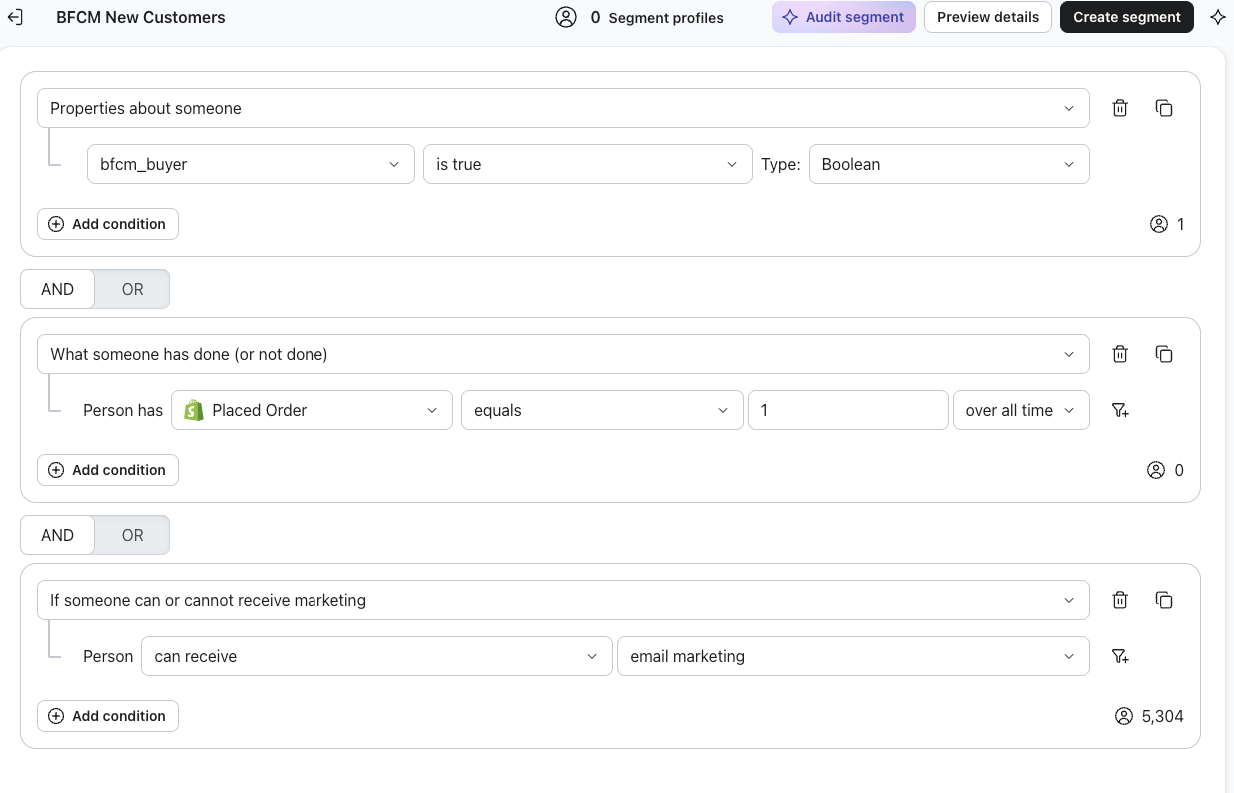
1. BFCM New Customers: bfcm_buyer = true AND Number of Orders = 1 over all time AND can receive email marketing.
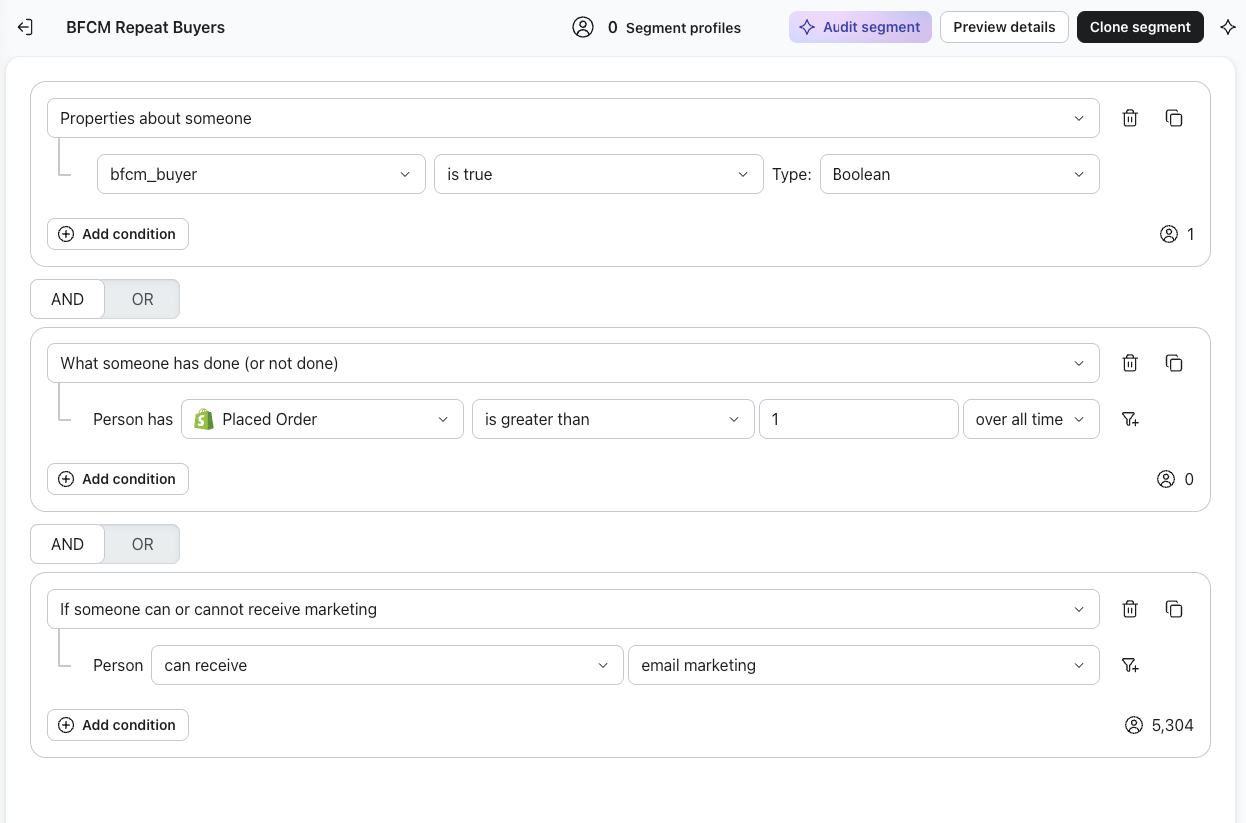
2. BFCM Repeat Buyers: bfcm_buyer = true AND Number of Orders > 1 over all time AND can receive email marketing. Route them into your existing VIP flow, not the new-buyer welcome. They don’t need to be introduced to your brand again.
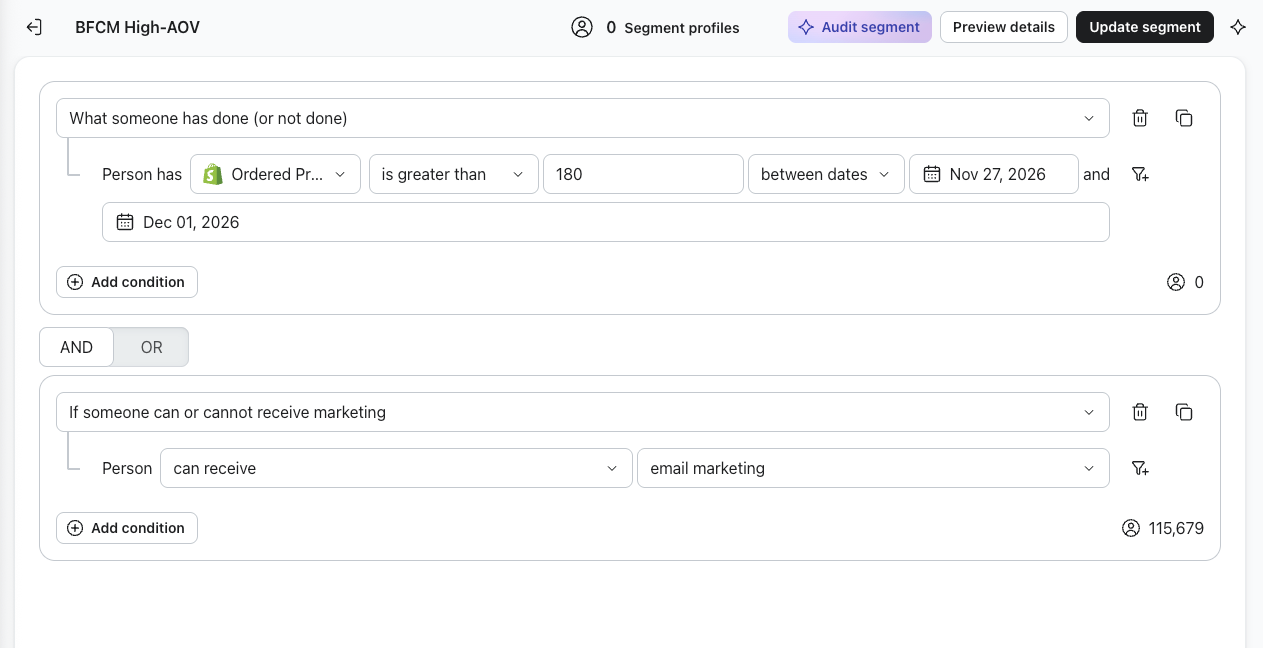
3. BFCM High-AOV: ordered product value above roughly 1.5–2x your typical AOV between the BFCM dates you set above. Calibrate the multiplier to your own numbers; it isn’t a universal constant. Give this group white-glove post-purchase treatment whichever architecture you run. In the screenshot below we assume a $90 AOV, so the segment uses $180 (2x AOV).
4. BFCM VIP Converts: this one is a flow rather than a segment. It triggers on a second Placed Order where bfcm_buyer = true AND Number of Orders = 2, and it adds vip_path: bfcm_converted. This cohort is your clearest BFCM win. Track it monthly as a leading indicator of how well the whole system is working, whatever your repurchase cycle.
The Core Build: Mid-Cycle Repeat-Purchase Brands
If your repurchase cycle falls between 30 and 90 days, build these two flows. If you’re fast-cycle or long-cycle, read this section anyway: the other two architectures are described as changes to this build, not as separate builds.
Flow 1: Welcome + Post-Purchase, with a Second-Purchase Push Built In
A customer just subscribed through a BFCM popup and bought with the promotion. This isn’t the time for brand education. What they need first is reassurance that they made the right call. (If you’re rebuilding your evergreen welcome series too, see our guides to the Klaviyo welcome series and welcome email series.)
Building the flow:
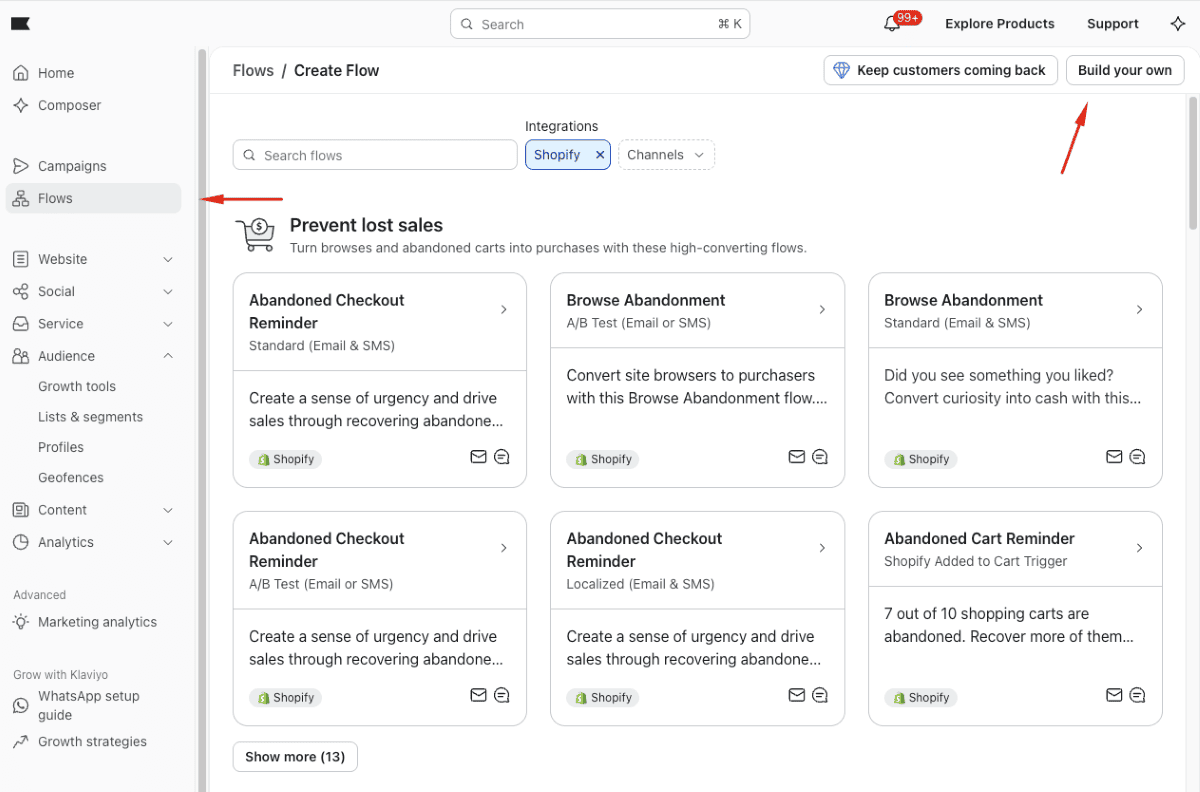
Step 1. Create the flow. Go to Flows → Create Flow → Build your own, name it, and click Create Manually. Set the trigger to Metric → Placed Order.
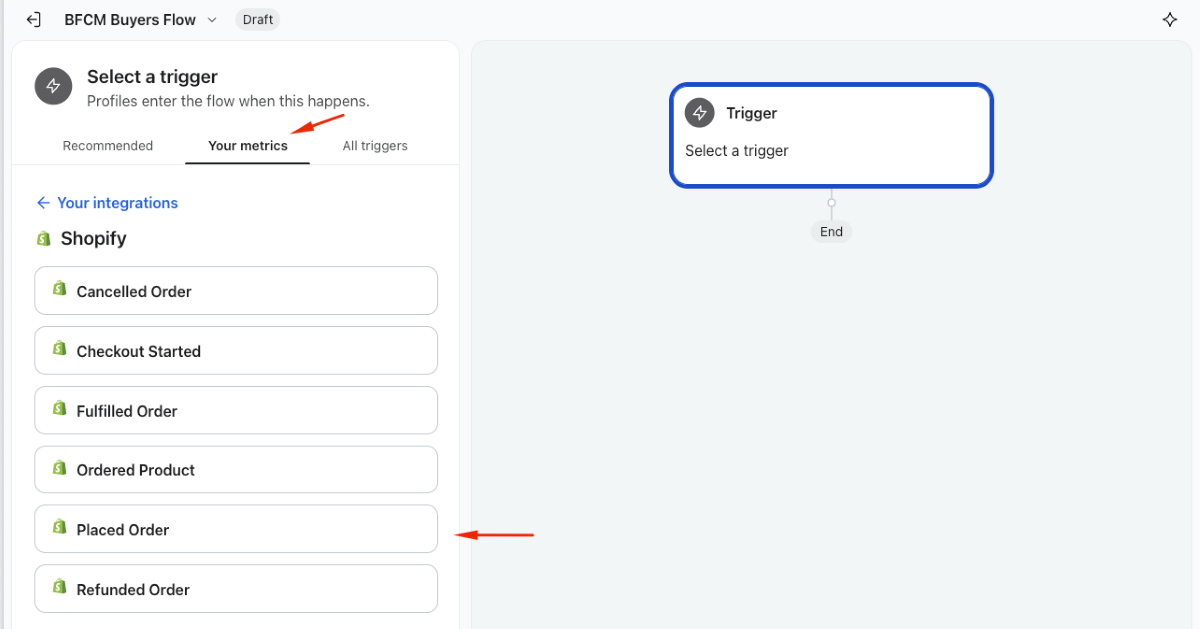
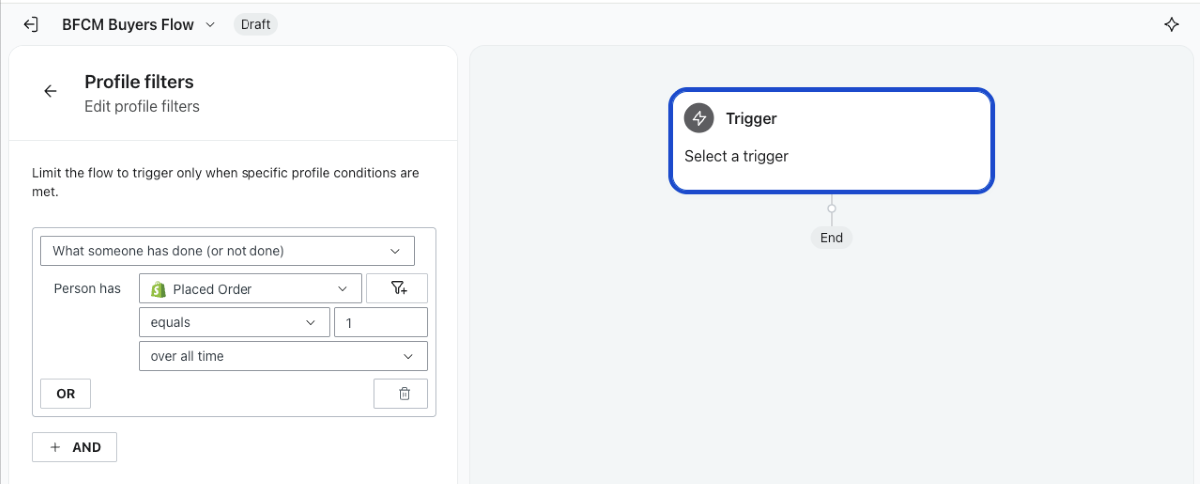
Step 2. Filter to first-time buyers at the trigger. Click the trigger block, open the Profile Filters tab, and add: “What someone has done or not done” → Placed Order → equals → 1. Trigger filters are checked only when the event fires, so existing customers who buy during BFCM stay out of a flow meant for new ones.
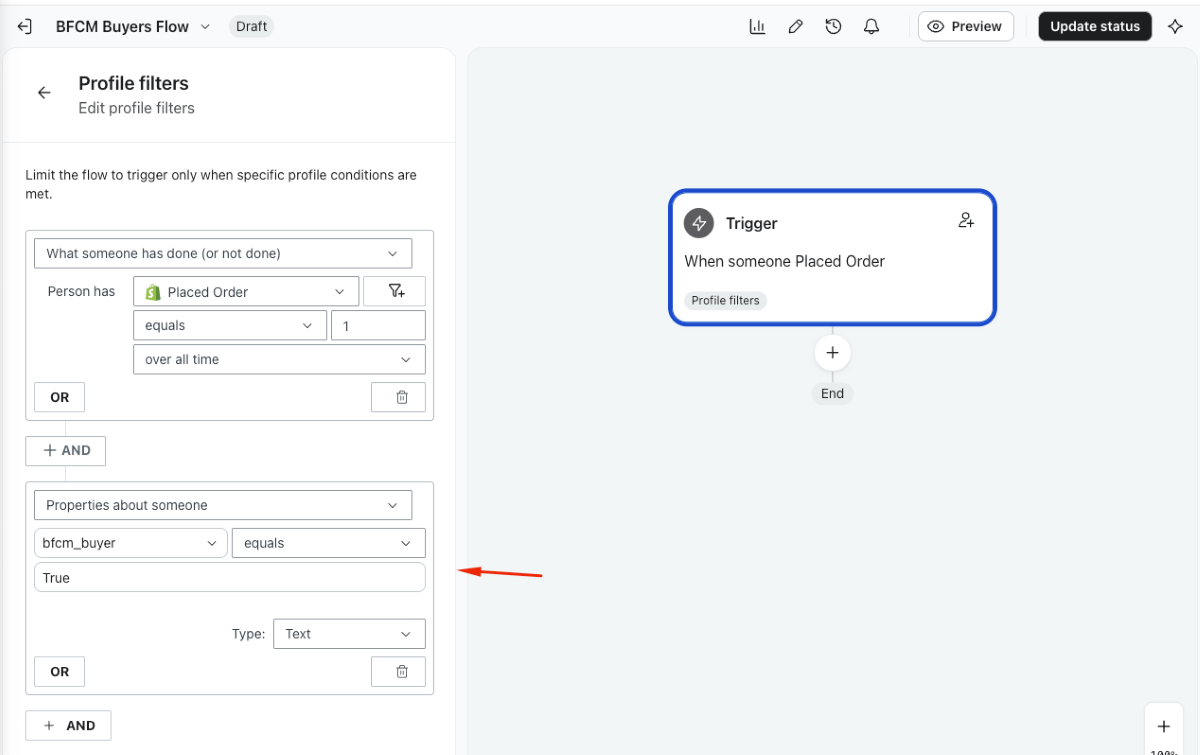
Step 3. Limit the flow to orders placed during BFCM. In the Flow Filters tab of the same trigger block, add: “What someone has done or not done” → Placed Order → at least once → between [Black Friday] and [the day after Cyber Monday], using the same dates as your tagging flow. Use this order-date condition rather than the bfcm_buyer property. Both flows trigger on the same order, so if the tagging flow hasn’t updated the profile yet when this flow checks its filters, the buyer would be skipped. The order-date condition doesn’t depend on that timing.
Step 4. Patch your existing post-purchase flow, temporarily. Add a flow filter there too: Placed Order → zero times → between the same BFCM dates. Without it, BFCM buyers get doubled messaging from both flows for two weeks. Then remove the filter around December 15, once the last BFCM buyer has finished Flow 1 (14 days after the tagging window closes), and put that date in your calendar now. If you leave the filter in place, every BFCM buyer stays excluded from your standard post-purchase flow on every future order.
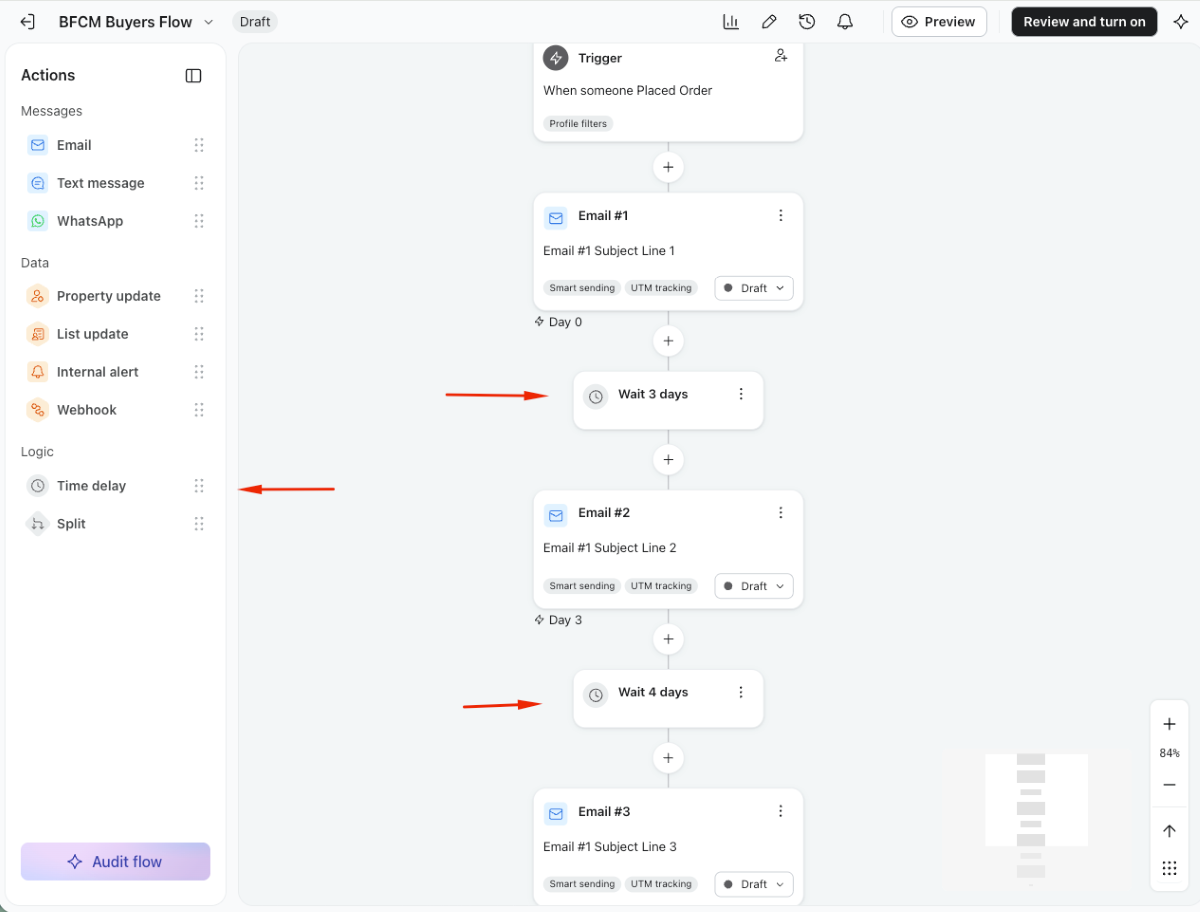
Step 5. Set the timing. Klaviyo delays count from the previous step, not from the trigger:
- Immediately → Email 1
- 3-day delay → Email 2 (Day 3)
- 4-day delay → Email 3 (Day 7)
- 7-day delay → Email 4 (Day 14)
Step 6. Add an exit check before the second-purchase push. Add the flow filter: Placed Order → zero times since starting this flow. Anyone who has already bought again exits immediately. Don’t send a “buy again” email to someone who just did.
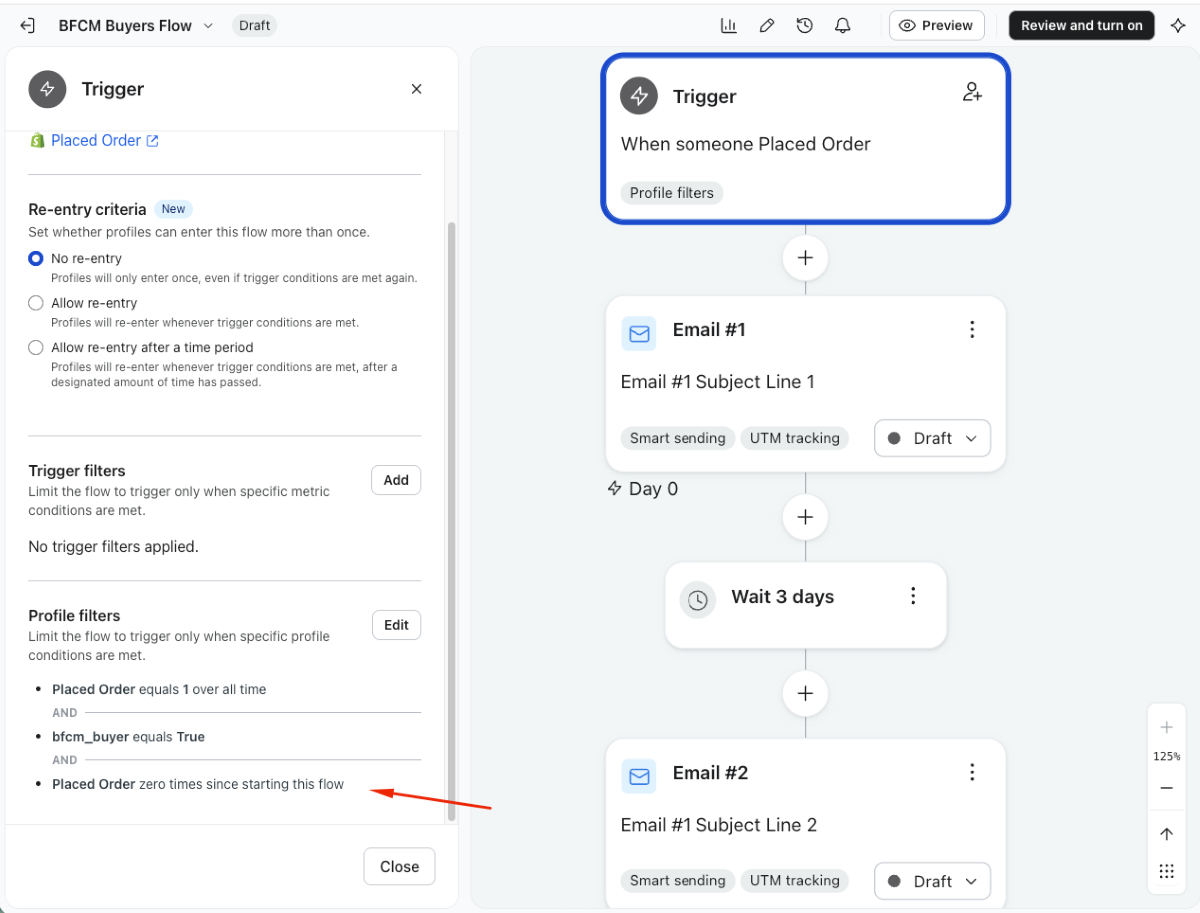
Email content:
- Email 1 (immediately): Keep the brand pitch to a minimum. Reassure the customer they made the right choice with a usage tip or a little-known detail about the product. Anything that looks like a transaction receipt with a logo on top erodes trust quickly with someone who doesn’t know you yet.
- Email 2 (Day 3): Product value only. One useful tip, no upsell, no ad blocks. The goal is to show expertise, not to sell.
- Email 3 (Day 7): Social proof: UGC and customer stories, framed as a preview rather than a pitch. A soft nudge toward a complementary product works here, e.g. “Here’s what other [product] customers added next.”
- Email 4 (Day 14), the second-purchase push: Day 14 is the right moment for a mid-cycle product. The customer has used the item, buyer’s remorse has passed, and they haven’t drifted off yet. In the accounts we manage, customers who make a repeat purchase within the first 30 days consistently show meaningfully higher 12-month LTV, so treat this window as high-leverage.
Setting up the offer inside Email 4:
Step 1. Set up the product recommendations block.
- Go to Content → Products → Product Feed → Create Product Feed.
- Name the feed with no spaces in the name. For this example, select “Both best-selling and most viewed products” in the last 90 days. A dynamic feed keeps working as your catalog changes, unlike a static block.
- You can add filters such as Category includes/excludes, price, or stock level. In this example we won’t select any, because we want to include all categories.
- In the email editor, drag in the Product block, switch it to Dynamic, and select your feed. Preview the email with a few real profiles before launch, because an empty dynamic block fails without any warning.
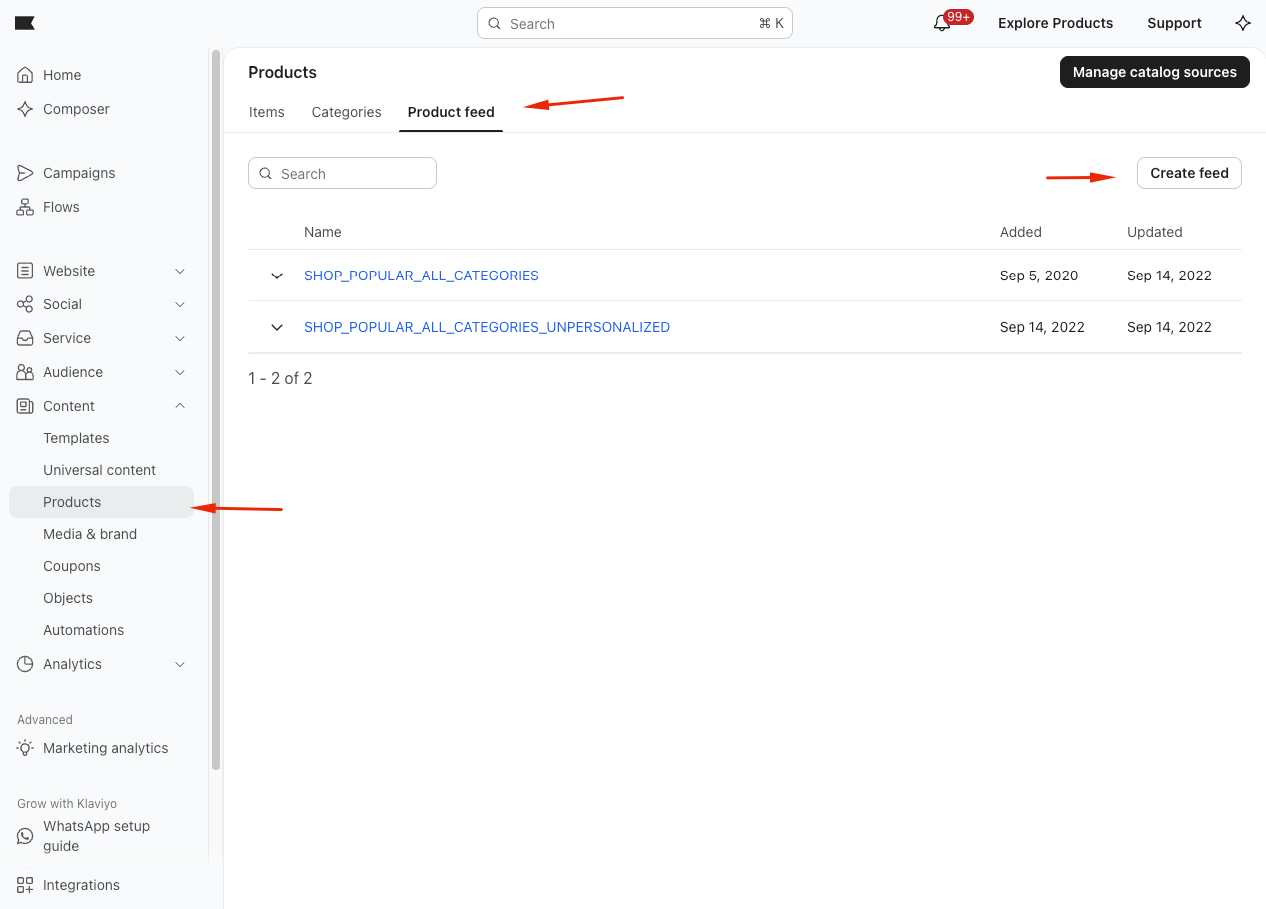
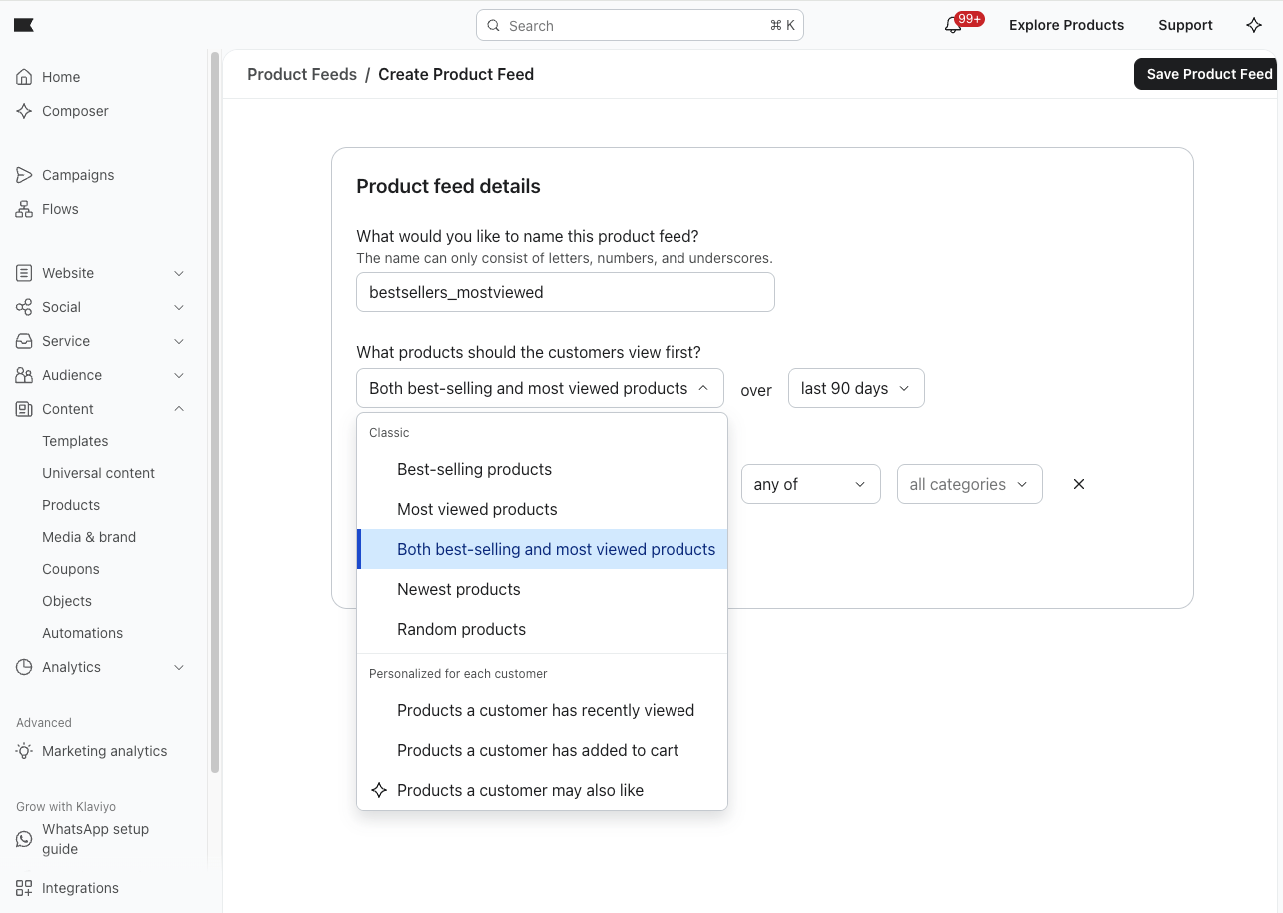
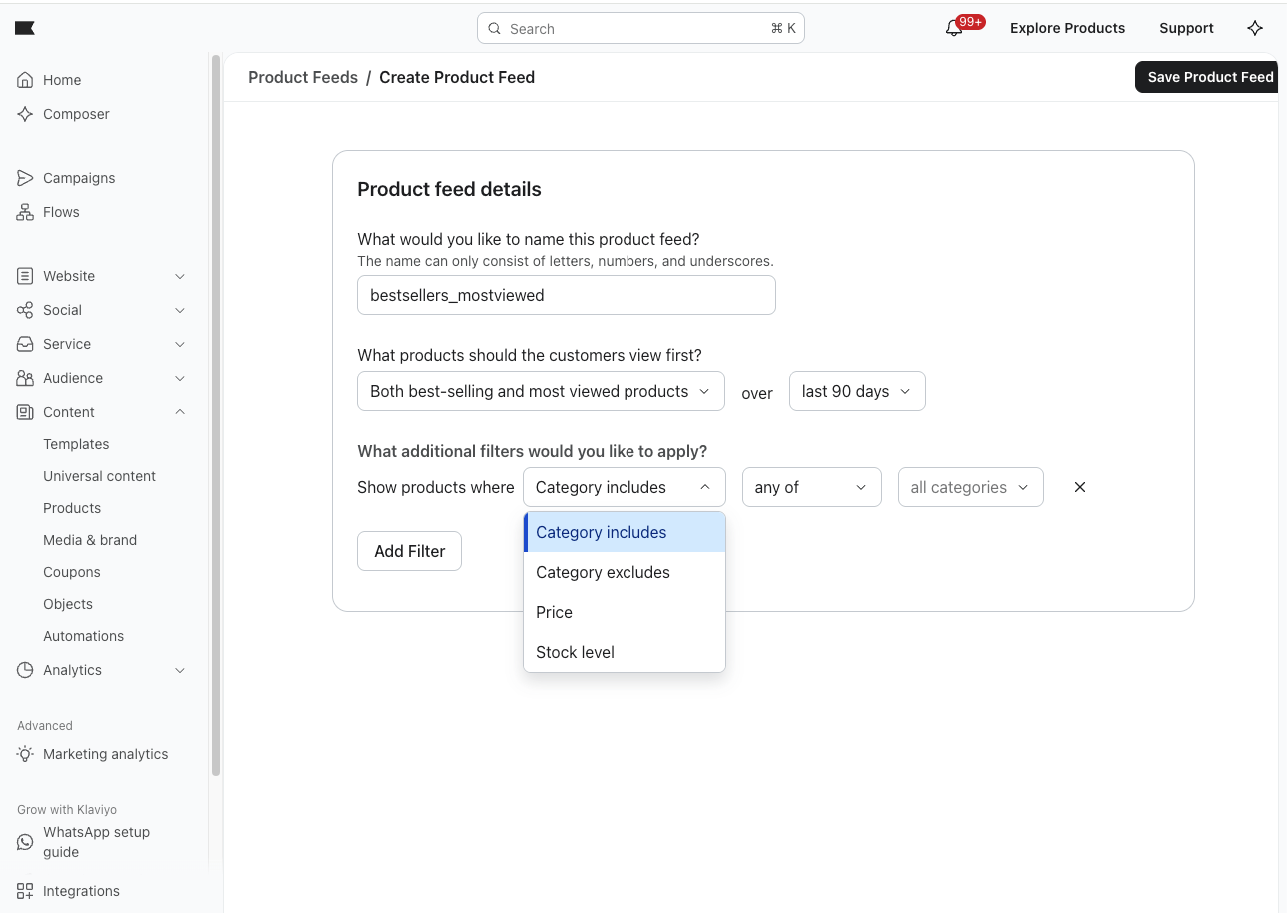
Step 2. Size the incentive carefully. Make it smaller than your BFCM offer, or make it non-monetary. The BFCM buyer already converted on price once. Matching the same discount depth in Email 4 teaches them to expect a deal every time you email, and that compounds margin loss right when you’re trying to build a full-price customer. A smaller percentage, free shipping, or a gift with purchase framed as a reward for coming back (rather than “another sale”) keeps the urgency without reinforcing discount hunting. If you’re not sure which works better for your margins and price elasticity, test it: a smaller or non-monetary incentive vs. a matched discount, measured on 30-day repeat purchase rate and third-order AOV, not just Email 4’s own conversion rate.
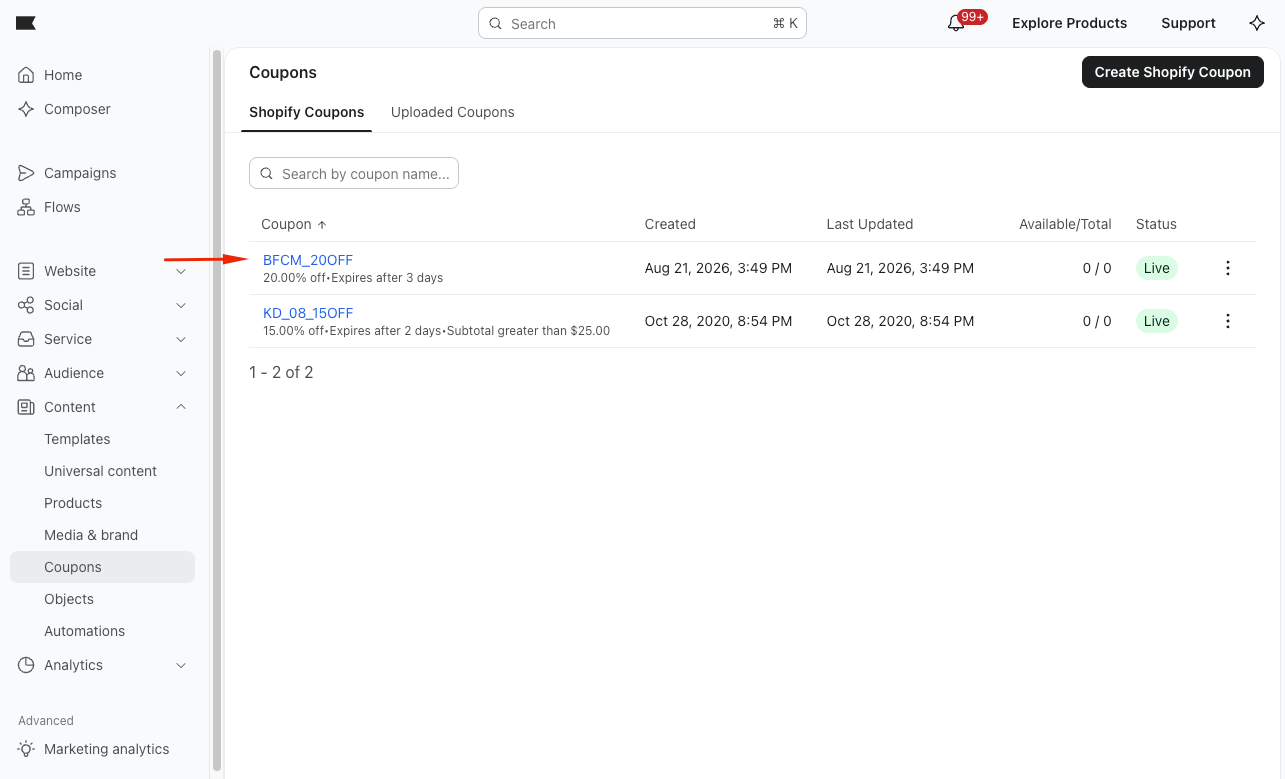
Step 3. Create a unique coupon with a short expiry.
- Go to Coupons → Create Coupon.
- With the Shopify integration, Klaviyo generates a unique one-time code for each recipient and syncs it to Shopify. That prevents sharing and keeps attribution clean.
- Set a 72-hour (3-day) expiry.
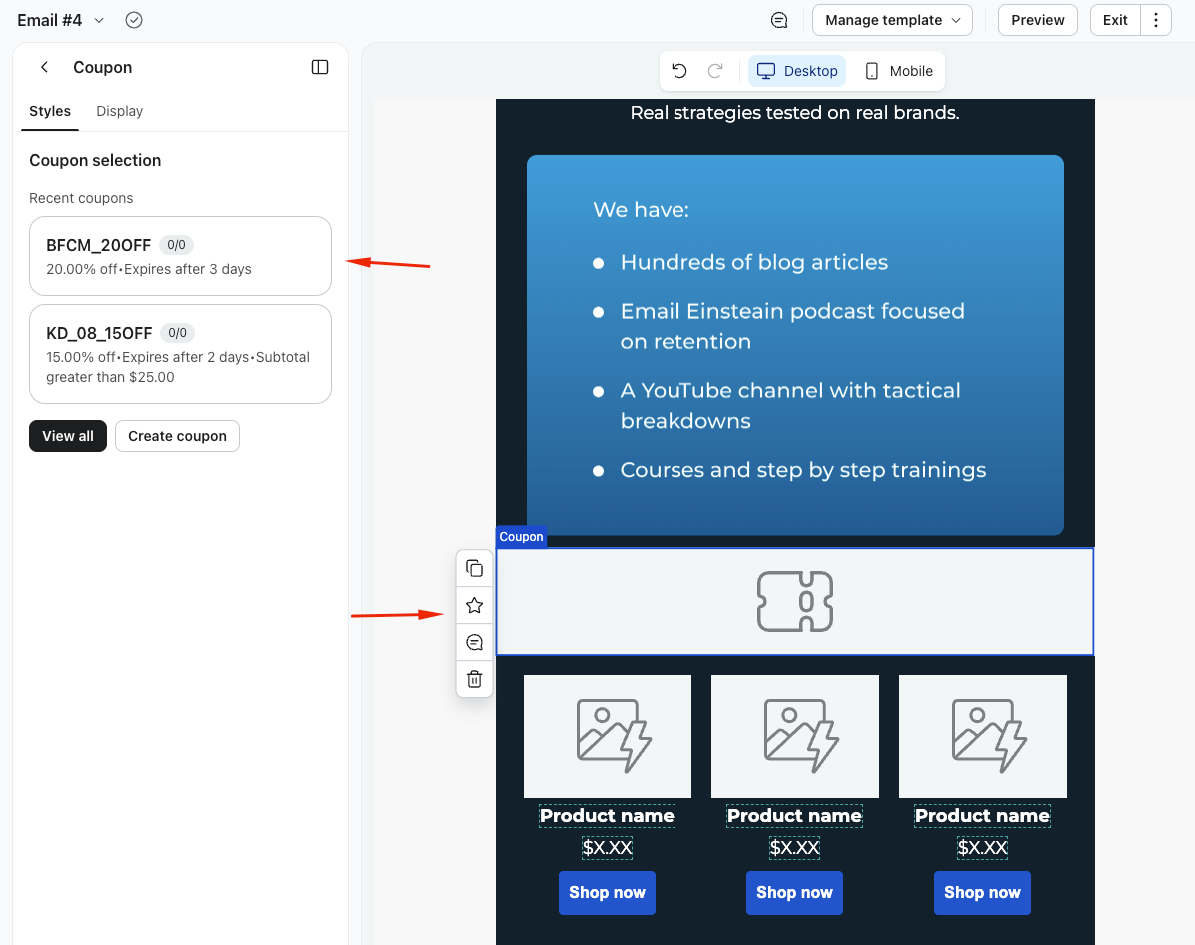
- Insert the code with the Coupon content block, which fills in each subscriber’s code automatically. Don’t use a static code here: one repost on a deal site and the economics of the whole email are gone.
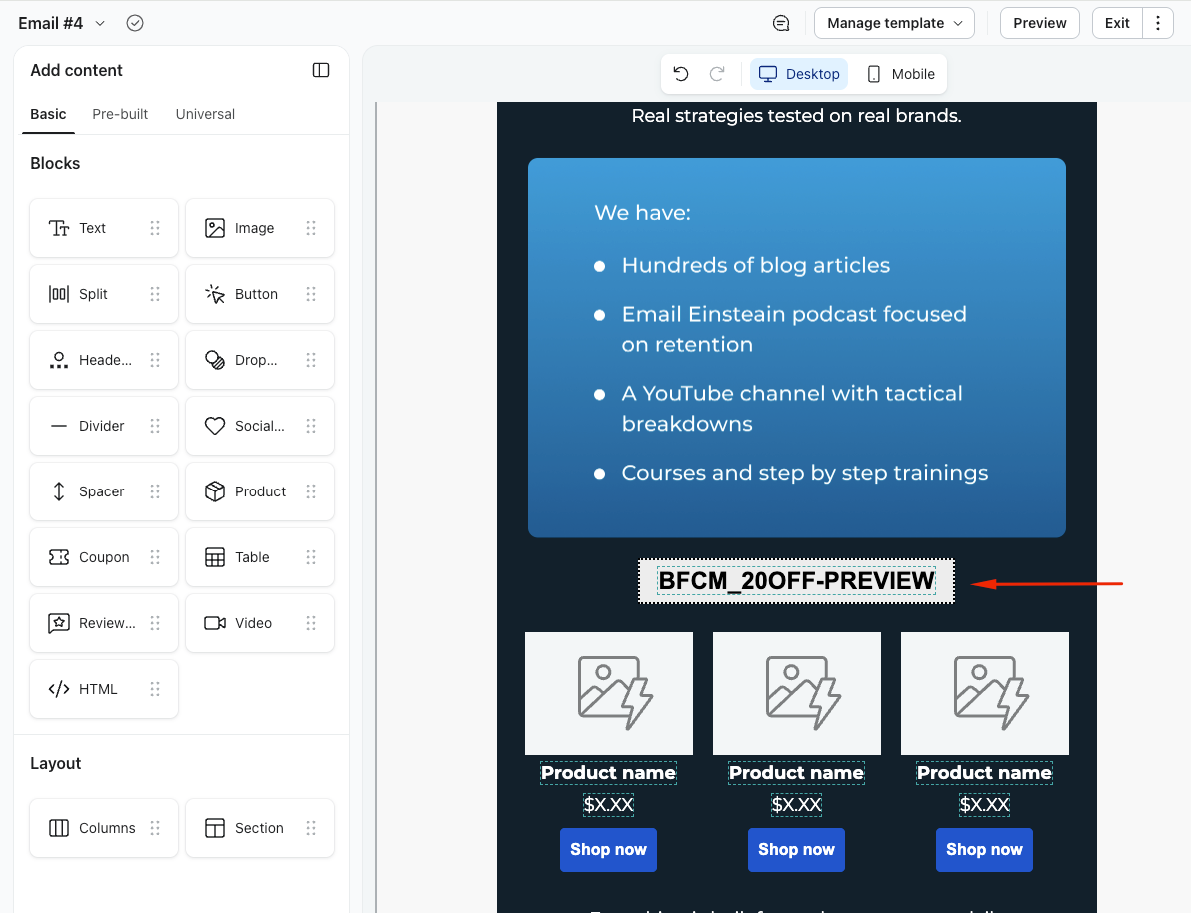
- If you see the word “Preview” behind the coupon code, it’s set up correctly. You’ll also see it when you preview the email.
Step 4. Cut friction at checkout. Pre-apply the code with a Shopify discount link, yourstore.com/discount/[COUPON_CODE]?redirect=/collections/[handle], so the customer never has to type it. If Email 4 promotes a single hero SKU, go one step further with a Shopify cart permalink (yourstore.com/cart/[variant-id]:1?discount=[COUPON_CODE]), which loads the product into the cart with the discount already applied. For a time-boxed offer this small detail has an outsized effect on conversion.
Flow 2: Win-Back, Merged Into Your Existing Lapsed-Customer Flow
Once a BFCM buyer goes quiet, you need a clear decision: keep trying, or let them go. Leaving inactive BFCM buyers on your active list through December quietly damages sender reputation for every other campaign you send.
Don’t build this as a separate flow if you can avoid it. Most accounts already have a win-back or lapsed-customer flow. A separate BFCM version doubles the build time and the maintenance every season. It also creates a real risk that the same profile qualifies for both and gets two contradictory “last chance” emails in the same week. Fold it in instead:
Step 1. Calibrate the timing to your repurchase cycle, not a fixed number. Use the average days between first and second order from the diagnostic step. For a mid-cycle brand this usually lands around 30–45 days. Keep a floor of ~14–21 days so you’re not acting on too little data, and a ceiling of ~45–60 days so inactive profiles don’t sit unaddressed.
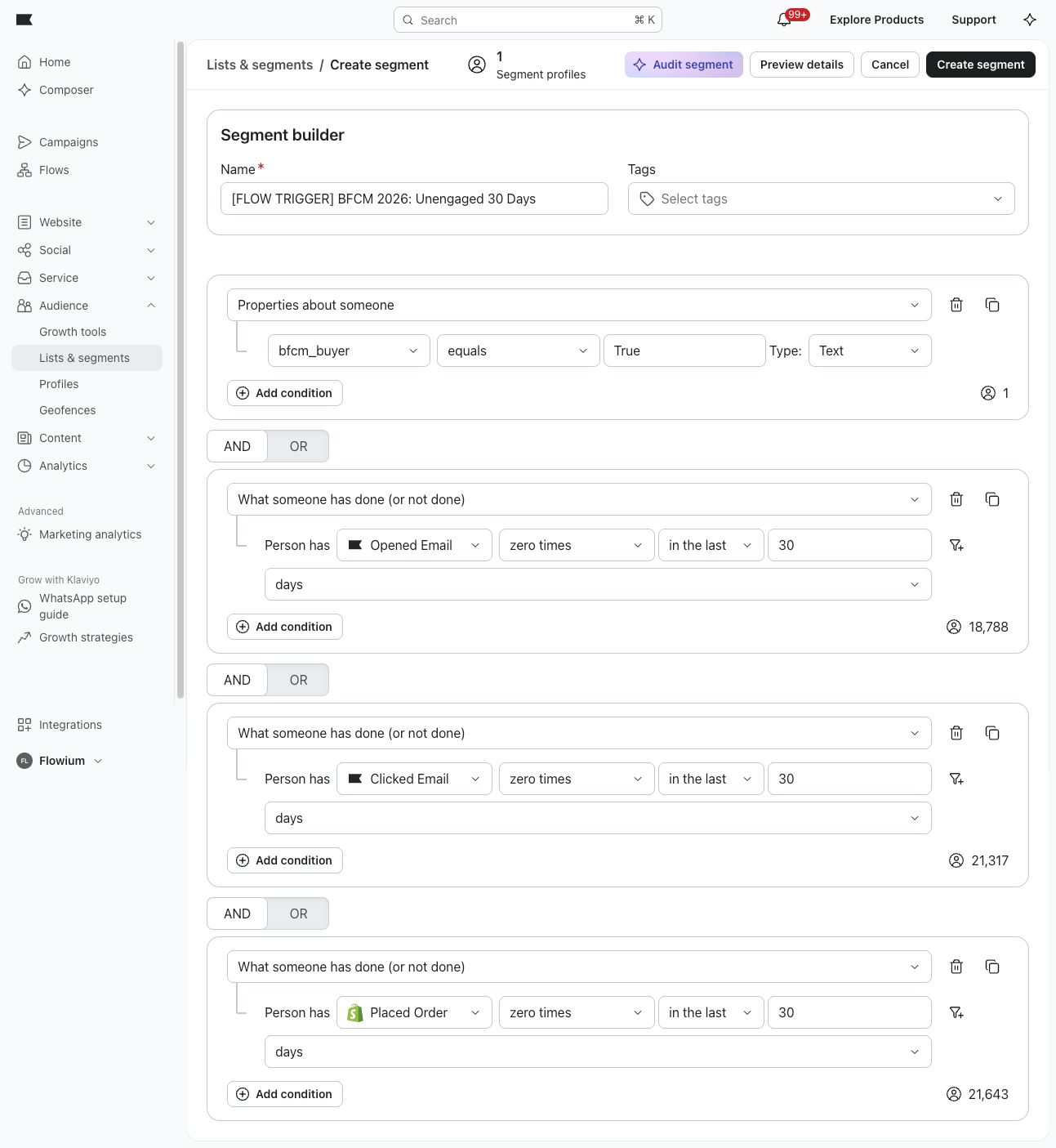
Step 2. Build one combined trigger segment, not two. Go to Lists & Segments → Create → Segment, and name it something like “Win-back: BFCM 2026 + Lapsed”. Conditions: (bfcm_buyer = true AND has not opened, clicked, or placed an order within your calibrated window) OR (your existing lapsed-customer criteria). One segment and one entry point, so no profile enters two versions at once. The “has not placed an order” condition matters: someone who ignores your emails but has already bought again is retained, not a win-back target.
Step 3. Trigger one flow off that segment. Go to Flows → Create Flow → Segment trigger, select the segment above, and set “Allow re-entry” to OFF.
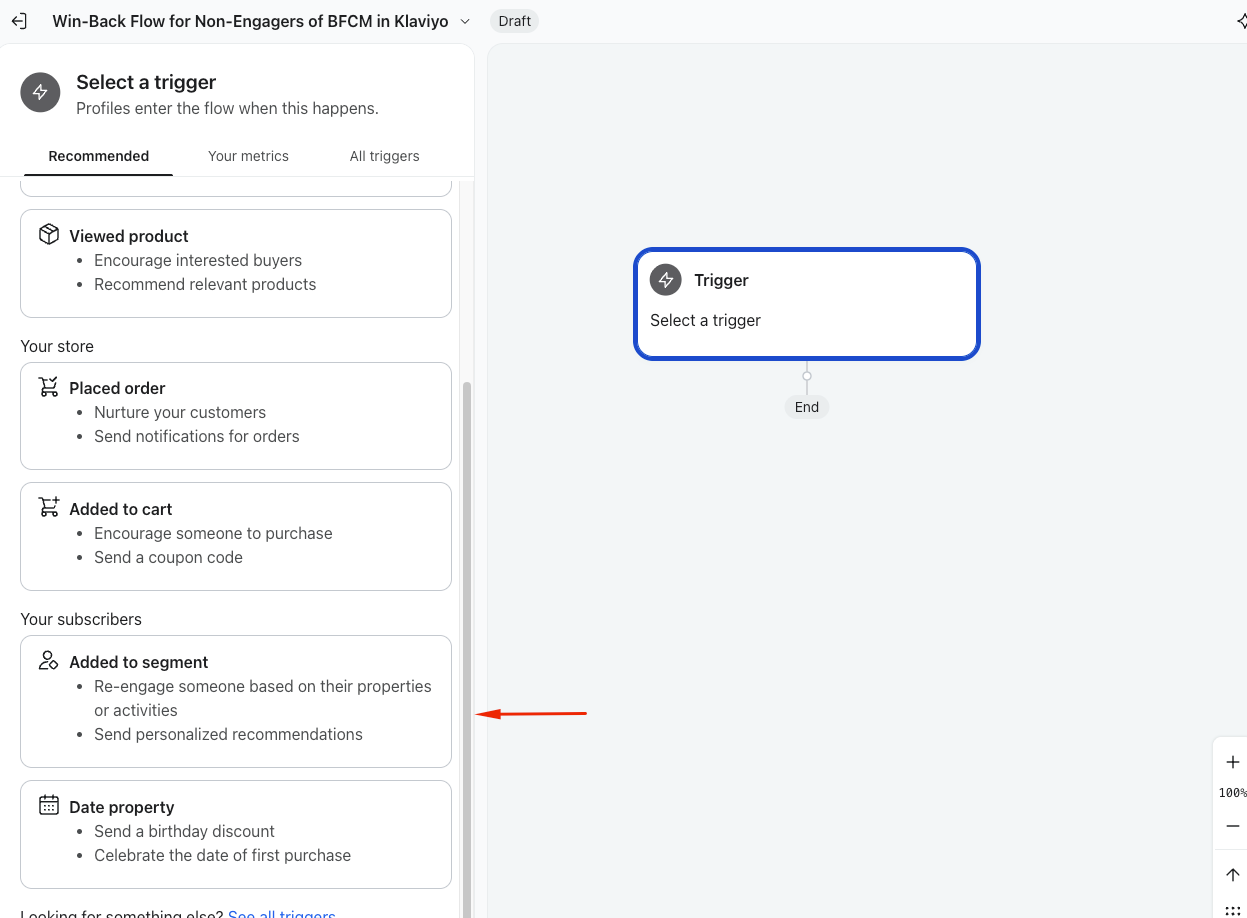
Step 4. Branch inside with a Conditional Split on bfcm_buyer. True goes into the BFCM-specific path below. False continues down your standard win-back path.
Email content for the BFCM path:
- Email 1 (Day N): Short, with no promotion and no product blocks, just a genuine question about the product they bought. The only goal is a reply or an open, and both count as engagement signals with mailbox providers. After a 5-day delay, split on opens/clicks. If they engaged, set bfcm_reengaged = true and return them to standard campaigns. If not, move them to Email 2.
- Email 2 (Day N+5): Say plainly that this is the last email before they’re removed from promotional sends, and give them a real reason to stay: a loyalty benefit, early access, or an upcoming date. “Great content” isn’t a reason at this stage. After another 5-day delay with no engagement, add them to a “Cold BFCM (exclude from campaigns)” list and update email_status to cold_bfcm_buyer.
Use a list-based exclusion here, not a global exclusion. A global exclusion in Klaviyo is permanent and blocks the profile even after a future purchase. A list exclusion keeps the door open for a deliberate Q1 re-engagement push. Exclude this list from campaigns through December and January, then revisit it.
Adjusting the Build for Fast-Cycle Consumables
If your repurchase cycle is under ~30 days, the Day 14 push in Flow 1 lands too late, because the customer needs to reorder before that email even goes out. Make two changes:
- Move the second-purchase push earlier, to roughly Day 7–10 instead of Day 14, and drop the “past buyer’s remorse” framing. It doesn’t apply at this pace.
- Prioritize subscribe-and-save over one-off nudges. At this consumption rate, the strongest retention play is converting the customer to a recurring subscription inside the post-purchase flow, ideally in Email 2 or 3 while the product is fresh in their mind, rather than asking them to reorder manually again and again. It’s also the healthiest form of incentive: a better subscription price tied to recurring behavior, instead of a one-off coupon that trains discount seeking. One subscription conversion is worth more than several individual repurchase pushes.
Everything else stays the same: the tagging layer, the merged win-back logic, and the deliverability checklist. The only other change is a tighter win-back window, closer to the 14–21 day floor.
Adjusting the Build for Long-Cycle, Durable, or Occasion-Driven Categories
If the honest answer to “when will this customer buy again?” is 90+ days, a year, or “hard to say,” a repurchase-focused Flow 1 will underperform and can come across as tone-deaf, because you’re asking someone to buy again before they have a reason to. For this cohort the goal is to turn a one-time discount buyer into an advocate and keep them warm for the next real occasion, not to get a fast second purchase.
Flow 1 becomes an advocacy flow instead of a repurchase flow:
- Keep Emails 1–3 mostly as described above: reassurance, product education, social proof.
- Replace Email 4’s second-purchase push with a review and referral ask, timed to when the product has actually been used. A mattress needs weeks of use before a review is credible; apparel might need days. Pair it with a referral incentive instead of a self-purchase discount. That’s the retention lever that fits this category.
- If there’s a natural next occasion (a gifting season, an annual sale, a seasonal need), add a longer-horizon nurture step timed to land shortly before it, instead of a fixed Day 14/30 structure.
Win-back measures something different. Don’t merge it into a purchase-based lapsed flow the same way. For this cohort, “unengaged” rarely means “at risk of never buying again.” It usually just means “not in the market right now.” Instead of pushing for a purchase, this flow should protect list health and keep you top of mind: lighter-touch content, a longer window before treating someone as cold (well past the 45–60 day ceiling for mid-cycle brands), and success measured by engagement retention and referral rate, not 90-day repurchase rate. Report on this cohort separately in your dashboards. If you judge it against a repeat-purchase KPI it was never going to hit, the flow will look like a failure when it’s doing its job.
BFCM Email Deliverability Checklist for Klaviyo
This layer is the same for every architecture. Work through it before you scale sending volume. (For the full pre-season list, listen to our BFCM checklist podcast episode.)
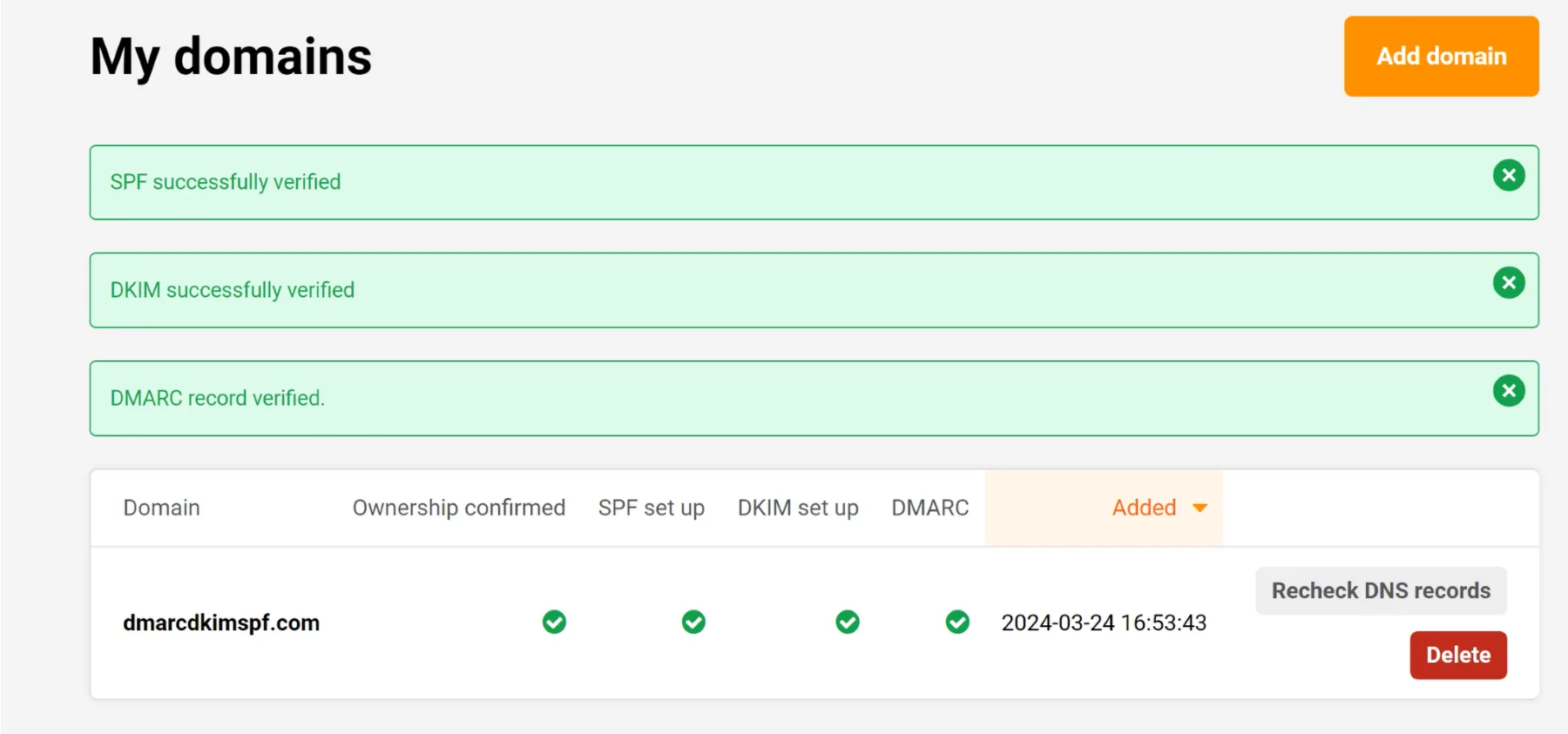
- Authentication. Confirm that DKIM, DMARC, and SPF are set up correctly. At bulk volume they’re required under Google’s and Yahoo’s sender rules, not optional. If DMARC is at p=none, move it to p=quarantine ahead of BFCM, but only once your DMARC reports show every legitimate sending source passing. Beyond authentication, the domain needs a real sending history before your high-volume sends. There’s no official minimum number of days, so start as early as possible.
- List hygiene. Before you scale sends, suppress or remove profiles with no opens, clicks, or purchases in 180+ days. Watch your spam complaint rate in Klaviyo’s deliverability dashboard. Google’s guidance is to stay under 0.1% and never reach 0.3%; sustained rates at that level lead to rejections at the mailbox provider. Don’t wait until you’re near 0.3% to react. Start investigating at 0.1%.

- Gradual volume increase. Do list-health and authentication prep in October, then ramp actual sending volume in the three weeks before Black Friday, roughly 25–30% week over week. A sudden spike from a domain with no recent sending history looks suspicious to mailbox providers, event or not.
Post-BFCM Retention: What to Send After November 30
In 2026, Black Friday is November 27 and BFCM week ends on Cyber Monday, November 30. This calendar works for most brands. Weight it toward repurchase content if you’re mid- or fast-cycle, and toward advocacy and community content if you’re long-cycle:
- December 1–7: no promotions. Send one useful piece of content, such as a how-to, a care guide, or a usage tip. The goal is repositioning, from “discount brand” to “brand that knows what it’s talking about.”
- December 8–20: social proof, then a gift guide. Lead with community and social proof, then send a gift guide built around what your BFCM buyers actually purchased.
- December 21–31: loyalty and referral. Promote your loyalty or referral program and ask for reviews of what they bought. This is the highest-leverage week for the long-cycle cohort in particular.
- January: clean the list and take one last swing. Remove inactive customers from your main campaign list. Then send one targeted, direct email to BFCM buyers who opened but never made a second purchase. It’s your best remaining window before that group drops off for good. Mid- and fast-cycle brands should expect it to convert; long-cycle brands should expect it to re-engage rather than convert.
Final Thoughts
The brands that win BFCM usually aren’t the ones with the deepest discount. They’re the ones whose Klaviyo setup matches how their customers actually come back. A generic flow built for a 30-day consumable will misfire on a durable good, and a repurchase-focused win-back will chase customers who were never going to buy again that fast. Diagnose your architecture first, then build.
Start building now. October is when these flows and segments need to be built and tested, and they take longer to get right than most teams expect, especially the merged win-back logic. If you want a second set of eyes before BFCM, book a free BFCM Retention Audit. In a live, screen-shared session, a Flowium Lifecycle Strategist reviews your flows, campaign strategy, segmentation, deliverability health, and list readiness across email and SMS, and shows you exactly where the revenue gaps are before Black Friday.