

Podcast Transcript
Vira: 0:40
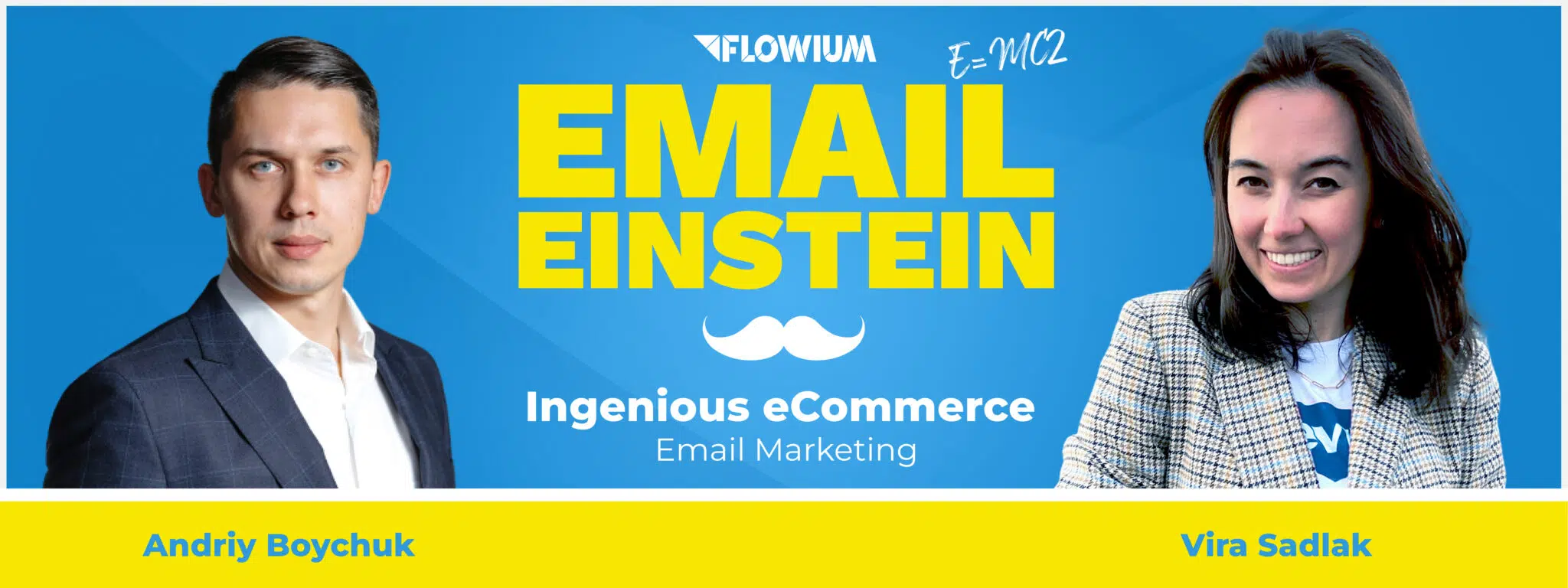
Hello everyone and welcome back to Email Einstein, the podcast by Flowium. We are your hosts, Andriy Boychuk and Vira Sadlak. And we are happy to have you guys back on our podcast to talk about all things Black Friday, to be honest, today. Because today we will be talking about 12 or even 14 important things to make sure to check before Black Friday, Cyber Monday season.
Andriy: 1:07
As the fancy people say, you know, on YouTube and the podcast, like 12, but stay tuned to the end and we’ll give you 2 bonus.
Vira: 1:15
Right. 12 and 2 bonus ones.
Andriy: 1:18
Yes.
Vira: 1:18
Or 14 if you’re good at math. Or if you’re even bad at math, 12 plus 2 is still 14. So, Andriy, what’s new and exciting with you?
Andriy: 1:27
Nothing.
Vira: 1:29
Come on, you went to the ice cream museum. I follow your wife on social media. You went to the freaking ice cream museum. That’s so fun.
Andriy: 1:36
By the way, I’m like almost 2 months off Instagram, which is kind of achievement nowadays.
Vira: 1:42
Yeah, it was really good. Honestly, Andriy, I haven’t noticed. It sounds bad. Come on. I haven’t noticed. I follow your wife. I follow your wife on Instagram, so I know what is happening with your life. And I also follow like our professional account. So like I see a lot of you there. So I didn’t realize that you were off the Instagram.
Andriy: 2:01
Come on. Come on.
Vira: 2:02
Yeah.
Andriy: 2:04
I feel bad now. Anyway, so last week it was my daughter’s, older daughter’s 8th birthday. So we dedicated, I mean, we, it’s like family tradition. If it’s somebody’s birthday in our family, we like take a day off and we celebrate. We go for breakfast. we do something fun and then go for dinner. So we went to ice cream museum in Manhattan. It was cool. A lot of ice cream. And there was a pool with sprinkles, but it looked more like sausages to me, not sprinkles.
Vira: 2:39
I mean, it looked very Instagrammable. It looked amazing. It looked very Instagrammable, like on your wife’s feed anyways. I don’t know. If you enjoyed it as much as your little ones.
Andriy: 2:50
In Manhattan, like, all new museums are all Instagrammable. Like, before that, we went for Museum of Color, which is weird, but—
Vira: 3:01
Sounds so random.
Andriy: 3:03
Yeah, but it was all about, like, Instagramming there.
Vira: 3:07
That’s cool. That’s cool. Maybe I’ve got to experience some similar things in London.
Andriy: 3:12
What’s up with you? Like, I see you’re, like, in your space, new house.
Vira: 3:16
Always. Always. We are in the process of moving. Moving to our freaking lives to another country in like 10 days, which is, um, which is crazy. And, uh, yeah, right now I don’t have even my desk because it was sold. So right now I’m like working from random places in my house. This one looks pretty decent. So yeah, well anyways, let’s get back to Black Friday Cyber Monday stuff. So we prepared 12+2 strategies for you guys. Not even the strategies, mostly like things to check to make sure that they are working before Black Friday Cyber Monday. And the first strategy or the part of our checklist is to start early. Here’s a fun fact for you guys. 59% of customers, e-commerce customers, they start their Christmas shopping or their holiday shopping in August or September. Can you imagine? Like 59% of all of e-commerce buyers will start buying for holidays as soon as Andriy, when do you normally start your holiday shopping?
Andriy: 4:20
Like never almost. No, I—
Vira: 4:22
Good for you.
Andriy: 4:23
No, I only shop for the one holiday, which is Saint Nicholas, which is kind of Santa Claus. So I shop only for that holiday and it’s like one week before.
Vira: 4:38
Right.
Andriy: 4:38
Yeah. But funny thing, this morning I received email from Amazon and they are kind of extending, they’re preparing Their BFCM, they will start on November 17th, which is Friday, and will end on Monday, which is November 27th. So they, like, even Amazon starting earlier, so which should give you a hand to start early as well.
Vira: 5:04
Right, right. Yeah. Another study indicates that only 9.6% of US-based buyers wait for Black Friday to start their holiday shoppers. So people are kind of trained to expect those deals, like, sooner with, like, a lot of my brands, we will be starting on the 17th. I think the earliest one that we will be sending this year will be on the 12th or like the basically a few days before 17th. So yeah, it’s not 24 hours event anymore. We talked about it already, but basically, yeah, you can combine Black Friday with its sister holiday Cyber Monday or with like this entire topic of holidays and extend it into a few weeks event.
Andriy: 5:47
Yeah.
Vira: 5:48
So users’ interest starts early this year.
Andriy: 5:50
Yes, start early, but again, be cautious not to start early, month before. I think Friday before, it’s good enough. Or if you have a lot of SKUs and some example we did in last podcast episode where we— there was a brand who releasing new sales every day for specific products or category of products, it makes total sense. But if you’re selling one thing and like you bombard your people 3 weeks before with the same offer.
Vira: 6:22
The same offer. Yeah, that’s a bad strategy for sure. But I mean, if you have your VIPs and you definitely should have them, you can definitely open your sale, your Black Friday, Cyber Monday sale to those people earlier, like sooner before everyone gets, before everyone else gets access to that sale. I really love this quote from Klaviyo blog. Your email subscribers aren’t like your children. You’re allowed to have your favorites. It’s so cute, so smart. Because yes, in email marketing, you are allowed to have your favorites. And for most of the brands, your VIPs, your most engaged and most high spenders, they will be your favorite customers. So you want to give them that white glove service treatment before Black Friday, Cyber Monday. Okay, cool. Strategy number 2, something to check before you start sending the campaigns, obviously craft an unforgettable offer strategy. And we talked about it a lot already in our previous, in our previous episodes. Yeah, 2 episodes in a row we talked about the strategy. So Andriy, say a few words about it. What makes an unforgettable strategy?
Andriy: 7:36
Yeah, there’s a bunch of strategies like with discounting or no discounting. We spoke on the previous episode and episode about that. So we strongly recommend for you to check those 2 episodes if you haven’t. But do something different. Like 10% off will not be unforgettable. It’s like, this is between 10 to maximum 20%. This is the standard offer. And it’s not about money. Like it’s about perceived value. It would be cool. I know it’s November, what, 7th already. So it’s not much time left, but it would be cool to do some kind of either free gift with a purchase or some upgrade. I don’t know, like free shipping, something, some, I mean, free shipping doesn’t sound like very cool, but something which, what you typically don’t do.
Vira: 8:28
Yeah, no, it’s a big one. But I would probably like disagree with like 10% not being like an exciting offer because I know for one of my clients, for them, the average order value is like$2,000 plus. We will be doing actually 10% off and this is like the biggest sales event of the year for them and it’s huge and we’ve been like teasing this email. So it all comes down, I guess, to like knowing your audience and knowing knowing what excites them. Some brands won’t even be doing any promotions this year. They will be donating all of the proceeds from Black Friday, Cyber Monday days to certain organizations. I love that. It doesn’t have to be percentage. It can be something different. And I think IKEA, a few years ago, they did this huge promotion called Buy Back Friday where they were actually promoting the used products. So you could repurchase the used product with a big discount instead of selling the new inventory with discounts. They basically resold what people donated back to IKEA. So yeah, you can be different, definitely. Okay, cool. Strategy number 3, and this is a big one, something to check before the holidays is to make sure that you align your target customers on all of your platforms. Andrii, tell us more about this one.
Andriy: 9:45
Sure. So it’s not like whatever you offer is, whatever your messaging is, whatever your like design assets, copy. If you work with agencies or you have internal team that everybody on the same board, and if you use, for example, for this season, something like red and white colors specifically for this season, and your social media is all about blue and white, it’s like misaligned. You want to have consistency between all of your marketing channels and also consistency between all of your offers. For example, typically brands have some kind abandonment cart offer, some offer for browser abandonment for winback. You don’t want to show on the website 10% off special Black Friday, Cyber Monday, and abandonment cart is 20% off or vice versa. So you need to align the design assets, copy creative, your offers, like your promo offers. And also there’s a feature we spoke about today about scheduling pop-up forms, if you use Klaviyo, you are able to schedule in advance some of it. So something like segments, forms, things you can prepare today to be ready for the Black Friday, Cyber Monday.
Vira: 11:08
Yeah, that’s a very exciting functionality that honestly I learned about today, especially the pop-up functionality. Because in the past, we had to literally wait until midnight. You had to stay awake and turn off all of the old forms and turn on the new ones and make sure that They all work together and stuff like that. And now you can literally pre-schedule when your forms will go off and when the new ones will start showing, which is pretty exciting. It makes our life easier. And especially considering how many people will be on that platform during the Black Friday, Cyber Monday holiday. So everything that you’re doing on that platform or on your ESP platform will be slower, probably for a lot of you. So do as much as you can in advance. One fun stat that I found was from Harvard Business Review study. They actually found out that retailers who use this multichannel strategy, so retailers, multichannel customers, they spend on average 4% more on every shopping occasion in store and 10% more online. Meaning that if you are talking to your customer from different channels, your average order value will be 10% higher. Which is like pretty, pretty cool if you ask me. But again, you need to make sure that all of these channels, they work seamlessly together, especially around the holidays. If you have online and physical stores, that’s like completely different beast. And that’s like extra important during that holiday season to make sure that these 2 sort of like departments of your business work well together. You can even offer hybrid shopping options, one when the customer can start their buying process on your website and pick up the order from your store. But you just need to make sure that all of that, like, product information, like pricing, product description, the discount codes, they are the same across all of your channels, just like to ensure that seamless shopping experience. That’s a big one.
Andriy: 13:21
You’re probably listening to this and some of you might be rolling your eyes. It’s like, oh, it’s like so simple. Yeah, it was so simple, but we see so many mistakes with brands where messages misalign, brand like design assets misalign, offers misalign. So it’s like it’s a common mistake and that’s why it’s important for you to have that checklist. We strongly recommend it would be in the description under this podcast link to the checklist where you can download and go and make sure you are ready for the Black Friday, Cyber Monday.
Vira: 13:55
Right, right. Yeah. Just like double check for all of this, like little discrepancies because during that season, your customers will receive a lot of communication from other brands as well. And you want to come off as that professional, polished, well-set brand, right? Okay. So now we want to talk about website speed. Again, one of the obvious things to check before the holidays, yet a lot of brands struggle with that. Basically, we all heard this idiom, Slow and steady wins the race. Well, not when it comes to the speed of the website. Not in this case. Not in this case, no. I found this honestly heartbreaking stats that as page load from time and time goes from 1 to 3 seconds, the probability of customer bouncing increases 32%. So if your page is loading like 3 seconds, 32% of your customers, they will just drop because they are like, they don’t have the time to wait, right? 1 to 5 seconds, if your page takes 5 seconds to load, the probability of bounce increases to 90%. Can you imagine? And 1 to 6%, I mean, you are done. It’s like 100% chance that people will drop off. So yeah, I mean, it doesn’t sound like a lot, 3 seconds, 5 seconds, right? But if you consider that all of the customers are now shopping from like mobile devices and we kind of used to that fast pacing environment, that like few seconds can be like a big deal. Andrew, what do you think of this?
Andriy: 15:35
Yeah. Like, just imagine 2 seconds, like between 1 to 3, it’s 32% increase in bounce rate and 1 to 5 seconds, only 2 seconds makes 60% difference, which is huge.
Vira: 15:48
That’s crazy.
Andriy: 15:49
We are not experts in terms of how to optimize your website, but you need to check with your developers or if you don’t have developers, like to talk to somebody who’s specializing on Shopify, WooCommerce, BigCommerce optimization and make sure you optimize for like light website, like light speed? Because personally, when I shop, not even shop, when I just browsing different websites, it kills me when like I need to wait a few seconds to load.
Vira: 16:21
Right. And that’s actually like one of the reasons why more and more brands who have like a lot of SKUs, they are switching from just like having a website to having a website And an app. And we’re going to talk about it in a bit. But before we go there, there are like some standard practices that are recommended for a good speed of your store. These recommendations are for Shopify because like I have most experience with like Shopify stores, but I’m sure they will be applicable across the boards. So a big thing to do before the holidays, and it’s like in general a good practice, is to minimize the amount of apps. Just like go through your apps and analyze what you are not using. Because when you add an app or like you change the functionality of your website or something, you basically add that little like code to the theme or like a snippet or something to the theme that basically like adjusts your theme and it can make your website slower. And it’s especially an issue around the holidays when you’re getting like a lot of traffic to your website anyways. And it’s especially the issue you if you’re not using that apps. Because, I mean, there are, like, so many exciting tools and we all want to try them, right? But just make sure that at least those apps that you’re not using are not on your website. Obviously, go through your images and make sure that they are, like, optimized size-wise for your website. Minimize the redirects and broken links because redirects, they also, like, add that, like, extra time for the page pages to load. And yeah, if you have a developer, definitely double-check everything, all of these things before the holidays. And even better if you have an opportunity to have a mobile app. This is the huge one. This is such a big trend these days. I feel like everyone and their grandma started having these apps for brands.
Andriy: 18:22
Andrii, tell us a few words about like what mobile apps are like for brands and are they for Yeah, I don’t think there’s a person in the world who doesn’t know what a mobile app is, but basically it’s a mobile, it’s an app in Apple Store or what is Google Play or whatever it’s called on Android. And probably half of our audience don’t like hate me now because I don’t, I’m not Android user. But anyway, it’s a version of your store, but in a mobile format. It’s extremely, nowadays it’s extremely easy to implement because there’s a solution like TapCard. And you did interview TapCard founder, one of the co-founders before, and we are partners with them. If you reach out to us and we can hook you up and there will be extremely cool deal for free app or some discounted rate, whatever. But anyway, it gives ability for your user to shop in your store, but this app will be optimized for mobile. So it will be extremely fast. It would be additional marketing channel for your customers because you can set up, as you set up email automation, SMS automation, you are now with mobile app, you are able to set up push notifications. So basically—
Vira: 19:48
That’s huge.
Andriy: 19:49
For abandoned cart, for example, if somebody abandoning your cart, they unsubscribe from your email, unsubscribe from your SMS, you are still able to send them push notification through the mobile app. And I do, I do have mobile apps for a few, the brand, few brands that I shop and I prefer to use the mobile app versus the website on my cell phone. And additional benefit that I like what they do, they do feature either products or feature discount in the mobile app. Versus the website.
Vira: 20:24
Yeah, there are like some with like brands that I shop with, there are some like offers that are exclusively available to app users. And I mean, there are like tons of different benefits of that like mobile app. First of all, just like you mentioned, they are actually optimized for mobile shopping. And considering that right now in the US, at least more shoppers shop on mobile than on desktop devices, that’s huge. The notifications that you are getting, the just like pop-up notifications out of the app and in the app itself, they have much, much higher click-through rates than emails. I’m not telling you to not stop using emails or something, but just like the combination of 2 is very powerful. I read on Tapcart blog that sometimes this push notifications that are delivered to the customer, they are very obviously personalized, but they are getting the click-through rates of 40% plus on average. Can you imagine 40% of people who would receive that offer from your brand that would actually click on that offer and go to your app. That’s huge. And also what is cool about mobile apps is that you can actually use that mobile device features like GPS or like camera. I know in like an H&M app, you can actually like in, as a part of your post-purchase journey, they ask you to take a picture wearing the outfit that you purchase or whatever, and it will be automatically uploaded to the review or whatever. So they are making this process easier. So it’s really cool that you can use that functionality of mobile device. But also one thing that I didn’t realize, and I’m obsessed with stats, but this one was very interesting for me to realize that actually the mobile, the average daily time spent in the US in browser, it stayed about the same from 2018 to 2020. So on average, customer is spending like 23 to 25 minutes on the browser on mobile phone, but the number of hours they spent on app, it like grows every year. And right now on average, a user spends 4.11 hours per day on different types of apps. So apps is the future. This is a really fun little addition. And just like you, Andriy, said, it’s like super easy to implement. Create an app with, with additions like TopCart, right? Because it’s like literally a drag-and-drop builder. It takes like probably like a day to create your app. It’s pretty, pretty damn cool. Okay, cool. Checkout process. Andriy, why is it important to assess your checkout process before the holidays?
Andriy: 24:00
So I’ll tell you a story. So I was about to book a consultation with a kind of business coach who and their fee was like$10,000 or something for the year. And I was trying, trying to book them. I went to their Contact Us page and they have a calendar and, you know, that Calendly thing that you can pick the date and time. And basically it was not available for this month and it was end of the month. I click the next tab and it was nothing available for the next month and months after. So probably they on the backend, they did something that blocked their calendar. And basically I’m the motivated buyer. I want to schedule a call with them and I even know their price point, but I’m not able to schedule the call. So kind of the moral of the story here is we are so used to what we do, how it works, that we sometimes forget the simple things that one thing on the, in the technology on and off can screw up our entire process. So make sure to check it yourself. Also, what we do in our company when we start working with a client, we record a Loom video, we go to their store, we pick a product, we add it to cart, we, we pay for it, and we show it to the customers and we talk it through recording Loom video, recording our screen. We talk it through how we where we feel frustrated or something that we thought needs to be clickable, but it’s not clickable. And we explain the entire process, like we say it out loud, what steps we do. So we strongly recommend for you to do the same. You can ask somebody on your team or ask your grandma, ask your friend to go to your store, maybe not pay, or maybe give them discount, 100% discount, so they can kind of go from A to Z through the entire process. But it’s extremely important. And you will, you will spot something that you were not aware of. Like, oh, hold on, I was thinking it’s doing this, but the customers don’t understand that.
Vira: 26:42
Right? Yeah. And it’s also cool to give it to people who don’t know much about your brand just so they are not like biased, you know? And I’ve done it with like a lot of, pretty much with all of my clients. And we often find out interesting things because I’m like in Canada and majority of my customers they are in the States. So sometimes the checkout process is different for me than say for an American customer. And we learned like a lot doing this thing with one of my clients. Yeah. And if you, if you can ask your relatives or your friends or whatever, record a Loom video and just like send it to you, just like you, Andriy, said, that’s, that can be like super insightful, to be honest. Yeah. You had something to add, Andriy?
Andriy: 27:26
There’s websites I don’t I forgot the names, but if you Google it, so you pay some 20,30, $50 and like random people will go through the entire process and they commenting how they go through that process. I know that we use it for our website, for our Flowium website, for our services. So it provides us some insights where things were logical for us, but for a person who didn’t know that email marketing service agency exists. It was not logical and they didn’t understand what we are doing. So it gives us, gave us insight what we can change.
Vira: 28:05
Yeah. My husband, he owns basically this tool called ProductPinion and that’s like the part of what they are doing. They are collecting the feedback from customers. They actually were one of our guests on our podcast and we used it, we use it for, for everything. Honestly, like collecting this feedback from a group of of customers. We used it for our Airbnb when we were optimizing our listings. We used it for our Amazon businesses just to collect the data from people who are not biased, from people who don’t know anything about your product yet, but who are your potential customers. That’s actually huge. Yeah. Another point that we want to discuss that honestly it goes hand in hand with what we just discussed is determine your Black Friday delivery strategy early. And when we say delivery, we mean like shipping and fulfillment. So you need to be like extra, extra smart about this entire ecosystem around the holidays. Andriy, why is it like so important around the holidays every Monday?
Andriy: 29:10
Let me ask you, Vira. So have you ever had bad shipping experience with Amazon? I know in Canada, maybe it’s a little bit different.
Vira: 29:21
No, to be honest, not with Amazon. I like exclusively have good experiences with them, but with other brands, yes, multiple.
Andriy: 29:29
I’m customer with Amazon since the early days where they were selling only books and nothing else. So I went to community college and I was buying textbooks because everybody’s saying that on Amazon it was cheaper. It was a few dollars cheaper and this was my first interaction with Amazon. But since then, since that day, I probably never had bad experience. But when I ordered gifts for my daughter, it says that it was delivered, but it was not. And actually on the— my— yeah, and it was extremely bad experience and frustrating. It’s like one of the most important dates in the year and those gifts were not delivered. And when I start to contact, it was a third-party logistic companies who like not answering the phone. They sending go to chat. I chatted them. It was AI bot. that’s supposed to replace us, which tell me like, okay, we receive it, thank you very much, we will contact you back in 2 business days. Until now, they did not contact me. And they say, but if we don’t reply to you, contact the sellers, that probably it’s their fault. And I’m like, okay.
Vira: 30:40
Wow.
Andriy: 30:40
So it’s extreme. Yeah. So this is my experience. Whose fault? Yeah, probably not Amazon’s. But anyway, so it’s my bad experience. So it’s extremely, people are buying gifts for their loved ones. So be very transparent about deliverability, like the deliverability, but delivery of the packages. If there is delay, provide the tracking code, provide the updates on each stage of the journey. If it’s delayed, let them know. There’s tools like Aftership, Malomo, Wonderment, which can use and automate that process. And people are appreciating that thing. Like, if the package is delayed, it’s not a big issue as long as you communicate it with the client.
Vira: 31:23
Yeah, as long as you let them know and as long as you have some, like, plan in place for what to do if this happens. Like, every year we have, with, like, a lot of my clients, we have this, like, email that goes out during, like, holiday season saying, like, today is the last day to order order before, to order for us to be able to deliver in time for Christmas. So like last year we sent this email like around the 14th. Like the year before we sent it around like 19th or something. So this date, it keeps like being pushed back because obviously the number of orders is like growing, right? And yeah, there are like a lot of issues.
Andriy: 32:02
And next day, next day you’re sending the emails like, sorry, you didn’t get it. Haha.
Vira: 32:09
Yeah, that’s a good plan, Andriy. Good plan to have in place. Yeah, no, for sure. Just make sure to be able to deliver on your promises. And if you are not able to do that for some reasons, have a plan in place that will help you with that. Another one is kind of obvious, but kind of not, because a lot of brands are still not doing that, is set up abandonment cart automation. For God’s sakes, set up your abandoned cart automations, especially during the holidays. Research actually suggests that between 47% and 72% of all consumers experience checkout frictions at some point and they abandon their carts. Reasons can be multiple. We’re not going to go in nitty-gritty of that. But during 2020 holiday season, approximately$8.6 billion were lost in ecommerce sales due to checkout cart abandonment issues. So that’s huge. So make sure that not only do you have abandonment cart emails in place, because that’s obvious, but also make sure that they work properly, that the discount code that you’re offering in your abandonment cart, it does not sort of like compete with the offer that you’re offering as a sitewide promo for Black Friday, some Cyber Monday. Do you have a strong abandonment cart checkout flow? And yeah, you want to bring attention back to your website. Especially around the holiday season when people will be distracted with offers from different brands. Andriy, do you have anything to add here?
Andriy: 33:38
No, just do it. Like, this is like extremely low-hanging fruit. If you don’t, still don’t have it, make sure to implement it. If you do have it, make sure, as Vera said, make sure your offers are aligned with what you’re offering on website or your offer is higher in abandonment cart. So it does not kind of, does not compete.
Vira: 33:59
Right, right. And also as a part of abandonment cart journey, it’s also a good practice to be able to answer those like popular questions that your customer might have about the product to prevent them from like receiving a product and like returning it in the future. And that brings us actually to our next point, which is optimize your return policy. Andrii, let’s play a little game. I’m going to give you Okay, no, I’m not going to give you even the categories. What do you think is the most popular category for like the most returned items of Black Friday Cyber Monday season? Like, what is the number one category that people return the most?
Andriy: 34:40
Gifts, but it’s my— no, probably something with something you can wear, like something in fashion category, like clothing, shoes.
Vira: 34:50
Exactly. So clothing and shoes are actually 2 biggest categories that people return around the holidays. 75% of all of the returns in e-commerce industry are actually clothing items, which is crazy. 21% are shoes. 75% of all of the clothing items that people purchase will be returned or exchanged. This is like crazy to think. It’s such a big, yeah, such a big expense for brands. And I was actually even surprised that people more often return clothing than shoes. Only like 20% of all of the shoes that were purchased will be returned, but clothing 75%. It’s insane.
Andriy: 35:23
Because shoes is easier to kind of to know. Let’s say I have like half a size difference between brands, so sometimes like too loose or too small. But in clothing, it’s so different. Like for me to wear jeans, like sorry for details, but I have like a big butt. And for me, like typically guys don’t have butts. For me to pick jeans, it’s like extremely, extremely hard. There’s only a few brands that kind of, I mean, a good fit for me. So it’s, I think I understand why.
Vira: 35:57
Right.
Andriy: 35:58
Why they do it.
Vira: 35:59
But also in this industry, especially in like fashion, like a lot of people purchase products like specifically with intention of returning them later. That’s how I shop, to be honest. I like purchase items. I don’t know which jeans like pair will fit me like size 6 or 8 or 10 or whatever. And I order 3 sizes and then return 2, right? So for me as a customer, It’s like a cool feature, but do you think about ecology at least?
Andriy: 36:25
Like, Vira, come on.
Vira: 36:26
Well, I return them back to the—
Andriy: 36:28
No, but like, how? Like, but they spend like fuel on, uh, like they burn gasoline or like oil to deliver this or ship it via—
Vira: 36:37
You make shipping look bad now, Andrey. But it’s like a— It is true. I’m not gonna— I’m not gonna stop doing it, Andrey. Like, to be honest, I wish I could say that I changed and they like changed my mind, but like, no, not really. Like, there are some brands who are doing an excellent job with, say, like offering this like sizing chart or like helping you to find the right product. And that’s actually huge. And I, and I’m like, there are some brands that I know exactly what size I need, what color I need, like how it’s going to fit me. And I like never return the items for them. For other brands who can’t answer my, this like pre-purchase questions before I purchase. That’s a huge one. And like automating that process is like a big, big part of cutting those expenses. You can actually like answer the popular questions based on that data that you have.
Andriy: 37:32
Or quizzes.
Vira: 37:33
Yeah, like quizzes. You can, or this like product reviews apps, you can tag customers, like certain customers for identification and segmentation purposes. Purposes, you can just like analyze their data and maybe like answer some popular question. Does this product fit normally or it fits or it’s big, like larger or like smaller? Does this product like go well with like certain types of products or whatever? You know what I mean? Yeah. But that’s a huge one to have like a good return policy in place during the holidays is a big one. And a lot of brands will actually be like extending their return policy, especially considering how many people are shopping for holidays before the holidays, right? And like October. So I think there are some brands that are doing it from like October. They’re giving you something like 60 days or something return policy, which is like very generous, to be honest.
Andriy: 38:27
Just come up with this idea, but it would be cool to test if you give an option to a person, to a buyer, to like no return, 20% discount, with a return, let’s say 5% discount and see what they pick.
Vira: 38:42
Right.
Andriy: 38:43
But it might be, yeah, I’m not sure that it’s just throw it out there as brainstorming.
Vira: 38:48
No, I mean, we’ve done it actually with our Airbnb that we are running. And when we changed our policy from that, just like strict policy to that flexible one, and you can pick whether you’re paying 10% less, but you are not going to be able to cancel or you’re paying 10% more and you will be able to cancel. And our conversion went went up. So it does work in like some industry. I’m not sure if it would work the same way in like fashion brands or something, but it’s like importantly, it’s extremely important to have this like very easy return experience that especially during the Black Friday, Cyber Monday season. And in fact, there is this survey that indicates that 96% of consumers would shop with a retailer again, based on how easy the return experience was. So this is just like a part of the shopping experience now. It’s not just, it’s as important probably as the ease of navigation through the website and the quality of the product itself. I didn’t know that. Yeah, that was really crazy to learn. I feel bad for customers, for brands. Oh, sorry, for brands to, like, because they have to like keep that in mind for the holiday season and that’s expensive. But again, there are a ton of things that you can do to keep those expenses lower. On that note, prompt support. Another strategy, another thing to check before the holidays. Offering prompt support is so important. Going back to your Amazon example, Andrii, I’m sure you would be a much happier customer if there was not just a bot on the other end of the chat, but an actual person who would be able to like answer your questions faster, right?
Andriy: 40:35
Yes, I’ll give you a fun example for the support. So my sister, she’s managing her own Airbnbs and she manages Airbnb for other people. And she said like right now she’s working with potential clients who wants to kind of move the management of this property from himself to her. And the guy is very operational, IT, like he’s very like system processes. And when somebody books Airbnb with him, he has those automated messages and he sends it right away, say like, hey, there’s, there’s, might be like, if it’s raining, it might be this. If it’s like, if it’s too hot, it might be this. So it’s like either or. So he kind of, in his automatic messages, he by default like overload people with information.
Vira: 41:26
Covers everything.
Andriy: 41:27
Yeah, he covers everything and he thought it would be kind of perfect solution because like I described everything, but it’s like it does not work like that. But the support—
Vira: 41:38
No.
Andriy: 41:39
Yeah, but prompting support, extremely, extremely important. And I cannot tell you how many times I respect and appreciate that like human support. When I go to website, there’s pop-up, I chat them, even like there’s delay, some delays, like I’m waiting. For them to respond, but when they responding, it’s like like how to say like as a fresh air. You know, you inhaling the fresh air like oh there’s somebody I can talk to.
Vira: 42:09
A real person. Yeah. No, online shopping can be quite lonely, Andrei. I know what you mean. But but like to be honest, like this it does make a big difference. Like when you can talk to someone and they just not just answer with like a random. Random generic standard questions that you probably found in FAQ section like already. So that’s super helpful. That being said, on your website, be sure to include like very prominently contact us page and your info to your FAQ page in case customers don’t find what they are looking for through your website. It’s huge. It’s like very obvious, but a lot of brands still don’t have it. And you can cut the amount of those customer service inquiries, I’m sure, like by half if you add just like a simple, good FAQ section. And if you have the possibility to set up a live chat, like with an actual person, even better. We do have the podcast about this entire industry of like live chats and how they work and stuff like that. We will link that podcast But Andriy, what, like, what other good practices of like support should we like do around the holidays?
Andriy: 43:32
So I’m like bashing the AI, but I mean, AI is some combination with AI teaching AI how your products works, not like install AI chatbot and out of the box. You need to educate that they need to learn about your product, your return policy, any frequently asked questions. So you need to educate them. But also have an ability to that AI to transfer to a real human being. This is kind of the perfect combination if possible for you to do. Like Gorgeous, I believe you also interviewed either founder or somebody from Gorgeous. Actually, I think he was partner manager. But Gorgeous, listen, it starts at $10 per month for like 50 tickets and it includes also the chat widget on your website. So it’s like for $10, You will have the like Rolls Royce Rolls Royce of the customer support. I mean the the software you just need to on the back end there needs to be some some someone answering those questions.
Vira: 44:35
Right, and I mean there are ways to like outsource this customer support. You can have your like you can like automate this process partially, but that’s like huge.
Andriy: 44:48
And if you can Dior, but like, just let’s play it out. Like, Black Friday, Cyber Monday, let’s say start November 17th and like November 27th. Can you be as a founder, let’s say you run one man, one woman shop, like you don’t have any kind of support? Like, I mean, as a business owner myself, like I would dedicate fully to this like entire week and I will probably answer all the questions myself. But you will see totally different conversion rate, more and less returns.
Vira: 45:24
Right, right. But there are like some ways where you can actually, like we had this guest from the app or tool called TalentPop. Do you, Andriy, know who TalentPop is?
Andriy: 45:34
Yes, yes, yes.
Vira: 45:35
So basically, like when you, what I’m trying to say, you don’t even need to have this like team in-house. You can actually like train certain people specifically to be like responsible for your brand. So even though they are not the part of your team and maybe they manage like 2 brands at the same time, but they will actually know everything about your brand. Obviously, Black Friday, Cyber Monday is a bad time to start training those people. You want them to be on their A-game before the holidays. But yeah, I love the combination of like tools like TalentPop and Gorgeous where you can like partially automate this process. But then when the AI can’t answer this, like, standard questions anymore. You just, like, send it to, like, TalentPop. I think that’s pretty cool. And I love how some brands, they are approaching it like this, like technical brands or this, like, software brands. They take the list of popular questions. For example, will this item arrive in time for Christmas? Or I wear size 11 Nike. Will size 11 in your shoes fit me? Or is this mountain bike good for beginner or whatever. They have the list of this popular questions and the answers to these questions can be automated. But when you have something specific, then you can bring person on board. So yeah.
Andriy: 46:58
Like, I’m shopping for my mother-in-law. Do you think she will like this? I think AI will not be able to answer that.
Vira: 47:05
That’s a loaded question, Andriy, if you ask me. No, but that’s where these gift guides come in handy, right? We discussed gift guides with you on our previous podcast. But that’s huge. I mean, I’m doing gift guide literally for each and every of my brands, even for that car parts brand that I work with. Like, we literally do the gift guides for everyone. So that’s a big one. Okay, cool. One more thing to do or check before the holidays is check your inventory. Andrii, what things need to be checked before Black Friday, Cyber Monday season?
Andriy: 47:44
I mean, it’s simple as it sounds, like check how many products you have. Yeah, it’s so self-explanatory. Because if it’s not only about checking, but let’s say if you do like huge, huge promo, like selling, like pushing specific products, make sure you have enough of it. Because if you believe you will sell like, let’s say, 500 units, but you have only, I don’t know, like 300 units, it’s like, I mean, it’s already believe, like, failing strategy. So make sure you have enough, but also you need to budget so you don’t have more than enough. Because last year I spoke with one brand and their sales dipped, but they placed— their sales dipped during Black Friday, Cyber Monday, but they placed an order from the manufacturer like 3x. So basically they couldn’t even sell 1/3 of their inventory. So, like, you need to be I don’t know, it’s like a dance, you know, like it’s hard to kind of, you need to go this way to have enough, but also don’t have so much. If you don’t meet your goal, you will sit on pile of that inventory. However, the good news after Black Friday, Cyber Monday, there’s other holidays where you can push, move that inventory.
Vira: 48:58
Yeah, and by the time you will be listening to this podcast, there will probably not be enough time to order more inventory. What you can do, guys instead is to have a plan for those like cases when say you like run out of your hero product or you’re like completely sold out. Good problems to have, but also it’s like a good thing to have something like a backup strategy in place. Maybe you can offer some gift cards as an incentive to people. Say like purchase the gift card today so you can like use it towards this product once we have it back in stock. Maybe you can still have introduced, you can still introduce the back in stock strategy, which is like huge. And we discussed it in one of our previous podcasts. And it’s like basically like one of the highest performing flows in terms of like open rates, click-through rates, and like revenue generated per customer. Decide basically on how you will communicate to your customer if you can’t deliver the product because you run out out of the product. Or if you have like a lot of inventory, just like Andriy said, in December, there will be like a ton of ways to like creatively cross-sell or upsell this product.
Andriy: 50:10
And the final 2.
Vira: 50:12
And the final 2.
Andriy: 50:13
The bonus.
Vira: 50:13
They are very, very self-explanatory. First, finalize your November-December campaigns calendar. Andriy, do you have anything to add here? It’s very super self-explanatory.
Andriy: 50:24
I think both of them are— let’s maybe talk about both of them just to save people time.
Vira: 50:29
So first of all, it’s strategy number 14, set up your campaigns in advance. So basically, yeah, do it in advance.
Andriy: 50:36
Listen, if you, you’re probably thinking, yeah, it’s easy for you to say, but I don’t have time. If you don’t have time now, trust me, you will not have time during Black Friday, Cyber Monday because it would be even crazier and busier than now. So do, do yourself a favor. Like, I don’t know, don’t sleep one night or don’t, don’t, don’t go out over the weekend. I don’t know, like wake up at But prepare those campaigns and possibly if you can schedule those campaigns in advance with the proper segmentation, with the proper, all the proper settings, so they already scheduled. And only during Black Friday, Cyber Monday, you can just double-check if everything’s correct and monitor if everything goes according to the plan.
Vira: 51:23
Right. Yeah. I mean, I have nothing to add. Very self-explanatory. Yeah. I mean, normally we plan, we like try to pre-plan everything in like quarters, which is, I know it sounds like a lot of work, but it’s not when you have like repetitive campaigns and stuff like that. So definitely pre-plan your December. Most of the campaigns for my clients are done for December and we are just like at the beginning of November, right? That’s huge, you guys, because in November, your entire team will be busy. In December, a lot of people will be taking time off. You don’t want to put yourself in that situation. So yeah, have fun with preparing for November, December, and you’re going to do good this year, guys. You’re going to do good. It’s not as stressful as it seems when you are prepared for the holidays. So yeah, that’s everything on our end.
Andriy: 52:15
Yeah. Thank you for staying tuned to us today and all the notes, links you can find under this episode whenever you’re listening. or you go to our website, find this episode, and you will find all the links to all tools, resources that we mentioned in this episode.
Vira: 52:32
Thank you so much. And as always, if you like what we do, please leave us a review. Thank you so much. And we’ll talk to you next Tuesday. Bye.
Andriy: 52:39
See you next Tuesday.

Vira Sadlak
Podcast host, marketer, traveller and a life lover from Vancouver, Canada