Every company has specific metrics it focuses on to assess the success of its strategies, identify development opportunities, and advance its growth. Customer Acquisition Cost (CAC) stands out as one of the most critical among them. It directly impacts ecommerce profitability, scalability, and how efficiently your marketing budget turns into revenue.
The common mistake that businesses make is that in the chase to acquire new clientele, they max out their budgets, spending tons of resources on paid ads and promotions with no guarantee for stable results. Such a rise in acquisition costs can quickly erode margins and make scaling unsustainable.
Thankfully, there are methods that allow you to reduce CAC while you build a more efficient growth engine. In this blog, we dissect 12 tried-and-true methods to lower customer acquisition costs.
What Is Customer Acquisition Cost in Ecommerce?
Customer acquisition cost (CAC) is a company’s overall expense for acquiring a new client. This covers funds used for advertising, marketing, paying salespeople, and other associated costs.
It is essential to understand CAC. This metric allows businesses to assess the effectiveness of their marketing initiatives and make well-informed decisions that guarantee long-term growth.
If the cost of acquiring a customer exceeds its profit, the business can experience financial troubles.
Why Ecommerce CAC Metrics Matter
Without a good grasp of CAC, it is possible to increase revenue while simultaneously compromising profit margins. Here are two fundamental things about customer acquisition cost you need to understand:
- CAC directly affects profitability
Your company is losing money if the cost of acquiring a new client exceeds the revenue they bring in. It also plays a crucial part in budget allocation, assisting you in determining which marketing channels yield the highest returns and which ones require optimization or reduction.
- CAC is crucial for scalability
Brands with efficient, well-controlled CAC may grow more quickly and reinvest confidently in acquisitions, whereas high CAC restricts growth potential and raises financial risk. This is a reliable metric of long-term performance when combined with Customer Lifetime Value (LTV).
What Contributes to CAC in Ecommerce
Every expense you incur in order to draw in and win over a new customer is included in the Customer Acquisition Cost in ecommerce. You may wonder where these expenses accumulate the most and what actually causes them. This is a concise summary of the key ecommerce customer acquisition cost components.
- Advertising Spending
Google, Facebook, and Instagram paid advertisements are important for acquiring new customers. When targeting is not focused, costs can increase quickly, which raises CAC. AI-powered techniques can lower the cost of customer acquisition in this situation.
- Costs of the Tech Stack
Customer acquisition is supported by your website, CRM, and analytics technologies. Inefficiencies and CAC rise when these systems are out of line.
- Employee Pay
CAC is also increased by sales and marketing salaries. While controlling costs, automation and AI-powered solutions promote AI-driven customer acquisition and lessen manual labor.
- Promotions and Discounts
First-time discounts, free delivery, and coupons are examples of offers that lower margins and raise the cost of attracting new customers.
- Performance of Websites and Landing Pages
You require more traffic (and money) to gain each customer if your conversion rates are low because of slow load times or poor user experience.
- Conversion Rate
You will need to spend more to make each sale if your conversion rate is lower, which will raise CAC.
- Inefficiencies in Attribution
Budgets can be misallocated as a result of inaccurate tracking, forcing you to keep funding underperforming channels.
- Inefficiencies in Funnels
Leaks in the funnel, such as abandoned carts or ineffective follow-up tactics, lead to missed opportunities and increased acquisition expenses.
How to Calculate Ecommerce Customer Acquisition Cost?
The formula for calculating your customer acquisition cost is simple: divide all of the expenses incurred in obtaining new clients (such as sales and marketing charges) by the total number of clients acquired over the same time frame.

Example: A business’s customer acquisition cost would be $10 if it spent $1,000 on marketing and sales in a given year and gained 100 clients.
Average Customer Acquisition Cost for Ecommerce in 2026
Customer acquisition cost in ecommerce varies widely depending on your industry, margins, and marketing channel mix, but understanding benchmarks is essential for evaluating your performance. On average, ecommerce CAC ranges from $50 to $250+, with some high-ticket industries going even higher. Let’s look at the average range and benchmarks for different niches in 2026, based on reports by Firstpagesage and Eightx.
| Industry | Average CAC |
|---|---|
| Advertising Specialty / Promotional | $64 |
| Automotive Parts | $78 |
| Beauty / Personal Care | $60–$130 |
| Cannabis / CBD | $72 |
| Electronics | $76–$377+ |
| Household Goods | $58 |
| Fashion / Apparel | $68–$120 |
| Food & Beverage | $53–$100 |
| Furniture | $77 |
| Jewelry | $91 |
| Medical/Health and Wellness | $80—$130 |
| Pet Care | $68–$90 |
| Sporting Goods | $67 |
| Toys / Hobbies / DIY | $59 |
Over the past five years, CAC has risen significantly—by more than 60% across ecommerce, largely due to increased competition and rising ad costs. For example, Facebook CPMs alone have increased by nearly 89% since 2020, making customer acquisition more expensive than ever.
It’s also important to assess your CAC in correlation to LTV to get a comprehensive understanding.
To stay profitable, most brands aim for an LTV:CAC ratio of 3:1, meaning each customer generates three times the cost required to acquire them. However, many scaling ecommerce companies operate closer to 1.5- 2.5x, which can limit long-term profitability if not optimized.
Pro Tip: Our experts always recommend distinguishing between blended CAC and channel-level CAC. While blended CAC provides a high-level view of overall performance, breaking costs down by channel helps identify inefficiencies and uncover where budget is being wasted.
Overall, top-performing DTC brands focus heavily on retention and repeat purchases to offset rising acquisition costs. Their goal is often to break even or better on the first purchase, allowing long-term profit to come from customer lifetime value rather than initial conversions.
Main Reasons Your Ecommerce CAC Is Too High
- Wasted Facebook and Google ad expenditure. Poor targeting, wrong campaign setup, and escalating ad costs all contribute to wasteful spending.
- Poor performance of landing pages. Slow load times, conversions are decreased by weak messaging and inadequate mobile optimization.
- Low conversion rates. Users depart without making a purchase due to ineffective checkout procedures, unstated fees, and a lack of trust signals.
When purchased traffic does not convert effectively, customer acquisition cost rises. This is frequently the result of poorly managed advertisements, poorly functioning landing pages, and difficulty in the purchasing process. Resolving these fundamental problems can improve overall marketing performance and drastically reduce CAC.
How to Reduce CAC: 12 Effective Strategies
Now that you know how to calculate your customer acquisition cost, what to strive for in terms of goals, and what can cause issues, let’s explore what you can do to optimize this metric. Here we gathered all the best ways to reduce ecommerce CAC.
Optimize Ad Spend and Ad Targeting
You can reduce your CAC while improving overall ROI without maxing out ad spend. Ensure your advertising budget is consistently focused on acquiring high-quality new customers rather than broad, low-intent audiences. Use negative audience segmentation to avoid wasting spend on users unlikely to convert. Set frequency caps to prevent overexposing the same users to your ads, which can increase costs without improving results. Separate prospecting and retargeting campaigns to tailor messaging more effectively. In addition, invest in organic channels like SEO and optimized product descriptions to reduce reliance on paid traffic over time.
Optimize Landing Pages
Driving traffic is only effective if your landing pages convert visitors into customers. A slow, confusing, or poorly optimized page will cause users to drop off, increasing your CAC. Focus on optimizing pages with high ad spend but low conversion rates to improve efficiency. Ensure fast load times, clear messaging, and strong CTAs that guide users toward purchase. Since over 70% of ecommerce traffic comes from mobile, your site must be fully responsive and optimized for mobile users.
Prioritize Conversion Rate Optimization
Improving conversion rates allows you to generate more revenue from the same traffic, directly lowering CAC. Analyze your funnel to identify where users drop off and address friction points. Simplify the checkout process, reduce unnecessary steps, and ensure a smooth user experience. Use trust signals like reviews, guarantees, and secure payment icons to build confidence. Continuously test and refine key elements such as layouts, copy, and CTAs.
Leverage Email and SMS
Email and SMS are cost-effective channels that help you convert and re-engage users without increasing ad spend. Set up automated flows such as welcome series, abandoned cart reminders, and post-purchase follow-ups. These channels allow for personalized communication based on user behavior and preferences. They are especially effective for recovering lost revenue and increasing repeat purchases.
Result: Over time, optimized owned cannels significantly reduce reliance on paid acquisition.
Focus on Organic Channels
Organic traffic from SEO, content marketing, and social media reduces dependence on paid acquisition. Create high-quality content that answers customer questions and improves search rankings. Optimize product pages with unique descriptions and relevant keywords to attract consistent traffic. While building an organic presence takes time, it delivers long-term, sustainable growth.
Result: This approach lowers CAC by bringing in traffic without ongoing ad spend.
Use Advanced Segmentation
Understanding your customers’ behavior, preferences, and demographics allows for more precise targeting. Segment audiences based on factors like purchase history, engagement, and lifetime value
Use lookalike audiences built from your highest-value customers to improve acquisition efficiency. Avoid basing lookalikes on low-intent actions like page views or add-to-cart events.
Result: This level of targeting reduces wasted spend and improves overall campaign performance.
Leverage Marketing Automation
Marketing automation helps capture revenue opportunities without increasing manual effort or costs. Set up flows for key moments such as browse abandonment, cart recovery, and re-engagement.
Automation ensures timely, relevant communication with users based on their behavior. It also allows you to scale your marketing efforts efficiently as your business grows.
Result: Over time, automation improves both conversion rates and cost efficiency.
Invest in Retention and Repeat Purchases
CAC only tells part of the story – profitability depends on how often customers return. Retention strategies like post-purchase emails, SMS upsells, and replenishment reminders increase customer lifetime value.
Personalized campaigns based on lifecycle stages help keep customers engaged. Loyalty programs and referral programs further encourage repeat purchases and word-of-mouth growth.
Result: By maximizing value from existing customers, you improve CAC efficiency and overall ROI.
Run Personalized Retargeting Campaigns
Retargeting allows you to re-engage users who have already shown interest in your products. Focus on high-intent users, such as those who viewed products multiple times or abandoned their carts. Tailor messaging and offers to their behavior, such as discounts or reminders. Avoid targeting all visitors equally, as this reduces efficiency.
Result: Strategic retargeting can significantly lower CAC while improving return on ad spend.
Use Better Attribution and Tracking
Accurate tracking is essential for understanding which channels and campaigns drive real results. Implement proper conversion tracking and integrate analytics tools to get a complete picture of performance. This helps you identify high-performing channels and cut underperforming ones. Without reliable data, you risk wasting budget on ineffective strategies.
Result: Better attribution leads to smarter budget allocation and lower CAC.
Optimize Offers and Pricing Strategy
Your offer plays a major role in whether users convert. Product bundling can increase perceived value and encourage customers to purchase more.
Combine high-converting products with slower-moving items to improve overall performance. Adding incentives like discounts or free gifts can help push hesitant customers to complete a purchase.
Result: A well-structured offer improves conversion rates and reduces acquisition costs.
Run A/B Testing Continuously
Lastly, A/B testing of various facets of your client acquisition and retention techniques will help you lower CAC. As previously stated, you must examine your conversion funnel to determine the point at which the majority of your clients leave. To find out what changes could help stop the leak and increase traffic, A/B test those touchpoints.
Your customer acquisition efforts, including your ad creatives, landing page design, offers, pricing, product bundling, and even email campaigns, need to be A/B tested.
In order to reduce friction and improve conversions, the objective is to determine which features at each touchpoint most appeal to your target audience.
Result: Continuous A/B testing allows you to ensure your strategy adapts to shifting consumer preferences.
How Flowium’s Clients Reduce Customer Acquisition Cost
All the mentioned strategies aren’t just good on paper – they give real results. Flowium’s team has tested each method and custom combinations, implementing them for our clients who are looking to lower their ecommerce CAC.
Want to see how they perform in practice? Let’s take a look at one of our cases, namely our BFCM campaign for Alen. While the main goal was to improve CLTV, the strategies that we used also resulted in a reduction of ecommerce customer acquisition cost.
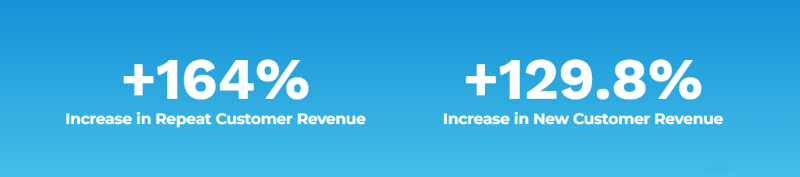
Here’s what we did for the brand to make their Black Friday campaign so impactful:
- Increased revenue from existing customers (lower CAC pressure)
Flowium boosted repeat customer revenue by +164%, meaning more revenue came from retention instead of paid acquisition.
- Leveraged retention channels instead of paid ads
By using email and SMS flows (abandonment, upsell, reminders), the brand converted existing traffic without additional ad spend.
- Improved conversion of high-intent users
Faster abandoned cart and checkout messages (within 24 hours) captured users who were already close to buying, reducing the need for new customer acquisition.
- Used segmentation to increase efficiency
Behavior-based targeting ensured messages were relevant, improving engagement and conversion rates without increasing costs.
- Maximized value per customer (higher LTV = lower CAC)
Cross-sell and upsell campaigns encouraged repeat purchases, increasing customer lifetime value and making acquisition more profitable.
- Created urgency to accelerate conversions
FOMO-driven messaging, limited-time offers, and reminders helped convert users faster, reducing wasted traffic.
- Built multi-touchpoint journeys instead of one-off campaigns
Strategic flows (early access, abandonment, post-purchase) ensured multiple chances to convert each user.
Instead of spending more on ads, this strategy, that we developed for our client, reduced CAC by increasing conversion rates and repeat purchases, turning existing traffic and customers into more revenue.
Conclusion
By focusing on high-value customers and doubling down on owned channels like email, successful ecommerce firms lower their customer acquisition costs. In order to guarantee that every dollar spent on customer acquisition produces a high AOV, repeat business, and enduring loyalty, they also concentrate on customer retention.
That’s exactly what the 12 tactics we mentioned above will assist you with. They build a long-term growth engine that ensures a sizable portion of website traffic converts, with the remainder being retargeted with customized ads.
If you need professional assistance in employing these strategies, contact Flowium. We’ll help you convert new clients into loyal brand promoters.
Frequently Asked Questions
How soon after a strategy change can CAC be lowered?
Within 2 to 4 weeks of making changes to your offer, creatives, or landing pages, you might notice early benefits. However, it usually takes many months to achieve longer-term CAC reductions through SEO, content, or referral schemes.
What distinguishes CPA, CPL, and CAC from one another?
– CAC is total cost of acquiring a paying customer.
– CPL stands for cost per lead (form submission or contact).
– CPA stands for cost per action (buy, sign-up, etc.).
The most comprehensive and final indicator is CAC, which represents the actual cost of conversion.
Should I cut off the other channels if one has the lowest CAC?
No, stability cannot be guaranteed by a single channel. Predictable growth and safeguarding your company from shifts in ad costs or algorithms depend on diversification.