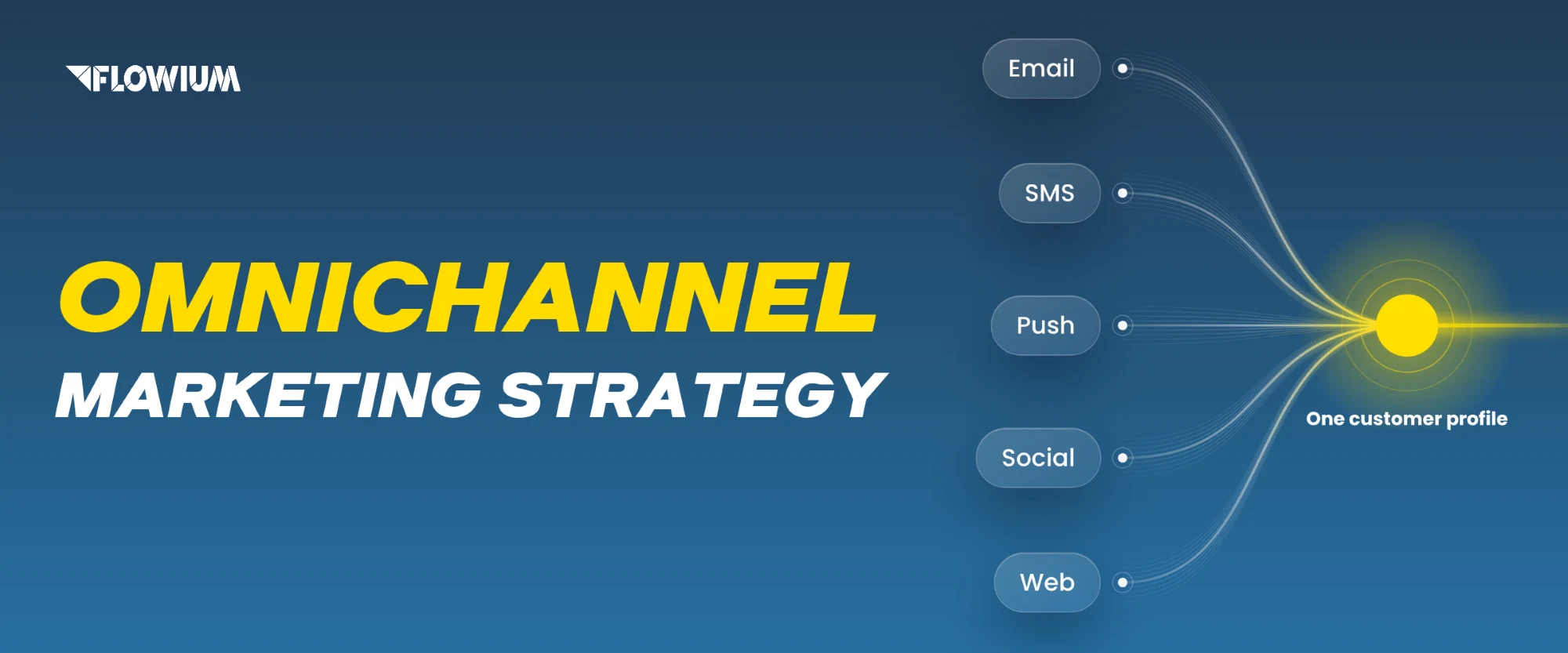
Most eCommerce brands already sell and message across email, SMS, social, and more. The problem is that each channel often works alone, so the same customer gets one offer three times, or an abandoned-cart reminder after they have already bought. Omnichannel marketing fixes this by connecting channels through one customer profile.
This guide explains what omnichannel in eCommerce is, why it’s becoming the standard for growing brands, how it differs from the multichannel model, and how to develop the best omnichannel marketing strategy step by step.
What is an Omnichannel Marketing Strategy?
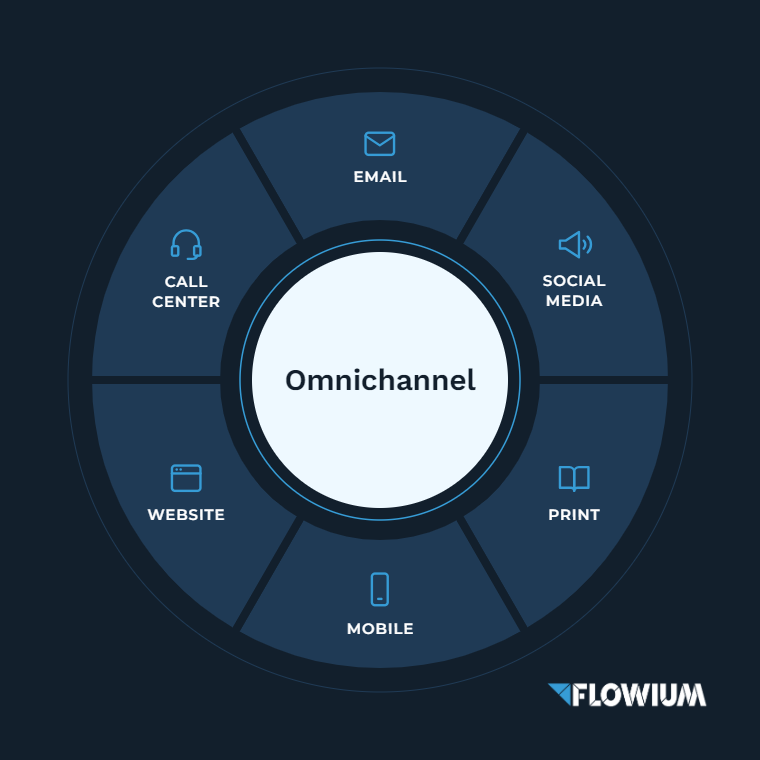
An omnichannel marketing strategy is a plan for connecting every customer touchpoint, such as email, SMS, push, social, and your store, through one customer profile, so messages are chosen by behavior rather than by channel. For eCommerce brands, the goal is to turn first-time buyers into repeat customers. Key data such as order information, supplies, and preferences remain consistent regardless of where the purchase begins or ends.
For example: “A shopper abandons a cart on mobile, then the next day opens an email that picks up exactly where they left off, instead of three unrelated campaigns.”
What Makes the Omnichannel Approach the Leading Model in eCommerce
Marketing is constantly evolving, and as of 2026, the omnichannel approach in eCommerce has become more of a basic requirement than a novelty, and here’s why:
Today, shoppers are constantly switching from one device to another and from one channel to another. Mobile devices are currently the primary platform. According to eMarketer forecasts, starting in 2027, mobile devices will account for the majority of eCommerce retail sales in the U.S., and already in 2026, they account for approximately 60% of global eCommerce sales.
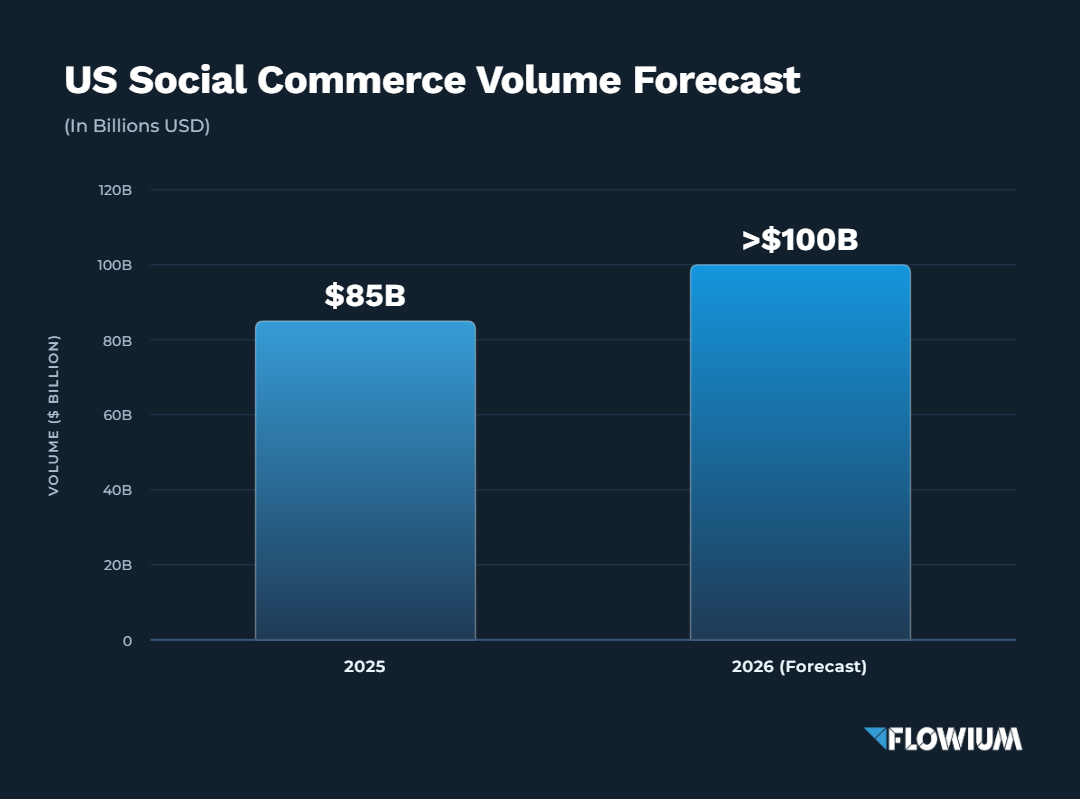
At the same time, marketers are tracking the growing popularity of shopping via social media. Social commerce in the U.S. is projected to exceed $100 billion in 2026, compared to $85 billion in 2025.
Customers expect to be recognized at every turn. A McKinsey study found that 71% of consumers expect personalized interactions, and 76% feel disappointed when they don’t receive them. Personalization is impossible when each channel has only a partial view of the customer and is unaware of information held by another channel.
A widely cited Harvard Business Review study on retail shoppers found that omnichannel customers have approximately 30% higher lifetime value than single-channel customers.
Although all of these figures are more indicative than guaranteed, it’s hard to argue with the trends, since in most cases, integrated customer experiences lead to more orders and more valuable customers.
Omnichannel vs. Multichannel Marketing: What’s the Difference?
A multichannel marketing approach is exactly the strategy where a brand tries to extend its reach to as many channels as possible, while omnichannel marketing is when all these established channels operate as a single, interconnected system. Here are the main differences between multichannel and omnichannel marketing:
As retention marketing experts, we can assure you that omnichannel marketing is a powerful strategy for retention marketing that yields significantly higher rates of repeat purchases and customer lifetime value (LTV). Other benefits include:
Lower costs for multiple campaigns and less marketing fatigue. Omnichannel marketing involves setting common rules to exclude specific scenarios, messages, or entire campaigns and limiting their frequency, meaning that if a marketing scenario has already occurred on one channel, it will not be repeated on another unless necessary. This prevents customers from receiving the same offer across multiple channels.
An enhanced, continuous brand experience. Omnichannel marketing means not only avoiding repetitive scenarios but also ensuring that campaigns continue seamlessly across channels when a customer moves from one to another. Getting the tone, offers, and timing right in these campaigns creates a sense of a unified brand, which builds trust and encourages repeat purchases.
Integrated data system. As you may have seen in the multichannel marketing comparison table, each channel in such a strategy has its own data, which is analyzed separately. In unified channels, customer data analysis is also consolidated, enabling more precise measurement and significantly higher-quality follow-up actions. When channels share a common customer profile, you can see exactly which combinations of touchpoints lead to repeat customers, rather than attributing the credit to the last click.
Simpler growth. Brands that stick to a strategy of constantly adding new channels often have to make partial marketing restructuring for each one. With an omnichannel approach, adding WhatsApp, RCS, or push notifications later means integrating them into the existing system, rather than rebuilding it.
9 Steps to Build an Omnichannel Marketing Strategy
Developing a highly effective omnichannel digital marketing strategy is a very individualized process and won’t work for every brand. That’s why our experts have created a guide with more general steps to help you gradually develop and transition to omnichannel marketing. Our step-by-step guide is designed for most eCommerce teams, particularly DTC brands on Shopify or Magento that use Klaviyo.
Step 1: Set Retention-Led Goals
Gradually shift your goals from achieving results in individual channels to achieving business outcomes. Move away from arbitrary targets like increasing email open rates or getting more likes and subscriptions toward goals that are more valuable for eCommerce, such as:
Increase repeat purchase rates
Increase customer LTV
Shorten the time between the first and second orders
Increase the share of revenue from owned channels
Select three to five KPIs and set baseline metrics for each one so you can demonstrate exactly what has changed.
Step 2: Map the Customer Journey and the Reorder Window
Analyze how customers actually progress from their first visit to their second, third, and fourth orders. For products that are part of replenishment marketing, identify the repeat order window — the days following a purchase when the likelihood of a repeat purchase is highest.
This analysis involves tracking trends such as which channels customers use before and after their first order, at what stage they abandon the purchase, and how many days pass before a typical repeat purchase.
By identifying these critical data points, you can lay the foundation for a framework that will serve as the basis for your customer lifecycle management strategy.
Step 3: Unify Customer Data
An omnichannel approach is all about integration, and that includes integrating customer lists. To do this, connect your store, such as Shopify, Magento, or others, along with email and SMS platforms, reviews, loyalty programs, subscriptions, customer support, and advertising platforms. By integrating all these channels, you’ll get a comprehensive, unified customer profile that includes orders, browsing history, consent to use these channels, and preferences. The next step in utilizing these enhanced lists is to create a more precise set of common segments, including:
Step 4: Choose the Right Channels Instead of Too Many
Your priority should be to improve the channels your customers already use, and the rest should be added as the system develops.
Email: The foundation for workflows, updates, and messages that require careful consideration.
SMS: Urgent messages during moments of high engagement, such as abandoned cart recovery, delivery reminders, and restocking notifications.
Push notifications: Cost-effective prompts for website visitors and app users.
WhatsApp and RCS marketing: two-way conversational channels when your audience prefers messaging apps.
Paid retargeting and direct mailing: supplementary channels that use the same segments and exclusion lists.
An omnichannel approach works by assigning each channel a specific role in the interaction journey so that they complement each other rather than compete. Here is more detailed information on the distribution of roles among the channels in the table:
VIP order queries, High-value cart assistance, Product quizzes
Conversion Rate, Resolution Time, Reply Rate
Paid Retargeting & Direct Mail
Low-engagement Recovery & Physical Touch
Inactive email/SMS segments, High-LTV win-backs
Incremental Revenue, ROAS, Cohort Retention
Omnichannel eCommerce Example: Case from Flowium of Assigning Roles to Each Channel
Our client, a fashion and apparel brand (revenue of $2-5 million, over 12 years in the market), based its customer engagement cycle almost entirely on email.
Before turning to our services between 2022 and 2023, the number of emails they sent increased from 251,000 to 321,000, yet revenue per recipient fell from $1.05 to $0.87. This proved that a higher volume of emails does not always mean higher revenue.
We developed an SMS marketing strategy for them, but not as a replica of their email campaigns. Email remained the primary channel for storytelling and managing the customer lifecycle. Email subscribers were invited to join the SMS list via exclusive early access, so the new channel was built on top of the existing audience. During BFCM, SMS generated $1.18 per recipient compared to $0.87 per email recipient.
Our strategies didn’t stop there, and we continued to differentiate the roles of SMS and email marketing. SMS messages began to be used at key moments in the customer lifecycle with high levels of purchase intent, such as welcome series and abandoned carts, while SMS campaigns were limited to supply replenishment notifications and time-sensitive offers.
We deliberately excluded information about promotions and new product launches from SMS messages so they wouldn’t duplicate what had already been covered in emails. Avoiding duplicate offers across channels is one of the key principles of omnichannel marketing.
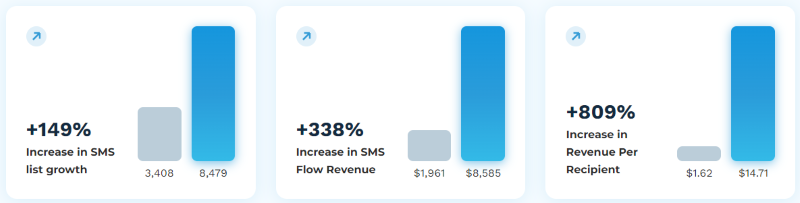
By optimizing SMS messages and including only the most essential information, the number of messages sent as part of campaigns decreased by 98%, yet revenue per recipient from SMS messages rose from $1.62 to $14.71 (+809%). Email campaigns also became more effective: revenue per recipient increased by 11%.
Then connect them so that a customer who clicks a link in an SMS doesn’t receive the same information through another channel later on. At Flowium, our services often involve this kind of work. We create lifecycle systems that integrate email, SMS, and other channels into a single mechanism for repeat purchases.
Step 6: Set Shared Brand and Messaging Rules
Put together a brief brand guide that you’ll follow across all channels and in your marketing efforts in general. Define:
Your brand’s specific communication style,
Rules regarding promotions (when discounts are allowed and when they aren’t),
Limits on the frequency of mailings for both individual channels and all channels combined,
Quiet hours,
Templates for repeated use.
These guidelines apply to your entire brand presence and create consistency. Consistency is what makes individual messages feel like a single, cohesive conversation.
Step 7: Coordinate the Actions of Your Teams and Partners
Not only must your channels work together as a unified and coordinated whole, but so must the people responsible for them. Marketing, CRM, customer support, and other departments must have closely aligned goals, shared segments, and a single calendar. The same applies to agencies you’ve hired, make sure they’re accountable for the entire customer journey. If you’ve hired more than one agency to manage your channels, encourage them to share information so they can work in sync.
Step 8: Launch in Phases and Test Through to Completion
Start by launching the most effective workflows, then add additional channels. Before and after each launch, place test orders and walk through the entire process to ensure everything is working as intended: check data synchronization, links, exclusion logic, consent handling, and whether messages are sent in the correct order. Fix any issues before scaling up.
Step 9: How to Measure, Test, and Scale Omnichannel Marketing
Once you’ve launched your omnichannel marketing initiatives, analyze the results monthly and plan tests quarterly. Keeping track of metrics that reflect the entire customer journey will help you do this, these include:
List health: unsubscribe, complaint, and delivery metrics
Keep doing what works, and expand into new channels or loyalty programs once your customer base has stabilized.
Omnichannel Marketing Strategy Best Practices: 5 Mistakes to Avoid
As a retention marketing agency, Flowium regularly conducts audits of marketing systems and strategies. We analyzed our data and the results of audits of over 500 brands conducted directly by Flowium experts, and based on this data, we compiled a list of the most common mistakes brands make when setting up their channels and how to fix them.
1. Over-Messaging and Channel Collision (Most Common Mistake)
The most common mistake made by brands that engage in more than one channel, both in terms of omnichannel marketing strategies and marketing in general, is sending the same messages and entire campaigns simultaneously across multiple channels. For example:
A customer from the list simultaneously receives the same messages from an abandoned cart campaign via SMS and email.
Solution: Implement strict exclusion logic and prioritization rules. For example: If a customer actively uses email or opens push notifications, pause SMS messages for 12-24 hours.
2. Siloed Data Synchronization Delays
MarTech stacks that synchronize data every 24 hours can result in customers receiving retargeting emails or emails offering to reorder items they purchased just a few hours ago.
Solution: Make sure your store and messaging platform sync orders and events in near real time (native integrations such as Shopify with Klaviyo are built for this), and add a purchase-based exclusion to every flow so recent buyers drop out immediately.
3. Competition for Attribution Among Internal Marketing Teams
When working separately rather than in coordination, your internal or outsourced marketing teams responsible for different channels may conflict with one another and compete for last-click revenue, rather than functioning as complementary touchpoints within a unified customer journey.
Solution: Establish communication and collaboration between teams and shift their KPIs from channel-level revenue to overall customer retention metrics:
lifetime value (LTV),
repeat purchase rate,
share of total revenue from the customer flow.
4. Expanding Number of Channels Before Mastering the Basic Ones
Instead of gradually and organically adding and developing retention channels, the brand immediately launches a multitude of them, including WhatsApp, RCS, or direct mail campaigns, before optimizing the core customer lifecycle stages.
Solution: First, refine your core revenue streams. Add conversational or paid channels only once core conversions have stabilized. If you have already launched additional channels, temporarily pause mass broadcast campaigns on them. Audit their performance, trim inactive segments, and restrict these channels exclusively to high-converting automated triggers until your foundational email and SMS systems are fully optimized.
5. Treating Every Channel and Subscriber the Same (Rare but Costly Mistake)
The brand treats all customer lists across different channels the same and uses a mass promotional messaging strategy regardless of the channel.
Solution: Keep in mind that each channel has its own characteristics and trends and, as a result, should be used for different purposes, research this aspect. Change your mass messaging strategy and use high-friction channels (SMS, WhatsApp) exclusively for high-intent triggers, urgent messages, and transaction updates.
eCommerce Omnichannel Trends and Where It is Heading
Three trends are worth planning for.
AI-driven personalization is moving from segments to next-best-action, predicting who will reorder and on which channel, while humans still own strategy and offers.
Conversational channels such as WhatsApp and RCS turn one-way messages into two-way journeys, which only work when they share the customer profile with email and SMS.
And as third-party tracking declines, first-party and zero-party data from preference centers, quizzes, and post-purchase surveys become the fuel for every omnichannel eCommerce solution.
Conclusion on Omnichannel Marketing
An effective omnichannel marketing strategy does not require a constant presence on every channel. It requires a unified view of the customer, a clear customer lifecycle, and channels that interact according to shared rules. For eCommerce brands, this is precisely how you can transition from paying for each sale to generating revenue that compounds.
If you’d like an expert assessment of the current state of your omnichannel or marketing program, Flowium offers audits of both your retention marketing efforts and your Klaviyo settings. We’ll conduct a lifecycle diagnosis, analyze your customer flows, segmentation, and channel mix, and show you where revenue is being lost and what needs to be fixed. Since 2017, Flowium has helped over 1,000 eCommerce brands generate more than $1 billion in revenue, and we’d be happy to analyze your business as well and offer our services to improve retention. Order a free retention marketing audit now!
Ecommerce Subscription Churn Rate in 2026: What’s a Good Rate by Category?
What’s a healthy subscription churn rate for your ecommerce category in 2026? Discover industry benchmarks, a simple calculation formula, and practical ways to keep more subscribers and protect recurring revenue.
14 min read
Ecommerce Subscription Retention Strategies: How to Reduce Churn and Increase LTV
High subscriber counts mean nothing if churn eats your margins after the first renewal. Discover practical ways to align delivery schedules with actual usage, prevent cancellations, and keep customers renewing month after month.
18 min read
Black Friday Email Strategy: BFCM Klaviyo Setup Guide
Maximize your peak holiday revenue with our expert BFCM Klaviyo setup guide. Written by Klaviyo Master Elite Partners, this post delivers actionable email campaign tactics, setup steps, and retention marketing strategies designed to turn one-time holiday shoppers into long-term repeat buyers.
13 min read
Customer Cohort Analysis: A Complete Guide
Cohort analysis groups customers by shared starting points or behaviors, then tracks their activity over time to reveal what averages hide. This guide covers the fundamentals, how to read cohort charts, and how teams use cohorts to reduce churn and drive growth.
13 min read
How to Build a VIP Customer Strategy for Ecommerce Brands
Stop sending generic discounts to your top spenders. Learn how to build a tailored VIP customer strategy using Klaviyo, email, and SMS. Flowium shares practical tactics to identify high-value buyers, boost retention, and maximize lifetime revenue.
13 min read
Ecommerce Marketing Dashboard: Essential Metrics and Best Practices
Struggling to turn scattered data into actionable insights? Discover how a centralized ecommerce marketing dashboard unifies your KPIs, optimizes campaigns, and boosts ROI. Explore the essential metrics and best practices needed to drive sustainable brand growth.
11 min read
Ecommerce CRM: Best Solutions, Benefits, and Tips
Discover how Ecommerce CRM tools boost sales, improve customer relationships, and streamline operations. Explore top solutions, key benefits, and practical tips to choose and use the right CRM for your online store.
18 min read
RCS vs MMS
This blog post explores the key differences between RCS and MMS messaging, explaining how RCS enhances traditional MMS with interactive, rich features that boost customer engagement, strengthen branding, and transform business communication strategies.
14 min read
RCS Marketing: A Comprehensive Guide with Tips and Examples
Discover how RCS marketing is transforming customer engagement. This comprehensive guide explores strategies, tips, and real-world examples to help brands harness rich messaging for higher conversions and stronger customer connections.
16 min read
WhatsApp Marketing: Top Strategies and Examples for Stellar Promotions
Current trends highlight WhatsApp as a powerful marketing channel for personalized, real-time promotions. This article explores top WhatsApp marketing strategies, best practices, and successful campaign examples across industries to boost engagement, retention, and sales.
18 min read
What is Product-Market Fit and How to Find It
This blog post explores the concept of product market fit, offering practical insights and strategies for startups to align their products with market demand, ensuring sustainable growth and customer satisfaction. Discover how to identify and achieve true product market fit for long-term success.
18 min read
Best Customer Review Platforms for Ecommerce Businesses 2026
Discover the top customer review platforms to elevate your business reputation, build trust, and drive sales. This blog post explores the benefits, key features, and strategies for leveraging these tools to collect valuable feedback and improve customer satisfaction.
9 min read
Push Notification Best Practices 2026
In this brief guide, we gathered the best practices for push notifications promotions. Read ahead to find out what strategies and methods experts use.
10 min read
How to Sell on TikTok: Working Strategies for Ecommerce in 2026
Learn how to sell on TikTok with working strategies for e-commerce. Discover effective methods to boost your sales on this popular social media platform in 2026.
14 min read
TikTok Ecommerce Guide For Increased Engagement And Sales
Dive into the world of TikTok ecommerce and unlock the potential of omnichannel marketing for your business. Learn how to leverage TikTok's vast user base, innovative features, and influencer community to boost engagement and drive sales in this comprehensive guide.
12 min read
The Ultimate Guide to eCommerce Email Campaign
For many eCommerce businesses, knowing email campaign best practices can be the difference between thriving and merely staying afloat. Undoubtedly, email marketing remains one of the best channels of reaching out to their customers.
8 min read
How to Improve Average Order Value (AOV): Top Strategies for eCommerce Businesses
One of the best ways to optimize your eCommerce is to increase your AOV. But how? This article shares top strategies on increase your average order value.
15 min read
Product Launch Email Best Practices and 20 Examples
Learn how to craft powerful product launch emails that build anticipation, spark FOMO, and drive sales. From planning and writing tips to visuals, testing, and examples, this guide covers everything you need to run a successful email launch campaign.
5 min read
How to Integrate Stamped.io Dynamic Reviews to Emails
Stamped.io is third-party software that can help you collect positive customer evaluations, establish your brand, attract high-quality visitors, and increase sales by using powerful social evidence.
9 min read
Get Your FREE Lifecycle Diagnosis
A free lifecycle diagnosis and a 30-minute call. Walk away with a clear read on your lifecycle program and where the next dollar of profit is hiding.