Due to the intense competition in the ecommerce industry, consumers now demand not only a high-quality product and a speedy, safe checkout process, but also effective post-purchase assistance and consistent contact. One of the various tactics used by online retailers to maintain the relationship they have built with current customers and encourage them to make additional purchases is ensuring a positive post-purchase experience.
Here are some helpful pointers from Flowium’s retention marketing experts on how to build the greatest post-purchase experiences for your ecommerce business.
What Is Post-Purchase Experience?
Every interaction a consumer has with your brand following an order is included in the post-purchase experience. It’s the link between purchasing and brand loyalty, not just shipping and tracking.
The post-purchase experience offers numerous chances to reduce attrition and increase client lifetime value, from order and shipping alerts to unboxing and returns.
Why Is Post-Purchase Marketing Crucial for Ecommerce?
Companies spend a lot of time improving the pre-checkout funnel, concentrating on encouraging consumers to find and purchase their products, but they neglect the post-purchase customer experience.
The cost of acquiring new customers is well known. Because of this, optimizing post-purchase engagement is essential to your financial success.
Assume you are a customer purchasing clothing for a particular event. You feel thrilled, but then there’s silence. No affirmation. No tracking information. You are left to speculate or, worse, contact customer service. Not only is that unpleasant experience annoying, but it also encourages them to shop at a rival store the next time.
Benefits of Post-Purchase Marketing
- Effective Retention of Customers
One of the best ways to keep customers is to use email promos after the sale. You ensure that customers have a good shopping experience with your business by following up with follow-up emails and staying in touch with them throughout the ordering and shipping process. It improves the customer experience by automating the process of informing customers of an order’s status and, as a result, lowering the quantity of support inquiries containing such queries. Promotional content of the highest caliber might entice them to remain in your client base and make additional purchases.
However, what if you received a personalized thank-you note, an instant confirmation, and a stunning tracking page with real-time updates? Customers are drawn in by that kind of experience.
- Enhanced Customer Lifetime Value
If a one-time customer is pleased with your product, communication style, and tailored approach, they may become repeat customers. Strategic post-purchase email marketing can be used to investigate the other two aspects, whereas the first is dependent on production. Expert marketers use it to increase client lifetime value. If a customer purchases a phone from you, for instance, they probably won’t need another one for a few years, but you may send them a cross-sell email with tailored product recommendations (such as phone accessories, chargers, headphones, earbuds, etc.). In general, this makes it possible for your email marketing strategy to increase sales and return on investment.
- Improved Brand Reputation
After placing an order and checking out, customers receive radio silence from an online retailer, which is a nightmare and makes them question both the firm and their purchases. For this reason, it’s critical to establish instant communication by sending confirmation messages in order to boost your company’s credibility and establish a strong reputation.
- Improved Customer Support Thanks to Feedback
With post-purchase email campaigns, you can both send and receive crucial information from customers. You can request customer testimonials and product reviews. Then, by addressing the aforementioned pain points, take advantage of this information to advance your company. Additionally, it’s a good idea to leverage the comments you’ve received as social proof for upcoming advertising initiatives.
Post-Purchase Customer Journey and Communication Touchpoints
The post-purchase experience isn’t made up of a single interaction. It’s a sequence of touchpoints that starts immediately after the checkout and continues through the following stages of the customer journey.
At each stage, brands use different types of communication to reduce uncertainty, help customers get value from their purchase, collect feedback, and encourage more purchases. Let’s look at the main stages and essential elements that directly form your client’s post-purchase experience.
| Journey Stage | Customer Touchpoint | Primary Communication Type | Main Goal |
|---|---|---|---|
| Purchase & Confirmation | Order Confirmation, receipt, payment confirmation | Transactional | Reassure and build up trust |
| Waiting for Fulfillment | Processing updates, shipping confirmation, tracking | Status | Reduce uncertainty |
| Delivery & Arrival | Delivery notification, unboxing, thank-you email/message | Transactional and relationship-building | Create a positive first impression |
| Product Onboarding | Setup instructions, tutorials, usage tips | Onboarding | Help customers get value |
| Early Engagement | Satisfaction check, support, educational content | Onboarding and feedback | Identify friction and improve adoption |
| Review & Advocacy | Review request, UGC request, referral invitation | Feedback and relationship-building | Generate social proof and advocacy |
| Expansion | Cross-sell, upsell, complementary products | Relationship-building and promotional | Increase customer value |
| Retention & Loyalty | Loyalty program, VIP offers, personalized content | Relationship-building | Strengthen the relationship |
| Replenishment/Repeat Purchase | Reorder reminders, subscriptions, replenishment campaigns | Re-engagement and promotional | Drive next purchases |
| Inactivity & Winback | Re-engagement emails, personalized offers, churn prevention | Re-rengagement | Reactivate customers |
Common Post-Purchase Engagement Mistakes
- Limited Communication.
Customers may anticipate the worst and ask for a refund or chargeback if they don’t receive timely updates on their orders.
- Unreliable Customer Service
Customers are more likely to initiate a chargeback and avoid the merchant if they are unable to contact customer service.
- Confusing Return Procedure
Complicated return procedures with several steps may turn off clients, discourage them from returning, or encourage them to submit a chargeback rather than deal with a convoluted return procedure.
- Poor Visibility
The delivery process’s credibility may be damaged by a lack of updates, tracking data, or confirmation.
- Item Not Received
Even if the item is eventually delivered, the customer may report the INR if the delivery details are unclear, don’t match the actual drop-off location, or they are unable to get in touch with the merchant’s customer support team to find their purchase.
Mapping out their particular customer journey might help merchants find possible places of friction. In this manner, they can strategically address any possible issues with their post-purchase experience.
Essential Strategies for an Excellent Post-Purchase Experience
Sending an order confirmation and shipment notification is not enough to provide a positive post-purchase experience. After checkout, ecommerce companies must handle every encounter, including product onboarding, shipping, customer service, feedback, loyalty, and repeat business. The following tactics can assist brands in transforming post-purchase contacts into chances for increased lifetime value, customer happiness, and retention.
1. Create a Post-Purchase Customer Journey Map
After a customer completes a purchase, start by recording every touchpoint they encounter. Order confirmation, shipment updates, delivery, product onboarding, customer service, review requests, loyalty communications, replenishment reminders, and re-engagement marketing are all included in this.
Teams can find gaps between the experience they plan to offer and what customers actually experience by using journey mapping to discover key engagement moments.
2. Proactively Communicate Order and Delivery Information
One of the main causes of post-purchase annoyance is uncertainty. Consumers want to know where their item is, when it will be delivered, and what to anticipate in the event that something goes wrong.
Throughout the fulfillment process, give proactive updates, such as:
- Verification of the order and payment
- Updates on order processing
- Tracking and confirmation of shipment
- Dates of estimated delivery
- Notifications of delivery
- Alerts for delays or exceptions
Inform customers by email, SMS, or other pertinent media. In order to provide a uniform tracking experience, a centralized order-tracking system can potentially combine data from several carriers and logistical partners.
The intention is to provide customers with information so they don’t need to call assistance to find out where their order is.
3. Customize Onboarding Processes for Products
The delivery of the goods shouldn’t be the end of the client experience. Provide customers with product-specific educational content to help them get the most out of their purchases.
Depending on the sector, this could consist of:
- Instructions for setup
- Quick-start manuals
- Tutorials for products
- Tips for usage and styling
- Instructions for upkeep and care
- Resources for troubleshooting
- Videos that are tailored to a product
For instance, a consumer electronics business can offer setup videos and maintenance advice, while a clothes brand might offer suggestions for fabric care and styling.
Create distinct onboarding processes according to customer segmentation, product categories, and purchase attributes. By distributing instructive content over multiple communications rather than giving everything at once, you can avoid overloading customers.
4. Use Customer Behavior to Initiate Communications
By reacting to what customers really do, you can go beyond time-based post-purchase ads.
Some examples of behavioral triggers are:
- Completion of setup or product activation
- Frequent visits to a help page
- Participation in a tutorial
- Not activating the product
- Recurring purchases
- Exploring complementary items
- Reduced involvement
- The anticipated refill date is drawing near.
For example, the brand can provide a troubleshooting guide or more onboarding materials if a consumer hasn’t finished product setup. A customer may receive a pertinent recommendation from the brand if they frequently browse a complementary product.
Behavior-based automation helps organizations identify customers who could be at risk of disengagement while improving the timeliness and relevance of post-purchase communications.
5. Provide Easy Access to Customer Service
After making a purchase, customers shouldn’t have to look for a way to fix a problem.
Offer easily accessible assistance using the channels that clients currently utilize, like:
- Live chat
- Phone
- Social media
- Self-service assistance facilities
- Chatbots driven by AI
While more complex issues should be referred to human agents with access to the customer’s order and interaction history, self-service tools can handle routine inquiries such as orders, refunds, delivery, and product usage.
Because consumers expect the company to have context regardless of where the discussion starts, an omnichannel support experience is especially crucial.
6. Make Refunds, Exchanges, and Returns Easy
One crucial—and frequently disregarded—aspect of the post-purchase experience is the returns process. A challenging return can ruin an otherwise satisfying customer experience and deter future purchases.
Make the procedure as straightforward as you can by offering:
- Explicit return and exchange guidelines
- Simple return guidelines
- Portals for self-service returns
- Easy ways to trade
- Proactive refund notices
- Return details unique to an order
To identify persistent issues with products or customer experiences, brands should also examine the causes of returns. Opportunities to enhance product descriptions, sizing information, onboarding, or consumer expectations before the next purchase can be found in return data.
7. Gather and Respond to Customer Feedback
Communication after a purchase ought to be two-way. After clients have had ample time to consider their purchase, ask them for their opinions.
Among the helpful touchpoints are:
- Surveys of customer satisfaction
- Evaluations of products
- Scores
- Surveys using the Net Promoter Score (NPS)
- Check-ins after purchases
- Requests for user-generated content
Pro Tip: Time is of the essence. For a product that needs to be used for a few days or weeks, requesting a review right away after delivery might not make sense. Make feedback requests according to your product type.
More significantly, action should be guided by feedback. Utilize unfavorable reviews to pinpoint clients who require assistance, and compile reviews to find persistent problems with goods or the customer experience.
8. Personalize Upsell and Cross-Sell Recommendations
Brands can launch items that truly complement their first purchase once buyers have received and begun using their products.
For instance:
- Electronic accessories
- Supplementary skincare items
- Coordinating clothing
- Consumables and refills
- Upgrades to the product
- Bundles
To decide what to suggest and when, consider past purchases, browsing habits, product relationships, and customer preferences. After checking out, refrain from making a sales pitch right away. The recommendation needs to show up when it enhances the customer’s current purchase.
9. Enhance the Experience of Loyalty and Rewards
A loyalty program ought to be more than just a points balance that users periodically review. Incorporate loyalty information into the larger post-purchase process so that clients can see and feel the advantages of loyalty.
Think about:
- Visibility of points in real time
- Customized incentivesVIP tiers
- Special deals
- Purchase benchmarks
- Rewards for birthdays or anniversaries
- Early access to the product
- Rewards for referrals
- Progress bars and additional gamification components
When a customer reaches a new loyalty tier or is about to receive their next incentive, for instance, they may receive a personalized greeting. These communications can take place at the appropriate time by integrating loyalty data with email, SMS, and consumer engagement platforms.
10. Develop Campaigns for Timely Replenishment and Repeat Purchases
Brands can use purchase history for consumable or regularly repurchased products to predict when customers would need to place new orders.
Set up reminders depending on each customer’s average purchase interval rather than sending out generic incentives.
This strategy can boost buy frequency without depending on ongoing discounts and improves the usefulness of repeat-purchase communication.
11. Create WinBack and Re-Engagement Journeys
Not every consumer will inevitably make a second purchase after making their first. To find clients who might be at risk of churning, keep an eye on diminishing engagement and purchasing behavior.
Re-engagement campaigns may consist of:
- Customized product suggestions
- Announcements of new products
- Educational content
- Rewards for loyalty
- Special deals
- Requests for feedback or preference updates
Don’t start with a bargain. To make the message more relevant, first think about the reasons why the client could have disengaged. Then, use the behavioral and purchase data that is already available.
12. Link SMS, Email, and Other Channels
Depending on the channel they choose, customers shouldn’t have different post-purchase experiences.
Organize customer service, push notifications, SMS, email, and onsite messaging such that messages are complementary rather than redundant.
For instance, sending a detailed product education via email might be more effective than sending an order update via SMS. Additionally, a consumer should be excluded from pointless follow-up messages if they have previously accomplished a desired action.
While enabling organizations to utilize each channel for what it does best, an integrated omnichannel approach produces a more uniform experience.
13. Measure and Continuously Optimize the Experience
Lastly, companies must assess whether their post-purchase approach is indeed enhancing consumer results.
Important metrics to keep an eye on are:
- Rate of repeat purchases.
- Customer retention rate
- CLV, or customer lifetime value
- The frequency of purchases.
- The interval between purchases
- CSAT, or customer satisfaction.
- NPS, or Net Promoter Score
- The rate of product reviews
- Return rate.
- Resolution time for customer service.
- Participation in loyalty programs
- The rate of replenishment conversion.
- Email and SMS revenue after a purchase
Examine these KPIs by product, customer segment, acquisition source, and lifecycle stage to see where customers are leaving and where the experience is performing well.
The objective is to build a connected client journey rather than just sending more post-purchase messaging.
How Flowium Helps Ecommerce Brands Level Up Their Post-Purchase Strategy
Sending order confirmations and review requests alone is insufficient to retain customers; the post-purchase experience is crucial. Flowium assists ecommerce companies in developing post-purchase journeys that leverage consumer behavior and past purchases to generate pertinent follow-ups, promote repeat business, and fortify client ties.
Making the Initial Purchase the Beginning of the Next Customer Experience
In order to help clients progress from their first purchase to their second and third purchases, Flowium overhauled the first-buy experience and repeat-purchase processes in collaboration with a sporting goods and apparel manufacturer. New messaging, copy, and lifecycle flow design were all part of the approach, which was backed by testing and segmentation.
The statistics show how a well-designed post-purchase journey can generate revenue: in just three months, returning-customer email revenue rose by 150.7%, from £48,250 to £120,950.
Treating the initial transaction as the start of a new lifecycle stage is crucial for e-commerce firms. Brands can use purchase data to identify the instructional content, recommendations, incentives, and follow-up messages that are most pertinent to each customer, rather than terminating engagement after delivery.
Using Purchase Context to Promote Appropriate Upsells and Cross-Sells
Additionally, Flowium shows how post-purchase contact can generate chances for further purchases. Flowium used a strategy for Alen that offered opportunities for upselling and cross-selling as soon as a customer completed a purchase during BFCM. A follow-up offering an exclusive extra discount on a best-selling product was sent to customers who did not convert from the initial communication.

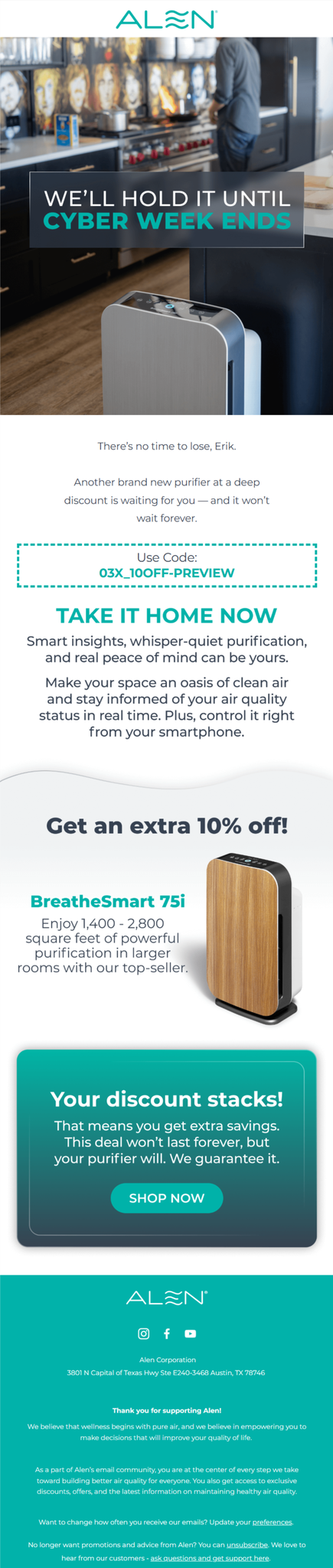
The campaign brought in an additional $5,672.45.
The tactic exemplifies a key post-purchase marketing principle: recommendations that are based on what the consumer has already bought are more successful. Brands can suggest related goods, accessories, refills, or upgrades that improve the customer’s initial purchase instead of providing generic promos.
Linking Feedback to Repurchase and Retention
Another method for post-purchase optimization is offered by Flowium’s collaboration with Wine Awesomeness. The company developed follow-up procedures based on consumers’ evaluations of the wines they bought, as well as a post-purchase review-request email. Repurchase, win-back, membership anniversary, and cancellation flows were also included in the larger lifecycle approach.
Reviews can be used by brands as a signal for future communications rather than as a stand-alone request for proof. While negative feedback may result in customer support or retention actions, positive experiences may lead to advocacy and pertinent recommendations.
Conclusion
Providing an excellent post-purchase experience is now essential in the fiercely competitive world of ecommerce. Brands and online marketplaces will have a competitive advantage if they focus on the post-purchase experience by resolving issues, utilizing technology, and putting important initiatives into practice. Businesses can develop a strong reputation, encourage repeat business, and realize the full potential of their clientele by surpassing customer expectations and cultivating enduring loyalty.
How you handle that post-purchase process will determine whether or not your brand is a trustworthy place to shop. If you need help enhancing your post-purchase experience, get in touch with Flowium experts.
Frequently Asked Questions
What is the post-purchase experience in ecommerce?
Any engagement a customer has with your company after making a purchase is referred to as the ecommerce post-buy experience. This covers delivery, shipping updates and notifications, the return procedure, and any correspondence with the customer support staff.
Why is the ecommerce post-purchase experience crucial?
Customers may not return if they have a negative post-purchase experience, which lowers their customer lifetime value. A poor post-purchase experience can also harm a brand and have a detrimental effect on the profitability of an online retailer. Additionally, it may expose retailers to post-purchase ecommerce fraud, such as return abuse and first-party fraud.