SMS marketing isn’t one of those rapidly emerging innovative technologies; it’s been around for a while and has earned the title of a reliable channel with high open and response rates. While it’s not new, it doesn’t mean that SMS marketing doesn’t adapt and develop new strategies according to changing market demands. Now it’s not just a channel for promotions and immediate conversions. When connected with email and other retention channels, it can also help brands maintain customer relationships after the first purchase through timely, relevant communication across the customer lifecycle.
From post-purchase updates and replenishment reminders to loyalty communication and winback campaigns, SMS can support the moments that turn a one-time transaction into an ongoing customer relationship. And in case you’re new to it, in this article, we’ll cover everything you need to know about SMS marketing.
What Is SMS Marketing?
To reach your customers, you have to be proactive and go right where they are. This is where this particular channel comes in.
SMS marketing is a direct-to-customer marketing channel where brands send promotional and transactional text messages to opted-in contacts through an SMS marketing platform. It allows businesses to reach customers on the device they use the most without relying on email inboxes or social media algorithms.
You can send promotional or transactional messages, news, and business updates via text messages.
The best part?
You can control how your messages are sent, who they go to, and the kind of content you send!
How Does SMS Marketing Work?
While you can totally send your promotional or transactional text messages manually, for businesses with growing contact lists, this method becomes totally inefficient. Therefore, most brands typically use an SMS marketing platform to automate this channel and send messages in bulk. This type of software can help you with:
- Sending at scale and tracking delivery, clicks, and conversions
- Collecting opt-ins from customers who agree to receive texts
- Segmenting contacts by location, purchase history, or interests
- Creating and scheduling messages for individual customers or entire lists
Top Benefits of SMS Marketing
When done right, SMS marketing provides many benefits to business owners. Here are some of them:
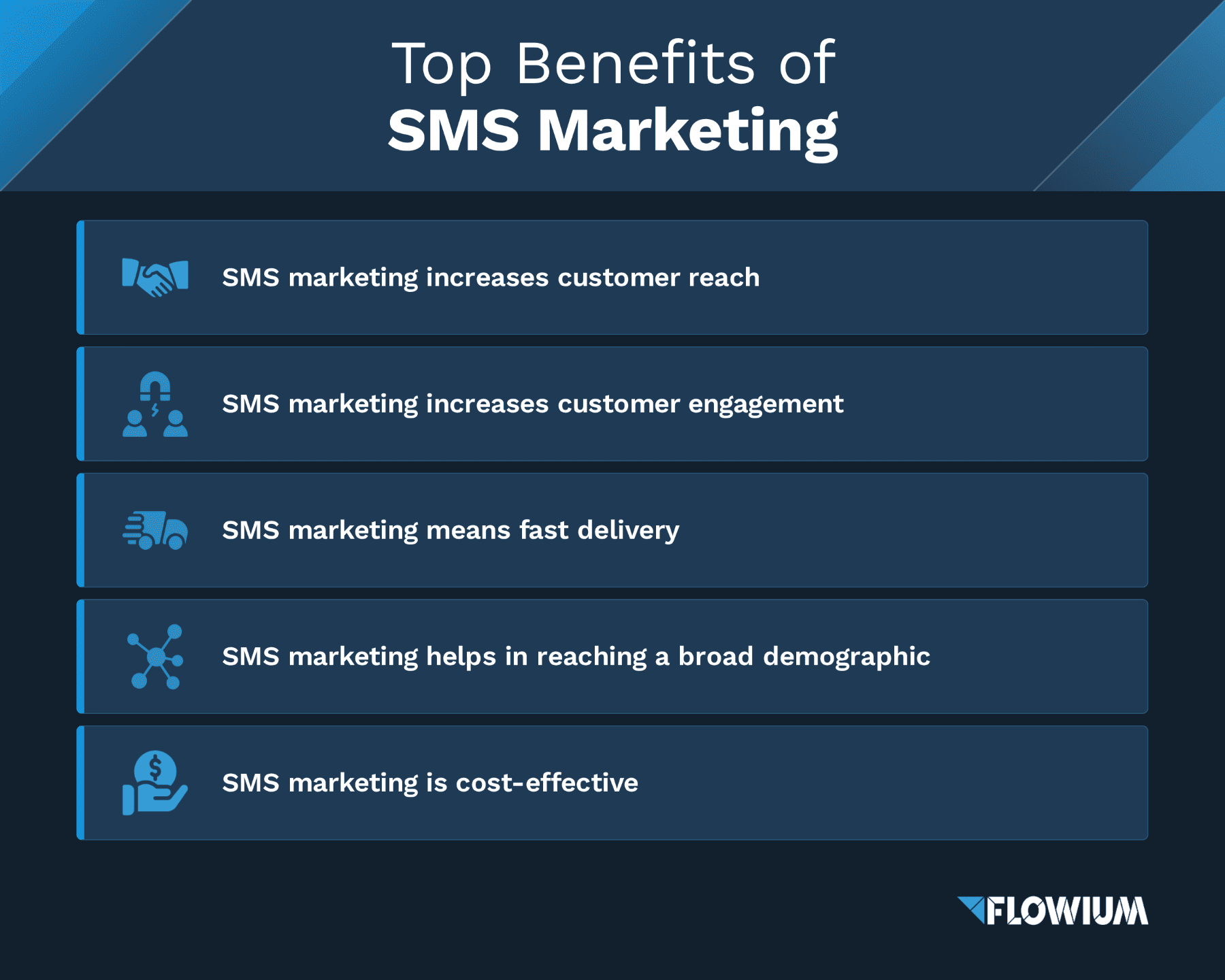
1. Increases Customer Reach
With SMS marketing messages, you can engage with more and more customers directly, irrespective of their location.
You see, most people communicate via text messages rather than emails. So, you have a better chance of reaching more customers using SMS marketing messages.
2. Increases Customer Engagement
Studies have found that the average open rate of text messages is 98% compared to 20% for email marketing.
Unlike emails that frequently get lost in spam, your customers will quickly see and read your text messages.
And by sending the right kind of messages, you can place your business right in front of your audience and get an increase in engagement rates.
3. SMS Marketing Means Fast Delivery
Press the send button, and your message is out and promptly delivered.
This can come in handy when you have time-sensitive information that you need your audience to see immediately.
With SMS marketing, you can be sure your message arrives without delay.
4. Helps in Reaching a Broad Demographic
This is one of the beauties of SMS marketing. So many people of all ages own a mobile device, so it is easier to reach different audiences using this mode of communication.
Think about it: anyone can get your message as long as they have a mobile phone that receives text messages.
5. SMS Marketing Is Cost-Effective
Want to save money while achieving more for less?
SMS marketing is a cost-effective way of reaching out to your audience compared to other advertising means like Facebook ads.
And the best part? You still get great returns on your campaigns!
SMS Marketing and Email Marketing Orchestration
The most effective strategy is not simply to send the same message through both channels. Email and SMS should work together based on the customer’s needs and level of intent.
How Do SMS and Email Marketing Work Together?
While SMS and email marketing are both effective forms of marketing, each channel has its unique advantages.
- Email is best for detailed nurturing, education, storytelling, and long-term relationship-building.
- SMS is best for timely, direct, high-intent touchpoints that need an immediate response
When both channels are coordinated as part of the same customer journey, brands can create a more connected experience without overwhelming customers with duplicate messages.
When Should You Use SMS vs Email?
| Use Case | Channel | Why |
|---|---|---|
| Welcome series and brand story | Room for visuals, detail, and context for a comprehensive brand introduction | |
| Product education and how-to guides | Supports longer, more in-depth content | |
| Abandoned cart reminders | SMS | Read within minutes, drives fast action |
| Delivery and order updates | SMS | Time-sensitive and expected instantly |
| Replenishment reminders | SMS | Short prompt at the moment of need |
| Limited-time or flash offers | SMS | Creates urgency with immediate visibility |
| Monthly newsletters and roundups | Suited for ongoing engagement | |
| Local promotions and store events | Email+SMS | Text for urgency, email for details |
How SMS Supports Customer Retention Across the Lifecycle
SMS can support much more than promotional campaigns and first-time conversions. When integrated into a broader customer retention strategy, it helps brands stay relevant at key moments after a customer has already purchased.
Rather than treating every subscriber the same, brands can use purchase history, engagement, customer status, and behavioral signals to determine when SMS adds value to the relationship.
Post-Purchase Communication
The relationship with a customer should not end once the order is placed. SMS can support the post-purchase experience with order and delivery updates, product education, usage tips, and other timely messages that help customers get more value from their purchase.
Replenishment and Reorder Reminders
For products that need to be replaced or repurchased, SMS can remind customers when it may be time to reorder. These messages can be based on the customer’s purchase date, expected product lifecycle, or previous buying behavior.
Loyalty and VIP Communication
SMS can also help brands recognize and engage their most valuable customers. Early access, VIP offers, loyalty updates, and exclusive product announcements can make repeat customers feel recognized without sending the same message to the entire customer base.
Winback and Re-Engagement
When a previously active customer stops purchasing or engaging, SMS can provide a direct way to restart the conversation. A well-timed message can remind the customer about the brand, highlight a relevant product, or give them a reason to return.
Time-Sensitive Lifecycle Alerts
Some customer moments require immediate communication. Back-in-stock notifications, expiring rewards, subscription or renewal reminders, limited-time access, and other high-intent events are often well suited to SMS because timing is part of the message’s value.
The goal is not to use SMS at every stage of the customer journey. It is to use it when its speed and immediacy make the interaction more useful. Combined with email and other channels, SMS can become part of a connected lifecycle experience that supports retention, repeat purchases, and long-term customer value.
For a broader view of how messaging, channels, and customer behavior work together across the journey, see our Customer Lifecycle Marketing guide.
Best SMS Marketing Platforms
1. Klaviyo
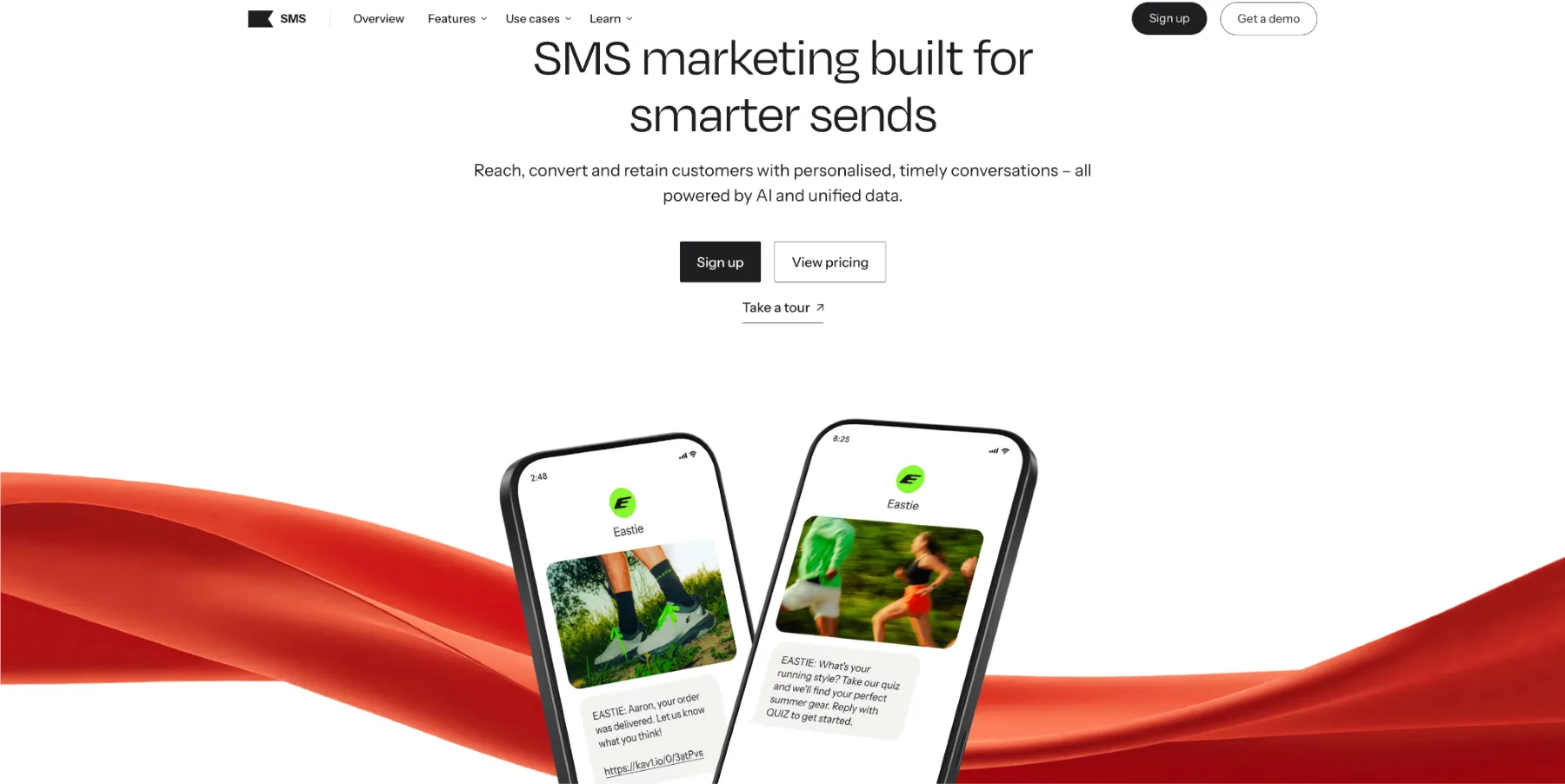
Klaviyo is a powerful marketing automation solution that helps businesses send personalized emails, push notifications, and SMS messages to their customers at scale. As one of the best marketing automation tools, Klaviyo delivers the ability to create highly personalized and effective campaigns right out of the box.
Klaviyo’s business SMS marketing technology combines advanced personalization efficiency with the immediacy of text messages. It offers ready-to-use SMS templates, SMS A/B testing, and other capabilities that can assist your owned marketing to drive sales with simple reporting and analytics.
2. Postscript
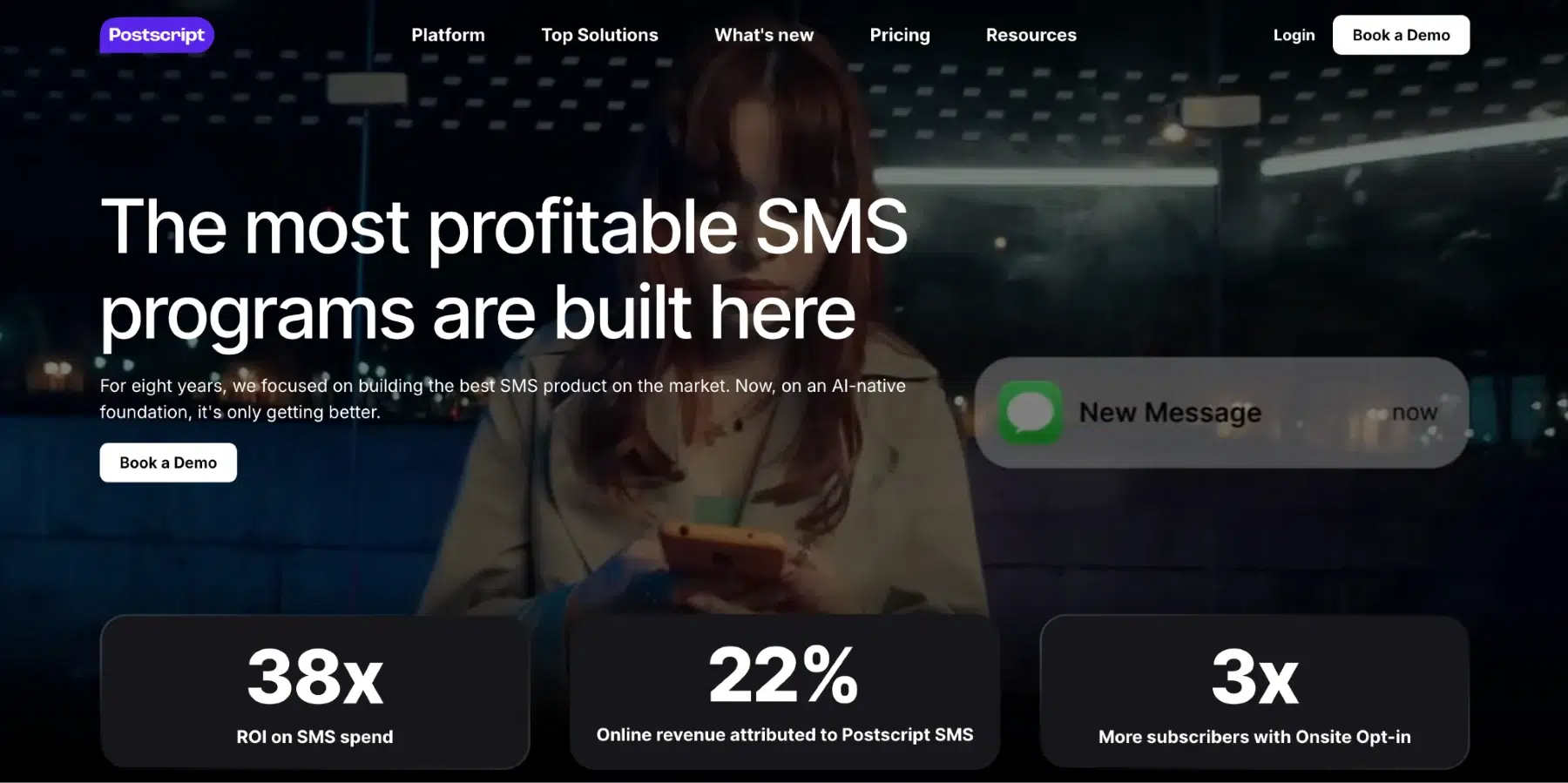
Thousands of growing Shopify & Shopify Plus stores rely on Postscript to manage their SMS marketing.
Your team will be able to grow a TCPA-compliant subscriber list, use Shopify data to create targeted text marketing campaigns, have two-way interactions with customers, and open a completely new marketing channel that will produce big-time ROI for your business.
Postscript SMS instantly syncs your Shopify store data and activates basic text marketing automation like abandoned cart recovery, shipment notifications, welcome series, and loyalty incentives to boost your sales.
3. Attentive
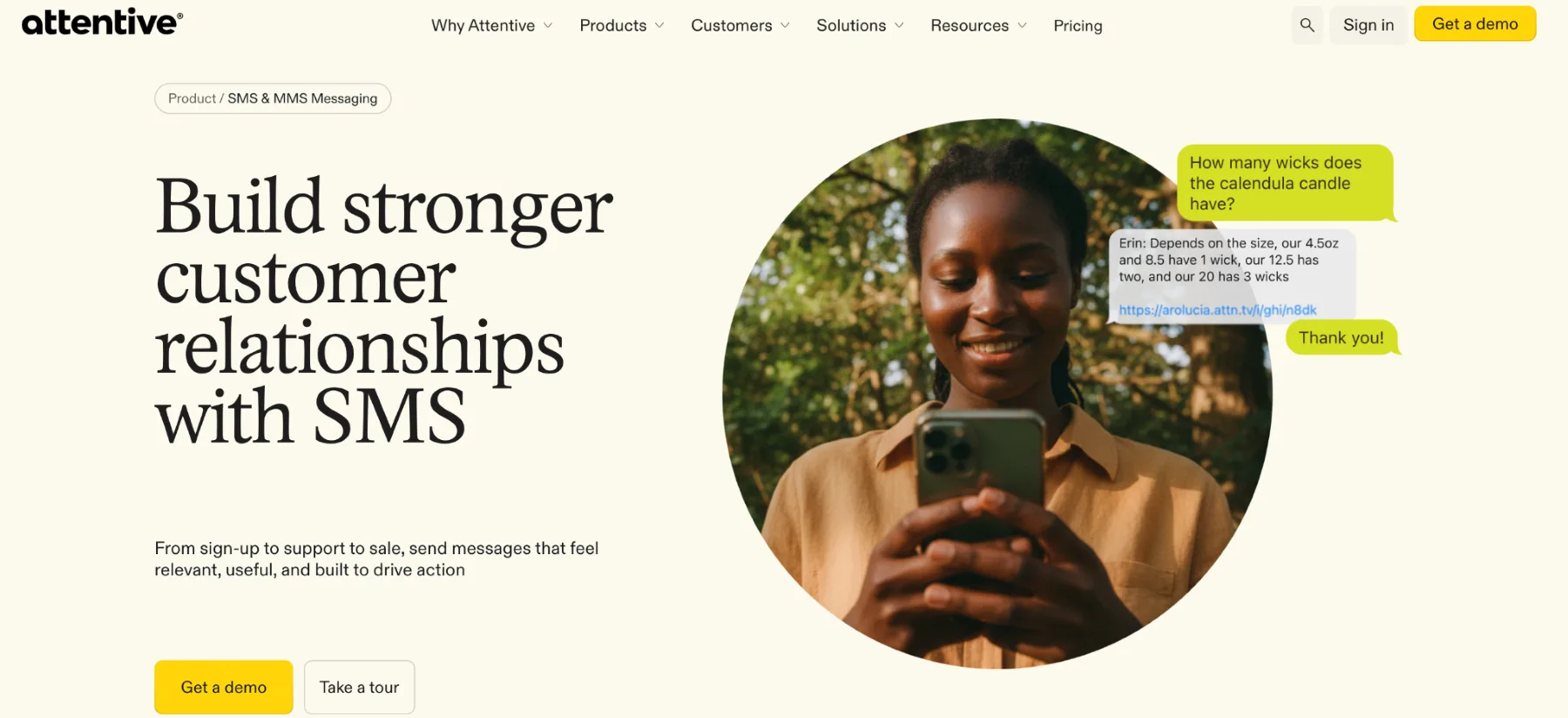
By developing meaningful SMS experiences, Attentive is the most comprehensive text message marketing solution, driving 20.5 percent of total online revenue for organizations.
Attentive allows businesses to send interesting text messages to each subscriber automatically using real-time behavioral data.
4. Avochato
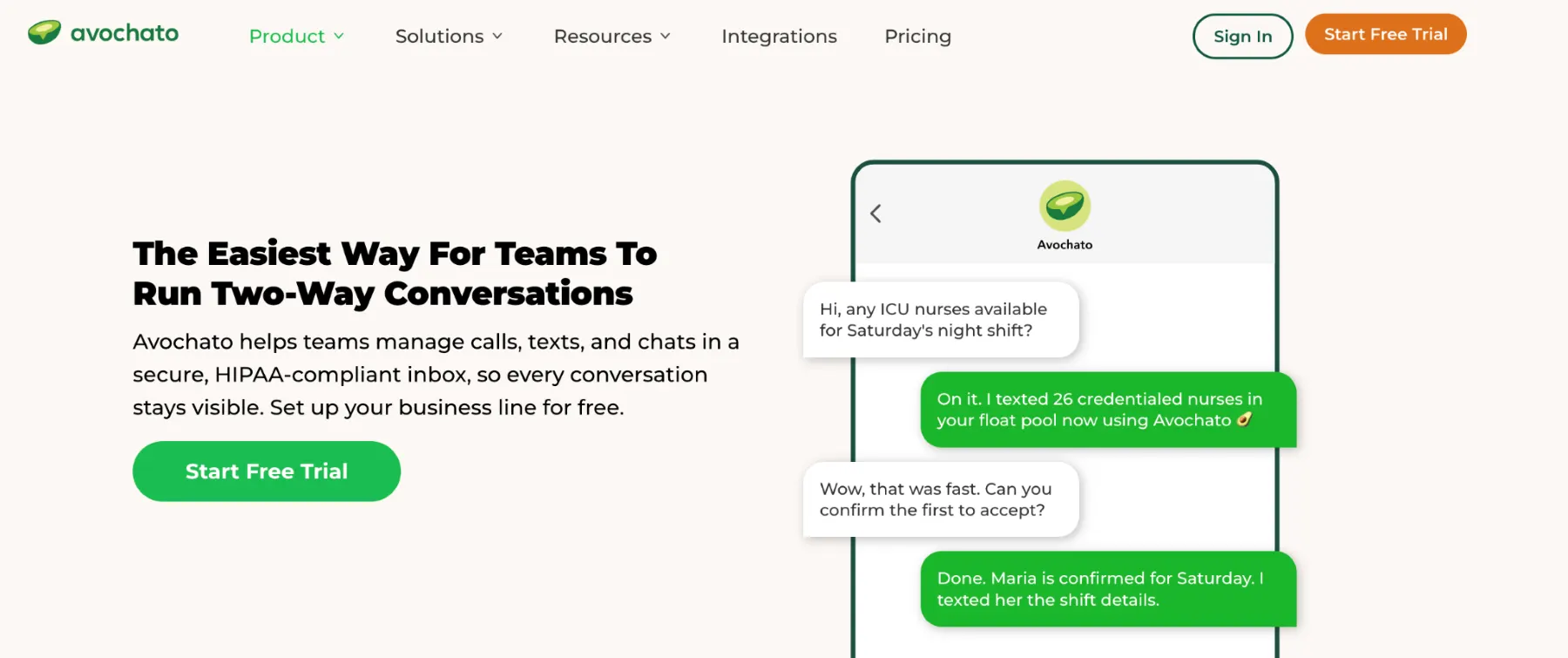
Avochato is a sales, support, healthcare, and operations communication solution.
We give teams a shared inbox and a phone number (or a group of phone numbers), so they can send text messages and engage with clients on their own terms.
SMS Marketing Pricing
SMS marketing pricing is not much different than any other kind of marketing. SMS messaging costs vary by provider, country, message volume, and carrier fees. In the U.S., platform rates can start at around $0.01–$0.02 per message, although the total cost may be higher once carrier fees, platform fees, and other charges are included.
What’s more, most SMS marketing agencies offer packages that cover a certain number of messages sent per month. The more messages you send, the lower your per-message price will be.
Apart from paying per the number of messages you want to send, you’ll need to pay for the keywords. Have you ever seen a company asking you to text “READY,” or some other word, to a specific number? In this case, “READY” is a keyword they’re paying for. And if you want your SMS marketing campaigns to be effective, you’ll have to do something similar.
To sum up, when choosing your SMS marketing provider, there are three main cost factors you should consider:
- Cost per message (between $0.01–$0.02 per message)
- Cost per keyword (between $10 and $25 per keyword)
- Monthly fee & what’s included in the price
How to Set Up SMS Marketing
Here’s a quick breakdown of how to set up an SMS marketing campaign that works for your business.
SMS Marketing Pricing
SMS marketing pricing is not much different than any other kind of marketing. SMS messaging costs vary by provider, country, message volume, and carrier fees. In the U.S., platform rates can start at around $0.01–$0.02 per message, although the total cost may be higher once carrier fees, platform fees, and other charges are included.
What’s more, most SMS marketing agencies offer packages that cover a certain number of messages sent per month. The more messages you send, the lower your per-message price will be.
Apart from paying per the number of messages you want to send, you’ll need to pay for the keywords. Have you ever seen a company asking you to text “READY,” or some other word, to a specific number? In this case, “READY” is a keyword they’re paying for. And if you want your SMS marketing campaigns to be effective, you’ll have to do something similar.
To sum up, when choosing your SMS marketing provider, there are three main cost factors you should consider:
- Cost per message (between $0.01–$0.02 per message)
- Cost per keyword (between $10 and $25 per keyword)
- Monthly fee & what’s included in the price
How to Set Up SMS Marketing
Here’s a quick breakdown of how to set up an SMS marketing campaign that works for your business.
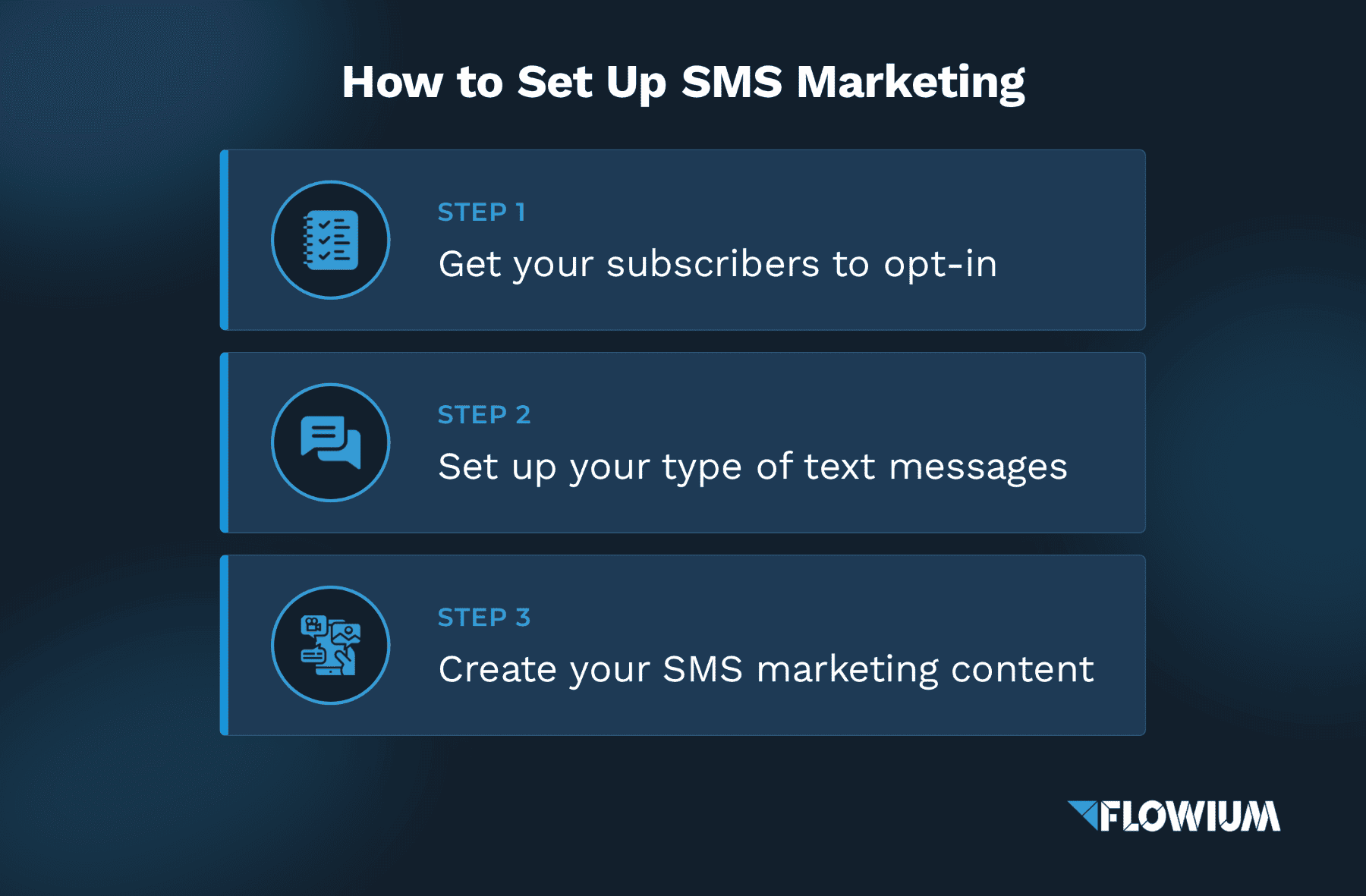
Step 1. Get your subscribers to opt in
Like email marketing, you need your audience to consent to receive text messages from you.
Using an on-site form like a pop-up, you can request your audience’s:
- Phone numbers
- Email addresses
- And preferred communication channels.
A great strategy is to offer an incentive in your opt-in messages.
Once they agree to receive messages from your company, you can then follow up with a welcome message and a series of valuable and relevant text messages to build a relationship.
Step 2. Set up your type of text messages
With SMS marketing, you can send different messages to your audience. The messages can include new product announcements, special offers, or other information relevant to your business.
You can send one-off SMS marketing campaigns with a specific goal or set up automated campaigns that get triggered whenever a contact meets certain conditions, such as abandoning a cart or buying something.
Here are some ideas for SMS marketing campaigns you can send to your customers
- Special offers and product or service promotions, such as a Black Friday sale.
- Discount coupons for first-time buyers, abandoned carts, and other high-intent moments.
- Text-to-win competitions, where your customers can win a prize simply by replying to your text.
- Loyalty program details and exclusive updates for VIP customers.
- Updates about your business, such as new opening hours, special events, or product launches.
- Personalized text messages based on each customer’s interests and purchase history.
- Post-purchase messages that provide useful information after an order has been placed.
- Replenishment or reorder reminders based on when a customer may be ready to purchase again.
- Winback messages designed to re-engage customers who have not purchased or interacted with your brand for a defined period.
Step 3. Create your SMS marketing content
Unlike emails, SMS marketing messages are usually short and have few design elements.
This means you must effectively communicate your message and capture your audience’s attention using just a few words.
A great strategy is to personalize and segment your SMS messages. This way, you can offer each contact a more relevant experience with your brand.
For example, you can offer discounts to people who are yet to make any purchase while announcing a new product to your regular customers.
SMS Marketing: Tips to Write the Best Texts
SMS marketing is a cost-effective way to reach customers and prospects. It’s also an opportunity to connect with them on a personal level.
But how do you write effective text messages that catch your customers’ attention and encourage them to interact with you?
Let’s go over a few tips to write the best text messages and improve your SMS marketing campaigns.
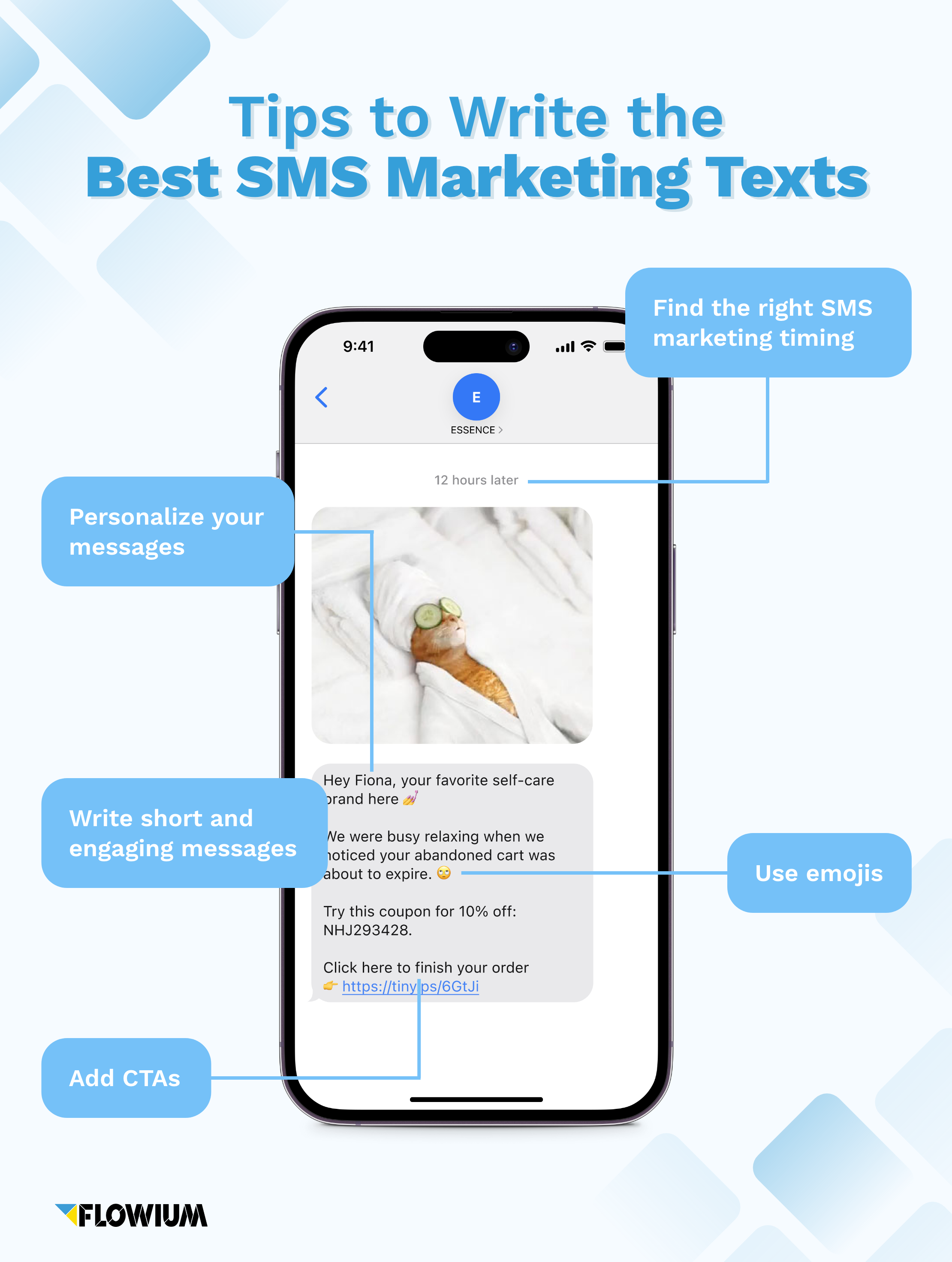
Write Short and Engaging Messages
When it comes to text messages, the shorter and more direct they are, the better. The average attention span of a smartphone user is less than 10 seconds, so it’s important to keep your messages short and sweet.
Moreover, your audience has limited time to read texts, so make sure your message gets across quickly and clearly without being too long or complicated. No one likes to read long blocks of text.
- Use Emojis
To make your text messages more engaging, use emojis in your message where required. Emojis can make your message look more appealing and attractive, as they add emotions to your words and emphasize the message.
With texting, it’s easy to misinterpret someone’s intention. Emojis can help your customers better understand the tone of your text message and help them interpret it correctly.
Pro Tip: Be careful not to overuse emojis. Don’t use an emoji if you believe there’s no need for it. If you use an emoji after every two words, you’ll end up cluttering your message and annoying your customers.
- Add CTAs
When it comes to SMS marketing, one of the biggest conversion killers is not adding a call to action (CTA) at the end of your message. How do you expect your customers to take action if you don’t tell them what to do?
Texts that contain a clear CTA are more likely to be read, clicked, and responded to. Adding a CTA makes it easy for customers to respond to your message, whether they want more information or want to buy something immediately.
People want to feel as if they’re being spoken to by an actual person and not just another business trying to sell its product or service. So, whenever you can, personalize your messages. Instead of sending a general text, try using their names or something unique about them and their purchase history with you to make them feel special.
Another aspect of personalization is your brand voice. Don’t try to sound overly corporate and professional. Let your brand personality shine! Brands that are authentic resonate better with customers.
- Find the Right SMS Marketing Timing
The best time to send a text message is when your customer is most likely to open it. Research your audience and understand their habits.
Analyze your customers’ behavior to understand what times of day and how often they open text messages. According to Simple Texting, more than 50% of consumers check their text messages more than 11 times a day.
You can also use A/B testing and track your analytics to figure out which times work best for your customers.
SMS Marketing Campaign and Message Examples
SMS marketing campaigns are one of the most effective ways to reach your customers. But it’s not just about sending a message. It’s about sending the right message at the right time.
Here are some examples of SMS marketing campaigns you can use in your SMS marketing strategy.
Promotional SMS Campaign
SMS promotional campaigns are a great way to get the message out about your product or service and increase your sales.
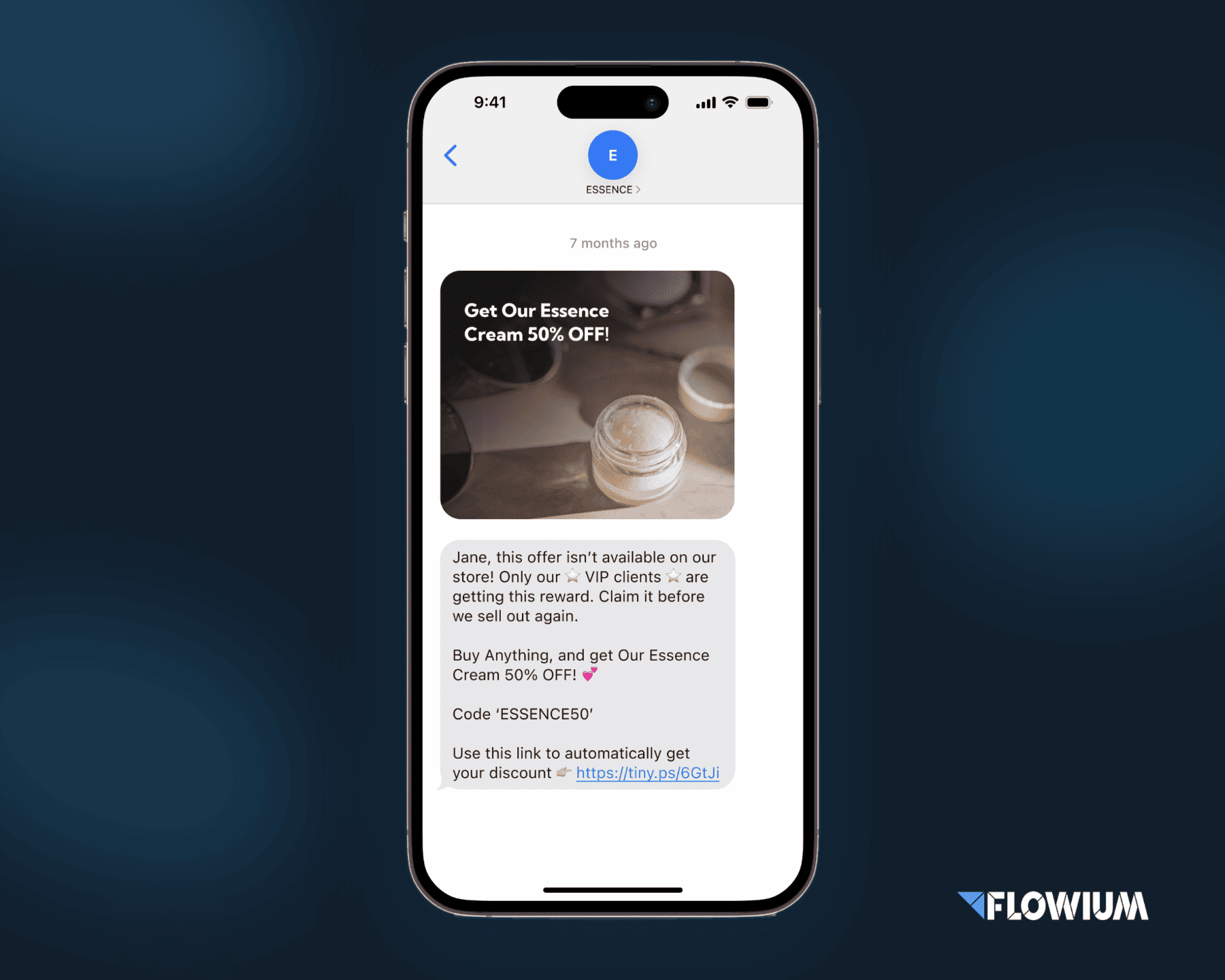
These types of SMS marketing campaigns are designed to drive customers to make purchases. This means the goal of these campaigns is to get people to respond to your advertising by making a purchase or taking another action you want them to take.
Promotional campaigns can be sent out whenever there’s a special event, such as a Black Friday sale or a particular customer’s birthday. You can also send them when you want to promote a particular product in a flash sale, maybe because you want to sell all the remaining items or generate more interest.
Welcome SMS
The welcome SMS is one of the most important SMS marketing campaigns. This message is sent to new subscribers to welcome them and thank them for becoming part of your brand community.
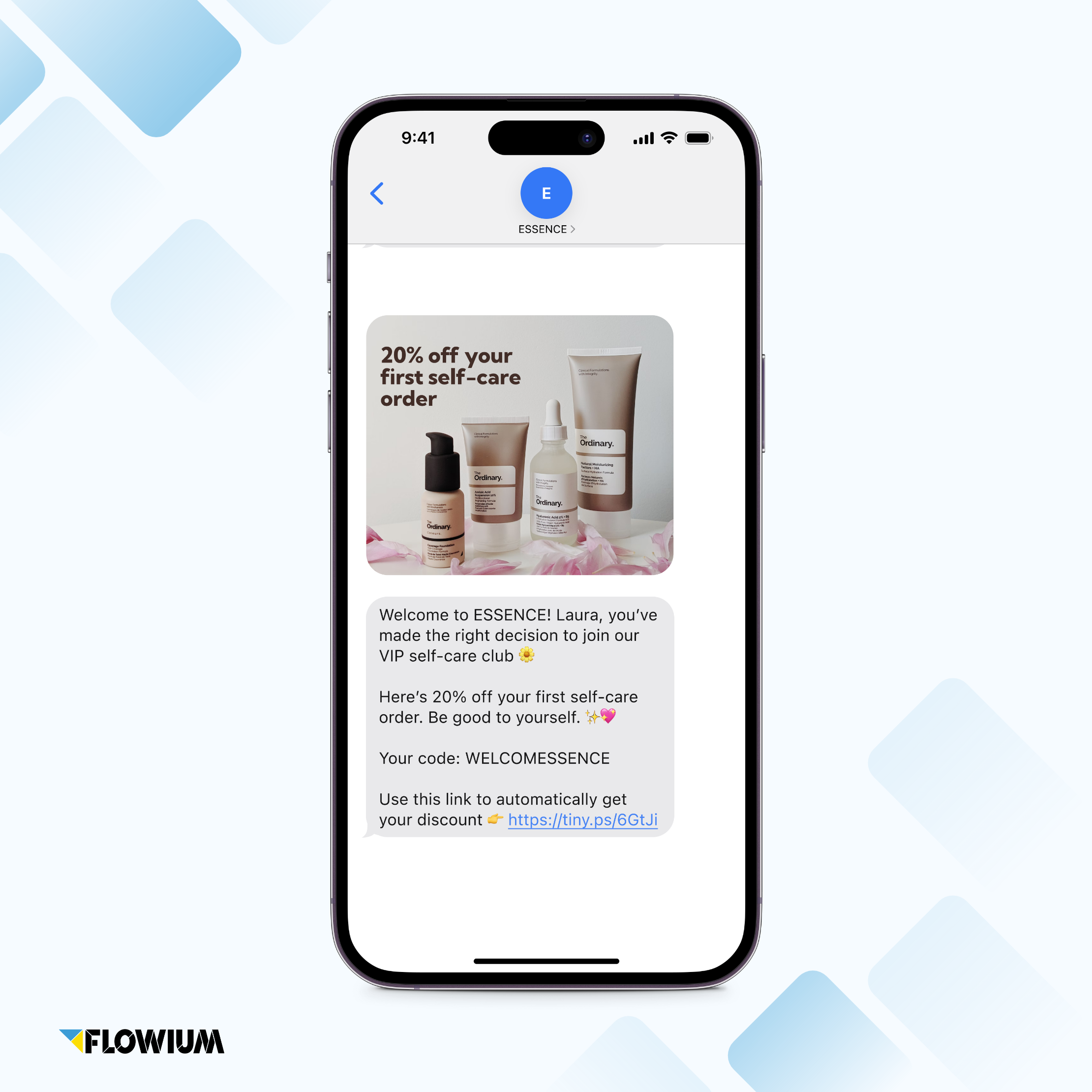
This is an opportunity to set the tone for the relationship. You’re greeting them and giving them a feel for what they can expect from your brand.
An effective welcome SMS campaign can contain a coupon or a discount code that can be applied to the first purchase. This is a great way of thanking them for subscribing to your list and expressing interest in your brand while encouraging them to make a purchase.
Abandoned Cart Message
The abandoned cart text message is a great way to re-engage potential customers who have left their shopping carts without checking out. This is an especially effective method for eсommerce businesses that are able to send automated messages to their customers right after they leave the site.
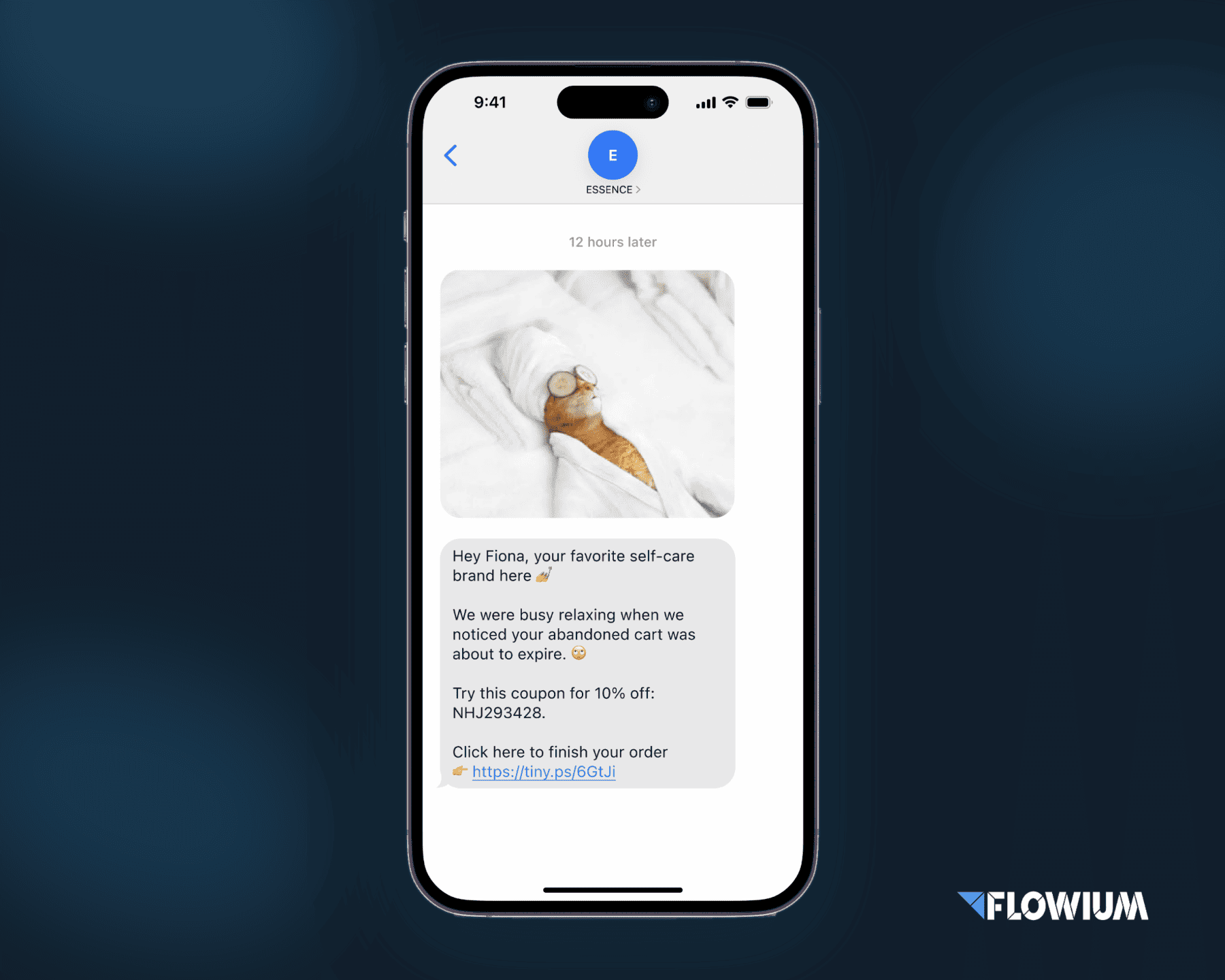
According to Baymard Institute, the average shopping cart abandonment rate for all businesses is a whopping 70.22%. An abandoned cart SMS campaign is an extremely effective way to reduce it.
Sale Announcements and Updates
The SMS notification campaign is a great way to keep your customers informed about an upcoming event or a sale that ends soon. This is a great SMS marketing campaign to use if you have an event or a limited-time sale.
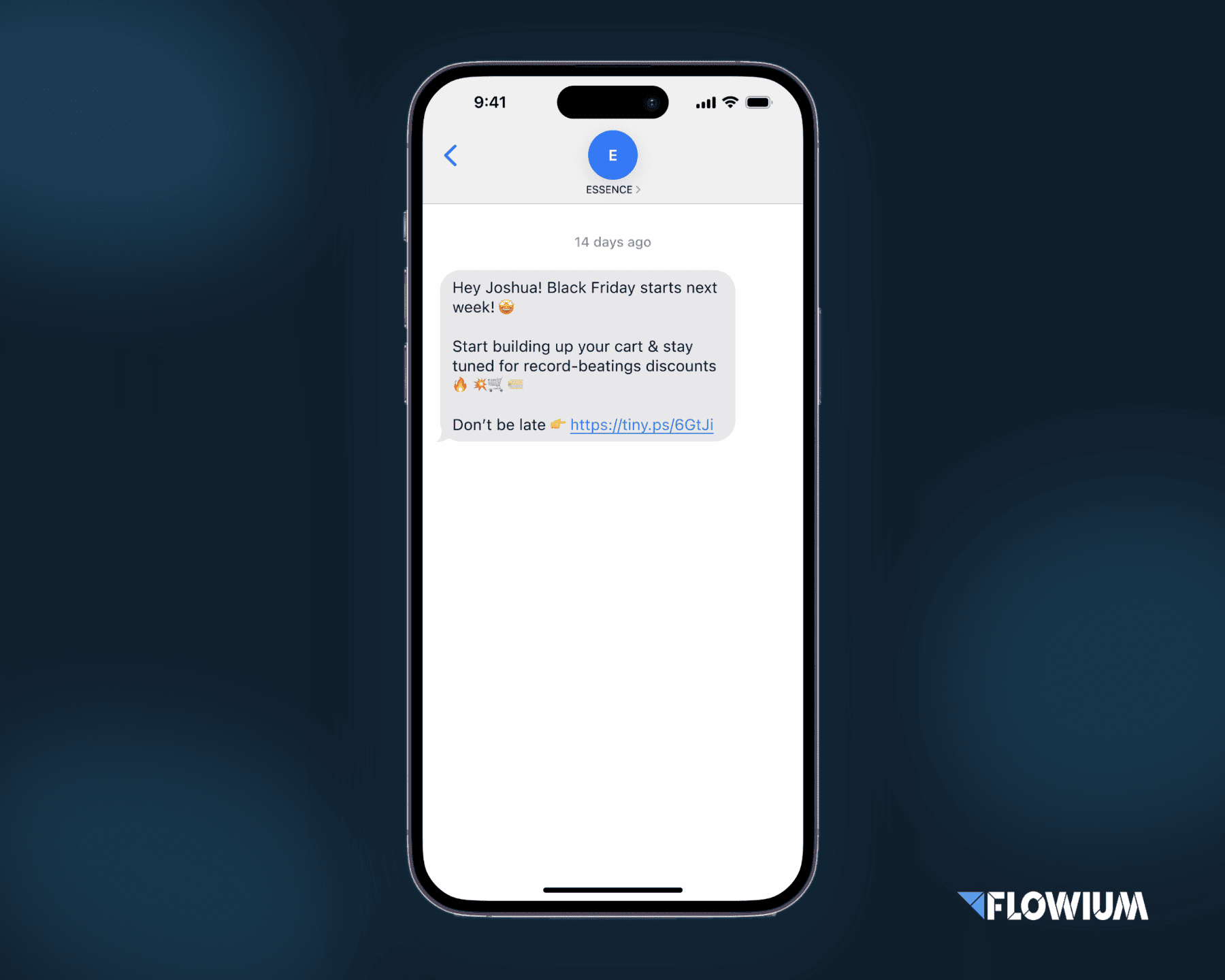
SMS notifications are also good for announcing new products and services to your customers. You can send them an alert when new items are added to your eCommerce store or let them know that their favorite product is back in stock.
Replenishment or Reorder SMS
Not every SMS campaign needs to focus on generating an immediate first purchase. For products with a predictable usage cycle, a replenishment message can remind customers when it may be time to buy again.
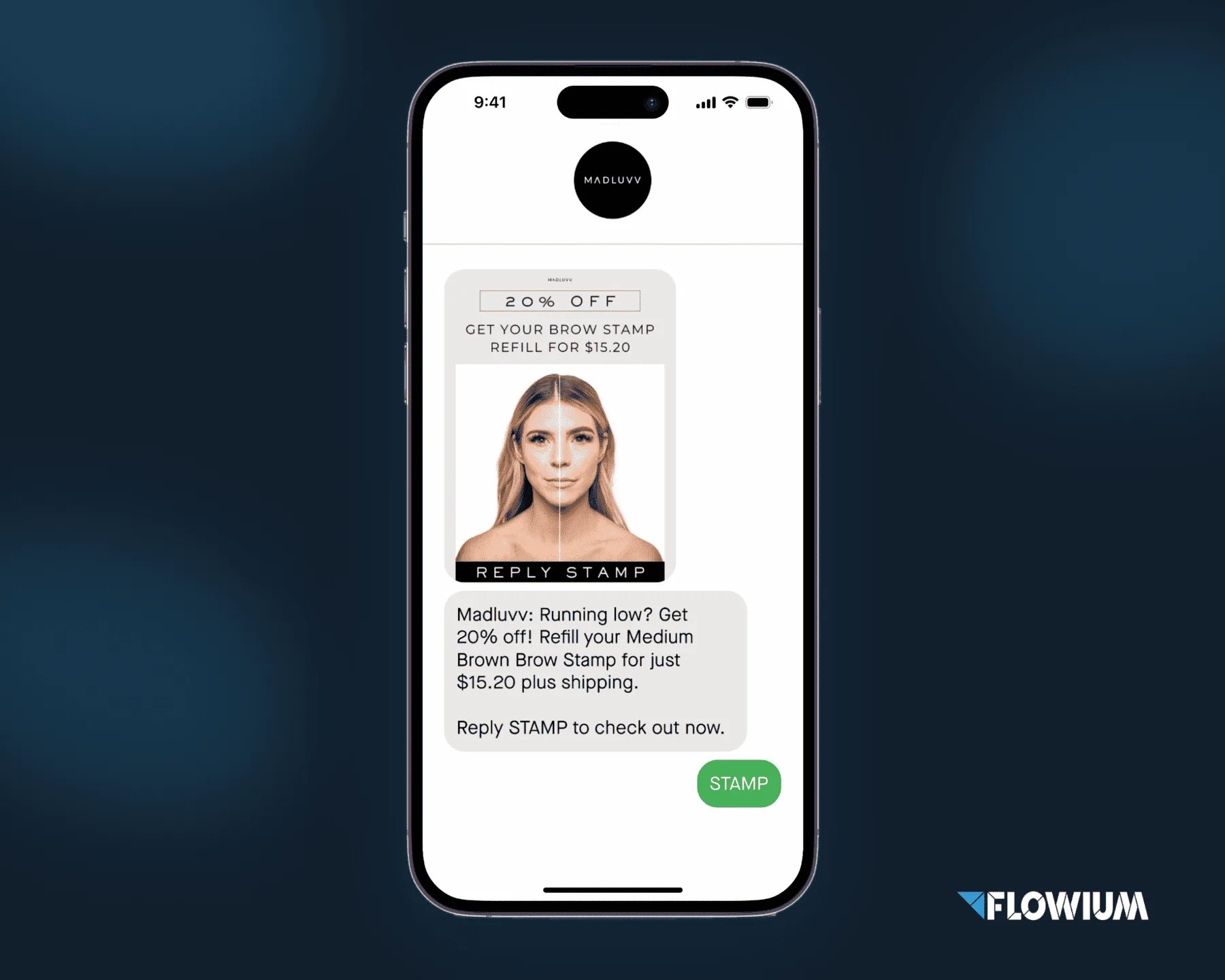
These messages can be triggered based on the original purchase date and adjusted according to the type of product or a customer’s previous purchase behavior. For example, instead of sending a generic promotion, a brand can send a timely reminder when a customer is likely running low.
The goal is to make the next purchase convenient and relevant rather than simply pushing another discount.
VIP or Loyalty SMS
SMS can also be used to strengthen relationships with your most valuable customers. VIP and loyalty messages may include early access to new products, exclusive offers, rewards updates, or invitations available only to a specific customer segment.
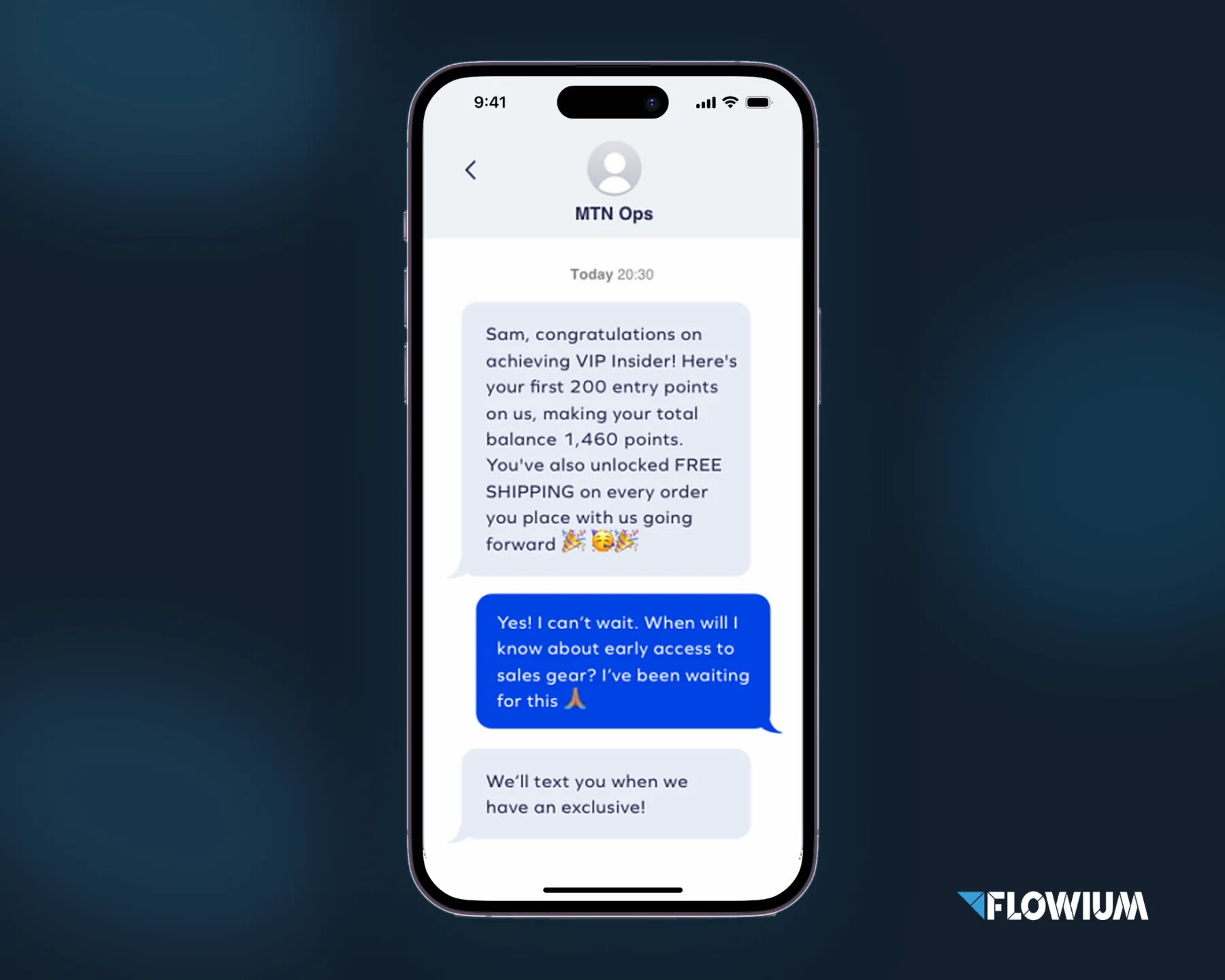
Because these messages are sent to a more targeted audience, they can make high- value customers feel recognized while helping brands create a more personalized loyalty experience.
Winback SMS
A winback SMS is designed to restart the relationship with customers who have become inactive. Instead of sending the same promotional campaign to everyone, brands can trigger a re-engagement message after a customer reaches a specific period without purchasing or engaging.
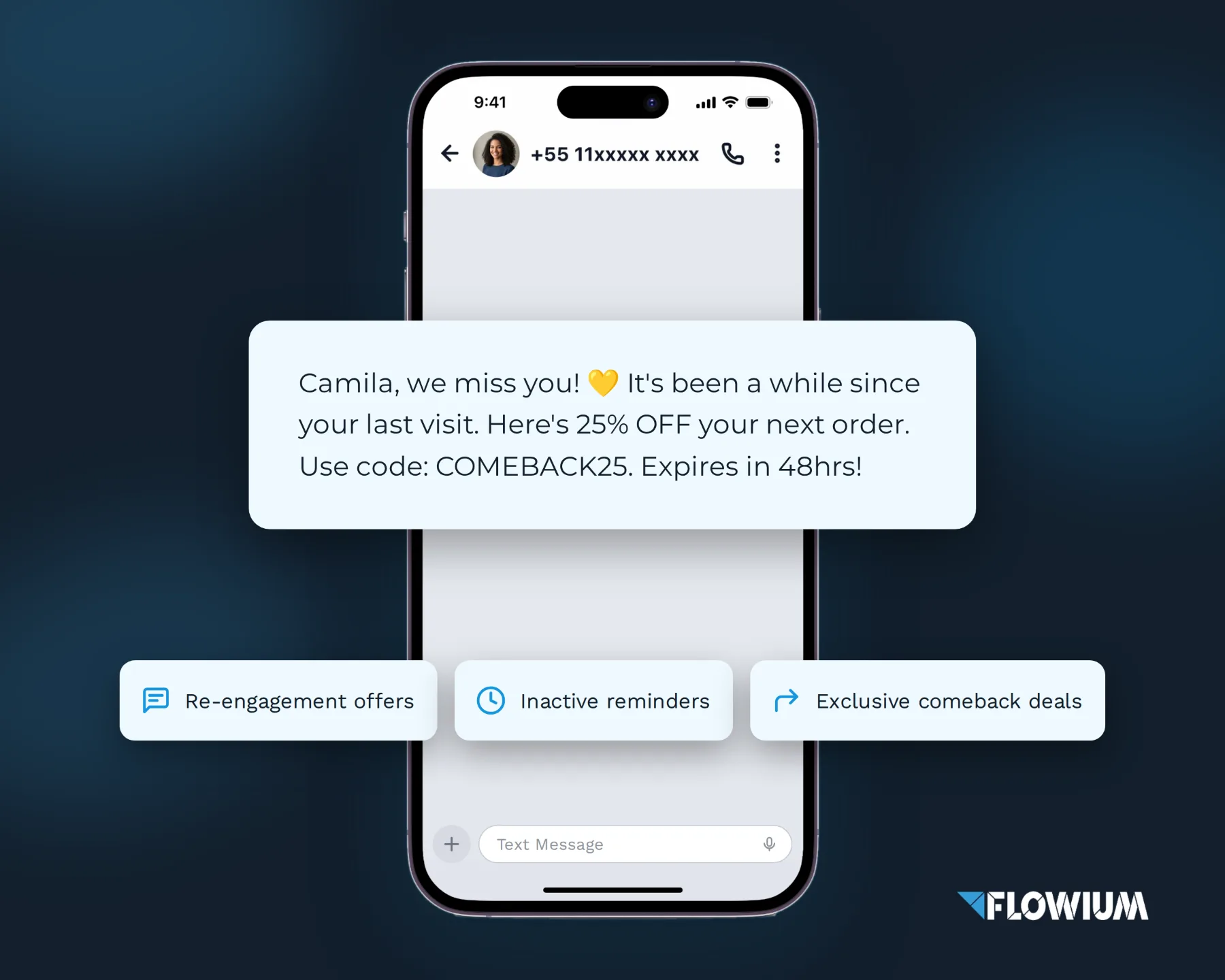
The message might remind the customer of a product they previously purchased, introduce something new that matches their interests, or provide an appropriate incentive to return. SMS works particularly well when the timing and offer are based on the customer’s individual relationship with the brand.
Set Up Your SMS Marketing with Flowium
SMS can drive immediate action, but its biggest value comes from knowing when it belongs in the customer journey.
At Flowium, we help ecommerce brands integrate SMS with email and other lifecycle channels to create a connected retention strategy. From post-purchase communication and replenishment flows to loyalty and winback campaigns, we build customer journeys designed to increase repeat purchases and long-term customer value. Contact us to get premium strategy building and marketing optimization across channels.
Frequently Asked Questions
Is SMS marketing the same as email marketing?
No. SMS messages are short, sent straight to a phone number, and read practically immediately. Email is better suited for longer content.
Do customers need to opt-in?
Yes, compliant SMS marketing requires clear consent, and every message should offer an easy way to opt out.
How much does SMS marketing cost?
The price of SMS marketing depends on three main factors: the number of texts you send, the frequency of your campaigns, additional features you may need, and your SMS marketing provider’s fees. The average price starts at $0.01–$0.02 per message.
How to collect phone numbers for SMS marketing?
You can collect phone numbers in several ways. The main one is offering users the option to subscribe when they sign up for your email list. You can include a checkbox asking them if they want to receive SMS messages from you. Another way is to ask users to opt in with a pop-up on your blog article or website.
What is the best time to send SMS marketing?
The best time to send your SMS marketing campaigns will depend entirely on your audience and their habits. Study your audience’s behavior as well as your SMS marketing campaign analytics.
Can small businesses use SMS marketing?
Yes! Most platforms are affordable and scalable, which makes them a good fit for local and small businesses.