

Podcast Transcript
Vira: 0:16
We are celebrating one year of our podcast. We have prepared 10 best email marketing lessons that we learned from doing this podcast and we’ll definitely share them today.
Alissa: 0:50
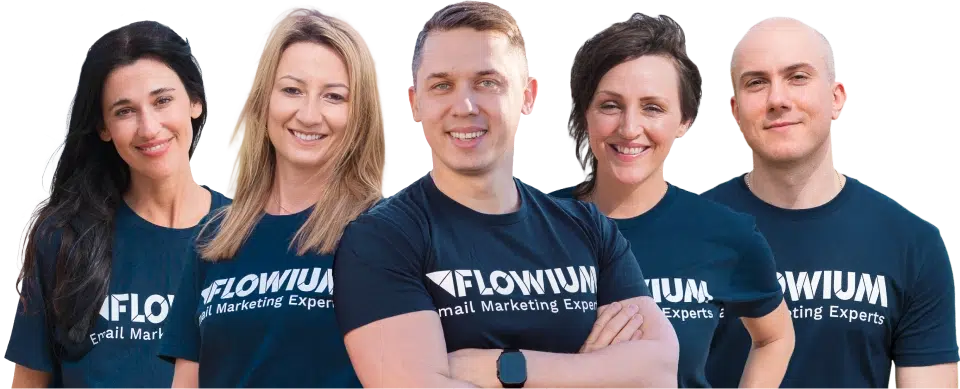
Hello. Hello. Hello everyone. Today is a very, very special episode of Email Einstein. But before we get started and talk about why it’s so special, as always, our little intro. You’ve got Vira and Alissa here. We are two email marketers at an email marketing agency called Flowium. We are super passionate about email marketing as I’m sure a lot of you already know. And because we love what we do, we want to share our insights with. Flowium is one of the fastest growing email marketing agencies in the world. We specialize in providing a premium, full service, e commerce email marketing experience for all of our clients. Our service is tailored specifically for your business and is designed to help increase your online retail revenue by 20 to 50. That is 5,0%. We deliver the right message to the right person at the right moment. That’s what we’re all about here at Flowium. That’s what Vira and I are all about with our clients. And let’s get started with our very special, special episode for today.
Vira: 1:52
Let’s, let’s start. I feel like we need more dramatic entrance because today’s episode, you guys, is our episode number 52. Thank you, Alissa. That was helpful. That was helpful. So we are celebrating one year of our podcast. So you guys, can you believe it’s so much changed in one year? We’ve gone through pandemic, someone got married and get a kid. Right Alissa?
Alissa: 2:23
Ha-ha-ha, we were just talking about that before we started recording.
Vira: 2:28
Your life definitely changed upside down. And here I am like almost 30 and thinking about getting a hamster. Yeah. And I’m like still not ready if I’m, if I’m not sure if I’m ready for such commitment, so.
Alissa: 2:43
Maybe next year, maybe on our two year anniversary you’ll have a couple of hamsters by then.
Vira: 2:47
Yeah, let’s, let’s, let’s do this. Anyways, here are some fun facts about our podcast. Our first episode was published on July 1, 2020, which is for those of you who don’t know It’s a Canada Day, and tomorrow we’ll be celebrating another Canada day. So our 52nd episode will be launched, like, approximately around that same time. People are listening to us in 81 countries. 81 countries. I didn’t know even that they even have 81 countries. I mean, of course they did, but I probably couldn’t even name 81 countries and 11,002 cities. Yeah.
Alissa: 3:30
Wow.
Vira: 3:31
Yeah.
Alissa: 3:32
What’s up, everybody? That’s really cool.
Vira: 3:35
Hi, everybody. I feel like we need to greet our listeners in different languages.
Alissa: 3:41
I know there’s a song my brother used to sing in, like, preschool or something that was like, oh, gosh, like, hello. Bonjour. Buenos diaz. Good day. Guten tak, Kunichiwa. Ciao. Shallom Dover Di, hello to all the children of the world.
Vira: 3:59
I like it. Let’s change our intro. Let’s change our intro. Alissa. Hello to all the children of the world. How do you say hello in Portuguese?
Alissa: 4:10
Oy or holla yeah, yeah, yeah. Depending on. Depending on how formal you’re being, I guess.
Vira: 4:19
In Ukrainian, if you’re trying to be informal, it’s pryvit. It’s somehow similar to, like, Russian privet. And to be more formal, it’s like dobry den. Yeah. So it’s a complicated language, but I love it.
Alissa: 4:34
Pryvit or dobriden.
Vira: 4:36
Oh, wow. At least. I’m impressed. I’m impressed. And your accent is almost non existent, so.
Alissa: 4:43
Wow. Yes.
Vira: 4:43
Yeah.
Alissa: 4:45
I could pass in Ukraine.
Vira: 4:47
Speaking of different countries, we are apparently popular in Thailand. And I was like, it was so interesting to see this because we are more popular than Amy’s Porterfield Podcast. And that’s a big one in Thailand. Not in the States yet, but we will be there, any, so watch out. And yeah, we are more popular than e-commerce uncensored, which is like another big one. So shout out to our Thai fans. We guys love you and we appreciate you listening to us.
Alissa: 5:20
Yeah. What’s up? And everyone’s listening to us 12 hours ahead too. Well, I guess not technically, but when our episode launches, it’s 12 hours ahead. So our episode launches at midnight 10 a. 10pm I don’t know what time.
Vira: 5:36
Midnight. Midnight, 10pm yeah. That’s great. That’s exciting, Alissa.
Alissa: 5:43
Very exciting.
Vira: 5:44
I have some blitz questions prepared for you. I know that we usually are doing blitz questions for our guests, but since today we don’t have guests. I know you prepared some for me too.
Alissa: 5:57
I did.
Vira: 5:58
Do you want to go first or do you want me to go first?
Alissa: 6:00
I’ll go first. I’ll go first, go ahead.
Vira: 6:02
Okay. I don’t know what you prepared. I haven’t read your notes, even though I know where they are.
Alissa: 6:08
Oh, my gosh. Okay, so we’re both surprising each other. Okay, so, Vira, these are my questions for you. I have six. Okay. Would you rather be able to speak every language in the world or be able to talk to animals?
Vira: 6:22
100% be able to talk to animals. I only need, like, language, and probably I would like to speak, like, Mandarin and Spanish and I’d be good. So that’s all of the languages they. That I need. But talking to hamsters. Oh, gosh. That’s definitely a superpower I want.
Alissa: 6:39
Oh, my gosh. That’s great. That is great. Okay, how long does it typically take you to get ready in the morning?
Vira: 6:45
Uh, five seconds.
Alissa: 6:46
Wow.
Vira: 6:46
I woke up like this. That’s my favorite.
Alissa: 6:51
It’s true. Actually, I have to speak to this because Vira is three hours behind most of the account manager team at Flowium. And sometimes, sometimes we have really early meetings or calls. So, like, for example, today we’re recording this at 10:30 am Eastern time, which is 7:30am Vira’s time. And usually we like, hop on zoom when we record this together, whatever. And we see each other briefly. And Vira looks like she’s been awake for hours. And she’s like, hello, everyone, I’m ready. I look glamorous. And I’m like, Vira, it’s 7:30 in the morning. Like, where did you just come from? Do you not sleep?
Vira: 7:25
You made me guys an early bird. I had to become one with you. East Coasters.
Alissa: 7:33
And she’s like, I woke up two minutes ago. It’s fine. And we’re like, what the heck? How do you look so perfect two minutes after waking up in the morning? So I believe that. I believe.
Vira: 7:42
Thank you, Alissa.
Alissa: 7:42
Of course. Okay, next question. Do you snore?
Vira: 7:48
I think I don’t snore, but my husband thinks otherwise, so I don’t know who to believe.
Alissa: 7:54
That is great. That’s great. I think I have the same situation as well, but my husband slept on the couch, like, throughout most of my pregnancy because as I got really big, I snorted more. And so I was like, okay, maybe I snore when I’m pregnant. Not. Not when I’m not pregnant. There’s no way. Okay, who is your first celebrity crush?
Vira: 8:13
Well, that was like, a Ukrainian guy. So if I tell you the name of Ukrainian guy, it will not mean anything to you. But my, like, highs or, like, not a high school, like, teenage crash. It was Adam Brody. Do you Remember from the O.C. oh, yeah. Oh, yeah. I loved nerds growing up, so was totally my. My crush. Yeah.
Alissa: 8:37
Wow. That was totally my first celebrity crush too. That’s really funny. Yeah, he’s. He’s like such a hot nerd. Hot Jewish nerd. Yeah, exactly. Exactly. And my husband reminds me of him, so maybe that’s why I married my husband. But anyways, that’s besides the point.
Vira: 8:53
That’s the only reason.
Alissa: 8:55
Yeah. Right. How many cups of coffee do you usually drink per day?
Vira: 9:00
Uh, none. I drink like two cups per week, probably. I’m a matcha girl.
Alissa: 9:05
Mm. Wow. I knew you liked matcha, but wow, I thought you drank coffee. Okay, interesting. Wow. We’ve worked together for what, almost two years, and I had no idea. Okay, that just goes to show how good I am at knowing you. Okay, and last question, of course. Socks or mattress?
Vira: 9:23
Socks.
Alissa: 9:25
Yes, me too.
Vira: 9:26
I don’t know. I can live without mattress, I guess. Guys, we promised that we have prepared some really valuable email marketing lessons as well in this episode. But before we go there, actually, in fact, we have prepared 10, 10 of our biggest, like, email marketing revelations that. The word revelation.
Alissa: 9:45
Yes, that’s the best word for it.
Vira: 9:47
Yeah. Our ten best email marketing lessons that we learned from doing this podcast. And we’ll definitely share them today, so stick around. But before we go there, Alissa, my questions. Texting or calling?
Alissa: 9:59
Texting.
Vira: 10:00
Yeah, yeah, definitely.
Alissa: 10:01
I’m lame like that. I’m lame like that. I know. I’m listening.
Vira: 10:07
If you were a food, what would you be?
Alissa: 10:10
Salmon avocado sushi roll.
Vira: 10:12
What? So specific. I love it. I love it. Favorite Disney character?
Alissa: 10:19
Oh, my gosh. Favorite Disney character.
Vira: 10:24
Like Disney princess, maybe?
Alissa: 10:26
Oh, duh. Ba. Okay. I love. Okay. Remy from Ratatouille the rat. Remy the rat from Ratatouille.
Vira: 10:37
He had a name?
Alissa: 10:38
Yeah, Remy.
Vira: 10:39
I thought his name was Ratatouille. Well.
Alissa: 10:46
The name of the dish is Ratatouille.
Vira: 11:16
Yeah, I knew that, but I thought his name was Ratatouille too. How convenient it would be. Oh, well, Remy. Yeah, He’s a really cool dude.
Alissa: 11:25
Ah, that cracks yam. I love that movie. That’s why I’m like, what’s the movie that I love from Disney? It’s gotta be Ratatouille.
Vira: 11:33
Nice. Speaking of food, what did you have for breakfast today?
Alissa: 11:36
Oh, okay. I actually made something really random. So I made three scrambled eggs with madras lentils. They’re like curried lentils that come in like a pre made package and I scrambled it all up together. And then put it in a tortilla roll or tortilla wrap with sour cream and cheese and cholula hot sauce. So I had like a makeshift breakfast burrito and a cup of coffee, of course.
Vira: 12:01
That’s so nice.
Alissa: 12:02
Wow, that’s good that you asked me because I never eat breakfast. So I would have just normally said a glass of water. But today I was like, I’m going to eat breakfast. I’m going to be a powerhouse today, so thanks.
Vira: 12:11
And see and the last one. And I think I know the answer to this question, but I’ll double check. If you could choose like one song to play every time you walked into the room for the rest of your life, what would it be?
Alissa: 12:27
September by Earth, Wind and Fire, obviously.
Vira: 12:30
Yeah, obviously.
Alissa: 12:32
That’s. That’s the best song of all time, like ever, in the history of all music. Sorry if you disagree with me. I’m sorry, but I love that song so much. That’s great. That’s a great question.
Vira: 12:44
I knew that that’s going to be the answer. So, yeah, guys, here you have your daily portion of inspiration that we really know. But here comes the gold. Here comes the 10 lessons that we learned from one year of doing this podcast. Okay, lesson number one. And this is something that our clients keep asking us about. That’s something that I keep hearing all the time. Email marketing is dying. It’s not true, you guys. It’s a Myth. According to 4Source website, 92% of Internet users have at least one email account. Because you can’t survive in the world of Internet without email. Every time you order something online, you need email. Every time you want to subscribe to like a newsletter, obviously you need an email. 92 freaking percent of people who are using Internet having some sort of email inbox or whatever. And like some of my friends, they are not on like social media anymore. For example, Alissa, yeah, she’s. You left Facebook last year, right? You’re not on Instagram. And something that I learned is that email marketing as a marketing tool certainly isn’t that. But some email marketing practices definitely are. For example, impersonal email emails or like impersonal content is not trendy anymore, you guys. It’s like the more relevant you are, the more relevant your email is, the better your email marketing will perform. So according to HubSpot, 78% of people who have unsubscribed or who have canceled their email subscriptions, they have canceled because they were receiving too irrelevant emails. And irrelevant is the key word here. So sending the right message to the right person at the right time is still very trendy. Sending like impersonal email addresses, violating senders rights is not breaking the law.
Alissa: 14:49
Not trendy. No, it’s not trendy.
Vira: 14:51
Bombarding your customer, exhausting your customer with irrelevant emails. So 2000s, you guys. Don’t, don’t, don’t do it. We have a ton of different pots podcasts, like speaking specifically about the relevance. But if you want to learn more about how to stay relevant, go to episode number one. Actually the first episode that we have ever created, it was about the misconceptions of email marketing and we talked about the relevance there. Probably that episode is going to be lame because it was our first episode ever, but it’s still very, it’s still very relevant. It’s still very interesting. On the other hand, episode number 51, the episode where we talked to Klaviyo specialist Naveen and Stephanie, we talked, talked about how SMS marketing tactics and Klaviyo email marketing tactics can be combined together to make this entire process of communication even more relevant. So go and listen to episode number one and number 51 and we will link all of the episodes that we mentioned in this episode in the description box. So scroll down and check them out.
Alissa: 15:58
Yeah, for sure. And I love that the fact that it’s our number one lesson. It spans from episode one all the way to our most recent episode. So it just goes to show. So we’re constantly learning about these things as we’re recording these podcast episodes. Lesson number two, automate, AKA send on autopilot. So this has always been a huge topic in email marketing and also one that we’ve talked about regularly, almost on repeat in our podcast episodes. And you know what, we’ll probably talk about it some more over the next 52 episodes of this podcast, so stay tuned. But what we talked about in the episodes that I’ll mention Now, episode 31 and episode 32, when we talk about these automations and what stages of your customer’s life cycle they fit into, we talked a lot about how these lifecycle emails, they’re data driven automated emails, so they’re considered flows, also known as automations, but they’re specifically triggered by different actions that the consumer actually takes. And it’s interesting because the behaviors or the actions that a consumer takes obviously happen in different stages of the buyer’s journey. And so it’s nice because you can actually see and get an idea of what or how deep in the funnel a customer actually is, is. And because the flows are so relevant because of how they’re triggered, they typically outperform campaign emails in all the major categories. So they usually have 165% higher open rates, which is not even a number I can comprehend. 1,558% higher conversion rates and over 1300% higher dollars per recipient, which.
Vira: 17:35
All sounds like fake numbers actually. They’re so high.
Alissa: 17:38
Exactly, exactly. But if you look at like an abandoned cart email for example, versus like your newsletter email, usually the abandoned cart emails have like a 70% plus open rate. If you ever get that on a campaign, it’s because you sent one email to your grandma and maybe another one.
Vira: 17:55
She opened one third of it.
Alissa: 17:58
Yeah, it’s like, I mean, it’s just not something that you see normally with campaigns. So just to kind of briefly go over how we split up the stages and if you want more information about the specific automations or flows that we talked about, make sure that you check out episodes 31 and 32. It’s a part one, part two kind of series there. But we split these flows up into three stages. So the early stage, or what we like to call the dating stage, you have the post purchase or post engagement stage. And then 10 years into the marriage or the late stages when sometimes you just have to put a little more effort into winning your baby back, if you get what I mean. So you have those three stages, the early stages, the post purchase stage, and then also the later stages where it may be that the customer kind of fell off the wagon, they’re not really engaged with you anymore, but they have purch. There is a level of interest, they’ve connected with your brand in the past, so you just gotta put a little more effort in there. But there are tons of automations that go into each stage. Make sure that you check out episodes 31 and 32. But on top of it all, lesson number two that we learned, sending emails on autopilot, there’s huge benefit to that and we will always drive that point home in the episodes to come.
Vira: 19:05
Right, right. And just like to keep talking about the relevance. Another thing to do to stay relevant and interesting to your customer is actually to segment. Segmentation is like what the marketing is all about in 2021, what any marketing, I guess is about. So segmenting your email list helps you to be more relevant. It allows you to be talking to your customers in their language, giving them the information that they want at the best time possible, the best offers possible. Basically you are delivering what your customers want to hear from you. And when you do it right. The payoff can be like huge. According to Mailchimp, the open rates of segmented list is almost 20 or like 19% higher than non segmented. Same goes for the CTR. Click through rates are 22% better. And like my favorite number out of all of this numbers, marketers who actually use segmentation for their email marketing campaigns, they see as much as 760% increase in revenue. So that’s what we are here for. Right? So it’s almost like counterintuitive. That’s something that our clients always like ask us. But why don’t I send, send like my email to my entire list? Maybe more people will see it and more people will buy it. Yes, my open rates will be lower. Click through rates will be lower, but more people will buy it. No, unfortunately this is not how it works. The lower your open rates and click through rates like historically, the lower is your sender reputation and it means that the less people will see you in the future, the more people will see your email in the spam folder. That’s not where we want you to end up. That’s why segmentation, segmentation and segmentation. The easiest approach that you can use is segment based on engagement. That’s like a no brainer. That’s the easiest one. Just send most of your campaigns to people who have engaged with you somehow within 30 days or 60 days or 90 days depending on how well people are responding to your emails. You can also segment based on purchasing behavior. So if someone purchased item A, if someone purchased like this T shirt, try to upsell them matching shirts. You can segment it based on demographic. If I’m selling the products for pregnant women, maybe in like nine months this product will not be relevant to them anymore. Maybe they will need like baby products. So that’s also another strategy that you can use. Anyways, in episode number 12 we talk about three quick and easy email marketing segregation strategies to try today. They are the most basic strategies that every business can benefit from. So go ahead and really listen to episode number 12 if you want to learn more about about segmentation. So that’s my lesson number three.
Alissa: 21:56
Love it. Yeah. And the segmentation one, oh my gosh, that’s like we could do a hundred episodes on that. Three years of.
Vira: 22:02
That’s our bread and butter.
Alissa: 22:04
Yeah, exactly, exactly. Okay, lesson number four. Mobile is the way to go. Mobile, mobile, however you say it. So I don’t know. In episode number 49 when we talked about increasing your mobile mobile conversion rates, we actually shared this really cool fact and I love it so much. I wanted to share it again today. So mobile traffic surpassed desktop traffic way back in 2016, and it’s actually only been increasing. Mobile accounts for approximately half of web traffic worldwide. In the first quarter of this year, mobile devices, excluding tablets, generated 54.8% of global website traffic. Let that just sit in your mind for a little bit and I’m going to continue, continue on. However, this mobile traffic is converting at less than half the rate of that on desktop, at 2.25% compared to 4.81% for desktop. Even tablets usually do a bit better, converting at 4.06% on average. So let’s think about that. More than half of the people who are surfing the web, as they used to call it, are doing it on their phones. But less than half, half of the rate of people who are converting at all are not are doing it on mobile compared to desktop. That’s a big, very telling sign as to what’s going on. Right? To us, it shows that people are super happy to go on your website on their phones, but when it comes to actually making a purchase, people don’t feel comfortable doing that. And you have to ask yourself why that is. Are you part of that problem? Because that does seem like a problem to us. So when we looked at all of this, we shared four tickets. Tips that you should take into consideration as you are optimizing mobile and making sure that your mobile website is the best that it can be so that you can actually start to convert. So if you go back again to episode 49, you can listen to more about this in depth. But the four tips that we gave, making sure that you’re designing your website for mobile specifically and then also designing the website for desktop, they are two very different things. And you have to make sure you’re doing one for one and then one for the other, maintaining solid page loading speeds. So you also want to make sure that if you’re doing like all this heavy image based like design essentially on your desktop website, that’s fine. But it’s likely that you probably don’t want to do that on mobile because if it takes forever for your website to load, you’re probably going to lose some people. Everyone is in like that here now, immediate mindset. And you need to make sure that you’re keeping up with that on mobile. The third is making sure that you have mobile friendly pop ups. I know for me this is a huge pain in the butt where I’m on a website and then a massive pop up comes up and I can’t click out of it because the X, like the exit button is too, is so large that it doesn’t even fit on the screen. And then I’m like, well, I’m done with your website, thanks. So make sure you don’t do that. And then also making sure that the checkout experience is as great as it can be for your consumers, for your customers. So making sure that you don’t have a million fill in the blanks, that you’re not asking them to write a whole paragraph about how they had a pet hamster when they were younger and then their, their sister took it to college and now they want to buy a new one and that’s information that they have to include in the checkout. It’s like, don’t do that. Make the checkout experience very straightforward. Just ask for the bare necessities on mobile. If it’s on desktop, it’s a different thing. But on mobile, just make sure that you’re making it clear, concise and straight to the point. So again, if you want more information on how to increase your mobile conversion rate, check out episode 49. That was a really big one. I think I might even go listen to it again because I have some tips to give to clients. So that’s number four. Mobile is the way to go.
Vira: 25:42
And it was one of your favorites, that’s for sure. I remember you you ere enjoying it so much.
Alissa: 25:47
Yeah, it was, it was really good episode to record.
Vira: 25:50
Yeah. Okay, number five, lesson number five that we learned. It’s very important to provide the value first in your emails. And we actually talked about it in episode number 25. And yeah, value first is estimated that in 2019, like two years ago, there were 293.6 billion emails sent and received every day. Which means that an average person receives more than 120 emails every day. 120 emails, that’s like a big amount of emails if you ask me. I bet in 2021 this number is even higher because people are ruthless with their emails sometimes. Yeah, and it’s way too easy to just like get lost in all of the noise for you as an email marketers. So if you want to stand out in 2021, you need to make sure that you deliver the value to your customer. You need to make sure that you cut through the noise. So how to do that? Well, we sort summarize it in three big groups of content, right? The first group is educate. Second group, entertain and inspire. So your every piece of communication that you’re ascending should either like educate Your customer about the benefits, about the product, about like how to use the product, FAQ, 10 ways to use the socks or the mattress or whatever. Either, like entertain. So you can maybe like tell stories or share jokes or send cat videos. Please do vira@flowium.com if you have any funny cat video. You can add me to your email list or your emails should like inspire customers. That’s actually a great way to communicate as well. And I know, Alissa, that you’ve done it a lot with your clients, especially with Lulalu. Right? You guys did send like a campaign when where you were talking about different customers stories. Very inspirational and empowering stories of women who battled the cancer, right?
Alissa: 27:50
Yes. Yeah, exactly. The inspiration stuff. I’m all about that. I’m all about that life. The inspirational emails.
Vira: 27:57
Yeah, definitely. Not everything should be like about the product. Sometimes it can also be about your customer or about their journey. Right?
Alissa: 28:05
Yeah.
Vira: 28:05
Yeah. So number five, provide value in your email and if you want to learn more about like what sort of content you can provide. Podcast number 25.
Alissa: 28:14
Yeah, I love it. So this next tip that we learned over the course of recording this podcast. So this is an pertaining to any specific email, but this or any specific podcast rather. But this is something that we’ve just kind of talked about and it’s been peppered throughout every episode that we’ve talked about. And we’re going to call this tip. Socks and mattresses are not created equal. The recent.
Vira: 28:40
Good one, Alissa. It’s a good one.
Alissa: 28:42
We’re going to call this tip what it is because one of the things that we always want to do with this podcast is bring value, as much value as possible to anyone who’s listening, whether you’re into email marketing, you’re an e-commerce business owner, whatever it is. So the reason why this tip is so important is because all businesses and all brands are not equal. Right? There are very different times and timings when it comes to the buyer’s journey. From when they make a purchase, how many touch points they need to have because of the price point of your item or your product, when they’re actually going to come back and buy more of your product. Does that ever even happen? There are just a lot of things that, that get taken into consideration when you think about the buyer’s journey for your customers. So even though we, we have our awesome email marketing podcast, there’s a ton of information that we dish out. It’s so, so important for you to understand that what we say and what we recommend to do is on a very Generic level, very, very high level information. And it’s important for you to take everything and really consider whether or not it makes sense for your company, right for your brand. So the socks and mattresses example, you know, we’ve, we’ve used that as a joke for, for the last year and it was just something that kind of happened. And we laugh about it internally at Flowium. We laugh about it. Vira and I laugh about it together all the time. We know that some of you laugh whenever you hear us talking about socks or mattresses. But the thing that we really want to drive home is someone who is selling socks and someone who is selling mattresses has two very different customers who are going through two entirely different customer journeys or buyer’s journeys. A socks customer, it’s likely that they are going to be purchasing socks a lot more frequently than someone who is buying a mattress. Unless you own like a 25 bu bedroom house and you just need to buy mattresses over and over and over again, or like you’re in the hotel business or you own a hostel or anything like that, it’s unlikely that the average person is going to be buying a mattress once every 60 days. So like a prime example of that is the win back flow that we’ve talked about quite a bit. We’ve actually had an entire episode on winning back your customers. And with a win backflow, it makes sense for you to have your customer who’s buying socks from you come back in 45 days, 60 days, maybe even 90 days, depending on how high quality the socks are and how expensive they are. But in terms of the mattress, if you’re sending a win back email to someone who just bought a Mattress from you 60 days ago, there’s something very wrong there. There’s something very wrong with that picture. It’s likely unless you have accessories or something that goes along with the mattress that makes sense to buy in conjunction with the mattress to complement the mattress, you probably don’t want to send a win back for like two to five years because the hope is that they’ve spent a ton of money on a mattress and there’s some kind of warranty on that mattress that’s going to keep the matches for them for at least a couple of years. So make sure that you take that stuff into, into consideration when you’re listening to all the advice that we give and all the, all the ideas that we put out there. So just remember, socks and mattresses, they are not created equal. So email marketing strategies for e-commerce brands as a whole, none of them should ever be created equal and nothing should look exactly the same because the buyer’s journey is very different. For every sing is one of like our biggest tips ever is number six, socks and mattresses are not created equal.
Vira: 31:57
Ah, that’s, that’s a genius, genius rule or whatever. Yeah. Um, the next one is reputation is everything and we talk about it all the time. Reputation, especially in email marketing really does affect everything. There is such thing that is called the sender’s reputation. And the higher your open rate, the higher your click through rate, the better is your sender’s reputation. And there are the more chances that you will actually end up in your customers inboxes and not the spam folders. So we talked about like how to get out of a spam folder in our podcast, but I don’t remember which episode was it. We will link it somewhere here. But there are definitely like certain rules like email hygiene. There are certain rules like how to clean your list, who to send and who not to send your emails, like when to send. So all these things are very important for your customers to actually receive your emails. So we talked a lot about like how to not damage your sender’s reputation and if your reputation is already damaged, how to get out of spam folder. So we will link that episode in our description box as well. So go ahead and check it out. Reputation is everything.
Alissa: 33:19
Everything, literally everything. I’m going through this with one of our clients right now where they are in low IP pool and I’m like, oh dang it, we gotta pull them out. Not it wasn’t our fault. They came to us like that. That’s part of what we do.
Vira: 33:34
Yeah.
Alissa: 33:34
This was not our fault. Just to clarify. But yeah, it’s definitely something that’s. It’s determining everything for them. They primarily focus on revenue that comes from email. That’s like where most of their revenue is generated from. And that low IP pool, it’s just, it’s rough man. It does, it does make or break you. So that’s a big one. Okay, number eight, find the right technology for your brand. We have a approximately a hundred episodes where we’ve talked about this. So there’s episode 15, episode 16, 20, 21, 22. And a lot of these also have guests. So we’ve had a ton of guests. Amazing, amazing people through all different walks of life that are in all different kind of arenas on our podcast in the last year, from talking to e commerce business owners, to app creators, to a guy who controls a robot to write handwritten letters to customers, customers. There’s a lot and the scope is pretty varied. But the one thing that all these people have in common is that they all know and are passionate about the tech stacks or apps, kind of slash platforms that they use to help drive their businesses in the best way possible. So I won’t get into like really, really nitty gritty details of it all, but I’m going to run down a list of some of the many interesting apps that we’ve heard about on our podcast. Make sure that you check out the links to the episodes that I just mentioned, 15, 16, 20, 21, 22 so that get more of a breakdown about these. But the quick list. So we have Dojo Mojo, which is actually an online platform that helps users grow their email list all through running sweepstakes along with performance analytics. We have Ignite post that goes back to that guy who controls the robot. They basically have a robot who writes handwritten letters to customers from brands. And it just helps kind of connect all the, all the communication up really, really nicely. You have many chat and the world of chatbots that are changing up how we interact, engage with customers. We have tons of survey tools that we’ve talked about from Google Forms to Type form to Survey Monkey to oh my gosh. The, the, the amount of survey tools are endless. You have review apps that you can use as a brand from Yotpo post Stamped.IO, JudgeMe, Okendo. You’ve also got loyalty programs that we are. I mean that’s like the frenzy this year is I need a loyalty program, any little loyalty program. And you’ve got Smile.IO, Swell by Yotpo. I mean, yeah, honestly the list is endless. And then you’ve also got referral programs that you can get into. So like Talkable, Referral Candy, Swell also does that by yotpo. They also do the referral program. So there are so many options out there. These are just the tip, like the absolute tip of the iceberg. So in the same way that we talked about how socks and mattresses, no socks and mattresses are alike, none of them are created equally. The same thing kind of applies here where you have so many different apps, so many different tech stacks, so many different technologies as a whole that you can utilize for your brand and we you as many recommendations as possible. But it’s on you to do the research and find what’s the best for your specific brand. So even though Talkable and Referral Candy are both excellent referral programs that we’ve actually used for our clients, internally, we’ve used one over the other because one tends to have a benefit over the other when it comes to the kind of brand that we’re working with and vice versa, you know, so you have to make sure that you go through, do the research on the, on the tech stacks, know about them, understand how they’re going to improve your business, and then just get really passionate about them and dive in headfirst so that you can make the most of, of everything that you have for your brand and then also for your customers. So that’s number eight, Find the right or perfect technology for your brand specifically.
Vira: 37:13
Oh, I love it. I love it. And I’m the technology geek myself, so I love every time we have this amazing guests who are coming to us and talk to all these different tricks and tools. It looks like magic to me, honestly.
Alissa: 37:25
Yeah, it really does.
Vira: 37:26
Yeah. Yeah. Okay. Number nine, Lesson number nine that we learned this year is that campaigns can make your customers fall in love with your brand. And it is totally true. As we already talked in this podcast batch and blast conversations are dead. They are non existing. So sending a big one size fits all campaign to your list, it’s a really, really bad idea. On the other hand, you can create a very impactful on brand but very like impactful and very segmented campaigns and send them to your customers. And as we already talked briefly, segmented campaigns, they do perform more and like better than your non segmented ones. So in episode number 28, and that was just like one example of one month of campaigns that we have created in episode number 28 of our podcast, we actually talk about about how to make your customers fall in love with your brand in February. So like specifically on that podcast we talked about different like holidays that you can do in February. Different like awareness, for example, it was a heart disease awareness month or the Groundhog Day or stuff like that. So we do have a ton of different fun holidays. And Alissa is definitely a pro when it comes to cheesy holidays because she launches this amazing calendar every basically month on our YouTube. So go ahead and check it out where she talks about all the different fun ways to communicate with your clients. Of course you have your like standard set of promotions or like newsletters that you are sending, but you can also sometimes add a little bit of spice to your email marketing. So one of my favorite holidays is definitely a national Cheese Day and National Peanut butter and jelly Day and we celebrate this day like freaking every month. I’m not like joking, like seriously, every month or every second month they have some Sort of national Cheese day on the calendar. That’s specifically on the US Calendar. Yeah, you guys do love cheese, I guess.
Alissa: 39:32
We love cheese. We love cheese over here. Yeah, that’s a good one. And the campaigns, even aside from all like the goofy kind of marketing holidays that you have there, there is always the opportunity to create some really cool ideas. Like Vira, there was one campaign that you sent out recently for a client that was just so creative, which was basically what kind of tea are you? Or what kind of tea you should buy based on your horoscope.
Vira: 39:57
I know, I love it.
Alissa: 39:58
Star sign, which is really, really cool. That campaign was incredible. So, so, so awesome. So lots of ideas that you can have around campaigns that can make your customers fall in love with you. Awesome. I love it. Okay, and the very last one, this is our last fact or tip or piece of advice that we’ve learned over the course of the last year in recording this podcast, which is without, without trust, you have Nothing. So episode 46, we actually interviewed Marcus Sheridan about his book they ask, you answer. And Vira and I were kind of sat talking about this episode for quite a bit actually after we even recorded it. There’s so much good insight that we learned from Marcus in that episode. The main topic of discussion was really about being open and honest and transparent with your customers. So whatever questions that they are asking you about your brand, about your product, about who you are, you have to to be prepared and willing to answer those questions. Obviously nothing about like the personal financials or the private financials of the company, but if it’s about your product or the business you run, you should be willing to answer. That I think is very relatable to everyone whether you own an E commerce business or not. Because quite frankly, it doesn’t really matter where in the digital world you are, the digital space, whether you’re an email marketed marketeer or you run that business, or you’re just someone who likes to listen to our voices, or you’re someone who just wants more info about email marketing, transparency and being willing to answer the questions that your customers are asking. It’s really key when you’re dealing with customers and people in general. And actually it’s one of our core values here at Flowium, embrace integrity. So with everything that we like to do here at Flowium, and in all the ways that Vira and I like to work with our clients and just in the ways that we like to kind of create our email marketing strategies and the campaigns that we create for customers, we do it in a way that embraces integrity and, and lets customers trust what we’re doing as a brand for our clients, or what we’re doing for our clients as a brand, what we’re doing for the customers of our clients. We’re trying to embrace integrity at all times and let customers feel like they can trust the emails that they’re receiving, the brands that they’re purchasing from and everything. Honestly, without trust, you have nothing, which goes back to the name of the rule. But with the trust of your customers, you have the ability to gain everything. So that was a really cool episode for us to have, and it was such a pleasure to have Marcus on board here with us for some time. But it was very, a very, very telling episode. So that is our final rule for today. But I think one of our most important is just without trust, you have nothing. So make sure that in everything that you do, when it comes to your email marketing and how you engage and communicate with your customers, you’re doing it in a way that’s very integrity filled and transparent and honest with your customers because they will appreciate that a lot more in the long run from you as a brand.
Vira: 42:52
And actually, next Tuesday, that’s exactly what we will be talking about with our next guest, Ashley Deluca. We will be specifically talking about how to build a relationship first company with email marketing. So I feel like that’s a really nice, like, transition to our next week’s interview. I know Ashley personally, she’s amazing. So definitely come back and don’t miss next episode.
Alissa: 43:17
Love it. Wow. That was a totally unintentional transition.
Vira: 43:21
Smooth, right?
Alissa: 43:22
Very smooth. So, guys, before we end off today, thank you again for listening to us for a whole year. Vira and I, we have a lot of things that we’re doing internally at Flowium and we were asked to do this podcast a year ago and I think we were both a little hesitant. Not because we didn’t want to do it, but just because it was another responsibility packed onto working with clients and trying to make Flowium an even better place to work than it already is. But I think it’s one of those things where we said yes with hesitation. And we’re so glad we did because this has been one of the most fun things that I think I’ve ever done for, for me here. I don’t know. I don’t know if you feel the same way, but yeah, for sure. We’re super grateful to you guys for listening and we receive comments and emails from a lot of you who listen and it warms our hearts to know that we’re providing value where it’s needed. And as always, we want to leave the lines of communication open. If there’s ever anything that you feel like you could benefit from listening to us talk about or discuss or provide insights on, please don’t hesitate to reach out to us. You can email myself or Vira directly. It’s Vira V I R A flowium.com or Alissa A L I S S A flowium.com we also have a flowium.com/ask portion of the website where you can go on and pop any question that you like in there so that we can address it. And as always, don’t forget to subscribe. Share this podcast with your friends and if you like what we do, please leave us a review. Again, like I mentioned, we love seeing those reviews and just knowing that we’re we’re providing some some value and we’re not just talking for the sake of hearing our own voices, so.
Vira: 44:59
Yeah, guys, we love you. Thank you so much for listening to us for the entire year and definitely come back next Tuesday because we have prepared even more cool stuff for you this year, I guess.
Alissa: 45:10
Yeah.
Vira: 45:11
Thank you so much.
Alissa: 45:11
For sure. Thank you guys.
Vira: 45:13
Thank you. Take care.

Vira Sadlak
Podcast host, marketer, traveller and a life lover from Vancouver, Canada

Alissa Horta
Alissa is an email marketer that is passionate about relevance!