

Podcast Transcript
Vira 0:00
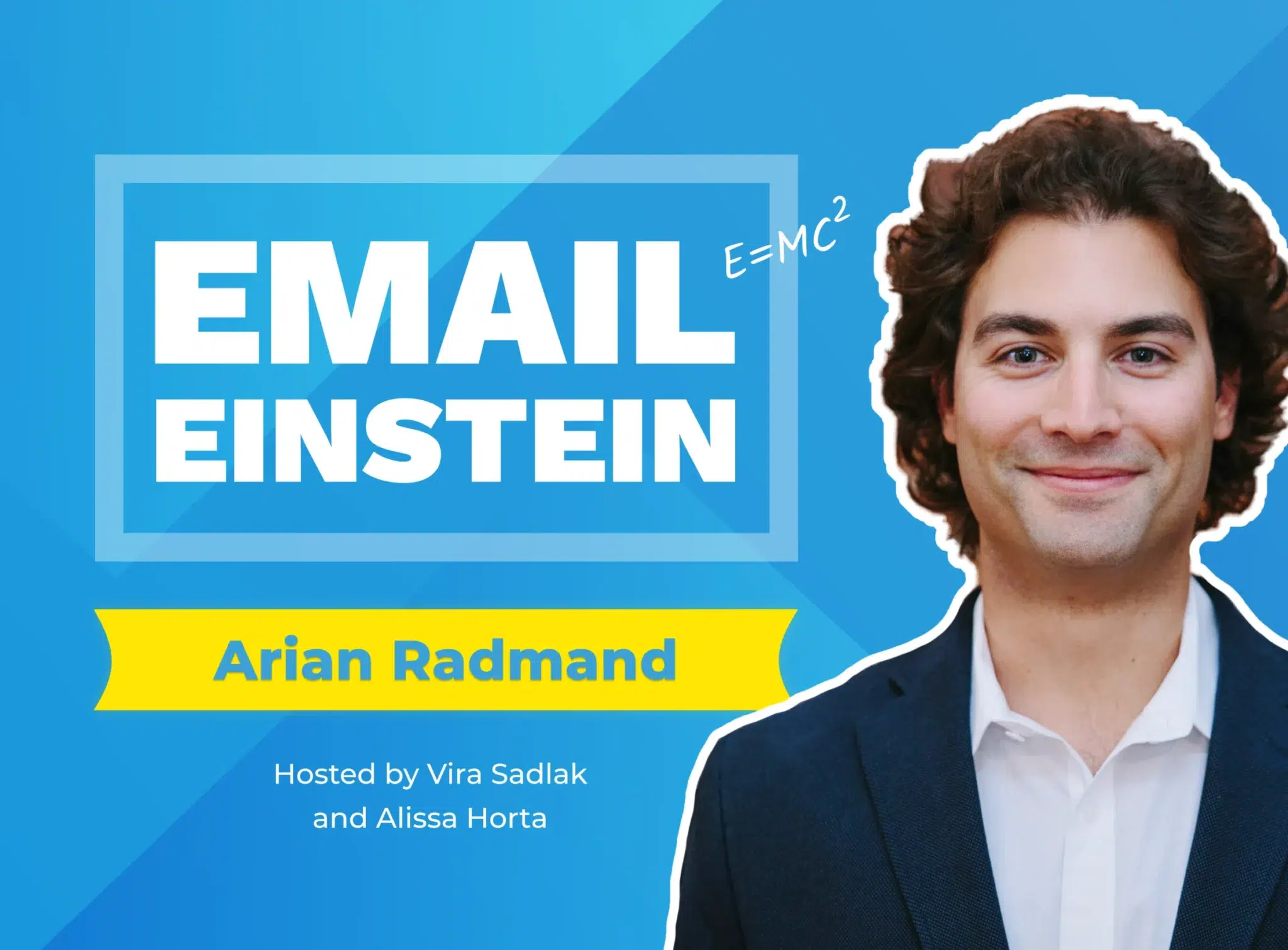
Arian is the CEO of ignitepost.com, the company that helps marketing and sales team to improve their conversion rates through let’s do the drum here. They actually are using software and robotics to send real pen and ink notes.
Alissa 0:38
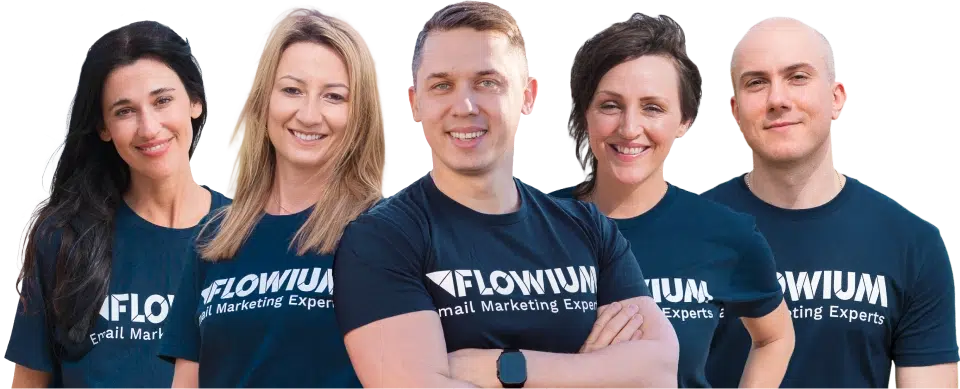
Hey everybody, and welcome back to Email Einstein. Another week, another episode. We’re super excited. We have a very special guest, Vira and Alissa here. And yeah, let’s just get started. So before we do we are two email marketers at an email marketing agency called Flowium. We are super passionate about email marketing, and because we love what we do, we want to share our insights with you. Flowium is one of the fastest growing email marketing agencies in the world. We specialize in providing a premium, full service e commerce email marketing experience for all of our clients, and our services tailored to specifically for your business. And it’s designed to help increase your online retail revenue by about 20 to 50% which is pretty good. We deliver the right message to the right person at the right moment, and that’s what we’re all about here at Flowium. But without any further delay, Vira, please tell us who our special guest is, because we’re really looking forward to this one.
Vira 1:32
I’m super excited about this one because I have like, a gazillion questions myself, and I’m sure that our listeners will have them as well. And just before the episode, I was rehearsing how to pronounce the name of the company and the guest correctly. So fingers crossed, I’m not going to mess it up this time. So today on the show, we’ll be talking to Arian Redmand. Did I say it correctly?
Arian 1:54
Yeah, you got it, Arian is I pronounced my name. But yeah.
Vira 1:58
Arian I nailed it almost. And Arian is from the brand called IgnitePost. Did I do this one? Right?
Arian 2:06
Yes, nailed it.
Vira 2:07
Okay, okay, this is the most stressful part of the podcast for me and my Ukrainian alter ego. So we’re so excited to have you on podcast today. Arian is the CEO of ignitepost.com, the company that helps marketing and sales team to improve their conversion rates through let’s do the drum here. They actually are using software and robotics to send real pen and ink notes. How crazy is that.
Alissa 2:34
Which this like. This is psycho to me. I was like, what they should have done my wedding invitations or thing, everything. Come on.
Vira 2:44
Christmas this year, guys?
Alissa 2:46
Yeah, yeah, that’s a great idea.
Vira 2:49
That something you’re doing, hey, hey, Arian, how’s it going?
Arian 2:53
It’s going well, it’s going well, thanks. Thanks so much for having me. It’s it’s awesome to be here.
Vira 2:57
Cool, cool.
Vira 3:34
Before we get into the serious questions, we want to play this little game called called blitz Q and A.
Arian 3:40
Okay.
Vira 3:41
Alissa will ask you, like, list of shirt and silly questions, just answer the first thing that comes into your mind.
Arian 3:47
Okay, I’m excited.
Alissa 3:49
This is my favorite part of when we have guests, because I feel like this is when you really get to know who the person is. So no pressure. Aryan, so Okay, first question, favorite US city?
Arian 4:01
Favorite US city. It’s got to be Boston.
Alissa 4:03
Whoa, yes, I love that answer. That’s a great answer.
Vira 4:06
Alissa, that’s where you grew up?
Alissa 4:08
Well, okay, so technically, New Hampshire. And when I say Boston, people are like, that’s not New Hampshire. But my dad worked in the financial district in Boston, so we used to go every single weekend, like, literally every single weekend. We lived about a half hour north of the city, so.
Vira 4:22
Boston Cream donut in the city?
Alissa 4:24
Yeah, yeah.
Vira 4:25
Where do you find it? Is the place?
Alissa 4:28
Arian, and that’s on you.
Arian 4:29
That’s a good question. I think actually, the Omni Parker house is the originator of it. We’re at least somewhere around there’s like an intricate story there involving, like, a bunch of, like, really early Bostonians, or maybe even, like, JFK. I got to look into it. I’m butchering it. But I think there’s, like, a very, very historical significance of the Boston Cream.
Vira 4:53
That’s the only thing that my husband asked me to bring from Boston the last time I traveled there. Bring me some Boston Cream donut.
Alissa 4:59
I love it. It’s such a great historical city. But anyways, okay, so, okay, next question, texting or talking?
Arian 5:05
Ah, man, you know, I’m gonna say talking.
Alissa 5:10
Yeah, great, nice. Okay, pen or pencil,
Arian 5:13
Pen gotta be pen. The reason is because if history was recorded with pencil, we would have no recorded history.
Vira 5:19
This that’s a good one.
Alissa 5:21
That’s true. I like that a lot. I like that a lot. Okay.
Vira 5:25
Instagram perception.
Alissa 5:27
Yeah, yeah, I like it. Okay, sending greeting cards or receiving them?
Arian 5:33
Ah, you know, I’m split on this one. I’m gonna say sending. I’m gonna say sending.
Alissa 5:39
That makes sense. I think that makes sense. When was the last time that you personally wrote a letter to someone, like handwritten on paper?
Arian 5:46
I do that very frequently, so last week.
Alissa 5:49
Wow, that’s really cool. That’s awesome. It’s so weird, isn’t it? That’s like, such a rarity these days. Like, wow, you wrote something with your hands. Yeah, yeah. Okay, email marketing or direct mail marketing?
Arian 6:03
Ooh, interesting. I’m gonna say direct mail, but I’m also gonna have a Klaviyo, use the right tool for the job.
Alissa 6:10
Okay, yes, I like that. I like that a lot. Okay, and then the last one, this is very, very serious, okay, is Santa real?
Arian 6:17
Absolutely, 100%.
Alissa 6:19
Great. We’re all on the same page.
Arian 6:21
Never doubt.
Alissa 6:23
Okay, it’s gonna be a good one. Okay, so Arian or Arian? Sorry, sorry, yes. Let’s get started. So tell us about yourself. So for those of you who don’t actually know who Aryan is, we’d like to know who are you, and what is ignite post, and what do you do, and how did you get there? And give us, give us a bit of a story.
Arian 6:48
Yeah, awesome. So a little bit about myself. So my background is actually in engineering, but really, so I started ignite post about two years ago. And the reason why I started ignite post is I kind of saw this trend that was happening really all over, of just everybody being absolutely crushed digitally with, like, way too much digital communication. And so I tried to kind of project forward into the future and say, okay, you know, a decade from now, what is it going to look like? How are brands and businesses going to interact with their, you know, target customers. What are they going to do to differentiate themselves? And, you know, at a point right now where everybody is very saturated with a lot of email, digital ads, push notifications on every device we own, I felt that the solution wasn’t going to be just doing more and more and more of the same. I felt that we were kind of near our saturation limit. And so the whole goal of why I decided to start ignite post was to bring things back to being human, really. And that’s kind of really what gets me going, so that this is my second company. And kind of the theme between the two companies, I would say, is that theme of kind of personalization and being back, coming back to being human. So my business before I did this was a private sports coaching marketplace called coach up that connected athletes and private coaches for one on one personalized training. Wow. And now with Ignite post, I’m trying to kind of apply that same personalization principles, but give businesses the tools to do that at the scale with which they need to do that.
Alissa 8:19
That’s really cool. I love that bringing, like, a humanistic touch to marketing and like, what, what we do, especially at Flowium. So that’s really, really cool. Yeah. Well, I love that.
Vira 8:30
And today, yeah, and today, we will be talking about direct mail marketing, not email, but mail. And that is so, like, fresh for me. And maybe it’s a very like millennial question to ask. But what is direct mail marketing? Can you like briefly explain the entire concept?
Arian 8:51
The entire concept? Yeah, I know it’s crazy. It’s crazy to think that a lot of people are just not super familiar with it, but in general, direct mail marketing is just direct marketing that is delivered physically to either customer or prospects mailbox, typically through the US Postal Service or some other delivery service. So examples, postcard, flyers, you know, catalogs, these are all kind of common examples of direct mail marketing. So that’s just, you know, in general, very broadly speaking, when we say about direct talk about direct mail, it’s any type of direct marketing that’s just delivered physically through the mail.
Vira 9:26
Like, to me, it sounded a bit like a thing of the past, to be honest. Like, yeah, but I just, like, Googled this, like stats, and I was, like, shocked. So for example, would you have guessed that four in 10 Americans of all ages look forward to checking their mailbox, so that’s like a little routine for them. And not only do we look forward to receiving like a piece of email or a card or something, but we also tend to hold to this things for a longer time. Yeah, it’s true. And. Yeah, and that’s like another number that I was, like, shocked to read. So in average US household, the male is thrown out after 17 days. Can you imagine? So you have basically, like, 17 days, and it gives you, like, a plenty opportunities for direct mail to get read, actually, instead just like.
Arian 10:17
And to continue living. Yeah.
Vira 10:20
I was, I was actually shocked. I like, when I learned that this will be the topic of the podcast, and when I learned what you guys are doing, I like, what is like direct mail, you know?
Arian 10:31
So, yeah, totally. And those are, those are awesome stats, too. And a lot of people don’t realize it, right? So everybody, because we have shifted so much towards digital communication, I feel like a lot of times the actual sending physical things to people kind of really gets lost, but that therein lies really the opportunity. I think some last year, you know, there was, I think the industry, something like $40 billion was spent in direct mail, in some in capacity, right? So putting either, yeah, like putting together print flyers and catalogs and sending things. So it’s huge just to think about, and just the fact that we do continue to get direct mail means that it definitely works, because companies wouldn’t do it if it didn’t work. The trick is really just finding the right fit and the right scenarios in which to use it.
Alissa 11:20
Yeah, and I’m like, I’m at my desk, and I’m looking on the side of my desk, and I have a pile of mail that we got, like, literally, three weeks ago, and it’s still on my desk and I still haven’t touched it. So that’s very funny, because I’m like, listening to that statistic, and I’m like, I am that person. I’m like, looking at myself and seeing the whole pile of mail. So Marie and so what would you say is, like the most effective thing about direct mail? A lot of people consider it like spam. A lot of people consider it to be on the decline. Some people don’t even know what it is. But why would you say it’s still so effective? And or, how can it be so effective?
Arian 11:58
Well, so really, it starts with kind of what we were talking about earlier is just us being human, right? It’s really ingrained in our DNA. If you think about us as human beings, we have evolved over time such that we learn about our environments by physically touching things like tact, tactile feedback, right? So, and there’s a lot of studies out there, I think they’re the Journal of vision. Probably did the most popular study, where they essentially had two cohorts of people, and they basically gave the same ads to both people, both cohorts, but one cohort was only allowed to view those ads, and then the other cohort was actually allowed to interact, touch, feel, pick it up, lift. And they actually found that that second group that was able to actually touch and interact with it, retained the what was being said better, so they comprehended things better, and they also remembered what was the content of the ads longer. So, you know, really, the thing about sending something physical to someone is that you’re unlocking our innate DNA, you know, in our reptilian brains that has evolved to this point to interact with and understand things that we can actually touch. So, you know, we’ve really, we’ve moved into an era where there’s a lot of digital communication, just because it’s super easy and very, very cost effective to send a lot of you know, digital outreach and digital communication. But you know, at our core, we’re still human, right, we have not evolved nearly as fast as technology has taken off. And so that’s really one of the things that makes male so effective, is that it exists and you can actually touch it and interact with it and hold it, which means subconsciously, it interacts with those parts of your brain that subconsciously it means more to you, and you know, you have this deeper connection with whomever sent you that that mail piece.
Alissa 13:46
That’s really interesting, hearing what you’re saying, and thinking about like, even like, with the pandemic that’s gone on this year, and how much people have been struggling with the idea of, like, okay, now I work from home. All my meetings are off my computer and stuff, and it’s like, it’s kind of fun, you know, in the beginning where it’s like, everything so digital, but then people are like, I’m sick of this. Like, I want to see I want to see my people at work, and I want to, like, be in a meeting and be in a different place, and just like, you know, like, almost like, feel the energy of other people. So it’s really interesting, because I think no matter how much we want to be little creepos that just sit at home on our laptops all day, it’s difficult for us as humans, because that’s not, that’s not how we’re wired, you know, that’s not how we work. So that’s really interesting. Really, really interesting. That’s cool.
Arian 14:27
Yeah, that’s a good point, too. If the pandemic has taught us anything, it’s that, you know, being virtual is great and can be effective, but we as humans still crave that in real life and in person interaction.
Alissa 14:38
For sure.
Vira 14:39
Right. Well, guys, to be sure, I’m still very, like, skeptic of this idea. So, like, I just want to be like, very open with you, because I live with my phone and stuff, but whether with email or traditional mail, directing like a targeted traffic to your website is all about building like a list of the people who match that ideal persona, that ideal profile of your customer. So are there a, actually, the ways to really segment your direct list, your direct mail audience? So that’s my, like, the biggest, biggest concern about all this, like mailing thing.
Arian 15:20
Yeah, I mean, and this is, again, this is, like, such a loaded question, because there are literally so many ways to segment, you know, audiences, honestly, really, it comes down to, you know, for the most part, your goals and objectives, which is, I think, where, really, every everything starts, but in terms of, you know how to segment, like, what you can do, the list is almost infinite, right? So some common things that we see, especially in the E commerce space, is segmenting based on on user behavior, right? So taking cohorts of who have behaved a certain way on on your site as an example, right? Like post purchase flows, like people that come in and they purchase certain items, or they purchase over certain thresholds. Like, there’s so many different ways you can slice how to segment and target a specific group of people that it really just comes down to what your ultimate goal is, right? So the segmenting really starts with what is my end objective, right? Do I am I trying to, yeah, what’s your why? Am I? Am I trying to get more product reviews for my product or service? Am I trying to get people to refer other people, you know, am I trying to, you know, get somebody to take advantage of an upcoming sale or use a discount code for, you know, an upcoming event that we’re having? Are we trying to just, you know, keep somebody in their subscription longer and extend their lifetime value? So it kind of starts with that, what is your ultimate? Why? What is your goal? And then from there, there’s so many different ways you can segment, you know, based on behavior, based on, you know, just demographic information, based on psychic psychographic information, a combo of all those. So there’s so many ways to segment things. It really just depends on what the ultimate goal is. So oftentimes, that’s what we do. We kind of start with, what is the goal, ultimately, that we’re trying to do? And then from here, what are some of the cohorts that we can segment and test? And then from there, it’s just a matter of, like, seeing which cohorts exhibit the behavior that that we want them to. And then once we, once we’re confident, we typically, you know, expand and roll out from there. So I guess, to answer your question, there’s definitely ways to segment direct mail audiences, but it really all starts with your ultimate goal.
Vira 17:25
Right. That’s a good one, actually. And that actually answered my question perfectly. And I was asking it because I moved to this apartment, like, a few months ago, and I received this, like, a sample of baby formula, and I have, like, no babies, right? And I don’t plan to have one anytime soon, but I received this, so I was wondering, like, how do they know like, who to send like, the the sample to, right? But I guess, and like, in the case with like, your brand, you guys do things like differently. You have your own like, a different approach.
Arian 17:59
Yeah. And a lot of times we work with our customers to do that right? Because no two customers are the same. Everybody has different data. They have their products and services are definitely different. So it really comes down to what is available, what is the goal, and then what just makes the most sense, given what you’re you know, what you’re trying to accomplish.
Alissa 18:16
So walk us through Aryan, like, how, how IgnitePost actually works, like, logistically speaking, like, what’s like, the step by step? Like, so I’m a client, but what client, kind of client do I have to be to work with you guys, and then at that point, like, what does our kind of working relationship look like? Yeah, yeah, what does that all look like?
Arian 18:34
Yeah, good question. So in terms of how night post works, there’s two main ways that folks typically use our service. They either use us in a campaign based, kind of traditional way, or in a more transactional way, so in a campaign based way. So think of our service almost like, you know, MailChimp for handwritten notes. That’s like a very kind of quick, quick analogy. So the same way that you can create a email campaign, right where you would create a campaign, add a series of emails to it, personalize things based on, you know, various merge variables, etc, and then execute it right, like, let it, let it send and report on statistics. So ignite post works that in that exact same way. So you can do all of those same things. You can create a campaign. You can add letters to a particular campaign, personalize the type. Type your notes out and personalize them with specific merge variables and data that you have. The only difference is, instead of sending emails, all of the letters that you create will actually be turned into real handwritten notes by us and our robotics, and then we actually do all the shipping and fulfilling for you. So you use it the same way. But the end result is a very, very much, a much more personalized form of outreach that actually gets sent through the mail.
Vira 19:47
So you’re not just like creating the note. You’re not just like writing the notes. You do like everything from the message like targeting to basically putting it into the envelope and send it.
Arian 20:00
Exactly.
Vira 20:01
That’s amazing. I need this in my life. The Christmas is coming.
Arian 20:07
Yeah. So, so that’s the so that’s the option A, so that’s how a lot of folks use us. And then option B is more of a transactional that send. And so with that, what we do is we actually give you the ability to create on our dashboard what’s called Letter templates, which are a predefined handwriting style and card stationary image. So basically, handwriting style and card, and then you can trigger those templates in certain scenarios based on a number of different trigger events, but most commonly, it’s based on user behavior. So as an example we talked about earlier, you know, a post purchase flow. So you can do things like somebody comes to my site and makes a purchase for the first time, I want to immediately trigger a handwritten note from the CEO or from the founder, asking that person to come back and review the product or service. So our site also works in that capacity. And to do that, you would essentially set up a letter template, which is a handwriting style and a card image for the stationery, and then you would use either our API or one of our integrations like Shopify or Zapier or one of our integrations there to plug into either your E commerce system or your CRM system, or wherever the data lives that you need to create and trigger the flow from. So that’s the second way that folks typically use our service. And then, obviously, the last thing that we also do is talk back to all of those systems as well, so that you can close the loop. So on a letter by letter basis, after we have fulfilled them and they go out the door, if you want to, you can also have us talk back to your E comm system or your CRM system, so that you can follow up with an email or a text message or what have you whenever the card arrives in the mail. And so now you get these very, very intricate and very personalized and individualized follow up on the channel marketing experiences, which we’ve seen work really, really well.
Alissa 21:59
So it’s like an email that goes out to just say, like, Hey, did you get my card kind of thing?
Arian 22:04
Yeah, you, I mean, you can set it, configure it to say anything you want. So we basically trigger and say, Okay, your card just got delivered. So from there you can, you can do anything you want.
Alissa 22:15
Wow, that’s so freaking cool, dude. That’s awesome. How did you even come up with this idea? This is genius.
Arian 22:23
Honestly, it was honestly just working with customers, right? So that’s where most features come from, is you work with your customers and figure out what they’re doing, what their needs are, and then how to help them out. And so that was something that was just super requested by customers of listen like, this is great, like we’re doing this. This is one way right now, right where we’re sending a lot of these notes. But how could we complete the loop? Because that’s really what, what kind of completes the experience and brings everybody back online right here? Here’s a way. And so we built our web hook functionality and helped people close the loop.
Alissa 22:57
Wow.
Vira 22:57
Basically, can set up with the entire sequence, pretty much, right? It’s not just one campaign. Can you do the sequence? Like, this, email, this mail, this, like, letter will go on, like, this date, this day.
Arian 23:09
Exactly.
Vira 23:09
Wow. Like, I’m impressed. I didn’t expect this episode like to be cool.
Alissa 23:16
Yeah, this is really, really awesome.
Vira 23:18
Can you, like, talk, talk us through the technology? Because I think it’s one of the most exciting parts for me, like hand direct mail letters, versus, like, bulk printed. Because, like at the beginning, when I started researching this thing, I thought, like, okay, they just like, print something and it looks like it’s like handwritten, but your cards are actually, well, technically not handwritten, but they written, so.
Arian 23:42
Correct.
Vira 23:42
Tell us more about it.
Arian 23:44
Yeah. And so that’s really interesting too, because there’s a huge difference between what we do versus direct mail. And actually don’t even call what we do direct mail, because it is so different, so different. Yeah. So, you know, traditionally, direct mail is basically it comes out of a printer, so laser printer, ink, printer, and everything it is printed. What we do is we actually use robotics that hold real ballpoint pens and will actually apply pressure to letters and cards and write them out. So fundamentally, kind of what we’re doing is just different in general, than than direct mail, but specifically so our technology does a couple of things, and so what we’ve done is we’ve combined software and hardware of the robotics to create this like really, really personalized and very authentic looking handwriting solution. So on the robotics side, like I said, we don’t use we don’t print anything. We actually use a real ballpoint pen that applies pressure to a card. So when somebody gets one of our cards in the mail, you can actually see that it was written with a ballpoint. With a ballpoint pen. You can feel the indentation if you run your your hand over it, which you don’t get if things just come out of a printer. And then we actually go a step further, and we introduce what we call penmanship variation. So if you look at one of our notes, it doesn’t look like a font. It doesn’t look like all the A’s are the same. All the T’s are the same. It. It’s uses cadences that are similar to how you would as a human write out a letter. So if you have, like, a double T, you know, in a in a word, those come out differently than if you have the letter T, just, you know, appearing independently and things like that.
Alissa 25:15
Dude, I am freaking out. I’m like, I need because I actually, we still haven’t sent out her thank you notes for our wedding. It’s so bad. And I’m, like, I did not want to hand write 100 letters. You know.
Vira 25:27
I think you’re a very small client.
Alissa 25:29
Yeah, I’m a small client. I’m too small. Oh my gosh, this is unbelievable.
Vira 25:33
It’s amazing. Yeah, and who’s, who’s like, hand handwriting? Is that the word whose handwriting are you using?
Arian 25:41
Well, so that’s the cool thing. If you want to, we can actually use your own handwriting. So if you wanted to put your handwriting on file with us, we can do that. We’ll send you a sample. You give us a sample of basically writing all the characters and symbols and a couple of phrases. But we do have some just default styles available. So if you really just want to get up and running in like two minutes, you can just use one of our default one of our default handwriting styles that are available. So it really it’s up to you, believe it or not, a lot of people actually choose not to use their own handwriting because they don’t like it, because they think that they write too sloppily. So a lot of people actually would rather us use our default fonts than than their own handwriting. But it really comes down to personal preference.
Vira 26:22
Like, I’m going through my notes and I’m like, no way I would send someone the card with my handwriting. But that’s that’s really cool. And the recent study actually shows that consumers, in a way, both like appreciate and expect personalization. And I feel like this is like a little touch that can make the all the difference in the world. So totally, yeah. Tell us more about the campaigns. Like, how does it work? How do you set up and stuff like that? What is the process from the clients perspective basically.
Arian 26:56
Yeah, good question. So in terms of setting up a campaign, it works pretty simply. So again, everything starts typically with with a goal in mind. So start with the why? What are we trying to do? And from there we kind of work backwards. So in terms of setting up the campaign, setting things up on on ignite post, is pretty straightforward. So you’re either going to, you know, create a new campaign where you add a letter and type out the message you want to use and then use merge variables, or you’re going to integrate us somewhere into your flow, whether that’s a CRM or your E commerce platform, but from there, you know, the really, the key is being able to correlate this to performance. And so there’s a couple different ways that we normally work with customers to correlate performance. And again, it all, it’s all based on on their goals, but the things that we’ve seen so far that work well, and at least the ways that we’ve seen to track performance, there’s a couple of them. So I’d say probably the most common thing that we see in the E commerce space is using some type of promotion or discount code when you are sending the correspondence out to either, you know, come back and, you know, take advantage of, you know, this, this new special offer, like we have a new fall offer, or, Hey, this is a VIP offer. Use VIP 2020, to come get X percentage off. That’s probably the most common thing we see. And actually there are two ways that we see people track with those types of discount codes. One way is putting them actually in the handwritten note, and then the other way is actually putting them on the card itself. So when you set up the campaign with Ignite post, you can actually choose to customize the image that appears on the front of the card. So we’ve had people put the codes directly there. And even go a step further and literally provide a unique code for literally every single person that they’re that they’re sending, that they’re sending a card to, so they can track on the individual, person by person level. So that’s probably the most common thing we’ve seen. But again, you know, we’ve seen things like email addresses work really well. So sending everybody to, you know, telling everybody to email you at a particular email address, that works very well, believe it or not, because it is a handwritten note. If you put a phone number down for people to call or text that actually produces a pretty, a pretty good response as well, especially if you use a service like call rail, or, you know, one of those other similar services that allow you to get all the data of how many people called or texted but forward to whomever you want. So there’s a lot of different ways that you can. You can set things up to track performance.
Vira 29:21
Yeah, so what is, what are the other like ways to track your campaigns performance? So how do you know? Can you do, let’s say, like a split testing, like this campaign or this I don’t know, like the texts were better than this one, or like this piece performed better. Or what, which one of two mailing list you sent did better? Can you actually get this information as well?
Arian 29:44
Oh, yeah, absolutely. And so, you know, again, it comes down to working with the actual company that’s going to be that we’re setting this up for. But there’s a couple different ways to do that. So if you’re just talking about sending kind of an initial test trial campaign, the most common thing we’ve seen is just to set up two different campaigns. Right? So if I have two different lists, I want to I want to target, take the list, split it in half, set up two campaigns where you know between the two lists, and then send a different offer to each one, or use a unique discount code for each list, and that’ll give us specific data. The really cool thing is you can actually do this real time in an integrated way, using our triggered sends and our letter templates. So you can actually come on to ignite posts, set up two different letter templates that are going to be triggered in different scenarios. And same thing, use either different calls to action or different discount codes that you’re going to be sending to each group. And then this way, you can correlate which cohort performs better or worse than the others. And so it just kind of depends on your goals. And you know, if you want to do this in a kind of one off scenario, or if you want to set this up on an ongoing basis, to do this real time via via an integration.
Vira 30:51
So how does it work with, like, I don’t know, almost like driving your offline traffic, like back online. Is that something that you guys can do?
Arian 31:01
Yeah, well, so it’s certainly a goal of ours, right? And so even going back to what we were talking about earlier, one of the reasons why we decided to build the platform in the way we did, and to make sure that on a person by person and letter by letter basis, we can have that web hook ability to pull people back, or to be able to follow up with somebody after they’ve received their handwritten note in the mail is something that’s super important, but works really well. And so closing that whole, that whole loop, is something that’s that’s really important. You know, the thing with offline traffic that I think a lot of folks not don’t remember but maybe overlook, is that when people get their mail, it’s like an experience, right? We go out. You know, every day it’s like this ritual, right? So the mail, mail comes, you go out, and you have this routine where I go to the mailbox, I open it. You know, most people, while they’re checking their mail, give their mail 100% of their undivided attention, right? So there’s no distractions or anything going on, as opposed to something like going through your, you know, your cluttered inbox or checking email. So that’s the one thing to remember, is that people, they have this ritual down. They’re touching basically every mail piece that they have, and they’re giving it their undivided attention. So if you can send something that captures their attention, they’re going to take action. You know, I always say we like to tell people to follow the 3c rule, which is, cut through the noise, connect with the recipient in a meaningful way and make sure you have a call to action. And if you do that, then it tends to provide good results, right? If you can, you’re already know that you’re cutting through the noise, because people have 100% of their attention devoted to going through the mail. So if you can stand out and connect with them in a more personal way, and then have a clear call to action. Those things produce amazing results in terms of getting people to take whatever that call to action is, or to drive them back online to do whatever you want them to do.
Vira 32:53
Let’s talk a bit more about this formula of yours. Calculate the noise, connect, and the third one was, provide the call to action.
Alissa 33:02
Similar to how we do email too. I think, like we.
Arian 33:04
Exactly.
Alissa 33:05
That’s interesting.
Vira 33:06
I mean, it’s marketing. It’s all about the delivering the right yeah, to the right person, right?
Alissa 33:11
Yes.
Vira 33:11
Call to actions. Talk more about this one, like, what kind of call to actions can you have? And this mail campaigns?
Arian 33:19
Yeah. So we talked about some of them earlier. So, you know, the common ones we see are, you know, come back to the site, use this discount code, or, you know, reach back out to me, you know, at this email address, or call text at this phone number. One of the, one of the things actually, that’s starting to be more more popular are QR codes. If we were having this conversation, I’d say a year ago, I would say almost nobody uses QR codes, like people just they’re not in style. They’re back in style. I mean, for sure, I think, you know, one of the silver linings of covid was they’ve just been prevalent everywhere. You know, if you’ve gone out or done takeout or anything, yeah, restaurants, everything like now, as you know, people are really getting trained to pull out your phone scan this QR code. So, you know, if we were having this conversation, I’d say in in January, I would not have recommended that as as a good call to action. But now that people are so used to seeing it and used to doing it and know what to do, it’s becoming a more and more like popular call to action to use.
Alissa 34:18
That’s really interesting. Okay, so wait a second. So, I mean, it’s obvious that you can, you can kind of integrate the two with direct mail and then also email. But I mean, do you guys work with clavio? Like, does it work? Well, like, Can you, can you combine like, clavio Segmentation abilities with what you guys do? Like, what does that kind of integration work? We love Klaviyo. So now I’m like, okay, ding, this is an amazing idea, but does it work with clavio, and can I start promoting this to my clients? Because this is something that would definitely, definitely work, you know.
Arian 34:48
Yeah, yeah. Excellent question. And, you know, the short answer is yes, and then the longer answer is, depending on exactly what type of integration and how you’re looking to, you know, set up the flow I would recommend going in different directions. So just off the bat, if somebody wants to, let’s say they have a segment and they want to test out, you know, our handwritten notes at a particular segment, literally the easiest thing they can do, go into Klaviyo, pull the segment that they have into a, you know, a CSV, and then literally take that CSV, upload it into our system and ignite post, and then create a campaign and say, I want to send this entire list that I just uploaded this handwritten campaign and and you’re done the whole that whole process would probably take five minutes, if you if you have the segment. So that’s the quickest way to get up and running. If you want to get fancier, it just kind of depends on, you know, how far down the rabbit hole you want to go. So if you want to typically set up an automation to do this on a regular basis, a couple options there. So then my next step would typically be, you know, listen, if you just want to get something up and running super fast, grab something like our Zapier app and connect it via Klaviyo, is Zapier app, and this way, anytime somebody enters a particular segment, you have full control over, okay, somebody just entered this segment. I want this particular card triggered. So that’s typically, like, the kind of second, second thing I would recommend. And then obviously, you know, we have a standalone API as well. So if you really want, you know, 100% like, you know, super duper granular control, you can always just grab the Ignite post API and trigger specific cards anytime you want. So it just it really, it depends on, on really, how fancy you want to get.
Alissa 36:26
That is so freaking cool. Okay, so this blowing my mind. But so with, kind of, like, the new shift in attitude towards direct mail, towards email marketing and everything like, how do you kind of use, how do you, sort of, like, find a way to use the attitude that people have, like, towards direct mail marketing, for example, to your advantage. Like, what does your pitch look like to people? Like, do you have, kind of, like, what’s it called, like, case studies, where you can show that like, clients who use direct mail versus clients who don’t do a lot better? Or, like, what, how would you approach a pitch?
Arian 37:01
Yeah, that’s a good question. And so the short answer is, we do have case studies in a number of different different scenarios. And so typically, what we do is we kind of match it to whatever the client or prospective client would be most interested in. So, you know, as an example, like we have specific case studies if you’re talking about a, you know, an E commerce company that is a subscription service, right? Or they sell some type of subscription box, and based on their goals, you know, we’ve got great case studies for, you know, if they wanted to increase the number of, you know, reviews they have for the service. We also have some pretty good case studies for elongating the amount of time that somebody is in a particular subscription so it really comes down to it to what your goals are. In general, what we see is, if you compare our kind of handwritten note solution to just traditional direct mail or junk mail, we tend to have a response rate that’s about 10 times higher. So if you have done any tests with just normal, generic direct mail, and you have some idea of what your response rate is, you can typically multiply that times 10, and that’s generally the ballpark that you’ll see if you do something with a handwritten note solution. If you haven’t done direct mail, and you’re just comparing this to your outbound email outreach, we tend to fall somewhere in the 20 to 30 times higher in terms of response rate. So it really kind of depends on what your your goal is, and what use case you’re looking for, but those are kind of heuristically what we say, and then based on what specific case you know, case studies people are interested in, we can go kind of kind of deeper based on what you’re you’re looking to use the service for.
Vira 38:38
I think you have a few on your website as well, right?
Arian 38:41
We do? Yeah. So we’ve got a bunch of case studies there, depending on, you know, what the use case is, everything from cold outbound sales prospecting and sales outreach to, you know, warm follow up to, you know, bringing unresponsive leads back into the fold if people stop responding to your correspondence. So there’s so many different use cases, and each one is, is unique. So, you know, there’s no, like, you know, just flat answer for everything. It all really just depends. It depends on the situation.
Alissa 39:08
Yeah.
Vira 39:09
So, I mean, I don’t have much experience with, like, direct mail and stuff, but I sometimes write those notes myself. My husband didn’t I. We have this little business on Amazon. So we’re selling physical products on Amazon, and one of our products is the scratch off maps, like all kinds of maps, like us road trips and stuff like that. And there is, like, this little tool inside of the inside of the package, like a scratch tool. And sometimes, I don’t know how they do that, but when people, when like Amazon, people are like, handling the thing, sometimes they somehow lose this little scratch thing. And then we started getting, like, a really bad reviews. And at first it was like, so we were like, so scared, but then we found the way to, like, to find the actual physical address of that person who say, left the review, and we like, send them. Yeah, like, the, literally, the handwritten letter, and put this little scratch inside. And we were like, Hey, we’re a small business, like, yada yada, stuff like that. So here scratch tool, here’s the coupon for your, like, next purchase and like, if you don’t mind, please, like, change your or like, remove your one star review or stuff like that. And we were surprised how many like positive feedback we actually got, how many like raving fans we got out of that little experience. And I Yeah, the personalized notes are powerful. That’s something that I learned the hard way.
Arian 40:38
Absolutely, yeah, yeah. It’s like, recovering from a negative experience is a huge use case, for sure. And you can set it up to, you know, click a couple buttons, and it’s taken care of for you. So, yeah, that’s definitely a huge use case we see, for sure.
Vira 40:52
And like too many people still suffer from this oil and water mentality when it comes to, like, mixing online and offline marketing, right? So I feel like we’ve, we’ve used like online marketing for the last decade pretty much, and like going back to offline media sometimes might be like a mental struggle for many people, but this too, they work surprisingly well together. And when you need to drive online traffic like an integrated approach. Oh, my God, it can, like, literally do wonders for you.
Arian 41:25
Exactly, right? And the whole key is, you know, if they’re not mutually exclusive, right, just because you start doing some type of offline, you know, marketing doesn’t mean you just throw your hands up and stop doing, you know, all of your digital outreach. So, you know, email marketing, digital outreach has gotten to the point where it’s super cost effective. And so, of course, like continue doing it, don’t, don’t stop doing it. You know, we’re just at a point where you can. It behooves you now to add other things into the mix, because, you know, if they are effective, and where I think going to continue to see a declining effectiveness as more and more players enter the space and just kind of saturate everybody with just a lot of digital outreach.
Vira 41:34
Right. So what would you say are the like the first steps, like the things to consider when you are deciding on whether or not this is like your tool to use, whether or not IgnitePost is good for you, or whether or not the direct mail is good for you. What things to what are the things to consider?
Arian 42:18
Yeah, so the number one thing to consider is just your use case, you know, like your your goals, what? What are your goals? What are you trying to achieve? And then from there, we can work with you to just figure out, does it make sense from the from a dollars and cents standpoint, typically, it all comes down to the value that that we’re providing. So, you know, we’ve worked with everybody from you know, folks that sell like, you know, candy bars and protein bars, all the way up to, you know, folks that sell enterprise SAS, you know, software and everywhere in between. But it all comes down to the value that we’re providing. So, you know, if you can equate, all right, how much is, you know, a positive review on Amazon worth to you right? Like a lot of folks, if you talk to them, they’ll say, Well, you know, I can actually correlate that. I show up, you know, X points higher in the search results if I can get a certain number of positive reviews on my site or on Amazon. So it really just comes down to what is your ultimate goal, and what value do you place on that? And then from there, it’s easy to experiment, because you can then stay within the confines of your your experiment and your trial and cohort and actually just test to see if this makes sense. And at base, I typically recommend that that approach anyway, you know, we normally just don’t go crazy. We normally pick a very, very specific proof of concept trial to do, and if it works, then we always know that we can expand and roll out, you know, even more and more. But that’s kind of really the key is figuring out, like, let’s get, getting some numbers and putting, putting some, putting some numbers to it. And then once you know that an approach works and you’re confident in it, you can always expand from there. So it’s kind of phased approach.
Alissa 43:53
Awesome. Aryan, thank you so much. This has been like, the most like, my mind is still like, what, what on earth is going on? So we have two kind of last, kind of ending questions for you. So the first is, what advice would you give to your younger self about starting a business loaded?
Vira 44:12
You started it like two years ago?
Arian 44:15
Now we’re only two years old, so.
Alissa 44:18
To you’re two years younger self.
Arian 44:21
Um, I think my biggest piece of advice would be, don’t wait until you’re ready to just stand where you are and start. You know, in general, this might be like a generalization, but nobody is ever ready for anything. If you wait until you’re ready, either the market has passed you’re the opportunity has passed, right? So, you know, I think that’s probably, one thing is get started. You know, immediately when you wherever you are and just start making progress, don’t necessarily wait for things to be perfect or for the stars to align, because they never are.
Alissa 44:50
Awesome.
Vira 44:52
Yeah. I love that. I feel like it’s an inspirational.
Alissa 44:55
Yeah.
Vira 44:56
Like a wrap up.
Alissa 44:58
That should go, that should go on one of the. Personalized notes that you guys send out.
Arian 45:02
It should. It should. I’m just gonna create a service where people can subscribe, and then every, every month, they get this inspirational quote.
Alissa 45:10
I love that. I love that so much.
Vira 45:12
Right. How can, how can people find you Arian, if they have any like questions, comments?
Arian 45:19
Yep. So if they need to find me. So the easiest thing to do is go to ignitepost.com and in fact, if you want to have a robot write you a sample and send it directly to your door. If you go to ignitepost.com/podcast you can fill out the form there, and you’ll actually have the robot send you a free sample right to your door.
Alissa 45:20
Dude, I’m doing that.
Arian 45:31
You should definitely do that. But, yeah, the easiest way is to find me through through IgnitePost and reach out to either the contact form there or my contact info is up up on the website there as well.
Alissa 45:53
Awesome.
Vira 45:54
That’s so cool. Thank you so much. Great.
Arian 45:57
Of course, this is an awesome thing. Thank you so much for having me.
Vira 46:00
Yeah, do you guys send the cards to Canada?
Arian 46:04
So we’re focused right now on the US, although we have done some international shipping, so that’s something we can make it happen.
Vira 46:11
That’s interesting. That’s interesting. Cool. Well, thank you so much.
Arian 46:15
Of course, thank you so much for having me.
Alissa 46:17
Yeah, thank you so much. Aryan, thank you. Thank you. Thank you.
Vira 46:20
So guys, if you want to hear more awesome podcasts like this one, more awesome episodes like this one, don’t forget to subscribe and share this podcast with your friends. And if you have any questions at all, or if you’d like it to be featured in our podcast episode, send all this good things at flowium.com/ask.
Alissa 46:38
And also, if you want to get involved in a community that talks about email marketing, maybe one day we’ll start talking about direct mail marketing in there too. Who knows? Make sure that you join us at flowium.com/community, it’s a really cool just kind of chance to engage and be part of a group that’s going to be talking about all things email marketing. People ask questions, people provide suggestions, the whole bit. So it’s definitely worthwhile checking out. And if you are interested in getting some more advice on how to establish a solid email marketing strategy for your own personal e commerce Store, make sure you visit flowium.com/contact when you go to that link, you’ll be able to sign up for a free consultation where someone like myself or Vira will kind of just have a chat with you about what you’re doing currently and how you can improve next week. We’re super, super excited because we will be talking about the best email marketing tools that will help you specifically so make sure that you stay tuned for that. We’ll be talking about a whole variety of subjects and little topics that have to do with those tools. So make sure that you that you tune in for next week. And yeah, thank you again. Arian, so much today was awesome. And thank you guys so much for listening today, and we will see you all next week, or talk to you all next week.
Arian 47:53
Awesome. Thank you. Thanks again.
Vira 47:57
Bye, guys.
Alissa 47:57
Bye.

Vira Sadlak
Podcast host, marketer, traveller and a life lover from Vancouver, Canada

Alissa Horta
Alissa is an email marketer that is passionate about relevance!