

Podcast Transcript
Alissa 0:00
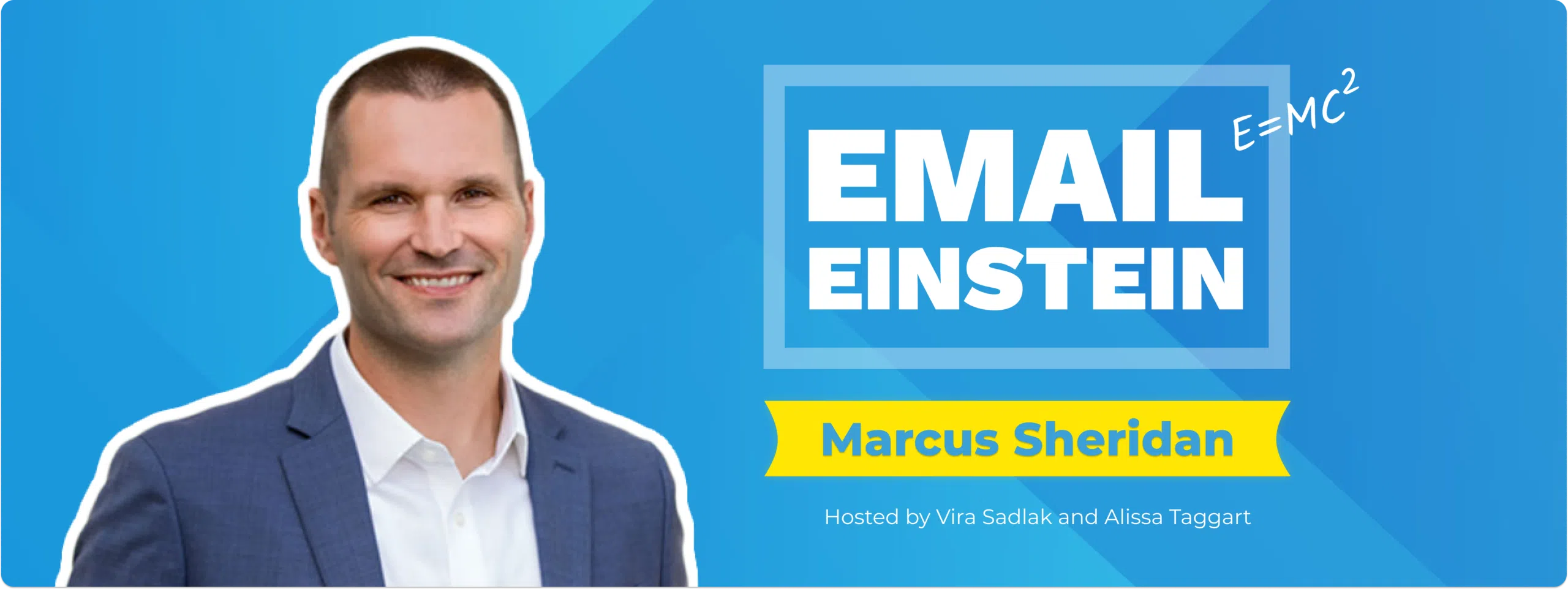
Marcus Sheridan, our special guest for today. Marcus is actually an international keynote speaker. He also works with hundreds of businesses, helping them to become the most trusted voice in their industry.
Vira 0:12
Hey, everyone. We are email marketers at an email marketing agency called Flowium. We are very passionate about email marketing, and because we love what we do, we want to share our insights with you. Flowium is one of the fastest growing email marketing agencies in the world, and we specialize in providing premium, full service e commerce email marketing experience for all of our clients. Our services are tailored to specifically for your business and as designed to help increase your online retail revenue by 20 to 50% delivering the right message to the right person at the right moment. That’s our motto here. And today’s guest will actually be talking about the right message and the right person, so we are super excited to have him on our podcast today. But Alissa, let’s do a quick brief introduction of the guest.
Alissa 1:23
Yay. I’m so excited. Today’s episode is jam packed with a lot of information. So please get ready. You guys, another episode of Email Einstein, I love it. Okay, so our special guest, a little more information about him. So in the late 2009 Marcus Sheridan, our special guest for today, he actually started his sales, marketing and personal development blog, The Sales Lion, and before actually merging with impact another business, he grew his brand to be synonymous with inbound and content marketing excellence. So today, Marcus is actually an international keynote speaker known for his unique ability to excite, engage and motivate live audiences. He also works with hundreds of businesses, helping them to become the most trusted voice in their industry. I know you guys are probably all wondering, how the heck do we get these amazing guests onto our podcast? That’s one secret that we will never tell.
Alissa 2:23
Marcus has also been featured in multiple industry publications, including the New York Times, where he was actually referred to as a web marketing guru. His book, which is the main kind of topic of conversation today they ask you answer, has actually inspired 1000s to achieve their potential, but it’s them the tools they need to get there. And actually, after our conversation today, I would not be surprised if he inspires Vira and I and then everyone else who’s listening to get to where we want to. He actually started his business out of a pickup truck. So you know, this guy is bringing it today, and today, actually, Marcus is usually on an adventure with his wife and four children, and he’s also super into fishing into trucks. The whole bit. He’s a dude’s dude, but we’re really excited to have him on board today. So yeah, guys, get excited.
Vira 3:15
And full disclosure, we have pre recorded this interview with Marcus, and now we’re recording the intro separately, just because Marcus is so busy and we only could get 30 minutes of his time. But oh my god, was that 30 minutes intense? So one of my favorite interviews so far, so keep listening.
Alissa 3:33
Easily, easily, one of the best. So yeah, enjoy guys.
Alissa 4:13
So Marcus, before we get started into the nitty gritty, the actual serious questions, we are going to hit you with our favorite, our blitz Q and A. So first question, East or West Coast.
Marcus 4:25
East Coast sky, definitely.
Alissa 4:28
Okay. And these next few questions, I kind of pulled based on what I what I think that you’re into, so fishing, lure or worms as bait?
Marcus 4:37
Lure, I’m offshore guy all the way.
Alissa 4:39
Okay, domestic or international travel?
Marcus 4:43
Man, international for beauty, domestic for time with family.
Alissa 4:47
There we go. Okay, very cool. Okay, Ford f1 50 or Toyota Tundra?
Marcus 4:52
Dodge Ram guy, very cool.
Alissa 4:57
Okay, and then last one, this may seem a little bit. Are but mattress or socks?
Marcus 5:03
Mattress.
Alissa 5:04
Okay.
Vira 5:05
I love how confident. Just like to give you a bit of a background, mattress and socks. This are the two examples that we are usually using in our podcast when we’re explaining some concepts.
Marcus 5:15
So with the prolific rise of mattresses sales online, especially, you know, and I actually bought my last mattress online, and I learned a lot about that space there, and just how competitive it is, and now it’s the Wild West. So I think that’s pretty you know, it makes sense that use that now.
Vira 5:39
We learned about what cars you like, learned about mattresses or socks. Tell us a bit more about yourself and what you actually do.
Marcus 5:46
Well, the super quick, like background story is I started a swimming pool company, a fiberglass swimming pool company, out of college with two friends, and that was in 2001 and things were going okay for us. I mean, you know, you’re struggling along until 2008 2009 when the market collapsed. And it was during that time that I started to really learn about the internet. And the more I read, the more I realized, you know, basically all they’re saying is, if you just really obsess over your customers questions and you’re willing to address them on your website through text and video, you can save your business here. Marcus, so I was like, shoot, I can do that. And so we called the philosophy they ask you answer and make a long story short, it became the most traffic swim pool website in the world, and it led to us becoming the fastest growing builder and manufacturer of fiberglass pools in the US. And today we have franchises all over the country. And I started an agency as well during that time period, because I was just writing on a separate blog, like what I was doing, and companies started to say, Yo, Marcus, this amazing. Can you talk about that at our conference? Or can you teach us how to do that? So I’ve got an agency with about 70 employees today, and we’ve implemented they ask you answer with now 1000s of companies. It’s become a book. It’s been translated in multiple languages, and I get to speak for a living, and it’s been absolutely amazing. And so that’s the quick story of you know, really, what is more than anything since 2009 the last 12 years.
Vira 7:02
Awesome. I really love how and your speeches in your book, your call yourself, your website, the Wikipedia of pools. And I’m like, yeah, that’s, that’s the vibe that we are going for. Yeah, that’s for sure.
Marcus 7:13
That’s right. And it’s a, it’s just a simple way to look at it. And what’s interesting about that Vira is, is, when I talk to companies, I’ll say, so who’s the Wikipedia of your space right now? And more often than not, they don’t have an answer, right? Don’t have an answer.
Alissa 7:27
Wow, and that’s cool, because I think we would definitely say that Andriy our CEO, is the Wikipedia of the space that we’re in. I would say.
Marcus 7:36
It’s a beautiful thing to be able to say right, because if you can say it, and the key is, does the marketplace say it, right? Does the marketplace say it? And would you know? Would they think it? And because sometimes companies say, Well, I am. I’m like, yeah. Does anybody else know that? Right? And that is the test, but it is worthy goal to aspire to.
Alissa 7:55
That’s awesome. That’s awesome. So you obviously just mentioned they ask you answer. So where did the philosophy of they asking answer come from? What is the philosophy? Would you be able to dive into that a little more for our for our listeners.
Marcus 8:09
Well, you know, in 2009 when I was starting to read about the internet, you know, I saw lots of phrases like inbound marketing, content marketing, blogging, social media, digital marketing. What I heard was, in my mind. As I was reading this, I was just like, okay, so listen to their questions, answer them on your website. That seems pretty cut and dry. I hear the questions all day, every day, because I sell pools and so shoot why not? Now it’s really evolved into three main things, though, in terms of really choices. What is the ask you answer today? Number one, it is a true obsession with the questions, worries, fears, concerns buyers ask about a particular product or service, right? And when I say obsession, I really mean it, right. And you take any product, you know, especially you look at E commerce for what it is. When somebody’s interested in buying something, they ask negative questions about it. You don’t ask negative questions about things until you’re interested in the thing.
Vira 9:05
That’s true.
Marcus 9:05
So that’s what I mean by questions, worries, fears, issues, etc. It’s like you actually lean more into the negative stuff than the positive stuff, or perceive positive stuff. So that’s number one. Number two, element of they ask you answer is, are we willing to teach it and show it in the way they want to learn it. So in other words, simply put, if somebody wants to read it, do we allow them to read it if they want to watch it? Do we allow them to watch it if they want to listen to it, like we’re doing right now? Do we allow them to listen to it? You know? I mean, how many business owners, geez, have I heard over the years that have said something like, yeah, video is not my thing. And so why the heck are we going to worry about video ourselves? Like, gee, guess what? The Marketplace doesn’t really care about your opinion, nor mine. They care about what they want, right? So that’s the second element of they ask your answer. And then the third element is, are we willing to sell it the way they want to buy it? And somebody might hear that with respect to like E commerce, they might say, Well, that’s pretty cut and dry. I sell it online. No, but it’s like, you know, an example of this is, do you allow them? Is. Like, this is old news by now, but there was a time when you didn’t really get to return stuff online, but that’s the way that people wanted to buy it. They wanted to feel safe enough to okay, if this doesn’t work out, can I send it back? And that’s an example of, are you willing to sell it the way they want to buy it? There’s other versions of that as well, but that’s the essence of the ask you answer. It really is an obsession with the way buyers think. And even though most companies say, yeah, that’s us, if you really analyze it, they don’t typically do it quite well.
Alissa 10:27
Right, right, right, right, yeah. And I guess it’s easier to say it versus actually putting it into practice.
Marcus 10:33
100%.
Alissa 10:34
Yeah, which is most things in life. So would you say? And I mean, I have a hunch. I know what the answer to this question is, but would you say that the they ask you answer philosophy actually works for all kinds of businesses. So kind of stepping back into what we just talked about, mattress versus socks, if it does apply for all kinds of businesses, how does they ask you? Answer differ from business to business?
Marcus 10:57
Yes, I’ve not seen exceptions to this really principle that is they ask you answer. Because this applies to any business where people want to know things before they buy, right, and whether that’s B to B, B to C, service, product, you know, E, commerce, just go down the list. I haven’t seen exceptions to it. Now, granted, there are certain situations where it might not be quite as relevant. Let’s, let’s look at like a business to government, situation where it’s a straight, you know, RFP request for proposal, situation where it’s just sometimes that’s a little bit different of a process. There’s not as much really vetting of a company that way. Now that is actually diminishing, and B to G, buying decisions are becoming closer to B to B, and so even that is becoming nullified. So point being is, as long as people are very concerned with not making mistakes with their purchases, the ask you answer is going to be very relevant, which is why the book is selling more today than it was when it came out four years ago, which is really fascinating, right? It’s like most books don’t do that, right? It’s got legs because it’s really principle driven.
Alissa 12:06
Yeah, that makes sense.
Vira 12:07
I love it. Love it. And I really, I was shocked when I read this. In your book, you’re saying that there’s, like, a really striking statistic that clearly shows, like, how much has changed in the way the people shop this day. So like, around 10 years, 20 to 40% of purchasing decisions were made like before the customer actually talked to a salesperson on your team. And right now, this number is something like in the 70s, right? Like 70 plus people.
Marcus 12:33
In fact, recently, they’ve redone the study, and it’s now like hovering around 80% so like, buyers are 80% through the buying cycle before they engage that company. However, that might be right before they call them, before they walk through the doors, whatever that thing is and it’s, it is amazing, right? Because you go back to 1995 which is the year the internet is, people are just starting to use the phrase, probably 10 20% in No 2005 or, you know, we’re, we’re probably now 30% and and now 2021, we’re 80% in that number keeps going up. It’s insane. That won’t change an amazing period of just tremendous vetting of companies and products and services that’s happening out there, and the ones that are winning are the ones that are not pushing back against that which, because it’s a rising tide, right? What do you do with rising tides? Is tides. You do nothing with them, because that’s what they do. They rise, right? And so it’s the same thing that’s happening here with this marketplace. And so the companies that are saying, Okay, how do I use the trend in my favor? They’re crushing, and that’s the key to trends using your favor, right?
Vira 13:38
Right, right? And yeah, and I’m definitely adding to that statistic, because, like, when I’m shopping right now, the first thing I do I go to the negative reviews, right? I want to address, address my fears, just like you said. So Marcus, going back to the content creation, what should brands talk about? I mean, what are the key sort of, like categories?
Marcus 14:00
So in the book, we talk a lot about this, there’s really five major subjects that, as buyers were obsessed with. This is very prolific in E commerce, but also applies across the board, bbbc, services, etc. I mean, this really doesn’t it doesn’t change. I discovered these first my pool company, and then I saw it was the same in every industry. It’s quite amazing. So here’s what we call the Big Five. The big five are buyers. Are obsessed with cost, pricing, rates, etc. That’s number one, cost. Number two, buyer obsessed with problems, negatives, issues, kind of like what you just talked about Vira was like, how could this blow up in my face? What could go wrong? Right? You know, how could this be a bad decision. So that’s number two problems. Number three, buyers are obsessed with comparisons. We’d love to compare stuff online. Think of how many times you’ve gone online, gone to Google, typed in comparisons of or this versus that. Geez. We love to do that stuff. Number four, we’re obsessed with reviews, to your point, negative and positive. We just love to know what people are saying. About the thing. And then finally, number five, we love to research the best. And if somebody thinks about how many times have you gone to Google and typed in best plus a phrase, it’s like a billion times, right? So those are the big five cost problems, comparisons, reviews and best. And here’s what’s crazy. Buyers are obsessed with them. These five subjects are literally running the economy, and yet businesses still don’t like to talk about them. Yeah, it’s crazy. And even the ones like even sometimes people in E commerce is in me, yeah, we’re talking about cost and price. No, no, no, no, no. Showing a number isn’t really discussing cost and price.
Marcus 15:39
Discussing cost and price is way more than just simply showing a number you clearly define value to the marketplace. So when you talk about this subject of cost and price, there’s really, you know, a website should do this, or even, like, a straight e commerce page. You want to think about it like this, number one, what drives the cost up in that particular industry for that particular product, like, what are the factors that make it expand? Make it expensive? Number two, what are the factors that keep it down? Other words, why are some products so cheap? Okay. Number three, what makes certain companies more expensive? Number four, what makes certain companies cheaper? Because sometimes you might find the same product, but it’s cheaper more expensive from different companies. There’s reasons for that too. And then finally, number five is, where do you fall as a company, as an organization, after all is said and done, where you fall? So where are you aligned? Essentially, by doing that, you give the buyer, you give the consumer this ability to say, Ah, now I understand how we’ve arrived at these numbers. Now I understand why this particular widget is 10% more than that other particular widget. It’s got this feature. It’s got that now I can define value. They might not say it that way, but that’s inherently, subconsciously, that’s what’s happening to them, and that’s how you talk about cost and price, right?
Vira 16:56
That’s really interesting, and I can see definitely how brands who are selling the high priced items. Can definitely utilize that. But let’s get back to the socks example. There is, like, only that much you can say about socks, and it’s not an expensive item, right? I’m selling socks, or I don’t know, whatever, something like not expensive. What kind of content I can create? Can I like, explain why my product.
Marcus 17:20
Doesn’t change.
Vira 17:21
Same, same for everyone. Yeah.
Marcus 17:23
In fact,this is true. I’m not just saying this. My son is a sock Maven, so he’s one of the like, like, folks that are on the front end of understanding sock styles, comfort socks. Since he was really young, he was very into expensive socks. And you know, I’ve never, ever and literally, he’s 17 now, I’ve never seen my son wear a pair of white athletic socks. Wow, do you believe that? And I’m not exactly, I’m totally serious, I wear white athletic socks every day of my life, except when I’m speaking on a stage. And so it’s like, how does that happen? I have no idea, but he’s a Maven. He does the research, he understands all the nuances. And he, as Malcolm Gladwell would say, as a Maven, he helps set the bar and set the trends for his peer group. And it just trickles off of that, right? There’s the domino. And so those big five absolutely apply. You look at like he will all the time say, what is the best type of sock for such and such activity, right?
Marcus 18:26
How does this particular sock brand compared to this other sock brand? And then it gets new, more nuanced. How does this particular material in socks compared to this material in socks? How does this particular design of socks compared to this particular design? You know, a review of the best of five sock brands for hiking outdoors, right? Like these are the like I did multiple of the Big Five on that one there. You know, why are such and such socks so expensive? That’s a cost article, but that’s a cost article ideally written by that company or someone that sells that product that is really defining. Look, these are the most expensive socks in the marketplace. You’re gonna easily see that when you research them, but let’s why that is. That’s how you turn what is in a perceived disadvantage into an advantage, right? And so that’s why this applies to everything. And socks is actually a perfect example of how the big five are so important.
Vira 19:17
It’s really interesting. Wow.
Alissa 19:18
So okay, so obviously, there’s the big five that every company, even though they don’t typically, should address. But are there any questions that you should avoid answering as a business, like, can you talk about your competitors openly? Is there anything that you don’t need to necessarily be as transparent about with customers, or you shouldn’t be as transparent about?
Marcus 19:38
General rule of thumb is, if you know you’re being asked about it, your sales team, customer service teams hearing about it, well then it’s your moral obligation to address it. At that point, competition is absolutely something we should be discussing. Now, what we shouldn’t necessarily do is get opinionated with that, right? If we’re the business, you can do that if you’re a third party, right? But if you. You’re the actual, let’s say OEM or manufacturer. You can’t, you know, necessarily, if you’re Ford, you can’t say, you know, Chevy really sucks. What you can do is you can say, okay, let’s compare the Ford Mustang with the Chevy Camaro, line item by line item. And, I mean, that’s, that’s something you can absolutely do, horsepower, you know, it’s like tire size, interior options, right? These are things that unquestionable. There’s no debate about them, because they’re all factual elements. And any company should do that, manufacturers should do that most do not, which is ridiculous, because they’ve been asked by dealers or end users a million times about these things. The only thing that I would say you don’t necessarily you know talk about is stuff that you know, maybe you know, once a year somebody asks you about or something that’s, you know, just like you don’t necessarily have to talk about all your skeletons, like, if your company filed bankruptcy, you know, 20 years ago, I don’t, I wouldn’t necessarily talk about that. If one person a year says, Hey, I heard you file bankruptcy 20 years ago. Like, that’s not the type of thing that I would address. But like, legit buyer, customer based questions all day long. I ignore nothing. And in fact, if it makes you cringe when they ask it, there’s a that’s a signal that that’s the one you really need to lean into.
Alissa 21:09
Interesting.
Vira 21:09
Okay, I really like that example in your book, when you created the article about the best pool construction companies in your area, or something, and it became one of your best performing articles on your website.
Marcus 21:23
That’s the thing about that. Beer is like that. Just goes back to the philosophy. I was sitting in Richmond, Virginia one night, this couple said to me, after two and a half hours, hey, Marcus, we like you. We think we’re gonna get this pull from you, but if we don’t get this pull from you, is there anybody else you’d recommend? I didn’t pull that night, right? But I thought to myself, well, they asked the question, which means I gotta answer it. So I went home, wrote this article. Who are the best pool builders in Richmond, Virginia, review slash ratings. There’s two of the big five. You got reviews. You got best in there. And I came up the list of five of the best pool builders in Richmond, Virginia, based on one real main factor. Who had I lost the most deals to over the course of the last you know, in that, in this case, was like 12 years at the time. And make a long story short, that article, it just became a cash cow. And I literally had a person come to me one time and they said, Marcus, I was just getting ready to sign a contract with Playmore pools, which is one of the companies listed on there. But before I signed that contract with Playmore pools, I decided to go online and research their company. And as I was researching their company, I stumbled across this article. You guys had really said, oh my goodness, these guys are so honest. I should probably call it too, right? And of course, you don’t have him, because otherwise I won’t be telling a story right now on this podcast, right? It’s like that that’s sold a pool for us, and that’s because we recognize that consumer ignorance is no longer a viable sales and marketing strategy. Buyers are going to learn. They’re going to find out. They’re going to know. They might start off uninformed, eventually they’re going to be informed. So if you treat them like an intelligent, educated human being, it opens up the floodgates of the subject matter that you can talk about with them. And that’s when it gets really fun, and that’s when you become the voice the Wikipedia right of your space. That’s when it happens.
Alissa 22:54
That’s awesome. Yeah, that’s really true. Because we found that we’ve been able to acquire the clients that we have because we’re so transparent on our website. And actually a big point for a lot of clients is, I was between you and another company, but you guys put your pricing on your website, and you’re very open, Andre our CEO actually wrote an article about all the E commerce, email marketing agencies that are out there, and the job they do, and everything. And so.
Marcus 23:17
To this, at least to this point, and I want to this is one that’s major for everybody that’s listening to this, especially if you’re in E commerce. I’m going to beg everybody to do this. 99% of the folks that are listening to this have not done it, and it’s an incredible strategy for trust building and conversions, and that is on your company website and on your product pages, you should always have a section Who is this product or service not a good fit for and what’s so fascinating about this is, when someone reads that, first of all, they’re surprised that you wrote it. But second, when they read it, they’re actually looking at that point psychologically to qualify themselves for the thing. So let me give an example. Let’s say, you know, here at River pools, we only sell fiberglass pools, which means that we might not be the best fit for you. In other words, if you’re looking for a pool that’s longer than 40 feet, we’re not going to be a good option. If you’re looking for a pool that’s wider than 16 feet, we’re not going to be your best option because we don’t have that size. If you’re looking for a pool that’s deeper than eight feet, we’re probably not your best option. And furthermore, if you’re looking for a super customized shape and size that’s really unique. We’re probably not your best option. But if you’re looking for a low maintenance pool that’s less than 60 by 40 and less than eight feet deep, and we have a shape that does fit your needs well, then we might be a great choice for you. Well, the person that wants a 16 by 32 rectangle that goes to six feet the whole time is like saying yes, yes, yes, yes, perfect. I want fiberglass, right? That’s what that’s what they were saying in that moment, because of the fact that we’re willing to say that. And you know, as a marketing agency, my agency is very open about who we’re not a good fit for. And you should do this with products. You should do this with services. It’s a game changer. And I’m telling you, 99.9% of all e commerce pages do not have this.
Vira 24:59
You wouldn’t be surprised, how many websites don’t have the FAQ section that’s like.
Marcus 25:04
That makes you want to shoot your foot off.
Vira 25:09
Or even when they do, they just like, very bury it somewhere in the footer of the website. It’s hard to find, like, Oh my goodness. Constant, constant battle with our clients.
Marcus 25:18
But you know what? Speaking of FAQ pages, I gotta say this really quick, most people do them wrong. Them wrong. In my opinion, an FAQ page, generally speaking, is best served. Is just listing the questions, maybe a T section of the answer, but it should link to the longer or video that fully addresses it, maybe within the learning center of the site, somewhere like within that blog, learning center of the site. Most companies, I feel like their FAQs, if they do it, are just they’re pretty barren. They just leave you very unfulfilled, right?
Vira 25:48
Interesting, interesting, that’s interesting. Just really quickly. What are your thoughts about the content types, like video versus audio versus text? What’s your favorite one and why?
Marcus 26:02
Well, I find that, for the most part, text still matters, certainly from a search perspective, right? It just carries the day when it comes to SEO and things like that, right? And what’s interesting too, is you find a buyer that, depending on where they are in the process of being in the funnel, we’ll call it. They might start with wanting to read about it, but then when they start to get really serious, they want to watch more videos about it. And so the reality is, I am pretty obsessive about text and video for most applications, certainly for E commerce, not a big believer that audio is necessary for most of those like a podcast, although, I mean, I love podcasts, obviously we’re doing one right now. I think they have their place 100% but I wouldn’t like somebody was trying to really grow their e commerce side of their business. I wouldn’t be probably spending the majority of my time producing audio content at that point. It’s world class. Video, great textual content, Big Five stuff all day long.
Vira 27:00
Awesome.
Alissa 27:01
Marcus, thank you so much for taking some time out to chat with us today. You gave us so many good insights. I’m like, Oh my gosh. I need to talk to all my clients and tell them they’re doing everything wrong.
Marcus 27:12
Well, I don’t think that. I’m sure you all are doing amazing things. But this was fun, right? This was fun and and listen, hopefully, if you’re listening this right now, just, you know, follow me on LinkedIn. I’m a great follow for those that are listening. And in fact, if anybody wants my personalized email, I’ll give it to you right now. It’s Marcus at Marcus sheridan.com if you ever want to reach out and say, Yo, Marcus, I heard what you said on that podcast. I don’t know if that’s true, Marcus. And so Marcus at marcussherden.com Find me on LinkedIn. I’m there very prevalently, and make sure you get the book. They ask you answer. But this was really, really really fun, guys. Thank you so much for having me.
Vira 27:44
Thank you, thank you for being here. Thank you, Marcus. Take care.
Alissa 27:47
Thank you again. So much for listening today, another phenomenal episode recorded thanks to Marcus. Please don’t forget to subscribe and share this podcast with your friends. And as always, if you love what we do, please leave us a review. We love reading them. We actually share them within our internal Slack channel page or slack channel. It’s called hashtag above and beyond, and we love shouting your reviews, so please keep them coming. Make sure that you check all the links in the podcast description to check out more about Marcus and his book. They ask you answer hands down. This was one of the best interviews we’ve ever had. So would hate for you guys not to take advantage of all the resources and do more research on this guy, because he is seriously smart. And as always, if you are interested in getting some more advice on how to establish a solid email marketing strategy for your e commerce Store, please make sure you visit us at flowium.com/contact and sign up for a free consultation.
Vira 28:43
And next Tuesday, definitely come back, because we will be talking about the topic that I know many of you have been asking about. The topic is called How to Get out of spam folder, so you may be asking for a friend, but yeah, I mean improving your email deliverability and getting out of spam folder isn’t a lost cause. I know we’ll already talked about how to not get into the spam folder, but if you’re there, life happens. So we will help you to get out of spam folder. That’s going to be a big, big and intense episode. So definitely come back next week. No matter where you are right now with your deliverability. This episode will be very, very relevant and interesting to you, so we hope to see you back next Tuesday, and thanks for listening.
Alissa 29:27
Thanks guys.

Vira Sadlak
Podcast host, marketer, traveller and a life lover from Vancouver, Canada

Alissa Horta
Alissa is an email marketer that is passionate about relevance!