

For a long time, revenue was the main indicator of ecommerce growth. To develop as quickly as possible, brands made significant investments in channel expansion, paid media scaling, and nonstop client acquisition.
For better or worse, that playbook no longer works.
Today’s ecommerce landscape is shaped by rising acquisition costs, fiercer competition, and increasingly compressed margins. It requires a more disciplined approach, with a focus on ecommerce profitability rather than growth at any cost.
From the POV of modern marketing professionals, success means striking the right balance between client acquisition, retention, and operational efficiency.
This guide explores the key strategies and metrics CMOs (Chief Marketing Officers) should focus on to build a profitable, resilient ecommerce business.
Understanding Ecommerce Profitability
The ability of an ecommerce business to consistently and significantly profit from digital transactions and operations is referred to as ecommerce profitability. The difference between online sales revenue and expenses determines it. Sales volume, client acquisition and retention, average order value, and gross profit margin are some of the variables that affect ecommerce profitability.
Knowing and understanding these general aspects of business operations is crucial for marketers because they directly reflect common marketing goals.
Later in this blog post, we will go into more detail about these strategies, but now, let’s look more into the state of marketing profitability.
How Profitable is Ecommerce in 2026?
On the surface, ecommerce is thriving, prompting many to start their own business endeavours. Global online sales are expected to surpass $8.1 trillion by 2027, according to Statista, underscoring strong demand. If we look further into ecommerce statistics, we’ll also see increasing numbers.
- The ecommerce market is expected to generate US$3.87 trillion in revenue by 2026.
- A market volume of US$5.00 trillion is projected by 2030, with revenue forecast to grow at a 6.62% CAGR (2026-2030).
- The United States generates the majority of revenue, with a forecast market volume of $1.22 trillion in 2026.
- By 2030, the eCommerce market is expected to have 4.1 billion users.
- By 2030, user penetration is predicted to reach 58.1%, up from 54.4% in 2026.
- The average revenue per user (ARPU) is expected to be $1.10k USD.
But behind that growth, the economy is tightening. The question of whether ecommerce will remain profitable in 2026 remains crucial.
The answer is definitely true, but to stand out in a competitive market, success requires careful planning and sound decisions.
Ecommerce Profitability Statistics
These are the numbers, not vanity metrics, that should guide your strategy if you’re in charge of marketing:
- 2–4% is the average ecommerce conversion rate (IRP Commerce).
- For scaling brands, the return rate ranges from 20-40%; top performers exceed 50%.
- 20–40% of revenue for mature lifecycle programs comes from email and SMS (Klaviyo).
- Generally, for Shopify stores, gross margins range from 40% to 50%+, depending on the category (Plottdata).
CMO Viewpoint: To have a growth engine, you achieve more than all of your revenue coming from paid acquisition, and your owned or retained channels accounting for less than 20%.
Why Calculate Ecommerce Profitability?
- To Monitor Financial Well-Being
The primary measure of your eCommerce company’s financial performance is profitability. By tracking it, you can determine whether you are profitable, how much, and where your profits come from. You will be able to use your resources more efficiently and make better business decisions as a result.
- To Determine Improvement Needs
You might find opportunities to increase your profit margins by monitoring eCommerce profitability. You can create plans to implement the improvements once you’ve identified where to increase profitability. For instance, you could increase product prices, strengthen your marketing initiatives, or bargain with suppliers for lower prices.
- To Determine Prices More Effectively
Your eCommerce business is significantly affected by your product pricing. You can control your expenses and target profit margins with eCommerce profitability. This enables you to optimize your profitability and make smarter pricing selections.
- To Make Business Strategic Decisions
eCommerce profitability can inform strategic company decisions. For instance, you might focus your marketing efforts on particular products or services if you know they have higher profit margins. Profitability information can also be used to bargain for better terms with partners or suppliers.
- To Evaluate Your Company Against Others in the Sector
You can compare your company to others in your field by assessing its profitability. This might help you assess your performance relative to your competitors and pinpoint areas for improvement.
- To Draw in Creditors and Investors
Profitability is a crucial indicator for creditors and investors alike. They will want to see that your business is profitable and has a strong foundation before investing. You can convince creditors and potential investors that your company is a sound investment by evaluating profitability.
How to Calculate Ecommerce Profitability?
While there are a lot of ecommerce metrics that businesses need to keep track of, when it comes to profitability, we highlight gross profit margin and net profit margin as the two primary ones.
Gross Profit Margin
Definition: The portion of revenue that remains after deducting the cost of goods sold (COGS).
Formula:

For instance, an ecommerce business selling outdoor furniture generates $20,000 a month, with $5,000 in COGS. 20,000 minus 5,000 divided by 20,000 * 100 = 75% is the gross profit margin.
Why it matters: Gross margin defines how much money is available to cover operating expenses (marketing, labor, rent, and software) while also generating profit. You are forced to work on narrow margins with little margin for error when your gross margins are low. High gross margins provide you the freedom to try out new tactics, weather downturns, and invest in expansion. To be profitable, most ecommerce companies require a gross margin of at least 50%.
Net Profit Margin
Definition: The portion of revenue that remains after all costs (COGS, marketing, fulfillment, overhead, software, salaries, etc.) have been deducted.
Formula:

For example, assume that the same business also spends $1,500 on rent, $500 on utilities, $2,000 on marketing, $4,000 on payroll, $500 on loan interest, and $1,400 on taxes.
Net profit margin = $20,000 – $5,000 – $1,500 – $500 – $2,000 – $4,000 – $500 – $1,400 / 20,000 * 100 = 25.5%
Why it matters: The best indicator of a company’s health is its net profit margin. If your expenses are out of control, you may still lose money even with a high gross margin and revenue. Net profitability is the primary metric lenders and investors use to assess businesses. A good net margin gives you money to establish reserves for downturns, reinvest in growth, and eventually pay yourself.
Ecommerce Profitability Challenges
The difficulties ecommerce businesses face in determining actual profitability have increased significantly, driven by rising expenses, data fragmentation, and operational complexity. Retailers must navigate an increasingly challenging landscape while managing fragmented data systems that obscure true performance metrics, from rising client acquisition costs that have more than tripled over the last ten years to marketplace fees that can absorb over half of sales.
- Rising Customer Acquisition Costs (CAC)
It is getting increasingly difficult to effectively attract customers due to the rising cost and unpredictability of paid advertising, particularly for firms that depend on platforms like paid social and search.
- Overdependence on Paid Channels
Due to a lack of investment in owned channels (such as email, SMS, and loyalty) and retention, many firms rely too much on acquisition to spur growth, which reduces profitability.
- Low Customer Retention
Brands struggle to recoup acquisition costs in the absence of significant repeat purchase behavior, which results in low LTV and unsustainable growth.
- Margin Compression
Aggressive discounting, rising product costs, and logistical costs all lower gross margins, which leaves less money for marketing and profit.
- Inefficient Marketing Spend
Ignoring contribution margin or LTV in favor of vanity metrics (ROAS, clicks) results in misallocated costs and unreported losses.
- Discount-Driven Growth
Regular promotions may increase revenue in the short term but damage long-term profitability and brand value.
The Role of CMOs in Increasing Ecommerce Profitability
Small and medium-sized ecommerce companies must adapt to evolving marketing responsibilities and trends in today’s rapidly evolving digital ecosystem.
The Chief Marketing Officer’s role is shifting from a traditional marketing executive to a strategic driver of company growth and financial performance. CMOs are increasingly responsible for aligning marketing plans with broader business objectives in ecommerce companies, ensuring that marketing initiatives directly support long-term revenue and profit.
CMOs must adopt a comprehensive growth approach that integrates marketing expertise with strong business and analytical skills, as marketing functions become increasingly integrated with sales, strategy, and operations.
CMOs’ Primary Duties in Increasing Ecommerce Profitability
- Linking Marketing to Revenue Objectives
By focusing on quantifiable business outcomes rather than vanity metrics, CMOS must ensure that marketing strategies directly drive revenue growth and profitability.
- Increasing the Effectiveness of Customer Acquisition
Lowering customer acquisition expenses while sustaining growth through increased conversion rates, channel performance, and targeting.
- Raising the Lifetime Value of Customers
Creating retention tactics to promote recurring business, such as lifecycle marketing, loyalty plans, and tailored customer experiences.
- Encouraging Strategic Pricing Choices
Working together with the product and finance departments to create price plans that balance competitive positioning with profit maximization.
- Promoting Decision Making Based on Data
Use customer data and analytics to assess marketing effectiveness, find lucrative channels, and allocate resources as efficiently as possible.
- Finding Possibilities for Market Expansion
Examining consumer behavior and market trends to find new growth prospects, such as new product categories, marketplaces, or client segments.
- Overseeing Collaborations and Influencer Networks
Forming strategic alliances with creators, influencers, and other partners to expand brand awareness and boost sales.
- Integrating Marketing With Broader Business Strategy
Ensuring marketing supports long-term business goals requires tight collaboration with senior teams in sales, operations, and finance.
Takeaway:
CMOs are essential for connecting marketing strategy with total business performance in contemporary ecommerce companies. They help ensure growth is not only rapid but also profitable and sustainable by focusing on acquisition efficiency, customer value, pricing strategy, and market expansion.
How to Improve Profitability in Ecommerce: CMO’s Top Strategies
There are many effective methods that you can try out to improve ecommerce profitability of your brand. We’ll share effective strategies that our clients implemented and got positive results, so you can try them out on your case.
Smart Product Recommendations
Smart product recommendations propose items customers are likely to be interested in based on their previous activity, such as what they have browsed, added to their basket, or purchased. By helping consumers find items they might not have discovered on their own, the goal is to make shopping simpler and more enjoyable.
How to put into practice:
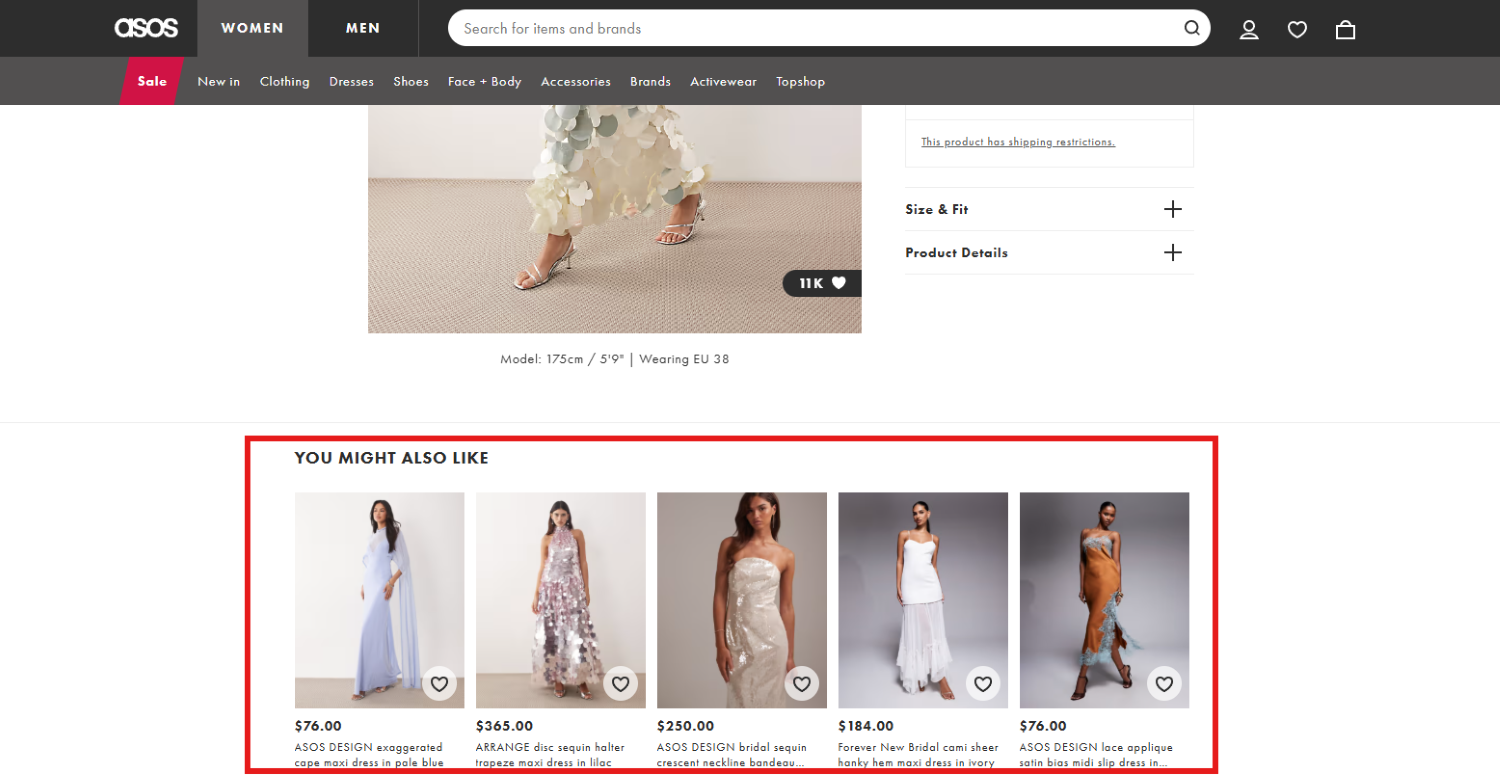
- Include a “You Might Also Like” feature on product pages to recommend related products.
- Provide tailored email suggestions. Send follow-up emails with product recommendations after the transaction.
- During checkout, display complimentary items: Before customers complete their purchases, suggest complementary products or accessories.
Example:
The most common place where you can see product recommendations is on product pages. Brands use this tried-and-true strategy to generate more sales, showing either the best-selling products or the ones that complement the viewed item.
As email marketers, we also advise adding personalized product recommendations to your post-purchase emails. You can include this block in your transactional messages as it shown in the example below.

Select the Right Product Bundles
Smart product bundles increase average order value (AOV) and make it easier for customers to buy several products by grouping relevant items at a lower price. By combining popular products with specialist products, you can create a product mix that appeals to a broader range of consumers and boosts sales. A well-selected product mix can also boost cross-selling, enhance client satisfaction, and optimize revenue potential. Additionally, bundles expose customers to products they might not have otherwise thought of.
How to create smart product bundles:
- Make themed bundles. Provide collections such as “Summer Essentials” or tech bundles with related products.
- Allow customization. Customers can create their own bundles, which will improve their buying experience and indicate their preferences.
- Make use of time-limited offers. In order to encourage quicker purchasing decisions and inventory clearance, create a sense of urgency by offering limited-time special bundles.
Example:
You can create exclusive bundles or deals that maximize the spending of customers who have a track record of making more expensive purchases. Here’s an example that shows how the mentioned strategy of allowing customization can be applied by smart brands. This instantly gives the business an opportunity to showcase more products, upsell, and increase profit in the end.

Subscription Boxes
Who doesn’t enjoy getting a surprise in the mail? Subscription boxes are a fantastic way to keep things mysterious, market your goods, and create a sense of anticipation.
Example:
A company named Seasons sometimes sends surprise boxes as a direct mail campaign. The company uses direct mailers to send samples of its products, such as a nice set of several oil flavors, to its loyal and returning clients.

Anything from snacks and cosmetics to apparel and pet supplies can fit inside a box. The goal is to provide customers with an enjoyable, practical shopping experience that encourages them to anticipate their next purchase.
How to use subscription boxes effectively:
- Create basic, premium, and deluxe options with varying numbers and attributes to offer different levels.
- Permit customization: For a more individualized experience, let clients select particular products or preferences.
- Add unexpected items: To maintain excitement and anticipation with every delivery, include unique items or samples.
Optimized User Experience
An optimized user experience (UX) is the result of a user-friendly website design. Customers will find it simple, entertaining, and easy to shop at your online store as a result. A well-designed website makes it easier for users to find what they’re looking for, lessens irritation, and motivates them to buy.
Ways to improve the user experience:
- Simplify the checkout process by reducing the number of stages and permitting guest checkouts. Provide a variety of payment methods to accommodate different tastes.
- Make it mobile-friendly. To enable effortless buying on any device, make sure your website is mobile-friendly with an adaptable design, simple navigation, big buttons, and quick loading times.
Example:
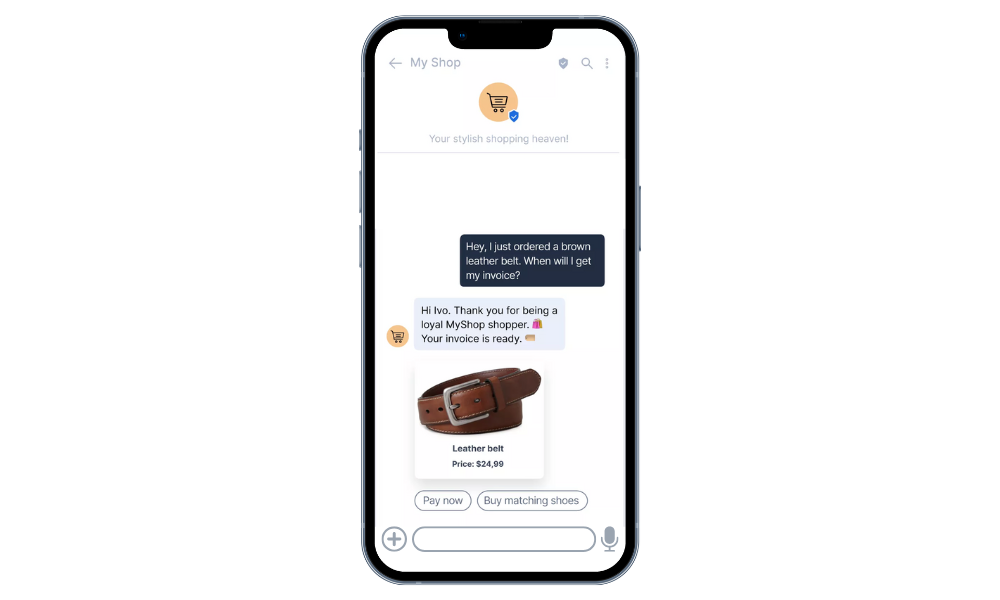
One of the top trends that helps ecommerce companies optimize user and client experiences in text message marketing is the use of RCS technology. Similar to SMS or MMS, this new messaging system offers richer visual elements along with more interactive features, suggested replies, actions, product discovery carousels, and more.
RCS seems and feels like a genuine exchange between your company and its clients. It increases your ability to communicate your brand’s voice and produce unique, captivating customer experiences.
Loyalty Programs
Customers can be rewarded for their recurring business and encouraged to return using loyalty programs. Customers are made to feel valued and appreciated by these programs, which frequently offer points, discounts, or other benefits based on their purchases.
How to put a loyalty program into action:
- Establish a rewards system where customers may accrue points for every purchase, which can then be redeemed for freebies or discounts.
- Give special incentives. To make customers feel appreciated, offer exclusive benefits like birthday discounts or early access to sales.
- Promote recommendations. Give discounts to clients who recommend new customers.
Example:
One of a company’s most crucial objectives is retaining customers, and an ecommerce loyalty program is the ideal instrument for this. Through the years of our work, Flowium has managed to help our ecommerce DTC clients achieve substantial results with setting up and promoting their reward programs for loyal clients.

Smart Upselling
Smart upselling promotes clients to purchase higher-priced items, upgrades, extras, or bundled products. By providing clients with options that improve their purchase, the objective is to raise the value of every sale. When done correctly, effective upselling can raise average order value, increase ecommerce profit margins, and enhance the shopping experience for customers.
How to use upselling to improve ecommerce profitability:
- Offer free shipping. By offering free delivery on orders exceeding a specific amount and making it obvious how much more they must spend, you can entice customers to add goods to their cart.
- Display the premium versions. Show a premium version next to a product when clients view it, emphasizing its extra features without demeaning the original.
- Make suggestions for extras at the register. Use polite language to suggest pertinent add-ons during the checkout process.
Example:
This email demonstrates how a brand can effectively leverage package discounts to upsell its products. Ugmonk marketers start this first-purchase email example with a thank-you note before introducing more products that may be of interest to customers based on their past purchases.

Seamless Omnichannel Experiences
Customers can switch between many channels on which your brand is present. You need to make sure they can do so without difficulty by creating a seamless omnichannel shopping experience.
The objective is to establish a uniform and practical shopping experience, guaranteeing that consumers receive the same quality of customer service and knowledge access regardless of where they purchase.
How to design flawless omnichannel experiences:
- Sync customer data. To facilitate simple access to shopping carts, preferences, and past purchases, make sure customer data is synchronized across all platforms.
- Optimize for different devices. Ecommerce companies have to be technically prepared that clients will access their products from all sorts of devices, from smartphones to laptops. Make sure your promotions, product pages on site, and other features are always available and function without errors.
- Turn on buy online, pick up in-store (BOPIS) options to encourage foot traffic and possibly increase sales by allowing customers to make purchases online and pick them up in-store.
Example:
Since not all promotional channels allow in-app purchases, in some of them, you need to leave a link to your website, Shopify, or Amazon store. In such cases, you need to ensure that all the links are correct and lead to the exact product that was promoted, so your subscribers can easily switch platforms and finalize their action without any confusion. Every time your purchasing process has tech-related mistakes or takes too long, you’re losing potential sales and profit.

More Ecommerce Profitability Trends 2026
Apart from marketing-focused strategies, CMOs also monitor and help brands implement general business operation trends, aimed at enhancing ecommerce profitability. Here are some of the major ones that we recommend looking out for.
Strategic Planning with Long-Term Objectives
Why is it necessary? With a strategic plan, all of your goals, actions, measures, and KPIs are aligned with overarching corporate objectives. By using this technique, you can avoid distractions from vanity metrics and focus on what truly matters.
This is a very brief summary of how to develop your strategy.
- Determine your vision for the next three to five years.
- Establish clear, long-term objectives that align with the overarching vision.
- Divide long-term objectives into immediate tasks.
- Determine which KPI combinations will help you monitor your progress toward your objectives.
- The KPIs to concentrate on are identified in the following stage.
Most Appropriate Channels for Customer Acquisition
While omnichannel marketing is an important strategy to establish your digital presence and expand reach, it might cost you money if you don’t know how to not disperse your attention. Depending on the case, some channels can give you much more in terms of client acquisition, engagement, and conversions. This makes many businesses focus their strategies more on the most profitable direction.
So, identifying the marketing channels most likely to resonate with your target audience and drive sales is the first step in selecting the best-fit customer acquisition channels. Analyzing consumer demographics, behavior, and preferences can help achieve this. You may adjust your marketing budget once you know where your clients spend their time.
For instance, you might concentrate on social media marketing if young adults are your target market. If business professionals are your target audience, you may want to focus on online advertising.
Result: You can improve your ROI and profitability by focusing on the right channels to increase your chances of acquiring high-converting clients.
Focus on Customer Retention
Retention marketing is one of the biggest trends in the current market, and there are a lot of reasons for that. Businesses that understand and implement this approach see substantial benefits in the form of enhanced cost effectiveness, repeated sales, increased customer lifetime value, enhanced ecommerce profitability, and more.
Concentrate on retaining your current clients so they return. It is crucial since it costs less to retain existing clients than to acquire new ones.
While there are numerous approaches to customer retention, some of the best ones are as follows:
- Providing excellent client service
- Programs for loyalty
- Customizing the client experience
Find out more about client retention strategies in our podcast.
Cognitive Commerce for Setting Competitive Prices
Find the best price for each commodity by using cognitive commerce.
What Is Cognitive Commerce?
Typically involving artificial intelligence (AI) technologies, cognitive commerce is tech that analyzes large volumes of data, including prior sales, competitor prices, customer demand, past shopping behavior, interests, and actions.
By doing this, you can maximize your online store’s revenue without losing clients.
Cognitive commerce could be used, for instance, to set different prices for the same product based on the time of day, day of the week, or location. Additionally, you might use it to offer discounts to price-conscious clients.
Result: You can maintain market dominance in the eсommerce sector and boost your profitability by using cognitive commerce to find the lowest prices.
Supply Chain Optimization
Higher costs, lost sales, and disgruntled consumers are all consequences of inefficient supply chains. Reducing these inefficiencies can boost customer happiness and business profitability.
The following methods can be used to lessen supply chain inefficiencies:
- Utilize state-of-the-art inventory management systems to monitor inventory levels and more precisely forecast demand. By preventing unnecessary inventory expenses and stockouts, you may save money.
- Enhance logistics processes: This could include finding more cost-effective ways to distribute goods, such as negotiating lower shipping rates or implementing direct-to-consumer delivery.
- Improve your negotiations with suppliers; the cost of goods sold may decrease as a result.
- Investigate direct-to-consumer options; they can reduce costs by eliminating intermediaries.
More Ecommerce Profitability Metrics for CMO’s to Track
Aside from the main metrics that we mentioned before, CMOs need to monitor more marketing performance metrics to manage profitability efficiently.
Key profitability indicators consist of the following metrics.
Customer Acquisition Cost (CAC)
The total cost of acquiring a new customer, including paid media, promotions, discounts, and marketing overhead.

CAC directly impacts your profitability. If it exceeds the gross profit on the first purchase, the business incurs a loss until the customer repeats the purchase.
Benchmarks:
- Average CAC across ecommerce: $45-$175
Top-performing DTC brands aim for CAC that allows first-order break-even or better, relying on retention to drive profit.
Customer Lifetime Value (LTV)
The total revenue a customer generates over their entire relationship with your brand, minus direct costs.

LTV shows the true value of acquisition and retention strategies. A high LTV signals that your marketing, product, and customer experience are aligned.
Benchmarks:
- Average ecommerce LTV varies: $200-$600 (depending on the category)
- Brands with strong retention and upsell performance often see 3-5x LTV growth in the first year.
LTV to CAC Ratio
The ratio of Customer Lifetime Value to Customer Acquisition Cost. This metric determines whether growth is sustainable. A ratio above 1 means you earn more than you spend; above 3:1 is considered strong by most ecommerce standards.

Benchmarks:
- A healthy ratio is 3:1 or greater
- Ratios below 1 indicate unprofitable acquisition strategies.
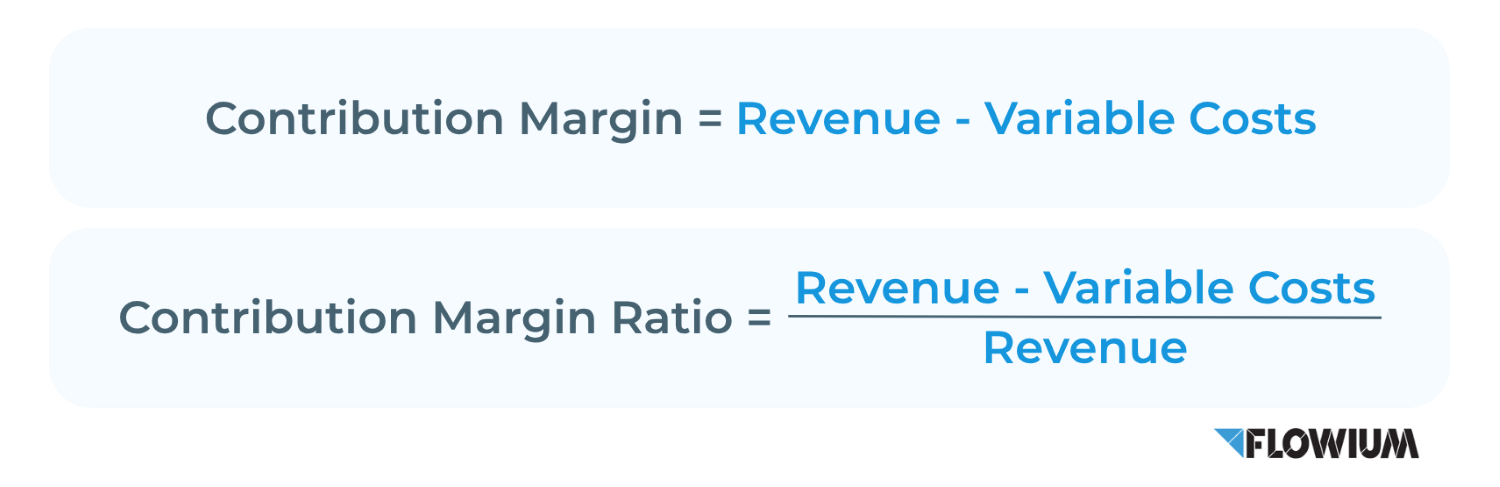
Contribution Margin
The profit remaining after subtracting COGS and marketing costs from revenue. Contribution margin shows how much each sale contributes to covering fixed costs and generating net profit.
Benchmarks:
Average gross margin (before marketing): 40-65%, depending on category
Contribution margin after marketing spend should ideally remain >20-25% for scalable growth.
Average Order Value (AOV)
The average revenue per transaction is calculated as total revenue divided by the number of orders.

Increasing AOV improves profitability without increasing CAC. Upsells, cross-sells, bundles, and minimum order thresholds are common levers.
Benchmarks:
- Typical ecommerce AOV: $50-$120, varying by category
- Best-in-class brands increase AOV 10-30% via product recommendations and bundles
Conclusion
In the future, ecommerce businesses will need to adapt to a constantly shifting environment and view new challenges as opportunities for expansion rather than barriers. By maintaining a proactive, strategic approach, your business will position itself for long-term success in a highly competitive market.
You can create ecommerce models that scale with stability and resilience by optimizing advertising, bolstering listings, making decisions based on actual performance data, and growing strategically rather than reactively.
At Flowium, we provide solutions that improve the customer experience and connect data across digital channels, helping brands simplify ecommerce profitability. Schedule a call to get expert consulting.
Frequently Asked Questions
What is the most important factor for improving ecommerce profitability?
Focusing on the balance between Customer Acquisition Cost (CAC) and Customer Lifetime Value (LTV) is key. Profitable brands ensure that LTV significantly exceeds CAC while optimizing retention and repeat purchases.
How to enhance ecommerce profitability?
To increase the profitability of ecommerce, concentrate on:
– Improving inventory control and pricing
– Using automation to lower operating expenses
– Improving client retention and experience
– Entering new channels and markets

