

The more your business grows, the more important data it accumulates. Managing large volumes of information, various tasks, client profiles, and operations becomes harder with time, even for small businesses. Thankfully, the modern market has a perfect solution to offer, and with many options at that. As part of a strong ecommerce integration strategy, online businesses can greatly benefit from using a robust CRM system. This software facilitates all the major processes, giving you an essential boost for optimization and growth.
In this article, we’ll explore the most popular options of CRM for ecommerce brands and give you professional tips on what you need to be looking for when choosing the top software for your company. This choice is much more important than you think, so read ahead to know all the specifics.
What Is Ecommerce CRM?
Ecommerce CRM (Customer Relationship Management) platform is a special software that allows online firms to store, organize, and manage all customer and prospect data within a single, centralized system.
By consolidating information such as purchase history, browsing behavior, and communication preferences, this type of tech solution helps ecommerce companies gain in-depth insights into customer needs and buying patterns. With this data collected, CRM offers brands a perfect opportunity to take action by building optimized business and marketing strategies with customized marketing campaigns, personalization, and more effective targeting.
The best CRM platforms also help companies provide effective customer service. They include functionality that enables teams to track inquiries, monitor customer interactions, and respond quickly to questions or issues.
Additionally, ecommerce CRMs offer visibility into how customers progress through the sales funnel, enabling businesses to identify opportunities for future purchases and refine their overall customer journeys. Many providers also offer built-in tools or integrations for managing marketing activities and customer service workflows, making these platforms a powerful all-in-one solution for growth.
What Is the Difference Between Traditional Systems and Ecommerce CRM?
CRM software has usually been linked with B2B enterprises handling long sales cycles, but this is not the case for B2C businesses. Here are some aspects that distinguish ecommerce CRM from traditional systems, which highlight the importance of using the appropriate solution.
| Aspect | Traditional CRM | Ecommerce CRM |
|---|---|---|
| Speed and Scale | Built for low-volume, relationship-driven B2B sales | Created to handle high-volume B2C data, rapid purchasing, and real-time interactions |
| Channel Coverage | Fragmented view of customers; relies on manual data entry across channels | Unifies caustomer touchpointsinto a single view across all channels automatically |
| Data Accessibility | Sales-centric data model that divides marketing, customer service, and commerce teams | Centralized customer data available to the teams for data-driven, coordinated decision-making |
| Personalization | Limited personalization for account management | Behaviour-driven personalization |
| Ecommerce Integrations | Lacks native integrations | Natively integrates with ecommerce stacks for better customer experience |
Why You Need CRM for Ecommerce
Ecommerce businesses can increase revenue, strengthen customer relationships, and streamline operations by using one of the best CRM solutions available. CRM systems enhance and connect with other essential tools across marketing, sales, and operations, including ecommerce platforms, ERP systems, payment gateways, ticketing tools, marketing automation software, and other SaaS solutions.
Before exploring the best CRM platforms for ecommerce, let’s look at the key reasons why implementing this software is essential.
- Complete Customer History
An ecommerce CRM centralizes customer data such as purchase history, browsing behavior, and past interactions. This enables you to analyze customer preferences and predict the performance of new product launches. With a clear understanding of buying patterns, you can make smarter decisions about future product offerings and inventory planning.
- Effective Team Management
CRM systems help segment customers based on defined criteria such as purchase value, behavior, or lifecycle stage. This makes it easier to assign key account managers to specific customer groups, prioritize high-value clients, and ensure your team is always prepared to deliver timely and personalized support.
With detailed customer insights, ecommerce CRMs enable highly personalized marketing efforts. You can tailor email campaigns, promotions, and product recommendations to individual preferences, increasing engagement, conversion rates, and customer loyalty.
- Improved Customer Support
CRM platforms allow support teams to track customer inquiries, order issues, and past interactions in one place. This leads to faster response times, more consistent service, and a better overall customer experience across all communication channels.
- Better Sales and Revenue Forecasting
By tracking customer behavior throughout the sales funnel, ecommerce CRMs provide valuable data for forecasting sales and identifying upsell or cross-sell opportunities. This helps businesses optimize pricing strategies, improve retention, and drive long-term revenue growth.
How Businesses Use Ecommerce CRM Solutions
Let’s examine a few ecommerce CRM use strategies now that you are aware of how it helps your company:
- Improving Personalization with Precise Segmentation
Ecommerce businesses use CRMs to segment clients based on their browsing activities and buying habits. This goes beyond simple personalization, such as using a customer’s first name, and enables more relevant and targeted marketing.
- Simplifying Operations
Customer data can be consolidated in one location with the use of a single, user-friendly CRM.
This connection decreases the need for development team interventions, lowers software expenses, and increases operational efficiency.
- Optimizing Performance
Automation and ongoing testing, such as A/B testing, assist brands in improving their tactics.
Testing various components (such as email formats) increases engagement and improves ROI, which supports long-term business expansion.
Key Features of Ecommerce CRM Software
It’s time to explore the best features now that you are aware of all the incredible benefits that come with ecommerce CRM adoption. They can streamline your productivity by automating tasks and organizing consumer data, among other things. Here are some of the main features you need to look for in your solution of choice.
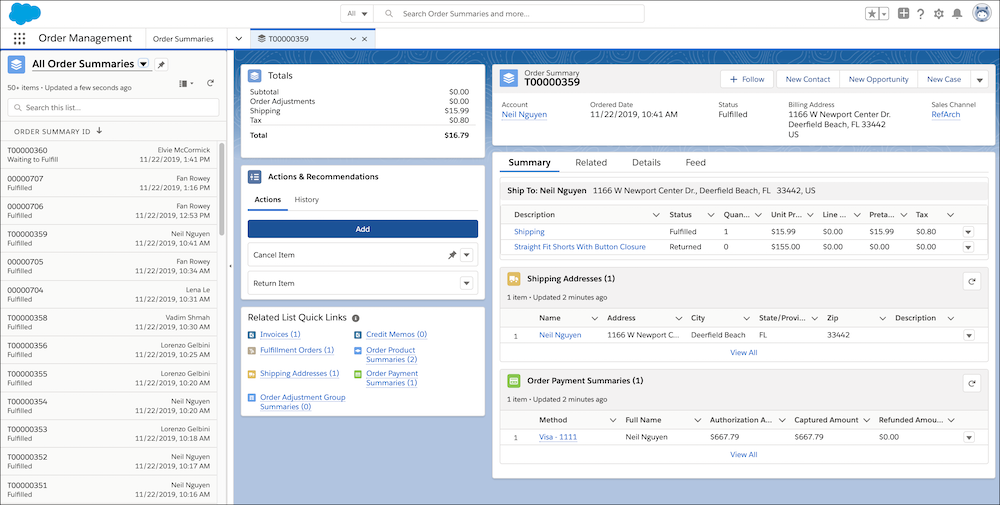
Order Automation
You can automate the entire order process by integrating your order, warehousing, or shipping systems with CRM. Everything from placement to birth falls under this category. Customers benefit from time savings, fewer errors, and seamless operations.
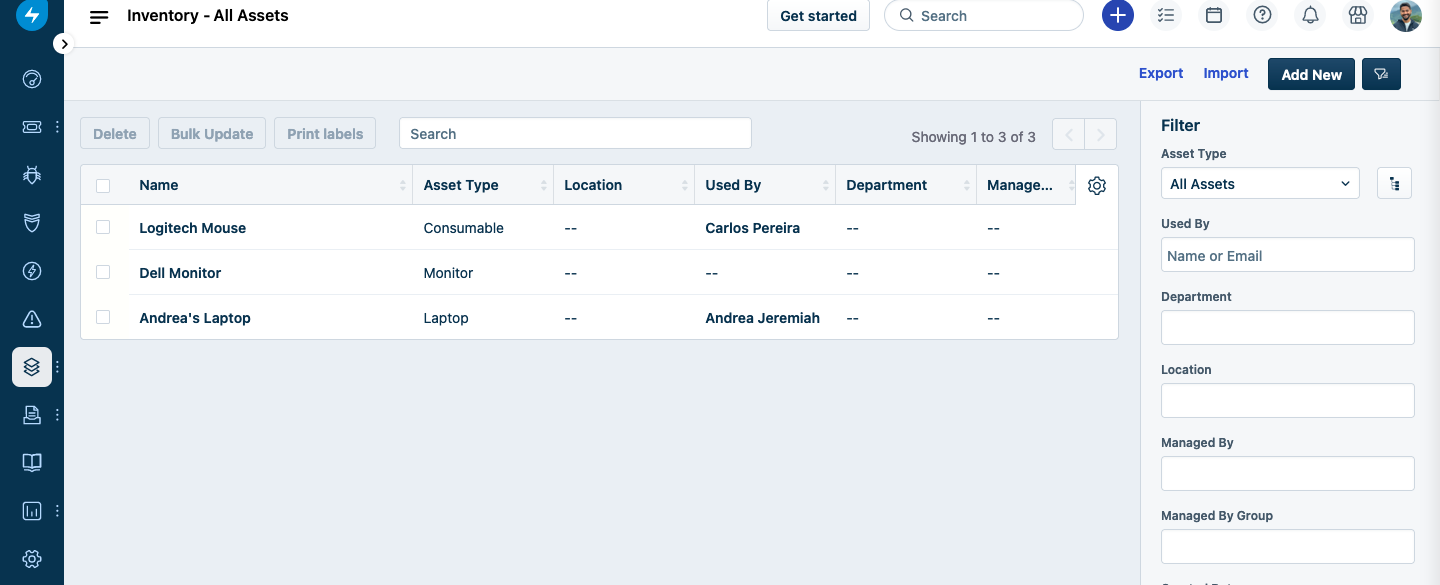
Inventory Management
You can receive real-time inventory changes with ecommerce CRM connectivity. This makes it easier for you to monitor stock levels. Additionally, you can keep the proper amount of inventory on hand for your customers and prevent product shortages.
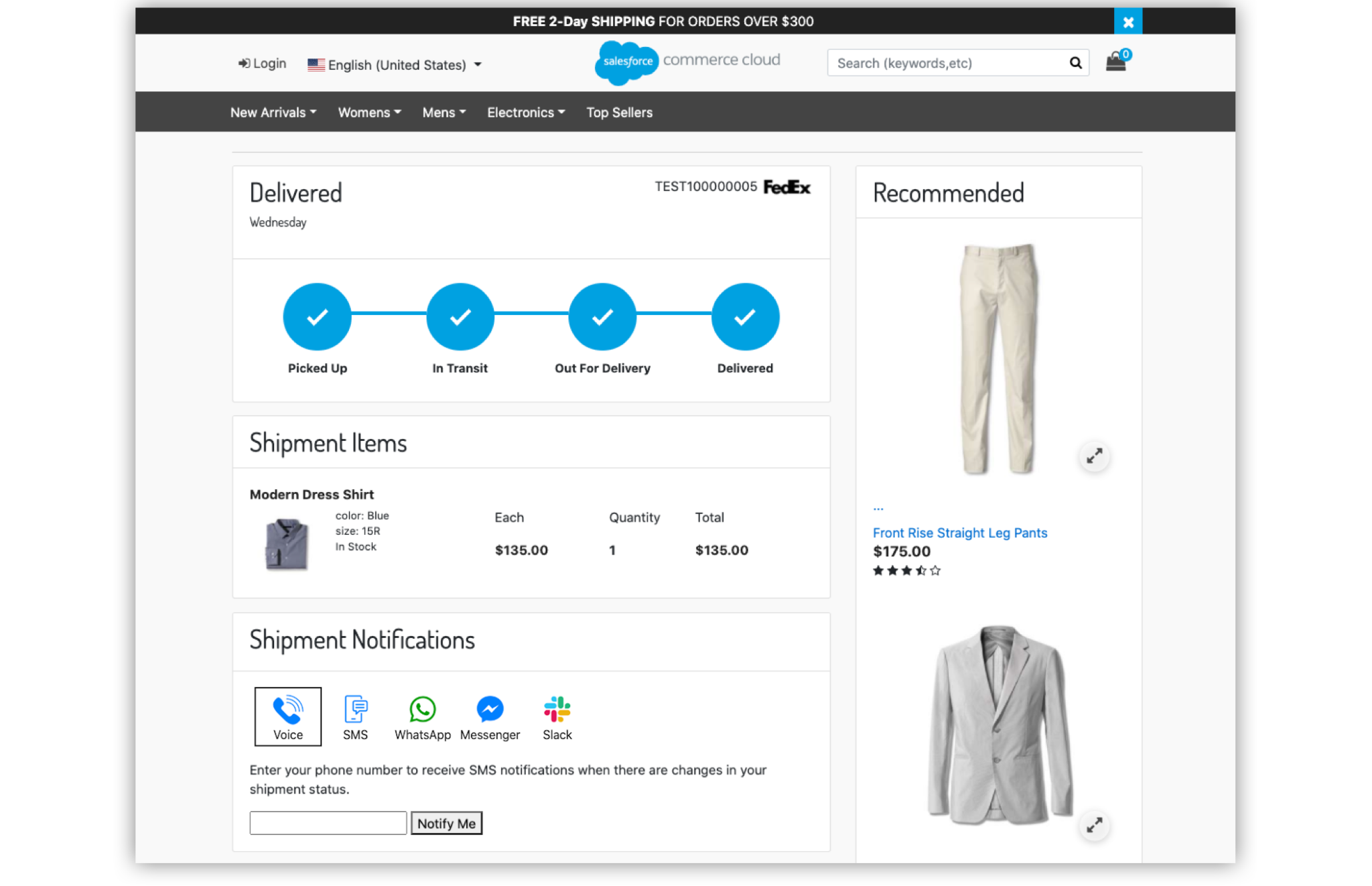
Shipment Tracking
You can handle shipping and tracking information straight from the system thanks to CRM connectivity with ecommerce. Customers are informed in real time as a result. Delivery schedules will be easier for you to control.
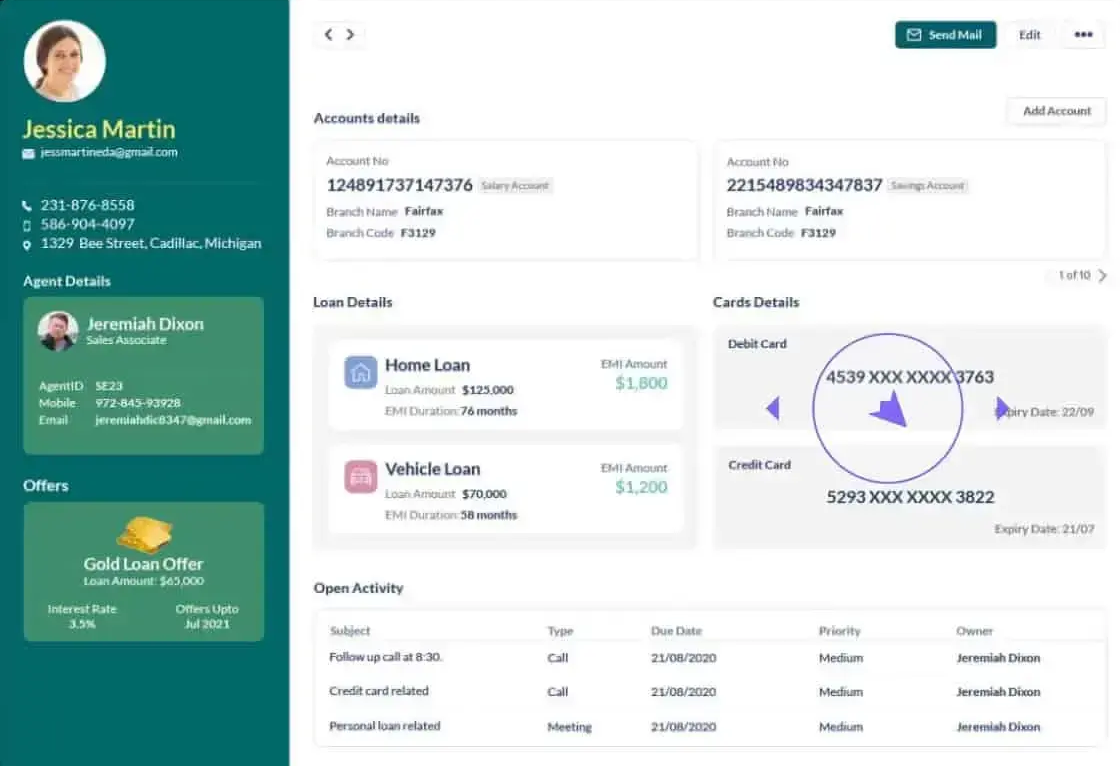
Data Administration and Synchronization
If a CRM does not compile all customer data into a single profile and allow marketing and support teams to access and use that data to customize the customer experience, then none of the other features or functionalities will function. The data platform layer is crucial because that is the whole purpose of an ecommerce CRM. You don’t have to manually enter data once everything is in sync. Because of this, all of your systems have the most recent information.
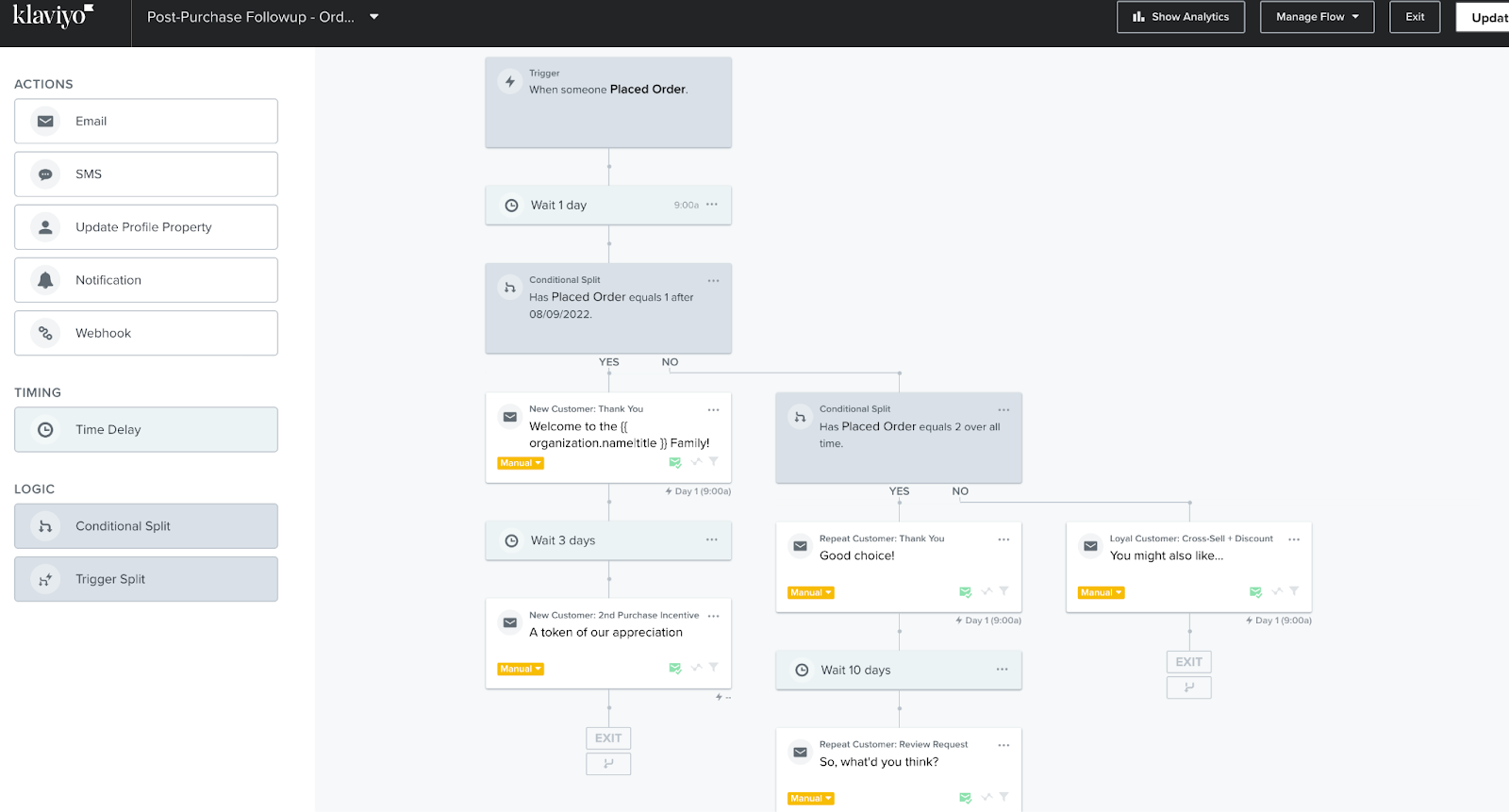
Marketing Automation
Sending messages by email, SMS, WhatsApp, and mobile push is done here. Campaigns and automations, such as welcome series, abandoned cart flows, post-purchase flows, and more, may include those messages. Acquisition tools, such as forms for list creation and integrations with social media advertising platforms, usually reside here as well.
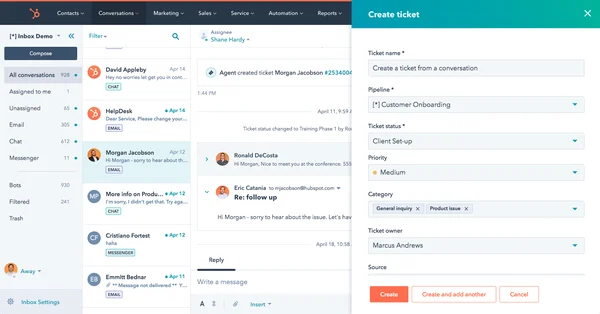
Customer Support
Ecommerce companies don’t always need to provide hands-on customer support. The majority of online shoppers choose self-service solutions. They want to have access to product manuals and FAQs. Ecommerce clients require a hub, a location where they can access all of their past purchases and relevant support materials based on those transactions.
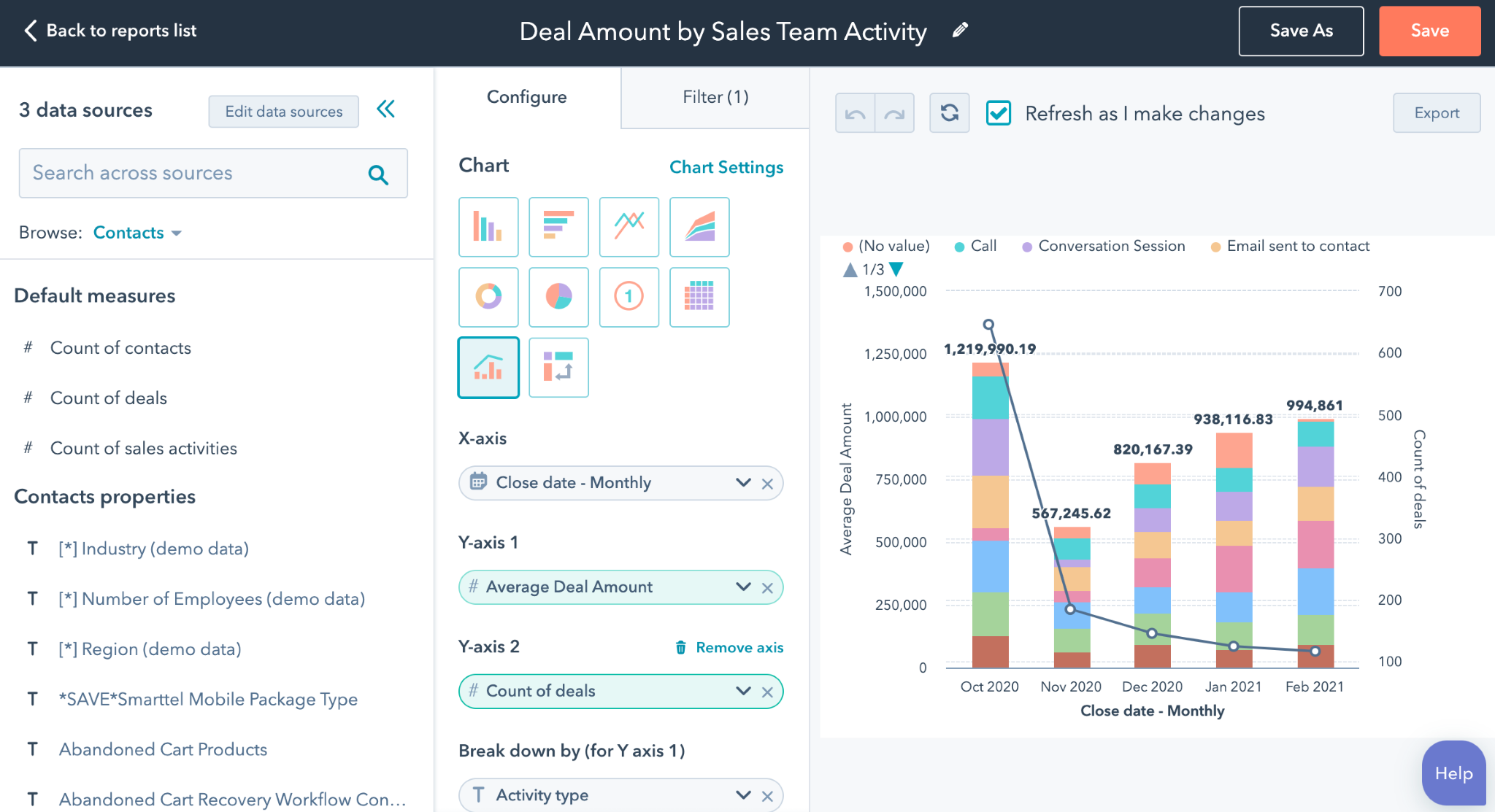
Analytics and Reporting
Strong reporting and analytics features, especially predictive analytics, are essential for an ecommerce CRM. You can obtain comprehensive reports on orders, inventory, and shipping. This allows you to see the effectiveness of your automations and campaigns. Additionally, you want to know about RFM models and potential future purchases made by a certain consumer category.
10 Best Ecommerce CRM
Klaviyo

Klaviyo positions itself as the only CRM designed specifically to handle the whole B2C client journey. It helps organizations build enduring client relationships while cutting expenses and time by combining marketing, customer support, and analytics into a single platform. With more than 350 pre-built connectors, marketers can see every customer in real time and from every angle.
Why Businesses Choose Klaviyo
While no-code data transformation guarantees precise, adaptable targeting, identity resolution automatically joins broken profiles. Marketers can build audience groups based on real-time activity, generate customized email and SMS content, and rapidly develop new flows using generative AI. By fusing marketing and customer support into a smooth self-service process, the Klaviyo Customer Hub goes beyond personalization.
Key Features for Ecommerce:
- Consolidated customer data for a single view
- Al-driven insights for actionable decision-making
- Clever marketing automation and workflow building
- Integrated customer support via the Klaviyo Customer Hub
- Pre-built connectors (over 350) for seamless integration
- Generative AI to create personalized email and SMS content
- Identity resolution to merge broken or incomplete profiles
Pricing:
Klaviyo’s pricing is based on the number of contacts and messages, with flexible tiers to accommodate businesses of all sizes. Exact pricing depends on the plan and the number of subscribers, with higher tiers unlocking advanced automation and analytics features.
Conclusion: Klaviyo offers a comprehensive view of every customer by combining marketing, customer support, and AI-driven insights into one platform. Its focus on B2C client journeys, real-time data, and intelligent automation makes it ideal for businesses seeking to optimize engagement and build long-term customer relationships. As certified Klaviyo professionals, we can recommend this CRM tool.

A unified customer relationship management system, called HubSpot CRM, is designed to bring all your staff together in one location. To ensure that everyone uses the same data, tools, and workflows, it links sales, marketing, customer support, content, and operations. Fundamentally, HubSpot CRM offers companies a user-friendly interface for managing and organizing client data. There are certain restrictions, though, since subscription plans are needed for extensive customization, reporting, team rights, campaign analytics, and predictive capabilities, and expenses can increase rapidly when companies add more hubs or user seats.
Why Businesses Choose Hubspot CRM
One of HubSpot CRM’s greatest advantages is its scalability, which enables startups to start with free tools and expanding companies to add more sophisticated capabilities as needed, all within a cloud-based, user-friendly, and adaptable platform.
Key Features:
- Contact and lead management
- Pipeline tracking
- Task automation
- Email templates
- Meeting scheduling
- Call tracking
- Automated workflows
- Integrations with Gmail, Outlook, Slack, Zoom, and more
- Comprehensive reporting across marketing and sales activities
Pricing:
The free tier of HubSpot’s CRM platform offers unlimited users as well as free basic contact, deal, and pipeline management. Smart CRM’s paid tiers start with Starter plans, which offer improved data enrichment and permissions for about $10–$15 per seat per month. Smart CRM Professional, on the other hand, usually starts at about $40–$50 per seat per month and includes teams, duplication management, and custom reporting.
Conclusion: All things considered, HubSpot CRM is a strong and adaptable option for companies looking to consolidate their technological stack, unify their staff, and improve customer satisfaction via a single, integrated platform.
Salesforce Commerce Cloud

Designed to function as a component of Salesforce’s Customer 360 ecosystem, Salesforce Commerce Cloud is one of the best CRM for ecommerce that is completely connected with Salesforce. Its main goal is to make it possible for companies to design and oversee online purchasing experiences while maintaining a connection between all commerce data and Salesforce’s sales, marketing, and support teams.
Why Brands Use This Platform
Businesses can create and host online shops with Commerce Cloud that send product, pricing, and customer data straight into Salesforce. Without depending on separate systems, this connection enables the use of commerce data for targeted marketing, personalized reporting, and customer support initiatives. Additionally, it supports a variety of languages and currencies, which makes it appropriate for commerce abroad.
Key Features:
- Customizable product catalogs with adjustable variations in size, color, material, and configuration choices
- Product availability tracking
- Backorders
- Promotions
- Applying coupons
- Designating products for clearance with the help of Commerce Cloud’s inventory and price management features
- Al-driven product recommendations
- Business-to-business (B2B) and business-to-consumer (B2C) transactions
Pricing:
Pricing for Salesforce Commerce Cloud is not publicly fixed, but it is usually calculated as a percentage of your gross merchandise value (GMV). Depending on the edition and terms of the contract, this can range from roughly 1% to 3% of annual GMV. The company uses custom quotes to determine exact pricing and enterprise licensing.
Conclusion: The fact that all commerce data stays in Salesforce is a major advantage of Salesforce Commerce Cloud. The interlinking of CRM with the main ecommerce platform helps businesses streamline major processes and ensure real-time data synchronization within a unified software ecosystem.
Zoho CRM
Zoho CRM is a feature-rich and user-friendly ecommerce customer relationship management system that helps companies handle marketing, sales, and customer service all in one location.
It doesn’t require a huge IT staff to operate and is designed to help teams work more efficiently with less effort.
Why Businesses Choose Zoho
From a single dashboard, users can automate daily chores, track deals, manage leads, and plan follow-ups. In addition to the ability to construct custom modules, Zoho CRM provides modules for managing contacts, accounts, deals, tasks, and activities.
Key Features:
- Pipeline management
- Email campaigns
- Sales predictions
- Process automation.
- Data-driven sales recommendations and predictions with Zia, the platform’s built-in AI assistant
- Social media tracking
- Call logging
- Integrations (Google Workspace, Microsoft Office 365, Mailchimp, Slack, Zapier, and other Zoho apps)
Pricing:
Up to three users can use Zoho CRM for free. The Standard plan costs roughly $14 per user per month, while the Ultimate plan, which is invoiced annually, costs about $52 per user per month. Additional automation, customization, and AI-powered capabilities are available in higher-tier editions like Professional and Enterprise; monthly paying is more expensive than annual commitments.
Conclusion: All things considered, Zoho CRM is an affordable, adaptable CRM that can expand with a company and is supported by a robust app ecosystem.
Zendesk Sell

Zendesk Sell is a customer relationship management tool that helps businesses build customer interactions by collaborating with marketing, sales, and support teams. It facilitates smooth and uniform client interactions throughout the whole customer experience by bringing teams together on a single platform.
Why Companies Opt for Zendesk Sell
This is an all-in-one sales platform that promotes rep adoption and automates data collection and analysis, giving sales management the practical insights they require to boost revenue growth in a quantifiable, scalable, and repeatable way. Whether in the office or out in the field, the sophisticated sales platform provides representatives with the resources they need to concentrate on generating income. S
Key Features:
- Email sentiment analysis and a clever auto-dialer
- Tailored coaching with intelligent out-of-the-box data and automated prescriptive insight
- Lead management
- Sales pipeline management
- Interaction tracking
- Contact management
- Reporting/Analytics
Pricing:
Zendesk Sell’s CRM pricing starts at about $19 per user per month for the basic Sell Team plan and increases through higher tiers, such as Growth, Professional, and Enterprise, each with progressively more advanced sales features and analytics.
Conclusion: Zendesk Sell integrates email, a smartphone dialer, a sales reporting package, lead scoring, and other CRM features into a single solution.
Pipedrive

Pipedrive is a sales-focused CRM platform launched in 2010 to simplify and optimize the sales process for small and medium-sized businesses. Designed specifically for sales teams, it helps users manage deals, contacts, and activities through a highly visual and intuitive interface. With its drag-and-drop pipeline view, teams can see their entire sales process at a glance and track every opportunity from first contact to deal closure.
Why Companies Opt for Pipedrive
Businesses choose Pipedrive for its simplicity, strong sales focus, and ease of adoption. The platform is built to reduce administrative work and keep sales teams focused on closing deals rather than managing data. Its transparent sales funnel, customizable pipelines, and automation tools make it ideal for organizations that want a clear, structured view of their sales performance without the complexity of enterprise-level CRM systems. Pipedrive is especially appealing to teams that value flexibility, mobility, and fast onboarding.
Key Features:
- Visual sales pipeline with drag-and-drop deal management
- Customizable sales stages and pipelines
- Workflow automation for follow-ups, reminders, and repetitive tasks • Email integration with Gmail and Outlook, including email tracking
- Lead and contact management
- Activity and interaction tracking
- Customizable dashboards and real-time sales reporting
- Mobile app for managing sales on the go
- Integration with 300+ third-party apps and tools
Pricing:
Pipedrive offers tiered pricing starting with an entry-level plan at $14/month (annual billing) designed for small teams. Higher-tier plans unlock advanced automation, reporting, and customization features but cost more.
Conclusion: Pipedrive is a user-friendly, sales-driven CRM that excels at visual pipeline management and workflow automation. By combining ease of use, strong integrations, and customizable sales processes, it provides growing businesses with a flexible and effective solution for managing and scaling their sales operations.
Freshworks (Former Freshsales)

Freshworks is an all-in-one platform that helps ecommerce companies handle marketing, sales, and customer relations from a single, centralized system. Teams can create comprehensive contact databases, monitor customer discussions, and provide tailored experiences across many touchpoints with its help.
Why Companies Select Freshworks
Freshworks CRM’s all-encompassing, omnichannel approach to customer management is why businesses pick it. The platform offers actionable data to increase client engagement and retention, improves sales and marketing processes, and unifies several communication channels into a single interface. Teams can focus on revenue-generating tasks, save time, and build customized experiences at scale with its automation features and AI-powered tools.
Key Features for Ecommerce:
- Email marketing tools
- Market and customer segmentation
- AI-powered chatbots
- Sales forecasting and pipeline insights
- Autoresponders and workflow automation
- Behavioral analytics and customer tracking
Costs:
Small teams can utilize Freshworks CRM because it offers a free subscription for up to three users. Paid plans begin at about $11 per user every month; higher tiers include access to more sophisticated analytics, automation, and AI-driven capabilities.
Conclusion: For e-commerce companies looking for a single platform for customer interaction, sales, and support, Freshworks CRM offers a flexible option. It is a useful tool for maintaining customer interactions and promoting growth because of its omnichannel capabilities, automation, and AI features.
ActiveCampaign

ActiveCampaign is a reliable platform for email marketing and automation that helps companies manage client connections and increase engagement through automated campaigns. Teams can develop behavior-based processes, segment audiences, and customize customer interactions by combining email marketing, sales automation, and customer experience technologies into one platform.
Why Companies Use ActiveCampaign
ActiveCampaign’s visual workflow builder, robust automation features, and range of campaign kinds are the reasons why businesses pick it. Without the need for additional tools, the platform enables customers to create intricate automation sequences for onboarding, welcome series, re-engagement, win-back efforts, and more. Its built-in analytics offer insights for data-driven decision-making, and its integration with forms, landing pages, and tags makes it simple to initiate automated workflows based on consumer activity.
Key Features:
- Visual automation builder with drag-and-drop interface
- Email marketing and behavioral segmentation
- Lead scoring and contact management
- Automated follow-ups and workflow triggers
- Landing pages and web forms directly connected to automations
- Reporting and analytics dashboards
- Al features to assist with copy and routing
There is no free lifetime plan available on the platform; there is a 14-day free trial. The Starter plan, which has up to 1,000 contacts and a cap of five actions per automation, is one of the paid options that starts at $15 per month.
Conclusion: With automation, segmentation, and workflow management, ActiveCampaign is a powerful CRM tool that is excellent at managing client relationships. It’s perfect for companies that want to use a single, centralized system for tracking interactions, streamlining engagement, and implementing behavior-based customer journeys.
Brevo

Brevo, originally known as Sendinblue, is an all-in-one CRM platform that helps small businesses consolidate communications, automate processes, and manage customer connections. It offers a user-friendly and comprehensive solution for expanding companies by integrating CRM, marketing automation, SMS and WhatsApp messaging, live chat, and contact management into a single system.
Why Businesses Opt for This Ecommerce CRM
Brevo CRM is a popular choice among small organizations because of its price, ease of use, and flexibility. The platform’s user-friendly interface, which is intended for non-technical users, enables teams to track customer interactions, manage connections, and categorize audiences into groups or segments. Without the complexity or expense of enterprise-level technologies, Brevo assists companies in streamlining interaction, centralizing communications across channels, and acting on pertinent data.
Main Features:
- Built-in CRM to track contacts and view full customer history
- Contact segmentation and list management
- Workflow and marketing automation
- Multi-channel messaging: email, SMS, and WhatsApp
- AI assistant (Aura Al) for automation suggestions, segmentation, and workflow optimization
- Simple analytics to track interactions and campaign performance
- Drag-and-drop editor for managing automations and campaigns
Pricing
Brevo CRM offers one of the most generous free plans in the market, with unlimited contacts and a daily sending limit. Paid plans start at approximately $11 per month, providing more advanced automation, increased sending limits, and access to additional features.
Conclusion: Brevo CRM is an approachable, all-in-one platform that enables small businesses to manage customer relationships, automate workflows, and engage across multiple channels from a single system.
Metrilo

Metrilo is an analytics and CRM tool made especially for ecommerce businesses. In order to help retailers make data-driven decisions that maximize shop performance, it focuses on offering comprehensive consumer insights, sales statistics, and retention solutions.
Why Brands Choose Metrilo
Metrilo’s advanced analytics and practical insights are why e-commerce teams choose it. In addition to tracking individual customer journeys and segmenting audiences, the platform offers transparent, up-to-date information on revenue, best-selling items, and new client acquisition. Its Intelligence Growth Assistant provides useful suggestions to enhance marketing tactics and optimize expansion.
Key Features for Ecommerce:
- Intelligence Growth Assistant for actionable insights
- Customer profiles with notes and tagging
- Email automation
- Segmentation and audience management
- Customer retention analytics
- Real-time sales and performance dashboards
Pricing:
Metrilo does not offer a free plan. Paid plans start at $119 per month, with a 14-day free trial available to test the platform.
Conclusion: For ecommerce companies looking for sophisticated analytics and consumer insights, Metrilo is a great option. Its emphasis on data-driven growth and client retention makes it perfect for merchants who want actionable analytics to boost sales and maximize marketing efforts, even though it does not offer inventory or order management.
How to Choose the Best CRM Software for Ecommerce
Generally speaking, to identify the ideal CRM for your ecommerce company, you must:
- Identify your company’s needs. Determine the precise objectives, procedures, and challenges your company faces so you know what you want the CRM to achieve.
- Study the features of the various CRMs. Examine the features, usability, and integrations of different CRM systems to determine which best suits your company’s needs.
- Check capabilities for handling B2C data volume and speed. The majority of B2B businesses have greater order values and smaller volumes. However, B2C companies should anticipate handling thousands of ongoing interactions across several channels. Determine whether your CRM can reliably handle such interactions in real time.
- Look into the price. Consider not only the package price but also any additional expenditures for add-ons, integrations, scalability opportunities, or hidden fees.
- Compare “B2C” to “B2B” focus. Make sure the CRM you select is designed for transactional retail data, as some generic CRMs are designed to track human-to-human interactions.
- Test out a chosen eCommerce CRM program. Use demo or free trials to get a hands-on look at the platform and learn how it works with your everyday business.
Conclusion
In conclusion, there are a variety of CRMs available, but picking the best one can significantly impact the success of your online business. If you want to see tangible results, the solutions we’ve listed are an excellent starting point to explore your options for the best ecommerce CRM.
Still not sure about your choice and the following steps? At Flowium, we offer professional ecommerce assistance together with an easy-to-follow plan to help you succeed. Contact us now.
FAQ
- Do I need a CRM for ecommerce?
Although CRM systems are not required for ecommerce companies, having one gives you a comprehensive picture of your company’s health and possible sales prospects. If you want to collect client information, link it with your ecommerce website, and track consumer activity, you need to use this type of system.
- For ecommerce, why is CRM integration crucial?
CRM ecommerce connection enables you to combine order history, browsing behavior, and communication data to conduct more relevant campaigns, improve support, and gain a better understanding of your customers.


