As customer expectations for personalization and convenience continue to grow, brands show the need for more advanced solutions than traditional email and SMS to stand out. Klaviyo understands this market demand and tries to meet the needs of ecommerce businesses. That’s why last year, the provider released a new feature called Customer Hub, designed to centralize customer experience. However, after this feature was quietly rolled out to merchant accounts, it left many ecommerce brands wondering what exactly it is and whether it’s worth using.
In this article, we’ll review the key characteristics of Klaviyo Customer Data Hub, its benefits and drawbacks, and what businesses it’s best suited for.
What Is Klaviyo Customer Hub?
Before receiving the characteristics in detail, let’s outline what this feature is in general.
Klaviyo Customer Hub is essentially an enhanced customer account gateway designed to centralize how shoppers engage with your brand after they log in. At its core, it functions as a customer account portal built inside Klaviyo, offering a more unified and personalized alternative to Shopify’s native customer accounts.
Conceptually, Customer Hub is Klaviyo’s version of what Shopify provides through new customer accounts, combined with app extensions. The key difference is where and how the experience is built. Instead of relying on individual Shopify app extensions to power each feature, Customer Hub brings those tools together through direct Klaviyo integrations and presents them in a single, cohesive interface.
Within Customer Hub, customers can manage their entire relationship with your brand in one place, including:
- Viewing and tracking orders
- Reordering previously purchased products
- Managing subscriptions
- Initiating returns
- Engaging with loyalty and rewards programs
- Saving favorite products through built-in wishlists
How Klaviyo Customer Hub Works in Practice
In practice, your customers see the Hub displayed as a widget overlay on the brand’s site, making it easy for them to access without navigating away from their shopping experience. Because it’s powered by Klaviyo, every action a customer takes inside the hub, such as saving a product or starting a return, also gets recorded on their Klaviyo profile and can be used for segmentation, personalization, and automation.
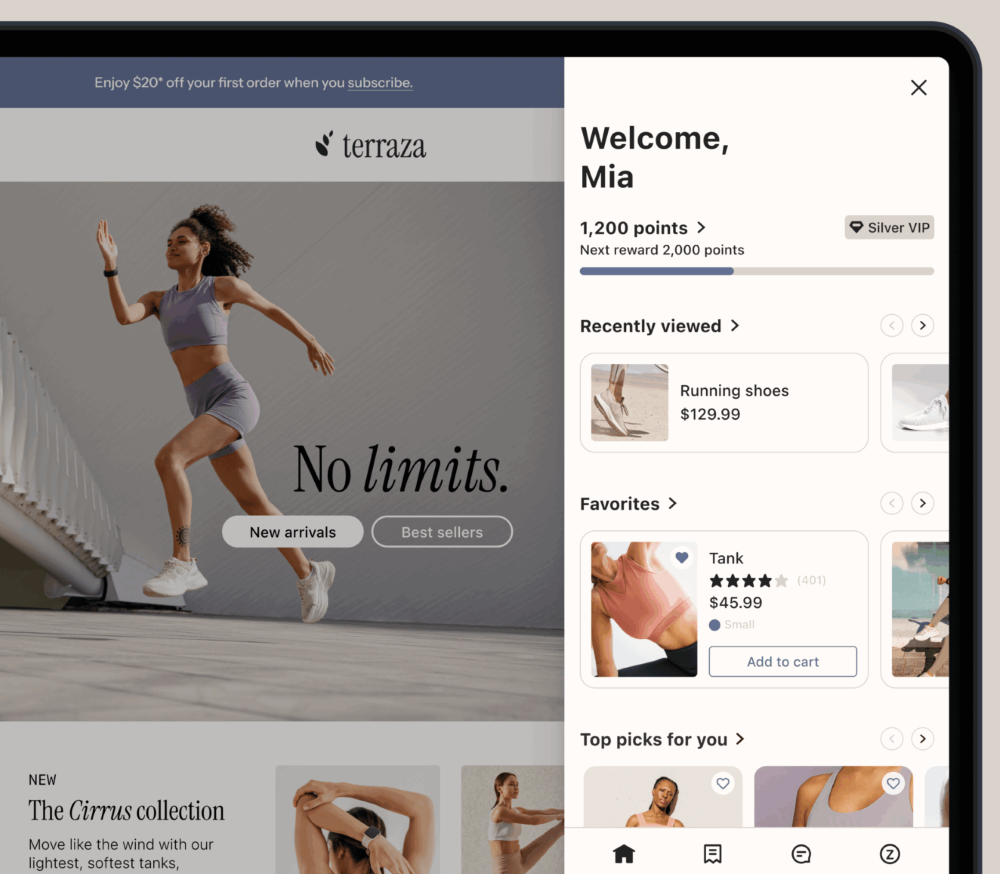
For example, a returning customer logs into their account to check an order status. Inside the Customer Hub, they see their recent purchases, saved favorite items, and personalized product recommendations based on past behavior. Above that, they can see a loyalty reward balance in the form of a scale that shows how many more points they need to collect till the next reward. There’s also a unique discount code generated by Klaviyo, which they can apply to their next purchase, all without leaving the hub.
Behind the scenes, Klaviyo tracks these interactions, allowing the brand to trigger follow-up emails, recommend relevant products, or personalize future marketing based on real customer activity.
In short, Klaviyo Customer Hub is designed to streamline the customer account experience while giving brands deeper insight into how logged-in shoppers engage, return, and convert.
What Businesses Can Use Klaviyo Customer Hub
Essentially, Klaviyo offers its Customer Hub as a service add-on to the core platform, not as a standalone product. It’s designed to complement your email and SMS subscription while expanding what your store’s regular customer account can do. Therefore, only particular users can adopt this extension.
- Only available for Shopify stores (including Shopify headless setups).
- Businesses are required to have an active paid Klaviyo email plan since the Hub can’t be purchased on its own.
Key Features of Klaviyo Customer Data Hub
Once logged in, customers can use Klaviyo Customer Hub as a central place to manage their entire shopping experience. The Hub is designed to reduce friction, increase convenience, and deliver personalization at every interaction.
Customers can:
- View order status and delivery timelines in real time, without needing to search emails or contact support
- Initiate returns with just a few clicks, making post-purchase interactions faster and easier
- Access personalized product recommendations and curated suggestions based on their browsing and purchase history
- Save and redeem personalized coupon codes, including dynamic offers generated by Klaviyo
- Manage their relationship with the brand in one place, rather than navigating multiple tools or pages
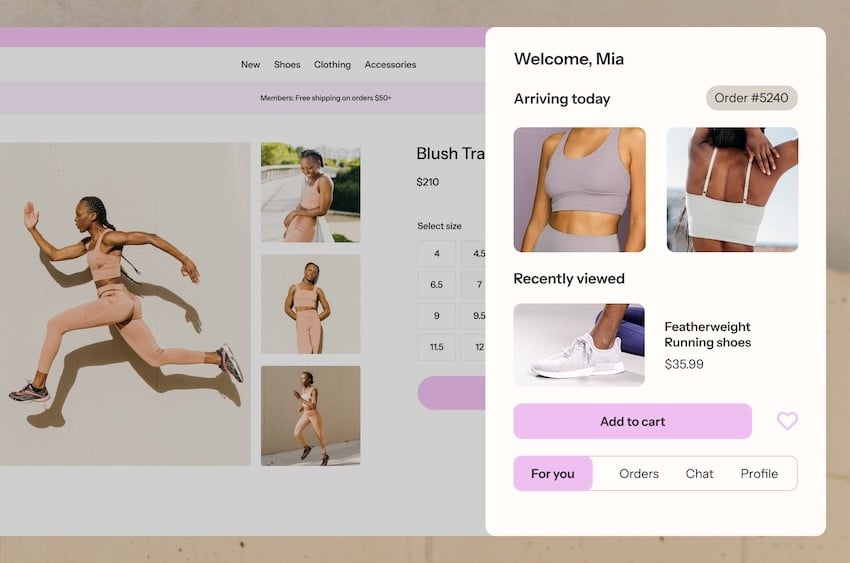
Personalized “For You” Experience
Customers can view personalized material based on their behavior, preferences, and wishlist activity in the “For You” section of Customer Hub. This could feature suggested goods, recently seen things, or exclusive deals that are pertinent to their hobbies.
Personalized incentives, such as loyalty-based rewards or welcome discounts, can be retained and used at a later time to promote additional purchases and return visits without interfering with the shopping experience.
Built-In Chat and Connected Support
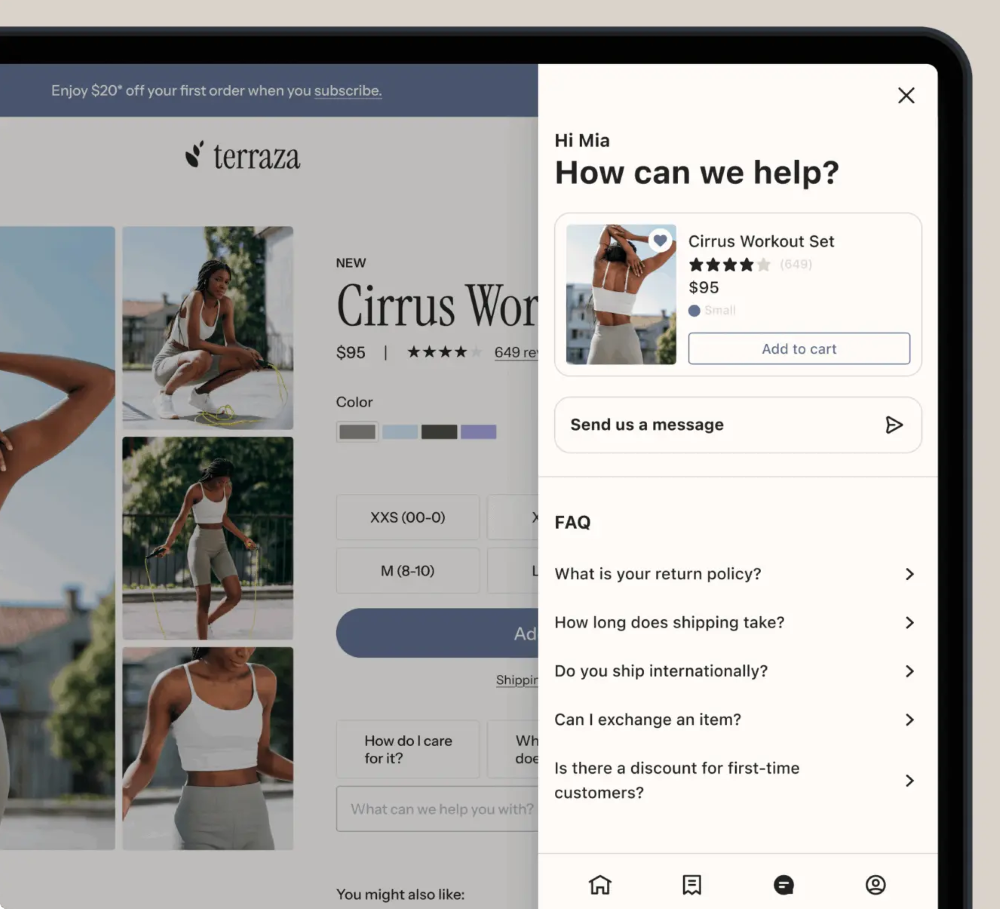
Additionally, Customer Hub has built-in chat assistance that lets users ask questions or voice concerns to a live representative right away. Support personnel have complete visibility into the customer experience thanks to conversations that flow straight into Klaviyo’s Unified Inbox.
Order history, browsing behavior, stored items, preferences, and previous interactions are all visible to agents in one location. Faster responses, more individualized assistance, and a more seamless overall service experience are made possible by this shared context.
Insights and Analytics for Brands
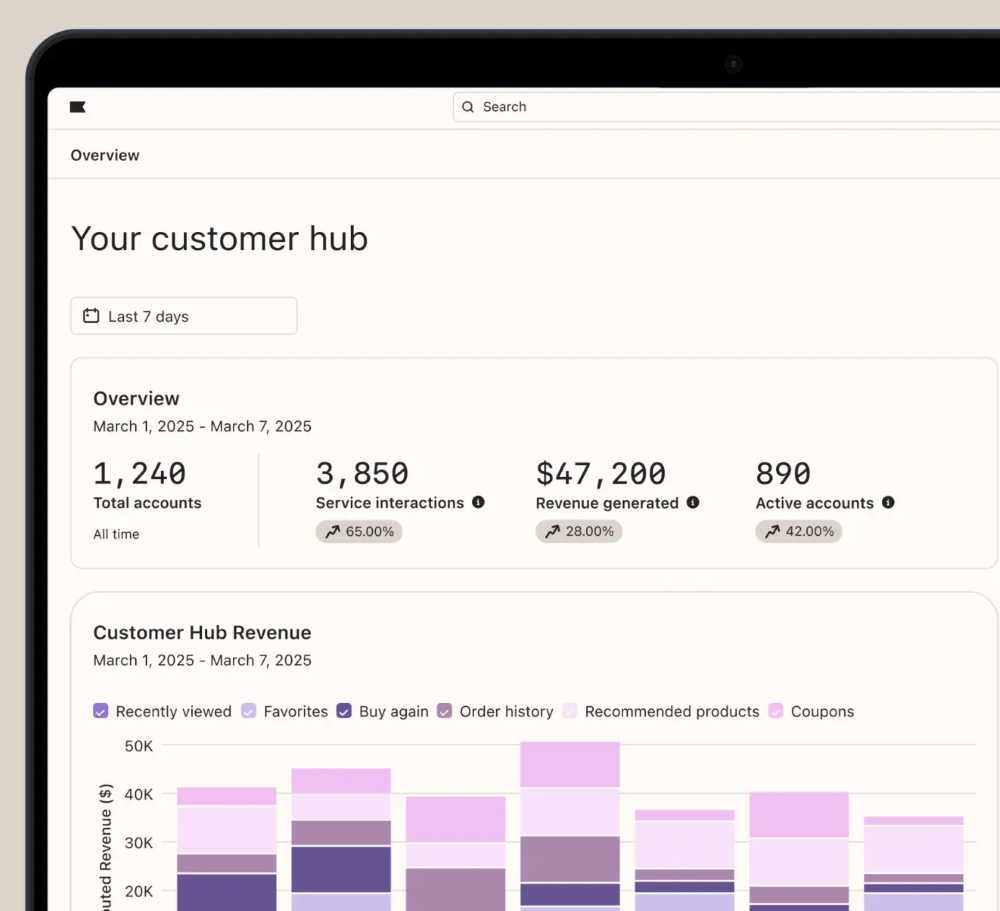
Klaviyo automatically records every interaction a consumer has with the consumer Hub. Real-time dashboards that display how signed-in customers interact with the hub, convert, and generate income are made available to brands. Using precise, first-party data, these insights assist teams in better understanding consumer behavior, spotting high-value engagement patterns, and optimizing marketing and service tactics.
A Unified Platform for Long-Term Relationships
Klaviyo Customer Hub helps brands create more connected, consistent, and long-lasting customer relationships by integrating customer data, AI-driven insights, personalized marketing, and customer service into a single platform. This transforms routine account interactions into significant growth opportunities.
Pros and Cons of Klaviyo Customer Hub
Like any of the newer ecommerce tools, Klaviyo Customer Hub comes with clear advantages as well as important limitations that brands should be aware of. Understanding both sides can help you decide whether you want to add it to your tech stack.
Pros of Klaviyo Customer Hub
First, let’s review what benefits your business can attain with the help of this tool.
- Centralized portal with self-service tools
Customers can track orders, manage subscriptions, start returns, and update profile information in one place. Customer Hub practically replaces the default Shopify account pages with a branded overlay that consolidates actions usually scattered around the site.
- Built-in wishlist and favourites functionality
Creating wishlists is very popular among customers. Customer Hub includes a native wishlist feature. This is a big advantage for ecommerce companies because they don’t need to look for a separate wishlist app. Shoppers can save favourite products for later and browse recently viewed items inside the Hub. As a result, this functionality helps to deepen engagement and gives brands data to act on in Klaviyo.
- High level of personalization through product recommendations
Klaviyo Customer Data Hub can also surface personalized product recommendations based on shoppers’ history and behavior. The tool gathers them within the hub interface with the goal of boosting conversion and average order value.
- Unified support of coupons and rewards
The Hub supports various types of coupons, whether it’s unique ones from Klaviyo or static ones from Shopify. This beneficial feature allows clients view and redeem gathered bonuses and available discounts directly in their accounts.
- Integrated support tools
Brands can integrate FAQs and web chat into the Customer Hub through add-ons. This allows clients to get answers without leaving the interface of the Hub.
- Timely insights through real-time engagement tracking
Activity information on Customer Hub, like favorites, clicks, views, etc., is transferred to Klaviyo in real time. Thanks to this characretistics, brands can act on rich behavioral data for segmentation, automation, and personalization.
- Delivering personalized experiences without login
Even before users log in, the tool can offer tailored content to known shoppers who didn’t fully log in but were recognized via a tracking token. This helps to bring up engagement even among shoppers who haven’t authenticated.
- Vast integrations
Klaviyo Customer Hub can integrate with loyalty, subscription, returns, shipping, and other types of third-party tools through configurable content blocks. This can help brands unify disparate ecommerce apps into one interface to optimize experiences.
Cons of Klaviyo Customer Data Hub
While the tool offers an advanced data-connected experience in general, of course, there are some limitations that you need to know about before deciding to introduce it to your marketing tool stack. Here are the key drawbacks.
- Unlocks full value only with customer login
While, as we mentioned, some personalization is available for unauthorized clients, getting a considerable ROI really depends on account usage. If your clients aren’t used to logging in, the adoption might require additional tutorials and education.
- Overlapping with existing Klaviyo and Shopify functionality
Before adopting the tool, we recommend looking into the basic features of Klaviyo and Shopify — they might already offer what you’re searching for. From client reviews, we found out that some functionality and integrations that the Customer Hub offers overlap with those available for regular subscriptions, so you won’t need to pay additional money.
- Still evolving
Klaviyo’s Customer Hub is still under development and lacks some of the functionality and data compared to some of the mature and tested ecosystems. For example, we couldn’t find a publicly available integration roadmap, which can be important for brands with complex tech stacks. This bit of uncertainty can be a major drawback and make it difficult to commit.
Klaviyo Customer Hub Pricing
Just like the rest of Klaviyo’s pricing plans, Customer Hub pricing is based on the number of active profiles in your Klaviyo account. If the active profile count of a brand grows, so does the monthly cost for this add-on. Here’s some more information on the available pricing information that we gathered:
- The price for the extension starts at $30/month for up to 10,000 active profiles.
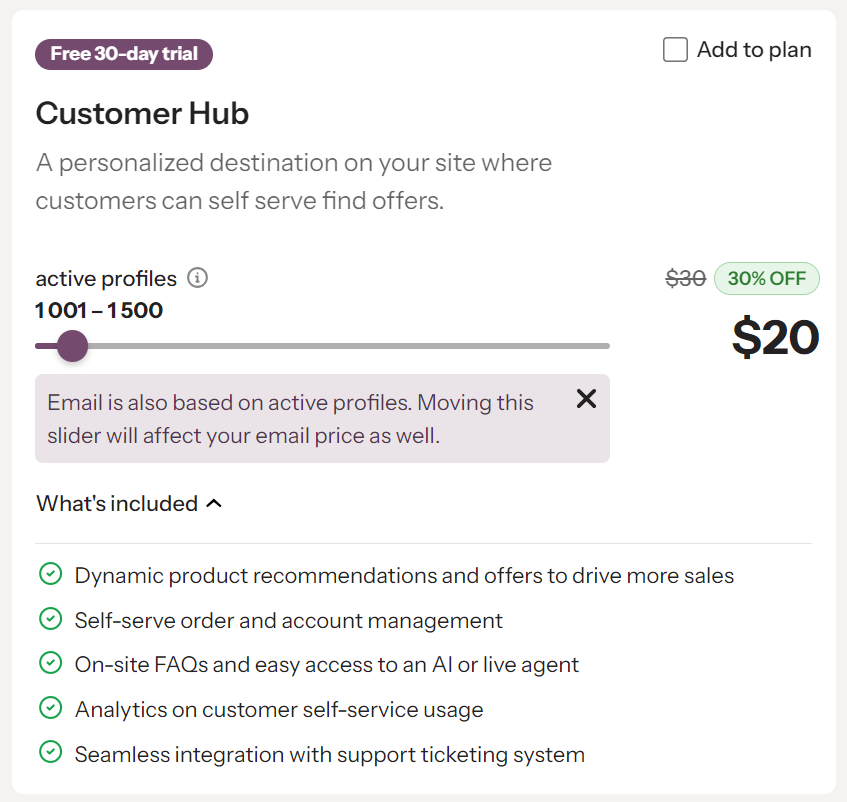
- As you can see, the provider also lists a special introductory pricing of $20/month for the same tier for promotional purposes.
- There’s also a 30-day free trial to allow users explore the tool’s functionality before committing.
- The price scales upwards when you change your profile count to over 10,000. It automatically adjusts the cost at the end of each billing cycle.
NOTE: Introductory pricing is promotional and may change once special pricing windows end. Don’t forget to clarify this detail with Klaviyo’s team.
How to Get Started with Klaviyo Customer Hub
It works seamlessly with existing Shopify accounts, providing a dynamic interface that adapts based on whether users are logged out, recognized, or logged in.
Step 1: Enable Customer Hub
To begin, navigate to the Customer Hub tab in your Klaviyo account and click “Get started.” This
activates the free trial and launches the onboarding flow, where you can configure the design and content of your hub before publishing it live.
Step 2: Customize the Customer Experience
Customer Hub allows you to personalize the structure and content of the experience by enabling and configuring key tabs, such as:
- Orders for order history and tracking
- Profile for customer details and preferences
- Chat for live support and assistance
These tabs help customers easily manage their relationship with your brand in one place.
Step 3: Integrate with Shopify Accounts
Customer Hub automatically syncs with Shopify, supporting both new and legacy customer accounts. This integration ensures customer data, order history, and account details are organized and available for personalized interactions inside the hub.
Step 4: Enable Extensions to Drive Engagement
To enhance the experience, you can enable extensions that add advanced functionality, including:
- Personalized product recommendations
- Favorites and wishlists
- Dynamic and static coupon displays
- FAQS and self-service support content
- Web chat for real-time assistance
These tools help increase engagement, encourage repeat purchases, and reduce support friction.
Step 5: Ensure Privacy and Compliance
Customer Hub includes settings to add links to your privacy policy and terms of service, ensuring customers understand how their data is used and how interactions within the hub are handled.
Step 6: Preview and Publish
Before going live, use the “View live” option to preview your setup and ensure everything looks and functions as expected. Once ready, publish Customer Hub through your settings to make it available across your site.
Step 7: Monitor Performance and Optimize
After launch, the Customer Hub dashboard provides insights into engagement, account usage, and revenue generated by logged-in shoppers. These metrics help you understand adoption and optimize the experience over time.
Step 8: Engage Recognized Visitors
Even when customers aren’t logged in, Customer Hub can recognize returning visitors using browser tokens. This allows brands to surface personalized content, such as recently viewed items or saved favorites, without requiring immediate login.
Step 9: Expand Access with Engagement Tools
To increase visibility and adoption, brands can add a floating widget across their website, making Customer Hub easily accessible at any point in the shopping journey.
Our Conclusion on Klaviyo Customer Data Hub Review
Klaviyo Customer Hub is designed to bring marketing, service, and customer insights together to create more connected, personalized ecommerce experiences. Overall, we can conclude that when compared to standard account experiences, Customer Hub increases customer engagement and lifetime value. Through several connectors and editable content blocks, it brings all of your customer information and multiple touch points together in one location. Your website can benefit from Klaviyo customization thanks to Customer Hub. If you need any assistance in setting up your email marketing with Klaviyo, including Customer Hub, contact our experts.
Frequently Asked Questions
Does Klaviyo Customer Hub work with every e-commerce platform?
No, Klaviyo Customer Hub requires an active, paid Klaviyo email membership and is only accessible for Shopify stores at this time. It isn’t available as a stand-alone program.
What is the cost of Klaviyo Customer Hub?
The cost of Customer Hub varies according to the number of active profiles in your account and is an add-on to Klaviyo’s email plans. Up to 10,000 active profiles are priced at $30 a month, with a 30-day free trial and special introductory pricing available for a brief period of time.