

Podcast Transcript
Vira 0:00
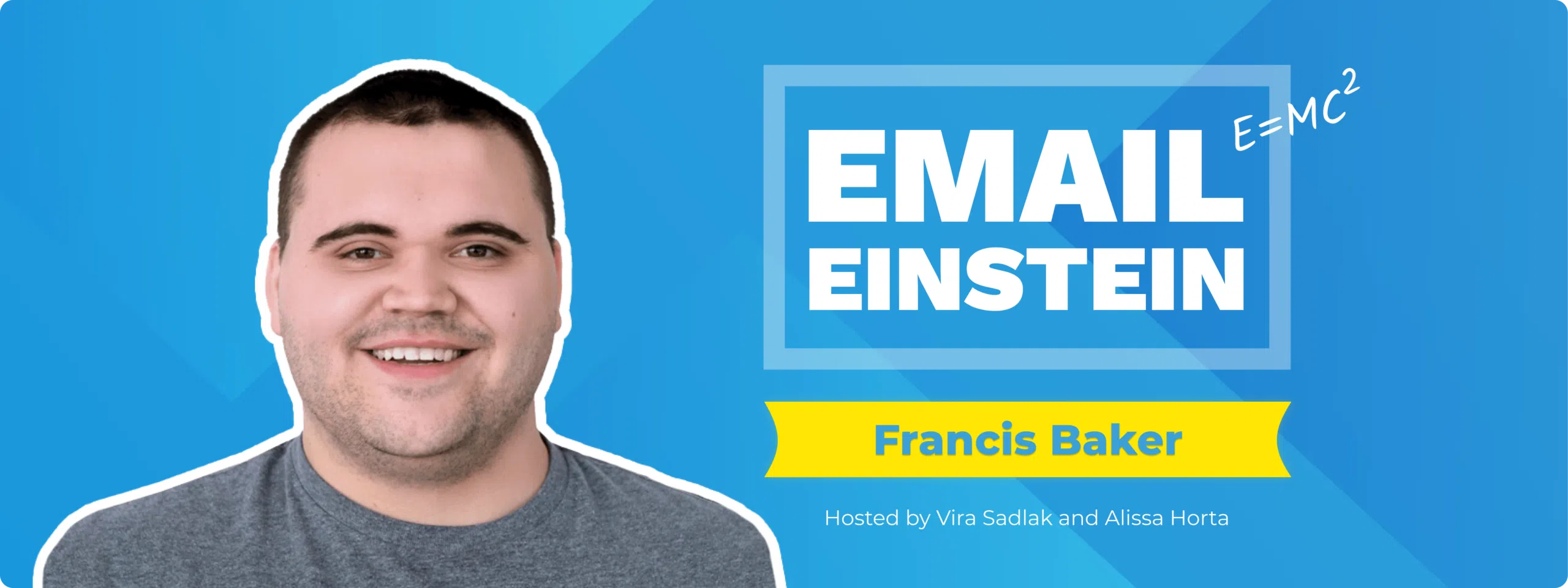
Hey. Francis is a senior deliverability and compliance specialist at Klaviyo. Francis has worked on the ground floor and helped build Klaviyo ascending infrastructure and deliverability monitoring tools over the past three years.
Alissa 0:36
Hey everybody, and welcome back to another episode of Email Einstein. Vira and Alissa here with an extremely special guest. This is a very, very highly anticipated episode, and we’re super excited. But before we get started, as you all know, or should know, we are two email marketers at an email marketing agency called Flowium. Vira and I are both super passionate about email marketing, and because we love what we do. We want to share our insights with you. Flowium is one of the fastest growing email marketing agencies in the world. We specialize in providing a premium, full service e commerce email marketing experience for all of our clients. Our service is tailored specifically for your business and is designed to help increase your online retail revenue by 20 to 50% that’s five zero, not one, 520. To 50% we deliver the right message to the right person at the right moment. And that’s what we’re all about here at Flowium. But without further ado, Vira is going to introduce us to our extremely special guest today.
Vira 1:35
Oh yeah. Oh yeah. Highly anticipated, I would say. So that thing. Deliver the right message to the right person at the right moment. That’s pretty much what we will be talking about today, because today we will be discussing deliverability, and I’m still having, like, a really, really hard time to to pronounce this word, like it’s super hard for my Ukrainian brain.
Alissa 1:56
You did good, though. You did good on that first.
Vira 1:58
Did my best on this. So recent stats actually show that return on investment on email can be up to 4,400% but to get those like insane numbers, to get those kind of returns, you have to be really thoughtful about the way you approach email marketing, and you can only expect such great results if your subscribers are actually receiving and seeing your emails. And unfortunately, that’s not always the case, and this like disheartening numbers of emails never actually make it to the inbox, but with a few tweaks and strategies, you’ll be able to have some solid improvements in your email deliverability rates, and that’s actually exactly what we’ll be discussing today with our guest, Francis Baker.
Francis 2:45
Hi, everybody.
Vira 3:05
Hey, Francis is a senior deliverability and compliance specialist at Klaviyo. He’s our deliverability visit if we have any questions or any issues. He’s He’s our guy. Francis has worked on the ground floor and helped build Klaviyo ascending infrastructure and deliverability monitoring tools over the past three years, and he has helped 1000s of different accounts fight their way back out of the spam folders, and he continues to do that. He’s our deliverability warrior, and we’re so grateful to have you today on our podcast, Francis.
Francis 3:43
Yeah, I’m extremely excited to be here, so it’s a pleasure to be here. And you know, I love talking about deliverability and compliance. I’m excited to jump into this.
Vira 3:51
I know it’s gonna be like a party for three email marketing nerds.
Alissa 3:58
I love it.
Vira 3:59
But before we go to some serious questions, and we do have, like, good, juicy email marketing questions, Alissa has a little game for you to get to know you better.
Alissa 4:11
Okay, Francis, here we go. So this is our blitz Q and A session of the podcast. I’m going to ask you a few this or that questions. Just give us the first answer that comes to mind. If you have a follow up question, we might allow it. We’ll see how it goes. Are you ready?
Francis 4:26
I am as much ready as it going to be.
Alissa 4:29
Okay, awesome. First question, text only emails, yay or nay?
Francis 4:35
I’m gonna go with Nay.
Alissa 4:37
Okay, nice. Yes, I love that. Okay, East Coast or West Coast?
Francis 4:42
Ooh, that’s hard. Born and raised in East Coast, but I love San Diego, so I’m gonna have to go with West Coast.
Alissa 4:51
Whoa. Okay, nice. Very cool. Okay, awesome. Third question, eggs or bagels?
Francis 4:58
Ooh, and these are good questions. Yes, um, I’m a carb guy, so I’m going with bagels.
Alissa 5:03
Nice, yes, okay, sending emails to your entire list, yay or nay?
Francis 5:11
Nay.
Alissa 5:12
Yes, and that’s a big nay, a resounding nay, for all of our all of our listeners, okay, socks or bare feet?
Francis 5:21
Ooh, I guess gonna go with bare feet. If it’s like, yeah, bare feet.
Alissa 5:25
Okay, Pepsi or Coke?
Francis 5:28
Coke.
Alissa 5:28
Yes, always. And then last question is Santa real?
Francis 5:34
Well, do we have any kids listening to this podcast?
Alissa 5:38
No.
Francis 5:38
I’m gonna go with no.
Alissa 5:40
Okay, we might have like, some like, like, young email marketing prodigies that are listening to this, but.
Francis 5:46
I hope I did not just spoil it for them.
Alissa 5:49
But I would imagine they’re at least, like, 12 or 13, you know, like it feels like a five year old doing email marketing is a little a little much of a reach.
Vira 5:56
Well, Alissa, sometimes it feel like five year olds are doing email marketing when I’m receiving this, like, insane, emails.
Alissa 6:02
Yeah, especially when you have people who are like, send to my entire list of 200,000 subscribers, and I’m like, Who told you that? Who like, who actually gave you that, that insight? Don’t do that. But anyways, okay, Francis, now we’re actually gonna get started with, like, the really juicy stuff. This is the highly anticipated questions and things that clients and clients of clients are looking for. So first question is, what is the actual definition of email deliverability, and how is email deliverability calculated? It’s loaded.
Francis 6:38
Yeah. So email builder ability, to me, is the measurement of emails getting placed in the inbox. And one thing I do want to say is, I do include promotions as the inbox. I know that it can be a topic that people might, you know, get heated or, you know, passionate about, but my point of view is, you know, promotions is 100% the inbox. It’s, you know, people do go in there. I myself love going the promotions when I have time. And I’m a huge fan of the and the tab from Gmail, so glad that it’s there. And you know, how is email deliverably calculated? I guess my counter question to this is, are we talking about for like, a brand? How do they calculate it? Or, like, how are inbox providers calculating it?
Vira 7:16
I guess the brand.
Alissa 7:18
Probably for the brand.
Francis 7:19
Okay, so yeah, for that, I think one of the best things, and this is one thing that I love about Klaviyo. I love about working at Klaviyo, is looking at your own data, looking at the open rates, the click rates, how your you know, your community is responding to your emails, ultimately, you know, there’s, that’s my favorite way of doing it. There’s other ways of calculating it, you know, looking at potentially leveraging third party tools, like a seed list. One thing I always tell brands is, if you’re going to leverage third party service, always also compare it to your own data, right? Because your own data is not going to lie, right? And so that’s, you know, that’s one of the biggest things, is looking at your open rates, making sure they look healthy, looking making sure they’re looking good, and, you know, making sure there’s no big red flags.
Alissa 7:58
What would you say? What would you say is like, healthy. And then what would you say is a big red flag?
Francis 8:02
Yeah, so I would say big red flag is definitely under 5% open rates, any and you know, even, I would say even, you know, you know, between like five and 10, that’s still concerning for me. I would say very healthy. You know, 15% 20% in that area, if not higher. I love obviously, seeing higher open rates. I think, you know, above 20% is very healthy open rates. You know, that means your community is really enjoying your emails and they’re clearly engaged. Then, you know, they’re waiting for the next one.
Alissa 8:30
Got it. So would you say that, like, it’s pretty it’s pretty irrational for brands to be like, we want 75% open rates constantly.
Francis 8:41
I guess it depends on the channel or the because I definitely have seen some brands, you know, and this goes really back to how your how you have things set up, right? Companies that have, for example, double opt in, they have a really clear opt in policy, and people understand what they’re getting and or even they give, you know, the consumer, the their voice, let them be heard with, like, a preference page, right? You know, that’s one thing I personally love. Is like when I go to go to unsubscribe, and instead of, you know, letting me just unsubscribe, they also give me the option maybe downgrade to only, you know, certain categories of promotions or emails, right? And those are things I as a consumer, as, like, a email geek, I huge fan of, but, um, you know, I do think, you know, 75 is very high depending on, you know, the size of the company. You know, that also is a calculation. But other thing is, like transactional emails, you know, I definitely expect to see 75 for that, yeah. So, you know, it definitely depends. But I don’t you know if that’s your goal, I’m gonna root in your corner to get there, so.
Alissa 9:36
Okay, nice. So it is, it is achievable. It’s not something that’s so outlandish. Just depends on how you get there. Okay, cool.
Vira 9:43
And, well, this is where it gets confusing for me. So I understand what is email deliverability, but can you briefly explain what is sender’s reputation? Yeah, like, how is it calculated and how to check my sending reputation? Because we hear it all the. Time, like, we hear this thing all the time, but, like, what is it like?
Francis 10:04
Yeah, yeah. Send a reputation is ultimately how the inbox providers, inbox providers view your mail stream, right? It’s, you know, you’re kind of your score, you know, everybody, kind of, obviously, everybody does it different what they look at. And, you know, we definitely talk about that. But when it comes to, like, monitoring it. There’s, there’s a kind of a, I would say, two primary tools that I am a huge fan of. One, Google postmaster tools. I recommend every brand to set this up. And the reason for that is because, one, it tells you how Google is viewing you, right? Breaks it down, both on the IP reputation level the domain reputation level, but also the great thing, if you’re, you know, a techie person like myself, they recently just rolled out an API, which makes myself huge fan. It’s something that ESPs, you know, we’ve been really asking for and wanting for since, you know, Google rolled this out years back. And we’ve always been told it’s, you know, it’s on the roadmap, or, you know, it’s being worked on, and it’s finally in the lights. And huge fan, you know, it’s free as well. Google postmasters is free. The other one that’s a huge fan is Microsoft s and DNS, which is their smart network data services. The thing with that is, it’s IP only. So that’s one caveat to it, right? So if you’re a smaller brand, you know, it might not work for you. The other thing is, you know, depending on your ESP, they might, you know, they might give you access to it. If you’re on a shared infrastructure, they might not. For Klaviyo, we don’t, because it does potentially expose information about our other customers, right? And we don’t want to obviously risk that. Other thing with Microsoft s and DNS is it’s not as insightful as Google postmasters. It’s still definitely useful and helpful, but it has kind of three categories of how it views the IP green is less than 10% of emails are perceived as spam. Yellow, it’s between 10 and 90% and then red is greater than 90% right? So it’s like, if you’re in that yellow category, you really just wish they’d give you a hard number, because 10 to 90% is a wide range. Yeah, that’s crazy. Wow. Yeah, yeah. And then the other tools that I do recommend is, I know sender score. That’s one that I always hear brands bringing up, but, you know, again, that’s on the IP level. That’s on the IP. And then barracuda, I think it’s like Barracuda Central. They also have a place where you can go in and kind of pop in your domain, and pop in your IP and get how they kind of look at your reputation. It’s, you know, it’s not super granular like Google postmasters is, but it’s still something. And, you know, Barracuda is definitely a big, you know, filter still out there that’s, you know, used in the enterprise space.
Alissa 12:23
So you would say that in order, yeah, I know I’m like, I don’t have enough notebook space for this. So, okay, so in order to, like, really accurately, like, configure, I guess you’re sending reputation or check it on a regular basis, you would strongly recommend getting some kind of additional support, whether it be from Google or a different platform that’s going to kind of complement what you’re already doing in Klaviyo, and then having that as kind of like a referral So, or a reference point, I guess, so that you know where you’re at assentially.
Francis 12:54
Yeah, Google, best master tools is great, huge fan of it, and for most brands, right, at least with brands I work with. You know, we work for contest Klaviyo is, you know, we have a lot of worldwide customers. We have customers in Europe, in Australia. We have a lot in the US. And for the most part, most of our volume, the majority of all our, you know, brands, volume is going to Gmail. Gmail is, you know, the dominant inbox writer. So, you know, you keep them happy and you keep in their good graces. Most likely it’s gonna be a trickle effect where you, you know, you might not have to really focus on, like, these smaller ones, depending on your you know, your your audience, or who you send to.
Alissa 13:28
Gotcha. Okay, cool. So what would you say are, kind of like, the key points that influence your email deliverability, and then also the reputation of you as a sender? And I guess this kind of stems back to or stems from, like, okay, there are all these platforms and stuff, but like, what are we specifically looking for that will influence how your emails are delivering, and then also what your reputation is like for these inbox providers, essentially.
Francis 13:52
Yeah, so before jumping into that, one thing, I want to kind of like explain is not every inbox rider is the same, right? So Gmail might you know, Gmail primarily looks at engagement, very heavily where, you know, maybe Comcast looks at no engagement, but also looks at the IP reputation. And not everybody looks at, you know, the same block lists, or maybe any block lists, so that you know, the biggest thing that I think is the most important part around no reputation and email deliverability is, how are people reacting to your emails? Are they opening? Are they clicking? Do you know, are those people marking as spam? Other things that the inbox providers you know might look at are like, are they forwarding where they responding? Right? Those aren’t things that you know we might not necessarily be able to track on our end, but there’s still things that you know they enjoy seeing. Other things are, you know, are you on any known block lists? Right? For example, are you on, like, maybe a spam house or, you know, an impactful block list. You know, not all block lists are created equally, right? There’s hundreds of block lists out there. Anybody can create a block list. The thing is, not every block list has an impact, right? The big one out there is obviously spam house. You know, they’re very respected in the industry. They do a lot of great things for the email ecosystem and the internet in general. So you. They’re still very heavily viewed by some, some, even major inbox providers. The other thing is, are you hitting a, you know, the mailbox provider, spam traps, right?
Vira 15:08
Can you briefly explain what are spam traps for those who, who don’t know?
Francis 15:14
Yeah, so spam traps, there’s three primary kind of categories, right? There’s pristine, which are ones that have never been used by anybody ever, right? So these are, you know, maybe ones that have just been pasted around the internet or maybe exposed on like a paste bin or something like that. And you know, for no for the spam trap operator, they don’t expect to ever see legitimate email there, right? So if they receive email there, they know it’s unwanted. Then there’s recycled, which are maybe, you know, a domain, or you know, an email that was primarily used, but then when you know, obviously expired because of you know, no usage, you know, for example, Yahoo, you know, Microsoft, if you don’t log in after a certain amount of days, they might shut off that email, right? Maybe after a year of it hard bouncing, they might turn that into like a spam trap. It’s more common for people to do that with domains, right? A domain that expires, they buy it, sit on it for a little bit, then convert that into the spam trap to see if people are still following best practices around bounce management, ultimately. And then the other one is a typo, right? So, for example, instead of typing in gmail.com you type in gmail.com right? That one obviously, is a sign of maybe someone not using double opt in, right? But you know, are you hitting these spam traps that the inbox writers ultimately operate is a big thing. Not everybody operates their own spam traps, but some do out there, right? And it’s not something you’re ever gonna be able to get, like, a metric on, but it’s, you know, it really just goes back to making sure you’re following best practices around how you obtain emails, right? You know, definitely never buy a list, please. But you know, we can definitely talk about that later. You know, double opt in is great. If you’re not going to use double opt in, maybe, you know, your legal team doesn’t feel it’s needed use something like reCAPTCHA, at least. And the reason for that is, you know, there’s list bombing out there, which is bots that just go to websites and just try to flood emails in there to get them signed up. And you know, a lot of these times, these emails are legitimate. They’re real emails out there. So, you know, using like, a third party service, you know, that might verify whether an email is legit or not, it might not catch that, right? So, you know, you got to make sure you have a strong defense as well. And then the other thing is content, nothing like using, like too many emojis or, you know, you know, for the most part, all the big, major and boss writers have moved to a more sophisticated system, right? So having the word free in your subject line in all caps isn’t going to cause your email to go to spam. But, you know, potentially linking to like a known malicious known malicious site, right? For example. And you know, one thing I always, always like to mention here is avoid free URL shorteners, right? Don’t use, like, a bitly or anything like that, because you know, for you, it might track, you know, data for you, but for someone malicious, it also masks where that link is potentially going. So that’s, you know, one thing to always keep in mind as well.
Vira 17:42
I didn’t realize that.
Alissa 17:43
Geez Louize. I’ve been doing it all wrong. Like, wait a second, I missed a lot. I missed a lot.
Francis 17:53
There’s a lot to this world, and I love it, because I feel like even being in it for three years. I know people have been in it for so much longer. I, you know, I love talking with them, because every time I walk away, I’m like, Wow, I feel like I’m new here. Because, you know, it’s constantly evolving. There’s just so many things out there to learn. You know, that’s why I love it.
Alissa 18:10
Wow. Geez Louise, okay, so a lot of this has to do clearly, with the inbox provider. So how can you actually train those inbox providers to recognize you as a good sender if you’re just starting out with email marketing?
Francis 18:23
Yeah, love this question, by the way. One thing I will say is, you know, when you’re starting fresh, one of the biggest things I and this is one thing I mentioned or recommend to every customer who’s new with Klaviyo or any ESP I’m talking with people in industry, is set up as much automation as you can. And the reason for that is in for Klaviyo context, we call it flows, you know, when you’re setting up automation, right, it’s going to be action based, right? Someone going to your website and maybe registering, just welcoming them, right? When someone subscribes to your newsletter, welcoming them, just saying, hey, you know, give them some information about you. You know, let them hear your story. You know, every brand I’ve ever talked to always has some cool story about how they got there. You know, whether it’s the CEO was, you know, doing something before, and they just stumbled upon something that someone needed, and he just built it. Or it’s a situation where it’s like, you know, it’s, you know, it’s a family owned business. You know, people love to hear about who’s behind that curtain of that brand. And so, you know, delivering that story is going to make them feel connected to you, and, you know, it’s going to make them, you know, potentially stay longer engaged. And then the other thing is, you know, with automation, what’s great about is it passively earns you money as well, which, you know, obviously it’s the big thing when it comes to email marketing is driving additional revenue. You know, for example, abandoned carts, you know, subscription notifications letting people know that they’re running low on, you know, you know, maybe you know something they purchase from you, whether you’re in your like, a supplement business or something like that. Something like that. But you know, I think, you know, the biggest thing is definitely automation, trying to automate a lot of the big things, because you know, when someone performs an action and then you send them an email, you’re relevant on their mind, right? You’re top of mind. You know they’re going to recognize you. Where a campaign, you know someone might have, you know, you know they might not be. In their email every day. So, you know, I think that’s one big thing. But the other thing is making sure you have a strong, clear kind of opt in practice, right? You know, for example, like I was talking about before double opt in or reCAPTCHA. But the other thing is setting the right expectations with your customers. And I think that’s a huge thing, even from my point of view as a consumer, right? When I go to a website and, you know, maybe adding something to my card them, letting me know that, hey, right now, it’s checked. If you uncheck you’re not going to receive emails from us, but this is what you’re going to receive. And I think that’s also a great point to even ask them their preference, right? Try to learn more about your community. You know, listen to them, right? Because, you know, when you listen to them, they’re going to stay around longer, right? And you know, one big part of email marketing is, you know, getting new faces in those funnels. And it’s not always cheap, and it’s not always easy, so if you can keep them there longer, it’s just gonna obviously provide more longevity,
Alissa 20:49
Right, right. And it’s always, I guess, retargeting an existing customer is always going to be way less expensive than actually going out and finding a new customer. So that makes sence.
Vira 20:59
So Francis, so you are recommending to start from the flows, and only after you have them for a while do the campaigns. Correct?
Francis 21:08
You can definitely do campaigns while you have automation going. But I’m, you know, I think one of the best things when you’re starting out fresh is getting those automation set up as soon as possible. Because it’s one of those things it’s like, especially working with brands who are transitioning from one ESP to another, one of the biggest things when you’re transitioning is like, I have all this data in my old platform. It’s not necessarily quick to move over, potentially, right for at least for Klaviyo. Do you know we have some integrations with other ESPs, but there are a bunch out there, right? There’s probably hundreds, you know, out there, and we don’t integrate with all of them, and you know, some of them, it’s not always easy to get the data you need out. So if you set up that automations while you’re transferring everything over, you know, it just makes it a little easier, because you’re starting to build up that reputation on this new email provider or on this new mail stream. And you’re, you know, you’re starting to warm it up already, right? So it’s going to make it, you know, little easier for you later down the road.
Vira 21:57
Are there any specific flows you recommend to turn on first, or it doesn’t matter.
Francis 22:03
That’s a really good question. I would say one that I think is huge, and it’s great. One is the welcome series. And that’s personally because I love one thing I love is when I opt into emails, is just hearing stories, right? Like I was just talking about him, you know, really passionate about email world, and, you know, it’s always cool to hear how people got to where they are, you know, why they’re doing what they’re doing. So I definitely think welcome series is huge. Also, welcome series is a great way to, obviously, drive revenue, right? You know, explain to them who you are, and then, you know, give them some gratitude. You know, give them like a coupon, or, you know, discount code, or whatever may be other ones that are, you know, really great abandon cart. You know, browse abandonment. Those are obviously great because they’re action based as well, like we’re talking about. But, you know, I think, you know, definitely transactional emails are great, you know, making sure that way people know when they purchase something that it was successful, right? And if you’re, you know, your E commerce platform doesn’t offer that, or it’s definitely important to have that letting them know that it’s been successful, or there’s any issues letting them know just being it’s always better to over communicate, especially when it comes to like, you know, purchase and under communicate, because you know when you under communicate, then they might reach out to support, or you might leave a bad taste in their mouth.
Vira 23:12
Right. And usually welcome serious like just looking at the stats from my clients, welcome series, that very first email, it has like the best open rates and click through rates. So in a way, you are training those systems to see you as a as a good guy in email marketing. So that’s a good one. So I guess it’s not a good idea to start from, like, win back series or sunset flow, or whatever. It’s better to start from, yeah, those like high high performing flow.
Francis 23:38
Definitely, I would definitely not recommend, and I’ve seen that before, where brands will come over the first campaign, they try to send them something back, campaign, and, you know, it’s one of those things I always ask myself, why? You know, usually at that point, it’s a great education opportunity to explain them how inbox Fridays are like thinking, right? You know, you’re a new sender, and they don’t know yet how to trust you or how to handle your mail. One thing that I always tell brands is it’s easier to fix your reputation, and it’s easier to build new reputation, right? Because one thing I always get asked is be like, Oh, I have maybe our emails weren’t performing great in our old ESPN. We’re coming over to Klaviyo. We just want to start fresh, so we’re thinking about buying a new domain. And I’m like, please, please, please, don’t do that. And there’s a couple reasons there. One, like I was saying it’s easier to rebuild your reputation. But the other thing is, is domain age does get taken into account in certain inbox providers, right? So if you have this fresh, brand new domain, it’s like you could try everything you want, making sure you’re following best practices, but you could still run into issues. That’s just purely because the domain is so new, right? Domain age is definitely something that I know, even on our side of the house, on the compliance side of the house, we take into account as well, and the reason for that is because, you know, malicious actors, fishers, people who are trying to, you know, maybe do something fraudulent, you know, while times those domains don’t last long, right? And so, right, seeing a very older domain or more established domain, right? Those are positive signals right out of the gate.
Alissa 24:54
Well, yeah. And I guess it just shows the longevity. It’s kind of like, I guess, like credit when. Like, credit unions and stuff are, like, trying to determine how high your credit is. Your credit age has a lot to do with it, so I guess it’s kind of the same with your domain. Is, like, the longer in use your domain is, and kind of the more credit you have behind that domain. And it just makes sense to improve it, versus like, well, we’ll just start from scratch, and I’ll start with a zero credit score and work my way up kind of thing.
Francis 25:19
Yeah, exactly.
Vira 25:21
Let’s talk a bit more about those, like new accounts. What are the safest ways to build your email marketing list fast? Is it a good Idea to say, buy a list when I’m just starting out with email marketing?
Francis 25:35
Yeah. So the short answer no. Explain why. I know I mentioned this before, so I’m going to answer it kind of from like, two different points. One, the compliance side, right? Depending on where you are in the world, it might just be illegal right out of the gate, right? So last thing you want to obviously do is start off, you know, start off your new business in breaking the law, right? That might not, you know, land for long successful business. But besides that, a lot of ESPs, like Klaviyo, for example, we won’t tolerate that, right? I’ve had those hard discussions with brands saying, hey, you know, our kind of road has come to an end here, because of, you know, ultimately designed to buy a list, and it’s never fun. I don’t enjoy that part of my role, okay? But, you know, it’s one of those things that it has to happen, right? Because when people are buying a list, you don’t know where these lists are coming from. You know, there could be, you know, a spam trap in there that might, you know, cause, like a spam house listing. And you know, that impacts not just one brand, but all our brands on our shared infrastructure. And my primary goal is to try to help as many brands get into the inbox as we possibly can. And so one bad actor, you know, does not outweigh all our good actors, right? And then, from the, you know, the deliverability side of the house is think about that user experience, right? You know, one thing I’ve been talking about a lot so far is user experience, or listening to your community. And you know, if you randomly got an email from a brand you don’t recognize, how are you going to respond? I know, personally, I’m going to in this is mostly because I’m in the email space. I’m going to either a really make sure I haven’t ever engaged with this brand, right? Maybe I haven’t gone there. Once I’m confident that I haven’t gone there, I’m gonna mark it as spam, right? And those are not good signals that you want when you’re first starting out. And those aren’t user experiences you want either, right? Because you know that person who you might have purchased that list, that could have been a real customer, right? Instead of them being like, Hey, I love this brand, go check out XYZ. Instead they’re like, hey, that person spammed me. Don’t go check out XYZ. So.
Alissa 27:23
That’s interesting. That’s so funny. Your job is kind of like a like, doctor slash, like, referee slash, like, slash, like, community ambassador.
Francis 27:34
Yeah, yeah. I’m good cop and bad cop.
Alissa 27:39
That’s great.
Vira 27:41
Magician, magician, email marketing magician.
Alissa 27:44
Sorry, Vira, I interrupted you. What were you?
Vira 27:46
No, no, I was just like wondering, what are the most deliverable see that happened. What are the most deliverability, friendly ways to build your email list? Yeah, healthy and fast as well?
Francis 28:02
Yeah, that’s a great question. And this is one area that I’m trying to learn more on, because I have a lot of knowledge around email deliverability and compliance and trying to learn more around the marketing world. What, I guess, one thing, I think that’s huge, is thinking kind of outside the box, right? You know, one thing that I see a lot of brands do when they first kind of get started, depending on, you know, obviously the brand e commerce, this might not work, but one that I am a huge fan, one website, I’m a huge fan of this product, Product Hunt. Think that’s what is I’m now drawing a blank, where you can go and find like new, you know, products that are launching, and, you know, you can engage with them. And, you know, a lot of these times, these are made by people who are, you know, just a side project, or maybe a weekend project or something that they’re just spending time, ultimately, to sit down and build and that’s how I find a lot of great tools that, you know, that’s how one tool that I love is, that’s how I found notion. I don’t know if you’ve ever heard notion, but it’s, it’s kind of like, like a note taking and, you know, Trello all in one it’s really nice, huge fan of it. And that’s how I found them. But I found a lot of products there. But the other thing, I think, for like, e commerce at least, is, you know, just, you know, when you’re starting out is, you know, ultimately, just trying to figure out a way to, you know, the biggest thing is ultimately driving traffic. And once you get that traffic there, maybe it’s from Facebook, Google ads, you know, Instagram, whatever it may be, at that point, it’s just, really, just trying to, you know, convince them that what you’re doing or what you’re going to send them is, you know, going to be interesting, right? So, whether it’s, you know, like I was talking about, you have a cool story, or, you know, for you know, you guys obviously have your podcast, right? I’ve seen a lot of brands, you know, kind of exploring to different territories with covid, you know, they’re starting to join, you know, maybe podcasts with other companies or brands like themselves. You know, that’s one way to obviously get some spotlight on you. You can do one thing that I know is very common in the E commerce space is giveaways. I love giveaways, but I think the biggest thing is depending on the platform in all say that, and the reason for that is, some platforms, they really try to make sure it’s clear and transparent when people are checking out this giveaway, that they’re going to be opting in. I’ve seen some where it’s like you got to individually check every. Rebrand that is on there. I love it from the compliance side and the deliverability side, because it’s super transparent. So I think that’s a good way if you’re going to do it right. Yeah, this is one area that I definitely need to get more knowledge on. But I do apologize.
Vira 30:12
We all do. That’s the question that we keep getting from the clients. And we were like, well, you can do the exit and the welcome series,
Francis 30:21
Yeah, you know, that is one thing, right? Is you got to be creative. You got to, you got to get people interested, right? That’s the biggest thing, once you get them interested in your brand. That point is just, really, just convincing them that, hey, what you’re going to send them is what they expect to receive. And I think that’s, you know, like I was talking about, is one thing I love is when I go to a website and they just give me the option of what I want to receive, right? So it’s like, maybe just product launches, or maybe it’s just sale, you know, sales, you know, stuff like that. Or, you know, depending on where your brand does, you know, you could also think of something creative there. You know, for example, if you’re in like, like a health space, you could also maybe, you know, send not just campaigns about your products, but, you know, maybe workout related stuff, right? Things like that.
Vira 31:06
And I also noticed that this campaigns about the community perform really well. So like, Here is the story of our customer. For some reason, this campaigns, oh my goodness, they perform like magic. Do you have any do you have any brands that you’re like, waiting to get in your in your inbox? Like.
Francis 31:26
Yeah, I wouldn’t say necessarily brands one, and I try to like, when it comes to like, subscribing to like newsletter and stuff like that. I’m very much so the type of person where I love to just hear, you know, read about promotions and hear about the story. That’s my big thing is, I love to hear about the story of, like, how they got started. But my thing that I really love is really good email. I love that newsletter. Huge fan.
Alissa 31:48
Oh yeah, they’re great.
Francis 31:50
And, you know, it’s not necessarily a brand, but you know, they’re, you know, they’re talking about what’s going on in the industry, what, you know, what’s new, you know, maybe what, ESP is no put out this article, or what brand has done this, etc. I don’t know. I love that website. I go there. I’m just like, wow, there’s really creative content. As someone who does not have that skill set of making things look beautiful, it’s cool to see people who do.
Vira 32:09
Right. So there’s the Really Good Emails that come or what’s the is that the one you’re talking about? Yeah, I love them. I’m like, I’m I’m opening, like, each and every email that they are sending.
Alissa 32:23
Every single one, like, actually, every single one. So Francis just a few more questions. So this has more to do with like, like list cleanup, because this is something that we get asked a lot, as well as like list hygiene, list cleanup and specifically for better deliverability. So are there, like, any kind of, like, strategies or tactics that you would say that we should start going about with regards to how to clean the list? And then I have a few follow up questions, but we’ll start with that one.
Francis 32:51
Yeah. So one thing I am a huge fan of is, so yes, you can definitely list clean, which is great. One thing I think is also really beneficial, instead of list cleaning, kind of listing, and kind of, like, making sure who you send to is just always engaged, right? And the reason for that is because when they stop becoming engaged, they’ll then exit that segment. Or at least with Klaviyo, we call it segments. I don’t know what other email service providers might call it, but just like, like a dynamic list ultimately based off of, you know, behavior, right? Obviously you’d build these to be engagement related behavior. But when it comes to, you know, how can I clean my list better? I think one thing I always see brands do, or, you know, they think might help them, is, you know, including criteria that maybe the inbox writers don’t see, right? For example, someone purchasing, or stuff like that. One thing I always tell people is, like, I myself, I have a lot of different emails, right? I have, you know, some that are just purely for, like, really important, crucial things right past you know that are, like, dedicated to, say, my, you know, my bank or, you know, my Amazon account. So if anything never happens, I know if I’m getting a notification there, it’s not good potentially. And then I have emails that are just strictly for, like, promotion related, like, my journal email, right? And I go into that email as much as I can, but not every single day. And so you know, if someone uses, if someone purchases, it doesn’t mean they’re necessarily engaged with your email, right? Maybe email isn’t the right channel for them, right? Maybe that person prefers, prefers an SMS, you know, that’s something that’s obviously starting to blow up more is SMS marketing, you know, like we were talking about, you know, before, it’s easier to reengage or retarget people who’ve, you know, shown interest, than it is to get new customers. So, right, right, right? Maybe creating, like, a custom audience with Facebook and retargeting that person on there to drive them back to your website.
Alissa 34:24
Gotcha.
Francis 34:25
It’s a great option, but I think one of the biggest things is making sure you don’t include criteria the inbox provider might not see, right? Just because someone purchases does not mean they want your emails, right? They might just want your product, which I see all the time, and I’m myself, as I’ve done that before, where it’s just like, you know, I might not opt into your emails because, you know, I know it’s just like, I’m buying this product once, and I’m going to be done with it. For example, water bottle, right? It’s like, not going to buy a water bottle every month,
Alissa 34:49
Right. Yeah, that makes a lot of sense. So how, how often would you say you typically need to clean your list?
Francis 34:56
Yeah, I would say it’s, it depends on like your setup, right? So I’ve seen some brands that will, and this is, like, you know, like I was talking about is, like, you know, if you’re more targeting engaged people first, and then you have, like, a sunset flow, and then at the end of the sunset flow, then, you know, maybe go in there once a month and just suppress those people or remove them from the marketing side of the house. And, you know, obviously, make sure they still get the transactional right. Because if they do come back, you want to make sure they still get those crucial, important emails that let them know that, hey, your products on the way, or whatever may be. So I think generally, what I recommend is, you know, customers to do it. You know, depending on the situation is, overall, your performance is good, maybe once a quarter, maybe once every couple months. But if you’re struggling with inbox placement, or you’re struggling with open rates, and maybe start to do it more frequent, or, like I was talking about, instead of, you know, doing list cleaning, just target more engaged people. That way it’s automated, and you kind of just do it right and like, you know, at least for Klaviyo, you know, you can have profiles in there that you might not have to communicate with, which is fine, right? Because, you know you might communicate them through another channel, like SMS or push or whatever.
Alissa 36:01
Maybe so when it comes to, okay, so like, for example, with like, a sunset flow, or, like, when you are doing that cleanup, when it comes to, like, deleting versus suppressing accounts, what? What’s the recommendation? Like, what is that supposed to look like? Sometimes, I personally find, anyways, I have a hard time explaining to clients what suppressing an account means and why we do that versus deleting it or so, yeah, if you could provide some clarity on that, that would be huge.
Francis 36:26
Yeah, for us, Klaviyo, right? You can have as many suppressed profiles as you want, right? We’re not going to charge you. What’s good about having suppressed profiles over deleted profiles is, when you suppress them, we keep that data about them, right, their purchase history, maybe if they filled out, you know, preference page talking about their pet or, you know, giving you their date of birth, you know, a birthday flow, or something like that. We still have that data. So if they ever do decide to come back one day, right? Maybe in like, a year, or whatever it may be, you have that data so you don’t have to react them again, right? And so it’s just like a nicer user experience. But the other thing is, no that data might be useful for you, right? In case of something ever comes up where they’re like, Hey, I opted out of this. Why am I still receiving your emails? I’ve had those situations many times, and it’s because people, instead of suppressing them, they go and delete them, and then maybe a resync happens, or import happens. You know, something’s new, and they’re just making sure all the data is in the account. So they imported again. Most people are now being brought back in, but if they were suppressed, they wouldn’t have been reactivated, and they would have received those emails.
Vira 37:20
I feel like people don’t always realize that, no, they are not paying for suppressed accounts. So that’s a big one, right?
Francis 37:28
Yeah, I think at least for Klaviyo, I know that’s how we do it.
Vira 37:30
I don’t know about the other platforms, but I’m just like, speaking about Klaviyo.
Alissa 37:34
Yeah, so obviously you want to keep that data in the background for a suppressed account, but what’s the process of getting that account reactivated? Like, can you, as the brand, do it on your own in the back end? Does the does the suppressed account have to actually go out and do it? How does that work?
Francis 37:47
It depends on what they’re suppressed for. I guess you’d say, right? With Klaviyo deal, again, speaking for context, a profile can become suppressed for, like, a wide range of reasons. Right? Marked as spam, for example, unsubscribed, manually suppressed. Like, for example, you going in there and doing it yourself, depending on the reason you know the user might be able to do it. For example, if it’s an unsubscribe the user, the marketer, like the Klaviyo account owner, can do it, or the user themselves can do it. Who unsubscribe by just resubscribing right for marked as spam or hard bounce, those take someone on our team to do and the reason for we have that kind of safeguard is just in case something happens, right? For example, typically when it comes to a market spam, it’s, you know, obviously that’s a bad signal. Same with the hard bounce, you know, that’s saying the email is no longer existing. And so we kind of safeguards there, and that’s just mostly to protect our reputation, and our customers reputation, for soft bounces, you know, for example, inbox full, stuff like that. A user can go in there and remove that suppression.
Vira 38:41
Cool. Well, I mean, I have, like, a gazillion more questions. Will not, will not have enough time to ask them all, but thank you so much. Actually, I my notebook is, like, full of good notes and ideas to implement with some of my clients. And thank you so much for coming. Francis, yeah, honestly, honestly, super helpful.
Francis 39:05
Honestly, honestly, it was my pleasure. I loved it. I was super nervous, and I still am that comes through. I am sorry.
Alissa 39:13
We’re nervous to talk to you, because you’re like, the ultimate Klaviyo, but like, deliverability pro. We’re like, ooooh.
Francis 39:21
But no, it was great chatting with both you and you know, I’m excited to see you guys keep growing and you know, I’m excited to see us keep growing too. But you know, if anything comes up, definitely don’t hesitate to reach out to me. If, you know, if you get any good follow up questions and you want to get those answered, definitely don’t hesitate. You know, I’m here to help. I love talking to the community. I love helping people.
Vira 39:40
How people can find you actually, if they have any follow up questions?
Francis 39:44
Um, I’d probably say the best channel is LinkedIn. I’m very active on there, you know, if you just look up Francis Baker, I’m probably the only one that works at Klaviyo that I know of. So if I have someone else there, I got to talk to someone, but LinkedIn you know is probably the best place.
Alissa 39:59
Okay, awesome. And we’ll include a link for your LinkedIn in the description box of the of the podcast, so people can click through and everything so and guys, just as a kind of reminder. So Francis is like the king of deliverability when at Klaviyo, and it’s a relatively smaller department, but it’s grown over time, and he’s still kind of the big cheese over there. So definitely a really good resource and a good reference point if you do have questions, and if you’re interested in finding out more about Klaviyo and like deliverability, and you’re working with another ESP and you want to hop on. He’s definitely a great person to reach out to, as I’m sure you’ve you’ve heard in the goodness in his voice. So definitely, definitely reach out. Definitely reach out.
Vira 40:41
Well, thank you. Thank you so much for coming and guys, thank you for listening. Don’t forget to subscribe and share this podcast with your E commerce friends or with your email marketing nerd friends. If you have more like technical questions or you want to get involved in community of email marketers, check us out at flowium.com/community, a lot of good things are happening in that group, so join us there. And if you are interested in getting some more advice on how to establish a solid email marketing strategy for your e commerce Store, just visit us at flowium.com/contact, and sign up for a free consultation. We will have all of this links in the description box down below, so just like, scroll down and go and enjoy some some some good stuff.
Alissa 41:27
Yeah, for sure. And for next week, we’re really excited. We have, like, I’m telling you, I think I’m pretty sure I said this last episode, but we have so many good back to back interviews, like someone from Klaviyo, really cool brands who do stuff really well when it comes to the design and copy. So next week, we actually have something a little different. It’s we’re going to be talking to arian radmand from Ignite post. He’s going to be talking to us about direct mail and how that links and kind of integrates with Klaviyo, basically. Long story short, I don’t want to spoil too much, but it’s a handwriting robot, so if you want to know more about that, make sure you listen to next week’s episode, because it’s really, really interesting, like, crazy stuff, crazy stuff coming up ahead. So thank you guys again for listening. Francis, thank you again, so much. Today was super insightful, and I just can’t wait to share this with with all my clients and be like, Hey, you have questions. Here it is.
Vira 42:27
And don’t ask me anymore.
Alissa 42:28
I know, yeah, don’t ask me. Ask Francis. Thanks again, Francis, and thank you everybody for listening, and we’ll see you guys next week.
Vira 42:36
See you next week. Bye.

Vira Sadlak
Podcast host, marketer, traveller and a life lover from Vancouver, Canada

Alissa Horta
Alissa is an email marketer that is passionate about relevance!