

Podcast Transcript
Alissa: 0:16
One of the industry geniuses with us today, Chase Clymer. He’s the host of Honest E Commerce podcast and the co founder of Electric Eye Agency. Chase is a Shopify expert and strives to help e commerce brands drive sales.
Vira: 0:54
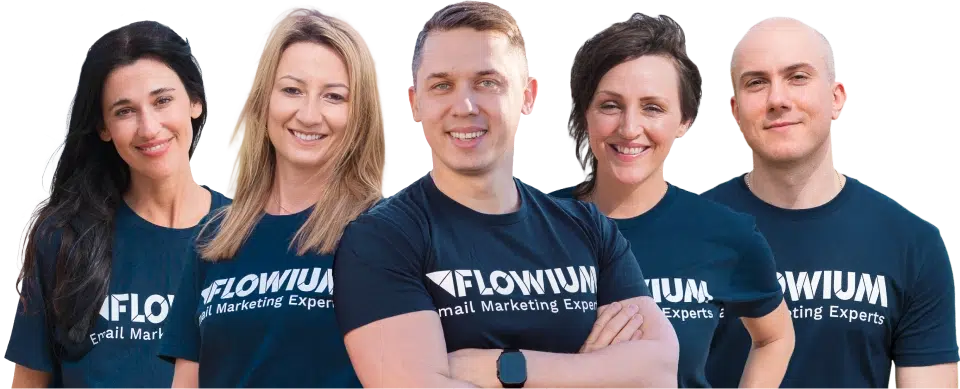
Hello everyone. Vira and Alissa here. Welcome to Flowium podcast. We are two email marketers at an email marketing agency called Flowium and we are so, so passionate about what we do. We are passionate about email marketing and because we love what we do, we want to share our insights with you. Flowium is one of the fastest growing email marketing agencies in the and we specialize in providing a premium full service e commerce email marketing experience to our clients and our services tailored specifically for your business and is designed to help you increase your online retail revenue by 20 to 55.0%. So our motto is delivering the right message to the right person at the right moment. And as always, if you like what we do here on our show, please leave us a review. And we actually have a really fun guest that I’m really excited about. And Alissa, please take it from here and let’s introduce our guest.
Alissa: 1:51
Yay. Before we introduce him, I like so we’re. This is episode 43 and I like that Vira did the episode intro. That’s a little curveball for you guys. But it’s fun, it’s fun. We like to keep it fresh here. So a lot of you listeners out there are actual e commerce business owners and we appreciate that you listen to us. We love having you guys, I guess sort of like incognito on the show. And our greatest desire on this podcast is to always make sure that we’re bringing you relevant content that is not only related to email marketing, but that will also bring you the greatest value possible to help your business be as successful as possible. And that is why we’ve brought on one of the industry geniuses with us today. Guys, everyone say hello to Chase Clymer. He’s the host of Honest E E Commerce Podcast and the co founder of Electric Eye Agency. Chase is a Shopify expert and strives to help e commerce brands drive sales while helping those brands look super good doing it too. And I’m not gonna spoil all the details. We’ll let him kind of get a word in here. We want him to share more about his agency and his expertise. But before we let him take the mic, we have our very favorite guest segment of the show. Blitz Q and A. But also, before we start, Chase, please say hi to everybody. We’re so excited to have you.
Chase Clymer: 3:10
Hello. I mean, I don’t. You can just keep saying nice things about me. I don’t want to talk.
Vira: 3:14
Yeah, it’s a very promising beginning, right? I like it. I like it already. Chase, before we go to all of the juicy, serious questions, we have prepared this quick Q and A. Blitz Q and A. So literally, we’ll ask you very quick questions. Just answer with the first thing that comes to your mind.
Chase Clymer: 3:54
I’m ready.
Vira: 3:56
West coast or East Coast?
Chase Clymer: 3:57
Ooh, West Coast.
Vira: 3:59
Shopify or Woocommerce? That’s easy.
Chase Clymer: 4:01
Shopify.
Vira: 4:01
I knew it was going to be an easy one for you. Instagram or TikTok?
Chase Clymer: 4:06
Instagram.
Vira: 4:07
Who would play you in the movie about your life?
Chase Clymer: 4:10
Ooh, I would go with Matthew McConaughey.
Vira: 4:15
Oh, wow. It’s a good.
Alissa: 4:17
That’s a good one.
Vira: 4:18
Good pick. Good pick.
Chase Clymer: 4:19
All right, all right, all right.
Vira: 4:20
Very modest one, too. Head the treadmill or hit the couch?
Chase Clymer: 4:28
Couch.
Vira: 4:29
I know. I mean, I’m the same. I’m the same this day. Guilty.
Chase Clymer: 4:32
There’s not a treadmill in my house.
Vira: 4:34
Guilty as charged. And this is our favorite one. And Alissa always asking this question, so I had to ask you a baby panda or baby penguin?
Chase Clymer: 4:43
Ooh, I’m gonna go with Penguin.
Vira: 4:46
It’s funny that this one took you the longest.
Chase Clymer: 4:49
When I was in 8th grade, my AIM username was extreme Penguin. Really.
Alissa: 4:56
That’s really funny.
Vira: 4:57
You’re good with names. Electric Eye. Extreme Penguin.
Chase Clymer: 5:00
Alliteration.
Alissa: 5:02
I have a very funny one. A last Blitz Q A before we actually get started.
Vira: 5:06
Yes, Alissa, please.
Alissa: 5:08
Mattress or socks?
Chase Clymer: 5:12
Mattress.
Vira: 5:15
It’s a. It’s an inside joke. Seriously, Mattress or socks?
Chase Clymer: 5:18
I mean, I gotta go with mattress. I mean, I don’t wear socks in bed.
Vira: 5:22
So you’re overthinking it. The reason why Alissa asked this one is because every time we do some sort of, like, case study or we talk about Some different email marketing strategies. We are for some reason always use the example of mattress or socks. It’s almost inappropriate how many times we are using.
Chase Clymer: 5:40
There are a lot of direct consumer mattress and sock brands.
Alissa: 5:44
Oh yeah, there are. There really are.
Vira: 5:46
There really are. So a good one. A very promising, promising beginning. But now let’s go, let’s get to some juicy, juicy questions because we do have like a gazillion things to ask you today.
Alissa: 5:58
A ton. So we’ll start with the very basic chase. Can you tell us just a bit about yourself and your agency and really how you just got to being a Shopify expert?
Chase Clymer: 6:09
Yeah. So Electric Guy has been around for five or six years now. We’re a small team of really smart people. Everyone’s smarter than me. That essentially all we’re doing is helping our clients build and maintain and optimize Shopify experiences. You know, making beautiful designs and highly optimized stores. And then on the back end of that, you know, we’re helping them. We also help with email marketing as well and we also do paid ads and the whole goal there is just to help them make more money. You know, anything we’re doing, we want to make sure we can see the ROI on the other side. And through building out the agency and kind of getting more and more deep into the Shopify ecosystem over the years and the partner programs and all that honesty. Commerce was kind of our content idea many moons ago and now it’s evolved into something super cool that’s it’s like a video podcast and we’re launching a community and coaching and all sorts of fun stuff soon as just kind of like where we’re sharing all of our actual knowledge from doing this every day and that’s kind of what we’ve been up to.
Vira: 7:05
I really love the name of the agency.
Alissa: 7:07
Yeah, I was about to ask, what does it mean?
Vira: 7:09
How did you come up with the name Electric Eye?
Chase Clymer: 7:11
Is there a Judas Priest song? So me and my co founder are really into music. We’re metalheads and when the agency got off the ground, it got off the ground pretty quick. We went from kind of tag teaming some projects together to having about six to seven retainer clients before we even had an agency. We kind of just saw the need in the market market and we knew a lot of people and we just kind of hit the ground running and it was very good for us back then. And we were just like name doesn’t matter. And we like made a list of a bunch of metal band songs and we just picked one.
Vira: 7:41
Random names. That’s a really, really cool story. Okay, so let’s talk the E commerce. Let’s talk the e Commerce in 2021 in this hopefully to be soon post pandemic world. So we are slowly emerging from the pandemic and like there is no doubt that online E commerce have seen like a lot of changes. This, this entire world has gone through big changes and yeah. And with them actually came a lot of new challenges for e Commerce in 2021. What are those challenges? What are sort of what is the new normal for E commerce and what we as business owners can do in 2021 to help us and our businesses thrive in 2021 and beyond? I know it’s a long question, but interesting to hear your.
Chase Clymer: 8:30
I think I got the context of it. Essentially what happened last year was a giant like dive for everyone into digital, into direct to consumer and it just made it extremely competitive. So we’re talking about paid advertising went through the roof which is so expensive to acquire a customer through means like Facebook or Google. So I don’t see that going away anytime soon. And I think that what brands need to do to try to future proof themselves is to invest in channels that they own, like first and foremost, like email marketing, like they need to invest in that. I think SMS is, is something that works very well for certain brands. Web push notifications work pretty well. I think that they need to focus on things that are not paid advertising. There are other ways to like every brand, whenever they reach out to an agency, you know the goal is always the same. It just isn’t a different question. And it’s like, how do I make more money? There’s a things you can focus on to make more money. And I think people just get caught up in like this weird illusion that Facebook and Instagram advertising is the only way.
Vira: 9:37
Yeah, exactly. So basically if you don’t have the budget for ads, there is still like hope for you. You are not doomed. Right.
Chase Clymer: 9:44
I mean there’s so much stuff you can do.
Alissa: 9:47
Yeah. And that’s where we see that quite a bit with our clients as well, where they’re either, they have the ads going and they’re like they’re not doing enough. We’re stuck. We’re not gonna, we’re not gonna survive. And it’s like this whole despair, like craziness, ch reaction and we’re like, relax.
Chase Clymer: 10:04
What I see is people just go straight into paid advertising and they just like have blinders on about user experience. And so, you know, they can, you can Literally have the best ad in the world. But if I get to your website and it looks like trash, like I’m not going to convert. And that’s things that, it’s a lot of education, you know, being, being an agency owner, being an expert in this field. It’s a lot of our job is to educate and then to like, you know, lead them. Be like we, I hear where you’re trying to go and you just gotta lead them down the path. And it’s just a lot of education along the way.
Vira: 10:35
Right. We always keep telling our clients that their brand should be either and their content that they’re creating should either be like educating their clients, their customers or like entertaining or inspiring them. You cannot always focus on those like sales, sales, sales. And actually this fun number that I found on the Internet and I didn’t realize that number is so low. So I went to this website, Smarts Insights for some like data, I’m a very big data nerd. And they reported that the average visitor conversion rate for the 100 best online retailers is 2.8%. So they basically like analyzed a ton of shops and the best of them had like 2.8% conversion rate. And if you think about it, in other words for every like 100 visitors there are only 2.8 people or actually let’s say 3 people who are converting. If you think about it, it doesn’t sound very exciting. And I know that 2.8 is a really, really good convers. That’s interesting. That puts everything into perspective, I guess.
Chase Clymer: 11:35
Yeah. And I can tell you that industry standard is kind of just like, it’s kind of. You just gotta take it with a grain of salt, be like that’s cool. But my number is this because comparing yourself to another brand is like comparing a Ferrari to a Camry. Like it is just a completely different car. So I’m even gonna drill down here a bit more like your product offering, your product is different, your offer is different, your user experience is different, your customer is different, your marketing techniques are different. All of that is going to affect your conversion rate. So shouldn’t compare yourself to someone even in the same industry. It’s just, it’s dumb. All you need to know is where you’re starting and like how can you make it better.
Vira: 12:11
Yeah. So it’s, you always have to compare your, you to your past self, right?
Chase Clymer: 12:17
Yeah, you can’t, it’s, it’s just not, it’s not worth doing. Like honestly competitor analysis I think is like only good for getting ideas of like what you can experiment with. I don’t think it’s good for like they’re doing this, so we have to do it. Like chasing someone is always failure.
Alissa: 12:31
Yeah.
Vira: 12:31
But I really like this new feature that Klaviyo introduced recently. I’m not sure if you’ve heard about it or not. It’s like a benchmarks, industry benchmarks and I really like how they grouped similar businesses together so you can see where other are at and you can compare what can be improved on your end, but more like for an inspiration, just like you said.
Chase Clymer: 12:53
Yeah, I think those benchmarks are pretty cool as well. But yeah, it’s kind of like inspiration. You can, I don’t think copying anyone’s ever gonna be a very long term viable strategy.
Vira: 13:04
Oh yeah, for sure, for sure. Yeah.
Alissa: 13:06
And the benchmarks are good for the inspiration side of things, but it’s almost, it’s proven to be a bit of a detriment to a lot of our clients before we’ve actually gotten a chance to get in front of it and explain like, hey, this is not like the bible, you know, for you because we’ve gotten a lot of like fanatical clients who turn around and, and they’re like, we’re doing awful. Our business is gonna crash. Look at these benchmarks. We don’t compare. This is a mess. We have to fix everything. And we’ business is your business and their business is their business. So like, there’s a separation and you just have to take it with a, with a grain of salt.
Chase Clymer: 13:39
That’s it. Yeah, yeah.
Alissa: 13:41
I’m like, is it a grain of rice or a grain of salt? I always, I always get the rice.
Vira: 13:44
I love it.
Alissa: 13:47
Okay, so, so with all that in mind, you guys have like a brand scaling framework that you work off of. And just to kind of clarify for our, our listeners, there’s obviously a difference between scaling and growing, which is something that I think people kind of m quite a bit together and kind of use them simultaneously. So scaling a business really means that you’re able to handle an increase in sales, work or output in a cost effective or reasonable manner. Whereas growth, your company can handle growth without suffering in other areas. So for example, like employee turnover because of heavy workloads or a product that can’t be produced fast enough to meet demand or whatever it is. So that’s just kind of like to clarify for people who are listening, scaling and growing are two different things. But how do you guys work with that brand scaling framework? What does that look like? How does, how do you put that into practice? How do you help your clients using that framework?
Chase Clymer: 15:07
Yeah, I like how you kind of called, called out the difference between scaling and growing there. You know, when I’m going into these conversations with people, I guess, like, we’re always having, like, hey, if you did twice as much business tomorrow, could you do that? Like, we’re, we’re asking those questions, like, right off, right off the bat. And they usually say yes. And we’re like, so you could ship 200 more of this one item? And they’re like, we’ll probably not know. And we’re like, okay, well, you need to go figure that stuff out because we’re going to show you the math behind how to do what you want to do. And we just focus on three KPIs these days, kind of to just get things started. So I kind of alluded to this earlier is everyone is like, all about. They kind of just jump to paid ads, right? So paid ads are going to affect your traffic. They’re going to shopify, likes to call them sessions. So that’s one of the three KPIs we look at. So we’re looking at sessions, we’re looking at conversion rate. We’re looking at average order value. If you take those within the same windowed snapshot and you multiply them all together, you’re going to get exactly pretty much what you made that month. It’s like, it’s just all averages, right? So you set your baseline. You know, your conversion rate is 3%. Let’s say your average order value is $75, right? I almost had a percent there, but $75, and you’re getting like 10,000 sessions a month, right? So there’s, there’s your baseline. From there, where most brands go without, like a strategic partner to guide them the appropriate way is they’re just going like, cool. These numbers are fine. We’re just going to dump all of our money into paid traffic and blow this thing out. And we’re like, that’s cool. But this is what’s going to happen. Your average order value is going to stay the same. Your traffic is going to go up as long as you’ve got money behind the budget. And your conversion rate’s actually going to drop. You know, it’s not going to drop. Hopefully it doesn’t drop dramatically because your targeting is pretty well. But, like, that’s how it’s going to play out. And your growth or whatever is just dependent on how much budget you have. But what we like to do and what we often find is their user experience isn’t as optimized as it should be. You can call this conversion rate optimization. You can, it’s customer experience, it’s the customer journey. It’s, you know, how, how is it to buy stuff on your website? It can always be better. And when you take time to like walk through that customer experience, not only are you finding kind of holes in their funnel or their bucket or just like problems that you need to fix, all of that’s going to help raise the conversion rate. At the same time when you’re doing that stuff. Like I think the most overlooked KPI is average order value because it’s the hardest one to strategize on and the like hardest one to actually iterate on and, and implement into a Shopify. And that kind of just comes down to like cross sells upsells bundling. Like there aren’t good app solutions for that. It’s a very custom thing to do it very well within the experience. But if you take the time up front to like optimize the website as best as you can and really focus on that user experience and build out a strategy for like upsells and cross sells and bundling that makes sense with the experience and it doesn’t like take you out of the experience. I feel like that’s what a lot of the off the shelf apps do is they pull people out of the experience and you realize you’re being sold to. Nobody likes that. People like to buy things they don’t like to be sold. You know, you build it into the experience and it feels like it should be part of the process and you kind of build all that cool stuff out. Now you’re coming to the table with these higher KPIs, like maybe you just crushed it out of the park. Now you’re at a 4% conversion rate and your average order value is up to 100 bucks. Even with that same amount of traffic, you’re now making thousands of more dollars a month and that’s forever. It’s not as long as your ad spend. So then you got all, you got those two pieces of the puzzle in the best place that you can get them to. Then you focus on bringing in more traffic. Obviously paid is a very easy route, but you also kind of really want to focus on those ODIN channels as well. Email marketing, sms, we kind of always say those are like really a phase two part of what we want to do because we want these first parts to be, be very well. But yeah, that’s Kind of the framework that we kind of approach everything with. It’s like because at the end of the day, like I said earlier, everyone comes to us with a different version of the same question, which is how do we make more money?
Alissa: 18:54
Right.
Vira: 18:55
Yep. Yeah, exactly. And internally, something that we also track is like the dollar earned per customer when for example, you’re sending the campaign. Yes, maybe that specific campaign earned more money. But if your dollar of money earned per customer is lower, it means that you’re not doing something right, that you’re not delivering the right message to the right person at the right moment, basically. So that’s a really interesting way to look at that. And you sort of started talking about the different ways to bring traffic to Shopify store. Let’s do a little case study. And it will be for my own, for my own business that I’m just starting because there are so many folks like I am who are starting their e commerce business today. So I’m just starting with my Shopify store. I have the product, I know who I want to sell it to. What is the highest ROI to bring the traffic to my Shopify store today? Should I focus on content creation or should I focus on the paid ads at the, at that like, very beginning of the business building stages. So what would you say are the safest and the smartest way to bring traffic to your Shopify store? And obviously as cost efficient as possible.
Chase Clymer: 20:07
Yeah. When you’re first starting out, you have a lot more time than you have money. So straight up, do not do paid ads at the beginning because your website’s probably not in the place, your copy’s not in the place, your offer is not in the place where it needs to be. What you need to do at the beginning is things that are not going to scale. And I think right now in 2021, the best thing to do when you’re starting your own direct to consumer e commerce business is to do a like, just direct reach out to influencers, know where you’re at in the world. Like you’re probably not going to get Kim K, but you can probably get someone like 10 or 20,000 followers to, you know, if it makes sense to their audience and your offer needs to be good to them. It’s like I want to send you free product. All I want you to post about it and all I want is the content that you make to be sent back to me. You know what I mean? The value. They need to get some value out of it as well because you’re borrowing their audience I think that’s probably the best way to approach it. After that, like you’re getting traffic to your website, obviously you got to have your email marketing automations on point. You know, get that email, educate them about your brand and your story and your value, the benefits and the features of your products through kind of an awesome welcome series and hopefully they convert and then you just keep going that route. I mean I think you mentioned creating content. I think creating content with influencers, one way to do it. You could also just be your own influencer. Go make a podcast, go make a video series if you like writing, make an awesome blog about, you know, maybe you’re, maybe you’re selling tea or coffee. So here’s all these cool recipes that, that you can make with the product. Building a content like engine within your business as you’re starting it just makes it easier to scale.
Vira: 21:35
And where would you say if let’s say a new business wants to create like a blog for Shopify for SEO purposes, would you recommend to host it on basically the Shopify? Because I know that Shopify blogs, they are pretty limited compared to like WordPress blogs. Or would you recommend to have it as a separ platform and just link to it from your Shopify?
Chase Clymer: 21:56
That’s a great question. Leave it on Shopify because I can tell you right now it’s going to be a giant pain in your butt later on when you realize you made a mistake to migrate all that stuff over to Shopify. Maintaining two different technology platforms is the biggest mistake ever. Like you can, you want everything to be on Shopify if it can be on Shopify and most of it can be on Shopify and if it can’t, your business model is probably goofy and you need to rethink it. I’m very passionate about that. People are like, oh well WordPress is better for SEO. No it’s not. WordPress has a lot more features. WordPress was built as a blogging platform but you’re trying to be a direct to consumer business. You don’t use a blogging platform.
Alissa: 22:29
It’s true. It’s so true. Yeah, we have people that come on with using WordPress and I’m like no, this just complicates everything. Like you don’t have to do this here.
Chase Clymer: 22:40
And tracking, tracking analytics, cross technology, cross CMS is just, it’s possible but it’s not fun.
Alissa: 22:47
Yeah, yeah, very much on the same page with that. So obviously, I mean we, we had originally had this question but now the obvious answer is definitely not was would you recommend relying heavily on or primarily on paid ads to reach current and new customers? Obviously not.
Chase Clymer: 23:05
But I mean, I think so. I think when you hit a certain point, it’s like, you know, when you hit product market fit. And my opinion on that is kind of like people are buying things from you online strangers that you don’t know organically, then maybe you can start to look into paid ads. You know, if you want a number, people like numbers, like thousands of dollars a month in organically in sales, like, you probably are onto something, your messaging is probably working, your offer’s probably there, your product probably isn’t garbage, then you can probably look into paid ads. But like, you know, it goes back to those three numbers. If your conversion rate’s zero and you’re getting a thousand visitors a month, like there’s something wrong there, right? Thousand people have said no. So I don’t think putting money into paid ads to get 2,000 people to say no is going to do anything but like run your credit card up.
Vira: 23:46
That’s a good one.
Alissa: 23:47
It’s interesting, those KPIs, because I’m thinking about that and almost trying to translate it into. When we acquire new clients, maybe that’s something that we need to kind of include in our. We usually have like a discovery questionnaire. And maybe that’s even something that needs to be brought up like on the, on this.
Chase Clymer: 24:02
Well, yeah, no, you, you absolutely should. You need to know what their conversion rate is, especially on mobile. Because everyone’s getting their Zmoles on mobile, right? And I like, so many red flags I see. Like, obviously desktop’s gonna go higher than mobile and you can even just do this in the back end of Shopify really easy. You can do sessions by device and then you can add conversion rate and you can see what the difference is between desktop and mobile. And if it’s off by like, you know, a percent or less than a percent, you’re like, that makes sense. You know what I mean? That works. But I’ve seen it where it’s like 4% on desktop, top half a percent on mobile. And it’s just like, there’s just something wrong.
Vira: 24:32
And I mean, in Klaviyo, most of those emails, they are sort of automatically look good on mobile. That’s just something that we always talk to our clients about. And especially the big one for us was the dark mode.
Chase Clymer: 24:42
That’s something that if you’re sending awesome emails to a garbage experience on mobile, you guys are, you know, shooting yourself in the foot. And they’re not Getting. They’re leaving money on the table.
Alissa: 24:53
Yeah, yeah, for sure. But I’m even, I’m even thinking of like vetting people or vetting clients before we even take them off on like looking at that. Because we’ve had cases where we take on clients and we create these fabulous email automations for them, these wonderful emails. And I mean, they’re spending, we’re competitive in the industry, but they’re sending, they’re spending money with us on a monthly basis and we’re not generating any revenue for them whatsoever. And for the most part, the strategy that we put in place for our clients is pretty foolproof. Like, it’s going to give you some kind of revenue on a monthly basis. But when we see like such low revenue numbers, then we’re like, okay, we don’t think we’re doing something wrong. There’s got to be something wrong here with the client’s business model.
Chase Clymer: 25:34
Yeah, it’s, we’ve been doing this a while and we’ve kind of got baselines in like expectation setting with, with we consider it a startup. Even if you’ve been doing it a couple years and you’re, you’re making, you know, even hundreds of thousands of dollars, like, you still might be considered a startup by some standards. And we just do expectation and level setting. Be like, this is what you should expect because of the numbers that we see currently. You know what I mean? That’s like just building a good engagement. Working with anyone is making sure that everyone’s on the same page before any money changes.
Vira: 26:00
And yeah, let’s get back to the content because I feel like you have a lot of things to say about it. How important is like when it comes to your e commerce business and not even how important, but like, what can I talk about? Let’s use our good old socks company example. I’m selling socks. There is only that many things I can say about socks. What should I talk about on my blog or in my Facebook group or on my podcast about socks if I decide to have mine?
Chase Clymer: 26:30
There is, is a lot you could talk about. There’s a few examples. So I’m gonna go two different directions with what you just brought up. So one would be, you know, maybe you are building like really warm wool socks and everyone that buys them is in, is into traveling or camping. Like, boom. You just make content about what your customers are doing with your product, not necessarily your product. Also, you could take it a different direction. Maybe you are just a sock company and you just make like whimsical Socks with like cats and pizzas and tacos all over them. Just make a fun podcast that people are going to enjoy listening to. Like, and just have it not really be about socks at all. It’s just, it’s just fun. And just have, have it just be a giant ad for your company. Just be like, yeah, this is sponsored by my sock company. And you know, there’s, that, there’s a lot of ways to do it. And it again, it’s kind of just comes down to like, what’s the product? And like, how can you think about this? Yeah, that’s, that’s a question that always comes up with like younger brands as well. It’s like, well, I don’t even know what content I should be making. It’s like, well, you haven’t thought about it very hard, have you?
Alissa: 27:25
Right, right, right. Yeah. And we often find that clients ask us that question a lot. Like, we’re like, okay, listen, we have a lot of content based emails that we can incorporate into your strategy, but you’re lacking content.
Chase Clymer: 27:36
And they’re like, first question we have is like, well, we’ve, we got to boil it down to like a single question to figure out where they’re at in this whole logic thing is, do you have a marketing calendar? And that answers a lot of questions.
Vira: 27:48
That’s a good one. That’s a good one.
Chase Clymer: 27:50
Because if they don’t have a marketing calendar, they probably don’t have any sort of like repeatable content being produced. And it kind of just backpedals from there.
Alissa: 27:57
Yep. Yeah. And that’s a great way to, to pose the question because you’re not like, you don’t write any content. But it’s like, do you have this? Because if you don’t have this, then the answer is no.
Chase Clymer: 28:06
Yhen we’re going to have a bad time. But sometimes it’s just like, they’re like, no. And then we’re like, well, this is why you need it. And they’re like, okay, let’s get back to you in about a month. And we’re like, cool.
Vira: 28:14
Okay, one more question that a lot of my clients having. Do you actually need to be like everywhere? If you are an E commerce brand, do you need to have an Instagram account, Facebook group and TikTok and everything, or do you need to pick one and focus on that one and just like grow that?
Chase Clymer: 28:31
I mean, that’s a very leading question because you already knew the answer. It’s all right. It comes down to like, this is my, one of my favorite sayings. Is everything is important. Nothing is important. So like the shotgun approach to marketing where you gotta be everywhere and do everything is just a great way to get an ulcer. Like you should just focus on the channels that are gonna work for you and whatever works for you probably won’t, won’t work for a competitor, probably won’t work for another brand out there. I was just talking about this yesterday on a different podcast and it’s just, you know, you got to figure something out that works at the top of the funnel where you can acquire customers at an affordable rate. And then you got to know something that works in the middle of the funnel that’s going to, you know, increase lifetime value and, and help people on the fence, you know, believe in your product. The middle of the funnel, like honestly I don’t think there’s anything better than email. SMS is up there though. And then you know, you can, you can just dive so, so far into this rabbit hole of like funnel building and like what you can use at different levels. But I mean like probably 50% of the businesses out there that are quote unquote successful are doing Facebook and Instagram ads for prospecting and email to like drive it home.
Vira: 29:32
Interesting. Interesting. And how to choose the platform, like how to decide which one is most important for my business.
Chase Clymer: 29:38
You got to just think about your customers. Like if you’re, if you’re a. Well yeah, if you’re like a men’s menswear brands, you’re making men’s underwear. I don’t think Pinterest is going to work for you because that’s 67% women.
Vira: 29:50
Interesting.
Alissa: 29:51
67% women looking at wedding dresses. Yeah, wedding dresses and engagement interest is baller though.
Chase Clymer: 29:58
One of our clients is a women’s brand and she just crushes it.
Alissa: 30:01
That’s awesome. Yeah, yeah, that’s interesting. So what would you say is kind of your best. We’ll go with like a one liner piece of advice for e commerce brands that are trying to scale in a pandemic slash post pandemic world.
Chase Clymer: 30:16
Create content. I mean it’s figure that out like figuring out the. Because it’s the hardest thing. And like I don’t think any, any agency is gonna, they can definitely steer you in the right direction and they can have good ideas for you, but they’re not gonna, I don’t think there’s, I haven’t, I’ve yet to meet an agency that will just bolt on a content solution for, for someone they can definitely like and we’re, we’re moving in this direction ourselves actually to be. To help create more content. But it’s very purpose driven content to you know, support our other initiatives. But I think like that Evergreen, that mainstay, that’s definitely up to the founders and the core team to like figure out how to do that.
Alissa: 30:50
Yeah, for sure.
Vira: 30:51
That’s a big one. That’s a big one. What do you think about the communities like Facebook communities and close to groups and stuff like that? Are they any. Are they helpful when you try to grow your.
Chase Clymer: 31:02
Yeah, I’ve interviewed, I’ve interviewed like at this point I think I’ve only, I’ve interviewed like 60 or 70 founders and like they, a lot of them have attributed to at the beginning having some sort of strategy around building, building a community. Some of them did it through a Facebook group, some of it did it, did it through acquiring like just you know, fanatical fans onto their email list that they’re always communicating with. But yeah, the community building aspect, especially when you start to get people that believe in the brand, they will give you the feedback that you need to help push things forward.
Alissa: 31:33
Right.
Chase Clymer: 31:33
They’ll help tell you the copy that needs to go on your ads because their voice as a customer of what it solved for them or how it made them feel is going to resonate so, so well with kind of the other traffic there. But yeah, I think community is just to like take it way back. Like I think community building a community is like a great idea for any business. And that’s kind of why we, we didn’t know honest E commerce was going to end up there. But now it’s like kind of evolved into it.
Vira: 31:57
That’s what we are doing internally for our agency and that’s what one of my clients is actually doing for their VIP clients. They have this basically VIP flow and every time someone meets the criteria of becoming the vip, say they have placed five plus orders or they are histor order value is over a certain amount of dollars. They are receiving this email with exclusive invitation to that almost like a closed clubhouse or something. So this is a really cool strategy and we’ve seen a big success.
Chase Clymer: 32:27
Yeah, I think that’s really fun. I’ve, I’ve seen it where if you hit a certain threshold and then this is kind of something that happens with that you can do with brands that maybe have like brand ambassadors involved that are like popular or famous or people, you know, the founder kind of has a name to them. I’ve seen them like be like hey, like you are awesome. Let’s get on the phone, I want to talk to you. And like, that’s a big one. Do like, they’ll, you know, here’s my calendar. Schedule a call with me. I want to talk to you.
Alissa: 32:51
Cool. Wow, that’s really cool.
Vira: 32:52
Yeah, yeah. And we. We really like that personalization aspect. We on our. One of our podcasts, we actually talked with a guy who owns the postcard company, and they are basically what they are doing. They make the direct mail a part of the flow.
Alissa: 33:09
Yeah. Ignite post.
Vira: 33:10
Yeah, Ignite post.
Chase Clymer: 33:11
I think. I think I interviewed him too, and I’m like drawing a blank on his name. I’ve interviewed everybody in this industry at this point, and I’m gonna keep going.
Alissa: 33:19
Ari.
Chase Clymer: 33:20
Yeah.
Alissa: 33:21
Yeah. Very cool guy. And very cool concept. Expensive, but very cool concept.
Chase Clymer: 33:26
So this is like a personal thing. We are digital marketing agency and we actually had a big conversation about this a couple weeks back and we kind of just said like, we don’t want to add to landfills, and we’re just not gonna want to do those things with our clients. Clients. Because we had a few ask us like, oh, yeah, like postcard campaigns kind of sound cool. And we’re like, yeah, but we like the world and we don’t want to add to the carbon footprint. And we just. That we just made a decision about it.
Alissa: 33:50
Yeah, that’s fair. That’s totally fair.
Vira: 33:52
Interesting. Interesting. Yeah, but definitely like providing that white glove service to your most loyal fans. It’s important. And there are different ways to do that. And one of my favorite is probably having those like, loyalty programs in place.
Chase Clymer: 34:05
Yeah. Even outside of the loyalty program program aspect, if you’re not kidding on like, get on the phone. I know founders that dedicate days in their week to try to get on the phone with as many customers that will just to ask them questions because they’re going to learn things that are going to improve the product, that are going to improve the website, they’re going to improve the offer, the marketing, all of that stuff.
Vira: 34:22
For sure. That’s an excellent idea. Actually, I think we should start implementing it with some of our clients.
Chase Clymer: 34:28
Oh, absolutely.
Vira: 34:29
I love that idea. And you as a customer, you can also appreciate that that brand talking to you directly, that definitely helps incentivize it.
Chase Clymer: 34:38
Be like, I’ll give you free shipping or a discount code or another T shirt or something. You know what I mean? Depends on what it is.
Alissa: 34:43
Yeah, but customers are usually pretty happy to talk to someone who owns the company that you buy from. It’s not like.
Chase Clymer: 34:49
Especially if they’re like, if they bought more than once, they kind of, they, they would recognize the name of your brand like in a sentence.
Alissa: 34:55
Right, right, right, right, right. Yeah, no, totally.
Vira: 34:58
Yeah. That we didn’t even realize before we started working in email marketing is that it’s not just you who want to talk to your custom wants to talk to you as well.
Alissa: 35:06
Yeah.
Chase Clymer: 35:07
And oh man, I’m like all the products, the SaaS products we use for the agency, if they’re like hey, like you got any comments? I’m like motherfucker.
Vira: 35:18
Yeah, yeah, we’re, we’re the same. So that’s a, that’s a big one.
Alissa: 35:22
Yeah, I shop enough on Amazon where I wouldn’t be upset if Jeff gave me a call, you know, hey, want to talk to you.
Chase Clymer: 35:27
Yeah, let’s do this thing as a top 1% of Amazon buyers.
Alissa: 35:31
Yeah, yeah, yeah, exactly.
Vira: 35:36
That’s funny. What are some of your. Since we started talking about all those like trends and apps and approaches, what are your some of your favorite e commerce apps, platforms to help you scale in 2021.
Chase Clymer: 35:47
I mean I think it’s going to be your guys favorite too. Klaviyo, obviously, hands down, we’ve been Klaviyo partner. We’ve been Klaviyo partners forever. I was supposed to speak at the conference before the pandemic hit so that.
Alissa: 35:57
We’Re supposed to go. I wanted to go so bad.
Chase Clymer: 36:01
Klaviyo Boston was a super fun conference. Klaviyo Boston was amazing.
Vira: 36:04
Super awesome.
Chase Clymer: 36:05
So I we love Klaviyo. We’re recharge partners as well. That one’s really fun if it makes sense for your business. Postscript for SMS has always been a really fun one as well.
Alissa: 36:14
Have you guys looked into Klaviyo sms?
Chase Clymer: 36:16
See I personally haven’t done it because Andy on our team is just a Klaviyo wizard. He was on a call the other day with Klaviyo teaching the guru things. He’s like, oh this is how you circumvent this thing to do a two step opt in. And he was like teaching him how to do it and he’s like this is amazing. Amazing. Andy really loves the Klaviyo product. That’s been a really fun offering that we’ve had for a very long time. What else do we like to do? We’ve gone like super custom as of late. So when brands are reaching out to work with us, they’re usually in this like sweet spot I guess where they have built something really cool. They’ve Got their product market fit, they’ve got loyal customers, you know, they’re probably, probably approaching a million, just past it, about to do it. You know, that’s probably the like, that’s where they’re at. Maybe a couple million, maybe a little less. But the KPIs are there that we need to see. But they’ve got it kind of all themselves or with like you know, a small team of freelancers or anything. But they haven’t really had someone like help with the whole tech side of things. And as we’ve been doing this longer and longer, we’ve kind of realized that we can make the websites lightning fast if we custom build them. So we’ve been doing a lot of custom stuff. So like all that AOV stuff I was talking about earlier, we’ve kind of built out like some insane, insane custom solutions built on our framework. We have like a framework that is how we custom build sites and we can like do some really cool upsell and cross sell stuff like in cart post purchase like upsell from one T shirt to a three T shirt bundle. You build your own bundles. Like all these cool things that are like built into the theme. Make it really fast because if you’re using like an app for all that stuff, each app’s loading a new JavaScript, calling it slowing the website down and a slower website is less conversion rate. So I didn’t, I didn’t mean for that to be a sales pitch for what we do at the agency. I just meant to kind of highlight that custom at a certain point. Custom is probably the right solution for some of those features.
Alissa: 38:02
Yep.
Chase Clymer: 38:02
But like you know, like building a feature to where like oh, you have one of these T shirts in the cart, add two more for 33% off the whole order. That’s something that’s really easy to build custom. But rebuilding Klaviyo is like not something anyone will ever want to do. You know what I mean? There’s like a, there’s a point in which it’s useful to use an off the shelf solution.
Alissa: 38:21
Yeah. I’ve had an experience specifically with a client where they use WooCommerce. So their website is built off of WordPress and they had like this funny little glitch at the top of their website and it was fully putting off customers. Like people would go onto the site and abandon the cart and then they would actually email the company and say hey listen, I was gonna buy but your website seems super sketchy so I’m out. I’m going with another competitor, and they lost, like, a ton of sales because of it. And so we were talking about it with them, and we were like, you guys should probably probably consider redoing your website. And they were like, no, no, no, no, no, we got it done already. Blah, blah, blah, blah, blah. And I was like, this is not a good.
Chase Clymer: 38:58
That’s like, the worst conversation ever is when, like, someone is like, oh, we just redo our website and we’re looking for someone to help with maintenance and X, Y, and Z. And it’s usually because we want to make more money. And I go, well, yeah, whoever did this, you know, sold you something bad, like. Like this. If you want to start with this, like, you’re not going to get the results you want if. And that’s just difficult conversations that you have to have as, like, you know, a consultant and an expert.
Alissa: 39:22
Yeah, yeah, no, it’s. It’s tough. But, yeah, the website side of things is really, really important. And that’s what a lot of our email marketing relies on he really heavily is that website functionality. So if it’s not up to par, then our emails basically get tanked. So big component. Okay, final question. What are you currently reading that you would recommend to our listeners if you’re a reader? And if you’re not, what are you currently streaming? And that could a fun. Fun or serious slash professional recommendation as well.
Chase Clymer: 39:55
All right, so I have the book right next to me. So on a business level, the last book I was reading and still am reading, I’m only like a third of the way through. It is radical candor. But I will put. I haven’t touched that book in about three months because I’ve been reading the Wheel of Time series by Robert Jordan, which is an amazing epic fantasy because I’m a giant nerd.
Vira: 40:14
That’s awesome. That’s awesome.
Chase Clymer: 40:15
I got. I literally, I’ve been. And I’ve been listening to it on my phone phone through the library’s app, like, for free. And then, like, like, tried to get the next book and it, like, was like, oh, it’s gonna be six weeks to get that one. I was like, all right. I guess I’m finally getting audible after so long. Cause I’ve just been. I’ve been listening to books on tapes a lot instead of podcasts lately. It’s been fun.
Vira: 40:34
That’s cool. Very cool. Are you streaming anything exciting, too? Are you watching any exciting?
Chase Clymer: 40:39
Oh, man, not really. But the reason I. The reason I started reading the Wheel of Time is because Amazon is producing a show on it right now. And it’s there. It’s essentially their take. Like they’re trying to make their own Game of Thrones. So that’s why I want to read the books before that comes out. And There are also 14 books. There’s all. There’s like three or four million words in this universe.
Vira: 41:03
And. And you are at book number?
Chase Clymer: 41:05
I’m at book two.
Vira: 41:07
Book two. Okay.
Alissa: 41:08
Are they big books? Are they really thick?
Chase Clymer: 41:10
Yeah, I mean, the. So if you listen to books on tape or anything like that. The first one. One, I think was like 40 30 hours was the first one. But like, I’ve gotten to the point where I’ve been listening to so many books on tapes that I’m like listening to them on like 1.5 speed now to try to like, get through it a little quicker.
Alissa: 41:26
Get. Get a little more in your noggin quicker.
Chase Clymer: 41:29
Yeah. Plus, I feel like this might just be a me thing, but sometimes, like, if. If it isn’t like moving fast enough, if it’s not stimulating enough, I’ll just like wander off in my mind and like, forget I’m listening to something. And I find by speeding it up kind of reduces that happening in my head.
Alissa: 41:45
Well, it forces you to focus a little more, I’m sure, because they’re talking a little quicker. So you’re like your brain’s trying to absorb the speediness.
Chase Clymer: 41:52
I gotta trick myself to pay attention.
Alissa: 41:54
Yeah, yeah. That’s not a. Not a bad life hack for me.
Vira: 41:57
The best combo is like reading and listening at the same time to the same book. So this is like.
Chase Clymer: 42:01
Well, that’s how you retain information better.
Vira: 42:03
Yeah, yeah, yeah. So that’s how I read my, like, self development books. But that’s not how I read Harry Potter.
Chase Clymer: 42:09
Yeah, yeah.
Vira: 42:10
That’s how I learned English, by watching Harry Potter and listening to Harry Potter books. And like watching Harry Potter, you read.
Alissa: 42:18
The books and watch the movie at the same time. Then you really trick yourself to pay attention.
Chase Clymer: 42:23
I know all the differences in the movies. I have a Harry Potter tattoo. Don’t even get me going, do you?
Vira: 42:30
That’s how I learned English. And I had hard times, like, because American English is so different from like British English. And I was like mixing those things together. It’s like Harry Potter.
Chase Clymer: 42:43
Yeah, yeah. American English in general. And American English is definitely a lot more difficult to learn than a lot of the other languages.
Alissa: 42:51
Yeah, yeah.
Vira: 42:53
Then I decided to switch to Desperate Housewife and I was fine. So that’s how I. That’s how you learn the language. You guys. Well, it was so fun having you today on our podcast. Thanks so much.
Chase Clymer: 43:05
Yeah, absolutely. Thanks for having me.
Vira: 43:07
Thanks so much.
Alissa: 43:08
Lots of top tips and useful stuff.
Vira: 43:11
Yeah. How people can find you?
Chase Clymer: 43:13
Yeah. If you enjoy my opinion on E commerce and epic fantasy novels, you can listen to our podcast at honestecommerce.com if you’re curious about the agency, you think you might be a good fit, you want to run through that brand scaling framework with us, you can check us out at ElectricEye IO.
Alissa: 43:29
Awesome.
Vira: 43:30
Awesome. Thanks so much. And we will definitely link all of the things that you mentioned in our description box. So guys just like scroll and you’ll find find all of the links there.
Alissa: 43:38
And guys, make sure that you don’t forget to subscribe and share this podcast with your friends. And as we mentioned before, if you enjoy our show and you like what we have to say and the fun guests that we feature on our on our episodes, make sure that you leave us a review. And also if you have any questions at all that you’d like us to feature on future podcast episodes or even if you have a guest speaker that you think would be valuable to you and others that listen in every week, make sure that you send in all those suggestions at flowium.com/ask and we’ll go through that.
Vira: 44:10
Thank you so much for listening to this podcast today. We hope that for you this conversation was just as interesting as it was for us. Definitely come back next Tuesday because next Tuesday we will be talking about all things sign up forms. So we’ll be talking about the best practices of sign up forms and basically we’ll discuss how to to get more submissions from your signup form. So come back next Tuesday and thank you for being with us. Thank you for listening to our podcast. We can’t wait to see you back here next Tuesday.

Vira Sadlak
Podcast host, marketer, traveller and a life lover from Vancouver, Canada

Alissa Horta
Alissa is an email marketer that is passionate about relevance!