

Podcast Transcript
Stephen: 0:18
Everything was so great. We were flying in the clouds and then we crashed right back down to Earth, all within five minute periods. Let’s talk a little bit about email. Ooh. Okay, I bet you know about a lot about this. Tell me. Tell me something that I don’t know. Okay, you’re actually on the right track. You think a little bit differently, but that’s a good thing.
Alissa: 0:53
Hey there everyone. Alissa and Vira. Here we are two email marketers at an email marketing agency called Flowium. We are so passionate about email marketing and because we love what we do, we want to share our insights with you. Flowium is one of the fastest growing email marketing agencies in the world. We specialize in providing a premium, full service e commerce email marketing experience for all of our clients. Our service is tailored specifically for your business and is designed to help increase your online retail revenue by 20 to 50% we deliver the right message to the right person at the right moment, and that’s what we’re all about here at flow em, we have a special guest with us today, and we’re so so, so excited to share with you. He has so much to share, and his story is really the most compelling we’ve heard in the E commerce space thus far. So we’re just going to go ahead and jump right into it.
Vira: 1:48
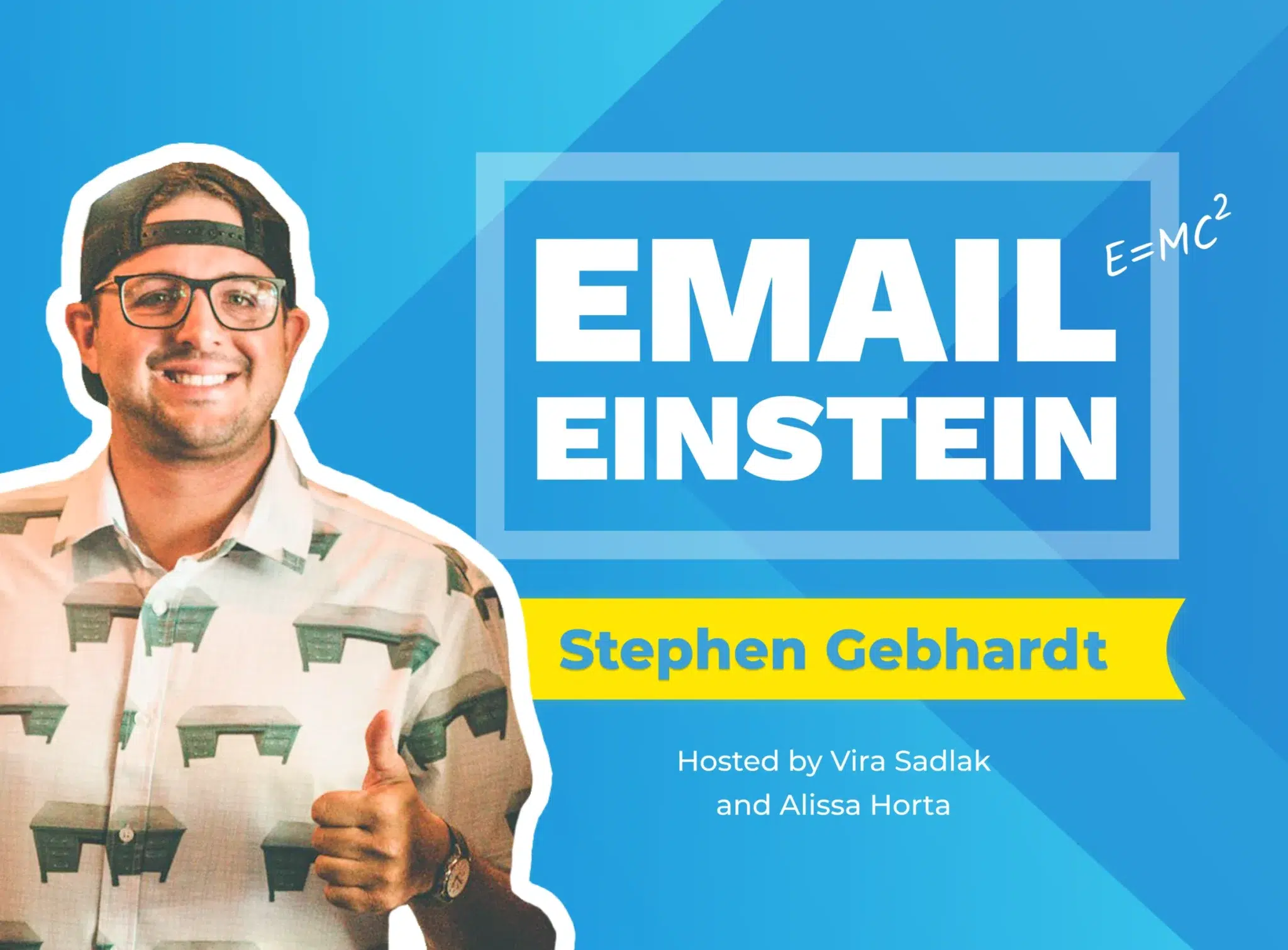
Hey everyone, welcome to another episode of Flowium podcast. Thanks for hanging out with us today, and today on the show, we’ll be talking to Stephen Gephard from RSVLTS apparel. Hi, Steven!
Stephen: 1:59
How are you doing?
Vira: 2:00
Good, good. We’re so excited to have you on the podcast today. For those of you guys who don’t know, Steve is one of the masterminds behind the RSVLTS apparel, Steve, your story is amazing, and I can’t wait to hear it today.
Stephen: 2:14
Absolutely. I’m excited to share it.
Vira: 2:16
It’s like one of those, like stories that I want to hear over and over and over again. And I am sure someday they will make a movie about RSVLTS and about you. But before we go there.
Stephen: 2:27
Starring Jason Siegel, right? That’ll be the guy that plays me.
Vira: 2:30
Yeah, yeah. I think it’s a good start. It’s a good start. Brad Pitt, maybe, yeah?
Stephen: 2:34
I like that one even more.
Vira: 2:38
But before we go there, let’s do a quick like blitz Q&A to get to get to know you and the brand better. So I’ll give you a few questions. Just answer them in one word or a few words. Okay, okay, cool. Let’s Start New Jersey, or New York?
Stephen: 2:54
New Jersey, specifically.
Vira: 2:57
Yeah, and I know why, and I think we’ll, we’ll be talking about it on the podcast as well. Marv or Harry from Home Alone?
Stephen: 3:05
I would say more of a Marv guy.
Vira: 3:10
Marv guy. My fave, okay. Bob Ross. Yay or Nay.
Stephen: 3:15
Oh, of course, yay.
Vira: 3:17
100%, What mobi stadium has the best food?
Stephen: 3:23
What the best food? I would say Safe co field, because their garlic fries are amazing, and they just have such an eclectic roundabout of of everything you could ever want in food. Definitely.
Vira: 3:37
Eclectic, eclectic.
Stephen: 3:40
It’s very worldly.
Vira: 3:43
I didn’t even know you can use that word anymore.
Stephen: 3:46
I think it’s T Mobile field now. So I’m dating myself here.
Vira: 3:51
And you are an expert in the stadium food. So.
Stephen: 3:54
I think I certainly am. I’ve been to all of them, and I’ve eaten more hot dogs.
Vira: 4:00
Cool Amazon or Shopify?
Stephen: 4:02
Shopify.
Vira: 4:04
What’s the most American movie of all time?
Stephen: 4:07
The Sandlot. These are layups here. I like this.
Vira: 4:11
I know, right? Yeah. We have a lot of things to discuss today, and that’s a promising beginning. But for those who are not familiar with RSVLTS, and I’m sure there are not, not so many people left like that in America, Steve, how would you like describe slash, explain? What are you doing? Like for those who don’t know what is RSVLTS about?
Stephen: 4:57
Well, I mean, I guess at first look, you could say RSVLTS is an apparel brand. It was started by myself and my business partner, who also happens to be one of my best friends. We both went to Seton Hall University together in New Jersey. But you know, at first looking, you know, we combined licensing agreements with cultural institutions like the SAM Lott, Home Alone, Bob Ross, Step Brothers, WWE, these big brands, and we can combine those licenses with high quality products, button up shirts. We’re really known for swim. We do a lot of hats, the whole nine. But you know, those forces combined lead to the really unique, awesome products that we’re putting out. So at its core, you could say, Yes, we’re an apparel brand, but I think when you dig a little bit deeper, it’s becoming apparent that RSVLTS is more of like a lifestyle when you wear RSVLTS, you know, maybe people listen to this, know what I’m talking about, and if you haven’t, you know, maybe one day you will, but it gives you this amazing feeling, like, when you’re walking down the street, somebody might stop you and say, Oh, it’s an amazing shirt, or, wow, you have the kid from home alone on your shirt, and it’s really conversation starting. And, you know, I think it gives people confidence. It’s conversation starting. It just makes you feel really good. And you know, through a lot of hard work and foresight and a little bit of luck. I think we’ve built one of the most amazing communities, really, out there that any brand has. You know, we do meetups in real life. We’ve done a lot of comic cons. We have incredible fan groups online. They’re popping up, you know, some we make ourselves, and others, you know, fans make themselves. We call them our insiders. You know, those are our most loyal members of the community. And, you know, we do a lot of unique content as well. You know, we have a really strong social strategy, and, you know, we’ve seen a lot of growth over the last few years. But I really do think that we’re just getting started. You know, we have big plans for the future as well.
Vira: 6:50
Yeah, and it’s interesting that you mentioned your social advertising, because I think that social advertising is what you guys do better than probably anyone in the industry, so you’re definitely crushing. But can you tell the story? How did you originally start the brand? I think it started as a marketing agency or something. How did you come up with the idea of a brand?
Stephen: 7:12
You’re lead me right down the road that I was going to lead us on. Anyway, social. You said social marketing. And I think at its core, you know, I do think, and you know, John and myself, we’ve always been kind of ahead of the curve with a lot of this stuff, and we’ve done a really good job understanding, you know, where we’re at now and where the future might be. And, you know, with that said, I really do like to think we were very early to the social media marketing game. I really, truly believe we were one of the first social media agencies out there. You know, we’ve been, we’ve been producing social media marketing campaigns for almost, for, actually, 10 years, almost to the month. About 10 years ago, we started, we were in a different company. We started making social media campaigns for different brands, and we would produce content for them that would live on social we would publish this content on a couple publisher sites. And we went off and kind of did our own thing and really doubled down on the social media marketing aspect of things. And we locked up clients like Microsoft, Unilever, some really, some big people. And, you know, we would kind of do those social media campaigns for the brands. And as we saw it, the times were changing, and we wanted to, frankly, own more of the budget. So we spun off. And instead of, you know, publishing that content on some of our, you know, partner websites, we actually launched our own which was called the Roosevelts at the time. It was a blog, and it was almost a vehicle for us to create this content for brands and, you know, regular, organic content as well. And you know, do a lot of the social media tactics that we were we were running with the time. You know, times were changing, and we didn’t want to always just be publishers. So, you know, we decided to spin off and take more of a direct to consumer play, but it was almost by accident, in a way. I i One summer, I was going to Austin stadium limits, and, you know, I wanted to wear, like, a cool button up shirt, so I just figured out how to make it. I made a repeating pattern, and it was really, really ugly, but kind of worked. And I worked in the concert, and, you know, I got a lot of compliments, and it was like, That Roosevelt’s feeling that I was talking about, man, we might be on to something here. So I ended up showing John. And you know, he’s a creative genius. I mean, that guy has done all of the designs for our patterns, and is like, the creative force behind all the designs we put out. And he’s like, Wow, that really has some potential here. Let me clean it up and fix it. And that was the first RSVLTS shirt we ever put out, and it was kind of off to the races ever since then.
Vira: 9:47
And what, what was the shirt?
Stephen: 9:50
It was we called it at the time “bomb hops and freedom”. We had to change it to America pops, because we we’ve learned many through a lot of trial and error about licensing and trademarks. So we didn’t know bomb pops was a trademark term at the time, but we called it bomb hops and freedom, and it’s the Statue of Liberty with those like retro red, white and blue ice pops that everybody loves during the summer. So you know, that was really it. I was like, oh, it’d be cool to have those two things on a shirt. I. Made the shirt without really thinking about it. And you know, who knew that little weird summer project that I wanted to do for my trip to Austin City Limits ended up being like our lives and the future of where the RSVLTS then ended up going?
Vira: 10:30
Were you not worried about the licensing and stuff, because it’s like a pretty gray area? So did you know what you were getting yourself into?
Stephen: 10:39
No, no. I mean, not at the time, you know, I think a lot of a lot of how the company has been built was a lot of trial and error. I mean, just throwing stuff up against the wall, seeing if it sticks, trying new things all the way from, you know, the designs that we take to the marketing avenues we take and, you know, the licensing thing was not necessarily top of mind at the time. You know, when we did this sandlot shirt, you know, we were so, I mean, it’s so amazing how green we were and uneducated on this stuff. I guess ignorance is bliss. But, you know, we, we wanted to do these sandlot shirts because we did a poll with our audience, and they said it was the, the most Americana movie of all time, like, hands down. And I mean, it really is, it’s, it’s just, it’s an amazing movie that people connect with, you know, with all ages. You know, you don’t have my age to love it. Kids love it. It’s timeless. So we, we made these cool sandlot designs, and we thought it’d be okay if we just changed the name it. Didn’t call it Wendy peppercorn, and didn’t call it the great hambino, and didn’t call this call it The Sandlot. Just let people figure that out on their own, without us really calling it official. And you know that man, that shirt, that this hambino shirt that we, we created, really took off it. Aaron judge, wore it in a post game interview after he, oh, my goodness, in a in a decade, it was like the longest recorded home run that anybody had hit in that decade. And he wore in a post game interview where everyone was looking to talk to him, and it just went viral. And, you know, shortly after that, I think our worlds came crashing down, but it was kind of the start of the whole company.
Vira: 12:10
Oh, my goodness, such a good story. What? What was your lawyer thinking about it? Or, I guess you didn’t have the lawyer?
Stephen: 12:16
Well, yeah. I mean, I guess I could break into the the that, that aspect of the story. But, yeah, so, you know, Aaron judge wore that shirt, The Sandlot shirt, that is kind of the shirt that we’re known for these who were at the time. And you know, it definitely went viral. And not too long after that, you know, I’m driving down the road, and I get to a stoplight, check my phone, and I see, like, cease and desist. What the heck is this?
Vira: 12:42
Oh, my goodness, not the email you want to receive.
Stephen: 12:48
Yeah, we’re like, oh, we’re killing it. This is great. The shirts amazing. Like, this is, this is our future, yada yada. Like, we are riding a high and, you know, I get Fox cease and desist. I’m like, Oh my goodness. Like, D Fox, yeah, Fox, like, 21st Century Fox. I literally got to the light, check my phone open. I think I blacked out, and I, you know, I’m driving. I, like, literally almost drove off the road because I thought my life was over. I was like, they’re gonna sue us. Our company is not going to exist anymore. Everything was so great. We were flying in the clouds, and then we crashed right back down to earth, all within, you know, a five minute period. And I’m calling John, I’m like, Dude, what are we going to do? And you know, that was a really rough day, but it turns out, just through, like, the connections that we made, and Seton Hall is an amazing school in New Jersey. And, you know, we actually knew a guy that did a lot of licensing there. We had met him at a trade show, and on a on a whim, I just emailed the guy. Was like, hey, you know, Michael, can you talk like, I need advice here. I don’t want my life to be ruined. And, you know, he gave me a call, we talked, we bounced emails back and forth, and he connected me with a licensing rep that he knew, amazing person. We’ve been working with her ever since. And we actually pitched Fox on the idea of getting an official license, like we never even thought that was possible. We’re just two guys from from , you know, we’re just kind of building this thing as we go. And Fox, on a whim, took a meeting with us, which they didn’t need to do, but they did. And, you know, in that meeting, we sold the vision of RSVLTS. It’s, it’s fans making amazing apparel with amazing designers, you know, really doing justice to their their properties. And it was selling it back through creative marketing tactics that we’ve learned over eight years at the time, or seven years at the time. You know, we were doing cutting edge stuff that a lot of other brands and, you know, the movie studios didn’t even know really existed in terms of marketing. But, you know, we merged those two things together in Fox. I can’t thank them enough. It was amazing. But they took a chance on us and gave us a official license that allowed us to officially call them sandlot shirts, officially call it a Wendy peppercorn shirt. And that was, that was the fuel we needed. That was everything, because it allowed us to really crank up the marketing, do more inventory, and really become an official company that has, like, a strong foundation. And because of that, it really set our business off. I mean, we parlayed the fox license into licenses with W. Bwe NBC, Major League Baseball Players Association, Disney, you know, we have all these amazing licenses that, you know, really, it all started with Fox. They took a chance on us, and that was, that was the, possibly the greatest thing that ever happened us as a company, because it validated what we were doing. And they really saw the vision.
Vira: 15:36
Gosh, that’s like a legendary story. One day.
Stephen: 15:38
It was crazy.
Vira: 15:39
One day they will make a movie about you guys. Maybe fox will make a movie about you guys one day. All right, I know, clearly they saw a lot of potential, like in your product, especially because the design is so unique, the quality of the of the staff are so good, it’s not your average like, Walmart slash target t shirt with a with a fox characters, right? So clearly they they saw a lot of potential. And like, what happened next after that, like, after that life changing moment.
Stephen: 16:12
So many things. It’s funny, because I think any business owner and entrepreneur, and whether you’re small or large business, I think so many things happen, but every day, they happen so slowly that, you know, when you look at it on a macro scale, it’s like, oh, man, it just doesn’t feel like we’re making progress here. But then when you kind of look at it from above, I think it’s amazing what happened after, you know, that meeting and then getting the license, you know, how much we’ve really accomplished through through just really hard work and just figuring it out as we go. You know, I said trial and error before, but that’s really what it was. You know, at that time, we really didn’t know about too much. I mean, we had concepts and understanding, but we didn’t know about, you know, massive fulfillment at scale. You know, we didn’t know about, you know, like just bringing things over from vendors and tariffs and shipping fulfillment, and, you know, doing product marketing at giant scale, and just doing the little things, like building creative assets, like just doing all these things that we had in our head, and we knew was the future RSVLTS, but doing it at a giant scale that it ended up becoming, you know, that is kind of like the higher level, holy crap, like done so much over the last three or four years. I honestly can’t believe all the accomplishments, but you know, some of the cool things that we’ve done, you know, we have, we have our office. We’ve hired, we have 10 full time employees and a bunch of freelancers. We’re like quadrupled, you know, a lot of our email lists. We’ve built, honestly, an amazing community that we have a Facebook group called RSVLTS insiders, that I think is the lifeblood of of our entire company. We’ve done comic cons. We’ve produced a lot of really great content. We’ve sponsored events. You know, we sponsored a sandlot reunion in Utah at the original filming location, which was weird, because, yeah, yeah. Cuz, who would have thought you were making these knockoff Sandlot shirts? No one.
Vira: 18:12
Someone told you that, like, three years ago or four years ago, you probably wouldn’t know.
Stephen: 18:16
I’d be like, No, you’re crazy. Like, I’m not. We’re making these shirts, and then all of a sudden, we’re at this event, like, hanging out with the entire cast, and they know you’re like, big dogs now, right? No, it was just, it was just, I wouldn’t say that maybe, but I just think it’s really cool that we believe that we could do this stuff. And it sounds so corny, but like, we really almost manifested this vision into reality. Another thing that I’m really proud of is just this wholesale program that we’re running. We, three years ago, we launched something called shop local, and the general premise of it is, you know, there are tons of every every town has two or three mom and pop shops that, you know, may sell apparel, or maybe they sell just random knickknacks, or even, like, just local, local mom and pop shops. You know, it might be a sporting goods store, whatever it is, but every, every town has, like, 123, of those. And you know, we’ve done a good job of identifying those stores in various cities across the country and putting our apparel in them. And, you know, the easy way would say, Oh, we’re direct to consumer, you know, let’s just sell on our website. You know, we don’t have to give any money away by selling it wholesale, and we’ll make more money that way. But the beauty of shop local is, you know, we’re activating our audience to drive foot traffic to these stores where, you know, maybe somebody was on the fence and they didn’t know the quality, or they really couldn’t see the amazing design in person. It gives us the opportunity to show this to our customers or potential customers in real life, while also driving that traffic to the store where it’s owned by an entrepreneur. You know, these people are fighting for foot traffic, and you know, we can drive foot traffic there to check out our stuff and do almost like a Jordan style release, where you know, people you know, go to get this exclusive item before it drops online. You know, it’s serving a dual purpose. They’re seeing our stuff in real life, and you know, they might walk out with a couple additional things in that store. And we’re really, I’m so proud of that. And, you know, we launched it like the idea came about three years ago. It’s been running about two years, and I think we. Exceeded our, like, three or four year sales goals within the first year. You know, we’re in 100 stores across the country now, and it’s really doing well. And, you know, despite the pandemic, you know, things are opening things are shutting down. You know, it’s really iffy time right now, but we see shop local is a really strong way that you know when these stores are when, you know when things kind of start turning around and they start opening up, it’ll be a really great way to kind of help them turn things back on and keep those employees working and keep their business strong. And that’s just something that I’ve been so proud of. And when you ask, like, hey, what accomplishments and what things have happened since that, you know that maybe a little snafu with Fox when we got that cease and desist, that’s something that I think is just really cool and unique about the company.
Vira: 20:59
That’s huge. They huge. That’s huge, like supporting local economy, especially in the time of pandemics. Good for you guys. Let’s circle back to the time when you were deciding on the name of the brand, because that’s a story that I love. So why naming the company after the 26th president of America. Why didn’t you call it like Washington, or like Lincoln or, well, I guess Trump is not a good idea.
Stephen: 21:25
No, everybody loves Teddy is the best he it was a very you know, we were, I still remember when we started kicking around the name John and I were on one of our crazy road trips. You know, at the time, when we were doing publishing and doing marketing campaigns, Microsoft took a fly on us. RSVLTS didn’t exist, by the way, like we, we didn’t have a website. All it was, was like an idea that we put in a PowerPoint. We sent it to Microsoft. We’re like, Hey, would you sponsor this baseball trip that we want to go on? We want to do a baseball bucket list around the country. And like, Oh, that’s a cool idea. You know, we’ve heard of you guys. We trust that you’re going to do good work. Here’s a budget to launch a website, quit your jobs and go off and do this crazy baseball adventure. So it’s kind of a testament to, you know, the successes that we had had and the trust that we built with these brands. But you know, with that first campaign that we were doing, I still remember, we were driving from San Diego to Arizona, and we were driving through, like, I don’t think it was a national park that Teddy founded, but we started just talking about national parks and all this awesome stuff. And we kept talking about Teddy Roosevelt. And, you know, not to get too into detail, but we were just talking about how Teddy Roosevelt awesome. And a really cool name for a company be the Roosevelt’s. And, you know, we kind of sat on that for a little bit. And, you know, we decided that would be like the foundation of the company. And we tried to buy the rsvlts.com and it wasn’t available. And, you know, we decided to shorten the vowels, take out vows. We have a funny t shirt that says word and vowels. But the premise behind, you know, getting the Roosevelt, you know, going through the all the steps to get that URL and everything, at its core, it’s because, you know, adventure, amateur boxer, writer, conservationist. I mean, Teddy Roosevelt really did squeeze every drop out of life that he could. And, you know, like us, when he believed in something, he went for it. And he was a patriot through and through. When he was in his office, he or, you know, after he was at office, he tried to squeeze his way into World War One, like the guy’s 50 something years old. He’s like, I’m volunteering for the war because I love this country, and I love everything the ethos about that unifying force. And he tried to get into the war. And, you know, there’s all these crazy stories about like he got shot and continued to give a speech, like he was just a badass, and he’s not on Mount Rushmore for by accident, like he’s there, and he’s just everything we aspire to be in our lives and for our brand. And, you know, it’s he’s just a good pick and something that we can kind of live up to. And that was just kind of the reason that we picked Teddy.
Vira: 24:12
So essentially, he’s your, like, brand spirit animal. He’s our spirit animal. That’s so cool. That’s so cool. Obviously, the company evolved so much since, since that time, but I know that you guys don’t sell on Amazon, and it’s very interesting to me. Can you tell a little bit more about your decision? Why you decided that Amazon is not a good place for roostbolts because Amy and Amazon is such a good place for like, free traffic and stuff people are buying all the time from Amazon. Why did you decide that it’s not a good place for your brand?
Stephen: 24:48
Look, this is nothing against Amazon. You know, I, I use Amazon all the time. The mic I’m talking on right now is bought on Amazon. So it’s, it’s not some like vendetta against them, but I think for a brand like us, where we look at our customer information very carefully, you know, we’ve really kind of set the tone for direct to consumer brands on social media. I think a lot of the tactics that people are using today we were using. Think, five years ago. So we just were really forward thinking about how we want our brand to be. And, you know, everything related to that, and it’s just one of the core decisions that we made early on, was not to sell on Amazon because, you know, we like to own our customer data. You know, we want to make sure that we can handle all the marketing ourselves, you know, we want to make sure that all the communications are done in house, just because we want to offer that, you know, official like white glove service to customers and really grow the community. If we were selling some commodity, you know, if we were selling paper plates or, you know, Solo cups or podcasts and like, not really trying to build a brand. I think Amazon be the perfect place for that, because, you know, they have volume, but as a brand that’s really trying to grow and last 1020 years, I think it was a wise decision to go the Shopify route and really kind of own it 360 degrees.
Vira: 26:17
100% 100% like taking ownership of your company’s growth by like taking control of your customers, that’s that’s huge, and let’s, let’s talk about it a little bit, because your community that you guys have built is insane. Social advertisement, user generated content is what you do like anyone else in the industry. You do it like better than anyone I’m following. Probably you’re crushing it. So in the time, yeah, in the time that RSVLTS has been around, how is your like, social advertising and your marketing kind of evolved?
Stephen: 27:23
Well, I’m, I mean, that is, that is a good question we have, you know, we always use Facebook, Instagram, you know, those platforms is kind of the front door to RSVLTS. We don’t, you know, we do have, I can’t say we don’t. We do have our shop local campaign that does have us in about 100 stores across the country. It’s amazing, but it’s difficult because we can’t have a sales rep at every counter in every store across the country solely promoting RSVLTS. We can’t really control that narrative. So, you know, through social media, I think we’ve done a really good job, and the focus has been really strong on just building a high level creative that matches the high level of effort and design that we put into our apparel. You know, I wouldn’t want to put out a shirt that we would never put out a shirt that wasn’t literally perfect and amazing and relatable and didn’t have that RSVLTS like fingerprint on it. And we wouldn’t do the same with our with our ad creative. So we’ve talked, we’ve taken a really strong emphasis on building, like, amazing creative for our social platforms. You know, Facebook, Instagram, predominantly. But we have in the past, done a lot of snap Twitter. We’ve jumped into Pinterest, a little bit, a lot of Reddit, but, you know, Facebook at its core is kind of the front door to Roosevelt’s. And you know, through there, once a customer comes in and gets our stuff, there’s a really strong likelihood that they’ll shop with us again, and, you know, we’ll get them either shopping with us again or whatever, if they don’t want to, if they found the shirt that they really like, that’s that’s great. And you know, I’m perfectly okay with that, but the goal is to kind of get them into our community, get them onto our private Facebook group, get them onto our emails and reading, you know about new drops that we have coming out, getting them following us on Twitter, and really just diversifying the amount of places that we can have these customers, and I don’t want to call them customers, let’s call them insiders, you know, diversify the amount of places that our insiders can interact with the brand. Because maybe they’re not on Facebook, you know, maybe they only use Reddit. Okay, let’s talk to them on Reddit. Let’s talk to them on Twitter. Let’s talk to them on email. I think that’s been the major key, and the thing that’s kind of set us apart from many other brands. And you know, obviously, like you said, user generated content that’s been unbelievable for us. You know, people love wearing our stuff and sending pictures, pictures of them wearing their stuff. It’s just, it’s such an amazing thing to see that come through, and see tag photos of people doing epic things and our stuff. So, yeah, I don’t know if that really answers your point, but you know, the social aspect of things, and just the community that we’ve built is so strong, and it really wasn’t by accident. There is a lot of thought that goes into this stuff, and we work really hard to to build that community, and we’re just so proud of.
Vira: 30:05
Your community is amazing. The engagement there, oh my goodness.
Stephen: 30:09
We started making meetups in real life, it’s so funny to.
Vira: 30:13
Oh yeah? Like the physical, like the physical meetups.
Stephen: 30:16
Alright, so story, so, well, this is a wild story too. So yesterday, I’m walking with my fiance home from our office in Hoboken, and and I’m at a stoplight, or, well, I’m walking and somebody’s in a stoplight, and there’s like a line of four cars, and I hear somebody yell, yo, Steve. And I’m like, I’m looking around, like, what the heck’s going on here? And he goes, good to see you in the wild. And I turn and there’s like a guy waving in a car, and I didn’t have my glass on, so I couldn’t really see him, so I’m kind of, like, waving at the clouds like the idiot. It, you know, I was like, Oh, my God, that’s so crazy. Somebody, you know, recognized me, you know, walking down the street, and I get home, and on our Facebook group, there is a post from a person that said, Oh, I think I just saw Steve in the wild. I’m not sure he looked exactly like him. And there were a bunch of comments. And I was like, that is an unbelievable testament to like the community that we built. It’s like, that whole interaction just happened. It was like a call and repeat. And, you know, that’s the sort of thing that’s just so cool, because people are really just big fans of the brand that are willing to travel. You know, we’ve done these meetups in Austin, Chicago, New York, where we’ll do an exclusive product. And, you know, people will fly in, you know, to Austin. They’ll fly in from Florida, California, Illinois. They’ll fly in from all over the country to come meet other people that they’ve interacted with online. So it’s really taking that online experience and moving it offline. So you can, you know, have some beers with another person, or just kind of like, hang out and just talk to them in real life. And I think that, you know that whole, that whole interaction, and then all the meetups that we’ve had, it’s just cool to see that online community blend with an offline thing. And I think that is one of the main reasons why, that, you know, our brand is just so strong right now in terms of.
Vira: 31:58
Yeah, and you’re how does it feel, by the way, to be a celebrity? Is it feel good? I’m joking.
Stephen: 32:04
Far from the truth, but it’s cool to like.
Vira: 32:07
Such a good, such a good, yeah, go ahead.
Stephen: 32:11
No, no. It’s just, it’s just cool to talk to these people and then go to an event be like, Wow, that’s you in real life. Like, I’ve like real people, yeah, times, and you’re right here, and it’s just as cool as you think it would be.
Vira: 32:23
That’s often the puzzle that is missing in the E commerce world, right? So you, you barely have the opportunity to talk to to real people who are buying your products. That’s That’s amazing.
Stephen: 32:33
That’s exhausted and set definitely sets us apart. And I, you know, I obviously don’t, I don’t want to give away too much to seers, but I think everybody, if they could have that opportunity to really focus on building a lifetime brand, rather than just something that’s flipping a product, or, you know, nothing wrong with drop shipping, or, you know, doing quick hit products. But no, if you’re interested in building a really strong brand with a really core audience, try to, you know, that would be my recommendation, is try to do that stuff, you know, try to make it bridge the online with the offline. I don’t know if it would work for everybody, but it’s, it’s been amazing for us, and it’s just, I think it’s been the core of what we’ve become.
Vira: 33:15
Yeah, and with your products, your products are kind of conversation starters itself, because I’ve met those people wearing wearing, like, RSVLTS shirts on the streets, and it’s always, like, pricey conversation, like a cool little comment or something, I think on other podcasts, you even mentioned that some guy met his like wife just because he was wearing the the shirt and she started the conversation. That’s that’s insane, that this community basically, like, builds itself.
Stephen: 33:43
It’s true. You know, we just, I like to think, you know, we definitely do. John specifically is, like, definitely a brilliant person. But, you know, we just kind of kicked the ball down the down the hill, and it just started rolling. But, yeah, people have gotten engaged at this point, more than I can even remember. You know, people upload photos of them, you know, at the hospital with their children being born, wearing our stuff. It’s, I really do think it’s a lifestyle. You know, people wear it to feel really good and confident about themselves and start conversations. And it’s just cool that people take us on that journey and are willing to share it with the community that we’ve we’ve worked really hard to build. It’s, it’s an amazing feeling.
Vira: 34:21
It is, it is an amazing thing that what you’ve done with your community, let’s, let’s talk a little bit about email. So, like.
Stephen: 34:28
Oh you know a lot about this, tell me.
Vira: 34:31
I might be a bit biased, Steve, but with social media, Website, Email, where does email fit in? Like, this big, beautiful picture, of RSVLTS.
Stephen: 34:42
Yeah. Well, we have a very, like specific formula for doing product launches and just doing communications with people, whether it’s, you know, a launch comes out, you know, that email is the tip of the spear for that. And then you know, whether it’s somebody placed an order and we want to give them, you know, constant updates. You know, email is integral to keeping that communication, keeping customers up to date. So you know, where like I’m saying Facebook and social advertising, beyond Facebook and Instagram, is kind of the front door that gets people in. Email is a really important part at keeping them involved and making those constant updates, and it’s, it’s really become a big part of our, our launch strategies. You know, people, people sit there waiting refreshing their inbox, or just looking at their inbox on launch dates, waiting for that email to come along, so they know, okay, now it’s time to go get this product. So, you know, email is as strong as it’s ever been. And is one of the most important pieces to our marketing strategy.
Vira: 35:48
And essentially, you like own the challenge. You can talk to your customer directly, and that’s the beauty of the email marketing. And.
Stephen: 35:56
Yeah, and you know what? Something to kind of tack on to that. I think email is kind of becoming like an insurance against Facebook in a lot of ways and all these other marketing platforms where, you know, a quick algorithm changed. We knew so many people when we were in publishing, so many different publishers, we had pivoted at the point, you know, we were like, Oh, wow, these sandlot shirts are sweet. Let’s just do them forever, and we don’t have to get this is the pre licensing phase. So we were riding high. But we were like, Let’s get out of publishing so much and diversify revenue streams. And I’m so thankful that we did, because a lot of the publishers that we knew in our previous lifetime, a lot of them aren’t around anymore because of a quick algorithm change by Facebook. And all it takes is a couple little changes to search and social and all these other things where, you know, you could be really crushing it as a brand, and then, you know, these changes happen, and it could just put your business completely under if you have all those eggs in that basket. So we look at email is almost like the insurance policy where we own that data. You know, if everything collapses and nothing exists anymore, at least we have, you know, this very specific data that we can tie back to customers, that can kind of keep everything going, and you know that it’s just so important to us, and that’s why we it’s just become such an integral part to our entire plans. In terms of marketing.
Vira: 37:20
Yeah, and it does work really great for you guys so and so much of email marketing is actually about, like, testing what works what doesn’t work, and we’ve learned it over the years. So do you guys have any, like, almost unexpected surprises that you’ve experienced along the way with email marketing? Thing, for example, like things you thought would work but didn’t, or like other way around?
Stephen: 37:43
Oh, okay, I have a couple. So I was actually just thinking about this the other day. Some things that were surprising would be the idea that, like, let’s get our email list. I think so let me, let me start that over again. I think there’s a trap that business owners fall into when it comes to email, and we fell into that trap. I think anybody that has ever owned a business would fall into this trap, and it’s an easy one to fall into it. Let’s acquire emails as many as we can, and the bigger the email list, the more success that we’re going to have. It’s, it’s it’s core, it kind of makes sense, but it’s funny that you know, since we’ve really gotten into, you know, more detailed marketing and really have hashed out our plan and kind of understand how it works, we found that, you know, yes, a giant email list, that’s cool, it will drive revenue, but surprisingly enough for us, our targeted email lists really curated with, you know, curated audiences that, you know, maybe they like Bob Ross but they don’t like WWE, those lists perform so much better than our main lists. So, you know, that’s, that’s kind of the trap that I talk about is, you know, maybe business owners. And surprising to me, you know, maybe you shouldn’t be focusing on getting the biggest list possible and just acquiring email lists like you’re trolling, you know, net trolling in the ocean for a fish, maybe you should try to look to have a more curated email list and build the community around that specific email list. So I think that was a very surprising thing that I learned in the last, you know, three to six months is focus on quality over quantity.
Vira: 39:23
Yeah, and that’s such a like, rookie mistake that a lot of new business owners and people who are just starting with email marketing are doing, they are just, like, getting the list and starting to exhaust their list with, like, daily emails, relevant, irrelevant, whatever they are, like sending it, and then their sender’s reputation gets hurt, and the dollar per recipient is low. So that’s that’s really great that you guys are like that. I guess that we are segmenting the list right? And.
Stephen: 39:50
It’s like the golden rule of email. It’s like, if you subscriber to a brand, would you want to get the all those emails? Probably not. So don’t do it yourself.
Vira: 39:59
Yep, yep. So we are focusing always on sending the right kind of content to the right kind of customer. So that’s thank you for bringing this up, because we are talking about it on our podcast, like, continuously. So what about the things that you thought wouldn’t work, but they they actually worked better than you than you hoped. Was there anything like this? Like.
Stephen: 40:23
Yeah, I think something that I’ve found that I didn’t, it’s not that I didn’t think it would work. I think everything that we do, we do with learning in mind. You know, if, if I just took a if I just took an approach, and this is so me, because I will, like, run into a wall 100 times and thinking. I’ll break through the wall in the 100 and first time. But something, it’s just, it’s weird, and I think a lot of people that are listening to this, if, if they own a business, or they have that entrepreneurial mind mindset, I think they can kind of relate to that. But I think something that I really didn’t think it would work, but I just wanted to try it, and thought it was important and not totally scalable. Was just talking to customers like, directly via email, almost one on one. A couple years ago, we had massive, I mean, like, like, backbreaking issues with our fulfillment around the holidays. You know, Thanksgiving was coming around in our warehouse at the time, just could not keep up with the volume. They weren’t receiving products on time. They weren’t shipping them on time. It was becoming very apparent that people that ordered things for Black Friday a month before Christmas, weren’t going to get their stuff for Christmas, which is just now, it just sounds so crazy to even think about, but at the time.
Vira: 41:39
Like a nightmare.
Stephen: 41:39
It was a nightmare. It was a nightmare, and it was backbreaking for for our company, I thought we weren’t going to last because we were burning bridges with nearly every customer that we had. So, you know, something that I did, and I was like, this is never going to work, but I’m just going to go for it. Was just starting to email customers one by one and real, like personal, not like copy and paste emails, like looking at their order history, looking where they’re from, trying to figure out, like, Who is this person? And just going one by one for hours and hours and hours and days, it was like a week, two weeks of this, but emailing these people one by one just to tell them, like, hey, you know, I’m a co owner of this company. We are, we really are trying our best. We are not a big brand that you can’t reach out to. We’re not some company that’s just trying to make a quick buck. You know, there really is a story and people that are working for this company. And I was like, this is never going to work, but I’m just going to try to have these conversations with customers. And, you know, after maybe the the 20th conversation, 20th email, I really started to kind of build the momentum. And it was, it was amazing. And it was inspiring, because I would send these emails saying, you know, our warehouse is down there. They’re really far behind. We’re working our best to get it, and kind of explaining the situation that we were in, these people were just so understanding. And it was, it was an amazing, amazing moment for myself and I think the company as a whole, because it really did show that this personalization and really putting yourselves in the customer’s shoes, if you can have those honest conversations from a brand owner perspective, it really does help. And there really is some amazing potential there, and it’s not really scalable, like you can’t email all of your customers if you’re at the level we are, but anytime that there’s problems or something that we have to explain, I keep going back back to that strategy. And yeah, I mean, sure, most business analysts would be like, Hey, that’s not your time best spent. You should be doing this or that. But I love doing it because it allows us to have a real conversation with a real person that went out of their way to spend their hard earned money with us, and I just think by doing that, it builds, like an unbelievable bond with our customers. And I did not that to your point. I did not think that was gonna work. And that was two years ago, and it’s still something that I do today, like almost every week.
Vira: 44:00
Such a beautiful story. Oh, my goodness and crying over there, almost, almost you got me here. It’s a beautiful example. And, yeah, I agree, you can scale this, but that’s definitely the strategy that you can use. And you can do a lot of this with, like, automated flows as well. So you can be, like, targeting your customers, like at the right point to some it’s like, more personal than just like the regular maybe like a campaign that you’re shooting to like your entire list, but I agree, when you’re like emailing directly to your customer, and like not using the copy and paste, but just like talking to them, that’s that’s huge.
Stephen: 44:40
And if you know, if you know those strategies, you guys have done an amazing job with educating me on, on email marketing. You know, we were, we were at MailChimp before, and just to be able to leave that and start working with you guys, you know, not only has our it’s definitely cranked up our revenue, but that’s, again, not everything. You know, not everything is, of course, yes, we got to keep our lights on like, I guess you could say everything comes down to the bottom line, but I don’t see it that way. You guys have done an amazing job of educating me, and through that education, it starts allowing me to think of bigger and better things that we might be able to try other places, or bring things that I’ve learned other places over to email. And you know, it’s just been an amazing experience to work with you guys and have that kind of, like, firsthand education and really kind of grow our business through email. So I’m excited to hear that you say maybe we could do more personalization, and that’s definitely something I’d love to talk about after the podcast.
Vira: 45:36
Thank you so much. So nice to hear that. And we are. We love working with you guys. You’re so, like, innovative and. It’s just like a lot of fun to be working with you. So thank you so much. Thank you for coming to the podcast. I know there is, like, a lot of happening right now, and we really appreciate that you could find the time to talk to us today. So I do have just like, one last question, and this is like.
Stephen: 45:59
If you want to talk for five more hours, I’m in and we could talk about.
Vira: 46:06
Sure, let’s, let’s just do it. Okay, yeah, but seriously, though, we do have this, like one classic question that we are asking all of our guests, and I’d really like to hear what you say about it. So Steve, what advice would you give your younger self about, like, starting the business, about going on this journey? What is the one thing you wish you knew before starting RSVLTS?
Stephen: 46:29
That’s a great question. I would think I would tell myself, if I was back at junior year of college at Seton Hall University, where four of my best friends and I were trying to make this newsletter our school newspaper, Seton Hall. You know, nothing against them, but at the time, the newspaper stunk. It was just terrible. And we’re like, let’s make our own let’s do this thing. And we decided to make our own newsletter, and it ended up becoming, like, so big overnight. It was amazing. It like took over the campus. Yeah, maybe we should have watched a blog, but we’re like, let’s get into print. Let’s do this thing right at the tail end of print. But I think I would have told myself at the time when we were doing that, that like, you’re not crazy. Like, if you want to build something, I’m going around, like knocking on doors, like trying to get advertising and learning how to do printing. And that’s just kind of the way my mind has always worked, is like, figure it out, you know, try to try to put all the pieces together to make this bigger thing work together. And I think maybe at the time was like, dude, you’re crazy. Like, this is just so weird. Most people don’t think like that, but I think I would go back and be like, hey, you’re actually on the right track. You think a little bit differently, but that’s a good thing.
Vira: 47:36
That’s a beautiful and inspirational end of the podcast I think. So thank you for that. Thank you for for talking to us today, and I’m sure a lot of people were like, happy to learn more about RSVLTS, and we hope to have you again someday, when RSVLTS become like, a global, huge, huge global brand.
Stephen: 47:57
We’re looking into doing global distribution like it’s so crazy because we went from not having a single license and almost getting sued by Fox to now we’re trying to figure out terms to do, like distribution in the UK and Europe, Asia, Australia. So, like I said before, you know, I really do think that we’re just getting started. We’ve made a lot of progress through hard work and, you know, having amazing people at the company, but I really do think with the community that we have and the things that we’re working on, we really are just getting started in the next years and decades for Roosevelt’s gonna be really excited. Can I just, can I say one more thing to go ahead, if there are other people at brands or people that kind of listen to this and, you know, thought it was interesting, or there’s any other things that people want to talk about. You know, definitely hit me up like I am available on DM Twitter. You can email me. My email is pretty much all over the place at this point, but I’d love to just talk to people. I think this is a fascinating, fascinating conversation, and I know that there’s more people out there that kind of think the way that I do or market the way that I do. So I’d love to talk to those people.
Vira: 49:04
Cool. Thank you so much, Steven.
Stephen: 49:06
Yeah, thank you for having me.
Vira: 49:08
Thank you. Bye, Steve.
Alissa: 49:10
There you have it. Guys. We hope you enjoyed listening to Steve as much as we did talking to him. He’s a super interesting guy. And if you want to know more about his brand, please make sure that you visit rsvlts.com that’s R, S, V, L, T, S.com, his brand is amazing, and they’re just incredible to support. So make sure that you check them out. Just don’t forget to subscribe and share this podcast with your friends. We would appreciate it so much. And if you have more technical questions or want to get involved in a community for other email marketing needs, make sure that you join our Facebook group. It’s called clavio community. It’s super interactive. We have people from all over the world asking different questions that are either technical or practical or theoretical around email marketing. It’s just a great space to be in and get some more ideas and inspiration for what to do for your email marketing. If you are interested in getting some more advice on how to establish a solid email marketing strategy for your e commerce Store, we do offer free consultation, so make sure you visit flowium.com/contact, and sign up for that free consultation. Again, it’s totally free. You get to hop on the phone with one of us, and we just get to talk to you about what you’re currently doing and what you could potentially do a little better, so that you can boost and maximize your email marketing. So now that Steve has inspired you up to get excited not only about your brand and your E commerce business, but to also get going with your email marketing, we want to give you more. Next week, we’ll be talking about one of our favorite automations, the flow we truly believe, to add serious dollars into your pocket. So. If you want to know more, make sure you listen to our next podcast episode. Thank you guys so much for listening, and we will see you next week.

Vira Sadlak
Podcast host, marketer, traveller and a life lover from Vancouver, Canada

Alissa Taggart
Alissa is an email marketer that is passionate about relevance!