


Podcast Transcript
Vira: 0:41
Hello. Hello and welcome to Email Einstein. I’m your host, Vira Sadlak. I’m an email marketing marketer at an email marketing agency called Flowium. We are so passionate about email marketing and because we love what we do here at Flowium, we want to share our insights with you. Flowium is one of the fastest growing email marketing agencies in the world and we specialize in providing a premium, full service e commerce email marketing experience to all of our clients. Delivering the right message to the right person at the right moment. That’s what we are here about. And today we are actually going to be talking to one of the guys who actually helped our team to became even more productive and who helped us to deliver even more messages to the right person at the right moment. So this interview was recorded I think a year ago, but I think today it’s even more relevant than before. So today we’ll be discussing the key productivity principles and mistakes in E commerce with our dear friend and consultant, Paul Minors. Without further ado, let’s get into it.
Alissa: 1:47
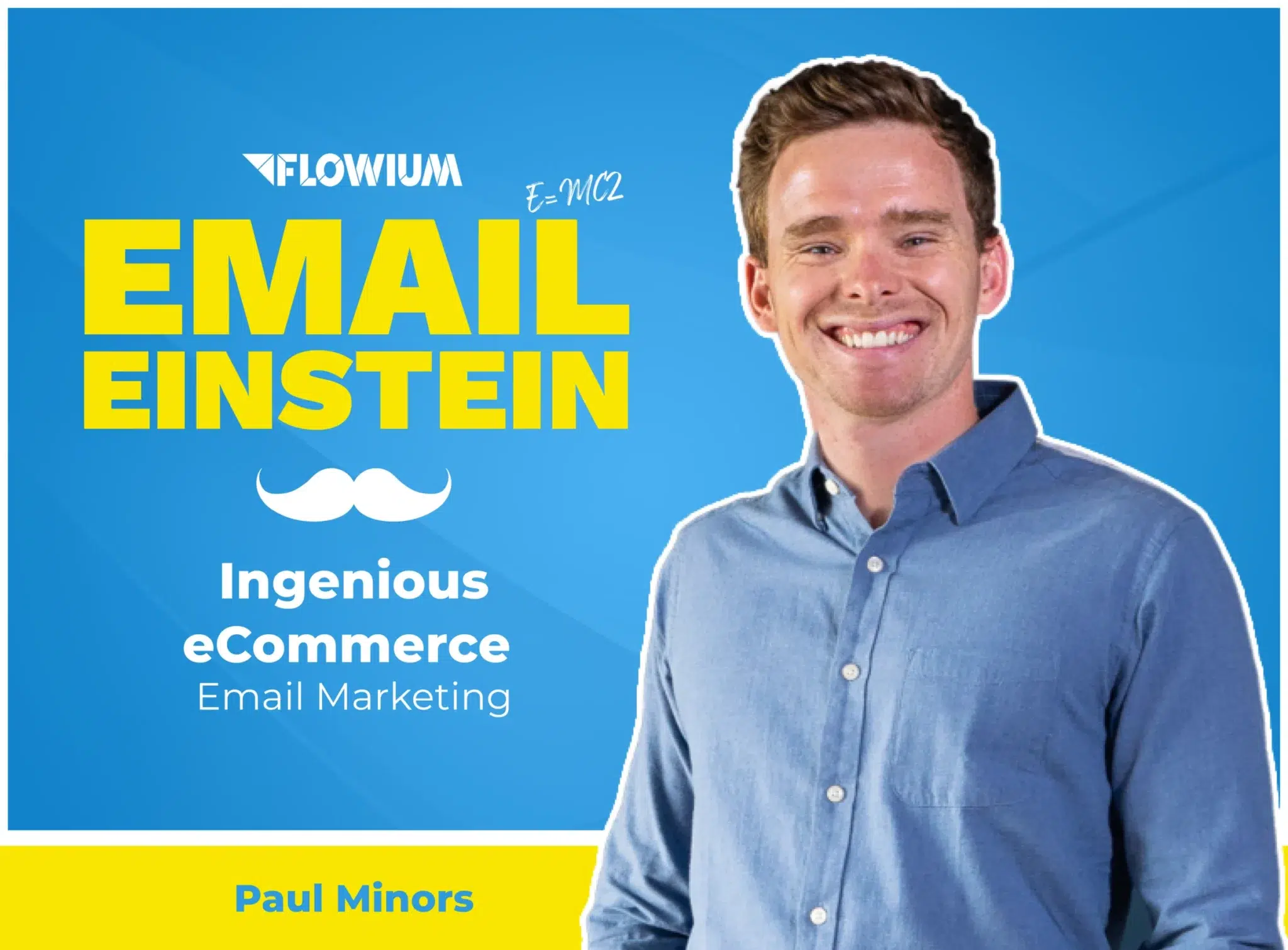
Everybody please meet Paul Miners. He is a productivity blogger and consultant and has been featured by big dogs like Asana, HuffPost and Evernote. Over a hundred thousand people visit his website every single month to do one thing and that’s to learn how to be more productive. As someone who’s obsessed with productivity automations just like us, and optimizing his time, he offers his website, visitors and clients a range of different consulting services that help business and business minded individuals get obsessed just like him. He’s a Zapier certified expert and a Sauna certified pro, a Pipe Drive partner and a kiwi. But some would just say that he is a productivity Einstein. Paul, thank you so much for chatting with us today. Honestly, I’d be lying if I said that I wasn’t looking forward to listening to your accent for the whole of this interview.
Paul: 2:43
Thank you. Thank you so much for inviting me on. I think King of Productivity and Productivity Einstein. There’s a big title. I’ll do my best to live up to the those statements.
Alissa: 2:53
I’m sure you will. So before we do get started, this is one of our very, very favorite Components of the show. Whenever we have a guest on here, we usually perform some level of a blitz. Q and A. Do you think you’re up for the challenge, Paul?
Paul: 3:06
I’m ready. I’m very excited.
Alissa: 3:08
Here we go, Vira. Hit us.
Vira: 3:09
Let’s do this. Yeah. The first few questions. Favorite city in the world.
Paul: 3:14
Auckland. Has to be Auckland, where I live, I grew, I grew up in the. Do you want, do you want quick answers as well or can I explain my answ?
Vira: 3:22
Go ahead.
Paul: 3:24
So well, I originally grew up in the UK in the south coast in a town called Lymington. But I moved to New Zealand, gosh, about 14 years ago with my family and that’s where I’ve been ever since. And it’s where I met my now wife and put down roots here. And it’s just such an awesome city. I just can’t imagine living anywhere else. I’ve been to some great cities but I’m, you know, this is home now. Yeah, I love it.
Alissa: 3:45
That’s awesome.
Vira: 3:45
Awesome. Awesome. Early bird or night owl?
Paul: 3:49
Early bird definitely.
Vira: 3:51
I wouldn’t expect it to be any other way.
Alissa: 3:54
I know, right?
Paul: 3:55
I actually get to bed probably reasonably early, I mean get into bed probably around 9 o’ clock and I imagine like a lot of couples, you know, watching Netflix on the iPad and then so usually going to sleep about, you know, just about quarter to 10, I suppose. So yeah, not, not super late, but usually up around, I would say 5:30 in the morning wake up time for me.
Alissa: 4:14
You’re my hero.
Vira: 4:17
Google Calendar or Paper Planner? That’s one. I want to hear the answer to.
Paul: 4:22
Apple Calendar. The secret, sad answer. Apple Calendar. But actually my Apple Calendar is a combination of my icloud account and my Google account. So I am kind of using Google Calendar but I actually do it all through Apple Calendar because I’m a big Apple geek. I love the iPhone, the Mac and I’m very much in the Apple ecos.
Alissa: 4:39
Yay. Me too. I’m the same way.
Vira: 4:41
Same. That’s awesome.
Alissa: 4:43
My first computer ever when I was 8 years old was you remember the Macintosh where they had like all the funky colors? Mine was the tangerine, the orange. Yeah, yeah, like the very old school like bubble looking one. That was my first computer ever. So yeah, Apple, Apple through and through. I love it. Okay, question. Have you ever seen a kiwi? The bird, not the fruit in real life?
Paul: 5:04
I have, but not in the wild, only at the zoo. I saw one the other day on Sunday because we have a two and a half year old son. My wife And I. And we bought the annual pass to Auckland Zoo. So we’re about 20 minutes from the zoo and we can just walk in. It’s a great way to keep. Keep Jay entertained. And so literally I was there on Sunday and we go into the Kiwi house, which is very dark because Kiwis are nocturnal. And the Kiwis, I can’t remember how many were in there. It might have only been one or two. But they’re very hard to see because it’s so dark and. But no, I literally saw one on Sunday.
Alissa: 5:34
Wow, that’s really cool. I did not know that they were nocturnal either. So very obvious. So they’re the night owl then? I guess.
Paul: 5:41
I guess so. Yeah.
Alissa: 5:42
Not peak productivity. Okay, and this last question, please forgive us. Cause this is just a silly inside joke that we have mattress or socks.
Paul: 5:51
My gosh. Mattress.
Alissa: 5:54
Yeah. Okay. Love it, love it, love it, love it. So background on that is whenever Vira and I talk about examples within the E commerce world, for whatever reason, we started giving the example of mattresses and then also sock companies. It was just a random thing that happened like way, way in the beginning, like episode three or something, and we just stuck with it. And that’s who we are now with a mattress or sock duo. So anyways.
Paul: 6:19
Well, I answered mattress because I appreciate a good mattress and being a productivity. Someone interested in productivity, I value good sleep. So mattress is important. And socks, being in New Zealand, you know, generally we don’t wear socks if we can avoid it, you know, only in winter. My little boy Jay as well, he’s always, whenever we get home, socks off, socks off. Even when we’re out and about, he’ll want to take socks off.
Alissa: 6:41
That is great. That’s really great.
Vira: 6:44
That’s the best answer we had so far.
Alissa: 6:45
Yeah.
Vira: 6:47
On this question. Cool, cool. Well, tell us a little bit more about yourself and about what you do. We briefly touched on it, but tell us about yourself.
Paul: 6:58
Yeah. So I’m a productivity consultant, virtual consultant here in Auckland. Most of my clients are actually international. I work with a lot of clients in the us, Canada, Australia, all over the place really. And I specialize in a few very specific parts of productivity. I specialize in a couple of tools. So one of them is Asana, which is a project management tool that some. Some of your listener maybe have heard of. That’s a really great tool for essentially it can be like the operating system for your business. It’s where you can manage the tasks and projects that you and your team are working on. And it creates A lot of transparency and visibility around who is doing what and when it’s due. Which is a great way of working instead of living in email or Slack. It’s a very visual way of working with your team. So I help companies to set up their accounts, train their teams because adopting any kind of new software can be challenging. So I help with that process. I also help people with a CRM called pipedrive. So it’s a sales CRM that helps you to track leads leads into your business and follow them through kind of like a sales journey. And then I also do, as you mentioned earlier, some Zapier work and I have a colleague, I’ve recently hired a contractor full time to help me with this. And so we help companies to kind of glue all their systems together really, whether, whether that is, you know, linking your e commerce system to your email marketing system or to a project management system. Anytime you find yourself thinking, gosh, it would be so good if when that happened, I could make this task or project over here or when somebody purchases a product, you know, I could send a notification to this person or something like that. Zapier is kind of the digital glue, if you like, that kind of holds a lot of these systems together. And so yeah, we specialize in these three tools and help companies to be more efficient and streamline their processes using, using technology and software.
Vira: 8:36
I love it. It’s pretty cool. And we literally just talked about Zapier and, and pipedrive and Asana like a few episodes ago. So really happy to have you here because we have a gazillion questions. Yeah, yeah, yeah, yeah.
Alissa: 8:49
That’s like our exact tech stack. So I love it. Paul, in your podcast you talk about the importance of the 8020 principle. So what is the 8020 principle and how can it be used in the e commerce world?
Paul: 9:04
Yeah, well, I certainly don’t want to take credit for coming up with it. I first discovered it after I read Tim Ferriss book, the four Hour Workweek. And I think Tim even found it from. I can’t remember even who the original author was or the economist who came up with it. And I think, well, the story that Tim tells in his book is that there was an economist who noticed that in his garden he was growing peas. I think this is the story. Anyway, I might be getting some of the details wrong, but he was growing peas and he noticed that about 20% of the pea plants he was growing produced about 80% of the actual peas that he harvested. And a lot of the plants didn’t really grow. Anything or grew very few peas. And so it’s kind of this, this principle that could be all this observation that can be applied to lots of different areas of your work and of your life. so the 80:20 principle, in a nutshell, it says that 80% of your output or your desired outcome typically come from 20% of your work or your inputs. So how that would potentially apply to an E commerce company is, let’s say with advertising. If you look at all the different ways you might spend money, advertising on Instagram, LinkedIn, Google, you might do magazines, you might work with influencers, whatever it might be. If you actually look at the dollars being spent and how that’s translating into revenue in your business, you might be able to observe the 8020 principle. Now, it’s not always going to be those exact numbers, but you might find that the majority of your revenue is coming from, let’s say, Instagram and all the other advertising that you’re doing generally is not producing any of the revenue or it’s producing a much smaller percentage. So with that understanding, with that knowledge, okay, rather than spending this other 80% on all these channels that clearly aren’t working, why don’t we reallocate that budget to Instagram and double down on the thing that’s working really well. And so when you apply the 8020 principle, it’s about, yeah, identifying what’s working well, doing more of that, and you can do the inverse as well. You know, good question to be asking yourself is where my, what are the challenges I’m facing or the pain that I’m experiencing at the moment and where is my time going and how can I cut back on things that are wasting my time? So in my business, I’m, you know, I look at my revenue and I might look at, oh well, look, 80% of my revenue is coming from these types of clients, all these other clients. These are a lot of work, but it’s actually not reducing, not contributing to a large portion of my revenue. So maybe I need to stop working with those types of people and then double down on the thing that’s working well.
Vira: 11:15
Interesting.
Paul: 11:16
So that’s, that’s the 8020 principle.
Vira: 11:17
That’s so cool.
Alissa: 11:18
Makes a lot of sense.
Vira: 11:19
How to understand what is the most important? What are those, like 20%? Because like in E commerce business, especially when you are just like a small business and you’re starting, you’re having so much on your plate and you almost feel like overwhelmed, like you’re juggling so much stuff at the same time. So what are the key like principles? Key productivity principles. I guess you should remember when building or starting an E commerce business.
Paul: 11:45
Yeah. What I would say, and I would say this to anyone really starting a business, not just E commerce, but focus on, really get disciplined and focus on the thing that’s going to make the biggest difference. And it’s kind of the 8020 principle really. And anyone starting a business, the thing you often need to do in the beginning is to validate your idea, which means confirming that you know, is there a market of people who want to buy the product or service that I have and how can I get those people to pay me money? So not just asking them, hey, would you like to buy this product? Everyone’s going to tell you yes. You know when people tell their ideas to their friends or their family and their mum and they say, hey, I’ve got this idea for a business, doesn’t that sound good? Everyone’s going to tell you yes. When you actually start to ask for money, it becomes a different story. So in the beginning when starting a business, whether it’s an E commerce company or another business, I think the most important thing is to validate your assumptions about do people want to buy this product or service. And the best way to do that is to, you know, create your e commerce website and start getting in front of your target market and trying to find people to buy your thing. I think a lot of people put distractions and obstacles in their way especially because selling, you know, whether it’s E commerce or selling consulting services like I do, selling is scary. Oh yeah, you have to put yourself out there. And I said to someone recently, you know, if you’ve ever gone into a job interview, you know how nervous and nerve wracking your job interview can be when you’re, somebody’s like vetting you and working out, do I want to hire this person? When you’re selling, especially in a one to one setting, you’re basically doing a job interview every single day trying to convince people that you’re the right person. And so because selling’s hard, it’s nerve wracking for a lot of people. Especially when getting started, we create distractions for ourselves. And so with an E commerce company you might think, well you know, we want to launch but we’re not ready yet, we need to make the site a bit nicer, we need to take these product photos and make the product look nicer and we need to do some more marketing. And I’m not saying none of those things are important. Obviously branding Product, photos, marketing, all of those things are important. Important. But I think what people need to be aware of is not creating unnecessary work and postponing the thing that really matters, which is selling. You know, when I started my business, I really focused on, I just want to get a few clients. I’ll worry about the website, I’ll worry about my marketing later. But right now, because I was working a full time job, I just want to get enough revenue to quit my job and I’ll worry about my other stuff and I can refine and optimize later. Right now I’m just going to sell. And so that would be my, my advice really, to not just e commerce companies, but anyone starting a business.
Vira: 13:51
That’s a good one. That’s a good one.
Alissa: 13:52
There is a company that I used to work for that what you’re saying just reminded me in the. My boss at the time, she always used to say, swallow the toad first. And I was always like, what the heck? But she was always referring to like whenever you had that list of things that you had to do to accomplish throughout the day, you swallow the turd. The toad. The turd. Oh my gosh, you swallow the toad first. So you do the thing that’s the most difficult. That’s like what you’re usually pushing down to the bottom of your list. And then by the time you get to that point in the day, you’re like, I’ll just do it tomorrow. And she was like, no, battle that thing first thing in the morning. It’s your first thing that you do. And then the rest of the things that you’re going to be doing for the remainder of the day are going to be so easy for you. So yeah, reminded me of that.
Paul: 14:33
I think it was a Tim Ferriss quote actually, to reference him again. I think he said maybe it was on his. Oh no, not that one. What I’m about to say, sorry, is that I think he said something like, often the thing you need to do the most is the thing you want to do the least.
Vira: 14:46
That’s so true.
Paul: 14:47
And I think that’s often true.
Alissa: 14:48
Yeah, yeah. I’m thinking of a few tasks that I’ve been postponing for a couple of days that I need to really accomplish because once I do, like, it’ll get everything going and in motion. But I’m like, oh, the thought of having to do that thing, like it just is going to take a lot of time.
Paul: 15:03
Yeah, eat the turd. Yeah, right.
Alissa: 15:07
I need to just eat the turd. That is great. So okay, aside from not eating the turd or the toad, what would you think or what do you think is kind of the most common productivity mistake that most E commerce business owners make?
Paul: 15:25
Yeah, I think, I mean it’s kind of like an expansion of what I’ve already said really. Either it’s, you know, creating, creating distractions and not focusing on, not focusing on the things that matter which is selling or making assumptions about your value proposition or your target market. You know, I think it’s very easy to pick a product and talk to friends and family and say hey, you know, would you buy this product? And people are going to tell you yes. But yeah, when you are in front of real customers it is a different story. So like just taking your time to just get in front as many of as many target customers as you can because really you’re trying to prove your hypothesis that the product or service that I’m selling, this is valuable and people and it solves a problem that people are willing to pay for. Along with that, you know, to expand on my answer a little bit, persistence as well, you will, you know, I’ve, I’ve started multiple businesses and you will make mistakes in the beginning and your initial hypothesis about what you want to sell and how you solve problems and how the product delivers value, a lot of those assumptions are going to be wrong. It can be disheartening. And this is kind of like a boring cliche answer which I’m sure many people have heard before, which is like stick at it, keep going, perseverance, blah blah blah. But it is so true. You know, I spent years trying to kind of get my business off the ground just earning to earn a few thousand dollars a month so I could quit my job and just be self sustainable. And I had to try lots of things. I launched products to crickets and nobody bought them because I made some assumptions about this is I tried to create just a productivity course, how to be more productive and it was far too general, it was far too broad. It was only when I focused on specific niches like how to use asana really well that I really found traction and was able to get going. So I’m sorry if that’s a boring answer. And people are like oh yeah, I know I have to keep going but it is true. Like you just have to keep trying new things, keep throw throwing spaghetti at the wall and see what sticks.
Alissa: 17:03
Yeah, no, but that makes sense. And even though it’s. Some people may consider it cliche. One of the things that Vira and I have found through this podcast is as we interview people and guests like you. A lot of what you talk about is pretty, you know, it’s knowledge that’s very common. It’s out there. You know, you can get that information from anywhere. But hearing it from someone who you know is like a specialist and an Einstein within that world really helps it to kind of set in and really help you understand. Like, oh, it’s not just a cliche. Like, this is like what the brainiacs this area are doing. So I should probably do it too, so it makes sense. It’s. And it’s still a great answer, I think.
Vira: 17:38
Brainiacs. I love that word. Alissa. I’ll need to put it into my English second language notebook. I’m definitely. I’m like writing it right now. So I just googled turd, so I had to. You are laughing so hard. And okay, that phrase is even like funnier now.
Alissa: 17:57
I’m so embarrassed that I cannot swallow the turd. Like, oh my word. Very, very embarrass.
Vira: 18:05
Okay, so Paul, welcome to our grade five podcast. Right, well, anyways, let’s get back to productivity tools. Paul, what are your personal favorite productivity tools? That would be the part one of the question and also part two of the questions. What are the productivity tools that e commerce business owners can like benefit from?
Paul: 18:28
Yeah, I mean, I use so many tools now to run my business. I mean my main tech stack consists of Asana for project management. So that’s really where all my work lives, all my tasks, my the projects and clients that I’m working with. Basically anything I need to do is in Asana pipedrive, which is my CRM. So that’s where I. That’s my sort of central database for all my customers, all the leads that have come into my business that I’m trying to sell to and that kind of links with Asana. So when I close a deal, I will start a new project in Asana. Calendly for booking calls with clients and leads is very important. I use ConvertKit, which is my email marketing tool. Has fantastic email automation capabilities. Just types of workflows you can create. It’s just probably the simplest and easiest to use but powerful email marketing tool that I’ve come across. What else can I talk about? I mean, Zapier that I’ve mentioned is the glue that holds all of this together. Yep, I’ve got some great productivity apps for the Mac. Like Keyboard Maestro is a great little app that lets you. It’s kind of like think about Zapier, but for Your Mac. So Zapier has these triggers and actions. You can say, you know, when this happens, do this. So Keyboard Maestro kind of lets you do that on your Mac. So I can say when this app opens, turn on do not disturb. Like if I open Zoom, turn on do not disturb. So I don’t get noticed. Notifications coming in.
Alissa: 20:10
What? Keyboard Maestro.
Paul: 20:12
Keyboard Maestro. Yeah.
Alissa: 20:13
Okay, I need this.
Vira: 20:15
Just recorded a video about like how to maximize your MacBook, right? Or something like that.
Paul: 20:20
Yeah, I did.
Alissa: 20:21
You did?
Paul: 20:22
Yes.
Alissa: 20:22
Okay.
Vira: 20:23
I saw it on your, on your website and it’s on my list. I want to watch it.
Alissa: 20:27
Yeah, yeah, I need to watch it.
Vira: 20:29
So cool.
Alissa: 20:29
That’s amazing.
Paul: 20:30
Keyboard Maestro, very powerful productivity app. Other apps that are really useful especially for the Mac, textexpander actually that works on PC as well, but great for storing snippets of text links amongst email templates. And so I use that hundreds of times a week to, you know, generate emails and things. Gosh. I mean I’m. Yeah, Apple Calendar is sort of my calendar. Apple Mail for my mail. In terms of, you know, tools for e commerce companies, you know, most people want to link their e commerce system to some kind of email marketing tool, whether that’s Mailchimp or Active Campaign or ConvertKit. So a lot of e commerce software does come with a native integration to let you do that. So if you think about like Shopify, I believe, you know, they have a Native integration with Mailchimp and ActiveCampaign, I believe so that you know, when somebody buys your product, you can add a subscriber to your newsletter list and tag them with specific tags which might trigger different follow up emails based on the product that they’ve purchased. Sometimes though, what I find is that native integrations, although simple to use, are too simple. And that’s where something like Zapier can be a bit more powerful. And so, you know, when I have somebody buy one of the products on my website and I do use an e commerce platform called Easy Digital Downloads, that’s more for digital products really, rather than physical goods. But when somebody buys one of those products based on the product that they’ve purchased, I don’t, I want to tag them in my email provider, but I also want to maybe update a specific custom field which is going to trigger different email follow ups. So Zapier is just a tool that’s very powerful that lets you kind of build your own integrations if the, if the ones that you’ve installed into your own e commerce software are too basic. And Zapier is, you know, a great addition to any e commerce platform. Like if you, let’s say you get a new order, maybe you want to send like a physical thank you card. I can’t remember the names of any off the top of my head right now, but I know that there are services you can connect to where you could then say, right when we receive this order, going to send them a postcard. And so you send the, this company like the customer’s name and physical address and then you’re going to say, hey, Paul, thank you so much for purchasing our product and you can send them a postcard. So rather than doing that by hand, like I’m sure many people do, you could automate something like that.
Alissa: 22:29
Yeah, we spoke to. Oh my gosh, what was his name? Vira? I think it was Ari from Ignite Post. So they basically have like a robot that does the handwriting, mimics handwriting. And so the robot, it’s all an automated system where someone makes a purchase or if you want to send out a postcard or something like that, or a handwritten note, you can basically automate it so that when someone makes a certain purchase or does something, it triggers the robot. And I mean, not everyone has a robot, but it triggers, it triggers the service to take place and then the letter gets sent out. But yeah, that’s, that’s definitely something that we’ve always talked about that we thought was really, really super cool.
Vira: 23:06
Right. And you can like literally connect it to your klaviyo or to your SMS flow or to email flow, which is super, super awesome. You talked about this like Start Team Asana, pipe Dr. Zapier and this is like literally what we have been using internally. And now when you mention it, I’m thinking Andre has started to use this like three tools probably after he had a call with you or something.
Paul: 23:29
Well, that’s, I think that’s how I initially met Andre, was he was looking for help with pipedrive or Sana or both. I think it was. That’s how he originally found me.
Vira: 23:39
Yeah, very cool. So cool.
Alissa: 23:41
Paul, walk us through like a typical workday for you. I’m actually really keen to know how you schedule and plan out your day. Like how much planning actually goes into a day in the life of Paul Miners.
Paul: 23:53
Yeah, well, my planning starts in advance, so it starts with obviously having a good record of what I have coming up in Asana. So you know, whether that’s clients booking calls with me through Calendly when they make those bookings. I have Zapier create tasks for me in Asana. So I’ve got tasks for when those things are coming up. I do a lot of planning for projects that I’m working on in Asana. And so the starting point is Asana. That’s where my work lives. But then the crucial next step is that on a Friday afternoon. So as I’m wrapping up my week, I block out time for those tasks into my calendar for the following week. I look at, right, what do I have coming up next week? And I look at, you know, a lot of my calls and things that already in there, because calendly put those on my calendar. But let’s say, you know, I’ve set aside some time. I’m going to make some YouTube videos next week. I’m going to need to block out an afternoon to go and do that. And so I don’t just operate from a task list. I use my calendars to plan when I’m going to work on these tasks. So I know that, okay, I’m going to need four hours to record all these videos. And I can put that in my calendar. And I’ve reserved and set aside that time for that specific task. So I do a lot of the planning on a Friday afternoon to plan my week. And then throughout the day as I’m working, my calendar is always open. In fact, whenever my Mac is on, my calendar is open. And so I’m referring to it a lot to see, right? What do I have coming up next? And I’m actually updating it as I go. So if I, let’s say I sit down to do those videos and I’ve planned four hours to do it. And my strategy is I usually plan a little bit more time than I think I need, right? Because that way I’m hopefully going to finish early. And now I’ve kind of won back some free time. It’s easier to work that way than plan too little time and then try and catch up. So let’s say I’m doing those videos and I realize, okay, I’m actually able to do these in three hours, not four. So what I’ll actually do is then on my calendar, I’ll. I’ll shrink the event. Instead of it being four hours, I’ll. I’ll condense it and show that it actually took three. So what this means actually is my calendar going into the future. It’s my plan for how I’m going to spend my time. But looking back into the past, the calendar is actually a record of how I actually spend my time. So I can look back and go, yeah, this is what I did last Friday. So it’s actually just a useful time tracking tool.
Alissa: 25:42
Wow.
Paul: 25:43
And so I’m constantly updating my calendar as I go. And some people feel that this time time blocking approach is a bit rigid and they can’t possibly work that way. But even if emergencies come up, if I have to deal with something that’s unexpected, I can just move blocks around. So I can say, look, this afternoon I had planned to do this, I can’t do that now, I’m going to move that till tomorrow, or I’m going to move that till later in the week where I’ve got an available slot of time and I’m going to fit in this new thing that I now need to go and deal with. So I’m kind of constantly playing Tetris on my calendar where I’m moving blocks around, fitting things in. You know, nothing really overlaps because you can only do one thing at a time. So you can kind of see where the gaps are and you can go, right, I can move this to here. And so I’m working in my calendar, calendar a lot throughout the day. And at the end of the day, I’ll review my plan for tomorrow because, you know, maybe I’ve. I’ve done my weekly planning, but, you know, between that Friday and where I am now, you know, new tasks have come up. So I’m at the end of the day as part of my kind of shutdown routine, I will look at what I have to do tomorrow. I’ll look at my calendar, make sure I’ve planned enough time for everything on my calendar. So I’m kind of using asana on my calendar as two. Two tools very sort of closely together to really plan what I need to do. So planning is. It’s almost like an ongoing activity for me. It’s. I’m jumping into my calendar dozens of times a day. As I. Once I get off this call, I’m going to be looking at my calendar and looking at what I have coming up. And so it’s not. Planning is, for me, is not something that happens once or twice a week. It’s something I’m doing constantly. And even though it feels a bit counterproductive to be kind of always looking at my plan and changing things, it actually means my calendar is always up to date. My tasks are always up to date because I’m not having to clean things up or tidy up things later. And my plan, because it’s always up to date, means I can. When a new thing comes in or an emergency happens, I can quickly look at my plan and make changes.
Vira: 27:14
Wow. It’s like, it’s like a superhuman power. Honestly, do you ever struggle with things like procrastinating, procrastination or something like this? Like, like we normal humans do?
Paul: 27:29
I hope, I hope this isn’t taken as a kind of obnoxious answer, but I generally don’t procrastinate and I, it’s funny because I did a productivity panel once and this question was asked and Mike Vardy, 1, another productivity expert, was on the panel and I gave my answer. I said, I don’t really procrastinate. He’s like, he just laughed at me. He’s like, come on, of course you do. You’re a human. I mean, of course, like anyone. You know, sometimes I’ll go on Twitter a little bit longer than I should, but generally because I’ve got my plan and my calendar. The really powerful thing about putting things on your calendar is that it’s kind of like making a commitment to yourself. So just like how we have this call on our calendar for this interview we’re doing right now. That’s, I mean that’s generally how most people use their calendar is they put time sensitive things on it like meetings and appointments. And most people, not everyone, but most people are pretty good at turning up to those meetings on time because you’ve made a commitment to this other person that you’re going to be there on time and you’re going to be a available for them. And so I have that same mindset with the work that I do. So when I put a block of time on my calendar to record some videos or do something, I’m kind of making that commitment to myself. I’m going to show up and I’m not going to do anything else at this time and I’m going to do this task. And so when that time, you know, I get to 2pm on a Monday and I’m starting to do my videos. If I am tempted to go on Twitter or tempted to work on something else, I can kind of look at my calendar and go, no, I’ve got three hours to do this task and if I don’t get it done, I’m going to have to push back everything else that I’ve got planned for this week and I don’t want to do that. Right. So that you create this, this commit to yourself. And it really helps with the procrastination issue. And so I would say, yeah, procrastination is less of an issue for me because I have this kind of solid plan for what I need to do, right?
Vira: 29:02
So I know that. I don’t know if you’ve read this book or not. It’s called Better than Before. It’s basically about like developing. It’s about developing habits and stuff like that. And they say that there are four types of people. So there are like upholders. So this are, I assume, people like you. People who meets like outer expectations and inner expectations. So if they said that, okay, I’m going to do this, I’m going to like stick to my plan, I’m going to stick to my calendar and I’m going to do this. There are obligers, people who meet outer expectations better than they do inner expectations. And I feel like sometimes I am the obliger.
Alissa: 29:39
I am too.
Vira: 29:40
When like someone, when I know that someone is meeting someone is waiting for me on the call, I will be there. But if I know that this is the task that I just put for myself and I can like move it to like next week, I can probably negotiate with myself. So there are also rebels. So these are people who resist like both outer and inner expectations, the troublemakers. And they’re like questioners. So people who, they resist outer expectation but they meet inner expectations and they question everything all the time. So do you think that this time blocking thing, do you think it would work for like everyone? No matter what’s their like personality or what’s. Yeah, they are.
Paul: 30:24
No, it definitely won’t work for everyone. And that’s because we’re all different. We all have different styles and different ways of working. And there is in fact no productivity system or technique or tool that will work for everyone. If you see tools or systems, online advertising, that this is the magic bullet. It’s, you know, it’s just, it’s just marketing and really you have to try different things and find what works for you. I mean, there’s other productivity systems out there, like getting things done. Gtd I’ve tried that. It wasn’t for me. It’s just doesn’t suit the way that I like to work. And part of what I’ve done over the years is just try different things, try different tools and find what works for me. And I’ve borrowed concepts from gtd and I’m like, I like that idea. I’ll implement that into my system. Or I like this tool, I can find a way of using that. And I think the best kind of methodology or system is the one that you kind of create for yourself. Where it works for you. I mean, I would certainly say, look, if you struggle with procrastination or if you haven’t tried time blocking, give it a go. Because I think it’s a really useful and powerful way to plan your time. But. But no, it won’t. It won’t work for everyone. It takes discipline. And I think what you just talked about with those different types of people, it’s basically a spectrum of discipline. I would say I’m a pretty disciplined person. If I say I’m going to, to do something, I will do it. It’s not to say that I don’t question things. And yeah, the questioning one was an interesting one. I definitely, as part of planning, you should be questioning, is this a good use of my time? You know, before you go ahead and put something in your calendar, you need to be questioning, well, is this something that’s worth doing in the first place? So, but, but essentially, yeah, like following a system, especially something like time blocking is something that requires a bit of discipline so that you can make those commitments and actually stick to them.
Alissa: 31:51
Yeah, makes a lot of sense. So, okay, with, with your regards to procrastination, you’re above the fold. You don’t do it, which I. I believe it actually, I will give you that. I do believe that. But in terms of like, managing distractions. So not necessarily even like, oh, I don’t really want to do it, but like, there’s just so many things that you have to do. So do you have any, like, quick tips on like, managing distractions and then also like notifications. So everything in the world is urgent. Everyone wants you to do everything, everything at once. How do you kind of manage all of that?
Paul: 32:23
Probably like, I’ll just rattle off a few things that I’m sure people have heard before, but I think are true nonetheless, which is, you know, notifications are obviously a huge form of distraction. So on my phone, for example, I don’t get any notifications about email. In fact, on my phone and app, I don’t get any email notifications. Email for me is I will check it when I want. I mean, I keep it open during the day and I’m probably checking it every couple of hours. Like after this call, I’ll go and check my email and see if there’s anything urgent. And I have a little badge turned on. So in my dock on my Mac, I can see that I’ve got three or five or however many emails. But for me, I don’t like the notifications because I don’t Want my email to tell me, hey, come and look at me. I’ll go and look at my email when it suits me. So getting rid of the email notifications is a big one. I do keep notifications on for more urgent forms of communication like text messaging, phone calls obviously, but just cutting away notifications is a big one. This is kind of why I’m not a huge fan of tools like Slack is. It’s a, it’s a real time, I think. You guys use Slack, don’t you?
Alissa: 33:18
Oh my gosh, I’m obsessed with Slack. I love it. It’s linked to my, my Apple Watch and my phone and it’s so bad because I’m always looking at it.
Paul: 33:27
But the thing I, the thing I don’t, I mean I think it’s a good, it’s a good sort of water cooler digital, digital meeting place. But it’s a form of real time communication. And so if you have all these channels where people mention you or they private message you, if you’re trying to sit down to do some deep work where you’re just trying to focus on one thing and you have notifications flying in, it’s very tempting to go and respond there. And then Slack requires that sort of instant messaging or it encourage us to put us into that instant messaging mode where it’s like, oh, I should reply to now because she just typed it to me and if I reply now we can deal with it now. Yeah, I actually prefer more asynchronous forms of communication which Asana is very good at. You can post comments in Asana and generally, you know, you might wait a few hours for a reply and so it’s less real time but it means that. But generally we don’t need to communicate in real time. A lot of the work we do is not that urgent unless like, you know, there’s a real the house is burning down kind of issue with a client or with something that you’re doing. Most of the things we’re talking about can wait an hour or two for a response. It’s just we live in this world of instant gratification where we just want the response now because it’s quicker and it feels good. But if you’re honest, most of the things we talk about can, can wait. So cutting down notifications, looking at your forms of communication tools like Slack. I prefer tools like Asana, which is more asynchronous. I mean Slack’s quite good for those real time situations where you do need someone to talk to you now. And I Think it’s about putting each tool, using the tool in the correct way. What was the original question? Distractions.
Alissa: 34:49
Yeah, distractions and notifications. But the notifications, you got tabs as well.
Paul: 34:54
Oh my gosh. Often I’ll share screens. Often I share screens with a client and they have so many tabs open. So my approach with tabs is. Sounds obvious, but only have the tabs open for the things that you’re working on. So I generally keep.
Vira: 35:06
But what about things you want to work on later? About the things you want to read when you get a chance. I know, I’m guilty of that. Like I always have like a gazillion tabs open. So when I’m sharing my screen, I like specifically share just my screen without tabs. You can do that. So that’s what I’m doing.
Paul: 35:23
Okay.
Alissa: 35:25
Secretive about it.
Paul: 35:27
I keep Asana open because I’m referring to that a lot. And pipedrive, those are basically the two tabs that I keep open constantly throughout the day because I’m referring to them a lot. Aside from that. So let’s say I get an email with a link. Cool. I click the link, opens a new tab. If it’s an article I want to read and I’m like, cool, I don’t have time for this now add it to my reading list. In Safari on the Mac and the iPhone, there’s a reading list built in.
Alissa: 35:46
Oh my gosh. You are literally my best friend. Because you used to Safari. Yes. No one else uses Safari. Sorry, I didn’t mean to interrupt, but that made me really happy.
Paul: 35:56
I mean, it’s got the. It’s better for privacy, it’s quick, it’s less power hungry for your battery. So I love Safari, but it’s got the reading list built in. I mean, there are third party reading lists like Pocket and Instapaper that you can use. But you know, if I’ve saved that article right. Close the tab, or if I need to do something like maybe I need to check a payment in my E commerce system, I’ll open that payment. Maybe I need to. Let’s say I need to do a refund. I’ll make the refund. I go into Stripe or PayPal, do the refund, and then I close the tab when I’m done. So I’m ruthlessly. Once I’m done with a tab, I close it. Yeah, they might be like, oh, I might need this later. Doesn’t matter, you can open the tab again. The Internet’s not going anywhere.
Vira: 36:35
That’s great.
Alissa: 36:36
I’m not a tab. I’m. I’m not a tab opener or a keeper opener. I close everything. I look at it and I’m like, can I do this now, yes or no? Yes. Keep it open, do it, close it, or if no, close it and I’ll figure it out later.
Vira: 36:49
When we had a call with you, Paul, like a year ago when you were teaching us like how to navigate through asana and stuff, you taught us this technique where you can actually block time for emails checking. So you can check it for example, like once in the morning, like for an hour and then before you turn your computer off for the day or something like this. So today when I send you that email before the podcast, I was like, oh my God, please, please, I want to fit in that email checking window.
Paul: 37:14
I.
Vira: 37:15
You will, I hope you will check my email. Before I made it, I knew I was checking like this year. What is his time in New Zealand?
Paul: 37:23
Yeah, so yeah, my approach has changed. I have an hour blocked out for email in the morning. That’s for me to clear my inbox and do some follow ups if I need to do follow up emails for people from pipedrive. So it’s really that time I’ve allocated to just get through the bulk of my inbox, really. You know, it’s, it’s good if you cannot check email until pre allotted times. But to be honest, like a lot of my work does require me to respond to email clients emailing me throughout the day with questions or issues, with zaps. And part of my job is going and answering those and fixing those. So I’m actually still checking email even outside of my allotted time. But I have these preset times so that if I get busy during the day, if I get pulled into something urgent, if I’m booked with loads of calls, I’ve still have some time saved for going in and clearing my inbox again later in the afternoon.
Vira: 38:08
Right, Right. For me it’s like the same with slack. There are times when I just like turn off the slack and everyone knows that I’m not there, that I’m working. And we all actually have this system of stickers that means different things. For example, when you are in the deep work, we have this little sticker thing and that’s cool. Basically you cannot, you cannot be disturbed. Or we have this tool where it connects to you, to your calendar and basically when you are in the meeting it shows that you are in the meeting, which is cool too. So. But Alissa loves slack. She’s always there, she always responding, always There always sending pictures. I’m so bad.
Alissa: 38:45
I’m not a tabber, but I am a slacker. I’m a big slacker.
Vira: 38:51
I just bad.
Alissa: 38:52
I know it does sound bad, but when people message me, I’m like, oh, I just want to help, like right away. What can I do? You know, that’s like my immediate thing. So I drop everything. But I’m pretty good at doing a lot of stuff all at the same time, which I know.
Vira: 39:05
Yes, you are not.
Alissa: 39:06
It’s not real multitasking.
Vira: 39:08
It’s a mom. It’s a mom thing.
Alissa: 39:09
Yeah, I think, yeah, that’s the other thing is I’m the mom of a three month old. So when I think about, like blocking off time, I’m like, gosh, yeah, like whenever I have a vacancy in my calendar, I think like, yes, I have so much time. But then Henry, our three month old, doesn’t nap as long as I had expected. And then I’m like, okay, well, there goes the time block. So, yeah, my time blocks are more like 10pm to 1am is when I’m like, now I’m really going to get some work done. But yeah, we’ll see. We’ll see how that evolves.
Vira: 39:39
Cool. And before we wrap this podcast app, I have like one last question. So basically, did you have any productivity mistakes in the past? Some tools that you wish you hadn’t used or some techniques that you did? Not necessarily. Like, are there anything that we don’t need to try? Sorry, it’s like it’s so late for me. I’m already. My brain is already somewhere there.
Paul: 40:05
Yeah, it’s a good question. I mean, there’s nothing. I. I’m sure there’s loads of things I’ve done wrong and, or could have done better. You know, there’s always ways to improve. But, you know, maybe I’ve tried a tool in the past, like, let’s say, let’s look at Evernote. You know, for years I, an Evernote user, I don’t use Evernote anymore. I’m actually just using Apple Notes now. I made the switch a few years ago because Apple Notes is just nice and simple. It’s clean again because I’m in the Apple ecosystem. It just works really well. And so at the time, you know, there’s nothing wrong with Evernote. It’s a good tool, does what I need. But I just found something better that again, worked better for me. And so I don’t regret using Evernote because it taught me a lot about how to keep good notes. And structure my notebooks that I later carried over to Apple Notes. So I think, you know, from that perspective, I wouldn’t look at it from the. In my experience, looking back at what I’ve done, I can’t really think of again. I’m sure there’s lots, but I can’t. Nothing really stands out. I was like, oh, that was a big mistake. Because I view things as like, everything is like an evolving process.
Vira: 40:55
Right.
Paul: 40:56
Even in my own business, like years ago, how I do my consulting and help people is a lot different to how I do it now. I don’t do really any hourly consulting anymore. I sell more programs with my course and group coaching and that kind of thing now and someone on ones now. Maybe I could have, I should have never done the hourly stuff, but it was an important part of that learning experience for me to kind of go through that journey, try different ways of working with clients so that I, I could find what works. So that’s kind of how I, when I look back, that’s how I kind of view things. Really is. Yeah, there are things that I definitely maybe shouldn’t have done for as long or could have done differently at the time, but they were all things that set me up for where I am now and helped me improve and learn how to just get better, really.
Vira: 41:33
Right. Well, thank you so much. Thank you so much, Paul. I’m sure our listeners learned a lot from this podcast, but where can they find you? You have a ton of useful stuff on your website and where can they find you?
Paul: 41:45
Yeah, the website is the main place. So my website, Paul Minors M I N O R S dot com is you’ll find me. I’m also on twitter @paulminors. I don’t do a ton of social media, but I’m on Twitter and I post a lot of videos on YouTube. So you can just kind of put my name into YouTube. You’ll. You’ll find me there as well.
Vira: 42:00
So cool. Thank you so much.
Paul: 42:02
Yeah, thank you for having me.
Alissa: 42:03
Thank you so much for today, Paul. Guys, please don’t forget to subscribe and share this podcast with your friends so they can also hear top tips from experts and gurus within the industry such as Paul. And thank you again, Paul.
Vira: 42:16
Thank you for listening, you guys. I hope you did enjoy enjoy it just as much as I did. And as always, if you like what we do, please leave us a review. And if you leave us a reviews, please screenshot it and send it to flowium.com socks and we’re gonna send you a pair of your very own branded pair of Flowium socks. And come back next week because next week I will be talking to my fellow ecom entrepreneur Sir Mark and marketers about all of those like cool items ideas for your content for August. So content ideas for email marketing campaigns in August 2022. That’s what we will be discussing next week. So definitely come back. Thank you so much for listening and we hope to see you here back next week.

Vira Sadlak
Podcast host, marketer, traveller and a life lover from Vancouver, Canada