

Podcast Transcript
Vira: 0:41
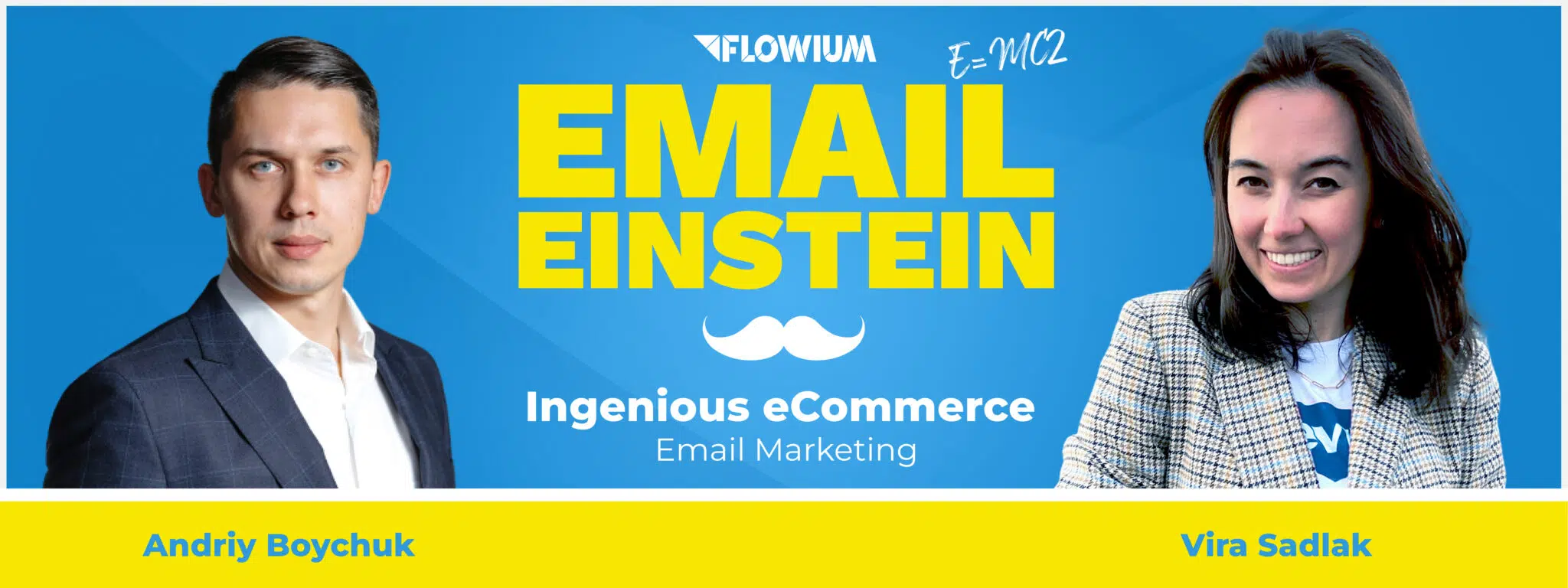
Hello, hello everyone. Welcome back to Email Einstein, the podcast by Flowium. We are your hosts, Vira Sadlak, And Andriy Boychuk.
Andriy: 0:49
Andriy Boychuk.
Vira: 0:51
We’re happy to have you guys. Welcome back to our podcast. I know this is like the busiest time of the year for you. That’s why today we decided to come up with a very quick and short podcast about how you can beat the post-Black Friday slump. And we want to share some winning strategies with you. This season is coming. So while right now you are in the busiest season of the year, the slow season is coming and it’s your time to optimize everything and to basically bring some additional work into your accounts.
Andriy: 1:23
So listen, just reality is unfortunately, and if you’re not first time in the business, first year in the business, I mean slump will happen 100%. And this podcast today is to give you some ideas how you can kind of improve or optimize And not to hit the zero or hit the normal revenue.
Vira: 1:51
Right, right. Yeah, I know that on average, American spend around like$998 on like gifts and holiday items and other expenses during the holiday season. But like January and February are considered to be one of the slowest months in the industry, partially because after spending like that significant amount of money, some shoppers will they have that like blues after receiving their credit card bills. Right. And the months of January and February are some of the lowest spending months of the year. And on average, for average US consumers, I know for me, these are definitely the lowest spending months. I don’t spend much unless it’s like a new year, new you kind of stuff. Then I spend like a lot. But other than that, I try to be more cautious with my spending during January and February. What about you, Andriy?
Andriy: 2:43
I’m not very big on gifts during holidays, so it does not kind of affect me much. November is probably the craziest month of spending because all birthdays are all holidays in November for me. But my hypothesis, another hypothesis for January is when people start their New Year resolution, majorities of people goals to spend less or live by budget.
Vira: 3:09
Mm-hmm.
Andriy: 3:10
And they set their own budget and kind of they spend less on different ton of things. That’s why they cancel a lot of subscriptions in January, but it slowly will pick up in February and March.
Vira: 3:22
Yeah, but for me, I buy like— but you need to have like a planner to plan your spending, right? Or you need to have some like app to help you like optimize your health or whatever. So I do spend a lot of money on like New Year, New Me kind of stuff. Correct.
Andriy: 3:37
So that’s why like anything health-related, fitness-related, productivity things, planning things, those brands are thriving in January and like middle of December to January. I used to buy Mike’s Hyatt course, Your Best Year Ever. Yeah. Like every year, you know, it was like500or200 and I was buying every year to kind of to prepare myself for the new year.
Vira: 4:08
Right. I have like a ton of those like planners. I have the Best Self Journal, the One Minute Manager, whatever the one that you are sending, you were sending to us. I have the best year of your life, something, something journal. And I, and I realized that I haven’t used them much now when I’m like packing to move to like a different country. And I honestly have like tons of this, of this, like journals that I haven’t even started. I’ve been like postponing using them. And I only like use one, probably out of all of them, the best self one.
Andriy: 4:41
So questions for you, like, yeah, quick questions for you, not related, kind of. When you’re traveling, are Are you taking a book with you to read? Hold on. Do you take a book with you to read? Doesn’t matter. Electronic or physical?
Vira: 4:54
Always.
Andriy: 4:55
Okay.
Vira: 4:55
Yes.
Andriy: 4:56
Is it physical or electronic?
Vira: 4:58
Well, when I’m traveling, it’s electronic. But now since we are moving, I’m taking some of my physical ones with me as well.
Andriy: 5:04
I see. Because I always, like, feel guilty not to take the physical one. And I take— and when always when I take physical one, for some reason I never read it. But lately I’m like, no, And when I take electronic, I mean, download it on Kindle on my phone, I always read it. So I don’t know.
Vira: 5:22
Yeah. Yeah. I, uh, I have like thousands of books on my Kindle right now and, um, yeah, I always have it with me on the plane. I do like the feel of like the real book. And I think when I move to London, I’ll start utilizing their libraries more because I just like opened this like new concept for myself. It’s called library, you know, you can like borrow books and then return them. I like, I’ve never done it before and it’s almost like, it pity that I just like discovered this concept for myself before I move out of this country.
Andriy: 5:52
But anyways, actually I read, yeah, like we have to continue, but actually I read, uh, the last book I read from library is what was Steve’s Job, the, the tech one, uh, by Isaac.
Vira: 6:05
That was by Isaacson. Yeah.
Andriy: 6:07
Yeah. So, so that was the last one I read from library.
Vira: 6:11
Yeah. I mean, they, they do have all kinds of stuff and here in the neighborhood where I live, if they don’t have the book that you need, you can order it and they will purchase it from you. They will put it onto the list and they’ll purchase this book for you if they have like enough inquiries about this book, which is really cool. Yeah. And you guys, going back to this post-purchase sales slump, probably like the biggest mistake that ecommerce brands, sellers can make when faced with this like post-holiday slump in sales is going into this like hibernation mode and not doing anything. January and February, even though they are the slowest months, it doesn’t mean that you need to be like radio silent and not talk to your, to your subscribers at all. In fact, this is a great time to launch a new product because even though some of the customers might be, they might be tired of sales or like certain type of sales. If you have like a good product that you are hoping to launch, December and January might be actually great time to do that because you will not be competing with so many other brands. So if you can prepare an engaging launch campaign, create some teaser video or create like a sequence of emails, That’s like the time to do that. Andrei, quick question to you. When you were thinking of like a good product launch or like a good product launch strategy, do you have any like brands that you think are doing it well?
Andriy: 7:36
Yes, the Dr. Squatch, like the soap for like, like men’s soaps. They’re doing amazing job about product launches. And by the way, I just searched it on YouTube a year ago. I posted a video about describing their product launches, their emails, how they do it. So strongly recommend to check that video out. It’s called The Best Product Launch Email Inspiration.
Vira: 8:01
That’s cool.
Andriy: 8:01
And actually there’s another— looks like I have recorded 2 videos, so sometimes I go crazy. So another one, The Best Product Launch Email Design, Teaser Email Design. Oh, I know that one. Yeah. So basically I, in that other video, I showed the teasers about the product launch. So basically, strongly recommend to check out those 2 videos. So Dr. Squatch, RSVLTS. I know we mentioned a lot RSVLTS because I probably work on that brand the longest. So RSVLTS, there’s some cookie brand, I forgot the name.
Vira: 8:39
If we started talking about the food brands, we actually like my favorite food brand that is doing good launches is Apple. I mean, they are, they are amazing. Not food brand. It’s just like a stupid joke. Food related, not even, but whatever. I think Apple is like the gods of product launches. And I actually read this blog about like what makes their September launches so successful. There are like certain like elements, ingredients of that successful launch. But just like, think about it. Millions of people all around the world on like September 15th or whenever it’s happening, like the mid-September, they’re like willingly devoting their time to listen to an infomercial about the products they are about to purchase. I don’t know any other brand who are doing such an amazing job with product launch as Apple does. Millions of people, people who can’t even afford their products, people in Cambodia are sitting in their slums and probably watching the Apple launch. And there are certain things that they are doing really well. Teasers, they are doing amazingly well. Well, exceptional products. Also helps when you have a good product and people actually want to purchase your product. But they are amazing with like generating that like anticipation. And I even read somewhere that they have this like strategic leaks somewhere where they are like leaking some of the information about the upcoming product launch to like certain, um, like bloggers or something. And, uh, that’s why like weeks or days before the product launch, we can actually see like some of the new features of new iPhone. Or something like that. So, yeah, I think they’re doing an amazing job. Oh, and my favorite thing that they are doing is they are doing this like exclusive previews. Apple often provides this like selected individual influencers and like industry insiders with the product before people can actually purchase. So I remember there is this like huge TV show, Ted Lasso. Apple actually gave their AirPods or not AirPods, uh, Pro How do they call this? Like, big headphones, Air something, whatever.
Andriy: 10:55
Let’s call them the big headphones.
Vira: 10:58
The big headphones. They gave it to the entire set of Ted Lasso, like, weeks or months, probably before everyone else could purchase them. And these products, they appeared in the TV show before everyone else could purchase them. So I think they’re doing an amazing job with product launches. Yeah. What’s your take on their product launches, Andriy? Are you in the cult? Are you following it? Are you watching it?
Andriy: 11:24
No, I mean, I know the date, I know the big fuss, and I even was trying to watch it this year, the live, but then I’m like, come on, like I didn’t have 2 hours or how many hours to watch it. I’ll probably read it in one sentence or in one paragraph after it’s done. So I’m boring. I’m very boring that way. I’m like, yeah.
Vira: 11:47
And you can watch all of this like memes after the presentation anyways. Everything is like summarized in like 10-second TikTok videos where they show how this new iPhone is like identically identical almost to the old one. But anyways, I’m like the part of the, I’m the part of the cult. I’m always waiting for their new updates and everything. And you can actually learn a thing or two about how to do like product launches from brands like Apple or like Roosevelt or like all those other amazing brands that you, Andrii, mentioned. And step 1 in every product launches is product teaser. Like to create the buzz, to create the anticipation for like a new product, you can create an email or series of emails where you are teasing what’s coming. Just like to, you can even like provide the glimpse of the product without actually showing the product, which also is like part of this entire like gamification process. So yeah. So this is step 1. Who’s doing teasers well, Andriy? Like, so what good teasers have you seen?
Andriy: 13:21
The Burrow, it’s spelled B-U-R-R-O-W. It’s a furniture brand. They do— I like how they did the few teasers of their product furniture launches. They basically pixelated the piece in a room. So kind of you can assume what it is. You can— it’s like it’s either a dresser. I mean, you can assume it’s a dresser, But what kind of dress are you like? It sparks your curiosity. Also, Behave Candy, that’s very similar. It’s— I believe it has to do with something. They kind of hide it with hands, but it’s like peeking. So you can kind of turn on your imagination what they have there. Also, DEUX, it’s cookie dough. And as well, they kind of pixelate or blur their images. So basically, again, Teaser has to be successful. Teaser should spark curiosity. It should not answer the question, what are you releasing? Because if you tell them what they are releasing, it’s like, okay, I want or I don’t want. If you hide the thing but give them some hints, even if they don’t— not interested or they don’t need that product, they would be curious just to answer if they were right or wrong about their guess in their head.
Vira: 14:44
I’ve seen some amazing, how do they call them? AMP emails, AMP emails, whatever, this like interactive emails where you can basically sort of like scratch the part of the email for the clue of what will be launched. So it’s like a pretty cool concept too. And you can like gamify this entire process. And I also love what Disney is doing. Like every time they’re launching their movie, they have this like series of like teasers and previews where they are not showing like the main character yet. They’re just like showing like the parts of it. like when they were launching The Little Mermaid, they had this like beautifully done trailer. And at the very last few seconds, they actually showed the actress who was Black, and it like, she looked different from what we kind of used to seeing in the mermaid, which created like a lot of like talks in the industry. So they are amazing with like creating the buzz without actually showing like the product or the main character of the email. So teaser is super, super important. So this is step 1 of any expect— of any good product launch. When it comes to step 2, normally we call it the early bird presale phase. And yeah, you can be creative here. During this phase, you can leverage the audience that you already have, especially your VIPs and your people who are your loyal subscribers. And you can sort of like tease the benefits of the product and you can give them the early access even to the product itself. If you, if it’s a part of your strategy, if your margins allows you, you can even give the exclusive like presale pricing. And a lot of brands I know are doing that. They’re basically like a lot of book brands. They are launching the book, you’re paying for the book. And then once the book is launched, like even like months after that, the book is being sent to you. So you can do the same with the product. It’s a pretty cool little strategy. Andrey, are you Have you been a part of any like early bird presale phase teasers?
Andriy: 16:51
Only, only the books, as you said, the latest one I bought from Arnold Schwarzenegger when he said the— I forgot the name of the book, but the latest of his book. And also I’ve been on the waiting list when the products was sold out, they released the product, I was too late to buy, I put myself on a waiting list and when I received the email, I bought it right away. And I don’t use that product. I have no clue why I bought it. But I— the teaser was so good. The product looks so good that I bought it, but I never used it before.
Vira: 17:28
What was it?
Andriy: 17:29
Like, no, sorry, not— it was a Tesla power bank.
Vira: 17:33
What is power bank? Like, I mean, I know what is power bank for like the phone, but like, how does the Tesla power bank look like? Is it like the size of the Broom or whatever?
Andriy: 17:43
No, no, no, no, it’s not for— for a— come on. No, it’s a power bank.
Vira: 17:50
This is so stupid of me. So this is an actual power bank for the phone, but like made by Tesla. Okay, never mind. Yes, we can cut this if you want. This is stupid.
Andriy: 18:02
No, no.
Vira: 18:03
Anyways, so AndrIy, you bought a Tesla power bank and you never used it. Good for you. Yeah, apparently, apparently.
Andriy: 18:12
$70 versus like what, on Amazon I can buy for $15?
Vira: 18:17
Yeah, I got mine in Costco for like$20 and it’s like the best thing that happened to me. But anyways, I can appreciate good marketing too. I have like way too many products that I don’t need and I purchased just because of the good marketing, so I can appreciate that. And step 3 of any product launch is obviously the launch phase itself. This is like the main event. This is when you should be bombarding your customers with all of these emails about your amazing products. If you don’t want to send it to your entire list, maybe just send it to people who have expressed some interest in the product. And there are like gazillions of different good examples of like product launch emails. I do like Jimmy Choo emails, the emails about like every time they launch new shoe, they do this like entire like product launch party almost where they explain the benefits of the product. Sometimes they show how you can style the shoe. Sometimes they show how you can like mix it with like other items in your wardrobe, which is pretty cool. And obviously Apple is doing an amazing job with like product launches as well. Their emails are always visually stunning, but also very informative. And even though they are on the longer side, but these emails are normally sent only to people who have expressed some interest in the product and who are willing to learn more about the product. Andrii, have you been a part of any like good launches emails, like the emails that you actually received on the launch date? What, what examples can you provide?
Andriy: 20:39
Yeah. So I— what stands out to me, the Dr. Squatch. Yeah, I think they have the best— they do. They have a lot of collaborations. And personally, I love their emails a lot, like visually, information. They also like, like have a playful tone. So their product launches are the best, but I never purchased any products from them. them because I’m a simple guy. I use regular soap to, to, to wash myself versus they have some kind of special thing, right, which makes you super superhero. And also another email from brand BYLT. I believe they did a collaboration with Dr. Amen. Do you know the Dr. Amen?
Vira: 21:26
No.
Andriy: 21:27
Like, he’s a brain kind of brain doctor. He scans your brain and he tells you like what things you need to kind of fix or eat or not eat.
Vira: 21:34
That’s cool.
Andriy: 21:34
But anyway, so they did collaboration with him and they, uh, uh, uh, released a collection, uh, with him kind of. So it was also very cool product launch. Why? Because if you know Dr. Amen, I’m not sure if I’m pronouncing his name correctly, but he’s kind of brain doctor. If you know the brain doctor, You kind of like, oh, you know, he stands behind all great products. So it’s like great product, you know, like there’s, there’s, you can make connection there.
Vira: 22:07
That’s cool. That’s cool. Yeah. And obviously the part that is also very important is a follow-up phase. And this is the phase that is happening after the launch where you like nurture your email subscribers with like different follow-up emails and you try to provide some like additional information about the product or even like promotions if they didn’t convert during the launch, maybe you can follow up with some upsell cross-sell campaigns a bit later. And yeah, to build that like interest about the product, we recommend sending this like in-depth emails about that, like describe specific features of the product or like specific features of the item that you launched. And so there you have it. It’s a simple 4-step strategy for product launch and December is amazing time to do that. So this is your strategy number 1 to go over that post-holiday slowdown in the industry. Tip number 2, or strategy number 2, is very unexpected, you guys, but start a sale. And we’ve been talking about the sales for so long, but believe it or not, December, January is still a good time to do a sale. You don’t have to do what you’ve done during Black Friday, Cyber Monday, but maybe you have some inventory that you want to move around. So it’s a great time to do the free gift with purchase. Or maybe you have some like great loyalty program points that you can sort of like give to your customers. So you can also incentivize on your loyalty program. Bulk discounts is also a good one when you’re like putting together some like products or like same product and selling it as a bulk. So basically anything around like winter clearance, around like free gift with purchase is a good idea during that holiday season, especially because If you are in like a fashion brand or something, and if you’re a fashion brand or if you’re in that industry, you might be preparing for the upcoming season already, and products products will change for your brand. So start a sale and try to sell out everything that you have in stock that you don’t need.
Andriy: 24:22
Yeah, in general, this is what I learned personally from Ezra Firestone. What he does for his brands is like to run the kind of flash sales every six weeks. So it’s a now it’s a good time. time, like, sorry, January is a good time to kind of do the first flash sales in the beginning of the year. And then 6, like, I don’t know, like 5, 6 weeks later to do it in February. So do not shy away. Don’t think, oh, I did sales, major sales in November. Now I need to do no sales until, I don’t know, like May. No, do it consistently unless you’re a no discount brand. And if you’re no discount brand, we have recently recorded episode and already published about no discount promo strategies. So just listen to that episode.
Vira: 25:16
Right. And AndrIy, I just Googled this like interesting thing and I want you like to guess. We already briefly talked about New Year, New You kind of topic that will be happening through the months of January and February. And a lot of brands who are in the supplement industry, in the health industry, in finance industry, they will be capitalizing on this topic. Can you name me 4 more most popular resolutions of the year 2023 that Americans made last year? The most popular New Year resolutions, top 4.
Andriy: 25:53
They made in last year, 2022?
Vira: 25:55
Yeah.
Andriy: 25:55
Or in general?
Vira: 25:57
Basically, they made it the most popular New Year’s resolution of 2023. So they made it before going into 2023. And some of them are, like, pretty, pretty obvious. And to be, to be honest, I made them myself, but I, like, ditched them, like, 2 weeks in. But anyways, what do you think are the most popular resolutions?
Andriy: 26:18
So, I mean, the, so the first one is like kind of lose weight or exercise more.
Vira: 26:25
Okay. You’re right on point. The exercise more is number one. Okay, cool.
Andriy: 26:29
Yes. Which is kind of very, very abstract goal, to be honest. Like, and I don’t recommend to do it, to set up this kind of goal. Second one, either save more, live by the budget, or pay off my debt.
Vira: 26:49
That’s amazing. You’re pretty much like hitting all of them. Number one is like, oh, really? Exercise more. Number 2 is lose my— Lose money. I’m sorry, lose weight. Lose money is like my resolution every year with all of the travel tickets that I book every freaking year. So exercise more is number 1, lose weight is number 2, save more money number 3, spend more time with friends and family, and spend less time on social media. So these are the top 5 sort of like resolutions. And when you know this kind of like resolutions it’s easier for you to create content for your brand. You can create like a ton of content and ton of sales around this, like resolutions. But it obviously, it all comes down to understanding who your customers are, right?
Andriy: 27:35
Yeah. Yeah.
Vira: 27:36
Yeah.
Andriy: 27:36
I mean, you can spend different ways. So, but yes, or you can survey them and find the, get the information.
Vira: 27:45
Absolutely. Absolutely. Zero-party data has never, has never been like more on trend than it is now. So you can like ask your customers who you are. What are your aspirations? What are your freaking New Year’s resolutions? It’s a fun little campaign, but yeah, you can create a ton of sales around it. Don’t be shy. January and February, people still want to hear from you. It’s just like, be more creative with your sales.
Andriy: 28:11
One more— Christmas trees.
Vira: 28:15
I mean, Christmas in July is still one of the biggest sales for us, like every year. So you can be creative even with like Christmas Believe me, Andriy. So for a lot of my brands, Christmas in July is like so hot. Like literally, we generated more revenue for one of my clients than for Fourth of July sale, believe it or not, just because we had like a little fun spin on it, right? Okay, so 2 more strategies that we recommend implementing in the months of January and February, and they kind of go hand in hand together, are loyalty programs and referral programs. One thing I didn’t realize about loyalty program, and this, the stat that I just learned today, is that 30% of US online adults, like, who belong to loyalty programs say they frequently forget to use them. And 28% say that they belong to too many loyalty programs. Honestly, I don’t even know to how many loyalty programs I belong. Every time I see a loyalty program on the website, I subscribe to that program, but I barely ever use it only probably like around the holidays. But actually another interesting trend that is happening is that millennial consumers, like ages 35 to 44 right now, they are the ones who are most likely to embrace loyalty programs to save money. And the boomers are like the people in their 60s and 70s. These are the audience who don’t use loyalty programs at all according to the study. And one more interesting thing that I learned is that the US consumers who live in Midwest for some reason are least likely to use loyalty programs during the holiday season compared to any other region of US, which is like so random. But apparently loyalty points are not very on trend for this Midwesterners for some reason.
Andriy: 30:16
So if you don’t have loyalty program, we strongly recommend for you to get one and to start using it. If you do have it in this January, you need to come up with, to be creative and come up with some creative campaign like 2x points, 3x points, or you buy this, you will get x points, or you will do this, or like, let’s say spread the message on social media, tag us and we’ll give you extra points. So be creative how you use loyalty programs. It’s not only about having the loyalty program, but leveraging. And what Vira said, it’s extremely important. Like what you said, 26%, 28% does not even know how to spend their points. Or what was the statistics? Yeah, it’s the simplest, the simplest and the easiest automation you can do. It’s a loyalty rewards point monthly statement. So first, it’s an additional touchpoint for you. It’s an excuse to send them another email. And second, you tell them, listen, you have this how many points and you can spend for— you can use it for X. Or use this much point from the minimum threshold to spend it for X. So I have a YouTube video that I recorded 3 years ago called Loyalty Program Strategy Quick Win. Just watch it and I show how we created the strategy for our client. And now we are using the strategy for all of our clients. But basically you letting the people know how many points they have and what they can use it for. Because as Vira said, the statistic do— does not lie. People sign up for loyalty program, but they forget it.
Vira: 32:01
Right. Yeah. And kind of, I feel like the entire like mindset around loyalty programs are changing and people, especially like younger people or like millennials or younger generations, they kind of do expect you to have some sort of like reward system built into your business model. Probably like the only, the only big dogs that don’t have it is like Amazon and Costco. They don’t necessarily rely on any like loyalty programs, they actually charge you to be the member of the—
Andriy: 32:33
I would disagree.
Vira: 32:34
Loyalty program.
Andriy: 32:37
I would disagree. So I’m not sure about all the— I’m not sure about all countries, but in the US, if you buy Kindle for— sorry, not only Kindle for books, they— I believe this year or last year they implement point system. So if you buy hard copy, they give you so much, so many points. If you buy Kindle, they give you another amount of points.
Vira: 33:01
That’s so cool. We don’t have it here in Canada. Uh, I mean, not for Tendo anyways.
Andriy: 33:07
That’s so cool. And, and, and they send me emails as like, my points are expiring. And I’m like, my points expire. And then I’m like, what should I— and I have no clue how to use those points. But so this is—
Vira: 33:17
At least they reached out to you. You see, that’s like what you said about the point of contact. At least they reached out to you. They reminded you that you are a part of that. Yeah. Like, exclusive loyalty program.
Andriy: 33:28
So Enterprise, the car rental, I rented the car back last year. I was in Munich and I rent a car and every month they send me a point balance statement like, oh, you have zero points. And—
Vira: 33:42
Oh, thank you very much for letting me know.
Andriy: 33:44
Yes. You need to get like, like, like 200 points to, to get the free rental. And I’m like, okay. And each month they send But still, I know this, but I still not— I didn’t unsubscribe it.
Vira: 34:00
Yeah, that’s like the same. It’s like the same with Amazon. We have, me and my husband, we have shared like Amazon account where as sellers, but it’s like connected to his banking account. So every time they like send us both emails like, this payment is on the way. So my husband, he receives like, I don’t know, like the1,000isonthewaytoyourbankaccount.Ireceivedthesameidenticalthing,butprobablythatfieldisdynamicbecauseIreceivedreceiveveryexcitedemailaboutlike0 is going to my account and it’s like so depressing. They need to change something. You know, it’s just, yeah, we work both on that account, you know, but whatever. I mean, the point was that some brands are like making you pay for all of the benefits. I do enjoy all of the perks that like Costco or Amazon are providing. You need to pay to be the part of that like exclusive club. But with your business, you don’t necessarily need to be like a big business to implement loyalty programs with like programs like Smile, Loyalty Lion, Swell, Byotpo, all these programs, they are amazing and they are very easy to set up. Some of these programs, they have both like referral functionality and loyalty program functionality. And you can actually even like marry them both, like combine them both so people can like earn loyalty points for referring their friends to their brand and they can earn some money once their friend who they referred to will purchase from your brand. And that’s actually the next strategy that we want you to recommend to implement in the months of January and February, referral programs. Andriy, say a few words about referral program strategy.
Andriy: 35:43
Yeah, if you don’t have it, again, strongly recommend to implement it. If you do have it, be creative, test it. Like if you have 5 for 5, like I’ll give you$5, like refer they will get $5 and you will get $5, increase it to $10 or $20 or do something else. Be creative. Don’t think that if you did it back in the days one way, it’s set in stones. No, January and February is a great way to kind of to experiment. Your sales will go down anyway. So like there’s not much to lose here. So that’s why experimenting to kind of bring up those sales a little bit Yeah.
Vira: 36:27
And while referral email, referral marketing or referral programs, they are amazing. They are not magical. Just because you set something up on your website doesn’t mean that people necessarily will start using it. So you need to promote it actively on your website, on your emails, on your social media as well. And referral marketing, I’d say it’s like more similar to like SEO or content marketing in the sense that it takes time to like generate that, the buzz, you know? But it does work and it works really well. But you have to be patient and you have to be loud about this program that you have. So yeah, so these are the 4 little strategies for you to implement in the months of January and February to go over that slowdown. Andrey, do you have anything to add to the strategies that we discussed?
Andriy: 37:24
No, but we would like to hear from you as well. So we have on our We have a chat on WhatsApp. If you go to flowin.com/WhatsApp, it will redirect you to our chat. Listen, we want to hear from you. Like, we want to hear what what kind of episodes you would like us to record to talk about. Maybe you are interested more about copywriting, email design, some other strategy. Do you want us to invite any I don’t know podcast guests? Like, listen, we are here to serve you. We please use— we want to be a resource for you. So this is— this podcast we’re creating for you. So we would like you to provide us feedback. So first, it will make our life easier. But second, we will be creating content that you would like to consume.
Vira: 38:15
Thank you so much. And as always, if you like what we do, please leave us a review. And we hope to have you back here next Tuesday. Bye, guys.
Andriy: 38:23
Thank you. Bye.

Vira Sadlak
Podcast host, marketer, traveller and a life lover from Vancouver, Canada

Andriy Boychuk
Andriy is an Email Marketing Consultant and CEO of Flowium