

Podcast Transcript
Vira: 0:16
Today episode is a very special one. Tim Kilroy, the guy who actually saved Flowium. I know it sounds a bit dramatic, but it’s true. And you’ll see why I’m super happy to have him on our podcast. Hello everyone. Vira, Alissa and a very special guest here today. It’s our episode number 42 and you are listening to Flowium podcast. We are two email marketers at an email marketing agency called Flowium and we are very, very passionate about email marketing. And because we love what we do, we want to share our insights with you. Flowium is one of the fastest growing email marketing agencies in the world and we specialize providing a premium, full service e commerce email marketing experience to all of our clients. Our service is tailored specifically for e commerce businesses and designed to help you increase your online retail revenue by 20 to 55.0%. And we believe in delivering the right message to the right person at the right moment. And honestly, this is what our podcast is about, this is what our work is about and as always, we are super happy to have you here and if you like what we we do, please leave us a review. But today episode is a very special one. We have a guest who like at one point he helped us to grow a lot as a company and I’m super happy to have him on our podcast. Alissa, please introduce our very special guest.
Alissa: 2:07
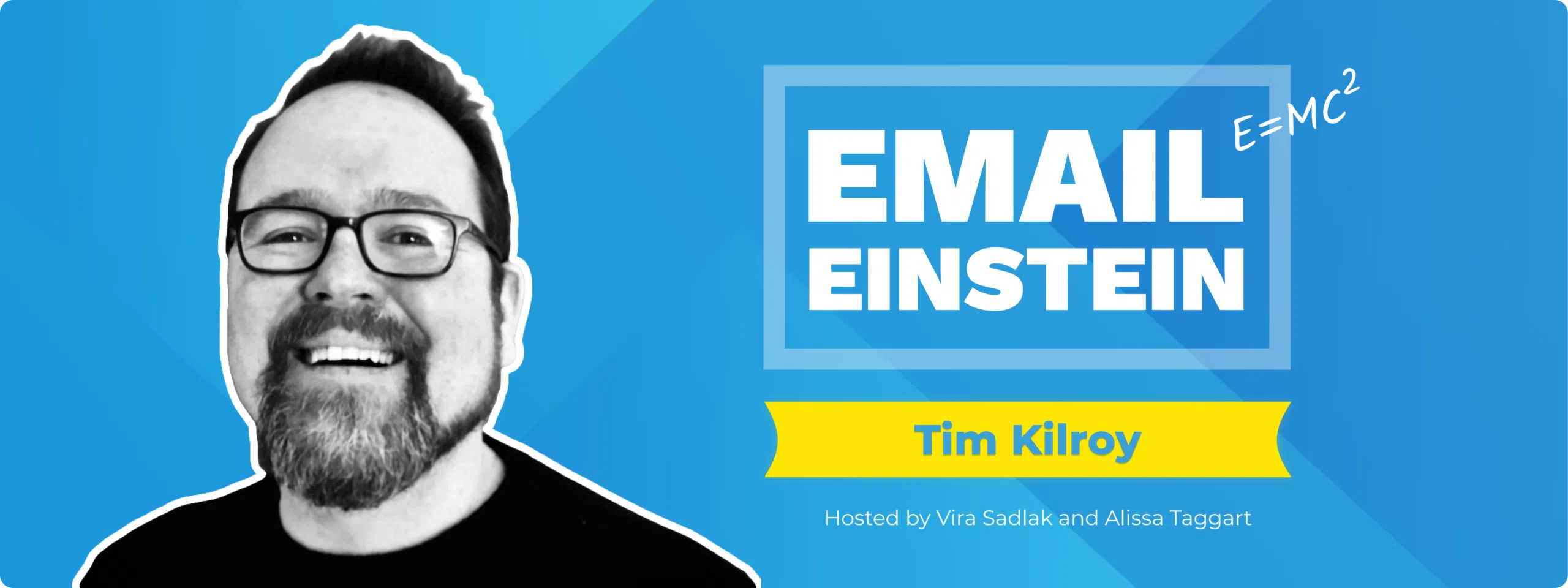
So our very special guest, his name is Tim Kilroy and he is a marketing agency coach and mentor. And this is a really exciting episode because not only do we have some solid questions lined up for Tim, but we know for sure that he will provide extreme useful insight to all of our fellow email marketeers, agency owners and e commerce business owners that are listening in on today’s episode. So just kind of a quick run through about who Tim is. So Tim actually coaches agency owners and has helped hundreds of agencies solve different problems from scalability to how to crush their competition. He used to own three agencies himself and has also worked for big corporations like Wayfair, so he knows how these things go from all different angles. Tim also hosts the Kilroy Report, a marketing podcast that actually tells the stories of agency owners and entrepreneurs who are working hard to build something extraordinary. Today, we’ll be honing in on how E Commerce owners can find and hire the right agency for them. Tons of E commerce companies typically resent working with agencies for their marketing needs, and it’s kind of a stigma within our industry. However, it’s not something to fear or avoid. You just have to know how to find and hire the right one. And here we cue Tim. So, Tim, say hi to everyone for us. Us.
Tim: 3:23
Hi. And thank goodness this is not video because you’d see me blushing. That was so nice.
Alissa: 3:31
Well, we’re going to make you blush a little more. So before we actually dive headfirst into our episode today, I actually want to share a really cool story about Tim is a huge reason why Vira and I are actually here today recording this podcast. And this story actually came directly from our CEO, Andriy. So back in September 2019, as Flowium was still, still developing to become the agency it is today, Andriy, our CEO, hit a bit of a stopping point and seriously considered actually closing down the business altogether. He was completely lost, unsure of what his next steps would be, and ready to quit, in all honesty. But with the last money that he had on a credit card, of all things, he actually hired Tim to coach and mentor him through everything he was going through. And after his time with Tim Flowium, the business completely picked up. And here we are a year and a half later, and with 40 employees scattered all over the world working together to help E Commerce owners maximize their revenue through the email marketing strategies we provide. So, Tim, I know this was originally coming from Andriy, but I want to say on behalf of our entire team and company, thank you so, so much because we love working for Flowium. We absolutely love what we do, and in part, we have you to thank for this. So thank you so much.
Tim: 4:45
Oh, holy guacamole. Wow. My job is completely awesome because I get to work with amazing entrepreneurs and people with a vision, and I get a front row seat to watching people go from, you know, can we do this? To we can do this and just love it. Just switching those words around means so much. And I’ll tell you the truth, I will be an agency coach until like, 40 minutes after I’m dead. Because I love that moment when you see a founder or a business or a company or people inside of a company sort of step into who they’re supposed to be. It’s just. It’s incredible. And your CEO, since we’ve got a love fest going on here, Andriy is The dude is just a beast. There’s no amount of work he can’t take on. There’s no amount of learning he won’t do. And there’s no amount of rethinking, redoing. He’s just a machine. He’s an extraordinary guy.
Vira: 5:48
Yeah, we like him. We like him and we’ll keep him, right, Alissa?
Tim: 5:52
Mostly because he signs the paychecks and I get that.
Vira: 5:55
Yeah, yeah, that’s one of the reasons. Maybe. But before we go to those juicy questions, and we do have a ton, a ton of questions to you, Tim, we have this little game blitz Q and A, just to get to know you a little bit better.
Tim: 6:09
I’m ready.
Vira: 6:10
Okay. So east coast or west coast?
Tim: 6:12
East Coast.
Vira: 6:13
Facebook or LinkedIn?
Tim: 6:17
Pass.
Vira: 6:18
Pass.
Tim: 6:19
Though I must say, they’re both good in different ways.
Vira: 6:23
Yeah, yeah, yeah, for sure. Who would play you in a movie? If there was a movie about you one day there maybe will be.
Tim: 6:30
I don’t. Can’t remember what the actor’s name is, but like the guy who’s. Who played the King of Queens.
Vira: 6:36
The king of Queens?
Tim: 6:37
Yeah, the King of Queens. I can’t remember what his name is.
Vira: 6:40
I don’t remember his name. But it’s a good beginning. It’s a good, promising beginning. Okay. If you could learn one new personal skill, not necessarily like professional, just like any skill, what would it be?
Tim: 6:51
I would love to be able to sing.
Vira: 6:53
Oh, that’s nice. That’s nice.
Alissa: 6:56
It’s really sweet, actually. I love that. I didn’t expect that.
Tim: 7:00
In a bucket.
Vira: 7:02
Yep, yep. It’s a good one. It’s a good one. The last book you’ve read or the book you’re currently reading?
Tim: 7:07
Oh, Hamnet. It’s a fiction book about the Shakespeare childhood. It’s really good.
Vira: 7:13
Nice. And the last one, Baby panda or baby penguin? And this is an important one.
Tim: 7:18
I think I gotta go with penguin.
Vira: 7:21
Yeah. Good choice, team. Baby Penguin.
Tim: 7:23
It’s a real toss up.
Alissa: 7:25
This is our favorite one because it takes everyone so much longer to answer this one than anything else, which is hilarious.
Vira: 7:31
I know. Yeah. Always. Always does.
Tim: 7:34
I have. I have twins and like they’re rolly, like with a. Like a panda. So I kind of. And they can climb anything and one of them chews on leaves. So I kind of have a panda.
Vira: 7:44
Okay. Yeah. So you’re covered in that area.
Tim: 7:46
I think so.
Vira: 7:48
How old are they?
Tim: 7:49
They are 11 and a half.
Vira: 7:51
Oh, that’s. That’s a cute age. Teenagers, almost.
Tim: 7:55
Yeah. We’ve got five kids and every Age is a cute age.
Vira: 7:59
Every age is acute age. I like, I like this beginning of the podcast.
Tim: 8:04
We’ve got an 18 year old, 17 year old, 15 year old and 11 squared.
Alissa: 8:10
Wow, wow, wow.
Tim: 8:12
And I can tell you that they’re all great ages.
Alissa: 8:14
Okay, that’s good to know because we have a two month old and the first six weeks I was like, I’m not convinced about this whole thing. But he’s cuter now and more interactive. So I’m like, okay, I think he’s growing on me. That’s good, that’s really good to know. So kind of move into our more serious questions. So obviously we gave kind of a brief synopsis about who you are and what you do, but can you share with our listeners in a bit more depth? Because it’s probably going to sound a bit better coming from you.
Tim: 8:42
Yeah. So my team and I, we help agency owners, and most of them are first time CEOs, but not always. We help agency owners figure out how to sort of unlock the potential of their agency. And we really focus on three metrics. We want people to generate more revenue, want them to generate more profit. And then the third one is the most important one, we want them to generate the most happy. Because when you are leading an organization, if your employees aren’t happy, you don’t have a very good organization. And if your clients aren’t happy, you don’t have a very good organization. And so we really focus on making sure that the CEO or the agency leader is doing the things that they need to do in order to be able to be happy with their work. Because if they are not happy enough to be able to invest themselves fully into their business, then they can’t work on the important things of making the lives of their employees better and making the lives of their clients better. Because when an agency is able to do that for all of the employees, that makes them happier. If they’ve got a great place to work and they make enough money, that means that they can be better to their families and their families can be better to their communities and their communities, can be better to other communities. And the same things happens with clients. When you help your clients build their business, they can be better to their employees, who can be better to their families, who can be better to their communities. And in a real way that we think about a lot, we really think of our work as a way to make the world just a little bit better through the stuff that we know how to do really well.
Alissa: 10:14
And I love that, I love that so much because it’s something that I think you very clearly. I mean, we talked about this before. We’ve all mentioned that Andriy is just a good human being, but that’s something that we can feel through what you’ve taught him and the mentoring that you were able to give him. Because he’s very clearly happy and passionate about what he does. And that translates into all of us working as a team at Flowium, loving what we do and being passionate about it. And so in turn, I mean, I’d like to say, and I hope that we don’t have any clients that would think opposite, but I’d like to think and say that all of our clients are very happy with us and they share that happiness. So it’s almost like this continuous, like transactional happiness that’s being shared back and forth. So that’s really awesome. Very cool philosophy.
Vira: 10:57
Alissa, maybe happiness is the metric that we need to include in our monthly reports with our clients.
Alissa: 11:02
I love that.
Vira: 11:03
And your revenue, your profit, your average order value and your happiness rate. How would you even track that?
Alissa: 11:10
I think it’s true and I love that. I really, really like that because that’s ultimately what’s going to keep people or put people off, I think.
Tim: 11:19
Right. Because really great relationships and open communication make your client relationship able to withstand a bad month, bad two months, or a bad quarter.
Alissa: 11:32
It’s true.
Vira: 11:33
And it happens.
Tim: 11:34
Or you know, a colossal mistake. So there’s this like fallacy that business is, you know, all logic and reason and spreadsheets and formulas.
Vira: 11:44
Right.
Tim: 11:45
All of that stuff is what we, what the logic side of our brain uses to justify the way that we feel.
Vira: 11:53
Yeah, yeah, it’s true. Exactly. So we actually have a ton, a ton of questions to you and I’m ready, let’s go about the scaling the business and growing the business. And it’s actually really interesting because we literally just had another podcast with Chase Clymer and we were talking a lot about brand scaling framework. And something that we learned today and I didn’t necessarily know at before the podcast, is that scaling a business is not the same as growing a business. Scaling your business means you are able to handle an increase in sales work in very cost effective and reasonable manner and your company can handle growth without suffering other in other areas like employee turnover or because of the heavy workloads or like product not being delivered in time fast enough or like not being able to meet demands. And that’s something that I did not realize necessarily. And we kind of covered outsourcing a Bit. But I would like to you to explain the outsourcing a bit. And for those of our listeners who have just started to think about like outsourcing, sourcing some of their stuff, let’s get some basics out of the way. What’s the difference between a freelancer and an agency? Like what way should I go as a small business owner? And why?
Tim: 13:09
The difference between a freelancer and an agency really is in capacity. So if you’re hiring a freelancer, you’re hiring one person based on what they say they can do and they are ultimately judged on three salts. When you’re hiring an agency, you’re not hiring one person. You are hiring a system or a process or a machine that executes tasks to create the desired result. And a lot of small agencies are freelancers with a little bit of help, everything sort of going through that. You know, the CEOs, the founder’s head often and those agencies and freelancers are pretty similar because if the, you know, if the primary person has a bad day, you know, you have a bad, you have a bad day. But an agency is built to compensate, so it’s not dependent on one single person’s input.
Alissa: 14:05
Yeah, that’s true.
Tim: 14:06
Right. So there’s a redundancy and durability to an agency that there isn’t in a, in a freelancer.
Alissa: 14:14
Yeah, yeah. And it’s true because I guess what people kind of like get off put by is the size of the agency that they’re working with. So that term like machine, you’re working with a machine or you’re hiring a process or a system, it puts people off because they think that right off the bat that relational aspect of it is removed. And there’s no intimacy, if that’s the best fit word. But intimacy with.
Tim: 14:37
Yeah, that is a, that is a great word by the way, because the best agency client relationships are in fact quite intimate.
Alissa: 14:44
Yeah. So I guess that’s the component that most business owners fear that they’ll lose if they go with an agency. Whereas with a freelancer, because it’s just one person, they think, oh, no sweat, you know, like the intimacy is there, but then again the output may not necessarily be there.
Tim: 14:59
So. Right. In defense of agencies, when someone is, is selling you and let’s say it’s the CEO or whatever, one of the co founders and they’re selling you, what they are selling is, you know, is the machine expressed through their words. And that’s probably like the machine has probably existed in that CEO’s head since the first day they decided to start an agency. So it’s not that you, as a business owner or as a client, aren’t getting the best that the agency has to offer, because agencies have institutionalized the thinking and process of the people that started it. You know, which is, you know, which honestly is the. Is the same as getting the thinking and process of a freelancer. So there is an equal amount of intimacy. And what is also cool, as a client working with an agency, if you have a relationship with the CEO or someone at the. The leadership level, they can understand the challenges that you as a client have at the leadership level. And then at the operational level, sort of the account manager or the production coordinator or whatever, they can also understand the stresses and strains intimately of the people on the other side, on the client side who are in similar positions. So actually, an agency can provide a more intimate relationship in many ways because you have multiple points of contact with different points of view. And so the, you know, the CEO of, you know, the owner, operator of a$10 million E Commerce brand, they may or may not remember what it’s like to be the production coordinator. Somebody, somewhere, they’re the production coordinator on their side, might actually have a much tighter peer relationship with the account manager on the agency side. And I’ve seen that so many times where account managers and company teams have just brilliant, beautiful relationships. And especially if it’s an account manager that takes this definition of their job really seriously. The definition being that the account manager needs to be the voice of the client inside of the agency, and it needs to be the voice of the agency inside the client.
Alissa: 17:09
Yep, totally.
Tim: 17:10
And, you know, account managers and the things that people rail against as sort of bloat and whatever, inside of agencies, they are dismissing the fact that the insight that comes from working with dozens of clients helps their business, and that also gives the account manager the ability to understand a lot more about their business than a freelancer might, as a freelancer has to be thinking about everything, where the account manager really only has to think about the 6, 8, or 10 businesses that they are engaged with.
Alissa: 17:42
Yep. I love what you said. The account manager is the voice of the client in the agency and the voice of the agency with the client. I love that.
Vira: 17:50
And if you think about it, Alissa, this is exactly what we have right now. I mean, there is no one in the company who know like that certain account better than the account manager. No one. Like, not an Andriy as a CEO. Like, this is. This is my account. I. This is like my baby. I know what, what they need. I always have tried to build this like a relationship with a client. They just literally send me the gift two days ago for my husband, one of my clients. So it’s part of the job that I really.
Alissa: 18:21
Yeah, it’s building, it’s building that rapport and really understanding the relationship.
Vira: 18:25
That’s, that’s for sure. And also I really loved what you said Tim at the beginning. It’s like taking them from can we do this? To we can do this. It’s. Yes, I will literally write it down in my notebook and we’ll be looking at it at the beginning of the day.
Alissa: 18:41
I’m writing, writing some notes here. I’ll have to re listen to this podcast episode because it’s different when you listen to it versus when you’re actually recording it. So we’ll be back. So kind of moving off of that point that Veer brought up about outsourcing, what would you say are like the top like 3e commerce tasks that can actually easily be outsourced to a freelancer or an agency, but specifically to improve the scalability of an E commerce store.
Tim: 19:07
So I think the thing that you really need to do on the client side is to think about those things that you either don’t have the in house expertise to do or, or you don’t have the time to do them. And we can actually even back off, make this a little more high level. You also have, even if you could hire somebody in house to do the task that you’re thinking about having an agency do, do you have the necessary expertise to manage that person? So do you know enough about what that person does in order to coach them, to support them, to grow them? And the answer often is no. Even really, really big companies use agencies. You know, I think Apple’s got four agencies and Microsoft has 27 agencies. And it’s not like, you know, Microsoft and Apple could afford any professional in the world. Right? Yeah, there’s like, there’s so they could, they could afford, they could buy anybody, but they choose to use agencies because learning how to manage an agency is outside of their core competency. Right. Their, you know, their core competency is creating software and hardware.
Alissa: 20:19
Right.
Tim: 20:20
Not agency stuff.
Alissa: 20:21
Right, right, right.
Tim: 20:22
So they know where their value is best expressed and then they, they outsource the rest to people who are expert. And that’s really, that’s the choice that you are making as an agency. And obviously the level of expertise changes depending upon their level. But when you were outsourcing a marketing function as a client, you are saying, you know more about this than we do. And you either have the time or additional resources or expertise to be able to do this for us because it is not worth or we are not able to garner the resources ourselves. And you know, if you’re the agency, instead of sort of positioning yourself as outsourced labor, what you really need to think about is, you know, your value proposition very simply has to be expressed in a very few ways. So for a client to want to hire you, you have to be able to do what they need better or faster or cheaper than they could do it themselves. Now Those are all ORs. They’re not ANDs. You don’t have to be better and faster and cheaper. You just have to be one of those. Right. And that’s really key. And smart clients are hiring people because they can do things better and faster. Because everybody could hire an email person and train them and it might take one or two years for them to get really, really good at email. Whereas an agency can step in and, you know, inside of five weeks, things are up and running.
Vira: 21:51
Right, Right. And actually I just found this meme on the Internet. One of my favorite memes about the time management as the one with Beyonce. And they say you have only, you have the same 24 hours in a day as Beyonce. But there is like a valuable hidden lesson that most people overlook. Beyonce actually spends those 24 hours doing what only Beyonce can do, doing what she do the best. She like, isn’t. She isn’t wearing every hat and doing like every job for building her empire. Right. She’s like focused on making where she can make the biggest, biggest impact. And that’s something that I feel especially small business owners struggle with. What are the key telltale signs that you need to hire someone that you need to hire or outsource some of your functions to a marketing agency or a freelancer or a freelancer. Is there like a checklist or something that I, as a small business owner can follow to know that yes, now it’s time to outsource?
Tim: 23:24
Well, it depends a lot. But you know, if you, if you’re a one man or one, one person, you know, e commerce brand, you know, you got a lot of stuff on your plate. You’ve got website maintenance and buying product and marketing and, you know, and so you have to like, you have to pick and choose those things that you’re good at. And so there’s two things. So number one, and this, this doesn’t necessarily involve a marketing agency, but as a business owner, you should immediately sort of try to outsource those things that the outcome is independent of who does it. You know, like, for instance, you know, one of the jobs in. In my company is to take the trash out of my office in my house, right? I could take the trash out of my office and put it in the garbage can out in the backyard, or one of my kids could do that. And the result doesn’t change. The garbage gets out into the garbage can. So that’s something that you could outsource because as a business owner, you want your maximum impact to be those things that only Beyonce can do, right?
Vira: 24:35
Yeah.
Alissa: 24:36
You are Beyonce as the business owner.
Tim: 24:38
Exactly, exactly. And if you want to be Beyonce, you know, after hours too, whatever, that’s. It’s all good. That’s up to you, but it’s all good. But when you’re. When you’re thinking about, you know, should I hire an agency or a freelancer, you really have to think, what is the opportunity cost of me not succeeding in this channel? Right. So you’re not really thinking. You. And if you were thinking about hiring an agency, you can’t really be thinking about saving or reducing costs because you are, in essence, hiring an extension of your team who can do things more efficiently, more accurately, more creatively than you can. And so as a business owner, you really do need to think like, what are the things that I’m good at and what is the things that my organization are good at? And marketing may or may not be one of those things. There’s an awful lot of companies that are great at marketing who don’t use agencies. And then there are an awful lot of companies who are great at stuff but do use agencies. And this is much more about what’s the, you know, what’s the cost benefit here, Right? Because at a certain scale, by the way, I really think that everybody should have an agency relationship of some sort or another, if not for any other reason than to have a horizontal look at what’s happening in that marketing channel.
Alissa: 25:59
Okay?
Tim: 25:59
Because. Because if you are as a single brand, you only have experience with what you know how to do. And agencies can bring a horizontal look at things. So they deal with dozens of clients, and they might already know the answer to, you know, what’s better, you know, a dollar off promotion or a percent off promotion. And since Dark Mode came out today, you know, do they tell you to worry about it or not? And those are things that you may not. Your internal marketing team may never have enough breadth of experience to know. And so agency is actually they really do have an advantage over in house teams because they do have the opportunity to get much more data, much more horizontal data, you know, sort of multi brand look at that, result sets and techniques and that sort of stuff.
Vira: 26:46
Yeah.
Alissa: 26:46
So how can you make sure that you’re actually making the right choice when you’re hiring a digital agency? So do you have like any tips that you could offer for hiring the right agency or like major red flags to look out for?
Tim: 26:59
Absolutely. Okay, so something I use with my agency owners because agency owners always want to, you know, talk about, you know, return on ad spend or percentage of revenue increase or whatever. And they talk about these, they talk about result sets. And if that is all your agency can talk about, they’re not, then their work style is to work near you, not with you.
Alissa: 27:23
Right.
Tim: 27:23
And what you really want as a client is to have an agency that really understands you. And this is a two way street. But something that I encourage, my early stage agencies are always asking, you know, what niche should I specialize in or you know, where how should we focus ourselves? And I’ve come up with this metric. It’s return on understanding. So the best places to start are the places that you understand the best. And so if you’re an early stage agency owner and you have never purchased, if you’ve never been to the dentist other than when you went with your parents, you probably shouldn’t be servicing dentists because you don’t know how they work. But you know. Right. And that doesn’t that make sense?
Vira: 28:07
It does totally.
Tim: 28:09
Right. And so because you have no understanding of, of what the real goals of a business are, it’s really hard to service them appropriately. So as a, a business owner, when you were thinking about hiring an agency, you should expect that, you know, being able to do the stuff that you say that you do and getting good results, those are table stakes. Like everybody should be bringing those to you. The way to pick an agency is the one who can understand your problems and your goals the most. And it’s even cooler if they can actually tell you about your problems without you having to tell them.
Vira: 28:46
Ooh, that’s a good one.
Tim: 28:48
Right. Because as an agency, you’ve been through a bunch of different client engagements and seen a bunch of stuff. You know, after talking to a business owner for just a few minutes, you can figure out like why, why are they talking to an email marketing agency? You can sort of run through all the reasons and there’s not that many of them. So, so if you can say you know what? I’m guessing, you know, I could be wrong here, but based on your stage, you know, I’m going to guess that your acquisition costs are going up because you’re trying to get a bigger audience and you’re not sort of effectively driving the second purchase from your existing audience. And so you’re being stretched financially. And so if we invest a little more money in accelerating that second purchase, that profit then feeds your new acquisition opportunities and it becomes a self sustaining cycle. And the business owner will think like, well, yeah, how about that? Yes, sir, let’s sign me up for one of those. And but as a business owner, what you really want is somebody who understands what you’re trying to accomplish.
Vira: 29:50
Right.
Tim: 29:51
And this also, also, by the way, in order to be a good client, you can’t actually just abdicate things to an agency. The agency will know the things to do in order to accomplish goals. But agencies are actually really terrible at setting goals for you. You have to be able to say like, you know what, like this is the financial metric that makes sense for us. Or this is, you know, when I shut my eyes, this is what my, you know, this is the experience my customers have when, you know, when they get an email. But you have to set the goals as a business owner and you have to have some clarity about what you want to accomplish. Because there’s no agency in the world that can give you strategic clarity if you cannot provide them with at very least directionality or a destination that you want to hit.
Alissa: 30:40
Yeah, no, and it’s true, because we have, sometimes we have clients who they end up expecting us to be. They take the concept of being an extension of their company a little too literally. And so then they start to ask us like, well, what should our goals be? Or what should we be looking to do as a company over the next 3, 6, 9, 12 months? And we’re like, hold on a second, we can’t determine that for you. It’s your company. You have to tell us what the goal is. So then that way we can be part of the building block that’s going to help you achieve that. So definitely on board.
Tim: 31:12
Now there certainly are agencies that have a strategic component to them who can help them work through that. But unless that’s part of the deal, like unless that’s what you bought, you’re not going to get that, nor should you expect it.
Alissa: 31:25
Right, exactly. Exactly. Yeah. Unless it’s part of the scope. Nope, it’s not happening. Right.
Tim: 31:31
And some clients don’t understand that it’s because they don’t really understand. And actually a lot of agency owners don’t understand, you know, what the agency is really good at. So there are agencies that are great, that are great at creating beautiful things, you know, great ads or great videos. There are agencies that are really great at managing data and making adjustments. And then there’s agencies that are really good at sort of. Of making sure that things are thorough. But agencies are largely in the execution business. But because there’s like a mystery around the way that the agency machine works, it’s really hard for some business owners to understand that marketing only works when there’s clarity. And so unless you’ve paid somebody to be strategic and to look at your business and say, oh, here’s what the market looks like, here’s the competitive set. Here are the trends, here are the bits and pieces. And based on what I understand about your capacity, your products, your margins, whatever, we think that this is a reasonable goal for you to get to. Unless as a business, you were having that discussion as part of the engagement with your agency, your agency is not qualified to do it because the people in the agency are really good at a thing. Right, right. And it be the equivalent of going to your mechanic and saying, hey, you know What? On Route 90 in Montana, should I be in the left lane or the right lane?
Alissa: 33:08
Right.
Tim: 33:09
You know, and you’re thinking, well, the mechanic knows about cars, so they clearly would understand where my car should be.
Alissa: 33:15
Right, right, right.
Tim: 33:16
You know, 1800 miles from here, like, that just makes sense to me. But go ahead, ask. Ask your mechanic where they used to be and see what kind of answer you get. That’s probably not going to be as gentle as the answer you get from your account manager at an agent.
Alissa: 33:29
It’s true. It’s true. It’s very true. That’s funny.
Vira: 33:34
What are some of the major, like, red flags that you should look out for on that first sales call with an agency? Just so you know that you are not picking the wrong agency? Are there any, like, red flags?
Tim: 33:48
Yes. Oh, sure, we can do that. Absolutely.
Vira: 33:51
Let’s do them.
Tim: 33:52
Yeah, right. No, no, of course. We know how to do that, too. That. Oh, sure. Yeah, we know how to do that, too. Sure we can.
Vira: 33:57
Okay.
Tim: 33:57
As a matter of fact, we can do it all.
Vira: 34:00
We can do it all. We can do it all. It’s a popular, popular mistake. Yeah.
Tim: 34:05
Yeah. And I’m not saying that there actually, there are grateful service agencies that are really good at a lot of stuff, and that’s fine. But when. When somebody is just agreeing with you and you know, they’re. And they’re not being thoughtful. That’s a red flag. Another red flag is when they’re too pushy, when the agency is pushing you to make a purchase decision right now.
Alissa: 34:29
Gotcha, gotcha, gotcha.
Vira: 34:30
Okay.
Tim: 34:31
That’s a huge red flag because that means the agency is concerned about getting your money right and not making sure that you’re a fit.
Alissa: 34:39
Right, right, right, right, right. Yeah. Which we’ve learned over the course of time. The fit is equally, if not more important than like the revenue side of things for your agency. It’s more about making sure that you’re taking on clients that actually make sense with your agency. And it’s not even just about what that client’s goals are and seeing if the agency can actually fulfill that. But it’s also like the relational side of it because there’s a certain, like, attitude or like demeanor about our clients that’s pretty standard across the board. Like all our clients have like these three adjectives that are similar about them. And when we take on a client that doesn’t quite fit that, even when we try to make it work, it doesn’t end up working. The relational side of things just doesn’t. It didn’t match up. So it’s like, okay, now we know for sure. Like this kind of a client, not ideal for us. Let’s continue with what’s working. So. Yeah, yeah.
Tim: 35:33
Like the most. One of the most important skills in early stage CEO, or actually any stage CEO can have is picking the right clients.
Alissa: 35:42
No, for sure, for sure.
Vira: 35:45
Something that I actually like about our sales calls and it’s shout out to Matt and Andriy. Is that, that first call, that first engagement with the customer? It’s more almost like a consultation. If you as a business owner just take that information from that one call and it’s like completely free. And you implement those things yourself, you will see a big, big change in the way. So that’s something that I enjoy about like Flowium in general is that we try to provide the value first before asking them to make a decision. So value, value, value. And then you ask them to join our team.
Alissa: 36:25
And a lot of our, our deals, sometimes they take. I think we had one client that finally signed on with us, but it took us like two years worth of engaging with them before they actually made a decision. And that’s kind of like the last component of our. What the. Like the pillars of which is playing the long game. So like having the stamina to, to play, have A long, long term strategy in place where you may not get the reward or the result like the next day or that same day, but over the course of time, if you have the stamina to kind of stick it out, you’ll see the reward, the fruits of your labor, as they say.
Tim: 37:01
Right, right. And I think that’s part of the, you know, the red flag to listen for. Because if somebody is pushing so hard to get you to commit today without having asked you all of the questions that they need to ask to make sure that you’re a fit, then that sales process is not discreet. And really, as a client, you know, you want all of these things. You want somebody who’s good at what they do, you want somebody who is able to listen to you, you want somebody who is able to speak to you, you want somebody who’s able to, to challenge you and celebrate you. And you can’t do any of those things if there’s no relationship. And so if this is just a transaction with somebody, that’s not awesome.
Vira: 37:42
Right, right, right. So I think the red flags for the clients will be the same. So some major red flags for E commerce businesses that we are working with, they would be very similar. As for them for agencies, it’s like the same process should be implemented for us. We should be like screening our potential clients as well.
Tim: 38:01
100%.
Vira: 38:02
Yeah.
Tim: 38:02
Because as an agency, you know, the things that you want to watch out for are unrealistic expectations.
Vira: 38:09
Oh yeah, that’s a big one in our industry.
Tim: 38:12
That’s a huge one. You know, the other thing that you want to listen for is dismissiveness. So when they say something like you’re just sending out an email or, you know, I don’t understand why it should cost that much because of, you know, this is easy or whatever, it’s clear that they don’t understand what you were trying to help them accomplish and they don’t understand the difficulty of it. And that makes, that makes it impossible for you to do a good job on their behalf if they can’t respect what you do.
Vira: 38:40
Yeah, for sure.
Tim: 38:41
One thing that is a major issue, and this is something that both agencies unwittingly fall into this trap, and clients fall into this trap too, where the agency says we are driving revenue. And that’s not what the agency does. What the agency does is it creates a connection, a conduit between the client brand and the right audience. And right either. And that’s either a cold audience or warm audience, doesn’t matter. But that’s what the Agency does. It, like, takes the things from the brand and it finds the right people and it holds them up and says, hello, look at this thing. And only after the agency has done its job and put the thing in front of that person, they come to the site and then the agency’s out of it. Because unless the agency is controlling the entire purchase experience, including the pricing and the return policies and the all that sort of stuff, at that point it’s up to the brand and its site to do the work.
Vira: 39:37
Right.
Tim: 39:38
So contrary to what everyone says, like, we’re going to drive your revenue and we’re going to build your revenue, we’re going to escalate your revenue. And that’s not true. What agencies do is they facilitate the delivery of qualified potential customers, potential purchasers to the right place. And then, and only then, you know, does the, does the brand, then the brand takes over and it’s up to, to the brand’s ability to engender trust, enough trust in the customer for them to hit the buy button. So you should also be really clear that great advertising and great marketing driven into a poor experience or a poorly priced experience or an experience that is at a competitive disadvantage. Great marketing cannot solve for a bad customer experience.
Alissa: 40:27
Right? No. And that’s. Yes, 100%. Yes. So, Tim, we have one last question for you. So this is for those of you listening, I promise this is not a plug for him to say, well, you’re listening to one right now. But where can you actually find the right digital marketing agency? Is there anywhere that you would recommend for business owners to look? How to start doing their search?
Tim: 40:51
Yeah. So the best place to look is to ask other business people that you know like and trust.
Vira: 40:56
Word of mouth. Yeah.
Alissa: 40:58
Yeah.
Tim: 40:58
And while that may not be the end of your search, if you can ask a peer, you know, who are you using and why do you like them? And then you have a discussion with that agency, then you get a sense of what’s good. Assuming that the person you ask at similar position. Because if Nike, if you were friends with Phil Knight at Nike and he said, who? And you said, who’s your agency? And you’re running a convenience store in Yonkers, that wouldn’t be a quality connection.
Alissa: 41:27
Yeah, no, for sure.
Tim: 41:28
But if you’re asking someone who’s at similar stage, then absolutely, then 100% start with a referral. The other thing is, lots and lots and lots of agencies have testimonials on their website and there is absolutely nothing stopping you from saying, like, oh, like Joe The CEO of Holy Guacamole Group. These guys are great. Send an email to Joe or ask him on LinkedIn or whatever. But it’s really, it is really challenging for smaller business owners to pick out really good agencies because there’s a huge imbalance in knowledge. So, you know, the agency knows nothing about the way that you actually buy products and get them shipped into your warehouse.
Vira: 42:10
Right.
Tim: 42:11
And you don’t know anything about how the agency works, whatever software they use. And so there’s like a, there’s a big, there’s a big imbalance. So the agency is telling you stuff that you probably can’t possibly verify or understand if that’s the right way to think about it.
Alissa: 42:25
Right, right, right, right.
Tim: 42:26
So that’s, that’s why I think that, you know, independent social proof and, or even referrals provided by the agency. I think those are really great places to start because as we talked about, most agencies are actually like, there are exceptions to this, but there’s not a huge discrepancy between an agency that’s really good and an agency that’s great in terms of performance. Now the big difference is, you know, in how they treat you and what you understand and what you learn and all that kind of stuff. But, you know, performance is kind of expected. So if the agency seems reputable, they probably are. And if there’s any verifiable social proof, that’s terrific. But you know, you should not be signing long term contracts with agencies. You should also be listening for, you know, things that if they sound too good to be true.
Vira: 43:14
They probably are.
Tim: 43:16
No, they definitely are.
Vira: 43:18
They definitely are. Yeah. Yeah, that’s, yeah. Unfortunately that is true not just for agencies, but like in general.
Alissa: 43:26
And we’ve, we’ve actually had that whole concept of social proof happen before with a potential client. They actually, in the sales process asked our sales, our sales director, Matt, if he could provide a resource of a recommendation or like a referral or someone that, a contact for a referral. So then that way that prospective client could talk to an actual client or a previous client to find out like what benefits they had, if it made sense for them to kind of join in and become a client of ours. And it worked out really well. We ended up taking on that cl, which is great. But it was nice that we were able to provide that because realistically for us it’s more important that we are again getting a solid client in who really is the right fit and who feels confident in what we say we’re going to do. And the service that we actually provide. So the word of mouth and the referral side of things is really. That is definitely what we would recommend internally as well, for sure. So it makes a lot of sense. A lot of stuff sense. Tim, thank you so much for today. We really, really appreciate it.
Tim: 44:26
You’re welcome.
Alissa: 44:28
We appreciate what you’ve done for our company. We appreciate you coming on and sharing your insights on this podcast. One last quick thing. Where can people find you if they are interested in your services or they just want to hear more from you?
Tim: 44:41
They can find me at timkilroy.com or at agencybreakout.com okay. Or if you want to, like, check out my fantastic podcast, you can get even more of me. Yeah, that’s at thekilroyreport.com.
Alissa: 44:56
Okay, awesome. And we’ll have all those links in the podcast description as well. So if you are interested in hearing more about Tim, which I certainly am. So I will be clicking on all three of those links. Make sure that you check out the links below for the two websites and then also more information on listening into his podcast. So make sure that you listen to us and then right away go over to Tim’s podcast.
Tim: 45:18
Absolutely. And I just want to say one thing before. Before we go.
Alissa: 45:21
Yeah, yeah.
Tim: 45:22
The success of Flowium. All I did was pull stuff out of the way so that Flowium could realize its potential faster. I didn’t create the good stuff in Flowium. I moved the trash out of the way. So, you know, I weeded the garden. The beautiful plant that is Flowium can grow.
Alissa: 45:41
We appreciate that. Thank you very much.
Vira: 45:42
And we are growing very, very fast.
Tim: 45:46
And you guys are. You’re great at what you do. And Andriy is a super committed, super passionate, super invested entrepreneur. If you guys have just had such an amazing. An amazing spurt of growth that I’m. I can’t really take credit for it. But, like, I do have some proud papa moments.
Alissa: 46:04
No, we. That’s what we want you to feel. And I always say this about Andriy too. He’s, again, like we said, he’s just an all around great human. But one of the things that impresses me so much about him is that he started and now runs this successful and growing email marketing agency in English, which is actually not his first or his second, but his third language, which to me, just like, my head explodes because I speak Portuguese and that’s my second language. And I speak fluently because my family’s from Brazil and stuff. The last thing I would ever be able to do in My life is own and run a company that’s successful in Portuguese. So the fact that he does that with his third language is like, it’s nuts to me. It totally, totally nuts. So yeah, it’s hard enough.
Tim: 46:47
It’s hard enough running a business in your first.
Alissa: 46:50
Exactly, exactly. It’s crazy. Absolute craziness. But we’re glad that we can give you some proud papa moments, so I love them. Thank you again, Tim, so much for joining us today. And guys, we hope that you enjoyed today again, make sure that you check out, check out all that Tim has to offer with those links that we have in the podcast description. Don’t forget to subscribe and share this podcast with your friends. Also, make sure that that you leave us a review if you enjoy what we do, because we love to rhyme on this podcast. And then just a quick note just to follow up on this episode, we do have two blog posts that we’d love to share with you. The first is called top 10 e commerce email Marketing Agencies. It’s actually an article that was written by our very own Andriy, our CEO, and it actually breaks down the top 10 most promising email marketing agencies around that aren’t Flowium, of course. So make sure that you check that out as well if you’re interested in kind of getting an idea of different marketing agencies around. And Vira. Vira has a second blog for us too.
Vira: 47:48
Yeah, and the second blog that you guys can check is actually about exactly what we talked today. So email marketing employee versus freelancer versus agency. That’s another great piece. And this article breaks down like the pros and cons of having internal employee versus an email marketing freelancer versus an agency. So definitely check out that link as well. Links for all of the resources that we’ve mentioned that we have mentioned will be in the podcast episode description. And definitely come back next week because we already talked about this amazing guide that we’ll be having next week on our podcast, Chase Climber. So come back next Tuesday to listen to Chase, to listen to Alissa, to listen to me and my Ukrainian accent as well. So come back. We really appreciate you guys listening to us and we hope to see you next week. And thanks again for being here, Tim. It was fun having you on our podcast.
Tim: 48:44
I’m thrilled to be here.
Alissa: 48:46
Thanks so much.
Tim: 48:46
Thank you so much.

Vira Sadlak
Podcast host, marketer, traveller and a life lover from Vancouver, Canada

Alissa Horta
Alissa is an email marketer that is passionate about relevance!