

Podcast Transcript
Vira: 0:41
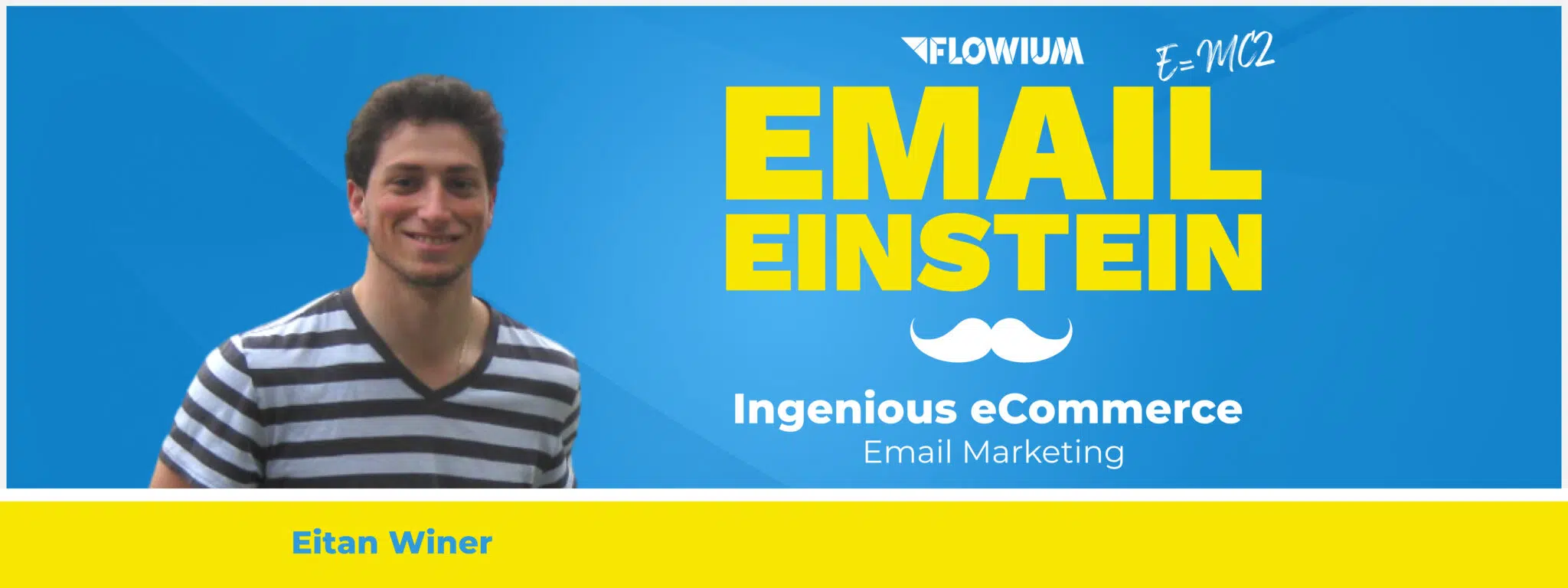
Hello, hello everyone, and welcome back to Email Einstein, the podcast by Flowium. I’m your host, Vira Sadlak. And I’m really happy, guys, to have you here today. As you know, through the entire month of August, we will be talking about all things AI, how to use AI, where to use AI, how AI can make your life easier and stuff like that. So, yeah, I’m very happy that we were able to bring today’s guest on our show because he knows a thing or two about AI. So in today’s episode, we have a special guest joining us. So, Eitan, Hi. Winer, the co-founder of and CEO of Maverick.ai. So Maverick.ai is a groundbreaking platform that assists online retailers like you guys are and e-commerce businesses and direct-to-consumers, DTC brands in delivering personalized videos to their customers and at a big remarkable scale. So without further ado, I want you guys to welcome our guest today. It’s pleasure to have you on our podcast today. Please say hi.
Eitan: 1:48
Thank you, Vira. Yeah, it’s a pleasure to be here. Excited to chat and discuss learnings and hopefully be valuable to the listeners.
Vira: 1:56
Let’s do this. But before we go there, I have a list of informal this or that questions just to get to know you better. And after that, we can go and start discussing all of the juicy AI questions. But before that, East Coast or West Coast?
Eitan: 2:13
I’ve been in the West Coast for the last 15, 16 years, and it’s pretty much my home at this point. So, yeah, I would have to go with West Coast.
Vira: 2:22
Same. Okay. Beach vacation or mountain getaway?
Eitan: 2:27
I think beach vacation. Yeah, that’s definitely more in line with what we have done and what we’re planning on doing in the future. And I know my fiancée loves the beach, so I don’t know if I’d be able to take her to the mountains. But yeah, I love the beach too.
Vira: 2:43
Awesome. And for those of you guys who are listening, so right now we’re recording this, like, prerecording this podcast, but very soon, in less than a week from now, right, you will be married, Aiden. And it’s on Hawaii. So I guess you’re a bit biased towards beach vacation, I guess. But congrats to you. Okay, cool. The next one, I’m kind of curious to see what you have to say. Digital detox. like no technology or documenting memories on social media while on vacation?
Eitan: 3:18
I personally don’t use social media too much, but I do consume a lot of content, especially lately. I’ve been on TikTok a whole bunch. So, yeah, I would actually probably bias towards the detox because I think it enables you to really enjoy the moment, be in the moment. And with some things, it’s really nice to capture a picture because then you can revisit that for the rest of your life. To be able to sort of like replay that memory and remind you of the cool times. But yeah, I think probably, probably the first one of a detox to really enjoy and be in the moment.
Vira: 3:52
That’s a good one. That’s a good one. Okay. Email or SMS?
Eitan: 4:00
I think both are incredibly useful. I will personally go with email just because I think That is where I have the most interactions myself. So very biased standpoint. Like, I receive a ton of emails, sign up for a lot of newsletters. I’m a lot more pickier about SMS, but I think that is just a personal bias. SMS is incredibly powerful, and if you can get it right, probably even more powerful than email.
Vira: 4:27
Mm-hmm.
Eitan: 4:27
But just based off of personal preference, I tend to be someone that is very strict with sort of SMS Privileges. Whereas with email, I think a lot of companies out there are sending me blasts.
Vira: 4:40
Cool. Okay. Shopping online or shopping offline?
Eitan: 4:45
I’d have to go with online. I now, prior to my wedding, have had to do a lot of shopping. And when there’s too many options, it can be stressful. I feel like when you go in the store, you just see everything around you. There’s no ratings or reviews that make it easy to know what you should get or not.
Vira: 5:02
Yes.
Eitan: 5:02
You actually have the ability to try things on, which is a double-edged sword because you know it fits or it doesn’t, but then you actually have to try things on. So yeah, definitely, definitely digital when it comes to sort of the convenience. I would say though that the digital world also feels very impersonal and you don’t have that human touch or ability to ask someone questions or for advice or even just have a nice interaction with the person that’s helping you out at the front desk. Yeah. So I think online for convenience, in person, definitely, at least today for the connection aspect, which is actually one of the things that we’re looking to change with Maverick too.
Vira: 5:38
Yeah. Yeah. And that’s actually what we will be discussing today, that like personalization aspect and that like human touch aspect. That’s something that we will be talking about today in the episode. So since we started talking about Maverick, what is Maverick? Explain briefly to our listeners who haven’t heard about your tool before, what it is, how does it work? And why should people care?
Eitan: 6:00
Yeah, at a high level, tying to the point that I was mentioning before of how convenient and fast e-commerce is, but also how impersonal and disconnected it can feel. We’re looking to sort of bridge the gap there. And at a high level, what Maverick enables brands to do is send personalized videos at scale to their customers and do so really easily. So today, if you’re the CEO of a brand and you want to send a thank you message, for instance, to each of your customers, you would be recording videos day in, day out. But with our technology, we’re able to leverage AI so that you record a video once, and then our AI is able to generate thousands and thousands of versions of that same video so that it is now possible for you to actually thank each and every one of your customers by name without having to make it a full-time job.
Vira: 6:48
Yeah. Yeah. One of the articles that is on your LinkedIn has this title, Maverick leverages deepfakes for real e-commerce connection. Deepfakes, is that like a proper term to use in the industry? Like, tell me more about it, ’cause I’m like still new to all of these terms.
Eitan: 7:08
Sure. I think deepfakes is probably a term that a lot of people are familiar with. Unfortunately, deepfakes have more of a negative connotation because oftentimes technology can be used for really good things, but it can also be used for really bad things. I mean, think of things like the internet. So I think in the same way, AI can be used for really good purposes and it also can be used for deception or sort of the traditional connotation behind deepfakes. And we like to think that we’re one of the good players in the AI space that’s using sort of artificial intelligence and generative models in order to help people connect and help people deliver better experiences for their customers. So we tend to avoid the word deepfake just because of the connotations it has.
Vira: 7:51
Mm-hmm.
Eitan: 7:51
But the technology is exactly sort of what describes the product. You’re generating content from scratch. A lot of people right now are probably very familiar with things like ChatGPT, and deepfakes, in essence, is very similar, but traditionally used for generating video.
Vira: 8:07
Right. And I know there are a lot of platforms on the internet that help you personalize videos, like Bonjoro, this platform that I know some of my friends used it in the past. But basically there, I think you need to record a video every time you get a notification about it or something. So basically you are getting a notification with a person’s details, name and stuff like that. Yours is automated, completely automated, right? You record video once and what happens next? I just want our customers to better explain the process so they know what to expect.
Eitan: 8:50
100%. Yeah. Tools like Bonjoro are super helpful, especially when you’re starting to get up and running. And you actually are able to record videos manually one by one. So Bonjoro enables you to do exactly that in a little bit of a more streamlined way, but you still have to record videos individually. So if Bob is buying, you would have to record a video for Bob, and if Sarah buys 30 minutes later, you would have to record another video for Sarah. What our technology does is you record one video and then we automatically tie into your CRM, whether it’s Klaviyo or sort of whatever CRM you use so that we take the information of what is the name of the customer who bought. We automatically generate a version of the video that is specifically for them and send it out. So just like any other Klaviyo email or campaign, it’s running in the background. It’s set it and forget it so that you can still leverage video, which is one of the most powerful, if not the most powerful medium today.
Vira: 9:45
Mm-hmm.
Eitan: 9:45
On top of personalization, which is also another tactic that is incredibly helpful for reaching people and getting their attention and doing it without having to record videos manually one by one.
Vira: 9:58
So what are the elements that can be personalized? Are we only talking about the name or are there like any other fields that can be personalized in videos as well?
Eitan: 10:07
That’s a great question. Yeah. So vision-wise, we in essence are trying to build out the equivalent of merge fields for video. So in the same way that today in email you have merge fields and you can put person’s name there, or a product name, or a discount code, or maybe a suggestion on what you think they’ll like. That is what we’re building towards, among a lot of other things that happy to chat through sort of like the longer-term vision. For the moment, what we started with is the name of the customer as the initial merge field that we are personalizing. And the reason we decided to focus on that, I’m sure you’ve heard this quote before, but it’s like, a person’s favorite word in the English dictionary is their name.
Vira: 10:44
Right.
Eitan: 10:44
And I think that is really true where we love hearing our names. It immediately helps us establish a connection. It catches our attention. And we’ve seen in testing that that is the variable that has the biggest impact when it comes to getting people’s attention, getting them to engage with the email, getting them to come back for a second purchase or to recover an abandoned cart. So that is what we’ve been focusing on so far. But as we speak, our team is building out the ability to customize a lot of different variables so that you can thank someone for buying the red boots versus someone for buying the blue hat. And maybe you refer to the city that they’re going to be using the product in or the discount code that has their name on it. So there’s sort of a lot of different options there. And then for the time, what we’ve been building on is this foundation of the customer’s name.
Vira: 11:29
I see. I see. So tell me one thing, Aidan. I’m Like, there’s like so much AI technology these days, like AI, ChatGPT. Is personal touch still like important? Is it still like necessary? Because I mean, sometimes it all feels like you as a customer is just like a number day, a number game. So, um, like in the era of like AI, ChatGPT, all of this amazing technology, uh, is it still important? That like personal touch.
Eitan: 12:03
100%. Yeah, I would say it’s probably more important than ever just because now it’s more doable. Um, and the threshold for like what a base level experience is, is just gonna continue going up and up because now you can create a lot of content, um, using generative models and you can create a lot of images and therefore the experience that people will have across different brands. just continues getting better and better. So it becomes more and more important to find a way to distinguish yourself from competitors. Like competitors today already use tools like Klaviyo to make sure that you’re following up a few days after a purchase to check in with a customer, or as soon as they abandon a cart, you’re shooting over an SMS that like explains the benefits of the product. And these are sort of just like table stakes at this point.
Vira: 12:52
Right.
Eitan: 12:53
So it’s more important than ever to think through like, How do you actually reach customers? How do you establish a personal connection when they have so many options there at the reach of a click on where they can buy a product, sometimes similar to yours? Like, what sets you apart?
Vira: 13:08
Yeah.
Eitan: 13:08
And establishing a personal connection, giving people a reason to identify with you and your brand and trust you over others becomes increasingly important. And we’ve seen that personalization is incredibly powerful there where, like you were saying, oftentimes we just place an order and we’re like, here’s your confirmation number, right? And we’re like nothing more than a number. But it’s interesting that in a lot of the responses that our brands get from their customers, they refer to exactly that, right? Things like, you make me feel valued, you make me feel appreciated, like glad to see that I’m not just a couple of bucks for you guys. So I think in the day of AI and these tools that enable you to do mass communications really easily, taking it to the next level becomes even more important.
Vira: 14:19
Awesome. Awesome. And since we started talking about this, like automation aspect of things, Can you briefly explain how Maverick integrates with customer shopping platform and how the automated notification system works? Like, what’s the process?
Eitan: 14:39
Yeah, you can think of it similarly to any other Klaviyo email. It’s as simple as dragging and dropping an email into your flow. And it will be an email that contains some special parameters that let it pull the right video thumbnail and let it pull the right video link. But it’s literally as simple as pulling in an email. We’re building out the ability to even integrate this into your existing templates so that it’s as simple as adding a link to one of your images or adding a thumbnail and adding a link there. And it’s pretty trivial. Usually, at least for the time being, we’re very much white glove. We’ve worked with hundreds of ecommerce brands, but we’re still in a stage where we want to be hands-on, learn from our customers, see what are the things firsthand that we could continue improving. So today we jump on a quick 15-20 minute call with our customers. We help them set everything up through Klaviyo. And it’s literally as simple as dragging and dropping an email as you would with any other, and then inserting some links to the Maverick videos. And that, that is pretty much it. From that point on, it works like any other email would.
Vira: 15:46
Yeah. So basically the email is sent from Klaviyo directly, but just like with your elements in it, right?
Eitan: 15:52
Yeah, exactly. It’s going to be a thumbnail there. We generally have best practices that we recommend in terms of like, hey, like what elements should you have in the email? But it’s as simple as adding a link to an image. And yeah, we either provide you with a template or help you build out a template yourself. But it’s really easy.
Vira: 16:57
So basically, like in Klaviyo, and our listeners know that there are like automated flows and there are campaigns. So we kind of covered the flows, but can you send this personalized videos in campaigns as well? So in this like one-time sense, say I want to send like a 4th of July campaign or like birthday campaign or whatever. Can I do it with Maverick as well?
Eitan: 17:23
You definitely could. Yeah. And customers have used us for campaigns. I will say our bread and butter is flows because that’s where people are able to use the same video over months and months of time and they’re getting value from it every single time someone makes a purchase or every time someone abandons a cart, every time someone joins their email newsletter or whatever use case they have. But yeah, it’s very similar in the campaign. You just create the email. Set the link that we will provide you with for the thumbnail. And in theory, yeah, that should work completely fine too.
Vira: 17:56
Oh, that’s so cool. And you’ve like touched briefly on like different use cases for Maverick. Can you just like summarize them? What are the potential use cases for Maverick? What are some popular use cases where you like recommend to start with? And maybe even like what you don’t recommend doing when working with Maverick?
Eitan: 18:16
Yeah, so I will say the most popular use cases and the most effective ones by far have been 2. One is a post-purchase thank you, and the second one is an abandoned cart recovery.
Vira: 18:28
Really?
Eitan: 18:28
The post-purchase thank you is just super powerful at building that so important connection with a customer, especially if you’re doing it early on in the experience, but equally so, and maybe even more importantly, if it’s a customer that is loyal and already has been with you for a long time. Our customers start seeing very immediately a lot of really cool feedback from customers being like, oh my God, I can’t believe that you do marketing this way. You have a customer for life. I’m telling my friends and family about it. And it’s just really delightful to see the responses. Usually in the morning when I wake up, I pick up my phone and I look at the summary of some of the responses that our customers have gotten that day. And I think that’s one of the most motivating things in the morning, just when you’re like—
Vira: 19:08
Mm-hmm.
Eitan: 19:09
After a hard day’s work and not very much sleep. I read those responses and it’s really delightful. So the post-purchase thank you goes a really long way in just building customer loyalty, delighting customers, making it more likely that they refer people, come back. So that one has worked really well. And then the abandoned checkout, very similar. If someone gets all the way to checkout, oftentimes they put in their information, shipping information, credit card, but then they don’t go through with it. Something small is keeping them from going that extra mile. And having a member from the team, especially if it’s someone like the CEO or someone that they might have seen on the website or just anyone from the team that they identify with, reach out to them, call them out by name, give them reassurance, give them a little snippet of like why they’ll be happy with their product, maybe a small discount. It goes a really long way in getting people past that hump, especially when it’s like a first purchase of, oh, I don’t know if I should do this or not. I’ve never tried this product. So those 2 are by far the most effective ones. The other ones that we’ve seen be pretty effective are a welcome to the newsletter.
Vira: 20:11
Mm-hmm.
Eitan: 20:12
We have a lot of customers who run contests or giveaways or maybe have content that they publish every month. So they have very large email newsletters, but a lot of that traffic doesn’t convert to first-time purchases. So same premise as the abandoned cart, doing that personalized reach out, making people feel appreciated, setting yourself apart from others. really goes a long way in boosting conversion from the email list. And then there’s a lot of other use cases that we’ve had customers use us from things like wishing their customers a happy birthday. We have like awesome videos of people blowing candles on a cake to things like winbacks where it’s like, hey, like we haven’t seen you in X amount of days, you’re probably up for your refill. Like, here’s a small discount so you can go through with that. To things like, hey, you bought I’ve seen that you bought the product 3 times, but you’re not on a subscription. Like, here are the benefits of our subscription program. So I think that the use cases are pretty endless because any communication that you have today with customers, you could in theory do through video and personalize it, and it would likely be more effective. So I think sort of like imagination is the boundary, but the ones that I mentioned are the most common ones.
Vira: 21:21
Right. And on your website, or actually maybe in that like article that I read about you, it mentions that the return on investment for Maverick is anywhere between like $10 to $40 on every dollar spent on Maverick’s personalized videos. Have you seen like this video’s impact, like the abandoned cart, first-time conversions and like loyalty campaigns? Have you seen any like impact on conversions for this emails?
Eitan: 21:50
100%. Yeah. And, and I think this comes across in a couple of ways. One, in those responses that I read every morning, you oftentimes see something like, oh my God, like, how can I not buy now? Or like, thank you for that small discount code and for reaching out. Like, I’m gonna try it out. But then you also see this in the numbers. So the 10 to 40x ROI, I think, is actually a little outdated. We have customers now that are doing 100x ROI as well.
Vira: 22:16
Okay.
Eitan: 22:16
And a lot of this, I think, comes from use cases that are immediate attribution, things like abandoned cart recoveries or welcome to our email and driving conversion there. We’ve had customers say, things like it’s 2x conversion with some of their flows. And you can see the impact pretty much all the way from the top of the funnel all the way through the bottom. You see customers having sort of engagement at an open level, a click level that are vastly higher than what they’re seeing with normal email. And I think here, one maybe like little snippet is you even the ability to say in the subject line, like we recorded a personal video just for you. gives you that ability to increase open rates.
Vira: 22:58
For sure.
Eitan: 22:59
And then when people open the email, see an image that has a little thumbnail where there’s a caption with their name, people are very curious and click on that. And yeah, response rates are also incredibly high. You have people seeing things like 14% of emails that they’re sending out with a post-purchase thank you get a delighted response, abandoned cart recoveries as high as 14-15%. So yeah, there’s a lot of metrics that are effective, of course, from the qualitative side when you just like feel that customer delight. But even when you look at things like email engagement all the way down to things like conversion, which translate directly to LTV.
Vira: 23:38
If we talk about like challenges or obstacles that businesses may face when implementing AI-generated videos, what are they and what are the common mistakes that you’re seeing across the industry? Like what are some common challenges?
Eitan: 23:55
Sure. I would say personalized videos are relatively new and so hard to do unless it’s automated that I would say the biggest mistake people are doing is probably not doing this.
Vira: 24:07
Mm-hmm.
Eitan: 24:09
Having a touchpoint, especially now where we live in the day of TikTok and Instagram where people just communicate using video and where personalization just becomes ever more important because you’re just drowned in communications from brands. I would say the biggest mistake is not doing any type of video and not doing personalized videos. Obviously, take that with a grain of salt because this is the company that we’ve built and the product that we’re selling. But even if you’re able to manually record some videos every week and send those out to customers, especially for brands that are starting, this makes such a big difference in really enabling you to build a loyal customer base taking your customer service and experience to a different level where you’re providing people with a good reason to buy from you and trust you versus going somewhere else. Um, so yeah, I would say if you’re a brand that’s like up and coming, definitely consider, even if not in an automated way, just recording these videos. I think the last iteration of this was writing handwritten notes. I know that—
Vira: 25:13
Oh yeah.
Eitan: 25:14
When I used to run my own Shopify store, bringing over alpaca apparel from Bolivia. I used to send handwritten postcards and people love those, but video is even more delightful because you’re able to see the person behind the brand. You’re seeing them say your name and it just touches people’s hearts.
Vira: 25:30
Right.
Eitan: 25:30
So yeah, I would say the worst mistake you can do is not doing it. And if you’re doing it, there’s probably no wrong way of doing it. There’s definitely like better messaging or like ways of recording the video, but I would say And this is what we say to our customers too. Like, don’t worry about the exact iteration of the video, how it looks, what you’re saying. The thing that people will remember is the fact that you sent them a personalized video, call them out by name, and that will touch their hearts. The exact execution, what you’re wearing, what’s in the background, like those things are much less important. So I would say if you’re not doing it, do it.
Vira: 26:06
Mm-hmm.
Eitan: 26:06
Because you definitely won’t regret the results and whether it’s automated or not. I think that’s like a question of how much you want to scale it and how much bandwidth you have. And the bigger you are, you probably have to start automating it. But yeah, I would encourage everyone to at least give it a go and see customer responses.
Vira: 26:21
And if you would summarize everything that you said, what advice would you give to business owners and entrepreneurs who are looking into doing this personalized video or who are considering implementing Maverick into their e-commerce strategy?
Eitan: 26:38
Yeah, I think there’s, there’s no, there’s no wrong place to start. I would say think of the key touchpoints in your journey where your customers are either getting stuck or where you want to make a lasting impression. Those tend to be things like the first conversion. Once you get a customer, especially if the product is awesome, then I think you’ve already done a lot.
Vira: 27:01
Mm-hmm.
Eitan: 27:02
But making it so that they feel appreciated and have a reason to come back is really important. So yeah, think of both the short-term and long-term. Things like abandoned checkouts are really great because they’ll get you immediate conversion, but I think it becomes more and more important over time to maximize LTV. And LTV is not just going to be like getting a person to purchase once, but getting this person to stay with you for a really long time and having them be so happy that they’re now excited to tell others about the brand and excited to come back to you the next time around.
Vira: 27:34
Mm-hmm.
Eitan: 27:35
So whether it’s with personalized videos or little tokens of appreciation, think of these like crucial touchpoints. And I think the best way is just to reflect on one’s own experience and apply that for one’s own customers, because we are all customers online. And I think oftentimes we, we forget about that and just being sort of mindful and reflective of like, hey, like, what are the things that have made a difference in my shopping experiences?
Vira: 28:03
Mm-hmm.
Eitan: 28:04
What are the things that have made me come back to a brand, um, versus not? And sort of, we are all filled with really good ideas and oftentimes we forget that like we are our target market to a lot of degrees. Mm-hmm. So taking learnings from that and implementing it on one’s own business, I think is always useful and it’s really obvious, but I think sometimes the obvious things are the ones that we forget. So yeah, just like thinking, hey, if I was on the other side, what would I want? What would make me come back? And whether it’s personalized videos or any other thing that makes your client feel appreciated and wanting to come back, I think it’s worth a shot.
Vira: 28:42
Yeah, that’s a good— that’s a great summary of everything that we discussed today. Aidan, the last question I have, I’m just curious to hear your opinion, like what future developments and trends in AI personalized videos are you seeing, like, or you are foreseeing, I must say? What do you think is the next big thing that is coming?
Eitan: 29:05
Yeah, so I think today, um, companies like Maverick are enabling you to do something that you couldn’t do before around generate thousands of versions of a video and modify the person’s name so every customer can hear their name coming directly from a team member. And that’s really awesome. But if you think of, like I mentioned before, this notion of merge fields for email, Mm-hmm. there’s no reason why communications through video in the future can’t start going in that direction more, where every piece of video content, I think eventually in the future will be very different from person to person who receives it.
Vira: 29:43
Mm-hmm.
Eitan: 29:43
So today when you receive an email or a video, it’s pretty much cookie cutter. Everyone’s seeing the same thing, but it doesn’t have to be and probably shouldn’t be that way, cuz the things that will resonate with you as a customer will be very different than the things that will resonate with me as a customer. Given what we’ve bought, where we live, what we enjoy, sort of like all of the things that we know about our customers can enable us to cater the experiences for them. And you can envision this in like a store setting where maybe the person is able to ask you questions and therefore show you certain things or talk to you in a certain way. And I think this just becomes more and more possible in the online world where starting with video, but you can think of any part of the marketing journey, people will get experiences that are very much personalized and catered to them. And ads will start feeling more like content because it’s things that like you really want to see.
Vira: 30:38
Yeah.
Eitan: 30:39
Communications will feel less like cookie-cutter email blasts, but more like, oh, they’re talking to me about the things that I like and they really understand me. And I think that will make it so that again, we’re able to have a more real-life-like scenario in the online world. And have both the nice things of efficiency, as well as be able to get that connection and sort of like personalization factor that today in large part is missing. But I would imagine in the near future, that’s, that’s a gimme too.
Vira: 31:07
Yeah, yeah, it all comes down to like delivering the right message to the right person, I guess, in email, video, like everywhere. It all comes down to personalization. Aiden, if people want to learn more about what you guys do, or if they want to try your service, where should they go?
Eitan: 31:23
Yeah, they can visit us at our website, trymaverick.com. And yeah, there you’ll be able to see some sample videos, case studies, learn more about the product, and hopefully get as excited as we and our hundreds of brands are. And if they have any questions, yeah, feel free to reach out. Very happy to personally answer any questions from people that hear about us through you guys and hop on a call with them to see how we can help out.
Vira: 31:50
Awesome. Thank you so much. It was fun having you on this podcast, you guys. All of the links that we mentioned in this podcast, all of the resources, they will be linked in the description box. So go to the description box, check out Maverick. Aidan, thank you so much for coming. It was fun having you here. I can’t wait to try your services, honestly, to try your app. It sounds, sounds pretty cool. And the videos that you’re making on your website, they are freaking realistic. You like, you can’t believe that this is like the deepfake, right? They look very, very authentic. So, for sure. Yeah.
Eitan: 32:27
Appreciate it, Vira. Thank you very much for the time. And yeah, I really enjoyed the conversation.
Vira: 32:32
Thank you so much, guys. We hope to have you back here next Tuesday where we will continue our months of AI conversations. So thank you so much and take care.

Vira Sadlak
Podcast host, marketer, traveller and a life lover from Vancouver, Canada