

Podcast Transcript
Vira: 0:16
And I’m super excited about today’s podcast because today we’ll have one more email marketing nerd with us. Hello everyone. Welcome to Flowium Podcast. We are email marketers at an email marketing agency called Flowium, and we are very, very passionate about email marketing. And because we love what we do, we want to share our insights with you. Flowium is one of the fastest growing email marketing agencies in the world, and we specialize in providing premium full-service e-commerce email marketing experiences to all of our clients. And our services are tailored specifically for your business, and they’re designed to help you increase your online online retail revenue by 20 to 50%. Deliver the right message to the right person at the right moment. That’s what we are all here about. And I’m super excited about today’s podcast because today we’ll have one more email marketing nerd with us.
Alissa: 1:42
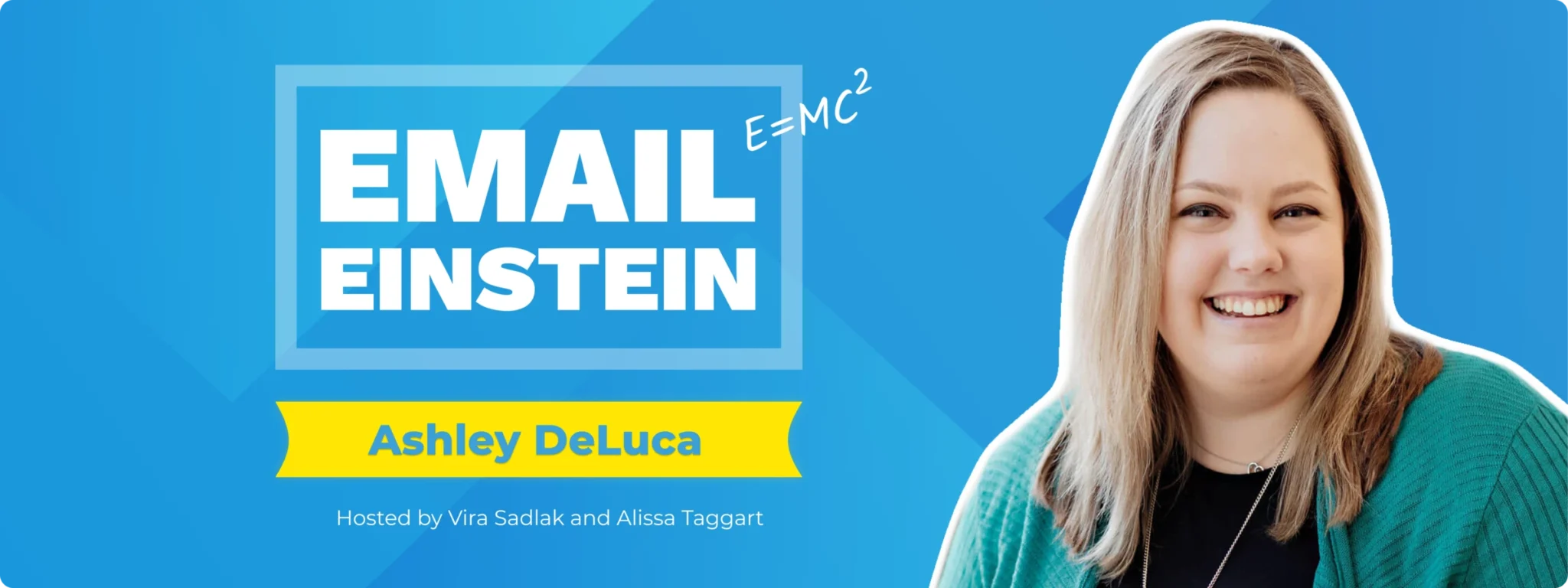
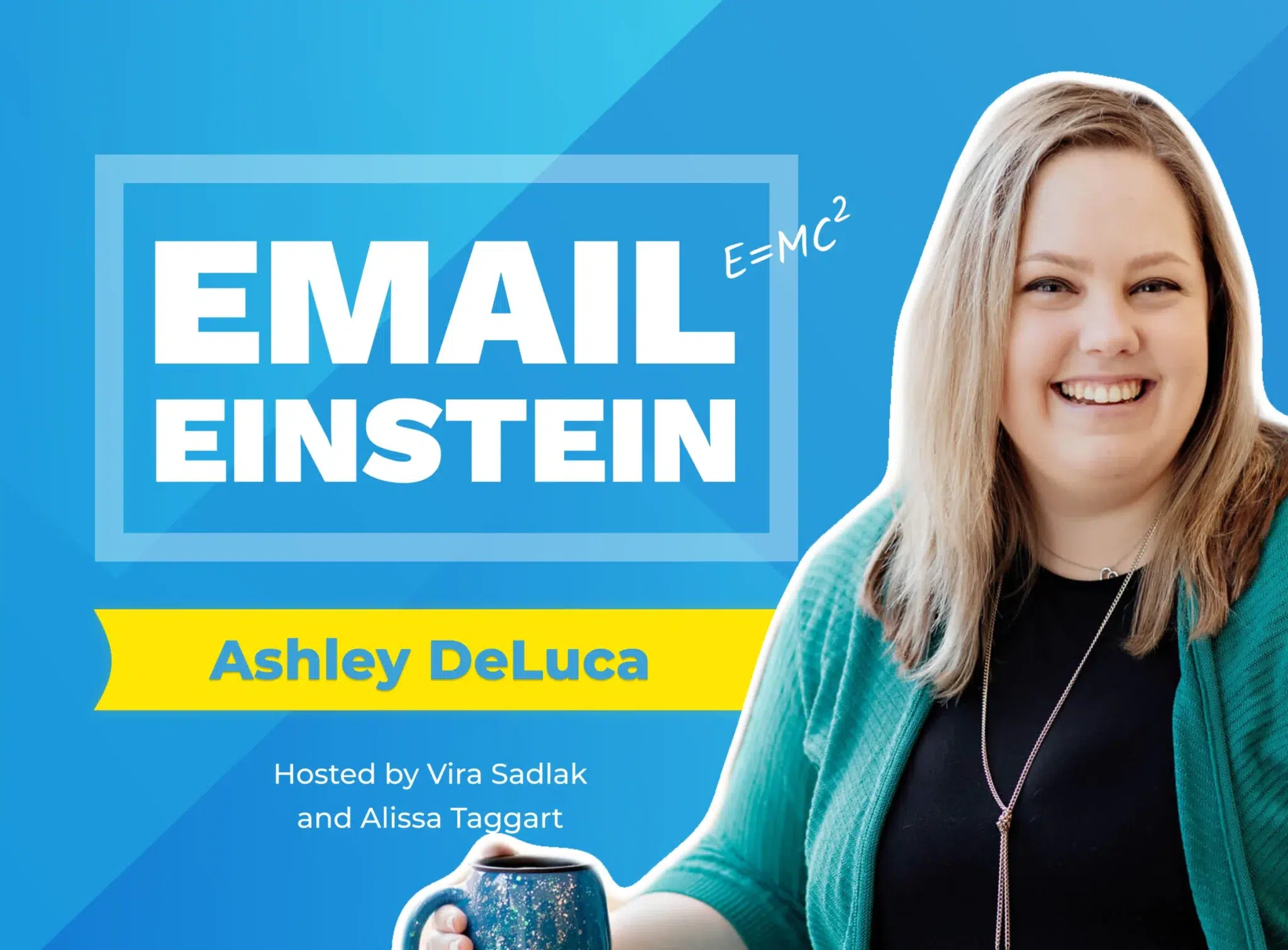
Yes, very, very, very excited. So guys, as Vera has mentioned, we do have an amazing special guest today. She is a fellow email Einstein that we super grateful to have on. We’re super ready to learn and we hope that you are too. But before we have her introduce herself, I will do a little introduction. So Ashley K. DeLuca has mastered email marketing for e-commerce and service-based businesses by doing exactly what we’ve been preaching to all of you listeners for the last year, sending relevant and intentional content to your subscribers. She’s worked with many 6 to 7 figure businesses ranging from business coaching to health and wellness physical products. Funnily enough, she actually started working at Panera, got into website design, and then started diving deep into the world of email marketing. So, you know, she’s an expert, especially in terms of what is good and bad mac and cheese, cuz Panera mac and cheese, can I get an amen? And one of her biggest goals with email marketing is to simplify email marketing as a whole and send emails that actually start conversations. Again, going back to the stuff that we’ve been talking with you guys about over the last year, She’s obsessed with guacamole, which I definitely can’t blame her for. She loves sea turtles, and more importantly, she is also obsessed with helping people build a relationship-first company with email marketing. Ashley, please say hi.
Ashley: 3:07
Oh my gosh. Hello. Oh my gosh. I’m super incredibly excited to be here and to get the fellow Einstein hat today.
Vira: 3:14
I love how random the facts about you. Obsessed with guacamole, love sea turtles, and email marketing. I love how random those facts are.
Alissa: 3:24
Yeah, I love it.
Vira: 4:02
Cool. Let’s learn even more random facts about you, Ashley. Now let’s do some quick blitz Q&A. Just like answer the first thing that comes to your mind.
Ashley: 4:12
Perfect.
Alissa: 4:12
Let’s do it. So Ashley, texting or calling?
Vira: 4:15
Oh, texting, please. Yes.
Alissa: 4:17
Wow. Yes. 3 Ps in a pod over here. We’re all texters. Interesting. Okay, best place to get guacamole?
Ashley: 4:23
At an authentic Mexican restaurant. I do have a really quick thing. So my husband, he does IT for Chipotle, and he’s always like, stop, you’re supposed to say Chipotle. And I’m like, listen, I’m just saying, it’s prob— like, I’d rather go get it from the place down the street, but if I have to, I will get it from Chipotle. Okay, that’s all.
Vira: 4:42
That is great. Like discounts, like special discounts because he works there?
Ashley: 4:45
He actually gets like Immaculate, like benefits. Um, so we do a gift card each month essentially to be to get a good chunk of Chipotle. We usually get Chipotle once a week with it between the 3 of us. And so, yeah, and they like, they’re really awesome. I really, I was like, you can stay with them unless you decide to go to Chick-fil-A, then we will talk. We’ll talk then.
Alissa: 5:05
Oh my gosh. Those are like, my husband is obsessed with Chipotle, like actually obsessed. If it was up to him, he’d eat it for breakfast, lunch, and dinner. So a little jealous, but that sounds awesome. Okay. And then last question for me, place you most want to travel to.
Ashley: 5:22
Oh my golly gee, I’m going to say Puerto Rico because it’s on the calendar to go to Puerto Rico in September. So that’s like my thing right now. I’m like, I’m ready to go to Puerto Rico like right now.
Alissa: 5:33
Oh my gosh, that’s awesome. That’s so— that’s
Vira: 5:35
exciting. Oh, cool. The next one, favorite Disney character?
Ashley: 5:39
Finding Nemo.
Vira: 5:40
Oh, good one. And unexpected one too. Like, people usually go with Disney princesses. So yeah, that’s a good one. Your power song?
Ashley: 5:48
Oh, I love Lizzo. I love any good song by Lizzo. I’m like, here for all the Lizzo. I think I’m just going to put her in my her own category.
Vira: 5:56
Yes, please. I love it. Okay. And the last one, it’s very random. Please don’t judge us. Socks or mattress? Oh, I love the quietness.
Ashley: 6:06
Well, okay. What’s the temperature?
Vira: 6:10
Ooh, that’s a random one. Just like, for now, I guess.
Alissa: 6:16
What would you choose today?
Ashley: 6:18
Okay. Today. Today. No socks. Will ditch the socks for the mattress. Okay.
Alissa: 6:23
Okay. Yes.
Vira: 6:24
This is a very random question that we ask all the time because those are the two examples that we always use for our, like, case studies in our podcast, socks and mattresses, just because they are so different. And customers who purchase socks have such a different customer journey from people who are purchasing the mattresses. That’s why we always use this example. And yeah, very weird thing.
Alissa: 6:44
Yeah, it’s a very weird thing. We’ve just— it’s a weird habit that we’ve come upon in the last year since recording this podcast. So yeah, it’s weird.
Ashley: 6:52
I mean, hey, I mean, you know that I love sea turtles and avocado, and besides the fact that they’re both green, that’s about all they have in common. So like, I’m here for this.
Alissa: 7:01
Cool.
Vira: 7:02
Well, tell us more about yourself. We know a ton of random facts about you now. Tell us more about what you do and why you do that.
Ashley: 7:12
Oh my gosh. Yeah. So I specifically, my like title I guess is email communication strategist. And as you’ve had mentioned in your podcast intro, it’s really, again, it’s about sending the right message at the right time to the right people in the right place and all the right things, right? Like making sure everything aligns. And so a lot of what I do is specifically in helping build relationship-first businesses, specifically in the backend with marketing. It’s something that when I first dove into email marketing was not present at all. It was very much so newsletters and focusing on me and look at this award I won and I was featured in this podcast. And I was like, listen, I love you so much, Suzy Q, but like this isn’t it. Like this is not what we’re looking for. And even on the e-commerce side, it was very much so transactional. And so the reason why I do email marketing is not just because it comes very naturally to me because I love to write, I love to have conversations. Like if I could literally make a living just talking all day, that’s exactly what I would do because I just love talking and then putting that in, like putting that into email format in that conversational style and approach as well too. And so yeah, I mean it’s my jam, but more specifically I do it because of my 2-year-old. I absolutely love I love my 2-year-old and being able to balance the idea and the concept of like the work life and being able to be the mom that I want to be, to be the business owner I want to be and to be able to make the impact that I want to make is like my huge why and the reason why I do the things that I do.
Vira: 8:37
That’s awesome. I love it.
Alissa: 8:38
I love it. So Ashley, what would you say is actually relationship-first email marketing, but specifically in like the physical products e-commerce world and why does it matter?
Ashley: 8:50
This is such a great question because a lot of times, yeah, it’s like, what, what in the world does it mean relationship first? Like, are we trying to date everybody? And my response is like, listen, yes, in a way we are trying to date our subscribers. And I think one of the biggest things, and I kind of just alluded to like the whole transactional versus transformational, and a lot of times specifically in the e-commerce world, it’s very much so just about the product. It’s very much so like, hey, once you buy this, I’m going to use super suitcase because like, we’re— I’m still on this Puerto Rico travel thing. I’m sorry. But like, I think a lot about in terms of a suitcase, like, oh, you buy the suitcase, that’s it. Awesome. We got, we got your monies. And that’s all it’s about. And for me, it’s more so not just even in the world of upselling. It’s in terms of with like, I want you to love your suitcase for the rest of your life so much so that you’re going to refer your hubby to go and get a suitcase, which is exactly what happened for me. I was like, I got this awesome suitcase. I was like, you need one too. I’m sorry, but like, I already bought what you want in black, you know, and like being able to like create that referral network to be able to Create it in a way that like, listen, I already have on my wishlist for Christmas that I want the like little carry-on bag thing that goes on top of my carry-on now, you know, that they purchased. So like for me, relationship first email marketing matters because you have people on the other side of your email platform, right? Like, and this is one thing that as well too is that in a very transactional state, we’re just like, oh, we need more emails, we need more emails, we need more emails. And I see this taught a lot of times as well too, is that like it’s all just about getting more emails and hoarding all of these emails. And I’m like, listen, dude, like it’s not about getting more emails. It’s about using the emails you already have, crafting a relationship to them that they actually work in your benefit of creating this referral network and making them feel like, oh my gosh, I know the founder of this company so well, or I know this company. You know, everyone’s a little bit different. And as you guys know, sometimes the founder is very much so involved. Sometimes it’s more so like, no, it’s like all about this persona of the company and really just putting that first and making people feel like, oh, they actually care about me.
Vira: 10:50
Right. Yeah. So what you’re saying that you recommend to use more not product-specific emails, but more like relationship-specific or how to explain it. Yeah. So something like this, right?
Ashley: 11:03
Yeah. And I’ll even be a little bit more specific as well too, because you’re just like, well, what are relationship emails? Like, what does that even mean? Right.
Vira: 11:09
Especially in e-commerce, in like physical product e-commerce. So it’s like a different world from the service world, right?
Ashley: 11:16
Yeah, definitely. Some of the same principles still apply, which I know we’ll get into most likely a little bit later because they always come up. But the thing is, is that when relationship emails come into play, I think very much so about the person on the other side. And that’s where my first thought goes into is I’m like, okay, so I’m going to stick on this suitcase tangent real quick. So within like a suitcase, like what else is it that like would be really powerful for that person to have? What would make having a suitcase even more enjoyable? What would be more so of like what other resources or tips or tricks can I help them? Maybe it’s like, Hey, here’s like 6 methods on how you can go through the process of essentially packing your suitcase and making sure that you can fit everything without having to sit on it. Because we all know that, like, especially as women, like, and this may be a stereotype, but like, we’re all— I just say this because this is me. I’m sorry. Like, I very much so, like, I will sit on my suitcase and be like, I just need to get one more sweater inside. And like, thinking about those scenarios, thinking about those situations, and then bringing that into life within your email marketing are those relationship building things because they’re like, oh my gosh, they told get me. They totally saw me last night trying to stuff this suitcase full of stuff. Like they get it. And so it’s really, I think also too about being relatable. And that’s kind of where that relationship builds is because it’s very much so conversational. Like, hey, if you’re doing this, hey, I got a, you know, a 10-minute YouTube video or whatever your other like medium is for like giving your audience content. Maybe it’s like Instagram Live where you’re like, hey, we just like went over all these different packing methods so that way you don’t have to do that. It’s really just about taking it in a different route as opposed to just being like, you need our packing cubes. Like, no, like let’s, let’s give you some solutions here. And then if those don’t work, work, or you’re like, oh yeah, like there’s no way I can like military roll all my clothes, a packing cube makes more sense. Then you can obviously upsell into the packing cubes.
Alissa: 12:59
Yeah. That’s so cool. That makes a lot more sense. It’s more about like reaching the customer at their pain point and focusing on their pain point. And then also how you can provide a solution to their pain point. So really, really understanding like what they need as opposed to, well, not even what they need, but just really understanding like, hey, I get that like last night you were probably sat on your couch drinking a glass of wine, crying because XYZ. We have a solution for that, like that kind of thing.
Ashley: 13:25
Yeah, definitely. For sure. Yeah. And that goes back to like the right message at the right time and targeting and segmenting and all those amazing pieces too.
Vira: 13:33
Right, right. And I really like how in your personal emails I’m like subscribed to them and like on your website you talk a lot about how you can build relationship in email specifically through storytelling. And I think that’s fascinating. And I think that brands are not using this tool enough. So tell us more about like storytelling in emails and like like how can you do that and where you can do the storytelling, like where to start?
Ashley: 14:01
Yeah, totally. Okay. So basically I don’t, I don’t have a PhD in stories, but I definitely tell them so much so that I have just become better because everybody’s stories, especially when you start, they start off very terrible. Usually you’re just like, okay, this, this missed a whole, a whole piece of it where you’re like, oh, this didn’t really like hit the buzzer. The best way that you can get better at stories is just to continually tell them. And I always always lean into first before like going into the email side to just talk about them. So whether you’re talking about them on an Instagram Live or over on Facebook or you do a YouTube video, or maybe you do very well with written and you’re like, oh, if I’m going to write a story, I can totally just write it as opposed to say it, lean into that first. But for me, there’s kind of two different lenses and I’m going to take this in two different routes because I have companies that I work with who fit into two different buckets. So again, you kind of have more so of like the personal route where like the founders are very much so present. Their company was created very much so based off of their story specifically or their experience. So that’s how the product was developed and all the things. And then you have others who are just like, okay, the founder’s story doesn’t really fit into that mesh. And so like the founder isn’t necessarily into that piece of it. So stories on the personal side, when you’re very much so into it, is really easy because within that you can pull stories that are very much so about you, things that have going on in your life. So very randomly, one of the recent stories that I told was about my My husband’s gonna be like, luckily he doesn’t listen to these podcast episodes, but it’s okay.
Alissa: 15:32
Can I say the same thing about mine? That’s so funny.
Ashley: 15:35
He’s gonna be like, you’re really telling this story to like all these people? And I’m like, yeah, I’m gonna tell this story ’cause I literally did. Okay, so basically I wrote a story about how I had went to Chipotle and I went to go pick up our like weekly Chipotle. And for some reason the system like just didn’t take our order, right? And I was like, oh my gosh, this has never happened. I just go to the shelf and get it and then I walk back to my car. So I was like trying to call my husband ’cause he had like the little gift card and all the things. So I go to tell this whole story and now most people would be like, okay, that sounds a little like really dramatic. You can’t get your Chipotle. Like, and I was like, yeah, like I’m playing on the drama here. But I was like, here’s the thing. Like, do you know how many people have you have promised that you’re going to send them an email like 3 days later on XYZ topic that you never did? I was like, you’re leaving your subscribers stranded at Chipotle looking for their Chipotle. And so it’s really fun when you can take situations, whether they’re funny or they’re dramatic or, you know, they’re a little sad or funny, like, and then pull it into what it is that you do to be able to link that together. Because a lot of times, even in more, you know, complex situations where you’re just like, okay, how do I like really describe the effects of this product specifically on like the health side of things as well too? When you have, you know, sometimes it’s like, how can I make this in like plain English? And the best way that you can do that to kind of bridge that gap is through stories. And so if you’re on the flip side, when you’re just like, oh my gosh, like, okay, the founder’s story isn’t really necessarily relevant for whatever reason, what you can do is you can actually use other people’s stories in terms of with other people who have used that product. And so the best way to do that, now there’s like legal things that come along with using other people’s stories and their permission and how to do that. And everybody’s different and it really depends on the industry as well too. But to kind of keep this like generalized, essentially what you can do is you can pull together that piece of the before, that transformational moment, and then after. And so basically when you’re writing out these stories, it’s very easy to identify, okay, this is Susie before, this is Susie in that transformational phase when she first came across our company in an Instagram ad, or, you know, she started to try this. She went on vacation and had our suitcase and she was like, oh my gosh, this like literally was so much easier to go down the airplane aisle because I wasn’t trying to like put it on my head because I didn’t have wheels or whatever that may be. Right. You can be as funny as you like. And then, then moving into the after state of like, yeah, like this is, you know, the product that she uses is the results that she got and all that really fun stuff. And so, yeah, that’s, that’s basically the two different ways that I like to use stories. But literally the ones that are like very much so off the wall, random that you feel comfortable sharing that, you know, can also relate to your audience as well too, is the ones that do the best for me.
Vira: 18:15
You know who does it really well, like telling their customer stories? That’s my personal favorite. I really like how Nike Nike tells their customer story. Like, in their advertisement, it’s never about the product, even though, yes, the athletes whose story they are telling, they are obviously wearing Nike runners or Nike leggings or whatever. But they go like extra mile— Nike goes an extra mile by making their customer the main character of every story they tell. And it basically builds that relationship with the brand, even though technically they don’t talk about how awesome this material cereal is or how comfy the shoes are. They never talk about the product itself. And that’s what like amazes me about their advertisement. I love this guy.
Alissa: 19:03
Yeah, their maternity brand release like that commercial or whatever where it’s like, it’s all like moms, but it’s like, you’re an athlete. And it’s like basically telling moms like whether you actually play sports or not, like you’re an athlete because of all the things that you have to balance and juggle and run around after your kids and et cetera. And it was so funny ’cause I saw the advert and I was like, wow, I wanna buy Nike maternity clothes. And my husband was like, you are such a sucker. And I was like, it’s good marketing, okay? Like it’s great marketing.
Vira: 19:34
I know. Yeah.
Ashley: 19:37
And another company who does that same thing is Apple. Apple does the same exact thing. And I actually saw an Instagram reel, this was a couple days ago, with some other companies as well too. And they’re like, for example, Rolex, like Rolex isn’t technically selling watches, guys. Like they are selling something so much more.
Vira: 19:53
Yeah.
Ashley: 19:53
And the feeling behind that. And that’s something as well too that I think is so incredibly important and why I think it’s so incredibly important to you to build those relationships because that’s when you get deeper into the core of people and being able to pull out those exact people for the right product. Yeah.
Vira: 20:35
Right. Yeah.
Alissa: 20:35
Yeah. So Ashley, what would you say are kind of some of your favorite ways to humanize your automated e-commerce emails?
Ashley: 20:43
Ooh, okay. So some of my favorite ways is I love to use, and I think it’s now like actually proclaimed that you do say GIF when you make, when you’re talking about GIFs.
Alissa: 20:52
Yeah, it’s GIF, right? I knew it was GIF.
Vira: 20:57
I used to call them GIFs.
Alissa: 20:59
I would say GIF and people are like, no, it’s GIF. I’m like, no, that can’t be right.
Ashley: 21:06
That can’t be right. Yes, yes, yes. So GIFs are a fun way. Actually, my autoresponder has a GIF of me and my son, and I think GIFs are like very much so stop the scroll stopping, especially within emails, because most of my emails that I do for my clients are very much so plain text. And so we do include photos, but like especially when you can be really funny about it, like having them pop, like one of my clients, we did one where like it was for the thank you order and we had them pop pop up and like throw confetti and we’re like, “Thank you!” And it was very fun and very personal. And so I love to do that. I also love to just try to put in humor as much as possible, especially in those really key touchpoints within the abandoned cart, coming through with your order confirmation, shipping confirmation, like all of those things that a lot of times, like I see so many people who just leave them as like the normal thing. And I was like, “No, these have to be delivered. Like they have to go through. So like, let’s make them funny. Let’s like make it very much so based on based off of your brand personality. And so I always love to customize those just by, you know, being really funny about like, oh my gosh, like we just sent Susie down to drop it off at the post office. And they’re gonna be like, who’s Susie? And they’re like, we don’t know who Susie is either, but like Susie totally dropped it off, you know? And like just being super funny and relatable within those. Those are like two ways. And then another way as well too is I like to make sure that within any of like the thank you sequences, I’ve seen some that are just like, thank you for your order. Like after they’ve received it. A couple of ways that we’ve done this a little bit differently is including like a handwritten note where it actually like someone writes it out and then it isn’t just like an image in there. I’ve also seen it as well too, where it’s a like little video as well, where it’s much more like, hey, like this is Ashley, like, you know, so incredibly excited and like going into that and just saying like, it’s very much more personal as opposed to just like, I’m glad you got your order. It’s so great to go. But yeah, those are, those are my, some of like my fun ways of like just like thinking out of the box, like thinking totally out of the box in terms of like how you can make an impression that people will want to talk about. Yeah.
Vira: 23:06
Neil Patel talks a lot about it in his blog and he calls it ditching propaganda for a voice. He talks a lot about like how important it is to have like a real human in mind when you are like creating that email. Right. And I really liked his blog where he said like, what’s the return of investment of cat meme and they actually did like a research. When you’re like sending a fun cat meme or something, it gets like a higher open rates, click-through rates, and people love that kind of stuff because it feels more like personal. It feels like that email is coming from like a real person on the other way. So that’s, that’s for sure. And like one of my favorites since we started talking about like subject lines and stuff, Alisa, we talked about it on one of our podcasts when we were discussing the good subject lines. I really like the subject line from Groupon when they had a big promotion. The subject line was the deals that make us proud. Unlike our nephew Steve, I really, really like this kind of, this kind of subject lines. Obviously they have to be like on brand with like the way you talk, with the way your brand talks. But adding a little bit of humor is awesome.
Alissa: 24:17
Yeah.
Vira: 24:17
Actually, I really liked your podcast episode about your best email. It was like literally 5 minutes long. Episode, but it was— I mean, I loved it. Can you tell us a bit about your best email?
Ashley: 24:31
Oh my gosh, yes. I am like the queen at like short to the point. Here’s what you do. Go do the things. And so within the best email, it’s actually very simple. You can use this regardless of your business type, wherever you’re at. Like you can go and send this email right now regardless of your promotional schedule because it’s very just real and authentic and it really breaks the normal kind of email cycle for companies as opposed to like, oh, we’re going to do this like every single week. This like totally revolutionized all the things. So essentially starting from the top of the email, the subject line for this was literally, hey, H-E-Y, that is really it. I have done different variations of like, hey there, or hi there, or something like that. Any kind of greeting works. And then moving into the actual body copy of the email, the reason why this works is because this was plain text. I had to actually kind of hit enter a couple of times so that way the bottom portion of the email with like my address and like the unsubscribe and all that had actually gone down a little bit on the person’s screen. And so the body copy was like, hey, first name. And it said, what you up to today? Very much so my language. Is there anything that I can do to support you this week? Hit reply, let me know when you have a sec. And then I had like a little blue heart because it’s very on brand for me. And then I end ended up going into, to your success or your friend, either. I think it was your friend, to be totally honest with you. And then said, Ashley. And the reason why this is like my best email ever, and I was like, I can say it in like 2 minutes, is because the intention behind it. I think one of the biggest things that really worked about this email is because so many people replied back to it and they were just like, oh my gosh, thank you for asking. Like, thank you for like coming into my inbox asking me this. And like my mentor reached out to me and he was like, you know, we’re supposed to be like in Slack asking these kinds of questions. And I was like, no, like go back and look at it. Like, I’m so sorry. I mean, you signed up for my email list. Like my best friend texted me and she was like, dude, why did you email me? Like I thought we were on a texting basis here. And I was like, yeah, go back and look at it. And I had directed somebody back to him like, just no, no, like I mean, I care about your response. Like I truly, truly do. And I was just like, just go back and look at it. And they were like, oh, I see what you did there. And the biggest thing within that is I got so many responses back and people who have taken that email copy and made it into their own language, ’cause I know not everybody in the world says whatcha, you know, went through and like changed it into their own copy, changed the question, you know, not necessarily maybe like what can I support you this week, but like specific to their product. Like how can I support you in your health journey? Me this week or whatever that may be. And so many people get responses and opportunities to be like, oh my gosh, I totally, totally meant to reach out to you about X, Y, and Z. Like, can we schedule a call? One of my clients, she got several sales calls off of that to be able to sell into her program. One of my e-commerce businesses specifically, it opened up so many opportunities for education around the products because a lot of times people just need that open door to say, hey, like I’m totally open. Like I’m here to help you. I wanna serve you as opposed to just including it down at the bottom as a random CTA of like, oh, I’ll just ask if I could support them this week. Like that was the only intention of the email. Like I didn’t include any links about a podcast I was on. I didn’t include any links about any like of my digital products or anything like that. I was just very much so like the entire intention of this is to know how I can support you. And it changed everything for me.
Vira: 27:52
It’s really cool. And we are doing like a similar thing with a post-purchase sequence for some people and for some brands. And we always have the email number too of the post-purchase sequence or even sometimes in email number 1, we ask about like, hey, like, how can we help you? Like what questions we can answer about the product or something. At least you do the same with your clients, right?
Alissa: 28:15
Yeah, all the time. And we find that it’s, it’s a little bit better. It works out a little bit better for our clients.
Vira: 28:21
Yeah, for sure. Yeah. And you get the brownie points from ESPs as well because when people respond to your email in the eyes of the, of those like services like Google or Yahoo or whatever, it says that, hey, this, this sender is legit. Like you give them some extra, extra points to their sender’s reputation.
Alissa: 28:40
Yeah, exactly.
Vira: 28:42
Exactly.
Alissa: 28:42
Ashley, what are some simple email types that anybody who is either in the email marketing world for e-commerce or is an e-commerce business owner that’s trying to handle their own email marketing, what can they use in order to increase open rates and increase their sales while not coming off as too salesy?
Ashley: 29:05
Hmm. Yes. This is always like the magical question. Question of like, how do we balance the. Not too salesy, yep. Yeah, how do we balance the things? Because especially in e-commerce, it can get really tricky because you’re like, no, I am here to sell my product and do the things. And you know, a lot of times like we do mention the products because we do want them to know that they exist and all that. But okay, so one of the things that I’ll say, one of the email types is doing an educational with a, I like to call it a mini mention. So the way that I like to mini mention products is anytime I reference the product, even if it’s not like a direct CTA of like, I’ll go back to my suitcase example of like, buy this suitcase for $997. Like it’s not very much so like direct. It could just be like talking about, you know, the differences in suitcases’ locks, for an example. Like if we’re gonna, if that’s like one of the main selling points of your suitcase and you’re like, I want to educate them why my lock makes the most amount of sense, like why it’s more secure or TSA approved or whatever. Whatever that may be, anytime I reference it in terms of with like, okay, so our signature suitcase, you know, has a, you know, TSA-approved lock that is 4 digits long or whatever, right? This is very much so off the bat. I would literally just go ahead and link directly over to the product with that mention. And the reason why that works is because a lot of times as people are reading, I’ve noticed that people will click as they’re reading through. And sometimes they won’t even get to the bottom of the email to the other CTA or the other focus of the email, even if you’re trying to drive them to another educational piece of content or even to the product, it allows you to be able to, again, mini-mention without being salesy, without being like super in your face because the whole context of that paragraph or that sentence is still to educate. But if they’re like, ooh, the signature suitcase, like what is this? They can still click and go on over to it. One of the other things that I’ll mention with educational content, specifically in e-commerce, is so often there’s a lot that you can talk about. You know, there’s so much that you can kind of dive into that you can go deep deep into and you’re just like, okay, like how do we even define what we should even be educating our audience about? I think the best way that you can do that is to look at your FAQs up to the product and create educational content around that. I think that another way that you can do that is what are kind of the supporting pieces that would then help them become more confident in purchasing? So maybe it is educating very much so about the locks and the different kind of lock types, even though Most people would be like, well, why do you need to learn about the locks? For me, when I bought my suitcase, for an example, I was very much so like, I want to know everything. Tell me everything about this suitcase because it was a premium product. I mean, it’s a premium brand, right? And so for that purpose of it, especially if you have a premium product, it’s super important to dive into those details because your buyers are going to be interested in those details. Now, for e-commerce products that are necessarily more so, I wouldn’t say lower cost, but are not necessarily like premium, like it’s a lot easier to be able to turn them around and be like, oh yeah, like I can take that risk, lower risk I should say. For those ones, it is easy to be able to kind of really just more so focus on those kind of questions or just providing what I like to call supporting content beams. And so thinking about like your supporting content pillars. So for an example, let’s say that you sell like lipstick, for an example, with your socks. Or socks. Okay, let’s go the sock route. I’m here for the sock.
Vira: 32:17
Let’s do this actually.
Alissa: 32:18
Vira loves the socks. Vira loves the socks.
Ashley: 32:22
Oh my gosh. Okay, so like, let’s, okay, so within this, like, okay, socks are pretty low risk, right? I would say a pair of socks, like especially, I don’t know, like $5, maybe more. I don’t know. How much, how much are your socks?
Vira: 32:32
I mean, we work with brands that sell like $30 socks, but I know—
Ashley: 32:36
$30 socks. Okay. I’m here for these $30 socks then. All right. So.
Vira: 32:41
I can get you a discount, Ashley. I know the guy.
Ashley: 32:45
All right, so we’re gonna, we’re gonna talk about these $30 socks. Okay, do they have avocados or sea turtles on them by chance?
Alissa: 32:50
Of course, anything you want.
Ashley: 32:52
Okay, we’re, all right, we’re doing avocado socks over here for $30. Okay, so what are some of the things in terms of with sock education that would make sense? Well, sock height, right? Like, let’s talk about sock height. Like, what kind of sock height do you need? What, what’s trendy? What’s in style? What may be coming up? You know, a lot of times for me, like, when I think about I’m like, okay, well, which ones are actually going to stay on my ankles? Right? Like which ones aren’t going to roll down? So that could be like a whole email right there about how your socks don’t roll down because you have a special silicone thingamabob around it. I’m not sock educated, I’m so sorry. So thingamabob is going to have to work. You know, you could talk about the material in terms of with, you know, how your sock material is different and why that is, but specifically going back to more so of that pain point of like, why would they buy? Like why would they be interested in your $30 socks? Socks because they’re not interested in the $5 socks at Walmart, right? They want specifically socks that are not going to roll down, that are comfy, that are gonna last, that aren’t gonna get holes after twice in the shower. They want their dogs to be able to pick them up and not get a hole in it just because they wanna play tug of war. Like I want tug of war worthy socks over here. So like these are all things within the educational realm that you can like dive into. You can be fun, you can be humorous, you can tell stories around about how your socks did survive a tug of war, you know, against my dog, my basset hound Baxter, master who loves to tear up all the things. Like that could be totally a thing. Okay. So within that as well too, you know, within the other email types, I think the biggest thing is really it’s the process of education to then support the sale. But also too within that, you can really just honestly focus on like what I call the connector email. And the connector email is very much so about like sitting down with your, you know, your preferable, like ideal client and being like, Listen, like, your socks are terrible, but in a very nice way, like being able to like connect with them and be like, listen, I know what it’s like to have terrible socks. I know what it’s like. And like more so focusing into like, how would you have a conversation? Like, how would you like very much so talk to the person across from you about socks? If they’re coming to you, they’re like, oh my gosh, I absolutely hate my socks. Like diving into that and really much more so focusing on how can I like get at the same level that relatability factor and to be able to bring that in. So that’s where stories come in as well too, that really play a role in like creating these connector emails and just thinking about, again, the scenarios that they’re going through to be able to push them together. That, that’s really what it’s all about. People just want to be seen and heard. They want to feel like you get it. And they also want to feel like, oh my gosh, like this is what it’s all about. These avocado socks are it for me. This is what I’m so excited for.
Vira: 35:22
Yeah, that’s awesome. And it always comes down to like knowing your customer and understanding where they’re coming from and what they’re end goal with all of my clients. We are trying to show like before and after whatever product we are selling. There is always the before, before they are coming to us with some of their pain points, and then our products or our brand resolves that pain point. So that’s what we are trying to achieve. Actually, you talk on your website, you talk about the 5 C’s of email communication. What are they? Just like quickly, briefly summarize them for for us.
Ashley: 35:56
Yeah, 100%. Okay. So going through, basically the thing you need to know is you have to have the first before you get to the next one. So the very first thing is you have to have a connection point. So this is where stories come into play, those relevancy touchpoints. When you create these relevant, memorable moments, that’s when you become memorable. So that’s why I use avocados and sea turtles as part of my brand, because that’s what leads then into conversation because they’re like, what do you mean you like avocados and sea turtles? But more specifically within that, that’s That’s when you can start to say, hey, like, yeah, we have these specialty items, we have these special things because they mean X, Y, and Z for us. So for an example, if I were to own an e-commerce business, I would specifically have products around Down syndrome because I have two brothers with Down syndrome. And so for me, that means a lot to me. So I probably have the Joey and Josh line, you know, and like that’s a connection point and a conversational point that you can then use within your brand. So that’s kind of like bridging the gap there. Okay. The next piece of this is customer journey. I know y’all talk a lot about in terms with making sure things are, make the most amount of sense within that, but more so specifically within customer journey, I think it’s really incredibly important to make sure that you don’t just dive into the details, but have that 8,000-foot view of all of the things. And that’ll really help with making sure that you don’t overwhelm people and you make sure that you give them the VIP best experience ever. The next piece of this is congruency. And for me, For me, congruency is really much more about not just like what your emails look like, but also the tone and the language that you’re using and all of that really fun stuff. And so when it comes down to communication, I think it’s really crucial to make sure that in everything that you’re doing, even if you, you know, you bring in somebody into your email marketing world that like you take the time to go through everything to make sure that that voice matches because a lot of times it’s very easy to just be like, oh, well, how’d this person come in? And like all the things. So make sure that it’s congruent is so incredibly important. And then the last piece of this is consistency. Consistency is so crucial. You know, it kind of goes back to the whole concept of dating. Like you’re not just going to go out on the first date and then peace out and then be like, oh yeah, like I was totally expecting a second date. You want to make sure that you’re consistently showing up because email is the way essentially that people will actually see your name and then go somewhere else and be like, oh yeah, I remember she’s over on Instagram or oh yeah, I remember she has a podcast. All just by sending that email and seeing your name.
Vira: 38:14
That’s so cool. And remember, Alissa, in one of our first episodes, we actually talked about the fact that people need to see your brand in like different settings for like 30 to 60 times or something to start recognizing the brand. Can you imagine? You have to have like so many connections with the customer for them to actually—
Alissa: 38:35
And it’s— and the higher the price point, I think we said that the more touch points necessary. So I think the starting is like $17 or $18. But if you’re trying to buy a Rolex, you’re going to need like $500 before, before you actually convert. Yeah. Before you actually commit, which is true. It’s very true.
Vira: 38:54
Yeah. I really like this 4 or 5 points that we just discussed. It’s like a really nice summary of our episode. So let’s just like revise them all again. So connection, understanding customer journey, congruency, and consistency, right?
Ashley: 39:06
Yeah. And conversation.
Alissa: 39:09
Yep.
Vira: 39:09
And conversation. Yeah. Yeah. So these are the big ones. Ashley, I know that you’re launching your book very soon. Tell us a few words about this book and what it’s going to be about. And when are you launching?
Ashley: 39:20
Yes. Oh my gosh. Thank you so much for allowing me to share this because this is like my heart and my soul of like all of my podcast episodes and my entire brain into one thing, which I’m super excited for. So the book is called Own Your Table. And to to kind of like bridge the gap here, like owning your table looks like you owning your power as the expert in your industry simply by using email marketing. And for me, it really looked like, you know, my entire life I was always struggling wanting to be at other people’s tables. And it wasn’t until I really dove into email marketing and started my own table, that’s when it started to change everything. That’s when I started to actually turn an email list profitable. That’s when I started to create backend growth and sales on autopilot through what I was doing and then being able to replicate that for other businesses as well too, simply by putting people at their own table at the head of it. And so inside of the book, it’s all about learning the exact strategies that I use to be able to create 5 figures via email marketing alone, how to create profitable conversations within your emails, and how I increase open and click rates by creating a community of subscribers that hit reply. So it’s very much so a lot about what we talked about today, just like on 60 different levels of Skittles and sugar and all the things. Um, but yeah, if you guys are interested in learning more about it, I am in the process right now of doing a crowdfunding campaign for me to be able to get this email marketing book out there into the world, to be able to create a ripple of how to really ditch the transactional and really more so focus on creating transformational email marketing. So you can hop on over to ashleykdeluca.com book. That’s where you’ll be able to learn all the things about the book. If you would like to grab a reward, I have tons of rewards and fun stuff coming up along with that as well too. If you want to learn more about it.
Alissa: 41:01
That’s awesome. Thank you so much. Thank you. That’s really helpful.
Ashley: 41:05
Yes. Oh my gosh. Thank you.
Vira: 41:06
And we will definitely link all of the resources that we mentioned in this podcast. They will all be in the description box. So just scroll there and check out Ashley’s website. It’s super cute and you can learn a lot about content and email marketing from her podcast as well. So we’ll link it in the description as well.
Alissa: 41:24
Awesome. Ashley, thank you so much for being on with us today.
Vira: 41:29
It’s so much fun, Ashley.
Ashley: 41:30
Yes. Oh my gosh. My husband’s gonna be so excited because I’m gonna be all talked out of email marketing and he doesn’t have to listen to it as on our way to get Chipotle tonight. So he’s gonna be like, oh, you can talk about something normal tonight. We’re like, yeah, let’s talk about the clouds.
Vira: 41:44
It was so hard for me, Ashley, not to talk about email marketing on the previous podcast that we recorded with you. We were talking about like like how to be a mompreneur and all that stuff, like different life hacks of like managing time and stuff like that. But I had like a gazillion email marketing questions and it was so hard for me not to ask them. So thank you so much for coming today and letting us ask you all of the nerdy email marketing questions. It’s always a pleasure.
Alissa: 42:09
Always. Yes, always. Thank you so much, guys. Thank you so much for listening today. We love having you guys on here, even if it’s kind of through the digital space. Don’t forget to subscribe and share this podcast with your friends. And if you like what we do, please don’t forget, leave us us a review. If you are interested in getting involved in an email marketing community with a bunch of other email marketing nerds, email marketing Einsteins, whatever you want to call us, make sure that you check us out at flowium.com/community. It’s an open forum for e-commerce business owners, e-commerce email marketers, and just people who like to know more about email marketing within the e-commerce space as a whole. Again, open forum, everyone’s asking questions, discussing, dialoguing back and forth. We have a lot of our own team members who hop on there and answer as many questions as possible. So make sure that you check it out.
Vira: 42:55
Cool. And you guys come back next Tuesday because we will be talking to one more email Einstein, Andrei Boychuk, and we will be discussing email marketing agencies versus doing it yourself. All of the pros, all of the cons. We’ll discuss like when to consider an email marketing agency and even like what you can do yourself. And we’ll share some juicy resources as well. So come back next Tuesday and thank you so much for listening to this podcast.
Alissa: 43:26
Thank you, guys.

Vira Sadlak
Podcast host, marketer, traveller and a life lover from Vancouver, Canada

Alissa Horta
Alissa is an email marketer that is passionate about relevance!