

Podcast Transcript
Vira: 0:41
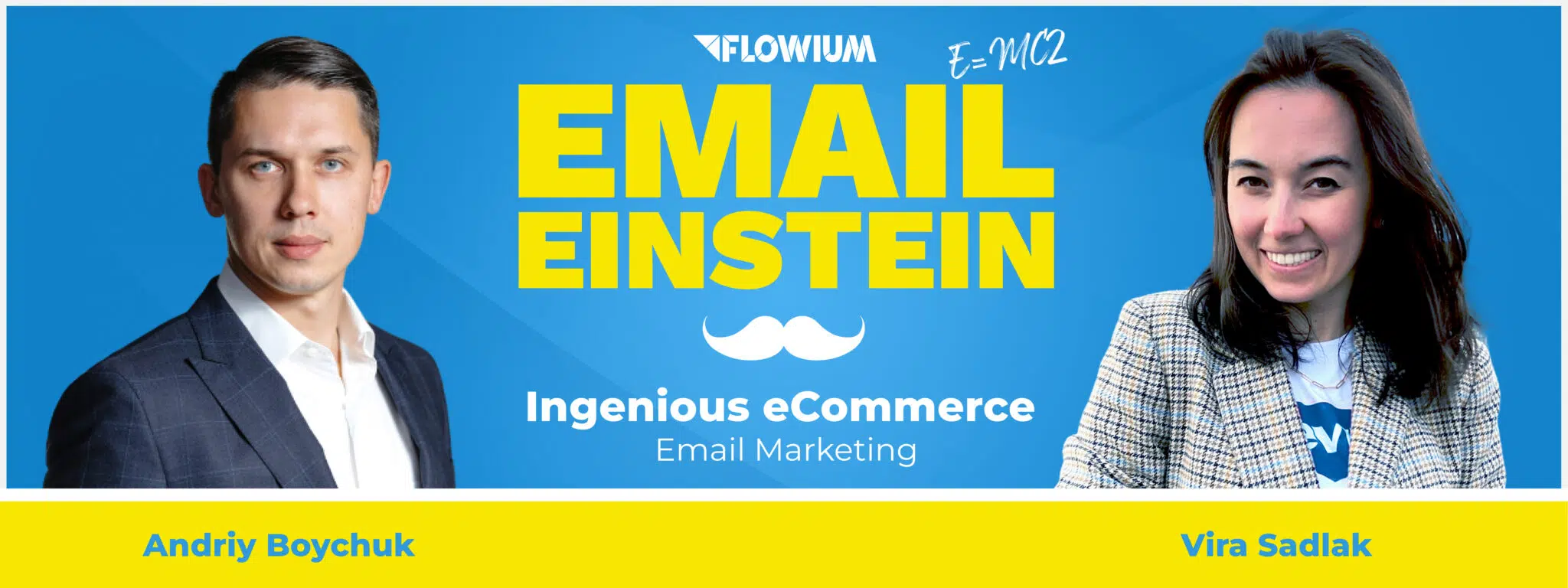
Hello everyone, welcome back to Email Einstein, the podcast by Flowium. We are your hosts, Vira Sadlak.
Andriy: 0:46
I’m Andriy Boychuk.
Vira: 0:47
And Welcome back to what is going to be the last podcast of the year, right, Andriy? This is going to be our final wrap-up of the year.
Andriy: 0:56
Yeah, and we’re planning to bring our, like, what, magic ball or whatever it’s called and predict the future.
Vira: 1:02
Yes, yes, predicting the future. That’s what we’ll be doing today because today we will be talking about upcoming ecommerce trends, or at least that’s, these are the trends that we think will be big this year. And as we head into a new year, there is some turbulence, like, on the economic horizon. Rising inflation. There are some major changes in email marketing and in ecommerce in general. But the good news is, despite these hurdles, ecommerce is still here to grow and to thrive in this ever-changing environment. We actually prepared our 4 big predictions that you can implement this year and 4 big, basically, opportunities to help you to go through the storm that 2024 might have and be very successful in the world of ecommerce.
Andriy: 1:49
Vira, before we start, before we start, I have a few questions for you. So how is London? Like, I am extremely curious to find out what’s going on there. How is life?
Vira: 1:58
The happiest place on earth, you guys. It’s not Disneyland, it’s London. I mean, probably a lot of people—
Andriy: 2:04
Is it like as happy as Amsterdam?
Vira: 2:07
Maybe. I don’t know. I mean, I might be biased, but I’m like in love. We’re still in that honeymoon phase with London. But to be honest, this is like not the best time of the year to be here. This is like definitely the gloomiest time of the year. And I’m still enjoying every freaking We moved quite a lot ever since we got to London because we haven’t had our permanent place. Fingers crossed, we’re gonna get our keys very soon. But as you can see right now, I’m in this Airbnb number 2 right now, and I’m like literally recording in the kitchen. So we’re gonna have a cozy kitchen talk today with you guys. What’s new and exciting with you, Andriy?
Andriy: 2:41
So in the future, we’ll show the guests how you travel with this podcast in your Airbnb. Totally. Everything’s good.
Vira: 2:50
Life is good.
Andriy: 2:51
Life is good. Good. Same old, same old. Nothing new and exciting. I mean, I’m preparing for winter hike, but nothing major. It would be one-day hike up and down. Not very high mountain. It’s like 1 kilometer, maybe 1,500 meters above the ground.
Vira: 3:10
In US?
Andriy: 3:11
Yeah, in New York. It was those snow, snow, I don’t know, shoes and whatever. It’s a team of volunteers. We’ll go there. Just— that’s exciting. Yeah.
Vira: 3:21
You can lead them. Yeah. I mean, you have so much experience now, right? It’s not your first rodeo, Andriy.
Andriy: 3:27
So yeah. Listen, it’s December 26th. It’s December 26th when we airing this. Today is December actually 5th. So, but did you prepare your resolutions like in 2024? Yeah.
Vira: 3:40
I mean, I, I wrote my goals already for the year 2024 and I’m right now I’m big into Notion, you know, this like planner platform or whatever. I’m like in love with Notion. I saved myself this like really cool template. I actually, I bought it. Okay. I’m guilty. I bought it from one of the influencers. I totally didn’t need to do that, but it’s so cool. So yeah, I have prepared all of the goals. I’m not going to spoil them. I don’t want to jinx them for now, but some of them are really—
Andriy: 4:08
You have to reveal the first one. You have to reveal the first one. Okay.
Vira: 4:11
If my landlord is listening to this podcast right now, we plan to, I dream of purchasing an apartment in London, but yeah, I mean, it’s a big, Obviously, it’s a big goal, but maybe it’s going to take us longer than a year. It’s a big dream, but I mean, who said we can do this, right?
Andriy: 4:31
I thought you would say that you don’t want to curse in Ukrainian anymore. This is how we started the podcast behind the scenes. Because so just backstory, we start with some Ukrainian curses, just I don’t know why. And we said that we start to curse when the war started. Vira said one of her resolutions is to stop cursing in 2024. Actually, I like it.
Vira: 4:55
That’s actually a good one. Yeah. And I’ve never cursed before the war, and now it’s just like the way I talk. I talk like a pirate in Ukrainian, to be honest. It’s bad, you guys. Yeah. No more cursing. With English, it’s easier because you guys have only like one word. Ukrainian curse is like—
Andriy: 5:15
You just lost like half of our audience.
Vira: 5:17
But I mean, that’s That’s just like tells you a lot about the mentality. Like you guys are efficient. You just need one word. This is amazing.
Andriy: 5:26
Yeah.
Vira: 5:27
Yeah. So no more cursing. Well, anyways, going back to the trends, right? Let’s start with the one that I’m personally very, very excited about. You guys, we predict again, looking at our magic prediction ball, that social commerce is going to be a big one in the year 2024.
Andriy: 5:49
What is social commerce?
Vira: 5:51
Okay, social commerce, it’s basically when you marry together a social platform, e-commerce platform, add like streaming services, add credit cards and everything together, mix it together, and voilà, you have like a new powerful platform where people can search and shop. I’m going to explain to you in a minute. I know it might sound a bit confusing to, especially to all of our listeners who are listening to us like from US or from Canada, from Europe, but you guys in Asia, especially in China, it’s been huge for the last, I don’t know, like 5, 10 years. And China has been actually at the forefront of social e-commerce with companies like Alibaba, WeChat, Taobao. My friend who actually moved from China to Vancouver, she talked a lot about it because she said that like shopping here comparing to like shopping in China is like I don’t know, it’s like a kindergarten comparing to like PhD or whatever. Actually, here’s a fun number. In US recently, they’ve done this little study and 42% of respondents, they said that they would trust social media platforms with their credit card information, which basically tells us that people are ready to shop on social media. And I mean, we do have some functionality when you can go to like an Instagram store and like purchase from there, but it still like brings you to the checkout page of your actual store. But social e-commerce in say China, it entails promoting and selling products and services through various social media channels, basically.
Andriy: 7:25
Actually,
Vira: 7:26
yeah,
Andriy: 7:27
actually I have experience. Yeah, I mean, you’re listening, you’re like a teacher, you’re like, like, like teaching, teaching, and you don’t give me, don’t allow me to ask a question. So let’s, let’s inhale and make some stops, please. No, I just want to share, I just want to share some, some experience that I didn’t even know it’s called social, what’s called social Social e-commerce, social
Vira: 7:52
commerce. Yeah,
Andriy: 7:52
social commerce. So I was buying for the company, the organization I volunteered last year. I was buying like things like Velcro. We were creating the uniform and we need to buy that. And I found it on Alibaba and I was like, hey, can you send me like asking them a bunch of questions? And they like, just join this video chat. And I’m like, it’s just sorry, just join this video. And I’m like, I don’t want like on those on Zoom. So I’m like like arguing with them. Just sell it to me. And it’s— it was unique experience and I never experienced. So I click on the link, I went to like to a room. It’s kind of like webinars. There were 2 ladies and there was group of people. I mean, I don’t know the people, it’s— I mean, in who was watching, but they like, oh, Andrey joined the video. So yeah, you ask about Velcro. So they just like Showing me the thing, how it works, the quality, the pulling, pushing, the like cutting, and I’m like, “Whoa!” So it’s …
Vira: 8:58
What is happening, right?
Andriy: 8:59
Yeah, it felt like next, next level. And after that, I’m like,”Okay, you answer all my questions.” So it’s nothing left just to pay. So I did like place an order right away.
Vira: 9:11
That’s amazing. I I didn’t know that you had this experience, and how cool is that that they were able actually to like answer all of your questions that you might. might possibly have about the product in like real time. And I mean, we kind of grew up having a similar experience. I don’t know about you, Andriy, but I remember like watching this, like TV advertisements where they were like demonstrating you different like products, different like massage chairs and like certain pots and pans and stuff like that. And I always wanted those because I’ve like seen them on TV. But this one is like completely different because it’s interactive and it’s in real time, which makes it like, again, brings it to a completely new level. And actually, last year, 30% of China e-commerce market was represented through social commerce. So like 30%, it’s like, it’s a crazy number if you think about it. And which is cool that they actually like connected it all in like one platform. So you don’t need to leave the platform to like purchase something. You don’t need to leave the platform to sort of like add the credit card or stuff like that. And also like how the process is going, basically, when you’re like going on that like a livestream, person was like explaining you all of the perks about the products and stuff like that. But also you can sort of like go directly to the product page and it basically like minimizes the video of the influencer talking about the product. So you’re like still listening to the audio while shopping for the product. And then when you like bought it, they can like congratulate you on the purchase. So they make all this like experience super, super interactive. And it’s, again, it’s a real-time interaction and it can significantly like enhance your, the overall experience. It makes it more personal, more engaging. And what I didn’t realize is that, like, in China or like other countries, I guess, as well, but China is the main one. They are not only selling like the Velcros or like t-shirts or something, they’re selling like freaking cars like this. Can you imagine? This is like, this is like the huge, huge industry. This is a huge way of people buying right now. And I think it’s coming to us. I mean, we kind of have it. So people do have like live streams about the product, you know, there’s like influencers, they often doing this, this like video conferences or whatever, but it’s not the same, but I think it’s coming. So Andriy, how long do you think it’s gonna take for US and Canada and Europe to catch up with Asia?
Andriy: 12:10
I think, I know you have a prediction for 2024, but I think it might take much, much longer. Why? Because Asia, Europe mostly on messengers, hardly people use emails and all shopping, all commerce goes through messengers here. It’s, uh, I mean, in US, I don’t think people use apps like a messenger for shopping, or maybe I’m not aware of something. Yeah, so same thing with this video stuff. Like, like, if I have a store, it’s like no-brainer. I’ll probably have the camera like, like turn on livestream at 8 AM and turn it off at 5 PM. Listen, it’s like kind of Customers coming through, going to your store live and asking you questions. So why, why don’t you do this right now? I mean, for me it’s basic. And what you said about the TV, it’s called infomercial here in the US.
Vira: 13:09
Oh, right, right, right.
Andriy: 13:10
They selling stuff, but it’s so polished. This is so kind of perfect that you can, you can sense a kind of professionalism, but they’re trying to kind of sell, sell, sell. Here it can be you in your area Airbnb kitchen theoretically and kind of like, hey, I’m selling this book, this book, or like you can start reading the book just so you know. And people like me, like Lullabies, I play sometimes, I sing sometimes, I play on YouTube so people can kind of use your book as audio for their kids. And I have something else to say and I forgot.
Vira: 13:50
No, I do agree with you regarding the infomercials. Yeah, I was looking for that word. They do feel very like polished. And you know exactly what’s going to happen at the end. You know that they’re going to ask you to purchase. You know what kind of promotion they’re going to have with this, like live infomercials or whatever. It’s make it like all more real almost. But I do think that the social commerce is coming to us in 2024, not in the format that, that obviously they do it in like Asia and stuff. But I started noticing that more and more brands started like combining their like Shopify and Instagrams and they are selling products on Instagrams more and more. So you like basically can like purchase through social media, but checkout is still like on the Shopify page, you know what I mean?
Andriy: 14:40
Yeah. And one more thing to add, shout out to one of our partners called WISE, WISE as W-I-S-E. So first of all, we do have an ebook collaboration recently. So if you go to flowium.com/100m, you can download this book. I believe 53 different companies partner up to share what’s worked for them to bring their stores to$100 million in revenue or more. But anyway, their tool, what it does is basically adds, you can have video on your store. It’s not news to us. You can embed video from YouTube or some other software, so it’s not new. However, with their tool, when you play the video on your website, it opens the cart with those products that are in the video. So for example, if I’m like wearing this green t-shirt, so it will not show me like it will show you the specific green shirt in different sizes. So you can buy right from that video app, which is very cool. And brands like True Classic use it. So if you want, you can go just to True Classic’s tees and check how it works. I mean, it was impressive and it does not slow down the website.
Vira: 15:53
Hmm. Interesting. I wonder if I saw it. One of our guests from the CBD industry, I think they had something similar on their website.
Andriy: 16:03
Do you know their website?
Vira: 16:04
I don’t remember. member, but I can, I can look after the, after the podcast. That’s very interesting, honestly. And yeah, and in that way, I guess you can also kind of give almost like a product demo to your customers before they purchase the product. That is definitely the aspect that I’m missing when I’m buying things online. Yeah, that’s, that’s super cool. Cool.
Andriy: 16:28
Is it the Hello Badge or something?
Vira: 16:31
Yes. Yes. I think Hello Badge. They did have something on their website, like at the corner The, like the bottom corner, they had this like video, but basically they set it up as an FAQ section. So it would answer—
Andriy: 16:45
This is, this is perfect. Oh, and I forgot to mention, like, if you want to sign up for VideoWise to try it out, like contact us because we can give you a good deal through our partnership with them. So if you go directly with them, there would be no discount. But if you go direct through us, there will be either 10%, 15%, 20% off.
Vira: 17:04
Amazing. Andriy,
Andriy: 17:05
do you see how— do I see how I sell like 10, 15, or 20? It depends how I feel that day.
Vira: 17:11
Yeah, that’s, that’s why you, you’re not in app sales, right?
Andriy: 17:18
Yeah.
Vira: 17:19
Cool. Andriy, you are kind of an expert in the next one, or at least you have big interest in the next area that we will be discussing. So your trend prediction for 2024?
Andriy: 17:30
Or at least people think I am. Yeah. So artificial intelligence is here. It’s not news. It’s been— No way. A year.
Vira: 17:39
What is AI?
Andriy: 17:40
It’s been the entire, like, whole year was ChatGPT. Now it’s ChatGPT-4 with some— I mean, the new tools with AI coming up every day. A few years ago, we were like stressing on like personalization. Oh, we need to personalize, we need to personalize, we need to personalize. So personalization right now, it’s not something new. It’s a—
Vira: 18:04
right.
Andriy: 18:04
It’s a minimum requirement. Like you must personalize. It’s like if you’re not personalizing, you’re already a few years behind. So this is kind of bare minimum. But there’s a next step and this is where AI plays a major role that first of all, it will help your brand either to personalize your website for customer experience, to personalize their cart or categories or using like like where we specialize email marketing, personalize the messaging to the follow-up emails based on some inputs or some behavior and AI will enhance, like help to do that kind of personalization.
Vira: 18:50
That’s cool. Yeah, I mean, I’m using obviously it every day, but just like the bare minimum of it. And I know we have like a lot of app partners who are utilizing AI for personalization and stuff like And here’s actually the fun stat regarding the personalization that according to Salesforce, their recent report, 65% of customers, they now expect customers or expect companies and brands to adapt to their changing needs and preferences. So more than half of customers, they kind of, they kind of expect it from you. So not doing it would be so 2000s, you guys.
Andriy: 19:32
Yeah, but in addition to customer experience, I think the analytics will be also on the next level, meaning for, for you as a business owner or if you work in an e-commerce brand, AI will help you to spot positive, negative trends, some gaps, things that show you kind of already red flags. So you can, let’s say, let’s stop spending money on this ads or let’s stop sending email to that segment. Right. Also, I want to read the question from our WhatsApp chat. By the way, if you are not there, go to flowium.com/whatsapp and join the chat where you are able to ask questions and we might select them and feature them on the podcast. So Anas asking, do brands hire email agency freelancer freelance in the future as AI is covering up all the things? So maybe near future the software will come who send campaigns, automation, segmentation by one click. To paraphrase what I understood, it’s— Vira, do you believe AI will replace us?
Vira: 20:35
Well, yeah, we kind of talked about it. I don’t think that AI will be replacing some professionals. I think AI will be replacing professionals who are not using AI because like up until this point, brands used AI mostly for like helping with some tasks like creating copy or designs or stuff like that. But like moving forward, AI will be here to help us analyze the big data, help us to strategize and And basically it will help us to create more tailored experiences. But the final decision is still like up to you as a person, as a lead on that project. That’s how I see it anyways. What do you think, Andriy?
Andriy: 21:20
I always have debates with people who say like, oh, just use AI, just use AI, just use AI. And I’m like trying to use AI and it does help me, does help me with a lot of things, especially with my proofreading with English because I mean, I write very fast. I do a lot of mistakes and I just throw all my copy to ChatGPT and say like, proofread it. However, when I said improve it or like make it more blah, blah, blah, it always spit out something that I hate. It’s like, it doesn’t sound like me. So I always ask like, do not change the tone, just proofread and make it grammatically correct. That’s it. So in my opinion, it will not improve— sorry, it will not replace us because there’s a lot of variables. If it’s so simple, in terms of let’s talk about email marketing only. It’s so simple if it’s like straightforward action that you need to do. Let’s say pick something and put something. Yes, that stuff, 100%. But if you have many variables, many things, and especially when you have a client who doesn’t know what they want, it’s like how AI knows what— like if we human beings sometimes cannot figure out what they want,
Vira: 22:34
right? Yeah, I agree. I do. I do use AI obviously for all of my writing needs, but I would noticed that you like emailed to my like landlord or whatever they were doing the checks for my employment. And you were like, if you have any question, questions, you’re like misspelled like questions, CEO of Flowium email marketing agency. That was cute. I don’t, it’s obviously not a big deal. No.
Andriy: 23:00
So I use AI, I use AI and train to misspell some words, you know, like I’m just like—
Vira: 23:06
Just like you feel more personal. Right?
Andriy: 23:08
Yes. Yes. I have a funny story. So I was on the consulting— I’m consulting some Ukrainian businesses kind of to help Ukrainian economy. And they were telling me a story that they were on a sales pitch and the guy was selling to them. They say like, we didn’t know, was it real person or AI? Because we were asking the guy questions. He stopped for a little, never responded, and continued with his script.
Vira: 23:37
Maybe he was just like in car salesmen. That’s how they do things, you know? Oh, that’s so funny.
Andriy: 23:43
Or maybe his headphones didn’t work.
Vira: 23:46
Oh, that’s hilarious. Because, like, I know how it can be unusual for, like, a person from Europe, because, like, in Europe, not just in Ukraine, but, like, everywhere, I’ve started noticing it with, like, British people or, like, German or something. They’re more, like, to the point. You, like, ask the question, they answer the question. It’s, like, almost, like, more efficient, the conversation. But in America, sometimes we are guilty of not answering the questions. That’s true.
Andriy: 24:13
You’re British now, so you cannot say anymore.
Vira: 24:16
Gosh, I hope I’m gonna pick up some of the Britishness over the next week and a half. Britishness accent. Yeah, I’m like still working on my American/Canadian accent and now I need to learn British.
Andriy: 24:29
My younger daughter, she’s like right now all in for Peppa Pig and Papa Pig. Hold on, but it’s not British. I think they are Australian. It is British.
Vira: 24:38
No, it’s like as British as they make them. Yeah.
Andriy: 24:42
Okay. So I am like always like, oh, it’s like so, I mean, so cool to listen. Oh, my bad. I’m thinking about also she likes Bluey and Bluey is Australian.
Vira: 24:52
Okay. Maybe because British, like Peppa Pig, I think it’s like the, she’s like quintessentially British. This is like the word I learned recently. Yeah. I love Peppa Pig. I’m like guilty of watching it. Cool. Okay.
Andriy: 25:06
Next three.
Vira: 25:08
Number 3, omnichannel experience marketing.
Andriy: 25:12
Do you guys know— Come on, such a generic word. What do you mean?
Vira: 25:16
What I mean, okay. So do you know the biggest difference between like the omnichannel and like multiple, multiple channel marketing? Because multichannel marketing, because that’s where I got confused, like back in the day when I first like started discovering these 2 topics, there is like a big, big difference between the 2. Can you explain it? Do you know what is like the biggest thing? Yeah,
Andriy: 25:40
I mean, like multichannel is when each channel lives independently and they do not communicate to each other versus omnichannel where they sync and they have the messages based on clients’ experience and not what they want to do. Because recently was a big, big company, TRUFF. By the way, Kardashian just made the offer and they’re buying this brand TRUFF. It’s hot sauces. And I was for Black Friday, Cyber Monday, I bought pack of those hot sauces. It’s truffle infused. I do love hot sauces.
Vira: 26:14
I love truffle.
Andriy: 26:14
And they, as an upsell, they sold me the 2 mayonnaise, mayo, also like hot sauce and like with one hot and another also truffle infused. And then I received emails saying, and text message saying, hey, we’re excited. So you become a customer. Bye, mayo. And I’m like, what do you mean I just paid for it. So this is show you an example of not omnichannel approach,
Vira: 26:41
right? Yeah, it’s probably, it was the multichannel marketing where they had separate conversation with you, with the same customer through like different channels. And this is like the biggest difference, right? The omnichannel marketing is shared across multiple channels, but it like still you have like one consistent conversation. And in that other one, it’s like separate conversation with the same customer. Omnichannel marketing, even though it’s such a buzzword, everyone heard about it, everyone is like thinking they are doing the omnichannel marketing, they’re actually not. There’s like not a lot of brands who are doing it right, honestly, I think still, because it does require like a good customer data platform, it does require some like app integrations, it requires like even like integrations between like different teams on your team. And yeah, I mean, it’s, it can be a bit challenging, but once you set set it up properly, this is huge. And this is kind of what people expect nowadays. They do want you to have this like smooth, seamless omnichannel experience customer journey.
Andriy: 27:46
Vira, I have a relevant question from our chat where it’s like, what’s the scope of Klaviyo now as SendLane and many other ESPs are getting bigger now? So I don’t want to talk specifically about ESPs, but many tools right now like Shopify came up with their email marketing platform. Post Vantive came up with email marketing platform. Yotpo came up with a review— oh, sorry, they were a review. They have review loyalty. Now they have email, they have SMS. And why? Why is it happening? I mean, first of all, they want to take more market share. Like right now, the leader on the market, one of the— Klaviyo. But first of all, they want to take market share. But the most important thing, what they are selling to you, they are selling you omnichannel approach. If you are in our Yotpo ecosystem, if you are in our Klaviyo ecosystem, if you are in our SendLane ecosystem, you can communicate omnichannel. Right. Because if you have Attentive for SMS, Klaviyo for email, or Okendo for review, yes, you can integrate, but you need somebody internally or you need to work with agency to see all those channels and nicely organize them so it’s, you’re not over double communicating with your client or trip.
Vira: 29:07
Right. Yeah, it’s just like takes more, more efforts, right? And I mean, Klaviyo kind of present themselves as CDP platform now, don’t they? I mean, or they do have like the elements of customer data platform.
Andriy: 29:22
I think this is, they going that way and something similar also with SMS. This is my prediction about Klaviyo. Again, I don’t have any insights, so this is just my hypothesis. They were one of the— they released SMS back in the days. It was kind of poor version of SMS platform, but right now it’s very robust and powerful and competitor to other platforms. Same thing with reviews. It’s good, but it’s not close to like Okendo or Reviews.io. Right. But I think they will improve. Same thing, CDP. It’s a poor version right now and I hope they’re not listening to me because they will hate me. But moving forward, they will be developing developing.
Vira: 30:00
Totally, totally. And I mean, they just like launched the reviews when, like 2 months ago or something? So I’m sure it’s gonna—
Andriy: 30:06
Summer, I think in summer.
Vira: 30:07
Or like summer maybe. Yeah, I mean, it wasn’t summer like 2 months ago. In my head it was. Well, anyway.
Andriy: 30:14
Listen, HubSpot is a great example. If you start using HubSpot for, for example, for CRM, it doesn’t make— does not make any sense to go to some other platform to, right, to have a chat feature or DocuSign feature. You want to stay in HubSpot ecosystem because like all pieces talk to each other and the tool designed to talk to each other. So it’s omnichannel approach to sales or to marketing.
Vira: 30:39
Right. And I love when brands are doing the omnichannel, not just within their like online ecosystem, but also with their physical stores. I have a little story time and I have a show and tell, you know, like they do in kindergartens. I talked about this brand, but I think they are rock stars, to be honest. It’s a Vancouver brand, they sell glasses. So I needed glasses, a pair of glasses. So I went like literally online and just started looking for some glasses. I heard from my friends about this brand called Kits. So I went to their website. I found the glasses that I liked. They had this really cool tools where you can try them on virtually. But I left their website. I didn’t even put the glasses in my cart or whatever. I just left their website. Then I started seeing, obviously, the ads with the glasses that I liked. So I went to their website. I placed my glasses in my cart. I received an email with a discount code, of course, of course. And I got my glasses. after I got my first pair of glasses, just like, this is embarrassing how much money I spend on things that I don’t need. After I got my first glasses, after that, I received this basically physical mail. Like, after I received my physical package, like a week later, I received this physical mail that was telling me that, hey, you have 3 free drinks in our store. Because this is the craziest concept ever, but they do have, like, online store, but they also have physical location. It’s in Vancouver. It’s by the beach where they sell coffee and glasses. Why not? Cool idea. I’m like, I’m gonna be in the city. Well, no, I didn’t plan to go to the city, so I drove 40 minutes to get my free matcha or whatever. And I just like get my coffee. It’s a beautiful day. And they were like, do you want to check out our glasses? And I was like, yes, I want to check out your glasses because now I’m a writer and I need cool writer glasses. So I got myself like cool writer glasses.
Andriy: 32:33
Oh, wow.
Vira: 32:34
Like, I’m like in the video, I’m like showing my glasses. Yeah, I needed them for work with computer. Anyways, so I got there because they got me to the store with their, like, a physical mail, right? Then a few days later or a week later, they were like, thank you for buying these glasses. Do you want to get the same pair for yourself with, like, X dollars off? And also, if you spend certain amount of money, you can get, like, additional pair for free. What I did, I made my husband got the same glasses. So we drove to Kits again, he got the same identical glasses, and I got my pair of 4th glasses just for free. You see, how cool are they? Wow. So that’s basically a story about— and I didn’t even need a freaking first pair of glasses. And now I have 4. And now I have 4 pairs of glasses because of their amazing omnichannel marketing experience. And it wasn’t the multichannel. Yes, they were talking to me through different channels, but they knew exactly what I bought, when I bought, they knew exactly what to send me at what point. They’ve built this amazing, powerful omnichannel ecosystem. And I got a victim, I became a victim of their amazing marketing. So kudos to you, Kids Glasses. And they have this amazing promo that first pair is for free right now. So guys, if you’re listening to me, if you’re in Vancouver, wink wink, you can get your first pair for free. No, I’m not an affiliate.
Andriy: 34:03
Yeah. And some—
Vira: 34:03
this is my story. Yes. And some matcha. So it’s actually powerful, right? So this was my story about amazing omnichannel experience. And this is like what you kind of can expect in the year that is coming. Andriy, what do you think about the upcoming trends? Like other trends? Do you have anything in mind?
Andriy: 34:27
So the final one, number 4, we believe, or I believe, is the Brands will have a little bit harder time to sell this year than previous year because due to kind of inflation, and they need to come up with more creative ways to sell it. So it’s not your typical 10% off, get it right now. Next time you come to the store, it’s another 10% off, which is kind of typical stuff. Like brands will work harder. They either have to lower, I mean, either lower their price, increase their discounts, or come up with some other creative ways to sell. As we here at Flowium always recommend, I mean, don’t be lazy, don’t do just 10% off, come up with something either, I don’t know, like cheat sheets, something that like improve the, how you call it, experience. What Vira just showed, explained, like free matcha. How much does it cost to like— yes, you have to have a physical store, but this is like prototype. Listen, opt in to get the free matcha in our store while you checking the glasses. Stuff like that. It’s unique. It stands out. Listen, you already heard about this. It’s, it’s a free, free, free marketing. Like there’s Tap Season, Tap Season Oils, the brand where my wife buys oils for like for cooking, the olive oils, balsamic vinegar. It’s like they have amazing oil, like amazing oil. And I’m the guy who like don’t care what I eat. But that kind of oil, that oil so good that even I do care now which oil I take. But they send me also like free gifts. They send us free gifts. They offer us discount. They have a loyalty program. They have a referral program. So they covering kind of omnichannel approach, but from, from discounting. So they sometimes build the perceived value. They give you a smaller version of their product. So we want to consume, buy more of their product. They instead of giving us discounts, they’re giving us like points. So I know we probably spoke about something similar on the previous episodes and you probably heard about this on other podcasts, but this would be the new norm.
Vira: 36:45
Yeah. And I mean, I kind of expect the brands to have some sort of like loyalty program built into their ecosystem now. I kind of do expect a good quality, like high quality customer service. It also can be like a value, maybe some like very convenient return procedures or like return policies can also have that like extra value. So yes, this year, it’s gonna be a bit more challenging. Sorry for wrapping up the podcast on such a low note. On the other hand, I don’t know if it’s more positive note or not, but brands will reduce their acquisition budgets and invest more in customer retention. So I think it’s like, at the end of the day, it’s, it’s like a positive trend. The brand will have to think of how to not just acquire that customer, but how to retain them. And yeah, you probably have more data about this, right? Yeah, sorry, go ahead.
Andriy: 37:42
It’s a supply-demand thing. If more brands, if our predictions are correct, if more brands invest less in the acquisition, there would be less competition in advertising space bidding. We are not saying they will drop it, but like less, they will invest less. So the price of the bids will be So brands, the price to acquire customer would be also lower. So yeah, I mean the cool stat that I heard, I never heard honestly, I never heard somebody putting this way, but I went to Gran Canaria to agency workshop and there was Gorgeous and Loyalty Lion and they had the same stats in their presentation. So that back into 2019, brands in general were losing$9 to acquire customers. So basically, after all they spend, all profit, it’s basically like 9.Now,in2023,thatnumberis29. So it’s almost what, 3 times? Yeah, a little bit more than 3 times more.
Vira: 38:46
That’s insane. Yeah. And I mean, and if you, if you think about the conversion rate to that, like only 3% on average of all of the new traffic you acquire or like potential customers that you acquire on average convert. This all like adds up, right? That’s why all of this loyalty programs, all of this creative ways of adding value to your customer’s life, that’s why they’re more important than ever. So yeah, invest more in customer retention and, and you’ll be— your customers will be happier and so will you. So here you have it, 4 and a half, I guess, 4 and a half trends that we predict this year to happen.
Andriy: 39:24
Yeah.
Vira: 39:25
Yeah.
Andriy: 39:26
Wish you happy holidays. Wish you a happy New Year’s. Thank you very much to everybody for listening to us, for tuning in. We have exciting new plans for 2024. We’re excited to come up with new episodes. Also, if you want to be part of our journey, join the chat on WhatsApp, go to flowium.com/whatsapp, collaborate with us, ask questions, propose your episodes. We’re here to serve you. We want to be a resource for you and share what you care about.
Vira: 39:56
Thank you so much for being with us through this year. We appreciate you guys. Definitely join our channel. It’s going to be— it’s going to be fun. It’s going to be fun. We’re happy to have you there, and I guess we’ll see you in the year 2024. See you.
Andriy: 40:09
Thank you. Bye.

Vira Sadlak
Podcast host, marketer, traveller and a life lover from Vancouver, Canada

Andriy Boychuk
Andriy is an Email Marketing Consultant and CEO of Flowium