

Podcast Transcript
Vira: 0:41
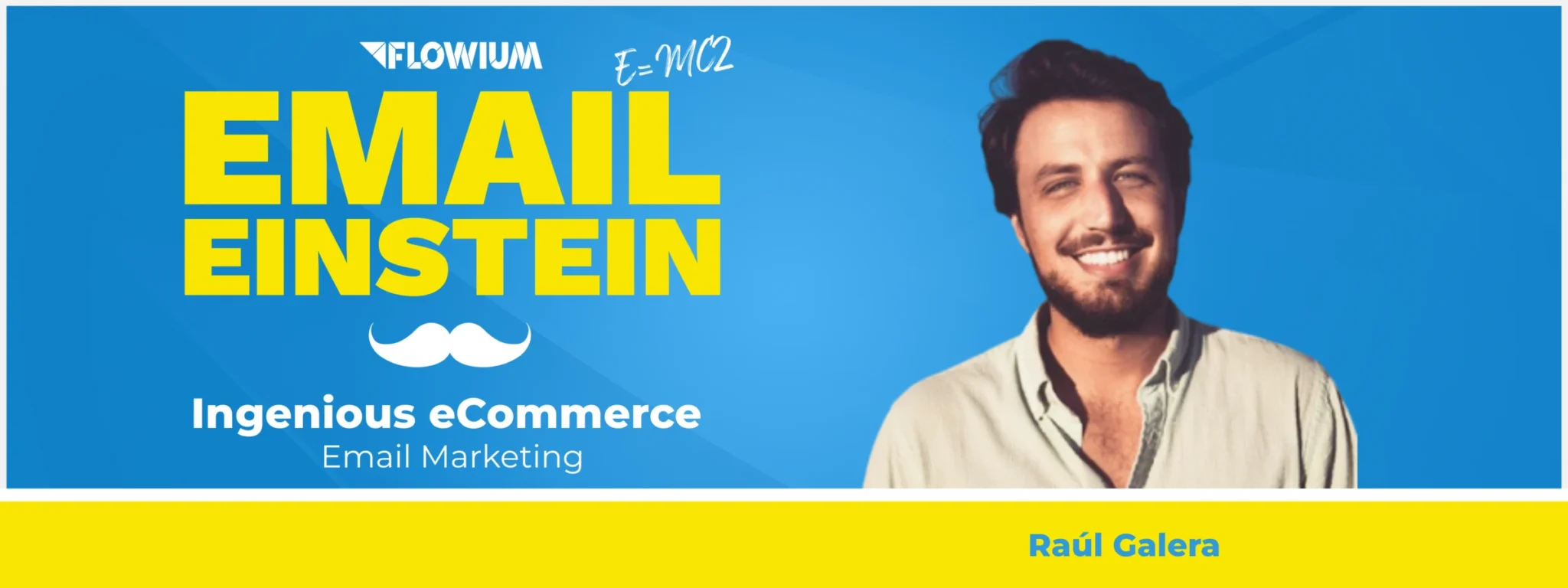
Hello. Hello everyone and welcome to Email Einstein by Flowium. I’m your host, Vira Sadlak. I’m an email marketeer at an agency called Flowium. And here at Flowium we are very passionate about email marketing. And because we love what we do, we want to share our insights with you. Delivering the right message to the right person at the right moment. And I’m very excited about our guest today because that’s pretty much what we will be talking about today. Delivering the right message to the right person through the referral email marketing or through referral marketing in general. So for those of you who don’t know, referrals have been proven to be one of the probably most valuable forms of marketing. And not only because not only do most of us like look up to others for like recommendations or some like product recommendations or service recommendations, usually this recommendation, they also come with a high level of trust. Here are some facts for those of you who are still not sure about the whole word of mouth thing. Customers in fact are four times more likely to purchase when their friends refer them to the brand than not. The lifetime value of referrals is 16% higher than customer acquired through any other channel. And also fun fact, another fun fact, that referral can actually increase your revenue by 16%. I’m not sure if this like 2 16% are like somehow connected, but I think they are. And today we will be discussing all things referral marketing and especially referral marketing in that post holiday world with Raul Galera from Referral Candy. So Raul is the chief advocate at Referral Candy. For those of you who don’t know, Referral Candy is an app that allows e commerce brands to set up and run customer referral programs. Honestly, we’ve been using them with some of our clients and the whole experience is very seamless. So I’m really excited for you to learn about this program. Referral Candy is the leading platform in terms of referral marketing for E commerce brand. It’s been around for a while. It’s founded like over I think 10 years ago and ReferralCandy has helped over 30,000 brands leverage the power of word of mouth and turn their customer base into their marketing team. Hi, Raul. I know it’s been a bit of a long introduction, but we’re excited to have you say hi.
Raul: 2:56
Hello. And thanks for having me.
Vira: 2:58
We are so, so excited to have you here. And I do have, like, a gazillion of serious, juicy marketing questions. But before we go there, Raul, I just want to play a little this or that game. Just like to get to know you better before we go to all of the. To all of the serious marketing stuff. Okay?
Raul: 3:17
Sounds good.
Vira: 3:18
Let’s do this. Let’s do this. Okay, Raul. So texting or calling?
Raul: 3:23
Texting.
Vira: 3:24
Okay, cool. Instagram or Twitter?
Raul: 3:27
Oh, Instagram for sure.
Vira: 3:29
Shopping online or shopping offline?
Raul: 3:33
I’m probably going to shoot myself in the foot here, but I kind of like shopping offline.
Vira: 3:39
I’m one of those people too, actually. Well, it depends, I guess. I do shop online if I have, like, a strong, good reference from my friends. But most of the time, especially for, like, clothes and stuff, I shop offline. Okay, cool, the next one. Android or iPhone?
Raul: 3:54
Oh, iPhone.
Vira: 3:55
Cool. Okay. Brand name or generic?
Raul: 3:59
Mostly generic for most stuff.
Vira: 4:01
Okay, okay, that’s interesting. I’m the brand name girl myself, so that’s interesting. Okay, the next one. I’m kind of curious to hear, but I think I might know the answer. But still. France or Argentina?
Raul: 4:14
Oh, Argentina, obviously.
Vira: 4:17
Yay, Team Argentina. And guys, for those of you who don’t know, we are usually recording all of our podcasts in advance, and today is December 19th. So yesterday was actually the final of the soccer championship. And yeah, I’m the team Argentina. My Argentina myself. So that’s good to have another Argentina Pel on the podcast.
Raul: 4:37
Yeah, it was also a great game in general. It was probably one of the best games I’ve ever seen.
Vira: 4:42
Yeah, definitely, definitely. So that’s a good way. I mean, that’s a good way to start the podcast on that high note, you know? But let’s go and discuss all of the juicy email marketing questions. Okay?
Raul: 4:54
Sounds good.
Vira: 4:55
Okay, Raul, so let’s start from the basics for those of us who don’t know. Although I’m sure a lot of you guys have used it, have seen it across the industry. But what is referral marketing and why is it so trendy? Why everyone is talking about referral marketing? Why is it so popular?
Raul: 5:14
Yeah, I would say that referral marketing, it’s popular because it’s. In my opinion, it’s probably the oldest form of marketing that exists. At the end of the day, that’s kind of like not only the main marketing channel, the oldest marketing channel, but also the oldest way of communication. That’s how information was passed from one another over the centuries. Now we have multiple ways of kind of keep spreading the word, but at the end of the day, the basics, it remains the same. It’s us sharing with other people something that we know, something that we recommend, something that we’ve experienced so we can hopefully provide information to other people. So I think referral marketing, it’s powerful because word of mouth is powerful. We all probably remember the last purchase that we made based on the recommendation. The same way that we remembered the last restaurant that we visited because of our recommendation, the last Netflix show or movie. It’s literally part of our daily lives. I think if we have just one conversation per day with somebody else, I’m fairly positive that there will be at least one sort of recommendation that’ll come out of it, even if it’s a direct or at least somebody sharing an experience. And that will make us maybe research more or learn more about something that we didn’t know about. So, so I think that’s, I think that’s, that’s the main reason why it’s so powerful and also kind of like bringing it to E commerce. I think it’s because a lot of brands have realized that it was an underutilized channel, that they weren’t really getting full advantage of it. It’s something that was already happening in their store. Their customers were naturally talking to their friends and family about the purchase they’ve made. And so more recently they’ve realized that they can capitalize on that by building a referral program on top of the organic word of mouth that they were already getting.
Vira: 7:03
Yeah, yeah. And basically by asking your customers to share your brand with others, you’re able in a way to generate leads that are warmer than the other leads that you would acquire, probably. And then by like rewarding this existing customers for their referrals, you’re kind of gaining yourself that advocates as well, which is like a win, win kind of situation. And on that like talking about the brand’s point that you mentioned, I found this like stats that was actually shocking to me that in the US every day around 2.4 billion conversation takes place, take place that are like somehow brand related. So people, they actually do talk about the brands, about the movies, about the restaurants. I would rather listen to my friend than to the Instagram ad. And in a nutshell, acquiring like a new customer, like via traditional marketing and advertising techniques like, like Instagram or Like Facebook marketing or whatever, it’s expensive or like at least it’s more expensive than having like some sort of like a referral program in place. And usually you do need a lot of manpower to do it successfully. So that’s why I’m like, I’m in love with these programs like referral candy because they can help you eliminate these difficulties. But let’s talk about referral candy briefly. What it is, what it does and what types of businesses is it for.
Raul: 9:00
Yeah, so in a nutshell, what we do is that we help E commerce brands. That’s the main type of business that we work with. We help E commerce brands set up and run customer referral programs. So you know, think about again the traditional referral programs that we’ve, that we’ve always seen in which you can give your friends some sort of incentive to buy for the first time. So typically maybe, maybe free shipping or maybe a free product or maybe a discount of some sort of. And at the same time, if your customer, sorry if your friend converts and they become a customer, then you also get a reward. So in my opinion that’s the beauty of it because both people are getting, getting rewarded. And so it’s, yeah, it’s, it’s, it becomes kind of like a no brainer for, for both parties, parties to participate in it. In it. So we’ve been doing this, you mentioned it in the, in the intro. We’ve been doing this for over 10 years now. We were actually one of the first platforms in the E commerce world to bring referral marketing to stores of pretty much any size. And yeah, we’ve been tied to E Commerce from pretty much day one. We believe that that’s, I mean referral marketing can happen across multiple industries I think and also in kind of like the SaaS world and B2B referral marketing is still powerful. There’s a lot of decisions, purchase decisions that are driven by my referrals. But we believe that E Commerce kind of have that visual component and sometimes the recommendations are not just oh, I bought, you know, I bought something. And let me describe you what I bought. It’s, it’s, in a lot of the cases it’s like, hey, look at what I bought. You know, let me show you this physical product that I bought last week that I think will be great for you. We think that that’s, I don’t know, makes referrals a lot richer. And so that’s one of the reasons why we’ve been tied to this industry since, since then.
Vira: 10:52
Yeah, no I’m like, I mean, I work in marketing so I know how the referral, but it still gets me every freaking time. Like every freaking time when someone sends me that like coupon code, you know, like, yeah, buy and save or like whatever, you save$10 off, your friends, save $10 off. It works every freaking time for me. Yeah. And in the long run, your referral program, it kind of like put your gross, makes your growth automate automated. It just keeps ringing like a steady flow of new leads, which is always exciting. I love it. And what would you say are the main way the brands that you guys work with or the brands that you’ve seen in the industry can reward their customers for referrals? Is that only like get$5 off, give $5 off or are there different ways to sort of like reward your customers?
Raul: 11:47
Yeah, we work with three kind of main ways. Well, so I guess we kind of have to make a distinction between what we call the advocates and the friends. So the friends, pretty straightforward, is they are your customers friends, they’re not customers yet. And so the goal is to incentivize them to buy for the first time. So that incentive we typically recommend to offer either a fixed dollar amount discount or a percentage off, but some sort of, some sort of discount that they can apply on the first purchase because that’s kind of the conversion event or that’s the success event that we want to reach is the purchase. So obviously by offering some sort of discount, especially a discount that it’s not easily available or at least it’s not available through any other channel, we’ve seen referral programs that offer, and you know, if we talk about maybe mistakes later, that’s something we can talk about. But we see referral programs that offer the same type of discounts or incentives to friends that anybody can find on the website. For example, you know, if you, if you sign up for a newsletter, you get 10% off. But if your customers are offering their friends 10% off as well, it’s not really going to be, it’s not really going to feel special. Right. So that’s, that’s kind of one of the things that I, that we typically see. But, but again, yeah, the goal for the friend is to offer them some sort of attractive discount that will make them buy for the first time. Because keep in mind, these are brand new customers. They don’t know about your, they’ve seen your brand, they’ve heard good things about your brand, but they still haven’t used it themselves. They don’t know you know, if they’re going to like it. So again, that that initial discount always works. And then for the advocate side, we have kind of three different ways that you can reward customers for referring their friends. And the reason why we have more options for rewards on the advocate side is because that’s an existing customer. So it might be a little bit different from one store, one brand to another in the sense that, you know, if you’re selling a product, you as a brand are selling a product that your customers can buy on a regular basis or a somewhat regular basis. Even more, if you’re on subscription, probably the best thing that you can offer is a discount on their next purchase because that way you are not only incentivizing them to go out and refer their friends and bring you new customers, but at the same time, you’re incentivizing them to come back and keep buying from you. So it’s, you know, it’s, it’s, it’s customer acquisition and retention literally in the same transaction. But you could also have, maybe, maybe because of the nature of your product or, or, or the cost of your product, maybe your customers are not coming back to buy from you again anytime soon. So maybe you can offer them a cash reward. So, okay, you’ll get a commission on, on your friend’s purchase. You know, you’ll get 20% of your friends.
Vira: 14:38
That’s interesting.
Raul: 14:39
Yeah. Or you’ll get 20% of every single purchase that your friend might make from, you know, from now on. You know, things like that.
Vira: 14:48
And that’s make total sense. Right. Especially for the brands. Like, that was like one of my questions. Okay, like, if person comes, if your brand sells socks and then you get like 20% off of your next pair of socks, that’s fine. But what if your brands are selling, say, mattresses and you only buy mattress like once every 10 years? That makes total sense, Raul. Yeah.
Raul: 15:10
Yep, that’s the example that I always give.
Vira: 15:13
Yeah, I mean, we love a good socks versus mattress example on our flowing podcast. I always use it myself. But what is the sort of process can you walk our listeners through, say, like a workflow almost for different types of brands or maybe using different examples? That’d be super, super helpful.
Raul: 15:35
Yeah, absolutely. So actually that the workflow itself, it’s fairly similar for everybody in the sense that it all starts with a referral link. So let’s say that in this case, I’m a customer, I got my unique referral link, and I’m going to refer you to this brand again. Pair of Socks that I bought last week. And I’m going to give you my referral link so you can get 20% off your first purchase. And so I’m going to give you my referral link. You’re going to click on that referral link and then the next thing you’re going to see is a landing page with the offer description which is say something like hey, your friend Raul is giving you a 20% discount and this is your coupon code. And so they’ll be able to see, you’ll be able to see the coupon code right there. You can copy it and then from there you get redirected to the store so you can, you know, browse products, you know, add them to the car and then once you’re ready you will go to the checkout. If you are on Shopify or BigCommerce, the yeah, the coupon codes will get automatically applied to the checkout. If not, you still have the coupon code you know, somewhere because you copied it earlier. So you just need to use the coupon code at the checkout to apply your offer and that’s it. After your purchase takes place I will get notified and by the store and I’ll receive an email saying hey, your friend just made a purchase and so this is the reward that you’re earning. So if it’s cash I’ll get it through PayPal and if it’s a coupon code I’ll get it right there in the email. And the good thing about all this is that you as a new customer will get invited to join the referral program right away. So you’ll either get some sort of post purchase pop up or email saying hey, thanks for your purchase. If you think that your friends will also love the product that you just bought, you know, here’s your referral link and here’s how you can start sharing it with your friends. So that’s kind of how, that’s kind of how it works and I would say the main difference is in terms of the advocate reward. So if it’s, if it’s a coupon code I’ll just get it to my email directly and you know, whatever conditions come with that, the coupon code and if it’s a cash reward I’ll just get it through people.
Vira: 17:39
Cool. And I’ve seen like some brands are also doing the points, you know, like some brands are doing like a loyalty points but I guess it’s like some sort of like different integration or something because I’ve seen some, someone are doing like points that give your customers. That you give your customers. And then they can like choose their reward using the points they are collected. It’s like a reward customization almost that basically allows you to have different. To deliver different offers to different customers. But I guess that’s like a bit more advanced integration, right?
Raul: 18:19
I would say, honestly, that’s kind of like the way that we’ve seen points is more kind of a loyalty feature. So there’s apps out there, especially in the Shopify world, there’s several apps that are offering point systems. And typically what they do is that they offer. They offer points for. They offer points for referrals, but they offer points if you leave a review or if you follow on social media or if you. Yeah, exactly. So that, I mean, again, so that’s kind of like more of a loyalty type of approach. We specifically focus on referrals exclusively because we think that referrals is an activity that brings very clear roi. So you can measure. I mean, if you open a referral candy account, the first thing that you’re going to see in, you know, in big bold letters is, or numbers in this case is your revenue, is how much revenue has a referral program generated. And that’s like the number one thing that we care about because we understand that referrals is something that it’s extremely easy to track in terms of how much impact is having on your online store compared to. Again, how do you measure social media like, or how you measure a newsletter sign up? Anything along those lines. And we. Anyway, bottom line is that we think that it can create a little bit of distraction for the customers and we think it’s better to leave their attention towards roi, positive activities, if that makes sense.
Vira: 19:45
Right, right. And I know that you guys integrate with Klaviyo. I know because some of our clients are using referral candy internally. So tell us more about integration with Klaviyo and what sort of like emails can be sent from Klaviyo in order to help to support this ecosystem, like a referral program ecosystem?
Raul: 20:08
Yeah, absolutely. So we’ve actually just released our latest version of the integration with Klaviyo. So there’s a lot more that you can do. Before there was only kind of like a handful of emails that you could replace into Klaviyo. Now you can replace all referral emails into Klaviyo. So you can have them either running on Referral Candy or on Klaviyo or a mix between the two. So it’s really, really kind of up to up to the merchant. So the way that we are using the integration with Klaviyo is that we’re basically pushing more data into Klaviyo. We’re passing more information to the platform. And kind of like one of the key points here is that that information is stored on the Klaviyo customer profile level. So you can use that information that we’re sending to Klaviyo for referral marketing email. So you can use it for something totally different. So you can maybe create like a specific flow within Klaviyo for customers who prefer more than five friends, for example, if you want to run maybe like some sort of offer or anything like that. So yeah, so at the end of the day, once you integrate with referral candy, so once you use your referral candy with Klaviyo, we’ll give you a lot of different kind of properties that you can implement into your Klaviyo flows. And so you can create a post purchase email, you can create some sort of reminder email, entire reminder flow to let customers know about about the offer. You can also run that campaign specifically for customers who have maybe not refer a friend yet. Maybe those really active customers who are referring friends constantly don’t need to. Yeah, they don’t. They don’t need to get reminded. But those who are not being super active, then maybe that’s something. Or you can, you can only invite customers who have maybe spent a certain amount of money or customers who’ve made X purchases in the past six months. That’s actually one of our clients is actually doing that. They’re running the referral program on those terms. So yeah, honestly the possibilities are pretty endless now with the latest integration.
Vira: 22:11
Yeah, I didn’t realize that you guys can segment based on their previous activity. Now I thought it was just more like a one type email plus reminder kind of thing. But no, it looks really cool. And where does it store? You mentioned that it’s stored somewhere like at the Klaviyo customer profile level, Right. So you can basically like customize down to like a customer so it can be pretty much like turned into a flow, not necessarily a campaign, right?
Raul: 22:39
Yep, exactly. Yeah. All that information is stored within Klaviyo? Yep.
Vira: 22:43
That’s insane. Like do you have any like merchants that you can talk about specifically? Maybe like some examples of like successful referral programs and maybe some examples of successful Klaviyo referral candy integrations? Do you have any good examples or case studies? Maybe our customers can go to your website and read some of the Exciting case studies or something.
Raul: 23:04
Yeah. So we’re actually in the process of building a case study specifically about Klaviyo. So we’re pretty excited about that. The numbers, unfortunately I don’t have it in front of me right now, but I remember the numbers were really good on that specific merch channel, both on the referral candy and the Klaviyo side. So maybe by the time that the podcast is published, it will be featured on our case study section. But yeah, we have case study section on our site. And then yeah, we try to publish case studies from different industries so merchants can try to try to find the merchant that kind of fits the industry that they’re operating in. But I would say so maybe without kind of digging into one specifically and trying to keep it broad for the listeners, because they might be. I don’t specifically wouldn’t mention a case study about clothing. And maybe the listeners, their store is. They’re selling gadgets. So it might not sound relevant to them. But one thing that I would say that most of our case studies, and not necessarily just in our case studies, but our successful merchants, something that they do have in common is that they have. Well, first of all, they have an outstanding product. And outstanding in terms of it doesn’t have to be unique in the sense of you’re literally the only company offering that, but it’s outstanding in the sense that your customers absolutely love it. So your customers are leaving really good reviews. You can tell that your customers are talking about it on social media, which effectively they’re generating referrals just by talking about on social. Social media. Again, like, you know, there’s like a good kind of feedback that you’re getting from your customers. I would say that the advanced version of that is are brands that are building a community around their brand. So the customers are not necessarily excited about the product, but they’re excited about kind of the brand journey. It’s not easy and every brand does it kind of in a different way. But. But do you know you’ve achieved something like that when your customers are interacting with your brand in a way that transcends your products? I’ll give one very specific sample. So we have a merchant in the uk, they’re called a Box of Stories and they sell books, which if you think about it, there’s this giant company called Amazon that started selling books and it’s probably the number one place where people go find books. So what the. What this company does is that every. Well, first of all, they realize that there’s like Thousands of books that get published every year in the UK and they never really make it to the bookstores or, you know, because of the way that kind of like the editorial process works and the way the economic distribution among editorial companies happens. They don’t really make it to like, you know, main, kind of like Main street where people can actually go and buy their books and physicals. So what they created is a service that sends you, I think it’s like four or five books to your house every month from authors that you’ve probably never heard of. And are books that are, you know, they’re really good quality. They just sometimes never made it to the bookstores because they’re from small editorial companies or whatnot. There’s kind of like commercial reasons behind them. And so anyway, so that’s what they sell. You know, it’s like you get four or five surprise books every month, so they’re on subscription. But the community that they built around that is a book club. So they have a Facebook group where people literally just go and talk about what they’re reading and they comment on different books and they share their opinions. Kind of like a good reads, but a very small kind of. Well, not small because I have several thousand customers in there. But it’s kind of like a smaller community where people can find books, leave reviews, all that kind of stuff. And it’s in a platform that they’re familiar with, which is Facebook. So they’ve been able to reach, you know, that level of kind of like bringing a community together. And without necessarily selling their products aggressively in it or even selling it at all. They’re just hosting the community. And now customers are associating that brand with, again, with a community where they interact with you. Yeah. So examples like that. There’s many examples like that in the, in the case study section. I’m not saying that that’s a requirement to have a successful referral program, but, you know, it tells you that that successful referral programs are those in which customers are so excited about the brand that the product becomes something in a way kind of secondary, if that makes sense.
Vira: 27:25
No, I love that community building aspect to it. And I mean, that’s a really cool business idea too. Almost like a subscription box for products that are good quality but less known for. So that’s a really cool idea for a brand as well. Let’s talk about how can referral programs help you actually overcome that post holiday sales slump? Because I know we’ve seen like a big spike in sales over the last two months. November, December. That’s like the biggest time of the year. What happens in January and February? Like, how can programs like referral candy help you generate more revenue or bring more people to your business? In the slower months of February, January, like March even.
Raul: 28:11
Yeah. So there’s, I mean, we’re all consumers and so, I mean, I’m pretty sure that our inboxes all kind of look the same at the moment. We’ve been. Maybe not right now because we’re really close to Christmas, but there’s still people that haven’t really done their Christmas shopping. And brands know that. And so they, they know they need to target those people with kind of like last minute.
Vira: 28:31
Guilty. Guilty of that.
Raul: 28:33
Yeah. For the first time this year, I’m not, I’m not guilty. I still don’t know how I did it. But yeah, that’s me. That’s literally me.
Vira: 28:39
Good for you, Raul.
Raul: 28:41
But brands know that, right? So we’ve been getting discounts. It’s pre Black Friday. If you have special access to. Some brands give you special access to Black Friday and you start on Thursday or Wednesday and then Cyber Monday as well, and then Cyber Monday. For some brands, I’ve been getting emails, they’ve extended it to Wednesday or Thursday that same week. So we’ve been getting discounts constantly for the past two months. And the thing is that, yeah, in January, obviously sales go down. So brands typically resort to that, like, oh, okay, well, let’s just create another promotion in January. Right?
Vira: 29:16
Yep.
Raul: 29:16
And so one thing that in my opinion gets sometimes overlooked by brands is kind of like continuing that post purchase flow with the customers, the brand new customers that you have just acquired during Christmas. So, you know, the conversions might not happen right away, but it’s about planting the seed. So you have, you know, you have customers that bought from you in November, December, either for the holiday shopping or Black Friday, Cyber Monday, whatever it is. And so you’re hitting them again in January to get them to buy from your brand again based on a discount, which, you know, they might not be ready. They might not be ready. You know, maybe financially they’ve spent a lot of money on gifts in the past couple months. Maybe, maybe it’s not the time. So getting a discount feels useless to some degree.
Vira: 30:04
You don’t want to train them too. Right. You don’t want to train your customers to expect discounts from you all the time. You want to deliver the value, but not necessarily discount or like monetary value every. Every time.
Raul: 30:15
Exactly. And it’s not just. And it’s surprising I mean sometimes I subscribe to brands emails just to see what their strategy is. And it’s still really, it really surprises me how, how reliant on, on, on discounts. Most brands are even like brand names that have the ability to provide, you know, expensive content like, you know, high quality content if they want to. But yeah, that’s, I guess that’s, that’s a separate topic that we can, we can have a conversation around. But, but again, so one thing that most brands have in common is that they’ve acquired a lot of customers during November and December. Brand new customers that they’ve bought from, from the store before. Well, well, instead of converting them into returning customers right away, which is probably not going to happen, why not converting them into advocates. So it also kind of shifts the narrative a little bit. You know, you’re sending an email to your customers saying hey, how was your product? Did you like it? Well, how much do you like? Will you refer your friend? Would you recommend it to your friends? Like, what will your friends think about the product that you’ve bought? Have you shown it to your friends? Oh, by the way, if you, if you show your product to your friends and your friends actually like it, you can, you can give them an incentive. They can use this coupon code in the next, you know, 90 days, whatever, to buy that same product from, from our store. So now you’re, you’re changing the narrative that the customer doesn’t feel like they’re getting sold something. They’re, you’re, you’re ask, you’re kind of asking them for a favor but in a way that it’s probably going to put them in a, in a good position in front of their, their friends and family. They’re going to be able to say something like, hey, look at this really cool thing that I bought, you know, over or that I got, you know, for, for Christmas. You know, you said like, let me know what you think. Like, you know, and so you’re kind of shifting the way that you’re interacting with your, with your customers and what you’re asking from them. And I think that’s really powerful.
Vira: 32:03
Yeah, you sort of like shift the narrative from like buy from us again, here’s the discount code. And like you don’t train them necessarily to expect the discount code, but you are actually making them your brand advocates, which is like cool. And it, in a way it costs you nothing to ask them for refer.
Raul: 32:21
Right.
Vira: 32:22
Once you have that referral program in place, it’s pretty much like an automated business growth Almost. And no, that’s a super powerful tool for sure. And Raoul, you briefly talked about some referral marketing mistakes, but to wrap up this podcast, what have you seen are some of the big referral marketing mistakes that brands are doing across the industry?
Raul: 32:49
Yeah, I would say the main one is not being ready or like not not having a brand or a product that’s ready for referrals. Like I said earlier, referral marketing, it’s something that you build on top of word of mouth. So if your customers are not generating good or positive word of mouth around your product, a referral program is not going to solve anything. A referral program is not going to solve a bad product or a bad, you know, purchase experience or a bad delivery service. You know, whatever it is, it’s not going to fix it.
Vira: 33:20
The product itself should be, should be good before you start building any, like, referral program of any kind. I see.
Raul: 33:26
Okay, absolutely. That’s, that’s, that’s number one thing, in my opinion. And then on top of that, so, you know, if everything else is falling into place, you have a good product, you have a good purchase experience, your customer success team is great and they’re, you know, they’re, they’re helping, you’re getting good reviews, all that. Okay, you’re in a good position to start now. Mistakes. Well, the one that I mentioned earlier about not having unique discounts, at the end of the day, you’re asking your customers to refer their friends and family to a store. You might as well give them something that feels unique or like, feels special. So in a lot of cases, because customers are going to refer you to their friends and family, not necessarily because of what they can get, but because of what they can give. So kind of thinking about what’s the reward structure and maybe giving more to the friend than the advocate, in all of cases, it really pays off. So not understanding that dynamic of why are my customers sharing, why are my customers referring their friends and family? It’s another big mistake that we see. And I guess that the third one to wrap up would be that they’re not promoting the referral program. So customers are not, are not being reminded about it. Exactly. Yeah. Like, you might think that just because you sent an email once, your customers are going to take notes and now they’re going to have their referral link printed somewhere and ready to be shared. That’s definitely not going to happen. So you need to remind them about the referral program on a regular basis. So they are aware that this is an offer they can benefit from and also their friends can benefit from it. So whatever channel you’re using, if it’s email grade or SMS or, or social media, whatever platform you’re using to connect with your customers, make sure that they are reminded about the referral program so they can keep spreading the word.
Vira: 35:12
And in what form, what do you recommend? Do you recommend sending email campaigns regularly or making it a part of flow? What’s your typical sort of recommendation around creating the awareness about referral program?
Raul: 35:27
The ideal in my opinion is a dedicated reminder campaign. Email campaign. Yeah, maybe I don’t. Maybe a couple. Every couple of weeks or maybe once a month they get a reminder about it. If you can combine that with posting on social media, having some sort of call to action on your website. For the referral program and referral Candy, we have different widgets that you can install in the store. But even just sometimes just a link to the referral program sign up page, things like that, things that customers can see when they’re browsing your store. All those three things combined are my ideal scenario. Obviously you know, you can choose between them if you’re going to focus on just one. I would have a dedicated email flow just as a reminder because the, the, the payout for, I mean the impact that the referral program is going to have on your bottom line, it’s going to be huge. If it’s probably the only marketing or sales channel that it’s based on performance, you’re only paying based on the revenue that you’re generating, that doesn’t really happen with any other program. So even if you have to give discounts away to acquire new customers, still better than you know, setting up an ad campaign that you don’t know how it’s going to perform and you might lose your budget or most of it. So I would think about it that way.
Vira: 36:46
Yeah. And also this referral marketing, it’s not either or situation in my opinion. It’s usually like a part of ecosystem. But I found this statistic that word of mouth can actually increase the effectiveness of marketing efforts of like all marketing efforts by 54%. I don’t know how they measure it but it was like really interesting to me to hear that stat. And like in a nutshell, referral programs, they just work because they are very like authentic, they are direct and they feel different. They feel less salesy in my opinion and more like authentic and direct way to spread the word about the business. I think that’s like the main reason why they work. Yeah, yeah, yeah. Cool. Well, Raul thank you so much. Thank you so much for coming to this podcast and sharing your wisdom with us. If people want to learn more about what you guys do about Referral candy, where should they go?
Raul: 37:42
Yeah. So first of all, thanks. Thank you so much for having me. ReferralCandy.com that’s where they can learn more about us. If you are on Shopify, you can check us out on the Shopify app store as well.
Vira: 37:54
Well, awesome. Thank you so much guys. We will share all of the links and resources that Raul or me mentioned today on the podcast. We’ll share them as always in the description box. Definitely go and check out Referral Candy. They are awesome and they have like a ton of really useful resources on their website. Like resources, case studies. Definitely browse through their website. A lot of ins, A lot of good insights for your business. Regardless of whether or not you’ll decide to go with referral candy or something else, they do have like a ton of good insights on the industry. Rahul, thank you so much for coming to our podcast. And you guys, if you, if you love what we do, please leave us a review. Please share this podcast with your friends and family. It’s very important for us. We want to stay up top to deliver even more value to you and the people from e commerce industry. And thank you for listening and we hope to see you back guys next week. Bye.

Vira Sadlak
Podcast host, marketer, traveller and a life lover from Vancouver, Canada