

Podcast Transcript
Alissa 0:00
Today’s episode is going to be beyond interesting, and our guest is even more interesting, everybody, please welcome Ben Fisher. He is an entrepreneur mastermind, and through his experience, he’s built multiple tools to help ecommerce brand owners do things for themselves.
Vira 0:39
Hey everyone, Vira and Alissa here and a very exciting, exciting guest. Welcome to Flowium podcast. We are email marketers at an email marketing agency called Flowium, and we are super, super passionate about what we do, about email marketing, and because we love what we do, we love sharing our insights with you. Flowium is one of the fastest growing email marketing agencies in the world, and we specialize in providing premium, full service e commerce email marketing to our clients. Our services tailored specifically for your E commerce business, and they are designed to help you increase your online retail revenue by 20 to 50% five, zero. And we believe in delivering the right message to the right person at the right comment. If you guys like what we do, please leave us a review that would help a lot with what we do, and we’ll just keep creating this awesome content for you. And now, Alissa, take it from here. Please introduce our guest. I’m really excited about this podcast today.
Alissa 1:37
Me too, because we just had an awesome chat with him. Right before we got started, I was like, Okay, we don’t need to record the podcast. We have all the info. We know it all now, but it’s important that we share that stuff with you guys.
Alissa 2:07
So the headline for our guests LinkedIn profile is, I help seven figure e commerce stores bend Shopify to their will.
Vira 2:18
Not bet. Not bad.
Alissa 2:19
Yeah, it should tell you all that today’s episode is going to be beyond interesting, and our guest is even more interesting, everybody. Please welcome Ben Fisher. He is an entrepreneur mastermind that really understands on the next level what it actually takes to grow an E commerce brand. Ben has pretty much done it all from the technologies used the platforms that facilitate things and the growth strategies necessary for businesses to thrive. And through his experience, he’s built multiple tools to help ecommerce brand owners do things for themselves, two particular tools that we’ll mention today. The first is cart hook, which is a customizable e commerce checkout system that actually enables online retailers to build optimized checkout funnels with the world’s first one page checkout with one click post purchase upsells. Carthook actually very quickly became one of the most trusted and successful applications around the world, specifically utilized through Shopify. And I know I just said a bunch of stuff, simply put, what carthook really focused on was how to acquire the customer. So that was kind of that part of the funnel, that cart hook, was really useful for. The other tool is actually the main one we’ll be focusing on today’s podcast, which is called one click pony. The pony, as Ben has been referring to it today, actually helps seven figure Shopify DTC retailers 10 time their repeat purchase revenue with one click. So again, simply put, the pony focuses on how to get those customers to repurchase, which is what we really want to kind of drive home for you guys today is providing a tool on how to create that repurchasing kind of behavior through your customers, which is all super cool stuff. We’re very, very excited to share everything, but before we dive into it, Ben, please tell everyone Hello.
Ben 4:05
Hey, Internet. How’s it going?
Alissa 4:10
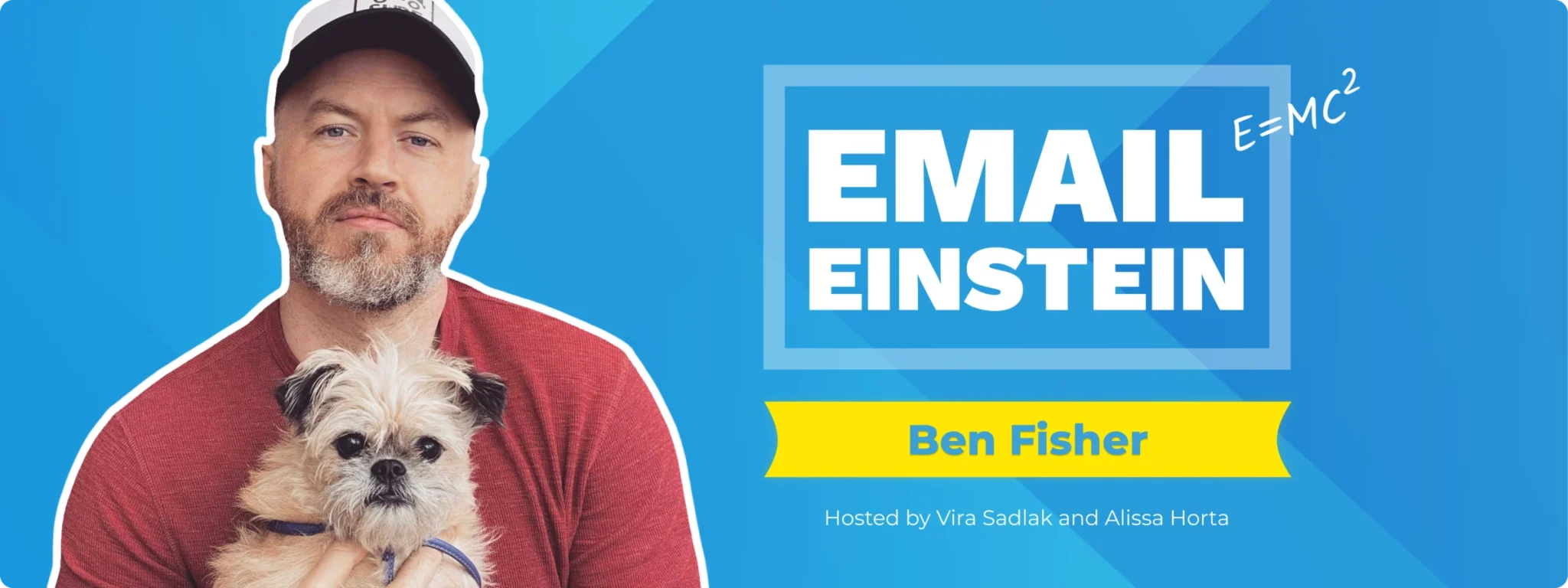
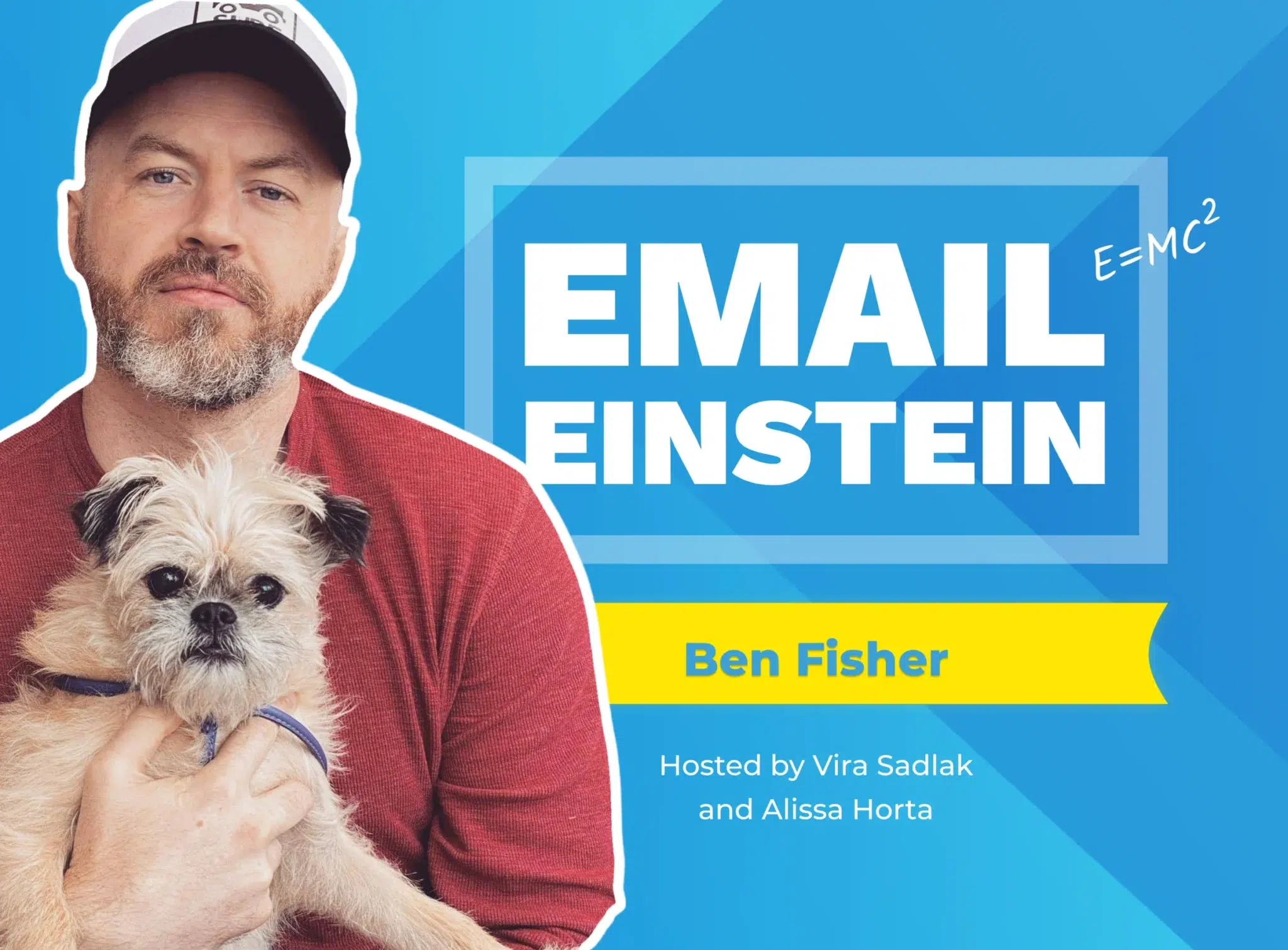
And I’m looking at so we typically record these podcasts on Zoom, and I’m looking at Ben’s picture, and it’s him, and I presume his little dog, so very cute and also very comical.
Ben 4:22
Yeah, she’s become, come a bit of my, I guess, my personality, motif, or motif, rather.
Vira 4:30
I think she’s on your LinkedIn picture as well.
Ben 4:34
I thought so photogenic. And it’s funny now, because I have a beard, so it’s like, kind of like you have the hair for my for my chin, down to like the hairy, furry.
Alissa 4:44
That is so funny.
Ben 4:45
Person below itself.
Alissa 4:47
It all meshes in they they always say that dogs tend to look like their owners, right so.
Ben 4:52
Yeah.
Vira 4:54
She’s not bald, so they do not look the same. No.
Ben 4:58
She balances.
Vira 4:59
That’s. The difference, she balances it out. Yeah, for sure, for sure. Then we usually start with this quick Blitz, Q&A questions, just like to get to know you better. And I guess my first question doesn’t even make sense anymore. Are you a dog person or a cat person?
Ben 5:13
I’ve had both, but oh, okay, these days I am a full blown doggy, doggy lover. But I do love cats. I had a cat named Fur ball.
Alissa 5:22
Oh, cute. That’s really cute.
Vira 5:25
Cute. You’re really good with names, Fur ball, Pony wings. I’m looking forward to hear why. Why are you? Why you called the company the Pony link? Yeah, that’s an interesting one, New York or LA?
Ben 5:38
Both. I Winter in LA, at least when I was younger, and then I but I love New York City. I’ve been here for the last, think, 12 to 14 years. Wow. But you know, there’s something, there’s something awesome about the beach.
Vira 5:53
Yep, yep. I know I can. I can confirm it. I live in Vancouver. We have ocean and mountains and, yeah, I can’t get enough, okay, uh, Shopify, or WooCommerce?
Ben 6:04
Shopify, so that large, largely out of just experience, professional experience but.
Alissa 6:09
I was gonna say, your pal, your pal who, right? Who created WooCommerce, he’s not gonna be happy to hear that.
Ben 6:15
I just realized that actually, although Adii is also building.
Vira 6:18
Don’t let him this link, don’t let it. Listen.
Ben 6:22
No, hey, I love I love WordPress. My backgrounds as a PHP developer, and so I have a lot of love for WordPress. There we go and WooCommerce. But the truth is, I’ve had very I haven’t done a whole lot of E commerce with with WooCommerce, it’s mostly been the Shopify world. So forgive me, Adii, I love you.
Vira 6:43
Clubhouse or tick tock?
Ben 6:45
Tick tock.
Vira 6:47
Tick tock. Do you have a tick tock account? I mean, do you make those dancing videos, you know?
Ben 6:51
Just watching, yeah, just watching celebrities dance around with.
Vira 6:55
Your pro. You’re not a you’re not a dancer yourself.
Ben 6:59
Yeah, I’m sure I could probably come up with something with our dog, though she’s very entertaining. When she was talking to herself in a mirror the other day, she was like, barking at herself, and Rebecca and my fiance and I were like, What is she doing?
Vira 7:16
So okay, I have like, three more quick questions. So who would play you in the movie, if there was a movie about you?
Ben 7:24
Jason Statham.
Vira 7:25
I knew that you’re gonna say that answer. Vibes, yeah.
Ben 7:30
I’ve been asked a few times, and one time I randomly said Jason Statham, and I will say the reaction was, oh my goodness, that’s so right. And I was like, okay.
Alissa 7:40
He’s great. He’s great. He’s very great.
Ben 7:43
Yeah, yeah.
Vira 7:45
three things that excite you, three random things that excite you?
Ben 7:50
Freestyle rapping.
Alissa 7:53
Wow, no way are you serious?
Ben 7:55
Yeah, yes. I was in a group. It’s a longer story.
Alissa 8:00
Stop. Oh my Gosh.
Ben 8:01
Yeah. I used to. I even once freestyle rapped in the voice of Kermit the Frog at a Lara con event, yeah.
Alissa 8:09
Oh my god, yeah.
Ben 8:14
So I love, I love hip hop. I love, I love freestyle rapping. I can’t say I’m any good at it, but I just enjoy it, and it’s creative to think of. Actually, a lot of the tech stuff I do, it’s like hip hop for tech.
Alissa 8:26
Wow.
Ben 8:27
Back to, I guess what you were saying around like branding and stuff. I just, I love coming up with words, and I love coming up, playing around with phrases and stuff. And so I’m sure that was more more details than you were asking. But
Vira 8:37
I think we should name our episode. It’s not easy to be green. I like it.
Ben 8:41
Yeah.
Vira 8:42
And the way you said it perfect, yeah.
Ben 8:45
It’s not easy, okay, but two more things, I owe you two more things. I love photography and so, and everything, how that’s changed is really interesting to me. And then, of course, we’ll call it e commerce is, I love it. That’s, that’s a, we’ll call that, that say weak one to say, because that kind of goes without saying. So what I’ll say instead is systems. I am a huge systems person. Like, I’ve, I’ve eaten the same thing every day for about last seven years. And like, I hired a nutritionist who put together the macros. Like, I tend to have a at least in my personal life. I tend to systemize a lot of stuff, and then I hire experts to help me get the results that I want. And then I just kind of turn off my brain and implement it, and just we, you know, the feedback loop is really important to me. Yeah, so it’s probably one of my weirder idiosyncrasies.
Alissa 9:41
Interesting, very cool, though very cool.
Vira 9:43
And the last question very random, and don’t ask us why, but socks or mattress?
Ben 9:49
Socks or mattress?
Alissa 9:50
Yes.
Ben 9:51
Mattress.
Vira 9:53
Good choice. Yeah, the way to go.
Alissa 9:55
I would always choose socks. I don’t know why. The last the last two people. We spoke with Joe’s mattress, and I’m like, Really, I love socks.
Vira 10:04
Alissa, can you explain why we are doing this every freaking time on every episode?
Alissa 10:07
So Ben, basically every, pretty much every episode for like, the last 20 episodes that we’ve recorded this podcast, whenever we give like, an E commerce example, we always use either a company that sells socks or a Mattress Company, and it’s not even like some regular company that we work with. It’s just that’s the first thing that comes to mind. But we’ve used it so much now that it’s just become the like, the standard thing, like, if you don’t hear about socks or a mattress on our podcast episode, did the episode even really happen? So.
Ben 10:38
That’s funny.
Alissa 10:39
It’s a Yeah. So now we’ve decided that that’s going to be a staple for all our guests moving forward, and just see how they react, because more often than not, they’re like, I don’t like socks on a mattress.
Vira 10:50
And I don’t like your podcast either.
Alissa 10:53
Exactly. But Okay, anyways, enough being silly. Enough being silly. Okay, so first question, and this is kind of a standard intro question for you. Ben, tell us about yourself, other than the fact that you like to rap and how you got into E commerce specifically?
Ben 11:09
Sure, I’ll try to figure out the abridged version. Yeah, I started coding at a really young age, in like fifth grade, and so 36 now, yeah, this would, I mean, I don’t even know the math anymore, but yeah, and I worked at a tech company, actually, during the first startup, during the first.com boom in the 90s, when I was in eighth when I was in eighth grade. So the carpool would actually drop me off at the tech company’s office right after after school, and all the other kids would be going home. And so for me, like I’ve always been around and interested in technology and programming and design, and so I would say I’ve more or less been doing variations of this. I mean, since fifth I mean, for most of my life, I don’t remember not coding and building things. So sometime after I graduated college, I first worked in advertising, which maybe goes back to my obsession with branding. And just like playing off of words, I’ve always tried to find ways to mix creative with technology. And so I think after I graduated and I worked as a interactive creative within advertising, which was a combination of like Flash development, programming and design, I think around 2010 this idea of building like products or digital products became really a thing that was what I’d consider fairly early, or mainstreaming of SaaS software as a service. And so I stopped working in advertising, and stopped waned myself off of freelancing with ad agencies, and instead started building my own products and working with companies who were doing subscription offering subscription software. So that is what, yeah, basically brought me into the E commerce world, where I started looking at, I don’t want to be an E commerce merchant myself, but I was like, wow, there’s just so much cool stuff and tools that I that the guy could build to help e commerce stores make more money. So yeah.
Alissa 13:03
The coding thing since fifth grade is really nuts to me. Like, really crazy, but that’s very cool. So you basically just got into E commerce and you were like, well, I don’t really want to do what e commerce brands do, but I would do want to find a way to help them.
Ben 13:17
Well, yeah, and it was my business partner in cart hook. His background was in E commerce. So I was building B to B SAS products. And basically was like, I couldn’t figure out how to charge money for them. This is before. And so when I after one of my earlier companies, like, you know what, I’m only going to build SaaS in a place where people will pay money. Like, basically, if I can help other people make more money, then they will pay for my for my product. And so I was like, e commerce makes sense, because the purpose of E commerce is to make money. So I will build SaaS tools for E commerce stores, because at least then, like the business model is kind of obvious, that even I could figure out how to do it. And so I partnered with Jordan, who was had built and sold an E commerce business, and that’s what led to cart hook, like I came from, like, the software startup world, and he came from the E commerce world, and that was so that was really my first foray into E commerce. Before that, I was really just building B to B SAS tools.
Alissa 14:13
Right.
Vira 14:13
That’s awesome.
Alissa 14:14
Let’s just go into it. So obviously there’s one click pony, or the pony link you’d mentioned to us before we even started recording that you actually created that about six years ago, and then now it’s kind of like, come back out of the woodwork and you’re redeveloping it. So can you walk us through, like, what it is and how it works, and then we have a million follow up questions after that.
Ben 14:36
Sure. So as you mentioned, I originally built one click pony like I had the original idea, like, six or seven years ago. This is before I even was into E commerce. I had this idea for a tool, which is the danger for any entrepreneur who’s technical is coming up with a solution before you really understand the problem. And so I had built this one click Buy button that can be embedded in email marketing. And I. Was trying to figure out who could make the most amount of use out of that, and, like, who, like, what could I do with it? And during that process, when I was researching how to turn that into a business, or, like, really trying to figure out identify who the customer segment was, is when I sort of coincidentally, met my future business partner, Jordan. And so when he and I worked on on cart hook, we actually focused on shopping cart abandonment. And a part of that was, I mean, I basically, I folded what I was working on. It’s like one one click pony didn’t go any further beyond that initial MVP, right? When I left cart hook a couple of years ago, I was looking around at things like, what did I want to work on next right. And that was like, sort of an obvious product, where I was like, wow, now that I have all this e commerce experience and understand the market itself has changed a lot. It seems like a really natural time to reevaluate that that product and figure out the business.
Vira 15:52
That’s awesome. So and tell us more about how it works. Is it literally a one click purchase, or is it more like Amazon’s Buy now with one click that literally takes you, like, to that short term buying process. And it’s not necessarily a one click, but it’s still a very convenient and short process.
Ben 16:13
Yeah. So it’s evolved. It started off as that. We’ll call it the proper one click, which both feels like magic, but for people who aren’t expecting it. It’s a bit of a it could be a bit of a jarring user experience. And so where we’ve ended up, after a lot of testing and using privately with with brands, is within like the Amazon experience. And what we’ve done is we have focused specifically on making it compatible with Shopify, shop pay. So we are offloading the one click buying experience to Shopify. So okay, the focus for one click pony is, we’re still street we’re streamlining a lot of the purchasing experience up to that, that one click purchase but yeah, so that’s it’s much closer to the Amazon experience. And I think, in my experience, it’s both the way for us to be able to legitimately help shop, to work, to exist on the Shopify platform as well as I think it’s, you know, it’s a good, good user experience. And you know, the results are still there.
Vira 17:10
I mean, I tested them both. I tested that one click purchase that, like, literally, one click purchase button when you click on the CTA in the email, and that’s all you need to do. The product is on the way to you. So that was like amazing. That felt like magic. But I can see that for some people, it can be a, not, not the best experience, especially when you, like, want to update the payment information, or maybe you want to purchase something else, or you want to, like, add like, a different address to the account. So, but I really like that original one. So what tell us more about it, tell us about the the process, like, what is happening? What is the step by step process for me as for user? What do I experience when I use one click purchase?
Ben 17:55
And what I’ll say is, and I think this could, this might be some helpful context, is one click pony is really focused on existing customers, like that’s where, that is where one click pony really shines, because existing customers already trust the brand. And one of the challenges with email marketing, or SMS marketing, is a lot of which happens on mobile, is when you’re clicking a call to action within an email you have to navigate through a store to buy the product, to buy products. And if you already trust the brand, you don’t need to go through all of the sales content. And oftentimes, if you’re an existing customer, you already know what you want, you just want to find it. And so it should really be. It doesn’t make sense for existing customers who are just trying to buy from you, and maybe are trying to buy something specific for them to have to basically click around your site. What we talk about we reduce the number of clicks from 20 down to three. It’s only ever three clicks.
Vira 18:46
Amazing.
Ben 18:47
Which leads into so what is it actually? What’s the experience actually like? So the brand sends out an email with Pony links. So we call it the pony and we call the links pony links. When a customer clicks on the pony link, they will see a per like a cart page that’s personalized just to them with the product that they clicked on in the email, as well as some additional products that are specifically for them. It will show that show like some of the best sellers from the store, as well as they have the ability to see what like recent purchases they’ve made, so they can easily repurchase again with a click of a button. And so if you can think of it as a better cart page, where it pre adds one the product you click from the email, and then it gives you these short links to relevant, personalized products that are personalized to every single individual who clicks that link. So every person who receives an email from the brand, that page that they land on is will be slightly different, just for them. When they click the Proceed to Checkout button, they now go into, they basically are, they are deep linked into Shopify, as native checkout, where they can purchase with a single click using shop pay.
Vira 19:57
That’s awesome. That’s awesome. So it’s not a You click it, you bought it. Kind of situation anymore, you still have like options to upgrade, to change something in your cart, and stuff like that. What happens if you say, don’t have customers credit card info on file, or maybe their credit card info is outdated? What happens then?
Ben 20:16
Yeah, so we have the way that we’ve set up the deep link within to Shopify takes care of all those different use cases. So if someone we will automatically trigger shop pay if the customer has purchased through SHOP pay. And at this point now, like shop pay, I think the stats are like 20% of people buying on Shopify stores have an account in shop pay and are logged in, yep, if you don’t want to pay with shop pay, or if, for some reason the shopper hasn’t purchased a shop pay, you still have the ability to pay with PayPal or Amazon pay or whatever else. What other you know, whichever options, whichever payment options, they offer, or to even just go through the normal checkout process where you enter your credit card. One thing that to know there is, even if they don’t have an account with shop pay, we pre fill all of their shipping information on the checkout page. So even if you just want to go in and enter credit card yourself, all of your shipping information, if you’ve ever at least shopped with the store, is pre filled. That’s amazing. So all you have to do is enter the payment information.
Alissa 21:14
Which is awesome, because.
Vira 21:16
No matter whether you have customers credit card info or not, exactly that process is still for them, like three clicks and basically and adding their information. Oh, my goodness.
Ben 21:27
How do you eliminate unnecessary clicks without eliminating so click, so many clicks, that it’s a jarring or bad user experience, right?
Alissa 21:36
Right, right, right, well, and that you also don’t catch people by surprise.
Ben 21:39
Yeah.
Alissa 21:41
Very cool. So can you purchase more than one item at a time?
Ben 21:47
Yeah. No, that’s a that’s the beauty of the pony cart, which is when you click on a product, the product that you clicked on in the email will automatically be added to the cart, but then we immediately show you additional products that you likely want to purchase, either based off of past your based off your purchase history and or based off of bestsellers or other collections that the that the store thinks is relevant to you.
Alissa 22:14
So the store can actually choose so to a degree like the store can actually kind of help determine what that average order value could potentially look like turn into, okay, yeah, which is cool. So you almost have a little more control over what your revenue is going to look like using this, using this method of purchasing.
Ben 22:32
Yeah.
Vira 22:32
Ben, I have a follow up question, actually, about that, adding two and more products to the cart, what happens if you say in the same email, you have two different product blocks with two different call to actions, with two different pony links. Does it create, like, two separate cards, or does it emerges, add everything? Oh yeah. Oh, I don’t know.
Ben 22:54
We intelligently merge all this. Oh yeah. We intelligently merge them.
Vira 22:59
Oh my. That sounds awesome.
Alissa 23:01
We love technology, don’t we? When it works, because it’s so it’s so much smarter than us sometimes, and it’s so helpful. That’s awesome. Very cool. So how do you know if the pony is actually going to be effective for your own business? Like, like, is there any criteria or anything that you have to fulfill in order for it to make sense for you to try and kind of implement something like this?
Ben 23:25
Yeah, I’d say there. There are a few consider, like, just like KPIs or specific customer behaviors that really matter, one of which is, you have to have an existing business. Ideally, one we’ve only, we’ve focused on brands that do at least, are doing $10 million a year in revenue, but this the pony can work for brands that are doing as little as a million dollars. The purpose here, though, is that for us to really be able to move the needle and help grow a storage revenue, they need to have some sort of product market fit with their product. They have to have an existing business, because the impact that we will have for them will just be much more substantial. So in general, it’s like that the minimum that you would typically on the smaller undo work with a brand that’s doing about 100 $100,000 a month in revenue that sells perishable products. So we are focused specifically on health and wellness, food and beverage, CPG brands, because they’re consumable. We’ve worked with other companies like, for example, one is like a fashion retailer who sells fashion products that are, I guess, they fit within the same sort of consumable product, but is technically not CPG. But we have focused specifically on nailing this for CPG, because there is this consumption period where there’s an expectation to buy it again, right? And so what you’ll see is there’s always going to be a segment of customers who don’t want to be locked into a subscription and will be just purchasing it. Rather have full control over when they buy it. And so the pony makes it easy for to enable those one time purchase customers to buy again.
Vira 24:54
Right, right. So basically, this model is ideal for someone who has repeat customers. So if you’re a sell. Selling mattresses, getting back, getting back to our mattress example. I mean, you don’t repurchase mattress every month, right? So maybe it’s not the best technology for you. When you’re selling socks.
Alissa 25:12
You are definitely buying more socks, for sure, for sure.
Vira 25:16
Yeah, yeah.
Ben 25:17
Well, that’s gonna say there were a couple other things. So basically, they’re doing at least a million dollars a year in revenue. Have multiple products so that, you know, there’s products to upsell and cross sell, right?
Vira 25:29
That’s a big one. Yeah.
Ben 25:30
Like, they have email marketing running, like, I think, you know, there are a number of brands out there who they really have user acquisition dialed in, where they’re investing a lot of money in acquisition, but they aren’t necessarily, they haven’t used, they haven’t used to, they haven’t worked with an agency like Flowium or anything, where they are really doing sophisticated email marketing, because I think pony, like the pony, really does well when you are already communicating with your customer, and have figured out how to do some level and had some success with email marketing.
Vira 25:59
Right.
Alissa 25:59
So if you want the pony, ladies and gentlemen.
Vira 26:05
Yeah. So basically, you’re with email marketing. You’re trying to answer all of those like questions that they have about the product, like before they click on that pony link, just like to make that process easier for them.
Ben 26:19
Yeah. And a big, and I think a big part is like a thing to keep mine like one click pony will not solve your sales problems, right? Right? This is really for driving incremental revenue. And so this goes back to the types of brands that I like working with and that we like working with are ones who we can be most helpful when it’s not a question of how we’re providing them this technology and this tool, and we have our own experience or like around best practices and ways to really maximize its value. But we ultimately can’t tell you how to sell to your customers like you’re in the best position to do that, right? So you have to have a strong point of view around how to drive repeat purchases for your for your business. And so we are best suited working with companies that, yeah, they want to, they want they’re growing quickly, and they want to dial in their incremental revenue, and they have an idea of how they can do that, using us, using our product.
Alissa 27:08
Very cool.
Vira 27:09
That’s awesome. And since you started talking about email marketing, I found this really cool case study on your Twitter. You said that the company like a fashion brand, they built a one click button for Klaviyo and fashion brand doing $1 million amount, has been using this technology for a year, and they increase their click to purchase rate in email by 300% three freaking 100% this number sounds doesn’t even like register in my head, you know. So how do you integrate one click pony with Klaviyo? What’s the sort of like process, yeah. Can you talk a bit?
Ben 27:43
So when you sign up for the pony, we bring you to an onboarding page where we you connect your Shopify store, where we’ll connect with Shopify checkout and like, set up, connect to shop pay and whatnot. And then the next part is to connect your ESP and Klaviyo was our very first integration. And so you just provide your Klaviyo api key where we we deep link into your Klaviyo account, so that you can easily just generate a new key and paste it and that’s it.
Vira 28:12
So you are literally copying and pasting?
Ben 28:16
Fewer clicks where it makes sense, one one click to do everything. I think that was.
Vira 28:20
Even, even like internally, even internally, yeah, that’s awesome. That’s awesome.
Alissa 28:25
Yeah, very cool.
Vira 28:26
So, yeah, we started talking a bit about one click pony and how it can help with like up sales. Can you talk a bit more about how 1-Click Pony can help with increasing customer lifetime value?
Ben 28:37
So, I mean, the simple, the simplest explanation, is that when you bought when you click a pony link, you’re not just being pushed through a funnel to buy that one product. You’re also being exposed to and suggested additional products based off of what’s selling well at the store, as well as products that the pony thinks would be suited for you based off your past consumption behavior, purchase behavior, and so when you click on a pony button, click on a pony link, you can easily, with just a click of your button, add additional products to your cart without having to go to a bunch of different product pages and navigate through the site. It’s really just streamlining the entire experience.
Vira 29:15
Right. And that thing that this experience is like tailored to you. It’s like specifically based on what you purchased in the past, and best based on bestsellers.
Ben 29:24
That’s very similar to the Amazon we’ll call it the good parts of purchasing on Amazon. The good keyword good because Shopify themselves specifically has positioned themselves as not Amazon, and with good reason, there’s a lot of really interesting philosophy that they have around that, but I think they’re undeniably there are aspects of Amazon’s purchasing experience that you know, a brand themselves should implement, not because it’s it improves and enhances the customer experience. It’s a better user experience, right? That’s what we’ve borrowed. But as inspiration as well as how we’ve approached building the pony.
Alissa 30:03
So, and I guess that personalization factor is really key to making sure that implementing a system like this doesn’t actually negatively impact your average order value, because absolutely you’re adding that upsell factor. But then yeah, and it’s personalized as well, and you can kind of determine what that looks like. So without that, basically you’re, you’re at a risk of endangering your average order value, I would imagine.
Ben 30:26
Yeah, no, there’s a I’d actually posted a blog post yesterday that that we wrote around, sort of, we’ll call it the pros, the pros and cons of one click, of making it easier to buy something, yeah, of one click buying and one of the negatives of being able to buy things really easily is that it can reduce or limit your average order value of purchase. So the way I think about customer lifetime value is that there’s a few different ways to maximize it, one of which is to increase the number of times a person purchases. Another one is to increase the average order value of those purchases. And so when you are driving someone to buy and you are effectively maximum, you are narrowing the scope to just buy that one product. Yes, you’ve increased the conversion rate, but the average order value, you’re leaving a lot of money on a lot of money on the table, so to speak. And so yeah, that’s absolutely critical to making the most of reducing friction. You can’t just reduce friction. You have to reduce friction or make it a better experience, while also incorporating strategies or tactics to increase the average order value, right? Because that’s really the name of the game, yeah.
Alissa 31:35
And I guess it’s not really useful to resolve one problem just to create more problems for yourself as an E commerce business. So it’s resolving the problem, but then also making sure that you’re mitigating for all the other problems that could potentially arise for that one solution from that one solution. So it makes a lot of sense, so that this upsell feature is really much like it’s kind of a deal breaker. I would almost imagine where the one click, it’s nice, but without that upsell feature. You’re really it’s it’s needed, it’s 100% needed, which is cool, and it’s great that you guys are incorporating that now. So question.
Ben 32:08
One thing I’d add there, yeah, I think for people who are listening, I’d say one of the things that I’ve learned from just being in the industry and is that there’s, historically, there were, we’ll call it pre purchase upsells, where you experience this when you’re shopping online, where there’s like a modal or something popping up when you’re buying from someone’s store that asks you to buy again with cart hook we I guess the innovation there was post purchase upsells, where you don’t getting in the way of someone purchasing ahead of you closing the sale. Because the whole value of post purchase upsells are a big part of it is the person has already committed to purchase, to buying right. Have their card on file, so even if they don’t accept the purchase, the what they’ve purchased up to that point will still go through.
Alissa 32:49
Right, right.
Ben 32:50
And the risk of doing a pre purchase upsell is that you’re you are getting in the way of the person completing their purchase. And that is most important, and most at most at risk when someone is a prospective customer, not when they’re an existing customer, right, right? And so I would not recommend, in general, the traditional way of doing pre purchase upsells for prospective customers. The benefit of least the way that the Pony works is because we’re able to detect the user and whether or not they’re an existing customer or not, we’re able to adjust the buying experience so that it doesn’t get in the way.
Alissa 33:24
So I guess there’s also that danger of asking, not only asking for a sale too soon, but asking for too large of us of a sale too soon. So the upsell has to be removed. You have that initial sale, and then the next time they come around, then you can add in that upsell to their user experience, or their customer their purchasing experience?
Ben 33:45
Well, in the way that we have, the way that we’ve designed our solution to accommodate, we’ll call it first time customers, is that we don’t get in the way of the purchase. That’s why it’s you see the product that you’re buying, and then you have below a couple other products listed, similar, again, to like Amazon’s, you’re not obstructing your purchase experience, we are simply enhancing it. And there’s still that Proceed to Checkout button. And so this would be a in our experience. Like the conversion rate is still really good for new customers, in part because you’re also getting the benefits of shop pay. And just like, the buying experiences is better than sending someone to a landing page, quite frankly.
Vira 34:24
Yeah. So tell us a bit about how it works in terms of like different platforms. Does it only work with Shopify at the moment, and also the quick follow up question, does the app support like different currencies and duties?
Ben 34:39
Yeah. So we work exclusively with Shopify at the moment. That was the first integration, in part because that is, we have so much, so much experience. We support whatever currencies shop pay or Shopify payments does. So Shopify has their own list of them, but it’s, it’s very they support most currencies on the consumer end.
Vira 34:58
Okay, that’s cool.
Alissa 34:59
So. So obviously, for those of you who are listening, this is probably something that’s very attractive that you want to put into place, because now I’m like scheming in my mind, like, how am I going to get my clients to start using this? Because this is so cool and there’s so many different strategic opportunities around it, but is there beta access, and is there, like, special access that we could potentially offer to those who are listening, like, is there a link that we could provide for them, or anything like that so they can test this out for themselves?
Ben 35:27
Yeah, so we are working it’s been in private, Early Access, and even today, when people sign up, we ask you a little bit information about your store, in part because of the reasons it said earlier, like there are a few qualifiers, just to get out of the way, to understand if we can be, if we can, if we can, really help you. So right now, it’s on a case by case basis, but I’d say for you guys, for your listeners, they just mentioned, it’s like, it’s like, only, like, four questions on a type form, and the last one asks for comments just, they should just mention that they heard this on your podcast. And we will expedite their their request, and I’ll be I will personally show them the product and jump on a call with them to demo it.
Alissa 36:06
Wow. Thank you.
Vira 36:07
Thanks so much. It’s like an exclusive club.
Alissa 36:11
I love it. I love it. Thank you for that. That’s awesome. That’s awesome. So absolutely guys for those. Again, for those of you who are listening, who are interested in incorporating the Pony into what you have going on, marketing wise, and just with your emails and improving your customers purchasing experience, we’ll add a link in the podcast description for you to click on, fill in that type form, fill in that information. Make sure on that last question you just mentioned that you heard about this through the Flowium podcast or Email Einstein podcast, and then Ben will take care of you personally, which is very exciting. He’s a good he’s a good guy, sir. You’re in very, very good hands. Ben. Thank you so so much for joining us today. This has been extremely insightful. There was also a blog post that you had mentioned writing not too long ago, pretty recently. We’ll also link that in the description below, because Vira and I actually read that as part of the research for today’s podcast, and it was unbelievably insightful and got us very excited about this project, hence all the scheming that’s going on in the background, like, how can we implement this for our clients? So thank you again, Ben, so much.
Ben 37:16
Awesome. No. Thank you so much for having us and having me. And yeah, now I look forward to like any feedback and suggestions you guys have and ways that you think that we could use this.
Alissa 37:26
For sure, for sure, guys don’t forget to subscribe and share this podcast with your friends. And as always, we ask that you leave us a review if you enjoy our show. This is kind of like a funky place to put this segment of the show, but I wanted to get it we wanted to get it incorporated it anyways, just because of the season that’s coming up. So we’re going to just plug in a quick Pro Tip of the Week as mothers and Father’s Day are around the corner in the next couple of months, we recommend that you actually give your subscribers the chance to opt out of the emails that you typically send out for Mother’s Day or Father’s Day. And the main reason for this is because sometimes Mother’s Day or Father’s Day can be kind of a sensitive time for some of your subscribers, so when you offer them an actual chance to not get triggered by your well intentioned messaging, they have a lot of gratitude for that, and it shows that you actually care about the people that you’re sending your messaging out to, and you are trying to fulfill our mantra of delivering the right message to the right person at the right moment. So just as a reminder, Mother’s Day is Sunday May 9, and Father’s Day is Sunday June 20. So as you start to prepare those campaigns, make sure, again, that you give your subscribers a chance to kind of opt out of receiving those messages. And that is your Pro Tip of the Week.
Vira 38:35
And that’s funny that you mentioned it, because I yesterday saw it on LinkedIn as well. And I think Ben, you like the same pro tip, pro tip.
Ben 38:46
On LinkedIn as well as Twitter. My username is skinny and bald, so if anyone has any questions, or if they want to, like, nerd out on any of this stuff, they can just tweet at me or check.
Alissa 38:58
Well, we’ll add all your links and make sure that people can know that.
Vira 39:02
Your Twitter is very, is very fun, so definitely follow him on Twitter. A lot of insightful, good stuff there. A lot of things are happening there. Okay, cool guys. Well, thanks so much for listening, and thanks for being with us, Ben, almost so much fun. And yeah, and I personally experienced pony link when you guys first introduced it. Then I tried this newer version. I love them both. I cannot pick the favorite, but it’s, it’s life changing, honestly, so cool. Okay, guys, so come back next week, dear listeners. And next week, we will be talking to Tim Kilroy, the guy who actually saved Flowium. I know it sounds a bit dramatic, but it’s true, and you’ll see why on our next week’s episode. So Tim Kilroy will be with us next Tuesday and definitely, definitely join us. So thanks for listening, guys, and we hope to see you next week.

Vira Sadlak
Podcast host, marketer, traveller and a life lover from Vancouver, Canada

Alissa Horta
Alissa is an email marketer that is passionate about relevance!