

Podcast Transcript
Vira: 0:16
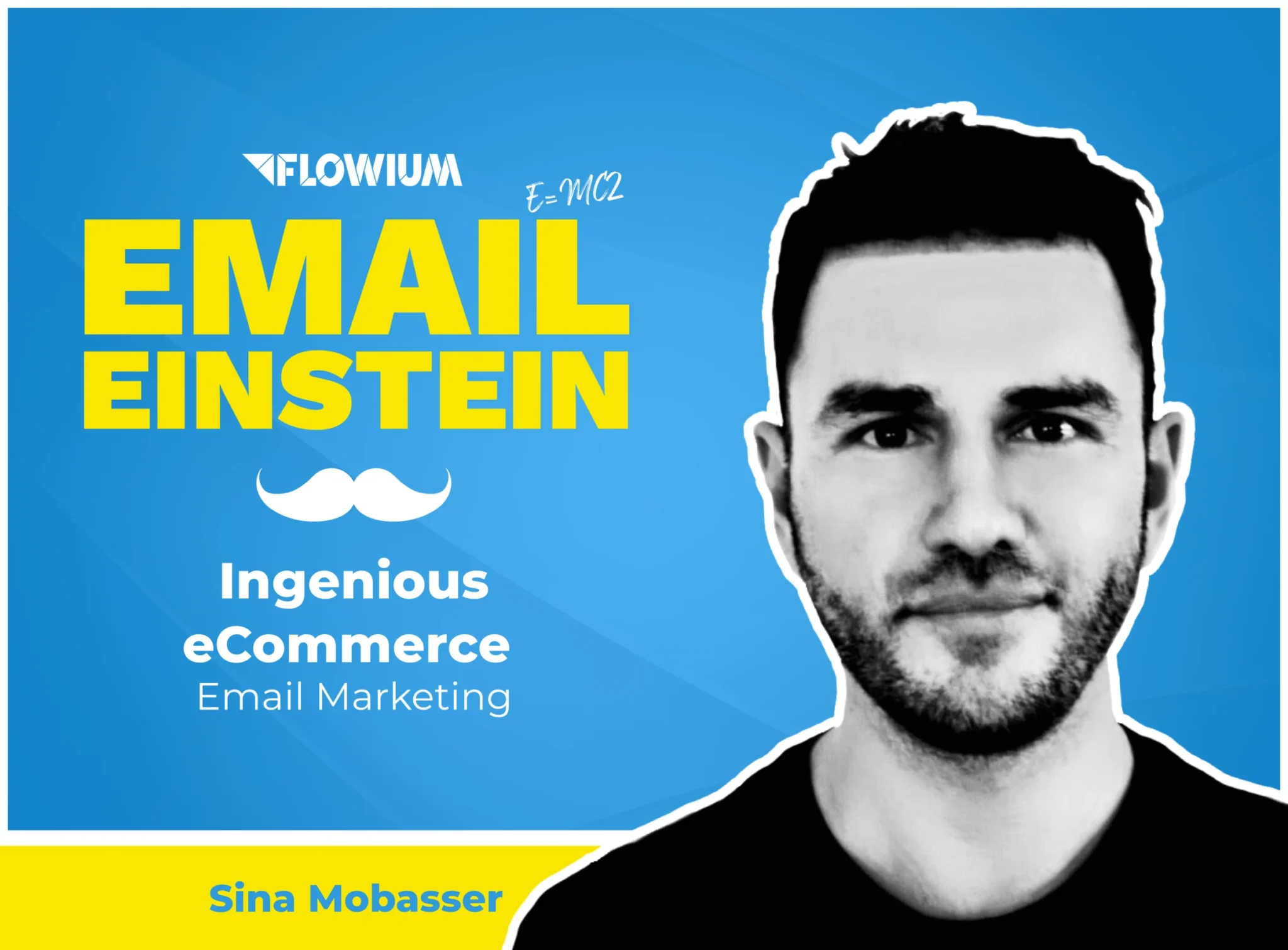
Do I need to have an app? And we will be talking to Sina Mobasser from Tapcart. He’s a founder and COO at Tapcart, the market leader in mobile e-commerce.
Vira: 0:35
Hello everyone and welcome to Email Einstein podcast. I’m your host, Vira Sadlak, an email marketer at an email marketing agency called Flowium. Here at Flowium, we are very passionate about all things email marketing. And because we love what we do, we want to share our insights with you. We deliver the right message to the right person at the right moment and that’s what we’re all about here at Flowium. And today’s guest is very, very special. And if you haven’t listened to this interview, if you haven’t listened to this interview in the past, well, you are in for the treat. Today we will be talking to Sina Mabasser. He is a founder and COO of Tapcart. And if you don’t know what the tab cart is, well, definitely check them out. Tapcart is actually a mobile app builder for Shopify merchants. This is like a drag and drop app builder for you. So this is like a Shopify. Like the idea is very similar, but this is an app, very powerful tool. If you haven’t tested it before or if you haven’t tried it before, definitely check them out today. And definitely stay for the podcast because we will be talking to Sina about all things E commerce and all things mobile E commerce in particularly. So yeah, the fun episode is coming, so stay tuned. Before we go there, Sina, we have this little blitz Q and A, this set of short questions just to get to know you better before we go to like juicy and serious marketing questions. So I’ll just give you a few quick questions and you answer with the first thing that comes to your mind. Okay?
Sina: 2:26
Sounds good.
Vira: 2:27
Cool, Cool. Okay, so Shopify or Amazon?
Sina: 2:30
Shopify.
Vira: 2:31
Oh, you’re a Shopify guy. Like we are here.
Sina: 2:36
And I’ll expand on that quickly. I mean, I like Shopify because I like brands and I feel that Shopify really fully supports brands where Amazon, if you’re a brand and you’re successful in any way, you’re instantly just going to get knocked off, you know, knockoff products created around the world and Amazon will start showing your knockoffs. They don’t. They’re kind of brandless in a sense.
Vira: 2:57
Yeah, in a way. You don’t own that context. Your customers on Amazon. And that’s something that I don’t necessarily like about Amazon. Yes, it’s a great platform, it’s a huge marketplace, a lot of traffic. But I’m a Shopify girl myself, so I’m with you on this one. So how many hours per day do you spend on your phone on average.
Sina: 3:18
Three and a half.
Vira: 3:19
Three and a half. So you’re just like checked your statistic reason.
Sina: 3:23
Three to three and a half. Yeah, it’s something that I am constantly in the screen. Time to see if I can get that down a little bit.
Vira: 3:29
What’s your most used apps?
Sina: 3:31
My most used apps? That’s a great question. Um, I would start with Slack. Um, we use Slack for work communication. WhatsApp is another great one. When I’m wasting time, whether I like it or not, talking to friends and whatnot. The fitness app I think is great. I have an Apple Watch and use that as well. And probably round that off with the Tesla app. Use that to get in and out of my car.
Vira: 3:52
Cool. Cool. Okay. Nachos or French fries?
Sina: 3:55
French fries.
Vira: 3:55
Who would play you in a movie?
Sina: 3:57
Mario Lopez.
Vira: 3:59
Ooh, a good one. A good one. You’re giving me some serious Bread Pete vibes, actually. That’s a good one. Okay. Is Santa real?
Sina: 4:08
Yes.
Vira: 4:11
For sure. Yeah. West coast or East Coast?
Sina: 4:13
West coast.
Vira: 4:14
Yay. It’s a west coast team. Yeah. I’m in Vancouver, so I’m with you on that one as well.
Sina: 4:20
We’re in Santa Monica.
Vira: 4:21
Yeah, it was a good little warm up. And now let’s get into the real stuff. So talk a little bit about your background. Where are you from? Like, where did you go to school? And like, what did you do in the past? And like, what is your background basically?
Sina: 4:36
Sure thing. I was born in New York. When I was one, my parents moved to the Los Angeles area. Grew up in this area close to Santa Monica. Went to school at ucla and a few years after graduating, I launched one of the first iPhone apps back in March of 2008. It was the 250th app on the App Store. Now there’s over 4 million. I believe it was a pop culture trivia game called Pop Quiz and it was a fantastic experience to learn about the ecosystem. And from the very first Time I saw the iPhone and a few months later when the app store was announced and third party developers could build apps for the iPhone, I was instantly in and have been a part of the community for 12 years now. Soon after that, I started my previous company in 2009 called TestMax. It was Test prep courses for the iPhone and iPad. Did that, did consulting a few years later. And then Eric and I started TapCart and early 2017.
Vira: 5:41
How did you realize that there was like a market for tap cart like three years ago, the e commerce apps were not as popular as they are right now. So how did you come up with the idea?
Sina: 5:54
E commerce apps were not popular because they were so difficult to build. They cost so much in terms of time, money and resources. And I’m talking if you want to build a level of app that you can now build with Tapcart, it would probably cost you several hundreds of thousands of dollars, probably take you over a year, if not more. And it’s very similar to how e commerce websites were pretty difficult to build and they could take a few months and cost in the tens of thousands of dollars if you’re building them right. And then eventually Shopify came along and made it easy for anyone to, with no code skills required, no technical skills required, to create their own e commerce website in a matter of hours, start $29 a month. So we look at Tapcart as a Shopify for mobile apps and because we’ve made it a lot easier for e commerce brands to build apps and manage them and engage their customers through our dashboard and it syncs with your Shopify dashboard in real time. So there’s not a lot of additional maintenance required to manage an app and it really works for a lot of brands to be able to create that presence on iPhone and Android.
Vira: 7:06
Shopify for e commerce apps, I really, I really like that definition. Can you briefly through the functionalities of Tap cart, what it can do, what it can do, do you really need to know like at least some code to design an e commerce Tapcart app for your store and stuff like that?
Sina: 7:25
Tapcart is a no code solution and it starts by installing the Tapcart app from the Shopify app Store. Tapcart is a sales channel, so very similar to how the online store sales channel is installed by default with every Shopify store. The online store is your website and that’s installed by default. Tapcart is similar in nature where it’s a sales channel that communicates and syncs with your Shopify dashboard in real Time exactly like the online store does. But sales channels don’t necessarily talk to each other, they just talk to the Shopify dashboard. So whether you have point of sale or wholesale, or if you sell on Amazon or Facebook, those are all sales channels. But quickly, if it’s managed correctly, the mobile app is going to be your second most highest ROI generating sales channel after the website. And when you think about it, it’s really because over 80% of the traffic to Shopify stores is coming on a mobile device. So naturally it’s going to make sense for you to offer the best experience possible on mobile.
Vira: 8:29
But do everyone really need to have an app? Say if I’m selling something that is, I don’t know, like not consumable. I’m not saying selling like supplements or whatever, I’m just.
Sina: 9:10
Let’s say you sell mattresses or something.
Vira: 9:12
Say mattresses, yeah, it’s a good one. So do I need to have an app for, for that?
Sina: 9:17
There’s certainly, you know, certain industries that are the best and most natural fit for an app. Fashion and apparel, beauty and cosmetics, any type of consumable good food and beverage is on fire right now. A lot of these D2C brands, whether they’re selling, you know, hot sauce or sodas or anything else that is exploding, those are a natural fit, obviously. And the recurring theme there is kind of smaller and repeatable purchases that don’t require a ton of thought and decision making power, such as compared with a mattress, for example, which is going to be sitting in your bed and you’re going to be sleeping on for many years, hopefully. But with new technology and new features that came out, especially in iOS 14, everyone knows about widgets, everyone knows about the app library. Those were two of the biggest and currently most popular features that came out in iOS 14. But something that not many people know about is called app clips. And what that is is streaming native mobile apps. So essentially what that means is historically, if you wanted to use an app just once, you would have to visit the App Store, you would have to search for the app, you would have to log into your Apple ID if needed and install the app permanently on your phone and do all that just to use it once. And that’s understandably a lot of friction. So when we started TapCart in 2017, we saw a future where we really questioned if that was always going to be the case. Just like Netflix used to less than 10 years ago, they were sending you DVDs in the mail and that was the only way to watch their Content and then eventually streaming came along and Netflix converted to streaming. So much like that. The old days of having to go through all those hoops to use an app just once, that’s changed now. And with app clips. App clips are essentially bite sized mobile apps that you can create only if you have a full native app on the App Store and they’re intended to be experiential. So what you can do is on your website. If somebody visits your website on an iPhone. With iOS 14, which already has at this point, pretty big adoption, I think over 60 or 70%, what that means is you can pop up a banner that says, you know, tap here to stream our app. And somebody as soon as they tap that, they can actually instantly streams your native app. So it allows people the opportunity to use your app without ever having to go through all that friction. And it’s a lot to ask before someone’s even ever used your app to do all that. So that’s what we’re really excited about. Now if somebody visits your website with just one tap, they can immediately stream your app. And there’s no doubt that if you have a good mobile app, the experience is significantly better than a mobile website. If you use Instagram, you know, do you go to the Safari app on your iPhone and go to instagram.com, which is a pretty fully functional mobile website, or do you just use the Instagram app? I’m guessing you just use the Instagram app and you really know all the reasons why. It’s fast, it’s smooth, has all those animations and transitions. So if you can offer that same experience to over 80% of your of your shoppers who are visiting your website, then I think it would make sense to do so.
Vira: 12:36
Cool. So are there any other like clear signs that your Shopify store needs a mobile app? Like, is there like a formula? If I’m selling like this kind of product, I need app for sure, something like that.
Sina: 12:48
So the top four or five industries that we see, starting with the three that I mentioned earlier, so fashion and apparel, beauty and cosmetics, consumable goods in the food and beverage space, for example, those are the top three. But also home goods, consumer electronics and the artists and entertainment space, especially with influencers, those kind of round out the top six most successful and highest ROI generating mobile apps that we see on our platform. Well over a thousand currently live apps on the App Store and Google Play Store from our customers. So we’ve got quite a bit of data and we have a pretty good sense of what works the second thing that I would suggest is if you have a decent email list and social media following, that certainly helps. Because if they’re engaged and if you send them an email to say, hey, download our App and save 20% or 30% on your first order placed in the app, there’s a discount code, but you can only see it in the app and you just enter that and you get the discount. That’s a great way to get somebody to download your app. So you know you’d be able to put out an email to your email list. And if you have a decent following and they’re engaged, they’re going to do what you say, especially if you have some good followers and good brand equity. And the same is true for social media. You can just put up a few posts on social media. There’s some incentives that you can use to encourage people to download the app, which I’m happy to go over later. Those two things are the biggest indicator of whether you can have a successful app and whether you could see a very strong ROI from your mobile app in just the first few months of having it.
Vira: 14:26
And what do you mean by decent? How big your email list should be? Say so you can start the app or so you can promote it?
Sina: 14:38
Anywhere from a few thousand to more. I think it doesn’t have to be a huge audience because what matters even more, I would say, than the number is how engaged they are. So really, when you release an app for the first time, the first people who are naturally going to download it are your best customers, the ones who purchase the most, the ones who love the brand. And there’s so many different ways to hear from a brand these days that what really works as a byproduct of the mobile app is soon enough it’s going to become the one place that people go to when they know that they want to see everything that’s the latest related to that brand. As opposed to having to go to the website or the blog or check their emails or go to their social. They know that this is a property, that you’ve already kind of got that real estate on somebody’s phone, which is very valuable. They can just go at any time and see everything that’s going on. So I would say that’s a lot more important is if you have some engaged followers, you can get them to download the app initially, give you feedback on it and go from there.
Vira: 15:41
Does it make sense for me, say, as a new business owner, to have the app right away when I’m like first launching My Shopify store. I’m launching the app right away, or should I, like, wait until I have the bigger list of followers?
Sina: 15:57
The sooner the better, in my opinion. And I suggest that because if you’re launching a new brand, it’s very rare to be able to launch a high quality mobile app in addition to the website, which is usually what goes first. So if you can build some buzz around your brand and if you are doing some creative ways of getting people interested in it, maybe before launch even, and you want to do a launch event of the website and the mobile app, those two are very powerful and it brings a lot of strong brand equity to your brand because it looks very impressive. People, consumers are going to take you seriously if you can offer this amazing experience that typically up until recently has been reserved only for the biggest e commerce brands in the world. And additionally, something that we started to see just in the last year is we have some customers who don’t even have a website. So not many people know. But Shopify has a plan that’s just, I believe, $9 a month called Shopify Lite that enables you to use the Shopify dashboard, but it doesn’t come with the website. So if you want to kind of use it as your, your dashboard, your management system, you can certainly do that, but you can install, install other sales channels. So you could actually we’ve had a few customers who move to Shopify from other e commerce platforms or they’re just starting out their brand and they’re thinking, you know, if 80% or even more like some influencers. This happens a lot. They have almost all of their traffic coming on mobile, so they don’t even need a website. They just launched the mobile app. On iPhone and Android, they use Shopify as the backend and they go mobile app only. And they’ve seen a lot of success with it.
Vira: 17:37
Whoa. I didn’t even realize you can do that. I thought it has to be like, connected to your, like a store, like a proper Shopify store. That’s fascinating. And how long does it usually take to say, build that app? With Tapcart.
Sina: 17:53
We built a system that syncs with your existing Shopify dashboard in real time. And we have a system called Tapcart Blocks that allows you to drag and drop to build your app. So we have a number of blocks that are used as the foundation for building an app. Various ways of displaying products from a certain collection in different ways, or actually displaying a carousel of your collections, or being able to upload images or videos that appear in the App or countdown timers and a whole lot more. So you can quickly go in in just a matter of hours. You can build out your app, you can add your branding, you can make certain products and collections available only in the mobile app if you want. That’s another great way to get people or incentivize people to download the app is to offer certain products or collections available only in the app. So you can essentially get that done in a couple of hours. You can preview the app as well. We have a web based preview that you can use, which is a great way of seeing how your app is going to look. And then with a few clicks of the button, you can, if you choose to subscribe, we have an implementation team who reaches out to you and a few hours of work after that, you can actually have your iPhone and Android apps live on the store within usually about a week or two.
Vira: 19:13
Whoa, that’s impressive. Especially in comparison to how long does it take for you to develop the app from scratch, like by hiring developers and everything. It’s like a few months and thousands of dollars. That’s, that’s impressive. Well, for me the biggest question is still, after I have designed a really great app for my brand, what happened next? How do I actually get my customers to download this retail apps? And you’ve covered it already partially. But can we go deeply into this question? How can I get my customers to load that app to their phone?
Sina: 19:47
Sure. I’ll tie in a few of the most popular methods that we’ve seen and we have customers who have some incredible ways of marketing that we could never really have even thought of ourselves. So they can certainly get credit for most of these. But a few of my favorites are the one we can start with, the one that’s the most kind of obvious, which is to offer a one time discount for your first order that’s placed in the mobile app. Really easy to implement. And because we do sync with your existing store, you just create a discount code on your Shopify dashboard, make that available in the app and you can supply that discount code to people once they’ve downloaded the app. So it’s only in the app. That’s a great way to do it. Another great way is to offer certain products and collections only only in the app. So in your Shopify dashboard, if you open any product or collection, there is a visibility section where up in the top right you can click on a button and you can toggle what sales channels you want that product or collection to appear on. So by default they all appear in all sales channels. But if there’s one that you want to make available only in the app, you can just click on that and you uncheck online store and hit save and immediately it’ll be hidden from the website, but it will still be available in the mobile app. Now. Great way to execute that into a winning marketing campaign of getting people to essentially driving downloads to the app. A great way is what one of our customers did last summer. They sell sustainable swimwear and they have a strong customer base that’s very loyal. So what they did is last summer they were releasing their mobile apps and they were releasing a new collection of swimwear. It was scheduled to happen the same week. So what they decided to do is make that collection available only in the apps on iPhone and Android for the first 24 hours. So they sent an email to their email list. This was a highly anticipated collection of swimwear that was coming out. They posted about it on social, Instagram, Facebook, and they said, hey, our apps are coming soon. We know you’re excited. This new collection is coming soon and it’s only going to be available in the mobile app for the first 24 hours. So if you want access to it, make sure to download our apps. What happened was it created this frenzy of people who downloaded the app and they actually ended up selling out of the entire collection of swimwear in that first 24 hours before it was even available on the website.
Vira: 22:26
That’s insane. And I think that Roosevelt is one of our clients. I think they are using the similar strategy as well. So there are certain collections or certain products that they are selling exclusively through the app. And I just, I love their app. I love how intuitive it is, how easy to purchase. It’s almost like Amazon one click purchase if you have your information saved there. Oh my God, it’s so easy to buy. That’s just insane. Do you have any numbers, any stats on conversion, like a regular Shopify store versus app? I was just like wondering, how does it compare?
Sina: 23:03
So online store order conversion rates can obviously vary by brand. It depends a lot on your website, how good of an experience you can offer, especially on mobile and the type of traffic that you’re bringing in, and of course your products itself. So there’s a lot of things that kind of come together to, you know, essentially determine. And these are the factors that go around what your online store conversion rate is going to be when you have a foundation. Across all of our customers apps, for example, we can say that per session the mobile app has a three times higher order conversion rate per session than a mobile website. You can certainly say that people who download the mobile app are, they’re better customers or they’re more likely to purchase something anyway. And we’re not going to try to deny or dispute that. But the numbers are the numbers. And when you do get a chance to use one of our customers apps, you can visit our website for some of the logos there’s. And just compare that with the mobile website maybe side by side even. I think you’ll instantly see how much better the experience of a mobile app created with our platform is.
Vira: 24:13
So you think that how it looks and how it feels is like the main reason why they perform better. Are there any other features that you think make it better than the regular store? I know for example, you have this push notification. So can you, can you talk a bit more about this function? Because that’s, I’m super excited about this one.
Sina: 24:35
Yeah, you can visit our, the Tapcart dashboard. You can just click on a button in your Shopify Dashboard when you have Tapcart installed and it will actually load the Tapcart dashboard embedded inside your Shopify dashboard. So you don’t even need to leave your Shopify Dashboard. You can get access to all of Tapcart’s dashboard there. And the second section that you see there is called push notifications. It’s called Engage and it allows to send push notifications to anyone who has downloaded your app and opted in to receive push notifications. In our recent studies, we looked at how many people had downloaded our customers apps and opened it at least once versus how many had opted into push. And we saw that over half of people who had installed the app and opened it end up opting in to receive push notifications. So that’s a great sign because that essentially means that you can market to these brands at no extra cost on our, our platform because currently it’s free to send push notifications. That might change one day, so take advantage of that now. But it’s currently free. And essentially what that allows you to do is reach all of these people. You can send them a push notification of a specific product and it’ll actually display the product image inside the push notification. It’s called an interactive or rich push notification. So you can do that. You can click a button and create what we call an animated lookbook that’ll take the first five product images, loop them into an animated video and actually display that as a video inside the push notification. So much better experience in terms of what you see when you hear from a brand. I think probably 99% of push notifications are just text or emoji based. And it’s a really great way to stand out from the crowd of other notifications that you get, not just from E commerce apps, but from WhatsApp, from your communications channels, from everywhere really. You’re getting all these push that can be pretty B.O. sometimes. So to get one that has an image of a brand new product or like a lookbook video in there and you’re offering a 20% discount on that product for the next one hour only, or maybe 20 minutes only, creating that sense of urgency, maybe even saying get it while supplies last. That sense of urgency, the visual that you get combined with the sense of scarcity that you’re creating that makes people act. And that’s something that really without that sense of urgency and scarcity, you are going to see a lot of abandoned checkouts happen. And that’s really probably one of the biggest pain points for a lot of E commerce brands, especially those on Shopify is under that order section there in your Shopify dashboard there’s a section that shows all your abandoned checkouts and shows you how much money you basically lost. And a lot of that time it happens because somebody is shopping on their phone. They might start a checkout, they have all the intention in the world of purchasing that. But during the checkout they get a push notification from another app or they get a WhatsApp message or a phone call and they get distracted and a few minutes later they have forgotten what they’re doing completely and they just leave. Or even if they do remember, they have had more time to think about it and they might get cold feet. So you have to really do everything you can when you it’s hard enough to just capture somebody’s attention for just a moment. It’s even harder to bring them into your store and it’s even hardest to complete that checkout. So you want to really minimize any friction possible. Our app, as you mentioned, with the Amazon one click, we have Buy with Apple Pay buttons that can appear on every single product page. We have one on the cart as well. So they don’t have to necessarily go through that long checkout process of entering their address and their card. You can be on the cart, you can tap Buy with Apple Pay or you can just be on one product, hit Buy with Apple Pay and you can purchase it just seconds later. So you know those are really good ways to get people into the app and you can do them through push notifications. So Just being able to bring people in, in that real time component. Because you can’t really do a 20 minute flash sale instantly from email. It’s just not a real time communications channel. You can’t do it through Instagram or Facebook because you just don’t know when your recipients are going to see it. But that’s really the benefit of push notifications. I think that’s really the number one reason to have a mobile app is not just the experience, which is already great. I think what’s more important and what’s really a great way to invest in your brand long term, and it’s really the most reliable way in my opinion, to sustainably and consistently grow your revenue, grow your bottom line, by growing your push notification subscriber base. You should look at that as a very valuable property that you have, kind of like a real estate property. And you’re just the more push subscribers you have, the more you’re just adding levels to that building and the building is going to eventually become a tower and it’s going to be incredibly valuable. So that’s what we talk about when we want to help these e commerce brands is giving them the ability to own their marketing channels, to grow their push notification subscriber base. It’s not insanely expensive like sms, it’s not saturated like email. And I think in my opinion it’s the best marketing channel out there that you can create for your brand.
Vira: 29:51
Yeah, follow up question on that one. Can you somehow segment those push notifications? Say I only want to target people who purchase like this socks and I only want to push them this specific T shirt that goes well with that socks or something like that. Or is it like you’re sending the push notification and everyone on your list is basically seeing it.
Sina: 30:13
So there’s two ways of sending push. One is through our dashboard and we’re going to be adding some segmentation and other functionality around push notifications pretty soon. It’s something we’ve been actively working on for a while now is how can we make our push notifications better. Segmentation, additional video types, content types, being able to maybe send a countdown timer inside of a push, all that stuff would be great. And that’s part of the V2 of push notifications that will be coming out next year. But currently you can only send it to all of your customers who have subscribed to receive push notifications from you. Now the other way of sending push though, which is great, is through our integration with Klaviyo. So we have an integration with Klaviyo that we built with them that allows you to add push notifications to your Klaviyo flows. And I believe we’re the only platform out there that allows you to do this. It’s something that we built with them. So right alongside your email and SMS buttons, there will be a new push notification button on your Klaviyo Flows. And this unlocks crazy amount of value, I believe, because you know you can have your existing Klaviyo flows. Let’s say it’s an abandoned cart or abandoned checkout flow. Or let’s say it’s a like an email drip campaign, like a welcome series. Now you can start to add push notifications to those. So if you’re used to seeing, you know, a 2% conversion from a abandoned cart email that goes out, considering how saturated email has become and how if you know most, most customers are using Google, they’re using Gmail as their email provider. And Gmail is very good at identifying the promotional emails that you send and putting them into the promotions tab on that user’s web client. So ultimately what happens is people don’t check that promotions tab nearly as often, obviously as they check the primary section, which is your non promotional, non updates, non forums, things like that, that’s sent directly to you. And when and if they do decide to kind of venture over to the promotions tab, you just see dozens upon dozens of promotional emails from all kinds of different brands, all kinds of different subjects of websites, things like that, and they’re all promotional. So people naturally kind of have their guard up a little bit. They don’t look at it in the same way that they would an email that just pops up right in their primary tab and you’re kind of competing with everyone else who’s trying to capture your attention. So if that, let’s say, has like a 2% conversion rate in terms of the emails that go out for that convert into an order that’s placed, we’ve seen in our studies that you can get a 10 times higher conversion rate if you do the email. But if you also add a push notification to that, because when that push notification is triggered, it is sent in real time. It gets sent immediately to the home screen of their iPhone and it can include all kinds of content that you can pull from that person’s Klaviyo profile. So if you know their first name, if you know that they just purchased something, that’s where the segmentation comes in and it’s really effective. So you can choose to create like a post Purchase flow, that’s a specific sequence that goes out after someone has purchased something. And let’s say after the order has been fulfilled, you can send out a thank you, for example, and maybe ask them for a review and offer a discount on their next order. And really being able to integrate push notifications into your Klaviyo flow and knowing that it’s going to be a different experience, knowing that people are going to get them at a significantly higher open rate than an email and it’s not nearly as expensive because it doesn’t cost extra to send as opposed to SMS, which could be, I believe, 1 to 2 cents per SMS. If you’re sending that to thousands of people, that’s going to add up. So it’s a really powerful tool that we really encourage brands to use.
Vira: 34:08
How does it work from the customer’s perspective, this integration with Klaviyo? Do I need to opt in for this push notifications or will I automatically have them set if I have like email and app?
Sina: 34:26
Consumers do not see that at all. So as soon as they opt in to receive push notifications, you’ll essentially be able to send them push notifications from our dashboard. Or you can send them push notifications through Klaviyo. There’s no second opt in that they would have to do for Klaviyo.
Vira: 34:43
Wow, that’s. That’s fascinating. How do you approach those, like back in stock notifications? Can you do them with push notifications as well?
Sina: 34:52
Absolutely. And this is actually my favorite push notification flow that’s linked to Klaviyo. So we built this for a huge brand that’s on our platform. They wanted something that was different and they wanted a way to monetize a product even if it was sold out. They wanted people to be able to essentially raise their hand to let the brand know that they wanted this product whenever it’s back in stock. So Shopify does have the ability, it does allow you to accept orders if a product is out of stock, but it’s not the best experience and people don’t always know when they’re going to get the product. So it can cause some friction. And if communication isn’t extremely clear to the customer, it can cause some bad blood and things like that. So what we built is a system that is called Notify me When Available. And what happens is instead of a particular product, if somebody visits that product and it has zero or less inventory, instead of just saying sold out and the shopper can’t do anything, they just visit the page. They can’t add it to their cart. They can’t do anything. What you can do is we can actually change that button with just one click. In Klaviyo, you can change the setting to change the button in the app to say, notify me when available. So what happens then is they tap on that and it basically sends to that Klaviyo profile, it says, when this product is back in stock in the Shopify Dashboard, send this person a push notification to let them know. And you essentially what happens is as soon as that product is back in stock, they’ll receive a push notification that says, hey, this product is back in stock. Tap here to purchase, you know, to complete your order. Or you can do all kinds of AB testing, conditional logic, things like that, to send variations of push notifications depending on actions and events that took place on that person’s Klaviyo profile.
Vira: 36:53
Wow. And basically this is the segmentation. So basically, only people who opt in to receive the updates about that product, only that people, only that group of people will get this push notification, correct?
Sina: 37:05
Exactly.
Vira: 37:06
So this is the segmentation for me. So you answered that previous question for me perfectly. Wow.
Sina: 37:12
All done through Klaviyo.
Vira: 37:13
Yeah, all through Klaviyo. Wow. And it integrates super smoothly, as far as I understand. How can I measure the success of my app? How do I know? Like, what are the key metrics that define my whole mobile app strategy.
Sina: 37:28
Out of the box there’s a few different ways. One, you get access to all of your app downloads, app install data directly from Apple and Google because every one of our customers has their own developer account, which means you own the app listing. It’s not submitted by, it’s not on our profile, our developer profile, for example. You own that. So in case you need to. If you want to build it’s. Let’s say the app is so successful that you want to build a custom app or add some crazy virtual reality functionality that we don’t currently have. And you can just create your app, submit an update to the one that we’ve created for you, and it’s a seamless process. You don’t have to ever worry about losing your downloads or your users. So Apple and Google provide you some data. But what’s a much better source of data is the Tapcart dashboard. So you can access a section on our dashboard called Insights. When you first look at it, you’re going to be reminded of Google Analytics. So we have heat maps that show you certain times of day where the app is most popular. When you get the most sessions, number of activity between iOS and Android, the number of sessions that you’re getting from each device, your retention numbers, how often people are coming back into the app, and a whole lot more. So there’s easily kind of dive into the metrics and understand really how people are using the app. Our dashboard is a great way and the third place is in your Shopify dashboard. So orders placed in the mobile app are processed the same way as those that that are placed on the website. They both appear in the order section of your Shopify dashboard. The only difference is an order placed on the website up at the top it’ll say sales channel, online store or one placed in the app, up at the top of the order it’ll say order placed in the mobile app. And when you go to the analytics section of your Shopify dashboard, the overview section, it’ll show you information like sales by sales channel. So without even leaving your Shopify dashboard or having to go to our dashboard, you can easily see, okay, I had this many orders and this much revenue generated from the app. The same for the website and your other sales channels as well. So there’s a lot of different ways that you can get that data. And eventually over time, what we’ve seen for the brands that are really managing their app well, they’re promoting it, they’re getting app downloads, they’re sending push notifications engaging their customers, they’ll see anywhere from 25 to 50% of all of their stores revenue coming in through the mobile app within six to 12 months.
Vira: 39:59
Wow, interesting. And that’s basically the sales that they probably wouldn’t get from the regular mobile app because it’s not as intuitive, I guess, not the app, the website, I guess it’s not as intuitive and mobile friendly.
Sina: 40:14
And because you’re able to bring people in with push notifications at no extra cost, that’s a great way. That’s probably the biggest way that we’re able to do that. It’s not just cannibalizing or replacing orders placed on the mobile website. It is generating new opportunities because you can send push notifications to customers because you can automate them with Klaviyo to really create these personalized and real time push notifications that go out. And because when somebody installs your app, you’re basically getting a small piece of real estate on their phone and that’s incredibly valuable.
Vira: 40:50
Do you get unlimited amount of those push notifications with the store?
Sina: 40:56
You do. Currently, as of October 2020, you get an unlimited number of push notifications that you can send with our platform and an unlimited on any of our plans and an unlimited number of push notifications that you can send through Klaviyo. Can’t promise it’ll be like that for forever, but we’ll certainly, if we make any changes to that, we’re likely going to just grandfather in all of our existing customers. But I think that there’s so much value that we’re providing and there’s so much that this next generation of push notifications through our platform is going to offer in terms of value that it’ll instantly pay for itself.
Vira: 41:32
Oh yeah, for sure, for sure.
Sina: 41:34
Many times over.
Vira: 41:35
How aggressively do you recommend the stores to go with this push notification? Like, do you have some kind of formula? Like, do the push notification one time per day, one time per week, like three times per month or something like that? Or it depends, case by case.
Sina: 41:50
It depends on the type of push notifications that you send. So a lot of brands that we work with, especially the food and beverage brands who may be generating the vast majority of their revenue through like a monthly subscription box, for example, you might think, why would I need an app? Because once I just get them to opt into that once, then I’m good to go. Well, you need to. In order for them to continue to want to pay you, you have to continue to provide value. And just your product alone is not necessarily after, let’s say, three months or six months that they’ve been getting it, they’ve gotten used to it. They’ve gotten used to the value that it provides. So you’re going to want to provide a little more. And a great way to do that is by providing valuable content to them. So there’s a lot of brands out there that we work with who their app is primarily a content and lifestyle hub. They do have their products available. You can manage your monthly subscription. But they, you know, a great example of this is your Super. They sell Superfoods. Fantastic brand with a really incredible story behind them as well. Highly recommend you check out your super. And but if you go to their app, they have a lot of content that they’re already created or are releasing regularly. So they have content from their blog, they have recipes that they’ve created, their latest podcast episodes, videos, just all kinds of content. And a great way to, you know, what we call content to commerce is a great way to drive that commerce and increase your sales and decrease the churn or the turnover of your subscriptions is to provide valuable content. So before releasing certain content on other platforms like your website or blog or social, where it’s very fragmented. You can choose to upload it only in your app first and which is very easy to do. You can show content from certain webpages inside of the app and it looks native to the app. And once you release that content, send a push notification to all your subscribers and say, hey, come check out our app for this new recipe or for this, you know, for the latest video that we created. And you’re providing value, you’re not being overly salesy and you’re driving people to a property that completely belongs to you. Where if you’re just posting this stuff on Instagram, you know, a few seconds later they’re going to keep scrolling and they’re going to forget about you. That’s a great way. And I tell that story because if you’re providing, if you’re not being overly salesy in your push notifications, if you’re not just like trying to hammer them home with like one promotion to the next, that can get a little fatiguing. If you’re providing valuable content that people really look to and say, this was interesting, this was valuable, and I’m glad I got it. Let’s say two thirds of your push notifications are that, and then every three is a new promotion or a new sale or you’re notifying your mobile app users first about this new product. Even that is a great way to send a salesy message that people still find valuable. So by doing this, you can send a few push notifications a day, or if you want to tone it down a little bit, you can send a few per week and people will be happy to receive them. Because what you have to remember is that everyone who’s receiving this message, they’ve downloaded your mobile app. So they’ve gone through the Google Play Store, they’ve gone through the App Store, they’ve downloaded your app for a reason and they’ve opted in to receive push notifications. So they are expecting to hear from you. They’re anticipating. They put their hand up and said, I want to hear from this brand. So don’t be too shy, just send some value, don’t be too salesy, and you’ll see this marketing channel continue to just provide more and more value for your brand.
Vira: 45:33
And in a way, I think the people who downloaded your app to their phone are your most loyal fans. So I didn’t realize that you can utilize this app not only for, like, selling purposes, but also for brand building and for community building. That’s something that I had no idea that you can do so. So that’s, that’s super cool.
Sina: 45:53
Yeah, it’s a great way to build a community. And like I mentioned earlier, it’s the place that people want to go to to hear everything related to your brand. So they’re expecting it and it’s just a fantastic way to do so.
Vira: 46:04
Yeah. Yeah, that’s, that’s nice. And this will be sort of like my last question, even though I do have like a gazillion more questions about this app. But the last question will be, what advice would you give your younger self? I guess about starting the business, about starting Tap Card. What would you maybe like, do different or what would you start doing sooner?
Sina: 46:28
I would. That’s a great question, by the way. What I would do is remind myself that even when times are hard and things you’re going through some things. Entrepreneurship is all about ups and downs. I think because there’s so much information now about entrepreneurship, people have realized that, that when you see that article about somebody selling their company, that’s not what it took for them to get there. And what it took for them to get there is usually, you know, years or decades of working hard, going through all the ups and downs, putting all your blood, sweat and tears into something and there’s going to be, you know, sometimes there’s going to be more downs than up. And to just remember that, you know, when things are looking down and when one door closes, another often opens and to just really keep that mindset in a positive way and remember that, you know, you’re in this for the long haul and eventually if you work hard enough, you’re going to be successful.
Vira: 47:19
For sure. For sure. That’s a very inspirational end of the podcast. So thank you so much. Thank you so much, Sina. I’m sure our followers will have a lot of questions about the app, about the tap cart, and about this entire concept. So where people can find you if they do have follow up questions and where can we, how can we find the tab cart?
Sina: 47:45
I’ll give you my personal email, so just email me if you have any questions. It’s Sina. S for Sam, I N for Nicholas, A for Apple @tapcart.co. You can email me directly. You can also visit our website, which is tapcart.com or just search for Google for Tapcart.
Vira: 48:09
Nice. Nice. Well, thank you so much. By the way, guys, all of the reserves that we have mentioned in this podcast, they will be linked in the description box down below. So just like scroll there and use all of the links. So thank you so much for coming.
Sina: 48:25
Thank you, Vira. It’s been a pleasure.
Vira: 48:26
Yep, it’s been a pleasure of mine. Thank you so much. Take care. Bye. Well guys, I hope you enjoyed this episode just as much I enjoyed, like recording it. Don’t forget to subscribe and share this podcast with your friends. And as always, if you send us the screenshot of your review, we will send you a pair of your own branded pair of Flowium socks. And as always, come back next Tuesday. Next Tuesday I’m actually going to be talking to one of my colleagues, Dawnna Goller. She’s a fellow project Manager here at Flowium, and we will be discussing all of the fun content ideas for June. I know you guys love this type of podcast. We definitely enjoy recording them. So I’m sure it’s going to be fun for you and you will be able to get a lot of ideas for your June calendar and for the upcoming months as well. Thank you for listening and we hope to see you here next week.

Vira Sadlak
Podcast host, marketer, traveller and a life lover from Vancouver, Canada