

Podcast Transcript
Vira: 0:41
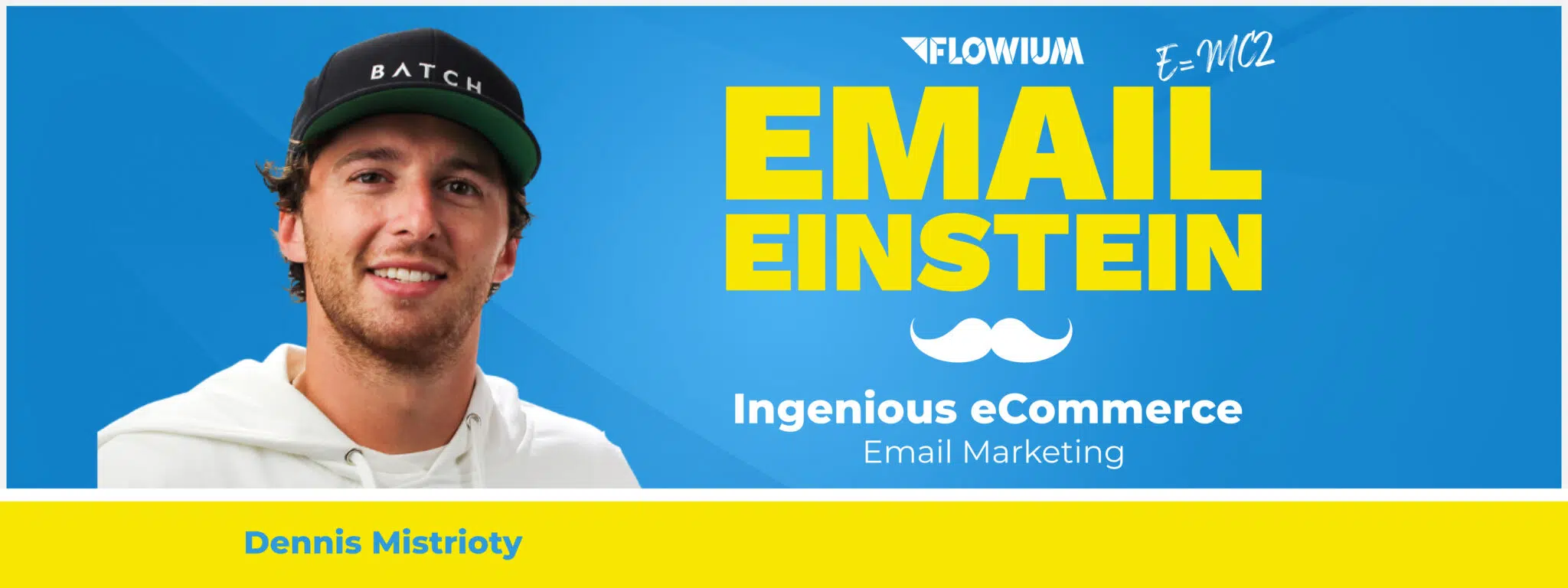
Hello, hello everyone, and welcome back to another exciting episode of Email Einstein. I’m your host, Vira Sadlak, And today I’m joined by a very special guest. Today we will be diving yet again into the exciting world of digital marketing, digital email marketing, as always, but with a twist. We are focusing today specifically on CBD industry, a sector that’s been booming lately, and yet it comes with its own set of unique challenges and limitations. Did you guys know, actually, and I was very impressed by this number, that global CBD market is expected to grow to a whopping$23.6 billion by the year 2025, which sounds crazy to me. That’s massive. But with such growth normally comes need for effective and compliant marketing strategy. And who better to guide us through this intricate maze of marketing for CBD brand than our guest for today, the founder of Batch CBD, Dennis Mistrioty. Dennis has been at the forefront of this industry, navigating the digital marketing landscape and challenges of this landscape. And I’m like super, super happy to have you today on our podcast, just like to walk us through all of the behind the scenes of digital marketing in the industry. Say hi, Dennis, and sorry for the long introduction.
Dennis: 2:10
No, my pleasure to be here. Really looking forward to this. Thank you so much for having me.
Vira: 2:15
Yeah, I do have, like, a gazillion of nitty-gritty questions. But before we go there, let’s play a little game, like this or that game, just, like, to get to know you better. It’s not going to be necessarily related to the topic of the podcast today. It’s just to learn more about who Dennis is. Okay?
Dennis: 2:33
Yeah, let’s do it.
Vira: 2:34
Cool. Let’s do this. Shopping online or shopping offline?
Dennis: 2:39
Shopping online these days.
Vira: 2:40
Okay. The last thing you purchased online?
Dennis: 2:43
I just purchased a magnetic whiteboard bulletin board combo for the office, and I just hung it up today, actually.
Vira: 2:54
Exciting. Okay, then paper book or ebook?
Dennis: 2:58
Paper book for sure. There’s something more satisfying about turning the page for me, and it helps as I’m trying my hardest to read more.
Vira: 3:07
Okay, cool. iPhone or Android?
Dennis: 3:11
iPhone.
Vira: 3:12
Shopify or WooCommerce?
Dennis: 3:14
Shopify, for sure.
Vira: 3:16
Email or SMS?
Dennis: 3:18
I only have one choice there, and that’s email from a business perspective.
Vira: 3:23
Okay. CBD oil or CBD gummies?
Dennis: 3:28
I’m going to go with a more purist answer and say CBD oil, even though gummies are more popular.
Vira: 3:35
Okay. Early bird Black Friday deals, yay or nay?
Dennis: 3:39
I’m reluctantly saying yay. I will be participating in the early bird deals out of what I feel is necessity.
Vira: 3:47
Okay. Pineapple on pizza, yay or nay?
Dennis: 3:51
Absolutely not for me. I, I can eat almost anything, but for me, a sweet addition to something that is traditionally savory is usually where I stand clear. So raisins on a Or cranberries on a salad, I’m out. Pineapple on pizza, I’m out.
Vira: 4:10
Wait, is your last name actually Italian? Because it sounds Italian.
Dennis: 4:14
It’s actually Greek.
Vira: 4:15
It’s Greek. Okay.
Dennis: 4:16
I happen to also be Italian, but I’m Italian and Greek.
Vira: 4:19
Okay. Because I know that Italians normally have very strong opinions about pineapple on pizza, so I thought that’s where it may be coming from.
Dennis: 4:28
Nope. I have no emotional tie to that answer.
Vira: 4:31
Okay, cool. And the last question that I always ask my guests, if there was like a theme song playing every time you entered the room, what would it be?
Dennis: 4:39
Probably the Star Wars Force theme. If I were to be in my own imagination, that’s probably not truly fitting, but that’s how I’d like to envision myself.
Vira: 4:49
I’m playing it right now in my head. Yeah, that’s a good one. That’s a good one. It’s a very epic one too. Okay, awesome. So tell us more about what you do. Tell us more about what Batch CBD is and what sets you guys, uh, apart from like other brands?
Dennis: 5:08
Sure. Um, well, I am one of the co-founders of Batch CBD. I started this business with my 2 college roommates in 2018, and what Batch is, is twofold. One, it is an e-commerce CBD and wellness brand, so we sell a variety of CBD products, gummies, oils, topicals. We’re also leaning into more non-CBD products such as functional mushroom gummies and a hydration powder and an energy gummy, et cetera. We have, we launched that brand about a little over 3 years ago, 3 and a half years ago maybe, and have been slowly growing ever since. However, the total other side of our business is we manufacture just about everything that we make, especially the CBD products. So we have a hemp farm and we have an internal testing lab and we have a bottling line and we have formulation stations and chemists and fulfillment all under one roof, which is the same roof that I’m— Wow, that’s so cool. Recording this podcast from with the rest of our marketing team and front office team. Because we have that, we are actually a contract manufacturer for over 50 other e-commerce brands, most of which are in the CBD industry, some of which are in other wellness or personal care type products. And that’s a whole, whole nother story. But that is kind of the two sides to the business. What sets Batch apart as a brand though, is because we have— because we do all of those things internally, we really are able to show customers where their product is coming from and what this industry is all about in an industry that is somewhat faceless or hidden behind closed doors. So we kind of try our best to lean into that authenticity and transparency and let the customer feel connected to the products that they’re purchasing, all the way down to the people that are making them and from the farm that it is coming from. As I told you before we started, we were just at the farm yesterday helping out with harvest. We have a genuine personal connection with our farmers who grow our crop for us to feed our supply chain. And, you know, the people that run our social media account were there along with the people that help fulfill the orders. So it’s a real kind of family-oriented culture around here, and we try our best to exude that in our branding. And Kind of creates that community a little bit. So as far as our industry goes, that sets us apart a little bit.
Vira: 7:52
Definitely, definitely. And I really love that like educational aspect of what you guys are doing. We were just like talking about before the podcast that you guys have this like really cool video guide on your website. For those of you guys who are listening, hellobadge.com, like go to their website and explore like the website and that like little video that they have like in the bottom right corner. Honestly, I learned a lot about CBD from your video guides. And I think that educational aspect is super important in this industry because first of all, there’s still stigma about this product, I think, in Canada for sure, in the States probably as well. But also just because this is the most genuine and effective way to connect with your customers. And we’ll definitely touch on that as well. But yeah, but let’s talk about regulations, Dennis. I was very excited to have you on this podcast today because I know that CBD brands are doing marketing differently. You kind of guys have to do marketing differently. And just to give you guys some background, even though this market is booming, a lot of people are using this CBD gummies and oils for arthritis, for anxiety, to wave goodbye to their migraines, for their I know, like, my family is using CBD gummies for our achy— for our senior pops’ achy joints. So the industry is booming. There are like a gazillion brands like this. But the problem is it’s still considered a very, like, high-risk business, I guess. And to be able to sell CBD online, a business faces, like, serious regulations, challenges, paperwork. Dennis, can you briefly like explain to our listeners the unique digital marketing challenges and limitations that businesses like yours face? I know it’s a loaded question. No, no, it’s just, yeah, a lot of people still, still new to this industry.
Dennis: 9:57
Well, it should be easy for me to answer given that I have to navigate it all the time. So the, the biggest challenge that a CBD company will face trying to sell products online is that you are restricted or not allowed to sell your products via paid, um, paid media on Facebook, really any social media, or Google, or Amazon.
Vira: 10:23
Mm-hmm.
Dennis: 10:24
Real quickly, I’ll tackle those one at a time. On Amazon, you cannot sell CBD products. If you try to find one to purchase and there’s a hemp product that comes up, they are navigating a loophole and frankly, are not supposed to be doing that. They’ll use different language like hemp instead of CBD, and the number of milligrams that they will advertise will be completely false, or it is prone to being completely false. So that’s Amazon. Um, Facebook, we are restricted in— we can only buy ads that are strictly educational and have to be a certain number of clicks away from a product page if we’re going to launch an ad. So there’s several clicks in the journey that has to have to start with curious education and then somehow turn that education into a purchase within that same funnel, starting from the ad level. And then on Google, same thing. We cannot be buying CBD-related keywords. Now, that is obviously how Most ecommerce brands, that’s usually the blueprint that most ecommerce brands start with to scale their business. So just to quickly answer your question, that is, those are the 3 main things that we are restricted by, along with some other things like even SMS we’ve had trouble with at times.
Vira: 11:46
Yeah, that’s something that I didn’t realize that when you’re starting selling like CBD products and on Shopify, you have to like disable SMS notifications on Shopify, you can still like do like email, but SMS is not like allowed. That’s like Very interesting. And that’s something that people don’t necessarily understand about this whole industry is that the truth is that there are tons of CBD products legally sold and advertised. They are legally sold. They are legally advertised. That said, bigger corporations, just like you mentioned, such as Google, major banks, they still consider it a new thing. That’s why there are so many limitations, probably. Right.
Dennis: 12:27
Totally. And I, you know, I’ve always been a little perplexed by it. I understood early on in the industry it was a bit of the Wild West. It still is as far as regulation goes from a governmental level, as you know, the FDA and stuff like that. Um, but I am a little surprised that the advertising restrictions are still so strict. Right. I feel like enough time has passed to reduce some of that risk. And I don’t think there’s any legal risk for doing that for advertising on certain platforms, but it is what it is. I always say the silver lining is that it has allowed us, it has forced us to be extremely creative in the way that we scale.
Vira: 13:09
Right.
Dennis: 13:10
And because of that, we’ve grown stronger. And hopefully, if whether it be this business or the next, we are allowed to pursue traditional advertising, maybe we’ll be that much more efficient.
Vira: 13:22
Yeah, that’s what I love about how like CBD businesses are built is that you have to connect from the point of like giving the value to your customers, like educating your customers, not necessarily asking them to buy right away, but giving something first. And only after that you can like ask them or like offer them to purchase something. Yeah, I know. I love that for you guys. Let’s talk about email. Obviously, email is important marketing platform in CBD industry. Like, what role does email play for Batch? Like, where is it in your marketing toolbox? And like, how do you use it?
Dennis: 14:06
Email is a huge part of our marketing toolbox. We fixate on our various flows and campaigns Every, every week we review them. And as we just have discussed, the best thing that we can do as a CBD brand is nurture the leads and the customers that we get to increase their not only average order value, but lifetime value, because it is so much more challenging to acquire customers at scale in our industry. So when it comes to email, we are constantly testing And optimizing anything that we can to, you know, increase click-through rate, open rates, testing subject lines, testing creatives, testing sale copy. So yeah, it’s absolutely huge for us and segmenting our flows to provide the most value for customers is another thing that we do regularly.
Vira: 15:37
Right, right. And correct me if I’m wrong, but like not all email platforms are like specifically CBD friendly. Am I right? Or yeah, how, how does it work with email marketing platforms?
Dennis: 15:50
You know, it’s almost been so long that I’m not sure. We’ve been using Klaviyo, Klaviyo.
Vira: 15:56
Mm-hmm.
Dennis: 15:57
For a while and they haven’t had a problem with it. And it seems like most of my other colleagues in the industry do.
Vira: 16:03
So yeah.
Dennis: 16:04
I don’t even remember anymore if that was a regulatory decision or otherwise.
Vira: 16:10
Yeah, I just did a quick research and I think it’s Klaviyo. A lot of people don’t know how to pronounce it. Klaviyo, Klaviyo, Klevayo, I heard. It’s a very difficult name of the platform to pronounce. I say Klaviyo, but I don’t know if it’s right or not. But I think, yeah, they are kind of like the friendliest to CBD brands. But you can only do like email with them and not SMS.
Dennis: 16:37
Correct.
Vira: 16:37
So that’s— yeah.
Dennis: 16:38
Yeah. We’ve tried a few times and never have prevailed.
Vira: 16:43
Yeah. Yeah. Okay, well, let’s get back to that educational aspect. I mean, acquiring customers is hard. In general, this is the most expensive part of that entire lifecycle journey, right? But retaining them is also very important. And on average, it takes 2 purchases for a customer to become like regular buyers. And with CBD, another challenge, and correct me if I’m wrong, I think it takes like some time to take effect, right? It takes like a few weeks to start seeing like results. So it’s very like important to educate customers so they don’t like expect to feel results right away. Is that correct or?
Dennis: 18:16
I suppose it depends what you’re taking it for. I think there’s an argument to be made there if you’re taking it for some sort of pain relief potentially or inflammation. But, for the most part, a lot of whether it be sleep or relaxation or whatever else it may be, you can feel the effects relatively quickly or from the first use. But, to your point, retention is huge for us. And, the first thing that I think— this doesn’t just apply to CBD, but there’s 2 things you mentioned. Yeah. I believe very strongly that the best retention strategy you can possibly have is to have a— is to have an effective product. And I feel like that’s a piece of advice sometimes you have to remind digital marketers actually, because—
Vira: 19:04
Right.
Dennis: 19:04
Sometimes we get so lost in our spreadsheets and our conversion rates and our open rates and lifetime value, this, that, and the other, that we forget that these are real people purchasing products, using it in their daily lives, and then deciding if they want them again. And if the product stinks, it doesn’t matter what that email subject line says. Why would they care to buy it again? It doesn’t matter if you gave them 90% off. There’s no point in giving them— giving this company another dollar. Giving them another dollar. So we’ve always— and some— and it’s kind of an intangible and easy to forget about because it’s It’s not a— there’s no direct metric to measure how good your product is necessarily.
Vira: 19:45
Right.
Dennis: 19:46
Obviously, there’s ways you can figure that out. But I think that’s one thing that needs to be just reminded from time to time. And the other thing, as you mentioned, the educational standpoint, I truly believe, again, not specific to CBD, that as a brand, you should be an expert on your product and industry. So if there’s anything that a consumer of your product may be wondering at any point throughout their customer journey or lifetime, you should have an answer to it somewhere. It can be as simple as an FAQ section, but the more you can provide value and frankly, it’s easy value to provide for your customer. We have a lot of different questions to answer there from hemp versus marijuana, to what is CBD, to which product should I take, to how does it work. We have no shortage of questions to answer, but every industry has them. And, uh, you should view it as an opportunity, I think, to answer those questions. As you mentioned, with our interactive video in the bottom of our website, that’s just another humanizing way to answer the questions, remind customers that there’s really people back here making these products. and delivering them to you. And we’re not just throwing out some AI-generated answer just to check a box. We’re really trying to add value. And, uh, so far, just based on anecdotal feedback, it seems like it resonates well with people. So yeah, 2, 2 great things that can help with retention among others.
Vira: 21:25
It does. Yeah. I, I really love that you kind of like put the human face on the brand with those videos and like everyone browsing your website is like a potential lead, right? So. The brand can’t actually afford to lose them, especially when you can’t rely on, like, especially considering restrictions on platforms like Facebook and Google Ads and stuff like that. But let’s go back to, like, growing the email list. I know it’s a pain point for, like, all of the brands, but for your brand, considering all of those restrictions, how do you guys grow your audience? How do you guys grow your email list? What are your Recommendations?
Dennis: 22:07
Yeah. Well, the, we use retention.com as far as the email list goes, which I’m sure you’ve heard of maybe, right? Yep.
Vira: 22:15
Yeah. They’ve actually been our guests, so you guys will link, um, the episode with retention.com for those of you who haven’t heard about them. Really good episode. Go and check it out.
Dennis: 22:26
Yeah, we actually have a lot of very unique and creative ways that we drive traffic to our site. I couldn’t possibly go into all of them right now, but to answer the email question, retention has been really valuable for us to capture those leads. Especially when we can’t be retargeting in the same way that most companies do from a paid media perspective. That’s one of the ways we’re able to basically retarget visitors to our website. And we’ll still, we can still segment based on behavior within our emails to provide the appropriate messaging depending on the customer. So that’s one of the tips that we use, I suppose, to retain emails. I would recommend it to anybody, honestly, even if, you know, you can do whatever you want with it. But the way that we, from a broader perspective, the way that we scale as an e-commerce brand in this world of challenges, if I were to boil it down, is affiliate marketing and search engine optimization. And they kind of go hand in hand. Search engine optimization is less unique to our industry. Everybody could be practicing it in some degree. So I’ll talk a little bit more about affiliate marketing. But basically, you know, affiliate marketing is performance-based marketing where we pay a commission or a cost per acquisition, a CPA, to an entity for promoting our product. That entity could be an influencer, it could be a publication, It could be a fitness app, it could be a banner ad platform. An affiliate or performance-based marketing is really just a payment model, but in our industry it seems to be commonplace and extremely productive. The most are online publications that are targeting high-volume keywords. So I’m in an industry that already has demand. And it is my job to capture that demand for my brand, right? I am not— while there’s many things that differentiate our product, I am not convincing a new cold customer that they need this product. A lot of our customers are people that have decided they either already need this product or are curious in trying this product, and they are seeking something of the like.
Vira: 24:46
Right.
Dennis: 24:47
And my job is to try to own as much of the digital real estate as possible in the pursuit of that product. So what are you going to do when you want to— you’re thinking you can’t sleep, you’ve heard of CBD gummies. What are some of the things that most people are going to do? The first thing they may do is type in, does CBD help with sleep on Google?
Vira: 25:09
Mm-hmm.
Dennis: 25:10
Another thing they might do is best CBD gummies for sleep. They may type that into Google. it is now my job to be as present on Google for those inquiries as possible. Yeah. We do that with our own site, provide a lot of content, and we’ll, um, rank for maybe lower, lower volume, lower competition keywords. But for those really, really highly transactable ones like best CBD gummies, we will often partner with an affiliate, like a highly authoritative online publication, and give a commission to anybody that clicks on our link within their article. For example, I won’t use a specific one to my industry, but when you’re looking for the best Mother’s Day gifts of 2023, somebody’s getting a cut of all those clicks. Sure. So you might be thinking you’re buying the best gift, but it might just be the company that offers the best CPA. And so that, so doing that mixed with really diving into our analytics allows us to be competitive in that market. So if somebody purchases from an affiliate link and that customer has an average lifetime value of$250, in theory, I can offer a bounty to that affiliate of less than$250 or less. Now it’s never really that high, but balancing the lifetime value with the commission to an affiliate and trying our best to just build those relationships and be in as many places as possible where customers are searching for our product is how we have ultimately scaled. And even if they click on the link, but they don’t purchase right away, that’s where retention comes in and helps us with the retargeting.
Vira: 26:56
Oh, that’s so cool that you built this like entire ecosystem. And when you say like affiliate, are you talking about like influencers or more like Platforms and blogs?
Dennis: 27:08
It’s much more online publications, um, health publications mostly, um, because that’s where most people are searching for our products. There are other ways that we do it too. Like I said, we have various fitness apps, um, or banner ads. We do it with some influencer, but that’s just us applying this model that we’re familiar with to influencer marketing. There’s nothing about affiliate for influencers that makes it unique to CBD. We just like it because we know it well, right? It’s, um, it’s risk-averse for anybody because it— nobody wants to spend a large sum of money on a risk that it could, that it could completely fail.
Vira: 27:58
Right.
Dennis: 27:58
And so You know, I will often go to an influencer and offer them 100% commission. You get every single dollar of anything that you sell, but at least I won’t be going less than a 1 ROAS. And then after we do that, we can discuss a future partnership. And so it’s a really— this is for, again, not just CBD. One of the best parts about affiliate marketing is being able to test different channels without the risk of completely losing out on your investment. And then if it’s successful, maybe you paid more than you would have otherwise. But that’s much better than the inverse of that. And then you could just talk about the deal, how you want to restructure it the second time around.
Vira: 28:47
So basically what you’re saying, you like build this like awareness online through search engine optimization, through like partnering with all this like big blogs and platforms, and then you bring that traffic to your website and then you capture it either with retention.com or with your like organic popups. I just like subscribe to your email list. And then what you do with that traffic, what happens after I became your like subscriber? How do you turn this like searcher into buyer?
Dennis: 29:21
Well, if you come and you don’t purchase, then you get treated differently than if you arrive at our website and you do purchase.
Vira: 29:31
Mm-hmm.
Dennis: 29:33
If you don’t purchase, we offer a sampling program. We offer a lot of education for starters. Do you wanna learn more about CBD? Learn more about our brand, what makes us unique, what makes us different? After a little time passes, if there’s no action, then we’ll offer, hey, Maybe you want to try a free sample. We have a very extensive free sampling program. So if you haven’t purchased, maybe there’s still this deliberation going on. And CBD is a high-ticket item, so maybe you’re unsure, oh, is this even going to work? Am I— do I want to spend$50 to$75 on a product that might not work? Is it— this might be snake oil anyways. You know, I see it at gas stations. I’m not risking that much money for something that might not work. Here’s a free sample, try it out for yourself. As I mentioned earlier, we put a lot of effort into product efficacy, so we have a lot of faith in if you try our product for a specific reason, it will be effective for you. So we offer that. If there’s still no action, we then send customers into what we call our last goodbye funnel, where we will— be pretty obnoxiously aggressive on discounts.
Vira: 30:48
Yeah.
Dennis: 30:49
No, not everybody gets those, but we actually started implementing those within the last year after not doing anything of the like for several years, and it was highly productive. So at first I think it felt brand devaluing or— but At the end of the day, we were only doing this to customers that were truly on the way out. It was customers that we were going to suppress completely anyways. So right before we do, we just give them one last chance. Here’s 50% off, take it or leave it.
Vira: 31:25
Right. Yeah, I don’t believe in discount codes devaluing brands. I just like see how powerful they are. If like Tesla did a discount code like tomorrow, do you think it would like really devalue the brand of the car or less people would want to purchase it? I don’t think so. I mean, I mean, if, especially if you’re like targeting specific groups of customers with the discount codes as like last resort, you know, I don’t think it actually like devalues.
Dennis: 31:51
I really think there’s a sweet spot. The only behavior we don’t want to, um, encourage is expecting a discount every time you purchase.
Vira: 32:01
Yeah, totally.
Dennis: 32:01
Right. You should be pleasantly surprised when a discount comes. I also do not believe in 1 or 2 discounts a year. I’m not saying that, but I don’t want people to just be reliant that, oh, well, anytime I purchase, I’m just going to get 25% off, 50% off. But for the most part, I like to—
Vira: 32:17
Yeah, you don’t want to train them. You don’t want to train your customers to expect something from you like all the time. I mean, that’s what I do anyways. Like when I like shop for something, I normally put something in the cart. I leave for like 4 or 5 hours because I know that I will get that like a sweet abandoned cart discount just because like I work in the industry, right? I mean, I trained all of my family to do the same. That’s how my grandma shops now. She just literally waits for her sweet discount code now.
Dennis: 32:44
Absolutely.
Vira: 32:46
Yeah. Did you have any marketing fails, something that you thought would work for you guys but didn’t? Always curious to learn this kind of stuff.
Dennis: 32:59
Yeah, I’m sure we have. We had one. I mean, With the paid media buying, that was a bit of a fail. We so badly wanted to be part of the club where we were running Facebook ads like everybody else. You know, we’re all part of various e-commerce or marketing communities and—
Vira: 33:20
Right.
Dennis: 33:21
It’s a common topic of conversation. And we felt like we needed to get in one way or another and we tried using the educational route that we were permitted. Um, and it— we just weren’t really able to force our way through that. So after, you know, 4 or 5 months of just almost no return, right, we had to stop the bleeding. It’s one of those things where if we were to do it long enough, I do believe we could have figured it out, but We were losing too much too fast to take that risk to find out in the end. So I know that one’s a little more specific to us. But in a, in a marketing avenue where you need to be really efficient, it doesn’t make sense to have a hand tied behind your back.
Vira: 34:15
Right, right. No, I really loved what you guys built with this like educational ecosystem. It’s so like wholesome, it shows that you care about the customer. And it kind of like built the trust, especially industry, in the industry where there are like a lot of like unknown about, people are still like new to the industry very often. So, um, I think that the way that you’re doing it, it’s very like wholesome and genuine.
Dennis: 34:40
And I like to see this. I appreciate that. We do. We do try to do that. And it allows it, once you make that connection and connect with your community, it allows you to expand within your community. So like I mentioned, us expanding beyond just CBD products. once we’ve gained the trust of all of these customers, those people are excited for whenever we launch something new because they hopefully believe that something, if it’s coming from us, it must be great. And it allows us to really cross-sell. Cool.
Vira: 35:11
On that note, and I think that’s going to be like the last question actually for today, I’m just like really curious to learn how do you guys like approach international marketing for CBD? First of all, do you sell in like Canada and abroad or you are only like American-only brand?
Dennis: 35:30
Good question. Maybe not as good of an answer. We don’t. And that’s because, well, every country seems to have their own rules as it pertains to CBD, like in the United States. All products must contain less than 0.3% THC. Mm-hmm. With all cannabinoids being derived from hemp. Some countries are 0.2% CBD. Mm-hmm. Some are 0.0%. Some require that you have a remote office in that country. Some, mm-hmm, have different labeling requirements. So it’s not, again, it’s not super efficient for us. I would like somebody to pave that road for me before I went down it. And just with a million things going on, I’ve had other brands that we actually manufacture for that are bigger than us attempt it, and I’ve asked them, do you think we should do this? And most of the sentiment has been it’s difficult. So while not impossible, I would rather explore a few avenues that I feel like have a little bit quicker upside right now.
Vira: 36:41
Right.
Dennis: 36:41
And eventually I would love to do that. But it’s similar to Facebook. There are a few too many hurdles right now to feel confident in scaling that avenue.
Vira: 36:52
Right, right. Wow. Awesome. Well, thank you so much, Dennis. It was so fun talking to you and learning about something like completely new for me. Thank you for being a part of our podcast. It was fun having you.
Dennis: 37:05
Of course. Thank you so much for having me. I enjoyed the conversation.
Vira: 37:09
Awesome. You guys, if you enjoyed the conversation just as much as we did, please leave us a review. As always, if you like what we do, please leave us a review, send us a quick screenshot, and we will be sure to send you some really nice Flowium merch. Maybe it’s going to be socks, maybe it’s going to be something else. I don’t know. So, yeah, thank you so much for listening and definitely come back next Tuesday because we are starting our big Black Friday Cyber Monday preparation podcast. session soon. So yeah, we hope to have you back here next Tuesday. Thank you so much. Bye, guys.

Vira Sadlak
Podcast host, marketer, traveller and a life lover from Vancouver, Canada