

Podcast Transcript
Vira: 0:41
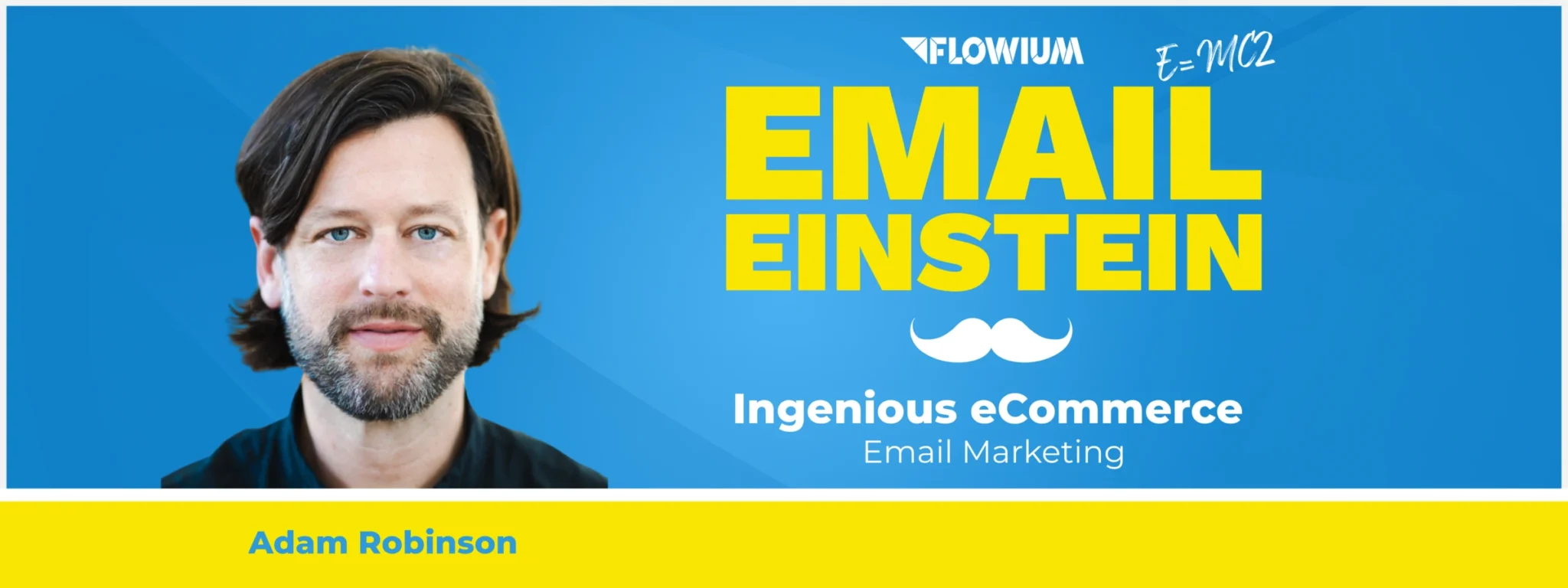
Hello, hello everyone, and welcome back to Email Einstein, the podcast by Flowium. I’m your host, Vira Sadlak. I’m a here at an agency called Flowium. We are very passionate about email marketing, and because we love what we do, we want to share our insights with you. And today we will be talking some big data, and we will be talking retention marketing, all of that fun stuff. But before we go there, here are a few fun facts you probably didn’t realize about retention marketing. Did you guys know that repeat customers are responsible for, on average, 40+% of a store’s revenue? And what’s even more mind-blowing is that, on On average, 40% of that share of overall revenue is generated only by 8 to 10% of your customers, of your most loyal customers. This data may even be higher for some of the brands, but the most successful brands are making customers retention a priority. That’s what is common for all of those brands because they know that customers that the brand already have are the ones that actually make them a sustainable, thriving business. That’s what we will be talking about today with our guest, how to maximize audience growth and reclaim abandoned revenues across all of your channels. That’s the topic of today’s episode. And please welcome the guest today. Please roll the red carpet for Adam Robinson, the founder and CEO of retention.com, formerly known as GetEmails. Adam and his team, they build this innovative, cool solutions that help ecommerce brands rapidly grow their abandonment revenues and first-party owned audiences. Say hi, Adam.
Adam: 2:27
Hello.
Vira: 2:28
We are super excited to have you here today. I have a gazillion retention marketing questions to you today.
Adam: 2:34
I can’t wait.
Vira: 2:35
Cool. Cool. But before we go there, let’s play a little game, a little quick this or that game, just like to get to know you better. Okay.
Adam: 2:44
Great.
Vira: 2:44
Cool. Shopping offline or shopping online?
Adam: 2:47
Online. I hate shopping offline.
Vira: 2:51
Paper book or ebook?
Adam: 2:53
Hmm, that’s a good one. Audiobook. Okay. Can I pick C?
Vira: 2:59
Sure. Yeah, why not? I’m an Audible girl myself. So, yeah, sure.
Adam: 3:05
Can I make a book recommendation that I just listened to twice in 24 hours?
Vira: 3:09
Yes, please. Always. Yes, please.
Adam: 3:10
So have you heard of Rick Rubin? Do you know who he is?
Vira: 3:13
I haven’t. No.
Adam: 3:14
Rick Rubin is like the greatest music producer that has ever walked the face of the earth. And he’s worked with all of the greatest living musicians, every— across every genre. And they all say he’s the best. He just wrote a book called The Creative Act: A Way of Being, where he explains the creative process as he’s interpreted it through working with so many of these, like, culture-defining artists. The interesting thing is As an entrepreneur, I read this book and I was like, I have never heard articulated so clearly my life and the way that I approach my work. So check it out. I’d be interested to hear if other people feel the same way, if he’s just speaking truth about living, or if it’s actually unique to like my approach to entrepreneurship. I would love to know.
Vira: 4:01
Awesome. You guys, we will link the book in the description, uh, in case you wanna get it. The Creative Act by Rick Rubin, right?
Adam: 4:09
Mm-hmm.
Vira: 4:10
Cool. Okay, awesome. Well, I have a few Audible credits myself, so maybe I’m going to use them tonight. Who knows?
Adam: 4:18
Perfect.
Vira: 4:18
Cool. Okay, next one. Email or SMS?
Adam: 4:22
I am, I think I’m going to say—
Vira: 4:26
That’s a hard one, I know.
Adam: 4:28
Well, I don’t, yeah, I don’t have a retail brand. I’m going to say for my business, it’s email. For my personal life, it’s SMS. There you go.
Vira: 4:35
Awesome. And as a user, and as a user, like from brands, what kind of communication do you prefer, email or SMS?
Adam: 4:42
I don’t really love getting the SMS, but I kind of appreciate it in some circumstances.
Vira: 4:49
Yeah, yeah, same, same. Okay, cool. Sorting by price or by rating?
Adam: 4:56
Me, it’s rating.
Vira: 4:57
Okay. Shopify or WooCommerce?
Adam: 4:59
Shopify.
Vira: 5:00
Ah, same. I might be biased though, because like majority of my clients work with Shopify.
Adam: 5:04
We should have like customer base beforehand. Yeah.
Vira: 5:07
Yeah. Okay. Abandonment cart or browse abandonment?
Adam: 5:10
If I had to pick one, cart. If you’re telling me I can do both, both.
Vira: 5:14
Yeah, definitely. Browse abandonment, I love it. People don’t realize how powerful it is. Abandonment cart is kind of the obvious one, right?
Adam: 5:21
Right.
Vira: 5:21
But browse abandonment, you have to be careful though with browse abandonment because sometimes it can feel very intrusive and almost creepy. People sometimes get scared when they receive those emails, but it’s a superpower. Both of those solutions are super cool and powerful and we recommend it as the base for everyone.
Adam: 5:41
We are spreading the same message in the world. That’s basically what I go ranting about. It’s like, even if you don’t use my technology in any way, set up as many triggered behavioral flows as your store will allow you to set up, how it works, right? Like, and then I, the pushback that I hear a lot of the time is, Well, won’t I be over-emailing? And my response is always, I’ve owned email companies for like 10 years now. No. If you want to cut back on email, like cut back on the batch and do more of these behavioral things.
Vira: 6:16
Yeah.
Adam: 6:16
If you could possibly set up a situation where you were doing 100% behavioral, that would be an optimal situation. The problem is the batch, I think, actually pulls some people back to your site that weren’t on there. But like over-indexing, it’s like you almost can’t over-index enough To the flows versus batch. And I love the name of your agency, by the way.
Vira: 6:37
Yeah, yeah. Thank you so much. I totally agree. And that’s what people, when they first start, like, creating the email marketing strategies and doing email marketing, they don’t understand that there are like 2 different types of emails, right? There are like flows, the automated messages that are triggered by customer action and, and the campaigns. And no, you don’t want to exhaust your customers with those like campaigns, especially if they are like one size fits all. No, it doesn’t work in 2023. It probably never worked, but especially now, but the triggered flows, they are so, so powerful. I can’t stress this enough.
Adam: 7:12
Do you have a fundamental like piece of content about building flows?
Vira: 7:16
What do you mean by fundamental piece of content?
Adam: 7:17
So like, we just made you— if you go to our, if you go to our website, I’ve been yelling about this for years. And finally, like we have enough people to like make good content. So like, if you go to our homepage, retention.com, the first thing that you see is a banner that says, get the 5 Fundamental Flows ebook.
Vira: 7:33
Oh, the 5 Flows. I have that book. Yeah, I just downloaded it. So yeah, yeah, we do have a bunch of articles on our website. I’m not sure if we have like the one, you know, but we for sure have like a bunch of blogs about the, we call it the customer lifecycle. So like the fundamentals, you know, in our case, it’s like 9 flows that you build upon, but definitely our strategies are very similar. 5 of yours and we have a few more additional. But yeah, I need to double check because we have YouTube, we have blog and a lot of different resources.
Adam: 8:08
Yeah, you’re doing a great job on the content creation.
Vira: 8:09
Oh, thank you so much. Thank you so much. It’s good to hear. I have one more question that I’m just curious to hear your answer and then we’re going to go to all of the juicy questions.
Adam: 8:17
Sure.
Vira: 8:18
So, Adam, if there was one song playing every time you’ve entered the room, What would it be? I know it’s a random question, but I’m curious to hear your answer.
Adam: 8:28
This is going to be an obscure one. It’s called Jack by HVOB. I’ve never heard of it. I can link to it. It’s a very— it’s kind of like— I don’t even know what the genre is called. Kind of electronic, but not EDM or something. I don’t know. I don’t know what the genre is.
Vira: 8:46
Well, they get it.
Adam: 8:47
She’s a DJ. HVOB.
Vira: 8:48
Awesome. Okay, cool. Let’s go back to the basics. Retention marketing. Briefly to those who are either new to the industry or who are trying to understand this buzzword, because it definitely became the buzzword in the industry lately. Everyone’s using it. Everyone’s mentioning it. What is retention marketing? Why it matters? And what is retention.com? It’s a loaded question, but yeah.
Adam: 9:14
Retention marketing is much broader than the product suite that we offer. I consider retention marketing anything that is an effort to increase lifetime value of people that have already bought from you. So it encompasses subscriptions, loyalty referral programs, SMS, customer service, shipping, simple returns policy, great content surrounding either a cause or a community, and bump, bump, bump, bump, bump, bump. personalized, timely, and engaging email marketing. We only do things that enhance email and SMS. All of the other stuff is definitely still retention marketing. It’s just not what I’m an expert in. So I know I’m not going to, you know, opine on it. What I will say is what I am about to speak about. I do believe for the amount of effort that you put into it, the time it takes to get going, and your ROI, it like blows all of the other things away. It’s just so much lighter of a lift for increasing LTV and increasing your retention than these other things that you can be doing. Like going from not having a subscription program as a brand to like having a subscription program is a heavy lift.
Vira: 10:29
Of course.
Adam: 10:29
Putting a loyalty program in is a heavy lift. Like plugging in retention.com takes 3 hours. So yeah, retention.com, I’m going to just start with what I perceive from talking to all of the brands that we do business with are the problems that, that there’s, that we’re solving for them. So the big picture problem is that there is a ton of leakage of you capturing and owning audience from the traffic that you’re driving to your website. What do I mean? You have 2 ways you can capture these people’s information. You can either get it in a form or you can have them buy from you.
Vira: 11:03
Mm-hmm.
Adam: 11:04
And that’s like kind of top of funnel leakage. People are hitting your website and They’re leaving without actually giving you their information. There’s also leakage in these flows that we’re talking about. The crazy thing is that no one knows and is very difficult to believe but is true is you’re saying these flows are the most powerful thing in the world. I agree with you. Did you know that the only people who are receiving these flows are actually logged into the Shopify store?
Vira: 11:31
Well, yeah, it makes sense.
Adam: 11:32
I mean, how else are they going to tie Right. The behavior on the shopping trip. But that’s only like 15% of the audience that would be getting these flows if every single person who fell into the segment that should get the flow was getting the flow. Does that make sense?
Vira: 11:49
Yeah, that’s, that’s a crazy, crazy number if you think about it.
Adam: 11:52
It is unjust. Here’s how I like to think about it. There is no question that anyone listening to this, the entire focus of their life during the day when you go to the absolute, what are we here for? Like, we are here to get people to add to cart, right? Like, period. Like, everyone’s job is to get people to buy online. The first step to buying is adding to cart. So when you think about that, I don’t know what the percentage of people, people’s conversion rate is, add to cart to— let’s say that it’s a rosy picture and, you know, half of the people or whatever, they go on to convert.
Vira: 12:28
You know, it’s actually like 70. I think it’s like 70% of something. People are leaving stuff in their cards, and only 1/3 of that— it’s like 1/3 in the best case scenario, right?
Adam: 12:39
Yeah. So in that 70% that’s bouncing in the best case scenario, like, you’re only able to deploy messaging to 13% of those people. Yeah. And by the way, some of them are actually on your list. They’re just on a different device. Like a lot of it. There’s this other audience of people who the brand doesn’t have an opt-in for, but retention.com has an opt-in for because we run this co-reg network. We can help brands contact people that are putting stuff in the cart and leaving and aren’t even on their opt-in list yet.
Vira: 13:13
Okay.
Adam: 13:14
Which it starts to get— it starts to get magical. And then kind of even more magical than that, right? Like in a world where Facebook targeting is getting less effective and more expensive, everything is getting harder. It’s kind of a shame that you’re only capturing like 2 or 3 or maybe 4%. I mean, 3% to an exit intent popup is like, I think, pretty accurate. This identity technology that I was just describing, how we expand the flow audiences, we can also just help people grow their email lists with it. And instead of 2%, you can get 40% of your anonymous US visitors.
Vira: 13:52
And that’s where it gets—
Adam: 13:53
To a deliverable email address.
Vira: 13:54
Confusing to me because I do understand like the process behind recovering abandoned cart for customers whose information we like have in Klaviyo, right? However, it’s like says on your website that, that abandoners represent up to 10x added revenue to your store. But who are these people? Like, how, what’s the technology behind it? How do we get, how do we know that this person that is visiting the website and whose information we don’t have, how do we talk to them? Like, what’s the, what’s the process behind it? Because it’s super confusing for now.
Adam: 14:27
Right. So let’s talk about the last product that I described. So we can get you email addresses of people who don’t fill out forms.
Vira: 14:35
Okay, Adam. So that’s, that sounds very like shady to me. But I know that, I mean, I know that you guys are like legit. And I’ve seen the case studies, like numerous case studies on your, on your website. But how is it even legal? Like, seriously?
Adam: 14:50
So This is probably one of the most widely held wrong beliefs or misinterpretations of the law. In the US, the CAN-SPAM Act of 2003 states very clearly, it says nothing about opt-ins. It says you must have an opt-out link in a marketing email to send it. That is not the case for GDPR. That is not the case if you’re in Canada. That’s not the case for CASL. But in the US, The law is that email is an opt-out sport and not an opt-in sport. That is not up for debate. That is a fact. You can read the law. We have retention.com/legal. We show you the law. We talk about how it relates to what we do. We’ve never not made it through a legal department. If people don’t want to do this, this is because of a sort of moral or ethical or a taste choice.
Vira: 15:41
Mm-hmm.
Adam: 15:42
It is legal in the US. The next question is, but I thought CCPA and CPRA were just like GDPR, so isn’t it illegal for that reason for California? Well, the interesting thing about the US is that it’s federalist, and there is a federal-level law that is opt-out for email. The states can’t put a law that supersedes federal law in place, or they’ll get sued under federal law. So the CPRA CCPA and CPRA, it’s almost identical to GDPR except for the fact that it’s an opt-out instead of opt-in law.
Vira: 16:18
I see.
Adam: 16:19
And another fact that people don’t know about the California law is it only applies to people with over $25 million in revenue, which I think is very interesting.
Vira: 16:25
Interesting.
Adam: 16:25
Just so you know.
Vira: 16:27
Interesting. So what you’re saying is that we can basically talk to people whose information we didn’t get from them directly, but we still can recover their abandonment carts. Is that what you’re saying?
Adam: 16:41
That is what I’m saying. It sounds impossible, but it is true.
Vira: 16:45
What about the deliverability then? Because I can, as I can imagine, the unsubscribe rates, the spam complaints, they probably must be super, super high on those emails. No.
Adam: 16:57
So they’re certainly higher than what your other flows would be. So here’s, here’s, here’s what’s going on. The positive engagement on these emails is absolutely phenomenal. Part of the magic of how our product works is we buy a bunch of open and click signals from the email ecosystem. system to clean these email addresses before we give them to you. So it was someone who’s on your website and we have like other registered click events in like the last 24 hours. So it’s like a super hot email. The thing that causes the most problems in email is when people rent or buy lists that are littered with what are called spam traps.
Vira: 17:31
Yeah.
Adam: 17:32
Spam traps are old inboxes that have converted to something that Gmail, Hotmail, Yahoo, they use as honeypots to catch people who are sending to people who have not opted in or not opted in in the last 12 months or whatever. So if you’re buying signal from the email ecosystem to clean this data, it eliminates this as a possibility. Now, you might think the spam complaint rate will be insane. Well, it’s just not like it’s a little higher than your other flows, but it is nothing that your overall email program cannot handle. And that’s why this is working. And that’s why we have customers like Warby Parker, Dr. Squatch, Tonal, BlendJet, Bulletproof, Karayuma— like all of the biggest brands on Shopify are using this very successfully. And what I would say is you don’t even have to believe me. There is a size that you can test this out on where there is absolutely no way that it could adversely affect your deliverability. Start very small. And then when you see it works, grow it. Right? Or stop using it. I don’t care. You know, like, if it’s not for you, great.
Vira: 18:39
I mean, it’s, it’s, it’s still based on customers’ actions. So what I’ve noticed, and I mean, it’s across the industry, campaigns normally have higher unsubscribe rates, higher spam complaint rates, just because they are not triggered by customer action. And in this case, that flow, it would still be I mean, it’s an abandoned cart email. I don’t necessarily, as a customer, I don’t necessarily understand the process behind it. All I know is that I went to the website, I browsed the website, I put something into the cart, and then I received the reminder, right? Or is the process the same for me as a Klaviyo customer and not Klaviyo customer, right?
Adam: 19:21
Yeah, I mean, well, I think to sort of summarize the point I think you’re making, it’s like there is a huge amount of intent that goes into somebody putting something in their cart, right? That’s counterbalanced by some element of surprise. If they know that they haven’t ever given the brand their email, a lot of people don’t know that, you know, you know what I mean? Like, yeah, if you put something in a cart in 2023, it’s just not surprising if someone sends you an email.
Vira: 19:47
Yeah, you kind of, kind of expect to receive an email from the brand. That’s what I always do. I always wait for that email to get the discount code.
Adam: 19:55
Those are very low complaint. Like the top of the funnel stuff is somewhat higher complaint than you’re welcome series will be, but like, it’s also higher open rate and higher conversion rate than your open series. It’s crazy.
Vira: 20:05
Yeah, I see what you mean. I see what you mean. Let’s talk more about your identity resolution technology, like what it is and how it can help like reclaim the data. And also maybe later we can talk about like winning back those customers whose information you have. But like, let’s, can you briefly explain what is this technology again, or like summarize?
Adam: 20:27
Absolutely. So there’s, in terms of banner ads, like, so I consider ad tech to be anything in the banner ad universe. And the ad tech world is anonymous, meaning there’s a unique identifier that follows you around website to website that allows advertise— that allows basically you to get put in segments so that advertisers can show you ads and so that people can show you retargeting and stuff like that. Cookies used to dictate all of it. Now it’s done some other ways.
Vira: 20:58
Right.
Adam: 20:58
So there are unique identifiers in a lot of these ad networks that it is possible— you’re not supposed to be doing this, but it is possible to deanonymize them to an email address if you sort of had enough of a database of emails. So I’m going to say this in a different way because I’m trying to be very non-technical, but I think it helps to be a little bit more technical in this case. Because it’ll demystify it a little bit. A lot of these ad networks use this encryption language called MD5, and MD5 is an email address that is hashed. A hash is something that is— you’re unable to unhash it with a human being, but— or a computer. But if you had the email in plaintext and you hashed it, the hashes would match. Does that make sense?
Vira: 21:43
Yeah, it’s like, it’s like the parts of the puzzle in a way. Yeah.
Adam: 21:47
What we did— yeah, what we did— this is like a waterfall. There’s the identity part of it, which is like we have access to these pools of cookies that show us these hashes of visitors, of anyone who’s, you know, been hashed. And then we made a bunch of partnerships with lead generation companies, and we have this massive database of emails, and then we just hashed all them. So like when we see a hash in a cookie, we match it to a hash in our database. If we have the match, then we have the plaintext because that’s how we created the hash in the database.
Vira: 22:17
Interesting.
Adam: 22:17
And then we check to see if it has signal from the email market. And then if it does, we pass it to the customer.
Vira: 22:22
Does that mean that you can also use that identity resolution tool to retarget your shoppers later on?
Adam: 22:29
The brands can. I mean, what we’re enabling is email retargeting, right? Like somebody hits your site, they leave, we give you an email address and you start retargeting them over email rather than—
Vira: 22:40
I see. I see.
Adam: 22:41
I mean, a very advanced use case. Ryan Pamplin, the CEO of BlendJet, just told me about this. He’s been doing it for 6 months. So A lot of our customers, we have a Facebook integration. They use these emails to put in Facebook because Facebook pixel gets blocked a lot now. So we get way more of an audience than Facebook’s retargeting audience. Ryan takes our audience and he combines it with the time on site of the visitor.
Vira: 23:04
Mm-hmm.
Adam: 23:05
And if the time on site is high enough, he keeps it. If it’s not, he throws them out and then he puts it in Facebook. And then he knows if, you know, his conversion window’s 3 days on a retargeting campaign. So after 3 days, he pulls the person out and he has created this like really efficient Facebook retargeting audience using our data signal from his website and data that he has collected on his customers. So people are doing all sorts of crazy stuff with it. We’re building that as a product for our customers right now.
Vira: 24:00
Interesting. Interesting. So how does Retentions.com integration with Klaviyo look like? Where is that information stored in Klaviyo, say, like like email, is that recorded in Klaviyo? Do I need to upload it like manually? What’s, what’s the process?
Adam: 24:15
Yeah. So like we have this one-click integration with Klaviyo and what it does, the brand. So like for the top of funnel, for the call it browse abandonment if you want to, if we’re just giving you emails that you wouldn’t have gotten otherwise, you don’t want us giving you emails that you already had. You don’t want to buy emails you already have. So you connect this Klaviyo integration using the API key or whatever. It pulls in your existing list and your unsubscribes so that we won’t send over any email you already have. So that’s kind of step 1. Step 2, it creates a list in Klaviyo called retention.
Vira: 24:50
Mm-hmm.
Adam: 24:51
And then step 3, you know, you work with our CS people to like get a flow set up for the welcome series and then get, you know, we have event scripts that like go by the cart abandonment and browse abandonment script and you sort of, you fork your flows And all of the events also go through us. They hit the side of the flow that’s our side. And it says, if it’s not already in the other side, run it. If it is, don’t run it. And then you can see the incremental that we have driven in that flow.
Vira: 25:19
Interesting.
Adam: 25:19
Does that make sense?
Vira: 25:20
Yeah. Yeah, totally.
Adam: 25:21
And it’s really quick. It’s really straightforward to set up the Shopify integration, actually installing the pixels. We just launched a private Shopify app that puts the, installs all of the scripts for you. You just like click go. And it sets it all up. You don’t have to do anything. It’s unbelievable. Yeah.
Vira: 25:41
Honestly, like the technology that excites me the most about your tool is that like abandonment cart recovery portion. But there is also, there’s also this like really cool tool that I just learned about today that is called Enrich. So what is Enrich and how can you personalize that communication with your customers with retention.com Enrich tool?
Adam: 26:01
Yeah. So what Enrich does is we basically have, you know, age, gender, income, like some basic demographic data on most US email addresses, if not all. And we found that a lot of brands want to know more about the emails in their database just for segmenting and messaging purposes and like buyer personas and like all that stuff. So— You can just do a kind of like a CRM, like, you know, here’s the file, pick the fields you want, you know, hit go, and it’ll kind of allow you to just like re-upload it into Klaviyo and add all that stuff so that you can—
Vira: 26:38
So is that more like a big report that shows you what portion of your customers, like what age, or is it—
Adam: 26:46
We should make it a report. That’s a really good point. We just have it as like it will add the fields to the people and then give it back to you so you can create segments.
Vira: 26:53
So it will be like recorded on customer’s like profile and then you can basically use that information.
Adam: 27:00
Exactly, it’ll spit you back the same email addresses with these additional 4 columns, then you can put them in Klaviyo and add those columns and then segment by them.
Vira: 27:06
Cool. So you can basically like segment based on those, based on those like custom properties, I guess, or based on those columns. That’s awesome. That’s, that’s really interesting. And like, how do your customers usually use it like this tool?
Adam: 27:24
I mean, everybody’s just, you know, so Here’s the thing. I would say, like, I do not lead with this product. I would say there’s maybe 10% of our customers that are staffed in a way to where they could really get value out of that information. Most of them, I would not recommend spending much time on it. Do you know what I mean?
Vira: 27:45
I see.
Adam: 27:46
Like, the other products are just like so valuable and so easy to set up. It’s like starting to mess around with like Oh, like, what if I sent men and women a different message? What if I sent old and young people a different message? It’s just, is that really where you are in your business? Or are there bigger, are there higher priority items across the board? Right?
Vira: 28:04
I see what you’re saying. Yeah. What are the common retention marketing mistakes you’ve seen across, across the industry? What are people doing that you guys can help them fix?
Adam: 28:16
Well, the biggest one Which I can’t remember if we talked about this on the recording or before. I am blown away by the fact that more people have not set up what I refer to as product abandonment and what Klaviyo refers to as browse abandonment.
Vira: 28:30
That’s crazy, right?
Adam: 28:32
Every single customer only has cart set up. Some of them only have checkout set up because Klaviyo makes you set up checkout and they call it cart when you’re setting it up.
Vira: 28:40
I mean, we’ve seen big success with all, like, with the, we call them 3, like, basic flows, the abandoned cart, then added to cart. Unfortunately, not a lot of people are using that, but this, this is a very powerful flow and browse abandonment. These are like one of your like top revenue generators for all of the accounts that I work with. And people just like don’t realize how powerful these tools are. But yes, it can be a bit creepy if you use like the wrong language. Sometimes people can get creeped out, but, uh, I mean, if you do it right, it’s like one of the biggest revenue generators for all of our accounts.
Adam: 29:16
And like, I think that creepiness thing, like it really depends audience to audience. We, you know, that’s, that’s one of the— it’s like, that’s one of the— won’t this creep my customers out?
Vira: 29:27
It’s like, it depends on who you’re talking to.
Adam: 29:29
We just say like, like we say like for, for the top of the funnel, like site abandonment, right? That’s what GetEmails was just like the first product that I talked about or which the second one. So it’s like we literally have been telling people for 3 years, copy your welcome series, say thanks for stopping by the site in the subject line. Leave everything else the same on the entire rest of the welcome series. It works great. Like, like it just doesn’t creep people out. It’s like you think that it would and it doesn’t. And it’s just, you can’t— again, you don’t have to believe me. You have to see it with your own eyes. Like, just set it up and you will be blown away.
Vira: 30:04
Yeah, definitely. It’s like a popular mistake not having that flow for sure. Yeah. How do you like measure the success of like your retention marketing efforts?
Adam: 30:14
As it pertains to our product, Our customers care about ROI and that’s it. So we try to get them thinking about the bigger picture, but like, it’s like, are you showing me better ROI than my other channels in 60, 90 days?
Vira: 30:29
And I’ve seen some crazy case studies on your websites, on your website as well.
Adam: 30:34
What I will tell you is that Dr. Squash is going to get on stage at Grow LA in one week from today with me. And he’s going to say that he made $1.2 million in October and paid us $20,000. He’s going to tell everybody that. Ryan, what’s that?
Vira: 30:53
What were the main things they did to get that result?
Adam: 30:58
I mean, well, the wild thing is the only thing that they were doing was the browse abandonment. They weren’t even using the abandoned cart stuff, but they were just doing what, what we recommended. They’re just collecting emails into Black Friday. And then the audience that they had amassed directly attributed to us was so large that it generated that return during October. And yeah, that’s crazy. That’s crazy. Ryan Pamplin paid us around $20,000 in October also. BlendJet. He has been a customer for much longer and he generated $1.8 million and we were around 45% of his Black Friday revenue emails that we gave him.
Vira: 31:36
Insane.
Adam: 31:36
What happens is I feel like Americans in particular, we want results now. So like there’s a gun to your head if you do what we do and we have to like price our services in a way to where the ROI is almost immediate or we’re just not going to get people to stick.
Vira: 31:51
Interesting.
Adam: 31:52
But what happens is we’re giving you email addresses that are then on your list and you mail these people over and over and over again. Maybe you mail them 100 times before they unsubscribe or like it stops getting opened or whatever. But like For each email address, people come back and buy over and over again. So it’s this snowballing effect, which is why I gave the Dr. Squatch example first and Ryan second. Like, if you’re a customer for several years, like, we will slowly become the majority of your email list. Like, we’re probably 80% of Ryan’s email list right now because think about the math. It’s like he was only getting 2% before. Now he’s getting 40%.
Vira: 32:28
Right.
Adam: 32:28
So how many months of 40%, you know, 10 times more email conversion until The emails that are on your list are almost all emails that have come from us. It happens eventually. So it’s like, all right, then it’s like, well, how much of your business is from email? And then that’s mostly us. So, you know, it’s just wild.
Vira: 32:48
It’s wild. And who, who would you say this tool is good for? Is it like for everyone or is it exclusively for businesses with like good deliverability and like excellent sender’s reputation?
Adam: 33:02
Like if you have bad deliverability, don’t even think about it. If you have bad deliverability, fix your deliverability.
Vira: 33:08
Like, that’s the basis, right?
Adam: 33:10
If you’re not able— like, you need to fix that before you do anything else because you’re just killing yourself. And I can actually give you a link to our deliverability doc about how to fix problems. It’ll be good.
Vira: 33:21
Sure. Yeah, we’ll share it. We’ll share it in the description box, you guys.
Adam: 33:25
Generally speaking, and this is general, like over $3 million a year, it starts working. Over 10, it starts working really well. Over 25 or 30, it’s like the best thing these people have ever seen. Like, they’re like telling all of their friends, sending all of their friends. They’re saying things like, you made us $1.2 million in October and we paid you $20 grand. Like, you know.
Vira: 33:49
Awesome. So where can people learn more about your, your tool? Where would you recommend starting?
Adam: 33:56
So you can go to retention.com. Our website. I’m posting a lot on LinkedIn, but it’s more about the startup journey I’m on. I’m currently doing this like work in public. I’ve said that I’m gonna like bootstrap a unicorn in 12 months. So a lot of people, I’m like incredibly revealing with the information that I’m spreading about our company online, but that’s not really about the product. Our company page has some product stuff on it, but it’s really just our website is like the best place.
Vira: 34:24
Awesome. Thank you so much, Adam. That was mind-blowing. Thank you so much.
Adam: 34:30
I just like, it’s my company and I still am just like, this is magic. You know, like 3 years in, I’m just like, I can’t believe we can do this.
Vira: 34:39
That’s, that’s so cool. And you guys, as, as I already said, we will be sharing all of the links and all of the resources that we discussed in this podcast in the description box. But if you have more questions, please reach out. We’re here to answer your questions. Definitely look into tool like retention.com. It’s mind-blowing. I honestly, I learned so much today, especially about the legal side of things, Adam.
Adam: 35:04
And if you want to learn more about that, retention.com/legal.
Vira: 35:07
Thank you so much.
Adam: 35:07
Answer all your questions.
Vira: 35:08
That was eye-opening. Thank you so much, Adam. It was fun having you on this podcast. We hope to have you back one day again.
Adam: 35:15
Hey, anytime. I’m happy to.
Vira: 35:18
Awesome. Well, thank you so much. Take care, Adam.
Adam: 35:21
Take care.

Vira Sadlak
Podcast host, marketer, traveller and a life lover from Vancouver, Canada