

Podcast Transcript
Vira: 0:41
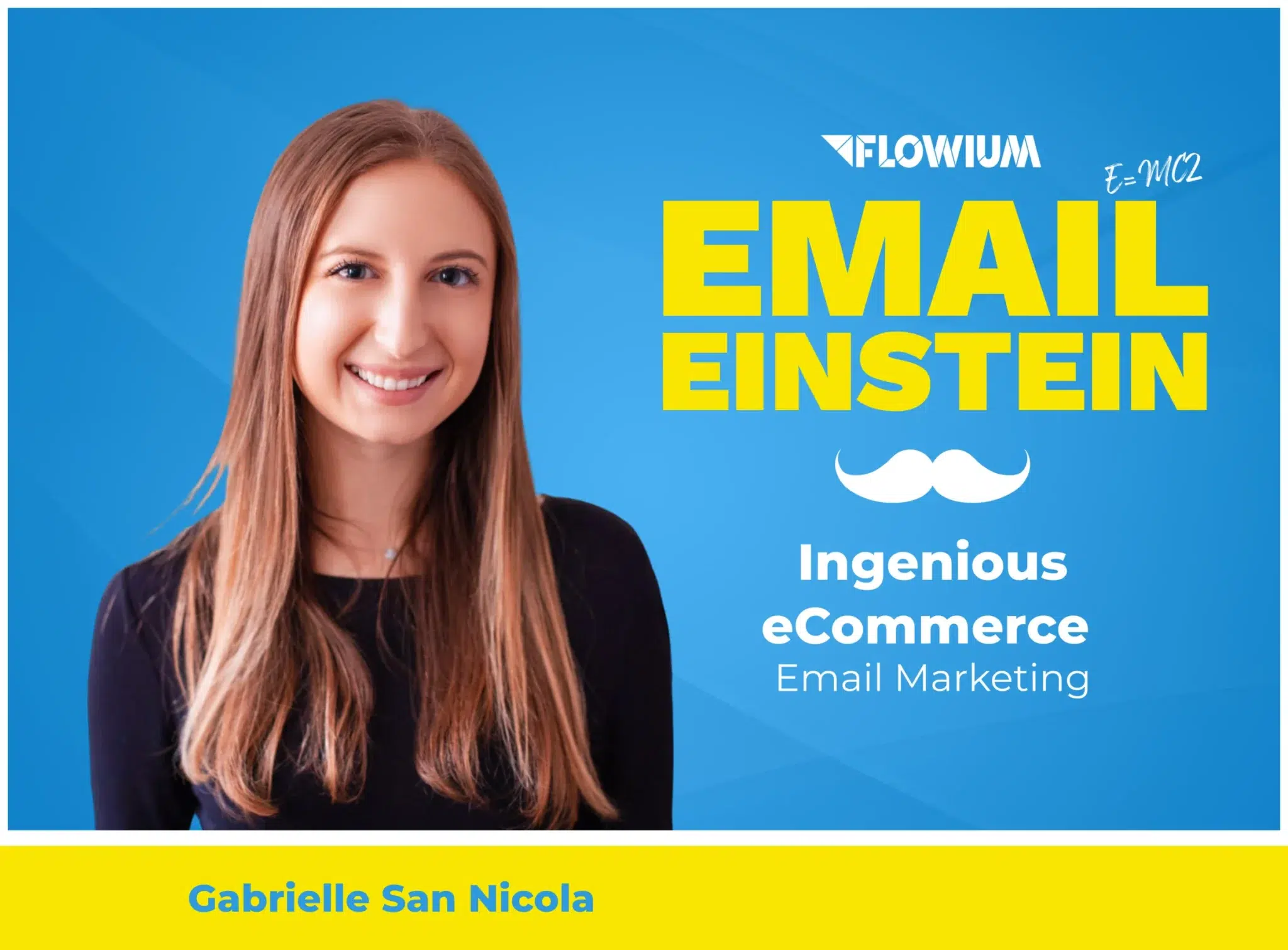
Hello, hello everyone, and welcome back to Email Einstein, the podcast by Flowium. I’m your host, Vira I’m a marketer at an agency called Flowium. And here at Flowium, we do email marketing. And because we love what we do, we want to share our ecommerce insights with you. Delivering the right message to the right person at the right moment. That’s what we will be talking about today. And before I introduce our guest, the guest I’m very excited about, by the way, I just want to do a quick question to you guys. Have you ever noticed that whenever you hear a good recommendation about a restaurant or gossip around the water cooler, it makes you listen. It keeps us engaged. It encourages our curiosity. And depending on the source of that information, we either believe it or we want to seek more information. And it’s the same for user-generated reviews and user-generated content online. And today we will be actually talking about the power of user-generated content and zero-party data. And I’m joined today by Gabrielle San Nicola from Okendo. Gabrielle is a strategic partnerships manager at Okendo. And for those of you who don’t know what Okendo is or who never used Okendo, this is like an awesome customer marketing platform that builds connections between consumers and the brands they love. Gab, we’re super excited to have you here. Say hi, please.
Gabrielle: 2:11
Hello. Hello. Nice to meet you, everybody. And Vira, thank you so much for having me on. I’m excited to be here.
Vira: 2:18
Yeah, we have— I have gazillion questions to you regarding all of the zero-party data and all of the reviews and all of the juicy e-commerce questions. But before we go there, Gab, let’s play a little Q&A game, like this or that Q&A, just like to get to know you better. Okay?
Gabrielle: 2:33
Okay, let’s do it.
Vira: 2:35
Cool. Okay. East Coast or West Coast?
Gabrielle: 2:38
East Coast.
Vira: 2:38
Email or SMS?
Gabrielle: 2:40
SMS.
Vira: 2:41
Sorting by price or sorting by rating?
Gabrielle: 2:44
Sorting by rating.
Vira: 2:46
I’m most of the time by rating, but sometimes I’m a by price person.
Gabrielle: 2:51
Well, I will do— I’ll probably go with both. I’ll see what is the lowest price with the best rating, but I think I will always go for the better rated product over the better priced product.
Vira: 3:06
Yeah. Shopping online or shopping offline?
Gabrielle: 3:10
Online.
Vira: 3:11
Instagram or TikTok?
Gabrielle: 3:13
That’s a hard one. I think I might go with TikTok.
Vira: 3:16
Yeah, we just had this conversation today with my coworkers. They said that Instagram Reels is more like a millennial thing and TikTok is more like a Gen Z thing. So I’m an Instagram Reel person myself, which obviously my age shows, right, when I say Instagram Reel. But yeah. Okay, interesting. Okay, the last question. If there was like a theme song playing every time you entered the room, what would it be?
Gabrielle: 3:48
Shiny Happy People by R.E.M.
Vira: 3:52
It didn’t even take you, like, a second to think. You, like, knew that right away, right?
Gabrielle: 3:58
Okay, this is, this is, this is a funny, embarrassing admission, but 2 of my favorite days of the year that come every year are when I can go to the dentist. I love going to the dentist, and I love getting my teeth cleaned.
Vira: 4:12
That’s so random.
Gabrielle: 4:13
I know, it’s very strange, but I described this to somebody the other day. I said, it’s like the beginning of the best day ever. I wake up and that’s the song that I hear as I play, and the sun is out and shining, and then I go and I get my teeth cleaned. So I’ve decided that that song is now my anthem.
Vira: 4:32
Very random of you, but very kind of cute too. Cool. Okay, Gab, so let’s go back to the basics. For all of those who don’t know what Okendo is, how would you describe it? What it And what do you guys do?
Gabrielle: 4:48
Yeah. Yeah. So Okendo is a customer marketing platform that specializes in reviews and surveys for Shopify brands. So you might know us for our bread and butter product, which was Okendo Reviews, but now we’ve, we’ve kind of expanded into like a, a zero-party data platform that helps brands kind of collect more information about their shoppers so that way they can Effectively market and personalize their content.
Vira: 5:22
And if you were to explain what zero-party data is, I mean, most of people know it, but just like to make things clear, what is zero-party data and why are brands so determined to get that data nowadays?
Gabrielle: 5:36
Yeah, so zero-party data, I mean, it’s such a buzzword at the moment, right? But effectively, it’s information that’s proactively shared from consumers directly to you. So you’re able to collect zero-party data via surveys, reviews, customer feedback. You know, this is really important to collect, especially after the past couple of years. There have been recent privacy changes with, you know, different legislation that’s been put in place, iOS changes as well. So attribution and being able to understand exactly where your customers have come from, it’s, it’s Mm-hmm. at best. So zero-party data is really important to collect because it’s quite literally your customers proactively giving you information about themselves and their shopping habits that you should then be able to like action on, if that makes sense.
Vira: 6:37
Yeah, yeah, totally. Someone from my team, like recently they shared this like meme in our Slack channel, like the differences between zero-party, first-party data, second-party, and third-party. And zero-party, there’s like a dude, shopping around, and it says, the gym shoes you liked in our survey are on sale. And the first-party data, it was like the same guy shopping the same shoes, and it says, the gym shoes you browsed last year are on sale. And the second party, it’s like, I hear you have a new gym membership. Need any shoes? It’s like a bit creepy, right? And the third party, that’s where it gets like the creepiest, right? Maybe you wouldn’t have skipped your workout today if you had new shoes. So that’s pretty much how it works. But yeah, no, definitely it’s like super, super important. I mean, zero-party data, it kind of like reduces that like guesswork, right? When customizing the customer experience. That’s why I think it’s like super important, especially now when we don’t have as much data as we used to back in the day.
Gabrielle: 7:42
Yeah, definitely. Cool.
Vira: 7:44
So when it comes to Okendo, and just like you mentioned, most of users know you guys as that awesome like review platform, and we will definitely talk about it later, but like, how do you, or how can you gather that like zero-party data with Acendo reviews and all of the other stuff that you guys are doing? How can you like gather that data?
Gabrielle: 8:07
Yeah. Yeah. So, I mean, you, you hit it on the, on the nose, right? You’re able to collect zero-party data via reviews. So just by asking your customers, not only what did you think about the product, but What did you think about your experience?
Vira: 8:23
Hmm.
Gabrielle: 8:23
Tell, why did you abandon your cart, right? Were there insufficient shipping options or did you find a better price elsewhere? All of that information is able to be collected. And then the cool thing about Okendo is that with our integrations, you’re able to then create segments in your email service provider or SMS platform and then send targeted campaigns that are personalized for an individual’s like unique unique needs. So if I have answered a survey that says I abandoned my cart because you didn’t have good international shipping options, if the brand then, you know, saw enough of a response and then made an action on that feedback and they changed their shipping options, they could then send out an email or an SMS flow that would say Hey there, I know you weren’t happy about our shipping options, but we’ve just made a change. We’d love for you to come back and give us a shot. Like, here’s 15% off. Um, so that’s, it’s, it’s a, it’s kind of like a powerful one-two punch of being able to collect the information, but then be able to action on it as well.
Vira: 9:40
Yeah, that’s so cool. That’s so cool that you can actually get that data from like surveys and reviews, even recorded Like for our customers, in the case of our, like most of the people who are listening to us, you can like record it on the backend of Klaviyo in customer’s profile. And then you can basically like segment them out based on that custom properties that they get from that platform. It’s, it’s really cool. And, uh, yeah, like for me, one of the biggest benefits of that like zero-party data is that it’s like very trustworthy. It’s more trustworthy than the third-party data, right? Because customers are like willingly share that information about the brand.
Gabrielle: 10:18
Mm-hmm.
Vira: 10:21
Knowing that the brand will use it for everything from like sales and marketing to creating that personalized experiences. And I think that’s where platforms like Okanda really shine. It’s like that personalization, you know? So that’s, that’s like super cool. Let’s talk about like different products that you guys offer. Let’s start from the, from your like bread and butter, from the reviews.
Gabrielle: 10:44
Yes.
Vira: 10:45
Why is it like a good idea at all to add reviews to your tech stack? Are they still like as effective as they used to. We know that a lot of brands are like, there’s like a lot of fake reviews nowadays. Like why should brands still care about reviews basically?
Gabrielle: 11:03
Yeah. Yeah. Um, reviews are, they’re, they’re pretty essential because they provide social proof, right? And that social proof really goes to maximize your buyer consideration. Right? Like, I would say 99.9% of customers read product reviews before they make a purchase.
Vira: 11:23
True.
Gabrielle: 11:24
And, you know, we’ve found that customers are willing to spend probably more than 30% more with a brand that has excellent reviews. But I’ve, I’ve even noticed in myself, like, when I go to Whole Foods or Target or Sephora, there are so many brands that are competing for shelf space, and I don’t know which one is the best chip to pick or the best facial moisturizer. So I’ll go on my phone and I’ll pull up brand sites to look up reviews before making that purchase, right? So it doesn’t matter if you don’t sell much online, your customers are there and they are looking for a reason that like you’re different than your competitor, right? Because at the end of the day, there are hundreds of different moisturizers you could choose from, but you’re going to choose from the one that looks like it would be the best for you as the customer. You know what I mean?
Vira: 12:25
Right. Yeah, no, totally, totally. And I mean, reviews, they not only benefit obviously the customer, but reading the reviews for e-commerce can also help you as a brand to learn how your customers actually feel about like your products and your business, especially like when it comes to negative reviews. I feel like they’re like, you can tell about a lot about your company and whether or not the processes are smooth or what processes can be like improved, what like internal changes can be made. Maybe like a customer, for example, had like a poor experience with one of your team members, or maybe they had a poor checkout experience. So all of that data is really, really valuable. And I like that tools like Okendo and like similar tools, they help you kind of like gather and almost like organize that data.
Gabrielle: 13:16
Yeah, yeah, absolutely. I mean, I get asked this all the time and the answer is yes, like you You should be publishing your negative reviews. You know, we, on the first hand, right, we find that purchase likelihood peaks when the average star rating is between like 4.2 and 4.5 stars.
Vira: 13:36
Really? Not even like 5 stars? That’s interesting.
Gabrielle: 13:40
Well, you know, as smart as we are, we do understand that there might not be such a thing as a totally perfect product. So if you see a site that has only 5-star products, like, that’s a little fishy, right?
Vira: 13:57
Right.
Gabrielle: 13:57
So negative reviews have a really positive impact because they can help establish that, like, trust and authenticity. You know, you can first of all show to your new customers that you take care and time to respond to anybody who has had a negative experience, and you can, you know, kind Surprise and delight at that point. So it really is a beneficial thing to be able to display the good and the bad. Right.
Vira: 14:27
Right. And how can you actually successfully generate those high impact reviews? Where do you start? I have a brand. I want to start collecting the reviews. How to make sure that the reviews I’m collecting have those high impact and that collect them effectively. You know what I mean?
Gabrielle: 14:47
Yeah, yeah, definitely. Well, you know, one, one thing that you definitely should be doing is, is kind of integrating incentives into your review process, right? So, so within Okendo, you can firstly just reward via a native couponing feature. Normally we recommend tiered incentives, right?
Vira: 15:11
Mm-hmm.
Gabrielle: 15:12
If I were to leave just a text review, maybe I would get 10% off. But if I leave a photo, maybe I should get 15% off. But if I leave a video and link my social, I’ll get 25% off. So, you know, trying to, trying to optimize for the most user-generated content as possible.
Vira: 15:33
Mm-hmm.
Gabrielle: 15:33
You know, because, uh, sometimes the highest converting ad types aren’t the ones that are super high production value. It’s those like UGC mashup ads, you know, showing real people how much they love the product. So you want to make sure that you’re incentivizing people to come, but you also want to meet people where they are, right? So send out an email request for review, but also send out an SMS text as well. You know, we find that more than 85% of reviews do come from mobile. So if, if you have SMS involved in your marketing stack, you absolutely should go to kind of diversify the channels that you’re requesting these reviews so that way you can maximize the review generation rate.
Vira: 16:23
Yeah, I know. That’s, that’s super interesting. So you can’t basically expect that every customer will provide you in-depth feedback, right? Describing their personal experience and specific attributes of the platform or of the product. I’m sorry. And using platforms like Okendo, you can actually integrate product attributes directly into the, that like process of review. And basically you’re allowing your customers to rate their experience with your product based on the features of the product. Can you, can you talk more about that? Like how does that like attribution process work?
Gabrielle: 18:21
Yeah, yeah, absolutely. So, you know, when you get a 5-star review that says amazing or love it, That’s really great, but it’s not helpful, right? It doesn’t tell you anything about the product or why they like it. So the product attributes allow your merchants to showcase unique selling points without relying on a customer to put that in the body of the text, right?
Vira: 18:49
Mm-hmm.
Gabrielle: 18:49
So we have product slider bars. We normally recommend no more than 3 attributes. So that way, when a consumer hits the page, we could see that These shoes are very comfortable and the highest quality, and they fit a little big to size, right? So that’s totally customizable. But, you know, we find that it has a lot of really cool benefits on top of the fact that you’re able to find, you know, potential customers who have similar buying habits. Um, we find that it cuts down on returns, right? Like apparel brands
Vira: 19:26
Mm-hmm.
Gabrielle: 19:26
have great return policies. I’m 5 feet tall. Pants literally never fit me, right? I’m too short for normal pants. So when I shop online, I’m a culprit of buying 2 sizes, right? Like maybe I’ll get a small and a medium or an extra small and a small, but that really eats away the margin for the brand. So if you have the ability to allow your buyers to find other customers that have similar sizing habits, right? If I find another group of people who are both all 5 feet tall and they weightlift and they’ve all bought a size small in these leggings, I’m going to be pretty confident in just making that one purchase rather than buying 2 pair and then returning the other one.
Vira: 20:17
Yeah, no, totally. And that, that really helps with that like in-depth feedback, you know, from the customer. Like I personally tend not to be very, very detailed in my reviews, but But every time I have that tool, it’s like super easy for me to navigate and it’s like really, really helpful. Cool. And that data that you collect, obviously it’s zero-party data as well and it can be like recorded somewhere as well in Klaviyo or this one can’t? Like how does it work?
Gabrielle: 20:46
Yeah. Yeah. So we have the ability to collect customer attributes and product attributes, right? So customer attribute, for example, let’s say for a beauty brand, you know, you’re collecting skin tone, eye color and sensitivity, right? Um, so those pieces of data are actionable. So you can send out an email or an SMS that says, hey, blue eyes, we have an eyeliner that’s going to make them pop.
Vira: 21:13
Makes sense.
Gabrielle: 21:14
Um, yeah, so all, all of that data is actionable, and then you can throw them into sequences. So if somebody really likes to enjoy, uh, a beverage outside, when you make a new, like, sparkling water, maybe send a segment that says, hey, all you people who like being outside, this is something that might be great for you.
Vira: 21:35
No, I love that like personalization aspect of the app. Yeah, let’s going back to that like collecting of zero-party data. I know in your like connect feature, through your connect feature, you can actually collect actionable insights into your customers, like preferences, behaviors, like experiences and stuff like that. But you also have the service functionality, like on-site service and stuff like that. Can you talk a bit more about that and how this service can help you improve the overall customer experience?
Gabrielle: 22:11
Yeah, yeah, absolutely. So, you know, Okendo Connect allows continuous in-moment insights from your consumers at peak moments of engagement across like multiple channels and touchpoints. So that, that’s like a very jargon-filled sentence. So I’m going to break that down. So the idea is that this works via microsurveys, right? So it’s like a short 1, 2, 3 question survey that’s really seamlessly integrated into that customer experience. So this can be a post-purchase survey asking for like marketing attribution, for example.
Vira: 22:51
Mm-hmm.
Gabrielle: 22:52
But this could also be like an onsite exit intent popup where when somebody goes to leave the site, they’re asking why the cart is being abandoned.
Vira: 23:03
Mm-hmm.
Gabrielle: 23:04
Or it’s something that’s a shareable link survey asking for phone number, marketing opt-in, and favorite color, which then, you know, you could turn your TikTok subscriber into like a marketing-ready contact. So there, there are a lot of use cases for these kind of surveys that, again, kind of fit throughout the entirety of the customer journey. And the, the core point of Connect is that it’s, it’s a continual stream of accurate and actionable data to be able to create a winning experience, right?
Vira: 23:45
Mm-hmm.
Gabrielle: 23:46
So all of this information that you collect That kind of gets aggregated into these customer profiles and you can monitor satisfaction. You can monitor marketing attribution and make a quick change if you find that more of your traffic is coming from one channel or another, or if you don’t have adequate shipping options, for example. So there are a lot of different ways that you can find immediate information.
Vira: 24:11
Mm-hmm.
Gabrielle: 24:12
But yeah, so that was, that was a whole lot. I’ll take a pause there. Does that all make sense?
Vira: 24:16
Yeah, no, totally. And basically, the more you know about your customer, obviously, the easier it is to personalize your outreach efforts and increase that overall conversion and stuff. Let’s imagine a scenario. There is a store that is selling, I don’t know, socks, for example. What would their customer journey with a candle look like? When will they be hit with that first survey and what information the store can collect and what happens next. Let’s start from the very beginning. I don’t know what happens first, the abandonment cart, for example, like what kind of questions do you ask? Why do you ask them? And what happens there?
Gabrielle: 24:59
Definitely. Yeah. And there’s, there’s a lot to start with, right? So, so we, we recommend firstly, and this is, this is for every brand, not just this stock brand. Uh, we recommend that every brand is consistently monitoring customer satisfaction. Right? So you can use NPS, CES, or CSAT just to like monitor your sentiment and identify areas of improvement and like then implement measures to like improve overall happy customers. Right? So this is, this is a good way just to like always have your finger on the pulse like ongoingly. But again, with, um, with this sock brand, First of all, we could definitely implement a shareable link survey that could exist in social media channels. So that way we’re collecting, always, always be collecting marketing opt-in if you’re looking for phone number or email. So in this shareable link survey, I would say phone number, email, and then maybe favorite color.
Vira: 26:06
Mm-hmm.
Gabrielle: 26:07
And what do you wear socks with? Is it sneakers? Is it Birkenstocks? Is Is it sandals? Is it only socks? Is it no socks? And then from there, you have the ability to send out different segments to people who like to wear socks and Birkenstocks. Maybe they’ll need like a thinner sock compared to somebody who wears them under like work boots, for example.
Vira: 26:32
Mm-hmm.
Gabrielle: 26:33
And then, you know, the, the cool thing with Connect, it’s kind of continually monitoring so that way you don’t need to do anything as the brand or the agency, but Connect will use contextual targeting to continue to complete customer profiles. So for example, if I’ve already answered that I like to wear my socks with Birkenstocks, Connect won’t ask me that same question again. It won’t surface the same question to that same user.
Vira: 27:05
Okay.
Gabrielle: 27:06
It’ll ask something else that might be relevant, maybe It’s, when is your birthday? Or, do you like to wear fuzzy socks? Or what have you. So that way your profiles continue to get like as enriched as possible. And then there are a bunch of other surveys that you can put together. We have like hundreds of pre-written templates that span like a wide variety of different use cases. I won’t go through all of them now because I’m sure nobody wants to hear me. talk for that long. Um, but there’s, there’s a whole lot of other possibilities and potentials, but it does really depend on what the brand is looking to optimize for or learn.
Vira: 27:45
That’s interesting. That’s interesting how you can like leverage those micro surveys almost like at, at each point throughout the customer journey. Yeah. Not just only as a post-purchase, uh, exactly like experience. Cause like majority of brands are only doing that as a post-purchase.
Gabrielle: 28:02
Right.
Vira: 28:02
But having that information can actually help you, A, monitor the customer satisfaction with their overall experience, and B, obviously customize that experience or personalize that experience to their preference.
Gabrielle: 28:18
Exactly.
Vira: 28:20
That’s so cool. How does the integration between Okendo and Klaviyo look like? I mean, we briefly talked about it, but what does Okendo’s integration with Klaviyo offer and how does it work?
Gabrielle: 28:32
Yeah, so, um, our integration with Klaviyo is the deepest integration that they have with any other review platform in the market. So it basically allows for all sequences to be sent via Klaviyo email and SMS. So you can use like Klaviyo’s A/B testing feature, you can use existing campaigns, branding blocks, you can then put your styled ratings into like abandoned carts, for example, or any product upsell emails. And that combined functionality is unique to us. But also with that integration, it allows you to link that customer attribute info and your survey data into those customer profiles. So again, you could build out those segments where you’re sending one-to-one campaigns that says, again, like, hey, blue eyes, we have an eyeliner that’s going to make you like look really great.
Vira: 29:29
Interesting. And can you actually build in these reviews into the emails? Like, can you make them a part of the email template or like, how does it look?
Gabrielle: 29:41
Yeah. Yeah. So you can, um, add your, um, like styled ratings and reviews into your emails. They can also be in like a GIF that flows through like your most recent 5-star reviews. Or you could do something where it might be a little bit more like manual. For example, if you’re a beauty brand and you have like an eye cream that’s magnificent, maybe you would go and you would find a review that said something, you know, 5 stars. If I had gotten this product sooner, I would look 30 years younger. And that would be the review that you would showcase within your emails, for example.
Vira: 30:22
Interesting. Interesting.
Gabrielle: 30:23
Yeah, lots of potential there.
Vira: 30:25
Cool. So basically what you’re saying is that when you want to do the product-specific reviews, sometimes it can be a bit of a manual process, right? But also you have the option of dynamically pull the latest reviews or something, right?
Gabrielle: 30:42
Exactly.
Vira: 30:43
From the website.
Gabrielle: 30:44
Exactly. Yeah.
Vira: 30:45
Okay. And it’s really interesting.
Gabrielle: 30:47
It’s pretty cool. And the Okendo team is pretty hands-on as well. So if you’re working with Okendo, So we’re always happy to like help set up those initial flows within everybody’s Klaviyo account.
Vira: 30:59
Cool. Cool. Well, thank you so much, Gab. Like so many, so much good information to start with. If people want to learn more about Okendo or about what you guys do or how you can help their business, how can they find you?
Gabrielle: 31:14
Yeah. So you can head over to okendo.io. Um, check out the website, uh, request for a demo. You’re always welcome to connect with me. I have a relatively long name, but my full name is Gabrielle Sannicola. You could find me on LinkedIn. Um, my email is fortunately and unfortunately my entire name, so it’s gabrielle.sannicola@okendo.io. Um, so feel free to connect with me on LinkedIn or via email or however would be easiest for you. I’m always happy to connect one-on-one and chat through like some strategies or really any other questions that anybody might have.
Vira: 31:56
Cool. Well, thank you so much. And if you guys are still not sure whether or not you need a review app or something, I’m just going to read you like this final piece of information. 95% of customers read online reviews before buying a product. So I’m just going to leave you with that information. And yeah, definitely, if you have any questions or if you want to more learn about those apps, definitely reach out to Okendo. They are amazing. A lot of our customers are actually using Okendo, so definitely reach out to them to learn more. And all of the links and all of the resources that we discussed in this podcast, as always, they will be linked in the description box of this podcast. And As always, don’t forget to rate our podcast, review, and subscribe to the podcast, because as we learned today, reviews are apparently very important. So thank you so much, Gab, for coming. It was really fun having you on this podcast today.
Gabrielle: 32:55
Thank you so much for having me, Vira. This was great.
Vira: 32:58
Cool. Okay, guys, we hope to have you back here next Tuesday. Come back for even more fun information about delivering the right message to the right person at the right moment. Bye!

Vira Sadlak
Podcast host, marketer, traveller and a life lover from Vancouver, Canada