

Podcast Transcript
Vira: 0:41
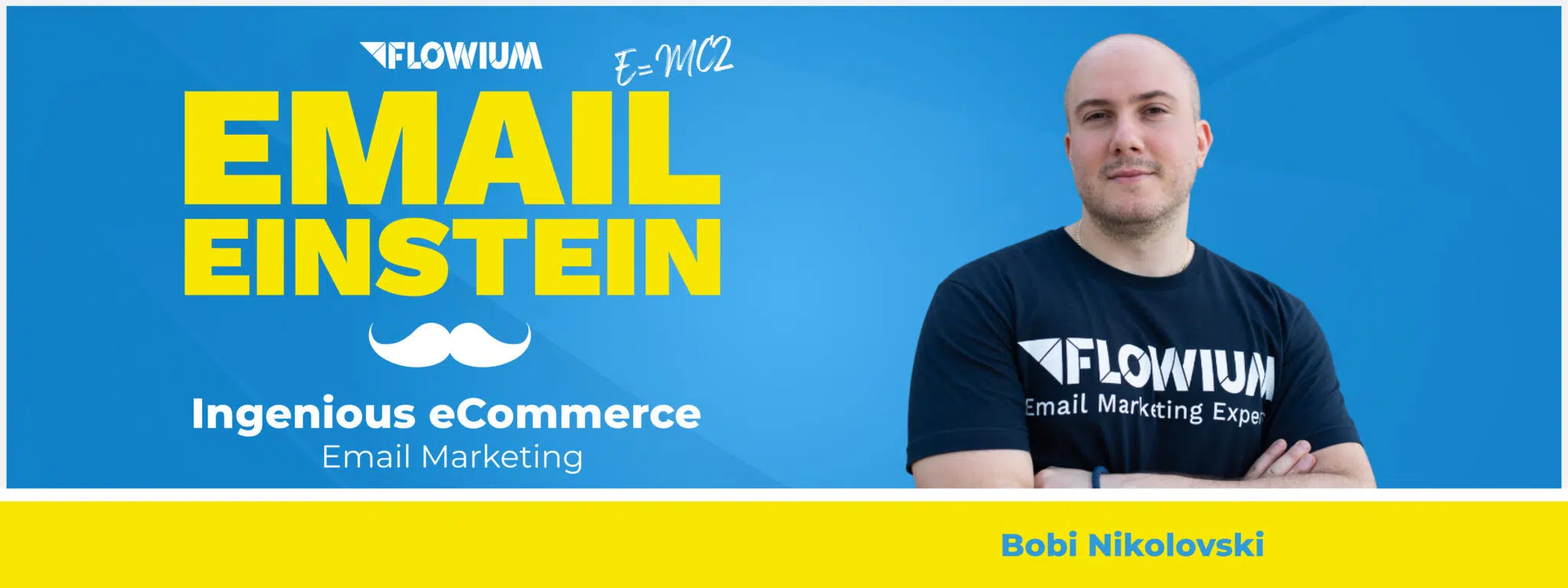
Hello, hello everyone, and welcome back to Email Einstein, the podcast by Flowium. I’m your host, Vira Sadlak. I’m a marketeer an agency called Flowium. Here at Flowium, we really love what we do, and because we love what we do, we want to share our insights with you. And ladies and gentlemen, today I’m joined by a very special guest, a colleague of mine, and today we’ll be recording yet another exciting episode about deliverability. So today we have a special guest joining us, someone with like a wealth of experience in Klaviyo, all things Klaviyo, all things deliverability. He is our email marketing rock star, Bobi Nikolovski. He’s also the head of email marketing team, like technician team here at Flowium. And believe it or not, he’s also one of Flowium’s community champions. There are only a few people like this in the world. I’m not exaggerating. There are like literally only a few Klaviyo community champions in the world. And yeah, these people, they are esteemed partners who excel in peer learning and provide invaluable support to the Klaviyo community. That was a long introduction. Bobi, say hi instead.
Bobi: 1:51
Hello, and thanks for the introduction. It was a little bit exaggerated, but yeah.
Vira: 1:57
Oh, come on, come on.
Bobi: 1:59
For the community, we have 14 people. Exactly.
Vira: 2:02
14 people in the whole freaking world. That tells you something about how much you guys know about all things Klaviyo. Yeah. So that’s why I’m super excited to have you today on this episode. But before we go there, I have a bunch of like shorter this or that kind of blitz Q&A questions just to get to know you better. And honestly, we’ve been working together for years, but I’m still curious to learn your answers.
Bobi: 2:24
Sure.
Vira: 2:24
So let’s do this, Bobi. Cool. Okay. Shopping online or shopping offline?
Bobi: 2:29
Offline.
Vira: 2:30
Offline? Yeah.
Bobi: 2:31
I like to try my things before I buy them.
Vira: 2:34
You’re like an 80-year-old person in, like, a 30-year-old body, honestly.
Bobi: 2:39
Yeah, probably.
Vira: 2:40
Facebook or Instagram?
Bobi: 2:42
I don’t use either much, but I’d say more Instagram, but yeah.
Vira: 2:47
Cool. Morning person or night person?
Bobi: 2:49
Definitely morning. I lose my concentration around 5, 6 PM. And it’s 5 PM now, so I want to apologize in advance if I get distracted.
Vira: 3:01
Let’s rush this podcast then. Let’s make it quick then, Bobi, so you don’t lose your precious concentration. Phone call or text message?
Bobi: 3:09
Phone call for sure.
Vira: 3:10
Sandals with socks. Yay or nay? Yes or no? What do you think? Sandals and socks?
Bobi: 3:17
Hell no.
Vira: 3:18
Hell no? Oh, gosh. I love it. Honestly, I love it. Maybe it’s like the summer I spent in Germany one year. I don’t know. But it’s like—
Bobi: 3:27
I don’t know. I don’t like it.
Vira: 3:29
Cool. Okay. Same day shipping or, like, same day shipping or free shipping with longer wait times? So like paying for same-day shipping or free shipping with longer wait times?
Bobi: 3:42
I like free stuff. So whatever free I can get, that’s the better option always.
Vira: 3:48
Very Eastern European of you. Like I had the same answer like a few years ago, but I’ve been living in Canada too long. I’m like paying extra just like to get it today, you know, just like to get it right away. It’s like a North American thing.
Bobi: 4:03
As long as it gets here, I don’t care much.
Vira: 4:05
Nothing can get much cooler. I love how chill you are, guys, in Europe. Right. Okay, the last one. Song that would play every time you enter the room, if there is one. So if you had your own theme song that played every time you entered the room, what would it be?
Bobi: 4:22
I don’t know. I don’t have a song. I like electronic music, so something chill out. I don’t know. I don’t have a specific.
Vira: 4:32
Cool. Okay.
Bobi: 4:33
If I have to pick one, I know the name, it’s called Colorblind, but I don’t remember who is it for because these electronic songs always have different artists. So I have no idea who is the artist. I can look it up if it’s important.
Vira: 4:49
I’m sure it’s something badass. Yeah, send me the link after the call. I’m just curious to hear. Now it’s going to be my designated Bobi song. Cool. Okay, Bobi. Let’s do this. Deliverability. Today we’ll be discussing all of the popular deliverability questions. What deliverability is, how to know if your deliverability is good or bad, how to know if you are in a spam folder and stuff like that. But before we go to all of these detailed questions, delivery and deliverability, is there a difference? If there is, what they are and why should we care about these things at all?
Bobi: 5:28
Yeah, of course there is difference. I’m just not sure when people who don’t understand properly, when they talk about those 2 different things, I think they always refer to the deliverability, even though sometimes they call it delivery, sometimes deliverability. The delivery is simply, did your email get into the inbox provider like Gmail? Like if I send you an email, will you get that email? That’s the delivery.
Vira: 5:52
Mm-hmm.
Bobi: 5:52
Deliverability is more like my sending reputation for the emails that I’m sending with the inbox providers who are receiving the emails. So, and that depends on many things, but yeah, most of all with the engagements and stuff. But yeah, the main difference is delivery is the act of sending an email and someone else receiving it, while the deliverability is the reputation that senders have when they decide to send emails.
Vira: 6:20
I see, I see. So basically, in other words, like email deliverability is the actual ability to get the email into customer’s inbox, I guess. And it also basically, it’s like where your email will land in that inbox, right?
Bobi: 6:37
Yes, in a way, that’s the result that is expected of the deliverability. The deliverability itself, when you say account deliverability, in other words, that’s account reputation about the ability to deliver emails into inbox for the inbox providers.
Vira: 6:54
What is this email sender reputation? Honestly, we hear this term all the time. What is email sender reputation? And like, how can I know if my reputation is good or bad?
Bobi: 7:07
Because there are a lot of bad actors, people who are sending intentional spam emails. So all of the inbox providers like Gmail, Yahoo, AOL, if someone is still using it, Outlook, they all have certain rules that want to filter out people who are spamming people. So there are certain things that they’re tracking and seeing if someone is not meeting the rules, they are marking those IPs and domains, sometimes even blacklisting them. When they do this, you will still, still deliver the email, but that email may be delivered to the spam folder. So you have the delivery.
Vira: 7:47
Okay.
Bobi: 7:48
But the deliverability is bad. So the rules, how they decide, like what are the rules, how they decide who is a good, who is a bad delivery person. This is mostly of few things. The most important I will leave for the end. But some of the things are like you should have a low spam rate, hopefully not at all spam complaints.
Vira: 8:15
Mm-hmm.
Bobi: 8:16
You should have low unsubscribe rate for, for the emails that you’re sending, and you should have high engagement. In the engagement, we are talking about forwarding emails, clicking emails. And at the end, I left the most important one, which is the open rate. And no matter what everyone says, like you can find different information on the internet, but from experience in the last, like I’m working 7, years in the email marketing, like the only thing that matters actually for like not the only thing that matters, but the only things that really matters, the other things matter too. But this is the decision-making factor is the open rate. As long as you have over 30%, hopefully, or around 35% minimum open rate, then you don’t have problems with the deliverability. As long as you go below that, then you will have problems. And of course, spam complaints, unsubscribes, those things matter. But from experience, I can’t talk much about those because we are not doing spam emails. All of our clients are pretty like real people, real agencies, and they’re just mailing their customers. So we don’t have problems with those. So I can’t give a precise experienced answer for that. But from what I’ve seen, the only thing that affects the deliverability for the accounts that we are working on is the open rate and nothing else.
Vira: 10:14
Right. Because majority of our, like all of our accounts probably are very like in that healthy spot. So that’s why the main thing that we are working with is the open rate and click-through rate. What about that like Apple iOS privacy updates? Ever since they introduced it, all of the open rates, they got inflated. Does it mean that all of the accounts became became like automatically healthier. Is that what happened?
Bobi: 10:38
Yeah, that’s, that’s a weird thing. And there is discussion about this and no one knows for sure because none of the inbox providers like Gmail, Yahoo, and, and those, like, they never say what their rules are officially. So we never know what exactly they’re looking for, what are the limits and benchmarks for open rates, click rates, and those kind of things. But from what we are seeing is It is like this helped us, people who are sending emails. So yeah, officially people who are having type privacy turned on on their phones automatically, their emails will show as opened and this will increase our open rate. And because of this increased open rate, we will have less problems with deliverability. Maybe the only difference that I’m seeing in the past, you got noted about possible problems with deliverability when you get around 20% open rate. So in the past, lower open rates, maybe 20% were sometimes the limit. But now, as I mentioned, I’m seeing this starting to get like they’re not marking your account as problematic until you get in 20%. But until when you get around 30%, they start warning you about it. So maybe—
Vira: 11:56
I see.
Bobi: 11:56
Those 10% extra is What’s—
Vira: 11:59
so that’s probably what changed. Yeah. Yeah. Is there a place that I can like literally see my deliverability score or like how good or bad of an email account do I have? Like what my deliverability or like what is my sender reputation? Is there a place how I can check it?
Bobi: 12:17
Yeah. For our way, for our account, like because we are Klaviyo partners, this is not something that we can see on, on, on the internet. This is something that Klaviyo provides to us for the accounts that we are managing so we can log in to the partner, Flowium’s partner account for Klaviyo. And then there we can see the deliverability scores for every account that we manage. And it is not like you’re like 50% or 60% or 70% good on this. It’s like 3 ratings. You have like green, yellow, and red. If you are yellow, you need to pay attention. If you are red, you need to fix your deliverability. If you are green, you’re totally fine. And the thing is, we are tracking this with the QA every month. And we only get red accounts in the deliverability, like maybe we are tracking this 6 months now, we only got one of our accounts warned about possible. So it was not red, we didn’t get it to red.
Vira: 13:20
Hmm.
Bobi: 13:20
We were warned that it may get red. And this is because of the specific client who simply doesn’t want to listen and they keep sending to their whole list. We are warning them, but they don’t listen. But most of the red accounts that we get are new accounts that we get. So we get a new account. And the thing with this, this is not like a big issue. This is easy to fix. There are certain things that you can do to fix it. So every time we get a red account in the deliverability space, most of it in a month, but sometimes in 2 months the most, we fix the deliverability issue for that account.
Vira: 13:54
That’s so cool. Yeah, well, we’ll probably talk about it later in details because I want you to give our listeners at least least like some action steps that they can implement to their accounts to improve their deliverability. Another discussion that like everyone is having in the industry is dedicated sending domain. Yes or no? What are the perks of it? And why should you care? But first, let’s start from like, what is dedicated IP in email marketing? And why is it important?
Bobi: 14:24
Yeah, so it is important. It’s not a crucial thing. and it only became more popular lately. When you are sending your emails through any email marketing platform like Klaviyo is what we are using is Klaviyo. So when you send email, you are sending it through Klaviyo. So when you send the email, the email is sent. It says that you send it with your email that you put as from email there, but in the extension of, of that line it says sent via Klaviyo. If you want to remove this so the email looks like it’s sent directly from, from your website, you can change these things. These things also help with the deliverability. It doesn’t fix your problems. If you have problems, it helps you fix it. So it’s not like if you have a deliverability issue on an account and you change it to dedicated server, it won’t mean that automatically you fix the problem because it depends where the problem is coming from. And We talked in the past about the main thing of the deliverability mainly depends on 2 things. There are more things, but 2 things are the most important. The dedicated— not the dedicated, sorry, the domain and the IP that the email is sent from.
Vira: 15:40
Mm-hmm.
Bobi: 15:41
So if you have bad IP that you’re sending to, no matter if you fix your domain, if it is shared or not shared, you will not be able to fix your IP problem with changing your domain. Or same thing around, if you change your IP, And if you have blacklisted domain, you won’t be able to, to fix your issues. So in a way it can help setting up a dedicated domain, can help you fix the issues with deliverability, but it won’t automatically fix your problems. If you want, I can share a little bit about how this is set up. I won’t go into details.
Vira: 16:18
Yeah, let’s do this.
Bobi: 16:19
So just shortly, first you go to Klaviyo settings, you apply for this. It gives you DNS records that you will need then to go to your hosting provider for your domain. You need to set up those hosting— those DNS records. It’s 4 DNS records that Klaviyo provides. Once you update them, sometimes your hosting provider will tell you that you need to wait like 24 to 48 hours for DNS records to become live. Once that happens, Mm-hmm. you can go back to Klaviyo and activate your dedicated sending domain. And that’s it. It’s pretty simple. When you do this, the things that change is first you can remove— you won’t be seeing sent via Klaviyo anymore, which is not related to deliverability. That is more like a branding.
Vira: 17:07
It’s just like a branding thing.
Bobi: 17:08
Yeah. And when it comes to the deliverability, what this helps with is if you’re on shared, as the word says, shared, you’re sending with Klaviyo. Domain, you still have your domain as from name, but you’re using Klaviyo shared domain with who is used by other brands also. So the problem here may become you may have a perfect sending reputation for yourself. You may have like 60%, 70% open rate, you may have like 3% to 5% click rate. But if someone else who is using your shared domain If they start having bad reputation, they start lowering their open rates and click rates on the emails that they are sending. That may hurt your reputation too because you’re sharing one. But when you have a dedicated one, like, you are the only one who is responsible for that.
Vira: 18:02
Right. So obviously you need to know what you’re doing when you have a dedicated one.
Bobi: 18:05
Exactly.
Vira: 18:06
But when you are on that shared one, it’s like, I don’t know, it’s like being a person with like good person in a bad neighborhood, pretty much. And you don’t necessarily have control over like where you are, right? So like, do they like move you from that like neighborhood to neighborhood or is it like one and done? Like how is it being assigned?
Bobi: 18:25
I asked Klaviyo several times and they never gave precise answer, but they, I think they’re doing like this monthly or quarterly and they’re reviewing the accounts and moving them appropriately to other shared domains and IPs that make more sense to actually what you are doing.
Vira: 18:42
Right.
Bobi: 18:42
But still, this may be a problem during Black Friday when a lot of people just want to send to more people. They are hurting their reputation.
Vira: 18:50
Right.
Bobi: 18:51
And that may hurt your reputation too. But when you have your own, like, the dedicated sending domain is a great thing for responsible actors in the email marketing space.
Vira: 19:02
Yeah, if you know what you’re doing. If you know what you’re doing, that’s true. But does it affect, does a dedicated IP impact email performance metrics such as like open rates, click-through rates, and stuff like that in Klaviyo?
Bobi: 19:16
Are we talking about IP or still on dedicated domain?
Vira: 19:20
Sorry, dedicated domain. Like, does it affect open rates, click-through rates, all that important metrics?
Bobi: 19:25
As I said before, like your deliverability depends not just on the domain but also the IP and what you’re doing. So yeah, if you have bad reputation, your domain may get blacklisted. So when you get blacklisted, of course, that will affect where your emails are sent. Usually when you get blacklisted, most of your emails will get to spam folder, and it would be hard to get out of that except changing the domain. But this doesn’t happen often, never happened to us at all. I honestly, I’m working with Flowium 3 and a half years, we didn’t have any account that was blacklisted during that time. So I don’t know exactly how bad you need to be to do this, but since we never had below 20% open rate accounts, we never got this problem. And so yeah, it, it may hurt your deliverability a lot and where your emails are placed.
Vira: 20:24
Right. So Bobi, the only way I can know if my deliverability is good or bad is basically by looking at the metrics, by like looking at open rate, Is that the main thing? Are there like any other things that I need to be aware of when I’m like looking at the deliverability?
Bobi: 20:43
Yeah. As I said before, the problem here is there is no strict rules that they tell you that you need to follow. We just follow the numbers that we are getting. We are following the open rates, click rates, and those kind of things, unsubscribes, bounces and stuff. And the only thing that may help you understand, okay, I may have a bad reputation now is if you see a sudden drop. So you said like, for example, you had like 50% open rate and suddenly you get to 20% or 30%. So that is something that may tell you that you need to check what you’re doing, what happened there, or if you’re dropping little by little, eventually if you get— If you, if you at some point like also it depends who do you send to. So if you are sending to the same people that had 50% open rate, you’re sending to them again now and you have 20%, there is a chance that you got a bad deliverability.
Vira: 21:40
That’s a symptom.
Bobi: 21:41
Yeah, yeah, you—yeah, that, that’s exactly the right word. We are looking for symptoms, but there are no diagnoses or whatever you call that, like, for certain, right? No one can tell you for certain. You can see, like, sometimes you may send a test email to yourself, it may go to spam. But that doesn’t mean that you’re blacklisted or have bad reputation. Sometimes you may receive email, send test email to yourself and it goes to inbox, but that doesn’t mean that you are not blacklisted and that you are not. So those kind of tests can help guide you, but they don’t tell you exactly what actually happens in the account.
Vira: 22:19
I see. I see. What if I say end up in the promotion folder for Gmail specifically? Does it mean that I have a bad reputation or like what does it mean at all?
Bobi: 22:30
Not at all. When we talk to Klaviyo, I talk to Klaviyo about this a lot because at the end they need to know more about any of us because they are the ones who are sending the emails to everyone. And they’re considering, as much as I was told, they’re considering promotions tab as inbox. Because if you have set up those different tabs like promotions and stuff, you will see it in promotions. If you don’t have, like, I don’t like having multiple tabs in my emails. I want to get everything in my inbox directly.
Vira: 23:01
Same.
Bobi: 23:01
So if you don’t have Promotions tab, you will get it in inbox. If you have them, you may get it in promotions, but that is still inbox, just a different tab. So they consider that, right?
Vira: 23:11
So promotion doesn’t equal— promotion doesn’t equal like spam or like promotions.
Bobi: 23:16
Different, different filters. And these filters are not connected to your deliverability, it’s connected to the content of the email. So if you have a sale or free stuff or things like words like that, not just in the subject line and preview, but also in the content of the email, then Google algorithms are pretty smart to know that this is a promotion. So of course they’ll put it in a promotion.
Vira: 23:41
Right, right. Yeah, no, just like to summarize the common symptoms that I personally look into, or like the common symptoms that signal that we might have like deliverability issues, is obviously drop in opens, especially just like you said, the sudden one, sudden drop in open rates. Sometimes spike in bounce rate. I’ve only seen it once and it was like a mistake of Klaviyo that then was like fixed. So that wasn’t even true, that numbers, but like spike in unsubscribe rates. And also like I’m always keeping an eye on like spam complaints or like lower click rates. Sometimes it just like means changing our segmentation strategy, for example, or changing the content strategy. Sometimes that’s all you need to do to fix fix that deliverability issues. Let’s talk about like improving the email deliverability, Bobi. What are some good practices that we have internally And that you recommend our listeners to have with their brands?
Bobi: 25:32
Sure. Well, going back to what I said before, the open rate being the most important thing that it seems like everyone is looking into, the simplest way to fix your problems once you start seeing a drop in open rates is to create engaged segment. Like you need to create a segment of the most engaged people on your website, but not just most engaged. You don’t need people who clicked or opened emails most times. You just need people who open and click most times recently. So let’s say 30 days or 60 days maximum. So those are people who are, who are recently active. That means that they’re active with their emails, they’re opening your brand emails. So just start sending emails to them until you see a spike in your open rates.
Vira: 26:18
Mm-hmm.
Bobi: 26:19
Gmail is usually the most problematic one when it comes to dropping the open rates and putting accounts on restrictions. So So in Klaviyo, and I think this is also an option in other email marketing platforms, but in Klaviyo specifically, for each email that we send, we can send— we can see where the open rate comes from. So sometimes we notice that we had like 50% open rate, suddenly now we are on 35%. When we go check the inbox providers, we see that everyone else stayed at 60%, 50%, but suddenly Gmail dropped to 20%.
Vira: 26:54
Right.
Bobi: 26:54
So what we do in this case is we divide the engaged segment. So for everyone else, we still send to 90%. 90 days engaged, 120 days engaged. But specifically for the Gmail account, we create 30 days engaged, for example. So people who most recently— because here we don’t need to fix the whole reputation, we just need to fix the reputation with Gmail.
Vira: 27:15
Gmail issue.
Bobi: 27:15
Yeah.
Vira: 27:16
Yeah.
Bobi: 27:17
So yeah, I would say those are the most important things to do, like make sure that you’re sending to the most engaged people. If you think you have problems with your click rate You can always create engaged segment with just people who clicked. Usually the engaged segment is considered people who open or click, but if you want to fix click rate, you can create a segment just of people who clicked in the last 30 or 60 days. So these people are more likely to click. We had some tests done about this. This always works when it comes to improving click rates, but you must know, be warned, Your revenue will drop on this account because you’re sending to less people. So that would be expected, I guess.
Vira: 27:57
Yeah, but it, it can help with like deliverability issues and with your reputation as well. So maybe like don’t do it all the time, but once in a while, especially when you have this like non-promotional, like educational emails or like entertaining emails that you know that people will enjoy them, but not everyone probably will. So that’s a good way to do that. Bobi, Tell us some like real life stories, like about how we were able to improve deliverability for either one of our clients or, you know, in the industry that someone has done it. Can you share like a real life success story or a case study where businesses improved their email deliverability?
Bobi: 28:38
Yeah, I have one, which will be short. I’d love to start with that one.
Vira: 28:41
Let’s do this.
Bobi: 28:42
And this is a bad example of a bad client. that hired us because they had bad deliverability. We fixed it in 15 days and then they left.
Vira: 28:52
15 days?
Bobi: 28:52
So this, I just wanted to mention this to tell you that it’s not that hard to fix a deliverability issue when you know what you’re doing. So this is not such a huge deal. You still need to be careful not to get a bad reputation. It’s easy to get out, but better not to get it because once you get it, it, it’s much easier later. Like, for example, if you never had bad reputation, I think it’s much easier for you to stay clean. But if you had a bad reputation, like those inbox providers will save you somewhere. Like this person at some point, like this email account at some point had a bad deliverability, so they are doing something wrong. And if you get even close to that, they may get— your reputation may get— Uh, lowered again. So it’s better never to go there, but once you are, people shouldn’t panic. This can be fixed. It needs like, as I said before, months, sometimes 2 months, depends how bad the account is, how, how long they were sending with bad reputation. So that also needs to be taken in consideration. But yeah, that’s one example. One other example that I want to use is I don’t think we should give names, but anyway, we had clients who, like I mentioned before, this is not the only case, but yeah, we have clients who simply, we are telling them, like, we are sending campaigns for them, but they also want to send their own campaigns and they’re sending to the whole list.
Vira: 30:21
Mm-hmm.
Bobi: 30:22
And like, they have around 20% open rates with their campaigns. We have 50 to 60% with our campaigns and it is balancing. But they started sending more campaigns lately and there we got a warning about their account. They didn’t get into lower reputation, but they got a warning. We told them, they accepted it. So let’s see, this is recent, so let’s see what they will do in the next month. About accounts that we got fixed, as I said in the past, we usually don’t have our accounts go to— not usually, but we never had our accounts go bad reputation, but we get new accounts that have bad reputation. Again, same problem, sending to the whole list. This is most of the time the main issue. One account that we got close to this is when suddenly a client uploaded a list that we didn’t even know about on their account.
Vira: 31:19
Right.
Bobi: 31:19
And this hurt their reputation. But yeah, this, this new accounts that you’re getting, once we see what they’re doing, We started segmenting, we become more cautious, we start sending to the most engaged people. And no matter how bad the reputation is, all of those inbox providers don’t just look over your previous history. They look into the first few emails that you’re sending. So if you send to the most engaged people and you send like not all of the emails we send go at the same time, so fewer sent now, fewer sent a few moments later.
Vira: 31:53
Right.
Bobi: 31:54
So if any of those emails start getting opened, the inbox providers are providing you better inbox deliverability for your next emails. And I see, we see better numbers.
Vira: 32:05
That’s good news. Yeah, that’s good news. I didn’t realize that they don’t look into your like entire history, you know.
Bobi: 32:11
They look into your entire history, but they don’t only look into your entire history because, right, again, I don’t know this as a fact, but I know this from experience where we had like how Other way you will explain if you have— if someone has like 20% open rate and suddenly you send the mail. Yeah, it’s to more engage. But if this is bad reputation and they— most of their emails were going to spam, how suddenly the next email we sent has like 50% open rate?
Vira: 32:40
Mm-hmm.
Bobi: 32:41
If most of the emails are still going to spam, there is no chance that 50% of those people will open the emails. So probably they are also checking what the first people who are receiving the campaigns are doing, because usually we send by recipient’s time. So sometimes recipient’s time, sometimes we divide them into few hours. So that helps us get better deliverability. That is also something that people can do in case they want to improve their deliverability. So don’t send everything at once. Send it.
Vira: 33:10
Yes.
Bobi: 33:11
Into few hours, like set the emails to go either to, to send to people according to their time zone. This will divide the number of people that get the email each, each hour. Or as I said, divide it to send through few hours and then this will help you because the first people that will get it will start opening. So the next people who get that email will have more chances to get it in inbox. And yeah, we were doing this with several clients and all of their— like we never had a problem where we were not able to fix anyone’s deliverability. Like it always gets fixed with these few things that we’re doing.
Vira: 33:49
And also give us all hope.
Bobi: 33:52
Yeah. And also the problem may be in the content of the email. So this, this can also be problematic sometimes and filtered out by the inbox provider’s filters. So don’t make it too complicated. Don’t put, don’t put too much stuff in those emails that you’re using to improve the deliverability. Make it as simple as possible so they can pass all the inbox provider’s filters when it comes to content. And yeah, those are just a few examples that I can give and what we were doing and what, what is working, obviously.
Vira: 34:23
Right. So let’s, let’s summarize it, Bobi. Action item list. My emails keep going to the spam folder, for example. How do I get back to the inbox? The action steps. What would you start from?
Bobi: 34:35
Yeah, we would start with first checking what the problem is. First, I would suggest check your domain and your IP to see if you’re maybe blacklisted. If you’re blacklisted, you should try to work on unblacklisting your domain or IP address because this is not done only with sending good emails and improving your reputation. Some of the websites that are filter websites that are checking the emails, if they blacklist you, you need to apply to them and provide some information. So that is the way to to get blacklist removed. So that is first thing. In case you don’t have blacklisted domain or IP, then I would say just pay attention to who you are sending. So segment, make segment of the most engaged people.
Vira: 35:26
Segmentation.
Bobi: 35:26
Start sending to those. The content of the email, make it as simple as possible to make sure that more of those emails go to inboxes and they’re not filtered out. And eventually that would be it. So it sounds simple. It is simple. I mean, finding a solution for blacklisted domain and IP may not be that simple, but yeah, that is a long process that maybe we’ll leave for some other podcast. Right.
Vira: 35:54
Absolutely. Yeah. So to sum up, the 2 main things to look into is first of all, whether or not you’ve been blacklisted. And the second thing, what you’re sending and who you’re sending to. And obviously there’s like a lot of things you can do with like subject line testing or like the content of the email itself. Like you can test promotion versus no promotion. You can test different versions of promotions. So the popular one that we are doing is like, how would people like the regular discount versus the tier discount? And we’ve seen big improvement when we are using like a regular discount versus like a discount with minimum order values and stuff like that. So there is like a lot you can do within those 2 buckets, but these are the main things. And I’m just going to add a few more things, like different other email deliverability good practices that we are doing here internally. But just like Bobi said, it’s probably the topic for another whole episode. We are doing the warming when we first start working with like a new account. And so that’s a big one. Obviously, we only exclusively send to people who have opted in into the list. This is a big one. Bobi mentioned it briefly in the podcast, but we exclusively work with people who opted in into the list. So we don’t work with lists that then like borrowed or purchased or like rented lists. This is like a big no-no. You can hurt your deliverability and it’s going to be really hard to like get back into the inboxes. And another little one, it’s kind of obvious, but I see brands are doing it all the time. Make it easy to either manage their email preferences or unsubscribe. Because if you don’t give them the option to unsubscribe, they will probably mark you as spam. And that’s something that you don’t want to happen. So make it prominent. Yes, it hurts when people unsubscribe, but it only hurts your feelings. It doesn’t hurt your deliverability as much as the spam would, right, Bobi?
Bobi: 37:52
Yeah, one thing about that, and what I see our customers confusing, they think when people like they’re saying, like, but they don’t want to lose subscribers. Like they won’t buy anymore from my website. Like, no, if people unsubscribe, that doesn’t mean they still can’t buy from your website. They’re just not email subscribers. They still can be a customer.
Vira: 38:11
Yeah, that’s why we try to sort of like get them on different platforms. We even have this like dedicated email and the post-purchase sequence where we are talking about like different outlets that we have about like social media or like Instagram, Facebook, Facebook group or something. So we can talk to that person somewhere on the social media. Because if they unsubscribe from your email, it doesn’t mean that your relationship with that customer ends. It only means that maybe they are not email people. Maybe they prefer SMS or maybe they prefer to hear from you from like Messenger bot or something. So yeah, there is still hope for you guys. Don’t worry. Bobi, thank you so much. It was really fun talking to you. Thank you so much. A lot of, a lot of good information. Thank you.
Bobi: 38:55
Oh, I hope it helps someone.
Vira: 38:57
Oh, I mean, it does. It does. We’ll probably need to record like more episodes like this, just because there are a lot of like actionable stuff that we can still talk about it, talk about, but obviously we don’t want to make this episode 3 hours long. So yeah, thank you so much for coming. And yeah, a lot of really good insights.
Bobi: 39:17
I would love to be here and yeah, hope to talk to you soon.
Vira: 39:21
Awesome. Awesome. Guys, as always, if you like what we do, please leave us a review. And if you leave us a review and send us a screenshot of your review, we will send you some nice Flowium merch. So this helps us and you will enjoy our Flowium merch. It sounds like a win-win kind of situation. Thank you so much for listening, and we hope to have you back here next Tuesday. Take care. Bye.

Vira Sadlak
Podcast host, marketer, traveller and a life lover from Vancouver, Canada