

Podcast Transcript
Vira: 0:40
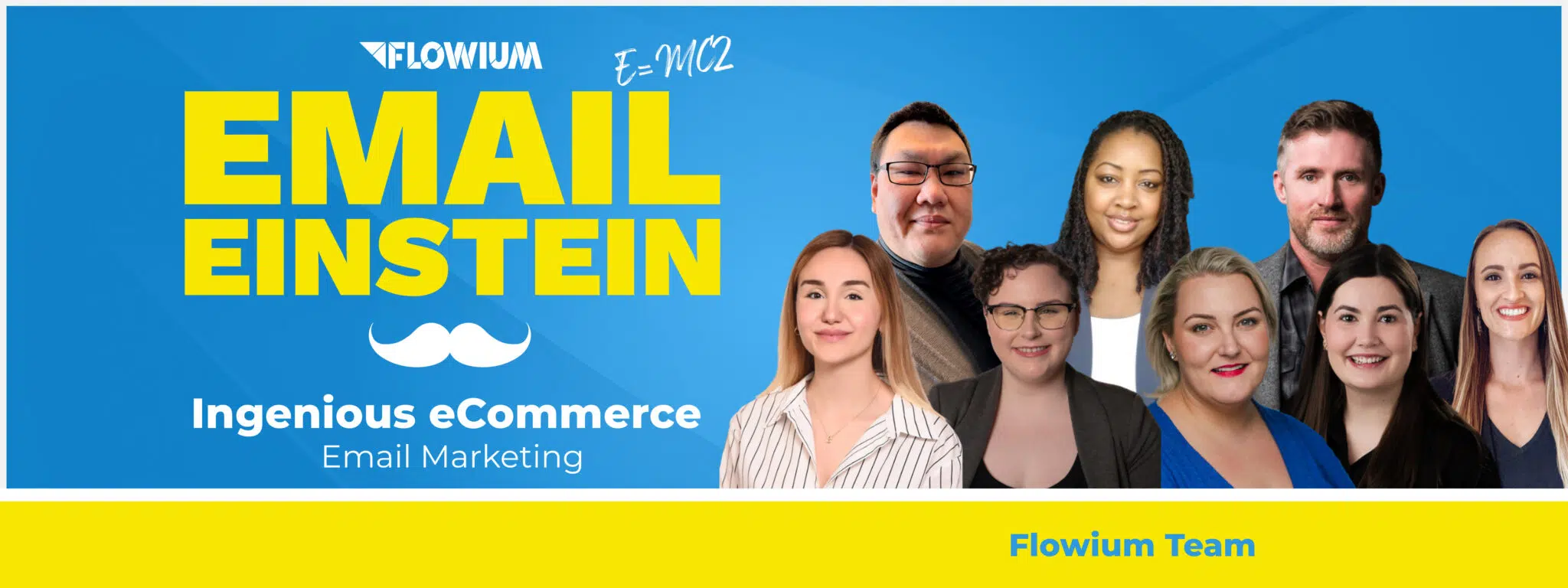
Hello everyone and welcome back to Email Einstein the Podcast by Flowium. I’m your host, Vira Sadlak. I’m a marketeer at an agency called Flowium. And today we will have yet another episode of our segmentation May. Yes, you heard it right. We call it segment segmentation because for the entire month of May we will be talking about all things segments. And today’s episode is special because we’re going to have not one, but actually eight amazing guests on this podcast today. So I’ve invited eight different people from Flowium, eight amazing email marketing specialists from Flowium. I invited them to share their favorite but not so obvious segmentation strategies. So each of these people, they will be sharing one of their favorite strategy. They’re going to share like a definition of the strategy, why they think it was effective and they’re going to give you an example of where this segmentation strategy was used. So let’s start with a really cool segmentation recommendation from our EMS, Melanie. Melanie, big shout out to you because this segmentation is honestly it’s so available to everyone that I think everyone should use it. So Melanie will be talking about super engaged segment. So let’s do this. Melanie, you have the studio to yourself.
Melanie: 2:03
Hi, my name is Melanie Kenny. I’m a lead email marketing specialist here at Flowium. And one segment that I’ve been utilizing in the month of May is a super engaged segment. So typically when we send our campaigns, we’re sending to an engaged audience and this takes it one step further. So instead of just those that have opened, we’re looking at those that have opened clicked in the last so many days. So I have a segment built for 30 days, 60 days and 90 days. This is super helpful if you are having some deliverability issues. You’re sending to the most engaged audience that you can gather through your subscribers and it’s guaranteeing a little bit higher results. So if you’re having a decrease in your click rate, conversion rate, this is a super great segment to utilize and it’s overall improved my clients accounts when they’re having those difficulties with deliverability.
Vira: 2:53
That was a good one. I’m totally stealing this strategy for my clients. And I mean, it’s a great way to improve your account’s health, right? Because when you use the super engage strategy, it’s going to really help with your open rates, click through rates engagement. So it’s a really good way to improve the health of your account. Now, if your goal is to grow your engage segment, I think this next strategy is what you should definitely try. So please welcome Dani, my fellow EMS, who will share her exciting strategy for those customers who are unengaged.
Dani: 3:31
My name is Dani and I am an email marketing specialist here at Flowium, and I am so excited to share a segmentation idea with you guys. So the idea that I have and one that I’ve used that performed very well, it definitely needs to be used with caution. And I will explain more about what I mean by that. So I have this brand that I’m working with and they do have a very large, large list as far as people that are engaged, but they also have a very large list of people that are unengaged. Now, these are not people that are suppressed. So people that are suppressed, that opted out, we cannot send to those people. These are people that just have not had the opportunity to open or click or do anything because they’re likely not, you know, on our site doing any behaviors like abandoning the cart or things like that. And we’re also probably not sending them campaigns because if they’re not in that window of a certain level of engagement, we usually don’t often send to those people. What I mean by proceed with caution is you don’t want to do this often. And in my example, we are actually doing this strategy throughout the course of a year. So it’s playing the long game for sure, but it can have some amazing results. So we took this largely unengaged list, so divided it into very small portions, so 15 to 20% of the list, and obviously named them like 1 out of 30, 2 out of 33 out of 30, things like that. And when I know I have a campaign that’s going out that has performed really well in the past as far as like promoting certain type of products. So this particular campaign I’m thinking of, it’s we were promoting jewelry that was personalizable, so especially around things like graduation or babies being born or weddings, things like that, Very, very popular stuff. So that is why we, we definitely choose to send this segment to that sort of campaign that we know from our people that are engaged, they love that sort of content. So we send that out. Right? And the people that opened and click within that unengaged segment actually grew our engaged segment by 7,000. So, so the next campaign that we sent out, when we sent it to that smaller engaged list, it grew by 7,000 people. And that to me is just creates so many opportunities. So I think with this sort of situation, definitely, definitely proceed with caution. Watch the numbers, watch your unsubscribes, watch your spams, watch your opens and clicks and obviously do this very, very slowly. So like I said, we are doing this over the course of a year, so definitely use this sparingly. But I do think it can have some wonderful, wonderful, wonderful results. I hope this was helpful and I look forward to hearing what some of my other co workers have to provide you guys.
Vira: 6:26
Such a good strategy. Honestly, I love the strategy. I use it quite a lot with my accounts just to make sure that I’m talking to everyone on the list, not just to engage customers. And if your account is in good standing, if your account is healthy, if you don’t have any deliverability issues, definitely try this strategy. It’s worth trying once in a while. It’s not like you should message those people all the time because in that case your bounce rates will be probably through the roof. But once in a while, it’s a good way to grow your engage segment. The next segment, Andrea and Sydney will talk about it. But the next segment is I’m kind of excited for you guys to learn about it because this is also the segment that I know, me and my colleagues, we use quite a lot and it is also based on engagement, but it’s based on like different kind of engagement, so you’ll see what I mean in a bit. So roll the red carpet for Andrea and Sydney who will be talking about this really exciting segmentation strategy.
Andrea: 7:27
My name is Andrea and I’m an email marketing specialist here at Flowium. One of the most successful segments that I always use with my clients is engaged but did not purchase. This is especially good when a client has a sale that they do regularly. So I have a client who does the same three or four sales multiple times a year. One of them is an open box sale. So when someone returns something, they check it, make sure it still works, clean it, et cetera, and then they resell it. So what we did was we created a segment of people who have engaged with a previous open box campaign but haven’t purchased. Now not only did this help us re engage and get people back into our engaged list, but it also increased the actual success of this campaign compared to the last time that they did it. And I think that that’s really important both in terms of revenue and also in terms of just keeping people engaged on your list. As we’ve talked about before, engagement is the way that we mainly segment. So having those people get re engaged by a sale that excited them before and that they engaged with before is always a great idea.
Sydney: 8:30
Hello and happy segmentation. My name is Sydney and I’m an email marketing specialist here at Flowium. So Vira came to me and she asked, hey, can you share with me a segmentation strategy that worked really well for you? And my immediate thought was, yes, I can. And that is active on site in the last 30 days. Let’s dive into it. So the definition is really simple. It’s just those that have been active on the site in the last 30 days and those that are not suppressed from email. To show you the reach of this segment, I have a campaign here that we sent in April for one of my clients and this was for National Pet Day. So this is obviously for a pet brand and we offered a great deal this day and of course we were celebratory for a National Pet Day, so we figured these blurred here are segments that are related to the products that we were featuring in the campaign. So you can see that they have quite a good click rate and placed order rate. But Active on site in the last 30 days has the best click rate overall and even has more revenue than some of the segments that are featuring the actual product that we’re talking about. So you can see how powerful this is. It’s bringing us in revenue. The placed order rates 2.73%, which is the second best. VIPs win out for the placed order rate and revenue. But you could see how important this segment is to include and especially big sale campaigns. They’re more keen to buy and they’re ready for a good deal.
Vira: 10:22
Such a great strategy the girls shared. I love it. I love this strategy. I use it a lot across all of my accounts and I know that my fellow email marketing specialists here at Flowium use it too. I also wanted you guys to listen to Boquette’s story because she, I mean, she changed the definition of the segment slightly and you’ll hear what she has done. But also I was just very impressed with the results that she got. And this just proves that sometimes that little tweak changes everything and it can bring you that little segment can bring you big results. So please welcome Boquet.
Boquet: 11:27
Hi everyone. Today we’ll be talking about the active on site no order 60 days segment. This segment includes those who have been active on your website website for at least three times in the last 60 days and those who haven’t placed an order. So you know those people are interested in your products, but they haven’t made a purchase yet. And the reason why I think this segment is super successful is because of the average metrics that we see. So you can see that the open rates for this segment is at 102% on average and then the click rate are at 17% on average in this account, which are amazing results. And it’s important to include this segment in some of your campaigns because this segment makes sure that you’re sending to subscribers who have opted in a long time ago and who are still interested in your products. So the factors that contribute to the success of this segment is that allows you to not limit your segmentation to email engagement only. So you’re sending to those who might not be engaging with your emails anymore, but they sure are coming to your website from other channels such as social media ads or direct search. And we use this segment whenever we have higher discounts than usual to entice subscribers who are already interested in your products. So for example, this is the Mother’s Day sale Lost chance campaign that we sent out for one of our clients. And you can see that the open rates are quite high here. 60% click rates are very good at 10%, which is unusually high for this account. And then the place order rate is at 1.33%, which is amazing. And we also use this segment for text based emails. So when you send out emails that include only text, they’re more likely to end up in your subscribers main inbox rather than the promotions tab. And this allows you to get a chance to capture those people who might not have been engaging with your emails at all, but who are interested in your products and in your brand. So whether they’re engaged with your emails or not, you know that the people in this segment are interested in your product. So by using it, you have a high potential to improve your email marketing performance.
Vira: 13:45
Thank you so much, Boquet. This is a really easy segment to create you guys, but you will see big results with this one. I know we’ve seen across all of our accounts, so definitely try it. I’m really pumped about having Janelle to talk about the segmentation strategy that she came up with for one of her clients. And and this segmentation strategy will be especially good for those brands who have like consumable products. If you are one of them, definitely listen to Janelle’s wisdom.
Janelle: 15:03
Happy segmentation. So one of the segments that worked surprisingly well for one of my clients had to do with creating a segment specifically for those who had purchased a sample pack. So a trial basically of the full size product. This sample pack generally has about a 10 day life and you usually see results in about two weeks. So what we did was we broke out a segment particularly for those who had purchased the sample pack within the last 30 days. We figured that was a good time to give them to really try the product, use the product and then we could retarget them. We included this segment in our normal campaigns alongside our 90 day engaged and we kind of monitored the results and surprisingly it performed really well. Your revenue per recipient was on par with the normal 90 day engaged. The click rates and open rates even outperformed the 90 day engage. So these people were really primed to buy that full size product. Excellent strategy and it was one that we continued to utilize without throughout our normal campaigns and it just kind of really helped us gauge that customer journey from a sample pack to a full size pack. So really awesome segmentation strategy that we use there and that we’ll continue to use and we’ll kind of develop it more for further sample packs that my client will be producing further. So if you have any specialty segments that you think your your brand can use, don’t be afraid to break those segments out. If they’re specialty purchases, you really want to utilize those segments to target them with those certain campaign messaging because you never know what it will be that will help get that client from just looking to actually purchasing. Happy segmentation.
Vira: 16:54
The next strategy that my colleague Adrian will be talking about is really good for brands who are serving like multiple types of customers or when you have like different products for different people, different line of products, different collections. So Adrian will talk about like interest based segment or preference based segments. This is a really good one.
Adrian: 17:16
Hi everyone, my name is Adrian Burke, email marketing specialist for Flowium let’s talk segmentation. The way I think about segmentation within email marketing is to the old adage that when you try to appeal to everyone, you appeal to no one. The power of segmentation is to be able to hyper contextualize messaging around a consumer benefit or need to encourage a behavior which is largely buying. And the way I’ve seen this work very effectively is collecting data around a passion or an interest of a consumer group and then forming messages that are specific to that demographic. And this largely exists within a single company. For instance, if you’re selling trucks and you’re selling the Ford owners, Chevy owners, Dodge Ram owners, and you try to broadly appeal to all of them at the same time with the same messaging, you’re missing out on an opportunity. With a simple survey, some understanding as to each consumer’s preference, you can cater messaging to speak to their needs, to their emotions and largely personify the, in this case vehicle to to that consumer. So consider segmentation strategies that allow you to within the same product range or same company allow you to hyper focus on the emotional needs that then connects to the the benefit needs of the human through segmentation. It’s an extremely powerful tool. And what you’re able to do in that instance is you are then able to cater not only messaging to the tone around that consumer’s interests, but you can then pair product offerings to that within the email. So segmentation super important again when you try to appeal to everyone, you appeal to no one.
Vira: 19:27
And finally our last strategy for today, but it’s a good one so make sure to stick till the end is the strategy for your highly valued VIP customers. And Joe, he knows a thing or two about the segment and yeah, so stick until the end to learn more about highly valued VIP segment.
Joe: 19:49
The challenge with with any segmentation strategy is balancing between deliverability and profitability. Sometimes you will get great open rates, great click through rates but very little conversion. And the vice versa can also happen. This was something that was happening with the client. They were getting great revenue out of this. But the problem was is that their segmentation strategy at the time was what I would like to call the everyone who can breathe strategy. So we had to find a way to reduce the sending or the sending rate and improve things like open rate as well as click through but not have the revenue touched in any way. This is a real challenge because you, you’re never quite sure exactly who unless you want to dig into the minutia of who is buying out of this, out of this everyone who can breathe segment. Right. So what I ended up doing was I built a couple of different segments. We went with a 90, 90 day engagement segment and what I like to call a highly valued VIP segment. Now this is an average buy rate or an average buy amount. So I took the amount, the average amount spent by each of these individuals or higher to place them into the segment. So the sending for this campaign which focus on a uvp, not so much a sale or an event, but just a unique value proposition from this particular brand out to both 90 day engaged and of course the highly valued VIP segment I created. This of course improved things like open rate and click through because the number of recipients was scaled way down from what it was. The real challenge was to make sure that we were still going to see the same revenue coming out of this. And we did. It did surprise me. I knew it was going to work, but not to the point where it was on parity with what the previous strategy was. And it was a great surprise. We also saw a bit of a tick in per recipient valuation as well or revenue. So, you know, I think the lesson here is when you’re faced with challenges that you, you know that you want to make sure create the best result for your customers or for the best results for your clients or a best result for your own marketing is to experiment with the segmentation, see where the patterns are and where the buying habits are for your customers and to categorize them properly to make sure that you’re delivering the right message. Thank you.
Vira: 22:42
And with that strategy by Joe, we are wrapping up this episode. Big thanks to all of my colleagues who made this episode possible, who recorded their answers and who shared their wisdom. Honestly, I hope you guys enjoyed it. I hope you enjoyed it just as much as we enjoyed recording it for you. And I hope you learned a thing or two. I know I did. I’m gonna totally steal some of those, some of those strategies for my clients. And as always, if you guys like what we do, please leave us a review. Reviews are very important for us, honestly. They help us grow, they help us to bring more new people to our email marketing community. And yeah, and we just like love hanging out with fellow marketers and fellow e commerce people. If you love what we do, leave us a review, send us your screenshot which is very important and we’ll send you something special. We’ll send you some special Flowium merch as a thank you. And yeah, and that episode is we’re getting to almost to the end of our segmentation may which makes me honestly a bit sad because we do have, like, a lot of wisdom to share with you guys. So maybe we’ll extend it a bit as well. So we’ll see. We’ll see. But thank you for hope to have you back here next Tuesday. Thank you so much.

Vira Sadlak
Podcast host, marketer, traveller and a life lover from Vancouver, Canada