

Podcast Transcript
Vira: 0:41
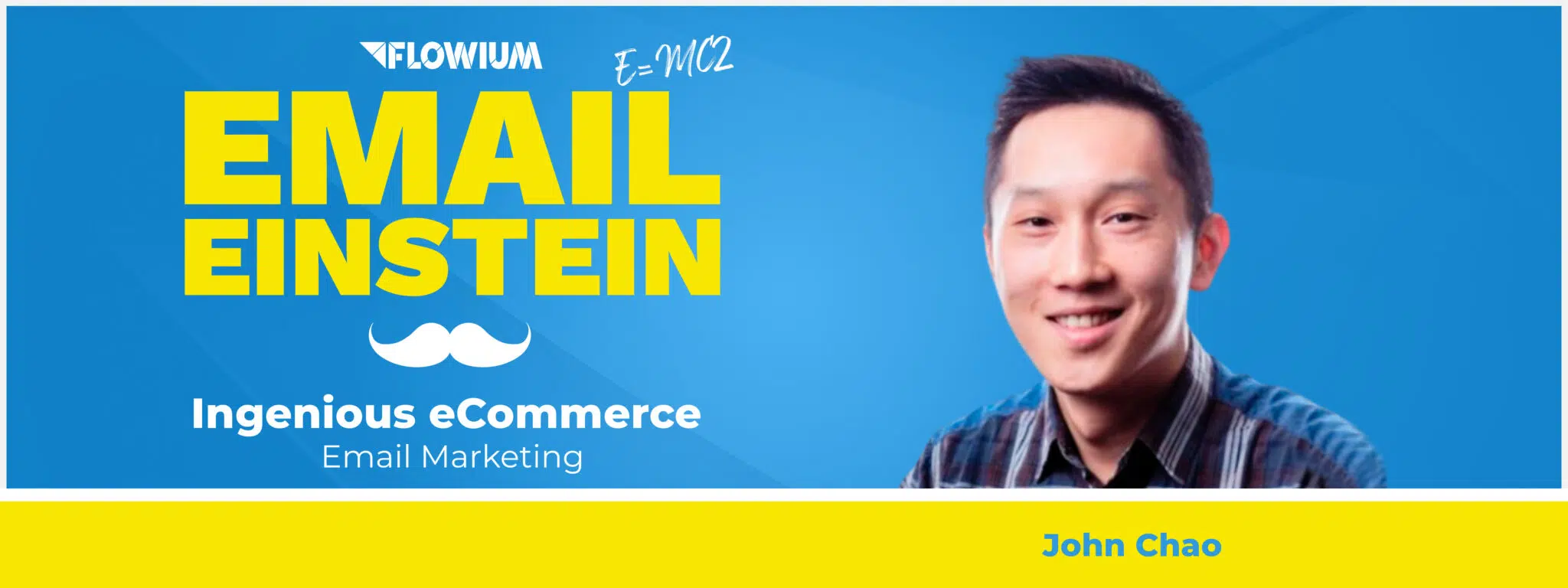
Hello, hello everyone, and welcome back to Email Einstein, the podcast by Flowium. I’m your host, Vira Sadlak. I’m a marketeer at an agency called Flowium. And here at Flowium, we love ecommerce, we love email marketing, and because we love what we do, we want to share our insights with you. And I’m super excited to have yet another segmentation episode here. Yes, you heard it right. Segmentation May. That’s a holiday that we may have just invented here at Flowium. And we are very excited to have a special guest with us today who I think would be a perfect fit for this episode because segmentation and ecommerce data analysis is his bread and butter, pretty much. And he’s here to share his wisdom with us. So please give a warm welcome to John Chao, the co-founder and CEO of Trestle. Say hi, John.
John : 1:33
Hey, everybody. Thanks, Vira, for inviting me. I’m super excited to be here.
Vira: 1:37
Yeah, I mean, we will definitely talk more about Trestle and about what you guys do and how you can help with all of those exciting segmentation stuff. But for now, let’s start with a little this or that game.
John : 1:50
Okay.
Vira: 1:50
This or that. Q&A game, just like to get to know you better before we go into all of the juicy e-commerce questions.
John : 1:57
Okay. Sounds good.
Vira: 1:59
Cool. Let’s do this, John. Okay. Tea or coffee?
John : 2:02
Coffee.
Vira: 2:03
Free shipping or 10% off discount?
John : 2:06
Free shipping.
Vira: 2:07
Really? I’m like a discount girl myself. That’s like a, that’s a big one for me. But yeah, I see the appeal in free shipping as well. Okay. Instagram or TikTok?
John : 2:18
TikTok.
Vira: 2:19
Ooh, fun. Fun. Okay, cool. Rating by price or by rating?
John : 2:27
Wait, say it again.
Vira: 2:28
So, like, sorting products by price or by rating?
John : 2:34
Rating.
Vira: 2:36
Good one. Good one. Okay. User-generated content or professionally shot product photography?
John : 2:43
Oh, that’s tough.
Vira: 2:45
That’s a tough one. Yeah, I agree.
John : 2:47
For authenticity, user-generated content, I think, if I were doing personal shopping for myself.
Vira: 2:52
Cool. Okay. Email or SMS?
John : 2:55
Email.
Vira: 2:56
Okay. Okay. I’m an email girl myself, but I might be a bit biased, honestly, working with emails on a day-to-day basis. Okay. And the last one, this is a question that we ask all of our guests, but I’m like really curious to learn if you had Like a theme song, the song that would play every time you would enter the room, what would it be?
John : 3:23
Oh, it’s— there’s a song by OneRepublic. I think it’s called It’s Going to Be a Beautiful Day, I think. But I think that’s the one.
Vira: 3:34
Awesome. Awesome. Cool. Okay. Okay.
John : 3:38
Yeah, actually, this is our, we use that for our wedding too.
Vira: 3:41
Aw, that’s cute. Your wife wouldn’t be impressed or your partner wouldn’t be impressed that you didn’t remember the name of your wedding song, you know?
John : 3:50
I think it’s called, oh, it’s called A Good Life. I’m sorry.
Vira: 3:54
A Good Life. Yeah, I know this one. That’s a good one. That’s a good one. That’s a fun one. Cool. Okay. Okay. So let’s go and discuss all of the juicy e-commerce stuff for those of us who are not familiar with Trellis, or for all of our customers who are not familiar with Trellis, what Trellis is and why people should be excited about it.
John : 4:20
Yeah, so we’re here to simplify personalization for our SMB and mid-market ecommerce merchants, right? So without having to do a lot of the investment upfront for data infrastructure and coding to be able to actually access your customer data, turn them into insights and preview segmentation, that can help you actually activate it across multiple channels. It’s like, my background’s in data science. I did this for like 16 years. And before I started, I worked at LinkedIn building machine learning models for sales and marketing teams. This is where I kind of got the idea for Trussell is, we spend, not every company in the world would have 1,000 people working on data and making, trying to monetize it. How can we actually make that accessible to millions of brands without the high price tag and without the complexity? It sort of became my mission. That’s really what Trestle is. Trestle is like a— it’s a wordplay on the actual bridge structure of trestle. And so we think of it as like a bridge to your insights, right? Like, how can we bridge the gap from data to knowledge? So that’s who we are.
Vira: 5:33
Awesome. And I mean, this would probably be the main topic of today’s podcast. Yes, we will be talking about the segmentation, but today’s entire episode is going to be about how businesses can actually effectively leverage that customer data to improve their overall performance because it’s so easy to get overwhelmed by that complex data. Yes, we own it. Yes, we do have access to this data through Shopify or through Klaviyo.
John : 6:02
Mm-hmm.
Vira: 6:03
But what I’ve noticed throughout the industry is that people don’t necessarily know how to use it. And I feel like tools like Trestle, they help to eliminate that guessing game. They replace it with science. And that’s what I think is powerful about tools like yours.
John : 6:23
Yep.
Vira: 6:23
Okay. Yeah. So tell me more about what you guys do and what are the main features of the Trestle platforms. Obviously, we are very excited to learn more about segmentation. Because that’s like the topic of the month. But tell us a bit more about like other stuff that you guys are doing as well.
John : 6:43
Yeah, for sure. So what it is, it really is like a data CRM that sits between Shopify and your marketing channels, right? So it’s just a lot of like pre-work that you have to do to get data out from Shopify or from different marketing engagement. And to turn them into, you know, store them in a data warehouse, turn them into data models, build a bunch of calculations on top to be able to actually get to something usable. And so we sort of take away that upfront work and just have a simple plug-and-play turnkey solutions for our merchants, where we directly pull from your Shopify backend, does not slow down your site or anything like that, and build the— create our proprietary secret sauce on top of the data to create the infrastructure that you need to answer these questions and create prebuilt segmentations out of the data.
Vira: 7:35
Mm-hmm.
John : 7:35
So examples would be like, one of the really powerful ones that has worked years and years for marketing is RFM segmentation, recency, frequency, and monetary. It’s one of the big things that we actually kind of got started with. Lifecycle segmentation, different segmentation on product purchases, people who have done certain behavior, bought product A, not product B, upsells, cross-sells, wholesale, subscriber, all these things are sort of data that are available from within Shopify. And we kind of just made that super easy and accessible as an interface that you can actually customize and create even more segmentation on top of all the audiences that we’ve already pre-created. But you then just activate them across email, SMS, Facebook, Google, TikTok, and we actually sync back to Shopify as tags. So—
Vira: 8:32
Okay.
John : 8:33
Yeah, so we kind of position ourselves as like a first and foremost a data platform, but also is something very, very friendly for marketers that they can actually operate themselves without sort of needing to call the data guy or have like a big data team to be able to operate this.
Vira: 8:49
Yeah, I know that’s a big one. So, and that’s where like where it gets me, like where I’m a bit confused. Like you said that you kind of have this like prebuilt customer segments and stuff like that, recency, frequency, monetary, or value. How are these segments or like these audiences that you like built through your tool, how are they different through like segments that we built with Klaviyo? How are they better? What kind of insights can you get from those segments versus like good old Klaviyo segments, for example?
John : 9:25
For sure. Yeah, that’s actually a good question. So like, so the sort of the first non-answer is actually we have probably like more than 2/3 of our customers actually use Klaviyo. So they plug segments on top of Klaviyo to actually increase and turbocharge your email revenue using the segments that we have pre-created. And so the difference, I think there’s quite a few differences, but like, I’ll just maybe call out the 2 main ones. The first one is just we have proprietary metrics that we have created on our own platform that are not necessarily available in other platforms, including Klaviyo. Secondly, I think as a As a data CRM, we offer a lot more different insights and analyses to give you the why of the segments. For example, we have product journey that shows you the sequences of your customers’ purchases. So from the first one to the second one to the third one, what do they buy? What is the timing between? That type of insight is really valuable to help guide you in terms of creating segmentations.
Vira: 10:27
Nice.
John : 10:28
And so we made that part really easy. Whereas I think Klaviyo, you know, a great email platform, but they’re mostly focused on the mechanics of setting up your campaigns and, you know, triggers, right? Where they’re not necessarily helping you to find or like uncover profitable segments buried in your data.
Vira: 11:18
Interesting. So what you’re saying is that segmentation strategies that you use, or like the definition of the segments, I guess they are more like personalized, probably like per customer, and they are a bit more advanced. That’s what I’m hearing, right?
John : 11:32
Yeah, and there are quite a few out-of-the-box solutions that you can plug and play without having to set up more complex flows sort of in Klaviyo. Because in Klaviyo, you do have to set up a bunch of if-else and rules to create sort of like the desired flows. But we sort of made that process simpler by like breaking it down and creating simple, smaller segments that you can just quickly use and then just sync a lot of them over.
Vira: 12:02
Cool. So let’s talk about that specific group of customers that probably everyone is the most excited about, about your superstars, superstars of your email marketing list. How do you find your most valuable customer segments using Trestle segments? What are the definitions? And like, what other insights can you gain from that Dressel analysis that can be then used for your email marketing segmentation?
John : 12:33
Yeah, so maybe I can start with like an actual sort of a customer story.
Vira: 12:38
Let’s do that.
John : 12:40
We worked with a fashion brand. And so they, during their trial, they’re like, well, what are some ways we should— how do we test this? Like, how do we know this works? And so we recommended that they sync one of the segments was called most likely to buy, and then the other one is basically like a churned loyal list.
Vira: 13:00
Mm-hmm.
John : 13:01
And they’re actually defined from— one is from RFM segmentation and one is from lifecycle. And we just say, hey, like, you know, just sync this over to Klaviyo, run a campaign against the segment, you know, here’s what— like, maybe like you normally do, and we can just compare the results. And so What they found was this campaign actually generated double the revenue within the first 24 hours versus their normal VIP list or their engaged 60-day list. And the reason why was we actually targeted, I think, 20% extra customers that were not on their VIP list, like that they didn’t know to target. You know, the buying signal just was not wasn’t captured in their sort of 60-day engaged. And what they’re surprised to find was like, oh, well, like, the open rate was actually lower. But the email generated per user was actually much higher. And this is why it kind of increased or doubled the campaign revenue within the first 24 hours. And it kind of makes sense, right? Like you, you hit the VIP list, and maybe the people are used to opening emails. And so you, so you keep sending it to them, but then there are actually additional customers that, uh, may provide additional value or convert, right? Um, that you’re not targeting.
Vira: 14:25
Interesting. Interesting. So basically what you’re saying is that engagement with an email does not necessarily mean that this person is a potential buyer, right? And sometimes like using this like standard, uh, sort of like practices, we don’t necessarily talk to other people who might be interested in, in purchasing something From you.
John : 14:48
Correct.
Vira: 14:48
Yeah.
John : 14:48
And then I think just being more contextualized, right, in terms of the emails that you sent. For example, like the things you want to tell your customers who— loyal customers who potentially have churned or haven’t purchased in over, you know, 10 months or a year might be quite different than the messaging you want to send to somebody who just made one product purchase, right?
Vira: 15:08
So true.
John : 15:10
I think a lot of that sort of like when you can see all the list of options, you can then really strategize and try to think about, okay, well, you know, maybe I do need to have a different post-purchase series for different types of customers based on the product that they purchased initially. Right. And that we have seen lead to really good results as well. Yeah. So this is what we did with Ilia Beauty as well.
Vira: 15:33
Oh my goodness. I’m like, I’m obsessed with their products. When I learned that you guys are working with this brand, you got like immediately 1,000 brownie points from me. Yeah. No, seriously, that’s a cool brand. And you also mentioned that you kind of like customized ILIA Beauty’s like post-purchase sequence, right? Or like post-purchase flow or whatever, based on like the information they got. Tell us more about it because I’m like excited to learn more.
John : 16:03
So we worked with their VP of Growth and E-commerce. And they were actually, because they’re slightly bigger, right? They’re actually thinking about maybe, maybe do we need to build a data team, right? Like, how do we actually go about doing that? And then they kind of discovered Trestle. And the problem that they wanted to do, wanted to find out more, was the replenishment times of different products, as well as do people cross-buy into different, you know, SKU lines, right?
Vira: 16:30
Right.
John : 16:31
So a typical example would be like, well, do mascara buyers, do they replenish at 90 days, 120 days? Is that different from somebody who buys, you know, their skin tint or their blush products? And, you know, you know, anecdotally, they think, yes, they’re definitely buying at different times. But to come back with like a scientific answer, it’s really, really hard. And so this is where they leverage our product journey to, to kind of answer those questions, because they can actually segment by the customers who bought the different products first, you know, an initial product mascara, or initial product equals skin tint, or maybe their lip, lip balm. And then to see what is their next, uh, the top product they buy on the second order and what is the timing in between, right? And it turns out like they can actually figure this out, um, scientifically and know, you know, the, the mascara to mascara purchase timing. Let’s say, I don’t know, I’m just making it up, but maybe it was like 96 days, right?
Vira: 17:27
Yeah.
John : 17:27
You know, where 50% of people would have made purchase. And so they can actually really tailor their purchase sequence to that time, right? Let’s say one week before where most people would repurchase And then one week after where the sort of the repurchasing is slowing down, so that they can hone in on early repurchasing patterns, as well as like reminders around like when people need to be purchasing and running out of the product. And then they would like also put in potentially like product upsell opportunities, right? Like, if you know mascara products, also buy a cross-buy into the skin tint or the lip balm or other things like that. Then you can then use that as a potential cross-sell opportunity on those replenishment emails.
Vira: 18:11
So basically, you kind of like grouped this like different customers into different like segments or like cohorts or like groups, you like grouped them and had like different customer journeys based on like what they purchased and based on their purchasing like behavior, right? Exactly.
John : 18:30
Yeah. So I think these are Sort of open questions. I think a lot of merchants actually come in asking this, like, I want to know what they buy next. It’s like one of the most common questions I hear. And so to be able to answer this question would allow, you know, like creative sparks to kind of, you know, start beginning in their heads. And then they think about upsell strategy and cross-sell and how to actually tailor the purchasing experience or the buyer to the product purchasing journey that the customers are already doing on the platform on your store.
Vira: 19:00
No, that’s super cool because normally what we do with platforms like Mailchimp or Klaviyo, we make an educated guess in an ideal world, what would this customer repurchase or when would they repurchase this, right? And we make our assumptions based on sometimes what do we know about the customers, but also sometimes about what we would like this customer to be. which is not necessarily the truth always. So that’s, that’s so cool that you can actually like support your, like support your strategy with this like data. Um, that’s like really cool. Yeah.
John : 19:41
It’s, it’s, it’s one of the things I always say is like, um, most of like all defaults are probably wrong for your store, right? Like for the most part, ’cause if you, if you’re not calculating it for yourself, you’re basically using someone else’s, um, defaults and that may or may not align with how people are shopping. in your store buying your products. And so the value in knowing is tremendous.
Vira: 20:04
True, true. Can you tell us more about this sort of like strategy that you have that’s called cohort analysis? I know one of your other clients that you work with, True Botanicals, actually they have this like beautiful video on your website where they were like explaining how this cohort analysis helped them to like better understand customer behavior. Like what is this and like how you can help to make like educated decisions to your customers? With this approach?
John : 21:24
Yeah, so there are actually multiple ways to use the cohort. But the first way is obviously just looking at the customer cohorts you acquire every single month, and then seeing how that’s trended over time and the performance of those customers in subsequent months, right? So one of my big pet peeves is in Shopify’s analytics dashboard, your admin dashboard, you’re probably looking at repeat purchasing. And the repeat purchase actually is a blended number that includes first-time customers, and also old customers from before. And so that doesn’t actually give you a true cohorted view. And so cohort is, you know, like new customers, how many customers did I acquire in April, right? And then in 3 months, what is the total spend so that I can actually have a better estimate on my ROAS on acquisition costs, right? So it’s really important, right? So understanding in 6 months, are these people still buying? when are they likely to churn, what is the repurchasing, uh, repeat purchase percentage, as well as their customer lifetime value. All that stuff you can get basically as a cohort basis, as a monthly basis, and you can see a rolling trend of all your customers across different months. And so that is something that really, really quite useful. Yeah, and a lot of our e-commerce brands actually have also have investors. And so with their investors, they also want to see how repeat purchases and how these things have trended over time. And so they actually do use the credit score analysis sometimes for investors’ reports as well.
Vira: 22:59
That makes sense. Totally, totally. And especially considering that, just like you said, people who have returned to purchase something from you a second time are very different from 3-time buyers or 4-time buyers or 5-time buyers. I read this one study that indicates that Customer actually has, have like 27% chance on average of making another purchase after the first purchase, but 54% chance of like coming back for like a third, third purchase. So these are 2 very different groups of customers. So why would you put them all in sort of like the same bucket, right? That totally makes sense.
John : 23:36
The trick, I think, for the most part is trying to get to 3 purchases because we see that’s the most incremental gain in terms of like the likelihood that we make the next purchase. And exactly, you know, that buyer sort of incrementality chart calculation we’ve done before. And it actually does not increase that much more after like the 5th or the 6th purchase, right? But like, if you get people to like 3, you know, you’re kind of maximizing your repurchasing potential from what, you know, your relationship with this customer.
Vira: 24:08
Yeah, totally, totally. And also just like to add to what you’ve previously said, like, I really love what you have with like different customers acquired during during different times of the year? Because I’ve seen that across the industry that sometimes people who are, for example, like holiday buyers, right?
John : 24:26
Yes.
Vira: 24:26
Who come to your website around like November, December to shop for like Christmas stuff. We even have like sometimes segments in Klaviyo called like holiday shoppers, meaning that these are the people who maybe purchase once a year and then they are gone until the next year. And if you’re lucky, you can convert them back. So like, why would you like spend the same amount of like efforts or like the same, like the same marketing? Why would you, why should you be doing same marketing for these people and say for people who are your engaged potential customers, right?
John : 24:56
Yeah, we actually turned— we actually had the analysis around Black Friday, Cyber Monday. And we do this every year. And we saw basically like the November cohort customers are 17% lower in CLV, customer lifetime value. And they’re like, I think 10% less likely to come back and repeat. And so—
Vira: 25:16
Interesting.
John : 25:18
Like, you definitely need to have a different strategy For example, we created segments like, for last year’s BFCM, we created BFCM buyers of 2021 from the previous year. And we have created segments of people who bought during those times and then did not make another purchase. And so you can actually tier your holiday strategies also based on this as well. You could send customers to higher value customers first, start warming them up, or for a long time no purchase customers, warming them up versus people who have just recently purchased. You should definitely think about these things and the platform will allow you to actually segment across multiple dimensions and to, like, to your point, like, you do want to have a slightly different strategy specifically around the holidays and also like reminder to come back. Otherwise, the statistics have shown that they are less likely to come.
Vira: 26:11
No, that’s really interesting. And I love this like approach, like the cohort analysis, in that you can like literally slice the list into this like small groups of people and analyze them separately. Tell me more about subscription brands. I know you guys work a lot with subscription brands. And Trestle can actually help businesses to optimize like their subscription services. Like, how do you use that information that you acquire through Trestle to improve that process or that business model?
John : 26:44
We just recently, I think it might still be up on the apps.shopify.com page. under— and we have a case study with basically True Botanicals. You know, we worked with True Botanicals around some of their subscription business, right? And they wanted to, you know, obviously increase that significantly. And some of the things that we did was, again, looking at, you know, we did analysis like, well, what is the lifetime— like, what is the difference in lifetime value for like a subscriber versus like just a non-subscriber?
Vira: 27:17
Mm-hmm.
John : 27:18
It’s typically 5 to 7 times higher lifetime value for like a subscriber. And we also looked at things like, well, when are people likely to churn, right? Like, are they likely to churn after the 3rd, 4th, 5th purchase? Like, what is like sort of the elbow point?
Vira: 27:32
Interesting.
John : 27:33
And then on top of that, I think just which products will be good for subscriptions, right? Like, if you look at, we had actually a product cohort analysis as well that you can actually view And just look at people who bought a certain product on their first basket. What is their purchasing patterns and CLV, you know, after 6 months or after 12 months? So you can actually understand which ones are actually generating a lot of repeat purchases, which one are maybe just like people start with and maybe don’t necessarily maybe enjoy. And so like trying to understand the interplay between a first product purchase experience Mm-hmm. And then what products they’re likely to buy next, and which maybe are bundling opportunities. I think those are all basically captured in the 3 product-level analysis we have in the product journey analysis and the product relation analysis and the product cohort. And so that’s what, you know, for a brand looking to start potential subscription businesses, understanding which ones would be maybe a good fit, That’s what we recommend is to go through those analyses.
Vira: 28:44
Yeah. And you’re kind of covering the biggest pain point of all of those businesses that you can like segment and target repeat customers specifically who are not subscribers yet, then to convert them into subscribers. So that’s a big one. I mean, that’s a struggle that a lot of subscription brands are having and you’re kind of segmenting out those people, which is, which is amazing. Yeah.
John : 29:08
And yeah, we have a, we just launched our Recharge integration as well. So, you know, you can sub— you can segment by, you know, your subscription statuses on, on Recharge. And so now that you can even build even finer controls.
Vira: 29:22
Amazing. Amazing. Tell us more about like, how do you work with like audiences on say Facebook Meta to deliver that like better experience to them?
John : 29:34
Yeah, so one of the things actually, another big use case besides syncing to Klaviyo is actually activating the same customer list across multiple channels. Typically, if you try to target the same customer, you will have to set up your triggers or filters on all the different platforms, like on email or SMS and Facebook. They all look different. It’s pretty much impossible to recreate the same experience if you wanted to create a unified brand voice targeting the same group of customers across the different platforms. Yeah. One of the benefits of Segments is like, we help you do this, right? Like by centralizing the list creation, the audience creation on our platform, you can then just flip a button and send that list across multiple channels like email, SMS, including Attentive Postscript, and as well as like Facebook and Google as audiences.
Vira: 30:26
That’s so cool.
John : 30:27
Will allow a brand marketing team or growth teams to figure out what are their strategy across multiple platforms, and then have a delivery mechanism that would help them activate that across different platforms. We’ve also seen ROAS go up by quite a bit for some of the strongest audiences like active loyal customers, most likely to buy, high spenders. Those are some of the segments that we have seen work really well on Facebook and Google when you sync it over, and then they will run sort of product ads that are targeted to, to this cohort of customers. And we’ve seen ROAS, you know, quite high, like sometimes our 8 to 10x ROAS.
Vira: 31:13
Wow. Insane. Yeah, no, I mean, return on ad spend is obviously a big thing, but it kind of helps your businesses to replace that, again, that like guessing with, with actual science, right? With actual data, Science, which is amazing.
John : 31:32
Yeah, because I think the— there’s the benefits. I think there’s a few benefits, right? But like, number one is like, when you, for example, use Facebook conversions, or, you know, it only remembers up to, you know, usually a shorter period, like 28-day attribution window, if you’re just using the pixel. But you have actually more history with some of your customers, right? Like sometimes years and years of history. And so to be able to like sort and contextualize that first before you target to that list of customers obviously would help with the results versus if you’re just doing a blended approach, kind of using Facebook’s out-of-the-box targeting mechanisms.
Vira: 32:11
Yeah, it’s totally like in that, like a popular marketing example, when you’re walking into the room full of people and there are like some people that you know, some people that you don’t know, there are like some of your best friends, you wouldn’t come to each one of those people in the room with the same sort of like speech or with the same thing. You want to kind of to deliver different experience to your customers based on like who they are, where they come from, when they purchased, when, like what, what was the monetary value of their purchase and stuff like that. Hence the segmentation, right? That’s the whole point of like segmentation to personalize that experience. Right.
John : 32:47
Exactly.
Vira: 32:48
Yeah. Yeah. Totally cool. Well, I mean, I do have a gazillion questions, a gazillion more questions. So we hope to have you back on our podcast maybe one day again, just like to talk about all of the advanced strategies that you guys are using with your customers. But if our listeners want to learn more about what you do, or if they want to work with you guys, where they should go, where they can learn more about Tresl?
John : 33:16
For sure. Yeah. So we have our website is at www.tresl.co, T-R-E-S-L.co. And then also you can find us on the Shopify App Store. If you just type in Tresl Segments, you’ll find us. Those are the best places to kind of find out about Trestle, whether this is a fit for you. You can also book calls with our team and kind of ask questions, because I think that’s sometimes the easiest is just like, oh, was this going to be for me or not? And we have a 14-day free trial, 30-day money-back guarantee. So we try to make it super simple and painless and worry-free for for customers who are maybe wondering about segmentation, thinking about the product need for analysis, they can definitely give this a shot. And going forward, I think we have a lot of actually exciting things planned to help making campaign planning simpler. One of the things we hear from customers is like, it’s just time, right? Like sometimes it’s just about, do I have the bandwidth? Do I have time to actually build these things and plan these things out? And so we’re going to spend a lot of effort working on a new product update which will actually help around campaign generation, campaign planning, and helping people create personalized campaigns as well.
Vira: 34:37
Amazing. Thank you so much. Yeah, no, your tool looks very intriguing, to be honest. I’m going to recommend it to my clients for sure. I know. And yeah, guys, if you want to learn more, all of the links that we discussed, all of the case studies and everything, it will be linked into the description box for this podcast. John, thank you again. Thank you again for coming. It was really fun talking to you.
John : 35:00
Yeah, of course. Thanks so much.
Vira: 35:01
It’s always a pleasure. Yeah.
John : 35:02
Yeah.
Vira: 35:03
It’s always a pleasure to talk to some segmentation geek, you know, or like data geek like I am. That’s us. That’s our bread and butter. And it was really fun having you on this podcast. Thank you.
John : 35:16
Thanks so much for having me.
Vira: 35:17
Yeah. Guys, if you like this podcast just like as much as I enjoyed recording it, don’t forget to rate it, review, and subscribe to the podcast. And if you’re interested in getting some more advice on how to establish a solid email marketing strategy, just reach out to us and sign up for a free audit. And I’m sure we can work together to improve your overall email marketing strategy. Thank you so much. And we hope to have you back here, guys, next Tuesday. Bye.

Vira Sadlak
Podcast host, marketer, traveller and a life lover from Vancouver, Canada