

Podcast Transcript
Vira: 0:40
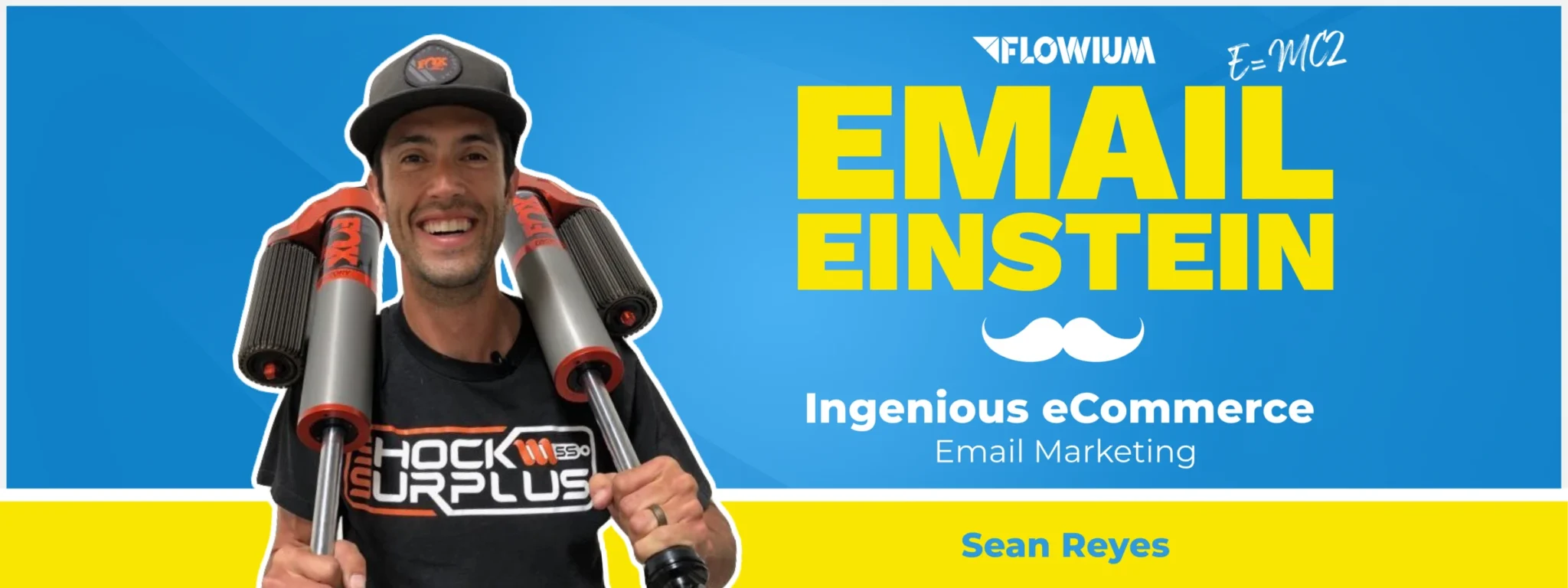
Hello. Hello everyone and welcome to Email Einstein by Flowium. I’m your host, Vira Sadlak. I’m an email marketer here at an email marketing agency called Flowium and I’m very passionate about email marketing. And because here at Flowium we love what we do, we want to share our insights with you. Flowium is one of the fastest growing email marketing agencies in the world and we specialize in providing a premium, full service e commerce email marketing experience to all of our clients. We deliver the right message to the right person at the right moment. That’s what we’re all about here at Flowium. So welcome everyone. Please say hello to Sean Reyes. Sean is a mastermind behind the brand called Shock Surplus. He founded shock surplus sharksarplus.com after discovering a significant knowledge gap, one in which there is a giant void in real information in the right control space. And guys, I don’t want to do a huge amount of the talking here. It will be better if you hear it directly from the source. But to put it bluntly, Sean and his team are doing big things to shake up the trucks industry world. And because this guy’s emails are awesome and because their content is awesome, their content presence, they kill it with their content presence. I’m super excited to have Sean with me today to share his insights and marketing within the highly competitive and not very repetitive shocks work. So today is going to be packed with some great insights. So without further ado, meet Sean, say hi.
Sean: 2:10
Hi guys. Hey. I really like that. Highly competitive, but not repetitive.
Vira: 2:16
Because that’s a challenge, right? With brands like yours, people come to buy shocks. How often? Like every three years, Every four years?
Sean: 2:24
Yeah. That’s one of the big things that our business has always been challenged with. Especially when you’re looking at a, if you’re looking at e commerce like KPIs, everyone’s like, what’s the lifetime value of your customer? And that’s honestly one thing we’ve never really figured out because like we get repeat customers every few years of those that have stuck around and have come back to us. But yeah, sometimes it’s four or five, eight years.
Vira: 2:51
Sometimes, yeah, we’ll definitely talk with you about it, like in depth about it. Personally, me, I’ve never purchased shocks in my life, but maybe that’s because of like Toyota Corolla, girl, you know? So, like, my shocks needs are pretty minimal.
Sean: 3:06
Yeah.
Vira: 3:06
Sean, before we get started, we have this little game that we do with all of our guests. Like a blitz Q and A just to get to know your better. So let’s, let’s. Let’s do this. We have a few this or that questions just to get to know you better. Okay, cool. West coast or east Coast?
Sean: 3:22
West coast.
Vira: 3:23
A same.
Sean: 3:24
Here come California boy.
Vira: 3:27
Yay. Texting or calling?
Sean: 3:29
I calling.
Vira: 3:31
Very old school of you.
Sean: 3:33
I text so much, but at my age and calling is just real connection.
Vira: 3:38
Awesome place you most want to travel to?
Sean: 3:41
Hmm, Croatia.
Vira: 3:43
That’s a good one. That’s a good one on my list too. Okay, cool. Have you ever worn socks with sandals?
Sean: 3:51
Yes.
Vira: 3:51
Okay. I mean, I studied in Germany at some point, so socks and sandals all the way.
Sean: 3:59
I have socks that have. They’re like toe socks, so.
Vira: 4:04
Oh, wow. That’s like a next level, Sean.
Sean: 4:06
That’s a next level story behind that.
Vira: 4:09
Whole different story. Okay, Sean, the last one. I’m really curious, dude, to hear your answer. If you were a car, what would you be?
Sean: 4:16
Oh, boy. An Audi R8.
Vira: 4:18
Okay. I was honestly expecting something more like off roady from you. Something more like interesting. Okay, cool.
Sean: 4:27
If it was a truck, it’d be a Ford Raptor. But you said car, you know, so maybe semantics.
Vira: 4:32
Oh, okay, okay, sorry, sorry. Like, for me, they’re all cars.
Sean: 4:35
Okay, gotcha.
Vira: 4:36
Yeah, Like, I’m. I’m not a car. Not a big car person. Like, as I said, if. If I would be a car, I would probably be like beige Toyota Corolla from like early 2000s. You know, like good old basic cars.
Sean: 4:51
They say. My wife had like that. My wife had like a one beige Corolla that we. We. When we moved, we. We ended up giving it away because she tried to sell it and no one would buy it. And so we got like 100, 100 tax credit. And she cried.
Vira: 5:10
Okay.
Sean: 5:12
It did someone some good.
Vira: 5:14
Don’t get me wrong. I just upgraded to crawl across. So like Toyota Corolla cross. So it’s like a teeny, tiny suv. It looks like an suv, but it’s like literally a Corolla inside. It’s a Corolla. It acts like Corolla. It drives like. I’m happy with it. I’m happy with it.
Sean: 5:31
That’s good. Yeah. That’s all that matters.
Vira: 5:34
Awesome. Well, let’s go to all of the juicy questions, Sean, all of the shock surplus juicy questions. So tell us about your company. What’s shock surplus and how did it all start for you?
Sean: 5:45
It’s shocks, shock absorbers, coilovers, all of that on a, on a car. And we just, we’re just hyper niche focused on that segment of the vehicle. And there’s our industry. And our segment of the industry has always just been ruled by, you know, marketing jargon. And everyone’s, everyone’s marketing jargon, all the basically sounds the same, right? And so you’ve got all these different brands of shocks that all kind of sound the same and you can’t describe, it’s impossible. These guys don’t know how to describe what it feels like in your butt when you’re, when you’re riding on their products. Right. So there’s, oh, there’s this big old cloud, big old mystery about like, what does this actually do? And a lot of people will be like, oh, there’s no difference between a hundred dollar shock or a five hundred shock. And so, you know, I set out to like kind of just prove that and answer that for as many people as I could. And so yeah, I was never a gearhead, never a car guy, but started in 2007 with my, my stepdad kind of invited me to work with him and he was definitely a car guy engineering suspension for decades and just learned it from him, learned the ropes, but really from a perspective of e commerce and small business. And so kind of applied my interest in e commerce and kind of to his automotive brand. And so started from there and then 2013, you know, I just basically in 2012 I was really butting heads, 2013 really butting heads with my previous company. And so I just decided to go at it on my own because of just seeing the gap in the market. And the gap back then was, was ebay. And so just kind of understanding ebay really, really well. And yeah, so started from there and we’ve been, we’ve been growing, I mean the first six years of the business, I think we were growing 100% year over year. And it’s been taken off and we’ve really kind the tone in the space. A lot of copycats, at least on ebay and Amazon, but the thing that no one can copy now is our content and our education. So the past couple of years have been just pedal to the metal on education and YouTube and content creation because I know that’s the way forward as you know, all the, all the math, all the math arbitrage of AdWords and Facebook, that’s like, that’s always just going to run its course as we’ve seen and it is running its course. But you know, media is the answer for us. And so that’s kind of what we’re doing now. Just super heavily focused on media and just continuing to help and really scaling our educational operation through YouTube.
Vira: 8:53
Yeah, yeah, no, you guys definitely like achieved authority in your niche through content, that’s for sure. Because like sometimes when I was like doing the research for our emails, like when I was like typing different things, you were like on top of like Google search results. Like this results organically. So you are like crushing it. And I love that your store and your website, it doesn’t feel very like very much like a catalog. You know, you get that like almost like a physical store with real people kind of vibe. That’s what I really enjoy about your store.
Sean: 9:26
Thanks. And we’re like turbocharging that like that feel of like, you know, content and personality with like the shopping where we got a new website and in progress at a lot launch in August that we’re super pumped about. That’ll really kind of make it a little bit more cohesive of an experience. And one thing we like to tout is we’re on top of word number one, on top of Amazon for the word shocks organically.
Vira: 9:51
So I’m always pumped for such a generic word too.
Sean: 9:55
Yeah, exactly. I’m so awesome.
Vira: 9:57
That’s so awesome. No, like Amazon paid ads or like I’m still learning them very much. We just launched our own brands like few, few weeks ago and we are like, it’s a learning curve. That’s, that’s for sure. But good for you guys. Good for you. Yeah, yeah.
Sean: 10:13
We were in the Amazon paid ads. We were in Amazon paid ads for a while and we’re making a lot of money on Amazon with, with it. But after, after a couple years we had just a two or three competitors that just jumped on all of our listings and drove the prices down to you know, razor thin margins that we couldn’t just like subsist on. And so we quickly stop. It’s a, it’s a tricky beast, right?
Vira: 10:36
Yeah. Amazon is a bit different from like a Shopify. You can’t really compete based on like value and content you provide. It’s almost always about the price. It’s just like a different kind of customer. I feel like go to Amazon versus directly to the store.
Sean: 10:51
Yeah, exactly.
Vira: 10:53
Well, no, guys, you’re crushing it with the content. But what’s sort of like role did content play at the beginning? Was it one of your biggest drivers of your sales growth at the beginning or like, what sort of like role it played at the very beginning when you first started?
Sean: 11:10
Content really wasn’t, it was always like a, I always had in my mind about like, you know, let’s take people on the adventure as well, but never really could put it together. Like back then it was like, how much does it cost to get a. You know, some of these brands are paying 10,$15,000 for a three minute video, right? And that’s, that’s, that’s really normal. And so you think about that and you’re like, that’s completely cost prohibitive. And so content never really played a role for us. I writing blog posts, that was easy for me. Writing comes easy for me. Education came easy for me. So we got a lot of landing pages there, but we never really put the pieces of the puzzle together of driving people to those landing pages. And so it kind of happened just organically over time. And a lot of those pages have just started, have ranked really well and they started ranking a lot better as we got on Shopify, showing those educational articles across associated products and whatnot. So like that kind of ability to tie in your educational content or just organic content with your product, so people that aren’t ready to buy, they go to your landing page, et cetera, sign up, keep them in a loop. That was always the long play and it’s definitely paid dividends for us. And as far as video content though, that’s pretty relatively new thing, I think about two and a half years ago, I just, you know, I knew we had, we had to get video content going and I knew I wanted to be on YouTube, but it was always like analysis paralysis, you know, it’s like, what do we do? How do we do it? And then just one, one week, I just said, screw it, turn on the video. And I’m just gonna, I’m gonna talk about, I’m just gonna talk about these 20 topics. And that’s what we did. Just like banged out 20 videos over the course of like two or three days. And yeah, and those videos just, you know, it’s just talking head, basic talking head stuff.
Vira: 13:10
And yeah, the production value like of your last videos is totally like a different, different level, that’s for sure. Like your first one looked a bit different. I’ve seen them like back in the day.
Sean: 13:22
But yeah, people don’t Want to read. You know, people don’t want to read. Yeah, but they’ll listen.
Vira: 13:28
I’m one of those, I’m one of those people I always like now like these days I use YouTube pretty much as a search engine. Like when I need something I go to YouTube and I like YouTube stuff and not necessarily Google stuff.
Sean: 13:40
There we go. That’s good insight there. Yeah, we’re seeing a lot more of that behavior too.
Vira: 13:44
Right, right. No, that’s, that’s awesome, Sean. I honestly think that you guys are crushing it with the content which honestly makes our job so much easier because like every time we need to like create some sort of like content for you guys or like some sort of email, it always like something so easy, so easy. And you guys are the brand that don’t rely on like discounts that heavily or I would say pretty much at all. So you bring value through like content and education and like, and that like extra care. I would say.
Sean: 14:19
Yeah, yeah. That was one of the, that’s one of the big challenges with us because the surplus name kind of like kind of indicates discount or overstock or secondary stock. And so we’ve always had a kind of battle against that stigma. And so you know, people are like the discounting and the discounting structure has always been top of mind because I’m like, we’re over here and I pay all of our people extremely well. We’re doing education and so I’m like, yeah, like very anti discounts as far as just like blanket discounts. There’s you know, we have strategic ones and whatnot but we want to be seen as the discount, the discount shop.
Vira: 14:54
Right. You don’t want to train your customer to expect discounts from you, especially when you deliver so much value in like other ways. Right Sean, So we like started briefly talking about your unique customer life cycle, I would say. So as we said, you only need to upgrade your shocks every few years. Right? Every three, four years, whatever. So usually businesses that rely on those one time buyers, they tend to ignore SMS and email. Why did you decide to have it?
Sean: 15:25
There’s a lot of our products obviously there’s a huge segment of our, of our sales come from Google AdWords and conversion based Facebook campaigns where people are ready to buy within seven days. And so that’s been a huge driver of our business and our business growth. Just because the market of shock absorbers is in the billions. I think it’s $17 billion a year worldwide and I think like 7 billion in the US alone. So it’s Massive. It’s just however, if we can make the math work to capture those customers, that’s, that’s great. But at the same time there’s very high end product that is, you know, if you’re, if you’re going to go out and buy like a really expensive bed and you know it, you’re going to research for a long time or if you’re trying to buy something expensive, you’re researching for a long time. And so email and I know that that’s, that’s the case for us as well where people are doing the research landing on our, you know, our educational pages and we want to, we know our content, we know our education is good and they’re getting a lot out of it but like sometimes you know, three months down the road you just won’t remember where you learned something and so you go back to shop and anyway, so it’s just one of our ways I wanted to keep, you know, stay top of mind and kind of engage with the people that were, that we’re getting and not buying. And so it’s very, very regularly that people fall outside a 30 day attribution window. And so you know, so it’s kind of the ways of just creating that, that like keeping those people in the loop, you know, that’s always been the goal.
Vira: 17:04
Right. Yeah. Something that people often don’t realize is that that conversion window for say socks, like$20 socks. Obviously easier to convert the$20 socks person than$2,000 shock person. Right. So you need to put a bit more like care and like education into those emails. You want to just like you said, you want to stay top of the mind with your customers. So much so that like in, in, in three years or like four years when they need to upgrade their shocks or like purchase of you and not the other brands.
Sean: 17:37
Yeah. And ltv, LTV is becoming a lot more important because it’s, it’s hard to be, it’s very hard to be profitable on that first purchase for an E commerce brand. And so that’s, we’ve always, that’s, that’s just been the, I want to say the hole we’ve dug for ourselves but we’re, we’ve kind of started addressing that through definitely through email anniversary flow. You help, you help us set that up like not too long ago that’s been working, you know, just all these little, all these little things to talk to the different, different segmentations we, we’ve set up to get them back whether it’s for a small thing or Whether it’s for, you know, their wife’s vehicle or their daughter’s vehicle. Right. So all these things, it’s like stay top of mind, keep them in the, keep them in your, in your, in your list. And then we’ve been slowly adding product, different types of product. Not necessarily like the core product of a shock absorber set, but like, you know, other auxiliary items of the vehicle that we know they need. They’re just not getting it from us. And so we’re like, that’s how we keep them in mind. That’s how the email has been a huge factor in getting customers back for that second or third purchase. So.
Vira: 18:44
Right, right. I was actually shocked, I don’t know if it’s a good word when I talk about your brand to use a shop for shark surplus. I was shocked with like the amount of quality content you had on your website because like in my mind, and again, I’m not the car enthusiast, but in my mind there was like only few things you can say about shocks, but I love how you sort of like test different shocks on like different vehicles and then you share your like experience. And also that the, the tone that you use to describe it, it sounds very like genuine, very friendly and you can literally put the faces to your service. That’s what I really love about, about what you’re doing, guys.
Sean: 19:28
Yeah, it’s the, it comes from, you know, thank. It comes from a genuine place of learning ourselves too because like I said before, I’m not, I was never a gearhead and a lot of this stuff we’re learning ourselves and like we don’t, we don’t know how every product performs on every vehicle we sell. Like we’d be lying if we said that. So like a lot, so much of our content is literally self discovery for my team and educating our own team. And then we’re just, we’re just document, we’re literally just trying to document that for, for the rest of the audience. And so like, you know, we’re disappointed that’s Genu genuine or we’re excited about something and that’s genuine too. And so yeah, a lot of the time, a lot of the times I’m just like, guys, just, just roll camera. Like we didn’t, we’re not, we’re not producing anything right now. We’re documenting something right now. And so it really helps set the frame of mind for how to, how to create content. And I really kind of took that. That’s not from me, that’s from Gary Vaynerchuk. Of he always used to, he was used to say a lot of document, don’t create. And that’s you know, and that, that’s kind of. I really took that to heart because creation. Creation mode of like, you know, trying to game the system. SEO is in my mind gaming the system. We’ve never, we’ve never done any SEO tactics. Everything we’ve done is just. Is genuine, you know, kind of learning and educating from just our, our own perspective on things. And it’s, it’s worked well.
Vira: 20:56
And so yeah, that’s a good, that’s a good reminder. I, I love Gary Vee and you should hire yourself like a guy like a drock. Was it his. His name? He has always this guy with him who like follows him everywhere and like films like literally everything and then they have like a bunch of cool content.
Sean: 21:12
We. I kind of, I kind of had my own version of, of that but recently we kind of, we kind of parted ways for. For certain, certain reasons and but we, we got a new one coming on. So yeah, I’m pretty excited about that because we, we are learning every day and so I think it’s just our audience wants it, you know, such a big audience of different. Is professional, not really professional, the professional racing scene, but like the prosumer level of stuff and the very beginner level of stuff. And so when we’re talking about how many brands we carry of like 20, 25 different brands across almost every vehicle on the road, off road, on road, like all these different things, it’s like there’s always someone that we can, that we’re talking to. Right. So yeah, turning on the camera and just helping out people is my kind of. My goal.
Vira: 22:04
Your kind of approach? Yeah, I love it. I love. So Sean, you already mentioned about some of the challenges of your business with like lifetime value. For example, were you affected by supply chain issues during pandemic and like after pandemic and if you were, how did you like navigate this supply chain disruptions?
Sean: 22:24
We the pandemic really actually we were one of the businesses that accelerated. I’m sure a lot of E commerce business say that, but the automotive aftermarket world, it really like really exploded. Cause you know, people just people need their dopamine from somewhere. Did I. I think you’re. Derek said that on your. One of your previous podcasts. Someone just said that but some people needed a dopamine from somewhere. And so when you can’t go play, you can’t do things. You go places and people are using their vehicle so much More we were extremely diversified in terms of our supply chain. So like our sales accelerated. We saw shortages of some of our A movers which affected us a little bit. And it kind of continues to affect us a little bit. Mainly because one of our two main suppliers kind of, I won’t name names, but they’re of, they’re of the type that’s taken advantage of the situation and have priced their wholesalers kind of out of the market because they have their own retail arms. And so they’re protecting their own retail sales and their own margins at the expense of their entire 5000 wholesale account kind of situation. And so that’s still affecting us a little bit. Prices have, you know, prices of shipping have gone way up and you know, brands are increasing prices on the cost side but lagging behind on the retail side by six to 12 months. And so that, that squeezes us in the middle, you know, and get the whole shipping container thing. That affects us, that affects us because it’s affecting our brands. Because a lot of our brands are made here in the USA or assembled in the usa. But like every single shock absorber contains what’s called shims, which are very small disc, metal disc, and millions upon millions of those are being shipped in from China and Taiwan and those are, you know, those are what are sitting on in the ports. So we are affected, but at the same time, like we’re doing such a small piece of the $7 billion shock absorber pie that like when one brand’s affected, we kind of just pivot and attack another brand that is available.
Vira: 24:40
Yeah, no, for sure. But your account, and I work with quite a few of them, your account is pretty unique in that sense that you have this flow called back in stock flow and it’s your number one best performing flow. How come I’ve never seen this before?
Sean: 24:59
So when we run Google Ads, we aren’t running those against out of stock products, but we’ve got about 250,000 uniques a month right now. And so many of those are the big A movers in our category. People really want them. And so we’ve kind of developed an authority around a few key products that we drive a lot of traffic to. People know us for them, we rank in the top three on Google across a bunch of associated terms. And so people really know us for those, People really want our service around those. And so those, those products have been a huge driver for us and you know, but they haven’t been in stock and so we’ll sometimes we’ve been We’ve been basically, the secret maybe is not out, but we basically cornered corner supply on certain products because our back in stock list shows, hey, there’s 100 people waiting for this one item. And so we see that out in our available network and we’re just buying it up constantly, just buying everything we can. And it’s been a big driver for us because if you think about 50,000 SKUs, 60,000 SKUs, and people, all the back in stock notifications that are constantly going out across that huge catalog, it’s been like you said, a substantial driver for us because when super popular products go in, people are literally emailing us or calling us and being like, you guys just sent me a notification 15 minutes ago, but I just checked again and it’s back, it’s out of stock again. I’m like, yeah, man, there were 120 people in line on that. I’m sorry, man. So, yeah, huge, huge demand for some of the stuff that we sell.
Vira: 26:56
That’s interesting, Sean. I didn’t realize that some of the brands are using that backing stock as almost like an inventory management tool. That’s, that’s interesting. That’s interesting.
Sean: 27:07
Yeah. Because our product is really a commodity because of just the sheer, just the sheer volume of pieces in the system. And so we, we kind of treat it, we kind of treat it as such. And so yeah, that’s how we are, that’s how we’re, that’s one of the ways we kind of build the build authority. Because you tie in Google AdWords and search volume to available inventory in your supply and then you look at your back in stock and it’s just like kind of all pieces to a puzzle like ensuring what’s going to move inside of usually 30 days. Usually retailers are worried about what’s going to move inside 30 days, but we’re like seeing what can we acquire that’s going to move before the product even hits our floor. What’s going to happen? Move inside of 72 hours or whatnot
Vira: 27:55
or less or 15 minutes?
Sean: 27:59
Yeah, velocity. Yep.
Vira: 28:01
Oh yeah. Oh yeah. And usually when we create the back in stock flows, we like don’t use any discounts for like Vue for other clients just because people are waiting for that product and they would purchase like anyways. So sometimes the backing stock flow can be something like as simple as like your item is back in stock. One email, boom, done. The placed order rate on, the click through rate on this emails are usually amazing. I’m just gonna probably disclose your open rate for this one because it’s insane. It has 73% open rate and 30% click through rate. I’ve never seen anything like this in other flows. So this flow is usually top flow in terms of like engagement. Just because people want to hear from you, you’re delivering the relevant content to them.
Sean: 28:53
Yeah, yeah, that’s kind. I knew it was around 60 or 70% but that hard number, I didn’t
Vira: 28:58
realize it was that high. Right, yeah, like out of those people we have a pretty, pretty solid placed order rate too.
Sean: 29:07
So that’s the thing with our industry also is. The thing with our industry also is that usually all these, a lot of our competitors, they don’t, they don’t have inventory. I call it inventory visibility. So like, you know, a lot of super high end sites track inventory and whether it’s in stock or out of stock, whatever. But so much of our audience has been used to seeing a product on a website and hitting add to cart and purchasing it. Not knowing of the delivery time window and sometimes being okay, and sometimes being okay that it’s not going to be delivered for a month or two months or even you know, some of our brands like it’s like six or ten months right now. And so for us it’s our, we, we go the other direction where like we don’t allow back orders. Very, very seldomly do we allow back orders because with that comes super high customer service requirements. And so you know, we’re always. The inventory visibility was always one of the big key things that we achieved in like, I think it was like 2018. It’ it’s made, it just makes a world of difference for customer service and obviously scaling the operation. So.
Vira: 30:25
Yeah, interesting, interesting. Yeah, so I can see how that can be like a challenge for businesses that like inventory, inventory management when you have like so, so many SKUs. Right. What, what other sort of like challenges you’ve, you’ve had with Shockstar plus at the beginning and now like what are the biggest challenges for you?
Sean: 30:46
Yeah, one of the biggest, one of the, I mean, not gonna, I mean I think a lot of people have the challenges of finances and that’s always been a challenge for us, especially when we’re, we’re kind of bootstrapped and not, not like venture backed or anything. You know, built this from my, my apartment and just rolled profits back in. And so it’s always been financially because especially when you’re growing so you’re growing so fast organically. It’s not like, like we’re, we’re not pumping advertising to grow it’s just happening so organically for us that like the financial struggles and all the challenges happen there where like you accidentally make a double payment for, you know, a hundred thousand dollars on your credit card and now your accounts are locked, all your accounts are locked in. You’re just like, oh my God, there’s stuff like that. And then it’s. Yeah, it’s the more, the more recent challenges. We let go of an ex employee. We let go of an employee a few weeks back and you know, the conversation was amicable and everything seemed fine and just wasn’t a good fit. And you know, I was going to pay him out an extra week and everything seemed good. But 12 hours later he deleted our entire YouTube channel, which is basically, which is basically unrecoverable because. Yeah, so it’s been, you know, that, that crushed our entire team and that was right before my vacation. And so we’re still putting out that fire right now, rapidly uploading old videos and yeah, so that’s been, it’s one of those things. Whereas like an owner, you almost like laugh at the universe because of how absurd of a challenge it is. And it’s going to be, you know, it’s definitely devastating for sure. But at the same time it’s like, oh man, a lot of lessons learned there on the security front. So.
Vira: 32:41
For sure.
Sean: 32:42
Yeah. So that’s the biggest thing. Top of mind. Customer acquisition and traffic has never been one of our, one of our issues. It’s being profitable on the sales, on advertising, stuff like that. But I think YouTube and first party data is the way forward. I’m glad we’ve been kind of pounding that, especially now.
Vira: 33:05
Right?
Sean: 33:05
Yeah. So many changes. Yeah. I mean everyone, everyone thinks they want, everyone thinks they want privacy, but like, no, I’m shopping for a desk. I want to see all the amazing desks in my face, in my feed. Right. If I’m shopping for, if I’m shopping for, you know, a new, a new printer, I want to know, I want to know the new, an upcoming brand that’s going to put their product in front of me that, you know, you wouldn’t even realize is so amazing unless, unless they have bad. That you’re targeting. Right. I don’t. So anyway, that’s been a big challenge for us and Apple, Apple is, you know, the recent changes with iOS not even 14 on Facebook but on 15 on email open rate tracking and so that all those dominoes are slowly, slowly falling. And I’ve kind of been, I don’t say I wouldn’t Say I would have foreseen it but I just knew that anyone can, can start. I could, you could launch a Shopify store today. I could load 20,000 products tomorrow. I could start my Google AdWords campaign on, on the, on the third day. And that, that’s how fast competitor, that’s how fast we see competitors in our space. And so but you can’t like the content thing and stepping in front of a video to make compelling, compelling entertainment or infotainment. That’s, that’s the big, that’s our big linchpin. You know, that’s our, that’s, that’s our ace in the ace up our sleeve where no compet rapidly get up there. So kind of seeing the challenges ahead of time is what I’ve been, I feel like I’ve been good, good at kind of adapting.
Vira: 34:39
To things. Right. Yeah.
Sean: 34:40
Yeah.
Vira: 34:41
Well just means that we need to start like talking more directly to the, to the customer and like collecting that data directly from them. So we’ll, we’ll adapt. We’ll adapt. Yeah. That’s for sure.
Sean: 34:52
That’s what we kind of, kind of to our flow sign up. We’re always been back and forth about how much data to collect that signup and how it affects like signup percentages. But we have daily driver, we have towing and hauling, we have four by four and overlanding. So these are, we have four different segments basically that we segment our email and SMS signups to at the beginning, you know. So that’s like, that’s considered first party data for people that are listening, you know. And our flows are based entirely off like which are very vastly different audiences. And so I think that’s just super important going forward and how we kind of tailor so much of our content.
Vira: 35:31
Yeah. Honestly with Klaviyo there are like so many ways you can like collect that data and just the data that already exists in Klaviyo, like where, where they live, what’s their sort of like purchasing behavior when the next purchase is going to be all that kind of stuff. You already have them in Klaviyo a lot of brands I feel like they are like not utilizing them enough but you do have like a ton of data on that platform. That’s like what I love about Klaviyo the most. And I worked with like different platforms but this one is like really amazing with like data and like organizing it into like smaller, smaller pieces. Yeah Sean. So this one would probably be like one of our last questions but I’m really curious to learn like so much of E Comm marketing is about, like, testing what works, what doesn’t work. Did you have, like, any unexpected marketing surprises that you, like, experienced along the way? So maybe like, things that you thought would work but didn’t, or, like the other way around?
Sean: 36:25
Well, I think one of the more recent unexpected wins we had was I made a back to the document don’t create situation. It was one of those. One of our advertising agencies kept asking for a YouTube ad, and we may have put a lot of time into scripting something, put a lot of time into developing the script and scenes and all that stuff, but we just never got around to shooting it. And this was over the course of months. And so when I was at the shop, I was like, screw this. Roll camera. And I just grab a. Grab a shot and we throw it in the dumpster and say a little something about, like, are you still running this crap? And we walk through the shop and I’m talking at the camera, and we probably did three takes of this, and it’s 30 seconds long. And it’s very, very rudimentary. Very just like a bunch of guys in a warehouse kind of just like messing around. And that’s been, like, a huge, huge win for us. Not necessarily in economics wise, it is producing good money for us in terms of an ROI spend on YouTube, but more so it has taught everybody on our team that, like, the document don’t create ethos of. As artists, we kind of always want people to enjoy something that we put a lot of work into and effort into, but at the same time, a lot of people just won’t care. And then something we put no effort into, where maybe it’s just a natural, natural flow for us. People respond massively to it. And that’s the thing that goes viral, you know. And so it’s been a lot of. It’s been a lot of those in the TikTok world, in the YouTube world, where our biggest wins have been, like, the stuff that just naturally is. Just naturally comes out of us. Whereas, like, the big. The big creation, the big. The big productions are like. Like sometimes just fall flat on their face.
Vira: 38:24
So such a good reminder, Sean. Thank you.
Sean: 38:27
So I don’t know that answer to the question, but it kind of comes down.
Vira: 38:30
That’s a good one. That’s a good one. That’s a good reminder. Yeah. I feel like a lot of our clients always, like, postpone that, like, video production thing just because they think it has to be, like, a high quality production. But I love those videos. I Always enjoy them so much. Those like real behind the scenes sort of like looks. And even when we like included that little section into your newsletter, like Meet the team, the section at the very bottom of newsletter, I was like surprised by how many clicks it gets every time we include it. It’s usually at the very bottom of the email but people still click on it. And yeah, that was, that was like a little nice surprise.
Sean: 39:09
Yeah, just jumping I think, I think, I think a bunch of owners and business owners can just massively benefit from turning on the, talking to the audience at every like, every touch point. Like I’ve got, I’ve got, we got videos on like our shipping and handling and our warranties and our customer service where it’s like, you know, everyone has, everyone has these, you know, terms and like the tos and the terms and conditions pages. Right. And every customer kind of sees your contact page or your warranties as that. But like they want, they want to, they want to see that there’s a real human taking care of each of one of these little aspects. And so, right, the whole, what’s the biggest, the biggest kind of meta thing about E commerce now and DTC brands now is like you want to buy from humans, right? I guess that’s always been the case but like it’s even more the case now because of how, how easy it is to launch an E commerce brand, a faceless E commerce brand. It’s really easy, right? You could have flashy great product and whatnot. But like the trust building factor is there’s, there’s no formula to. But I think a big variable is a human face and the humanity behind the business. And so I’ve kind of just taken that upon myself to be the face of shock surplus. And you know, in emails and in all of our content, not all of our content. I’m glad that there’s people on our team that are stepping into that role or playing a part of that role and that’s just helped us tremendously.
Vira: 40:42
Yeah, yeah. So, so you guys take it from Sean. Don’t be afraid on getting on camera, creating the content and like creating those micro stories behind the brand. So it’s a beautiful, beautiful. Yeah, you can always delete it if you love it. That’s true though. Yeah.
Sean: 41:00
That’s why I was like, guys, if this doesn’t work, we’ll delete it and make a new one. But like it’s always worked.
Vira: 41:06
I don’t know, for some reason it’s giving me like strong no 90s movie vibe for Some reason. One of those stories when you create something simple, something from scratch, and then it works. Yeah, it’s nice.
Sean: 41:19
Yeah.
Vira: 41:19
Awesome. Well, Sean, it was so nice having you on this podcast today. So much fun talking to you. We should do it again sometime.
Sean: 41:27
Thanks. Yeah, we got some new ideas on some other flows I gotta run by you, and so we’ll see how those go touch base again for sure.
Vira: 41:36
Sean, how can our listeners reach you or how can they find you if they have any questions or if they want to see what you.
Sean: 41:43
Yeah, we’re on shock support. Shock Surplus. Kind of just everywhere. Facebook, Instagram. My email is sean@shocksurplus.com Definitely willing to give any tips. I mean, I’m always like to say I’m an open book and give business advice or email advice or just, you know, whatever. I’d love to hear from anybody.
Vira: 42:01
Oh, awesome. Well, thank you so much for coming to our show today. It was pleasure talking to you, Sean.
Sean: 42:07
You’re welcome. Thanks for having me.
Vira: 42:08
Thank you. Bye, everybody.
Sean: 42:10
Bye.
Vira: 42:10
Thank you so much for listening. Don’t forget to subscribe and share this podcast with your friends. And as always, leave us a review. Send us a screenshot to flowium.com socks and get your own pair of branded Flowium socks. And of course, come back next Tuesday because next Tuesday we’re gonna have a podcast party right here. It’s gonna be the episode number 100, you guys. I still can’t believe we’ve been together for 100 episodes. But yes, we’ll be celebrating it with with Andriy Boychuk from Flowium, the founder and CEO of Flowium. And we’ll be talking all things e commerce and all things email marketing. So definitely come back. A lot of insightful things we’ll be discussing. You don’t want to miss it. Thank you so much for listening and I hope to see you here next Tuesday. Thank you.

Vira Sadlak
Podcast host, marketer, traveller and a life lover from Vancouver, Canada