


Podcast Transcript
Vira: 0:41
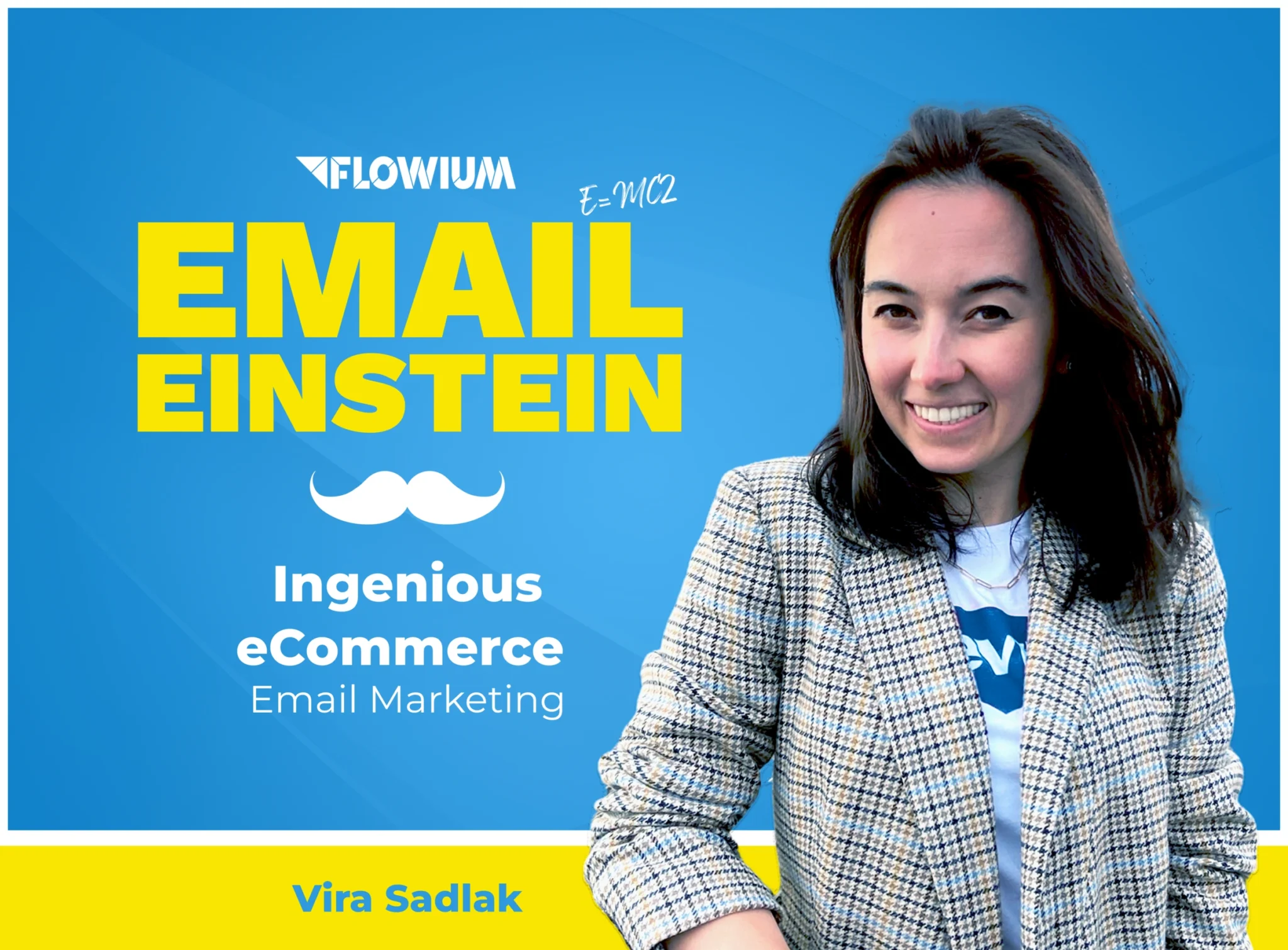
Hello, hello everyone. Welcome back to Email Einstein, the podcast by Flowium. I’m your host, Vira Sadlak, and I’m very happy to be back from my little vacation. I took some time off. I went to Italy with my family. It was beautiful, but I’m ready to be back and I’m ready for what is probably the craziest part of the year for all of us people in ecommerce, Black Friday, Cyber Monday preparation season. Honestly, for us here at Flowium, we start preparing for for like way in advance. So we’ve been like pre-planning everything since probably like June or July, believe it or not. But that’s basically what we do. We want to make sure that all of our accounts are like fine-tuned, ready for the storm that is coming. And that’s why during the months of September, October, November, we will be sharing a ton of really useful strategies of really useful things that you can do with your accounts to be ready for Q4. And in today’s episode, I wanted to talk about inventory alert flows. Inventory alert flows, that’s probably the definition that I, or like the term that I invented myself because I didn’t know what umbrella term to use to talk about all these 3 amazing flows that we will be talking today. So today we will be talking about replenishment flow, price drop flow, and back in stock flow. All of these 3 flows are rock stars when it comes to Black Friday, Cyber Monday season, because that’s normally the time when you might have some like inventory issues, or that’s the time when people are like the most engaged with your emails and stuff. So in today’s episode, I will be covering these 3 flows from sort of like different perspectives. I’m going to show you standard solutions that normally your ESPs or your platforms have for replenishment flow, price drop flow, and back in stock flow. But also I’ll talk about some apps that you might use if you want take it to the next level, right? And I’ll also be sharing some Black Friday Cyber Monday tips and strategies that you can plan to implement this season. So let’s start replenishment flows. We briefly talked about replenishment flows in one of our episodes, but here are some things that you should know about this flow. Do you guys know that the average ecommerce store earns 41% of their total revenue from only 8% of their customer. So basically from their repeat purchasers. Repeat purchasers are essential for any business, especially if you consider that customers who have purchased from your brand twice are 9 times as likely to convert as first-time buyers or first-time shoppers. That’s crazy to think that your top 8 to 10% of customers are worth 6 times as much on average as the other 90% of the customers. But that’s actually why having replenishment flows in place to target those like return customers, to target those superstars are very, very important. So there are like few ways you can do that. But before I go there, there’s like one more thing I wanted you to understand about replenishment flow. Replenishment flows, these messages, they are triggered and sent automatically to customers when it’s time or likely time based on some predictive analytic to reorder consumable product. That’s why replenishment flows or replenishment messages, they have one of the highest engagement out of all of the email campaigns or flows that you’re sending just because they are so perfectly timed, right? On average, and that’s like a recent study by LessTrack, on average, replenishment messages, they get open rates of 53.6%. So basically every second person, you can think of it as every second person who received this email, they opened an email and engaged with the email. Again, it all comes down to timing. And with Replenishment Flow, you can perfectly time those messages. There are several ways to determine when your customers need to be reminded about repurchasing some item. So there is like the way when you can analyze set schedules. For example, when you are selling disposable contact lenses and you know that this contact lens kit will last the customer a month, or they might even have like labels, the product might label itself as 1 month supply. So you know that you have to send this message at about 1 month’s mark, or even better, a few days before they run out of contact lenses. So that’s like the most basic way to determine when to resend it. Buying cycle based on the average. So basically you are going to have all of your customers and you’re going to analyze the average on how often the customer, they repurchase the product, which is also a good way to do that. Or you can analyze individual Individual buying cycle, which is probably like one of the most advanced strategies you can use. It might only be like one month. Like for example, when someone is purchasing like mascara, someone will use it in like one month. Someone will use it in like three months. So this process is called order gap analysis, and it’s based on individual buying cycle. But for that, you’ll need to have like multiple purchases from the customer. To be able to analyze that data, right? So it’s a bit of a challenge as well. And also there are like predictive data science and you can pull those data points together and analyze it for more precise and personalized figure. And in platforms like Klaviyo, they do have this like predictive repurchasing analytic that you can use. Now, there are a few ways on how you can do that. In any ESP, you can do the basic like a repurchasing flow. Think of it as a win-back flow, but for people who purchase a specific product. Or if you want to take it one step further and customize this entire experience, make it very personable to your customer, you can use apps like Rebuy, where you can create that personalized landing page. And personalized landing pages, they are actually designed to make the entire reordering process as easy and optimal as possible. So the page normally comes prefilled with all of the information with customers’ previous orders and upsells, and it is customized based on customer’s profile. What is also great about like apps like Rebuy is that you can not only send them to personalized page, but you can also customize their upsell experience. Normally with apps like Rebuy, it happens in 3 steps. Step 1, you’re sending them to customized cart with prefilled information. Step 2, you can do some free shipping upsells or any like product upsells. And step 3, you can also upsell individualized subscriptions. And basically the chances are if you’re selling something replenishable, the chances are you have this subscription product program in place, right? So replenishment flow isn’t actually an And a perfect place to upsell this individualized subscription programs as well. So yeah, there are like a lot of ways you can do the replenishment flow. It’s not a question whether or not you should have it. If you are selling replenishable goods, definitely, definitely create some sort of like replenishment flow. If you don’t want to spend money on like this fancy apps, You can definitely do that with your standard ESP. A lot of platforms, they come with prebuilt functionality like that. But if you’re willing to take it a step further, you can make this experience even more personalized and customized. And for Black Friday, Cyber Monday tips, normally products sell out faster than usual during the winter holiday seasons. So you also want to notify customers when the products they’ve visited sort of like have low inventory. When an item is about to sell out, send a quick heads up to your subscriber who have browsed the item, encouraging them to shop it before it’s gone. However, be very careful with this strategy because you have to be very considerable with the amount of inventory. It requires you to have a good handle on how fast a specific product can go out of stock because you don’t want to send an email to a customer and then for them only to realize that the product is out of stock. So yeah, so that’s basically our little Black Friday Cyber Monday pro tip. Now let’s talk about one more superstar of inventory management flows, the price drop flow. I love, love, love this flow. And from my experience, it does have a very high engagement rate because basically people express some interest in this product and then you’re sending them like the notification that this product they specifically looked into, it went on sale. Amazing flow. So let’s talk a bit about it. So price drop flows, very like the name of the flow is very self-explanatory, right? So the price drop flows, basically this flow let customers know when the products they’ve looked at is marked at a lower price. This can mean that you can easily automate your sales. And because everyone loves a good deal, especially on items they wanted, these flows, they work really well. These flows are also a valuable tool for marketers as the messages typically receive, they have very high engagement and conversion rates. So there are a few ways to set up this price drop flow. I’m going to share example from Klaviyo just because I work with Klaviyo platform for majority of my clients. But I’m sure that other ESPs have this same setup as well. So price drop flows is think of it as marrying a browse abandonment flow and a sales campaign, the best of both worlds. You can choose when a price drop flow will trigger, at what amount or percentage a product’s price needs to drop. So basically you can set up this completely automated flow. And every time the price drops by at least, and you can set up this amount, at least amount of dollars or cents or whatever, the customer will receive this email. And actually, another interesting thing to consider is that data actually shows that Google Shopping gives preference to discounted products. So to discounted price products when selecting top listings for any given search. One of my clients, they actually use this price drop strategy in order to boost this, like, Google algorithms. They drop the price of the product by a few cents, even like $0.50 or something, or like a dollar. And it basically triggers this Google Shopping algorithm where Google gives the preference to their products because it has been discounted and shows it in that, like, search bar when people are searching for the product. So that’s an excellent strategy for many reasons, and especially during the Black Friday Cyber Monday season, and especially if you are doing like discounts that are not, that are like automatically included in the price of the product. So yeah, this is an excellent flow to have. One of Black Friday Cyber Monday pro tips, you can also add a wishlist functionality to your website. There are like a bunch of apps like Wishlist Club, GrowWave, Wishlist Pro, etc., etc. And you can basically trigger inventory-specific automations based on these apps. So price drop is one of those flows, on sale, back in stock, low inventory, etc., etc. So yeah, you can definitely do it with the functionality that you have on your ESP, or if you want to take it a step further, you can use one of those, one of those apps I just mentioned. Now, back in Stock Flow, we briefly mentioned it already in this podcast, but this one is huge, especially around Black Friday. Cyber Monday season when products sell out very fast. And of course, you don’t want that to happen, but it’s life. Things happen. So you definitely want to have this back in stock functionality on your website for sure. So what is back in stock? Back in stock is an automated flow that informs your customers when an out of stock product they express some interest in is available. It basically adds that pop-up button to the product page of your Shopify store or any other platform that you’re using where shoppers can actively choose to be notified. And just like with price drop, just like with that other flow, these messages, they have crazy high engagement rate because person like literally told you like, this is the product I want. This is the product I want to know about when you guys have it back in stock. That’s why the open rate, click-through rate, and even like revenue generated by this flow is super high. So again, I’m going to use the example from Klaviyo. If you’re using other platforms, I’m sure they have this functionality as well. Klaviyo back in stock feature for Shopify. It’s like a prebuilt function in Klaviyo. You don’t need to do any like advanced coding or anything. Basically, Klaviyo’s back in stock feature, it has 2 components. First of all, first of all, it’s subscription button. This is basically like a little code that you add to your theme. It can be added to any standard Shopify themes. Or if you have something a bit more advanced, you might need the help of your coders or your developers. But basically, this little snippet, it adds the subscription button to your product pages. So people can be like, can add their email address and be notified of when the product is back in stock. And the second portion of this ecosystem is, of course, automated flow. The first email will only be sent when the item becomes available again in the store. So I’ve shared this example here on the screen if you guys are watching us on YouTube right now. One of my clients, we set up this very simple 2-emails-long sequence for back in stock. And basically, I’m just going to read out loud some of the numbers for you. The open rate, the average open rate for this sequence is 62%, 62.9%. So pretty much 63%, I’d say. The click-through rate, just comprehend this number, 24%. Can you imagine? So 62% of people who received this message, they opened it. Out of those 62%, 24% clicked. It’s insane. On average, with typical campaign, you get 2%, maybe 3% if you’re lucky. Here it’s 24%. And the placed order rate is 3.4%. These numbers, they are crazy, but it just shows you how important it is to send the relevant message to the relevant person. And when the person comes to your website and literally tells you like, this is the product I want to know about, please notify me, it means that they have like probably like the highest intent of purchasing or like the highest intent of like engaging with your message. So by not having this flow in your toolbox, you’re just like leaving money on the table. Of course, not everyone needs it. If you never go out of stock, or if you have some sort of like a different arrangement with your, with your products, maybe you don’t need it. But if this problem happens to you at all, this is like an excellent, excellent tool to have. Like big brands are using it all the time, like brands like Aritzia, Williams-Sonoma, Everlane, stuff like that. They do have this functionality a lot and they use it a lot around the holidays. But again, if If you want to make it even more advanced, you can use one of the apps. So for example, there is this excellent app for Shopify users that is called literally Back in Stock. How original. But Back in Stock app offers a couple key features that traditional ESPs don’t offer. For example, with Back in Stock app, you can easily sign up for restock alerts for a specific variation of the product. For example, if I want to I want to get like a green t-shirt size M and I want to get it like, I don’t know, I want to have it with like long sleeve or whatever. With apps like Back in Stock, you can sign up to receive restock notifications for specific variation of the product, which is amazing. With Klaviyo, you don’t have that functionality as far as I know. But also, which is what is awesome about apps like this, customers can actually include their desired quantity of specific variation. So you can, as a brand, you can make smarter inventory decisions. For example, they can say, I want to purchase 10 green t-shirts, size M, long sleeve. This is like, please notify me when you have like 10 green t-shirts in stock. This is like a cool functionality for both a customer because they know exactly when you as a brand have the product that they need in the quantity they need, but also for you as a brand because you can pre-plan your inventory, right? Monitor conversions, most wanted out-of-stock items, and recent notifications. So basically you can also have like a reporting based on like what product went out of stock faster, what product you have the most like people are waiting for and stuff like that. Again, it helps you to make smarter inventory decisions, which is huge, especially around the Black Friday, Cyber Monday seasons. And also apps like Back in Stock, they do support like different countries, different Shopify store languages, and you can expand your reach to like different markets as well. Black Friday, Cyber Monday tips for like this specific flow that we have is improve your user experience recommendations. Let your users sort by in-stock items only. Users who need something more immediately can quickly narrow down to listings that are in stock and only browse what is available. If you don’t have that functionality, it’s a great idea to add it, especially around Black Friday, Cyber Monday season, because you want to deliver the smoothest user experience that you can. And also one great recommendation that we have for all of our clients is that you can push the cross-sell on the PDPs of out-of-stock items. For example, when someone is going to that like green short page, but the product is out of stock, with apps like Rebuy, Wiser, Frequently Bought Together, you can promote similar products. So maybe they don’t don’t have this green t-shirt at the moment, but maybe they have a different shade of green or something. So yeah, it’s an excellent idea to push and cross-sell on PDPs of out-of-stock items. And this is the end, you guys. I hope you enjoyed this little presentation. We are preparing for Black Friday Cyber Monday season, and these are the flows that we will all have for sure for all of our clients. If have some Black Friday, Cyber Monday tips that you want to share with our community, definitely, definitely let us know. You can just like email me at vira@flowium.com, or if you want to be a guest on our podcast and share your knowledge with us, definitely do that as well. And you guys, if you want to learn more about these topics that I just like shared with you, we have some excellent resources on our website. We have this how to use price drop flow blog on our website, and we have also an excellent YouTube video about back in stock flow as well. So thank you so much, you guys. It was pleasure having you here as always. Definitely come back next week because we will have some super cool guests next week and we can’t wait to have you back here. Thank you. Bye.

Vira Sadlak
Podcast host, marketer, traveller and a life lover from Vancouver, Canada