

Podcast Transcript
Vira: 0:41
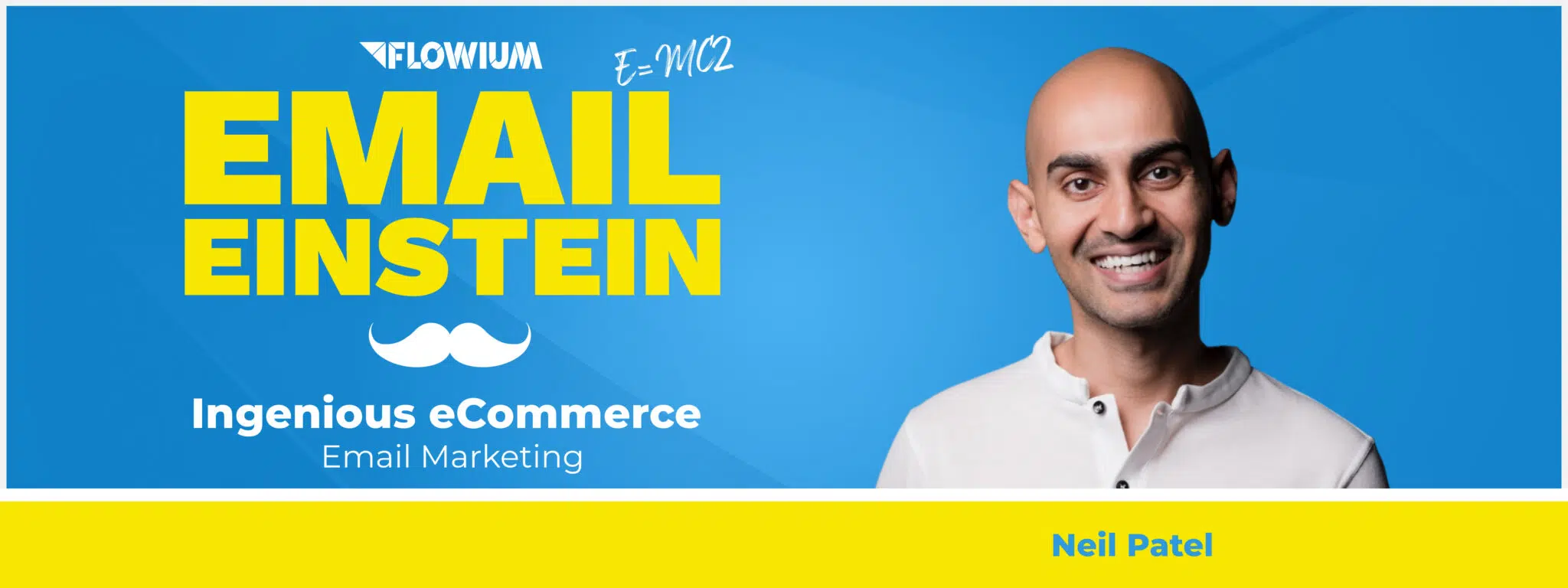
Hello, hello everyone, and welcome back to Email Einstein, the podcast by Flowium. I’m your host, Vira Sadlak, and Today we’re diving deep again into the world of email marketing and into the world of email marketing trends. Ladies and gentlemen, today I’m joined by a very, very special guest, by a digital marketing powerhouse, founder of Crazy Egg and Kissmetrics, and the driving force behind Ubersuggest and NP Digital. I’m not going to be doing the long introduction of the guest because you know him, you love him, and we’ve quoted this guest a lot of time in our podcast before. So without further ado, please welcome Neil Patel. Say hi, Neil.
Neil: 1:27
Hi, thanks for having me.
Vira: 1:29
Oh, it’s amazing to have you. Just as I said to you before the call, to me it feels like a full circle moment because basically everything I learned about email marketing at some point I learned from your blogs, from your videos, and now having you as a guest here, Sounds a bit, feels a bit surreal, but I’m so happy to have you here. Before we go to all of the juicy questions, and I do have a gazillion of them, Neil, I have this list of this or that kind of questions just to get to know you better.
Neil: 2:03
All right, let’s do it.
Vira: 2:04
Let’s do this. Okay. London or LA?
Neil: 2:08
I prefer London.
Vira: 2:10
Oh, interesting. Even though you live in LA currently, that’s Interesting.
Neil: 2:14
I prefer the weather in London. I prefer rainy, cloudy, colder weather.
Vira: 2:19
You would definitely love Vancouver then. Yeah, that’s, that’s how we roll here. Okay. Email or SMS?
Neil: 2:27
Uh, I love email, but SMS converts better at the moment.
Vira: 2:32
Okay. Desktop shopping or mobile shopping?
Neil: 2:36
I’m a desktop user. I do mobile shopping as well, but it’s just easier on a desktop.
Vira: 2:40
Okay. Using emojis in subject lines, yay or nay?
Neil: 2:44
It depends on the industry. In B2B, we haven’t seen it do that well. It doesn’t look as good. And in B2C, we’ve seen it work extremely well. But if you overuse it in B2C, it doesn’t work too well.
Vira: 2:57
Yeah, that’s true. I mean, you have to be careful with those. But reading or listening?
Neil: 3:05
Reading.
Vira: 3:06
Digital note-taking or good old pen and paper?
Neil: 3:11
Digital.
Vira: 3:12
HTML versus text-based emails?
Neil: 3:16
Text-based emails. Much better open rates and deliverability.
Vira: 3:19
And we’ll definitely come back to this one because it’s a big topic and I definitely want to discuss with you. But before we go there, if you had like a theme song playing every time you entered the room, what would it be?
Neil: 3:32
Uh, I don’t know. You know, I don’t really have a theme song or don’t listen to tons of music. The music I listen to is kids’ music, so it’s whatever my kids are listening to.
Vira: 3:44
Awesome. So Cocomelon or something, right, would be your theme song probably these days. Amazing. Okay, let’s talk about, um, the topic that we briefly touched on, HTML. versus text-based. There is like a big, big, it’s a big topic in the industry, HTML versus text-based, which works better in 2023. And I know that in your emails that you send like on a weekly basis, you use text-based. And yeah, so like walk us through your strategy.
Neil: 4:18
Not just for us, we’ve tried it with a ton of different customers, different industries. In almost all cases, I say almost all, sometimes HTML is great, but in almost all cases, we’re able to get deliverability, open rates, click rates, et cetera, total numbers just to be much better with text-based emails.
Vira: 4:38
That’s fascinating.’Cause for years we’ve been trained in the industry to use this like drag and drop editors to create this like beautiful designs, like dazzle our emails with everything.
Neil: 4:51
Yeah, but then you’ll be in the promotions tab because then they know it’s a lot of marketing-based emails. The big thing that we’ve seen is people assume text-based emails are only text. You can do text-based emails and add in like a GIF or some basic stuff like that, and it still can do well and you can have some sort of quote unquote images in there and it still do really well.
Vira: 5:15
Awesome. So what industries do you think this would work for and what industry that text only emails wouldn’t work for?
Neil: 5:25
Text industry, text works for most industries. For e-commerce though, people don’t always care for text. They actually want to see the stuff. So you can use text-based emails, but include images. Templates, the template emails look better, people love them, but the deliverability just isn’t as good with the, HTML emails, or maybe I said it wrong. I meant to say, I don’t know if I said it wrong, but I meant to say HTML-based emails when you’re selling products look better, you know, they’re great, but the deliverability on them sucks.
Vira: 6:04
Yeah. Yeah. I mean, people kind of do expect to see the product in their inboxes. And one thing that we’ve tested recently, and that honestly was a surprise to me, we’ve done this like extensive tests for one of our clients from the automotive industry where we were testing like the lifestyle images with their products. So basically like off-roading cars in the wilderness versus the product of the, of the detail, the product picture actually, and the product pictures outperformed the lifestyle images by far. Like we had like twice the conversion. We had like higher click-through rates. The placed order rates were amazing. So I was like very surprised by this result. Yeah.
Neil: 6:51
Yeah, and different tests work differently. Like we’ve also tested out where people can purchase within the email so they don’t actually have to go to your website. I think it was using AMP. I could be wrong from a technology standpoint. I don’t know what the team was using, but they mentioned AMP to me and we didn’t really see much of an increase in conversion.
Vira: 7:09
Interesting.
Neil: 7:10
They wouldn’t have to go to the website. They can buy right then and there in the email, click a button, select their address, you know, size, et cetera. You know, a lot of times you got to test because what you think will work better doesn’t always necessarily work better.
Vira: 7:22
Exactly, exactly. And AMP is definitely another like big topic in the industry right now. And for those of you guys who don’t know what AMP is, it’s basically like this framework for emails, this kind of like framework that delivers an interactive dynamic experience within the inbox. So you can basically like purchase the product within the inbox, or maybe you can play a little game within the inbox. You can book the meetings and more without actually leaving your inbox. And while this technology has been around for a while, I haven’t actually seen like a lot of brands using this technology. What’s your take on that, Neil? Do you think it’s a trend here to stay or is it something that is like a passing trend?
Neil: 8:14
I think it’s here to stay and I think people will do it. But again, We’re not seeing it convert as well as people think.
Vira: 8:20
Why do you think this is the reason?
Neil: 8:23
You know, you only get so much across in an email. Sometimes getting the micro-commitments, like letting them click a button and going to the website, then reading more, it just converts better. You know, everyone believes making the buying experience as simple as possible, letting people just click a button and buy right then gets you the most conversions, but that’s not always true. Sometimes people have to be warmed up and sold And you needed to get’em to take micro-commitments before they make a purchase. Not everyone’s just ready to swipe their credit card.
Vira: 9:18
I love that. I love that aspect. I didn’t even think about it because yes, like we’ve been trained by this, uh, big merchants like Amazon. We’ve been trained for this like one-click purchase experience and we kind of think that this is what our customers expect, but that’s not always the case. I love that.
Neil: 9:38
Not one bit. And, you know, it’s just, that’s what you gotta test in marketing. What works or people think will work doesn’t always work. Yeah.
Vira: 9:45
Yeah. Well, AMP emails, they definitely become more and more popular. And while I don’t see them very often, I really love when the brand sends me this, like, little, like, a quiz that is, like, embedded in the email or some sort of, like, animated, I don’t know, like animated discount kind of situation. But what we’ve noticed, like working with these emails, like for us at least, I’m just talking about the e-commerce brands that we work, AMP emails, they might not have as big of a return on investment as regular email has, just because it requires like a lot of more like work and coding from our team. And normally we get like similar Similar sort of like revenue from those emails.
Neil: 10:36
No, totally, right? And I think you got it right in which, look, it doesn’t always work the way people want. They got to end up trying a lot of different things and learning over time. And, you know, it’s just a numbers game of trying different things and analyzing what’s your ROI because you make a good point there too. People don’t realize that in marketing, it’s not just about spend, it’s also time. Something could take you 20 hours to do and something can take you 10 minutes to do. And if you’re going to make 1% more, but something takes you 20 hours, probably worth you spending the time somewhere else.
Vira: 11:13
Right, right. No, I love how these 2 trends, the text-based emails and AMP, they are like completely opposite, these trends, and they both working. So it’s like hard to tell which, which one is like the winning one, right? It’s kind of like a combo of both.
Neil: 11:33
That’s right.
Vira: 11:34
Yeah. Interesting. Interesting. Okay. Another big topic and the topic that has been around for a while is personalization. And I feel that it is still a rising trend, even though we became like so much more advanced compared to like a few years ago. What’s your take on that? Do you view personalization in email marketing as still like a rising trend?
Neil: 12:00
I do think personalization in email marketing is a huge rising trend. But what we found is when you personalize so much, your conversions actually don’t go up that much more. And here’s a great example of this. If I have a dog, I don’t, but let’s imagine I have a dog and you send me products for cat food, it’s not going to convert because I don’t have a cat. Of course, sending me dog stuff is going to convert better. That’s general personalization just based on previous buying trends, right?
Vira: 12:27
Mm-hmm.
Neil: 12:28
But what we found is when you go so specific and be like, Neil, these are the shoes you’re going to like and this color and the size, and really try to personalize each and every single email to like, you know, all the way till the pretty much finish line, we find that the conversion lift isn’t that much. So in essence, what we’re finding is basic personalization’s good, it’s driving conversions. Going too crazy with customizations, you’re spending a lot more hours, But the return for the extra personalization isn’t really noticeable from what we’re seeing. And we’ve tested that with so many big brands. Like I’m talking about companies that do billions and billions and billions of dollars in e-commerce sales.
Vira: 13:10
That’s very interesting. And like speaking about the big brands, something that I’ve noticed with like Amazon or like Home Depot, like all of these emails, they are not personalized at all. I mean, most of the emails that I receive from like Home Depot or something, they They’re not personalized. They like recommend me things that I haven’t purchased or I haven’t even like expressed interest in. So do you think for this like big dogs of e-commerce, personalization is like overrated or are these big brands potentially missing on like big opportunity? What’s your take on that?
Neil: 13:47
They need to personalize a little bit, but again, they don’t need to personalize that much. We’re not seeing the increase in ROI and You know, it’s not hard to guess when I say we’ve tested this with brands that are doing billions of dollars and billions and billions in e-commerce sales. There’s not a ton out there, right? So we’ve tested personalization with these big brands and they’re thinking about it and we’re talking to them about it. But I’m telling you, it’s not that big of a difference in ROI from what we’re seeing.
Vira: 14:14
That’s very interesting because that sounds almost like counterintuitive to everything that we like learned over the years about personalization. But that’s like fascinating What is like, what do you consider—
Neil: 14:27
They do, keep in mind, they still, sorry to cut you off, but they still do want it personalized, right? The dog food example versus cat food. People do want basic personalization. It’s just going to the 10th degree or just like the nth degree and just spending all the time just making it perfect. We’re just not seeing ROI there.
Vira: 14:44
Why do you think this is the reason? Do you think people want to have like choices? Do you think people don’t want to be told what to purchase? Like what’s the psychology behind it?
Neil: 14:54
I don’t know. You know, when we talk to people and done surveys and talk to people in person, they want everything personalized. Like, yeah, it’d be great if you can tell me what shoe I want, the color, the exact size, and just tell me to click a button and buy. But we found that either A, the personalization isn’t that good yet, which we don’t think it is. Like, it’s not a, you know, technology can’t read minds at this point in time.
Vira: 15:17
Mm-hmm.
Neil: 15:18
And B, A lot of times what people say and what they do is very 2 different things. Just because they say they want something doesn’t mean they really are gonna actually make the purchase.
Vira: 15:28
Yeah. So probably like the only place where people actually love making decisions and like having multiple choices, there is like Starbucks because it’s like so funny how like every order is like so customized, so like personalized. But I honestly prefer all of the emails to be like, personalized, hyper-personalized. I like to be told what to purchase by the brand, especially if they have like a lot of SKUs. But that’s very fascinating what you’re saying about like over-personalizing. And when you say like basic personalization, like briefly, what are these basic personalizations that every brand should consider?
Neil: 16:10
Yeah. So, Basic personalizations, things like name, basic preferences, when to send an email. Like if you know that people open the emails in the morning, send them in the mornings, don’t send them to them in the middle of the night. So then when they wake up, there’s all the other emails that they’re not going to— that are going to flood their inbox so that they’re not going to get to yours. So basic things like that is what we’re seeing that really help with the personalization. Preferences. Like for example, if someone’s reading my blog about all these e-commerce marketing articles and I send them articles on B2B SaaS, you know, it’s not too relevant. So you just got to make sure that you’re looking at their interests and sending them stuff that they’re interested in.
Vira: 16:55
Right. What about the information that your customers kind of like voluntarily give to you through like forms and through pop-up forms, quizzes and stuff like that? Is it still like worth collecting it or you don’t recommend going into like too detailed of a personalization here?
Neil: 17:16
No, I think it can all help in that stuff doesn’t seem that hard to do. It’s when I think it’s not worth personalizing is when it takes tons and tons of effort and there’s minimal gains. I’ll give you a great example of this, like Home Depot trying to figure out you know, what kind of construction materials to send you for your next remodel, right?
Vira: 17:40
Mm-hmm.
Neil: 17:40
Like that’s really hard to figure out. All right, is this person interested in a remodel? Are they not interested in a remodel? Yes, you can get some indicators if someone’s coming into your store and saying, hey, I want to remodel my house. But if you have a list of a million people, you don’t necessarily know who’s interested in a remodel or not. And saying, all right, we’re going to do a survey, figure out who’s interested in remodels, and then only send those people stuff for remodels and then figure out what they want based on their budget and adjust the content based on like, that’s really hard stuff to do.
Vira: 18:10
Interesting. Interesting. One of the trends that I’ve also noticed, and I don’t know if it’s a trend or just a bad practice, so you might be able to answer my question here. I’ve noticed that sometimes, again, major brands like Dollar Shave Club or some like big, like other vendors, sometimes they don’t even have like traditional signup forms on their website for some reason. They don’t have like pop-up, they don’t collect emails at the bottom. Why is that? Do you believe that like traditional email signup form is like on its way out or is it just something that they are missing?
Neil: 19:38
I, I don’t think it’s out. I think people look at it as it doesn’t work, but it really does work. And I don’t know why people don’t do it. Some companies have a bad taste in their mouth with that kind of stuff, but I’m like, well, if it adds value to your user, you shouldn’t worry about it irritating people. Um, and you can cookie people. So then that way, at least right now, you can cookie people and not show it to ’em multiple times over and over again.
Vira: 20:04
That’s, that’s interesting. Yeah. And, um, that’s something that I like keep noticing with like a lot of brands and yeah, this popup forms, they do have like a bad reputation for some reason. But I mean, this is probably like still the most effective way to grow your email list. So, um, like I’m, I’m surprised when brands are, don’t are not doing that. Neil, another big topic in the industry, and I’m sure you’ve been asked about it a lot, but like artificial intelligence in email marketing, that’s a huge topic and I don’t even know where to start. But how do you see AI like reshaping the landscape of email marketing? Do you think it’s, it’s here to like replace email marketers and email marketing agencies or? What’s your take?
Neil: 20:50
Yeah, so we actually did a test. So we have a really large list size in the mil— over a million. I think it’s like 1.4, 1.5, 1.6 million, something like that of active users. So we started using AI to analyze patterns of our email and we started figuring out what to send people based on what we’re learning from the AI. And we did this in segments and we’ve done quite a few tests on this, but we’ve done it in segments of like, 50,000 emails, 100,000 emails at a time and starting to segment. And then another chunk, we just do our normal emails. We’re not noticing, because with AI you can actually write a custom email to each individual person, right?
Vira: 21:31
Mm-hmm.
Neil: 21:31
We’re not really seeing any lifts from it. Heck, with some of the tests we ran, we actually saw a decrease in conversions by using the AI and it writing a customized email to each person. I’m not saying it won’t work and it’s not here. To stay. And I’m not saying that it won’t improve conversions. I’m saying in its current form, it’s not ready for production for email marketing in mass quantity.
Vira: 21:58
Right. What other marketers are saying is that AI is not here to like replace people, but it’s definitely here to like replace people who are not using AI.
Neil: 22:10
Yes.
Vira: 22:11
Because I mean, we’re using like a lot of a lot of tools, even for our efforts here. What’s your favorite tools for email marketing that your team is using? What’s your recommendations?
Neil: 22:25
We use all the major ones and we don’t necessarily say one is better than the other. We adapt based on what the customers are and what they’re using and what they want to use.
Vira: 22:35
Interesting. Interesting. Yeah. And actually on your website, I read that about 44% of marketers that you like work with, they believe that AI will positively impact their careers. And that’s definitely something that I personally believe too. Yeah, that’s, that’s fascinating. What some of our clients are using, we have this like AI technology that is basically like adjusting the hero images. And basically we like customize hero images, personalize hero images with their first name, last name, or any other information that can be pulled from the, from Klaviyo. But also we use it for, to create this like personalized videos as well, where AI can like adjust or personalize the existing video. So it feels like it’s been like actually recorded. So that’s just like some fascinating technologies that we’ve started using. That’s very interesting. And Just like to wrap up our conversation, I guess, about the future of email marketing. With the rise of like different communication platforms like messaging apps and considering like evolution and adaptability of the email, where do you see email marketing in like the next decade? What’s your take on that? What trends are you seeing?
Neil: 24:00
Almost all email marketing platforms are starting to do all types of messaging. email, SMS, social, et cetera. Everyone’s adding in the features. I look at the big thing as email marketing. It’s not dead, it’s here to stay. AI will make the process of creating emails better. I think people will start seeing more simpler plain text emails continually perform better. And I think people are going to look at holistic campaigns with emails in which how can you integrate email marketing within your overall marketing campaigns and get all the channels to work together? versus saying, I’m going to do email and then I’m going to do another SMS campaign and then a push notification campaign and then social campaigns. We’re seeing a lot of companies not looking at it as a full circle and it working all together with their campaigns. Instead, they look at email as, oh cool, yeah, we have this promotion, just send a blast. Yeah, if you just think about it that way, it’s not going to perform as well as how can it holistically work with your marketing? And companies are starting to adjust the way they think. I also think email marketing will boom, but right now is a little bit of a slow period because the economy and D2C got hit quite hard with the economic changes. I’m assuming you guys have seen it in the business.
Vira: 25:17
Oh yeah.
Neil: 25:17
In which it’s, you know, not as many companies are as aggressive with their email marketing in this economic time, which funny enough they should be because it has one of the highest leverage points.
Vira: 25:29
Yeah. Still has one of the highest conversions too in the industry, which is, um, yeah, that’s interesting. And when you say about, when you like talk about that like holistic approach, or I guess that like omnichannel experience, what’s your recommendations there? Where should you start from? And what’s sort of like the role of email marketing in that like big ecosystem?
Neil: 25:55
It’s actually really simple. It starts when people are working on strategizing what marketing campaigns they want to do over the next quarter, 6 months, year, whatever it may be. Email should be involved from day one. And if people just think of, they don’t think about it as a separate channel, but they look at it as an integrated solution with their overall marketing, it’ll convert much better in the long run because it’ll be planned correctly.
Vira: 26:19
Okay. Okay. And what like upcoming trends, not just like email marketing, e-commerce in general, What e-commerce trends are you most excited about?
Neil: 26:32
Yeah, so with e-commerce, the big thing that I love seeing right now is we’re seeing live shopping crush it. Like imagine like QVC or any of those, but people doing their own live, going live on social networks and selling their products. We’re seeing that being huge. I know in parts of Asia it’s really massive, but we’re seeing it becoming more and more popular. In the Western world. The second thing that we see with e-commerce is, you know, depending on the country you’re in, some countries are starting to boom in social commerce. And what I mean by social commerce is like group shopping, where imagine virtual reality where you’re wearing goggles and you can enter in a mall and you see a Chanel store, a Louis Vuitton store, and you’re with friends and you guys can try on stuff and figure out the product you want, buy it, and it gets delivered to your house. in less than an hour. Those are 2 big trends that we think are going to really take off within the next 5 years.
Vira: 27:29
What should the brands do to prepare for this, like upcoming changes? What can the brands do today?
Neil: 27:34
Just be up to date with the latest technology, embrace it, experiment with it. And the big players like the Facebooks of the world, the Apples of the world, the Shopifys of the world, et cetera, will bring this technology for companies to use over time.
Vira: 27:48
That’s something that I’m excited about as well. Yeah, I’ve never like tried this technology, but I heard that it’s like super big in like China and in Asia. So we’ll see, we’ll see what the future brings. Awesome. Well, Neil, thank you so much. I know it was short but sweet. So thank you for coming and sharing your like insights on e-commerce trends with us.
Neil: 28:13
Sounds good. Thank you.
Vira: 28:14
It was fun having you. Thank you everyone for listening. And if you want to, if you want to become a part of our community, we’ll have the link below under this podcast in the description box so you can join our WhatsApp channel. You can join our WhatsApp channel and ask all of the questions. You can suggest the guests. And yeah, definitely come back next Tuesday because next Tuesday we will be talking about all of the Black Friday, Cyber Monday preparation stuff. Neil, again, it was fun having you here. We’ll definitely love to have you again someday here.
Neil: 28:52
Awesome. Same.
Vira: 28:53
Thank you so much. Take care.

Vira Sadlak
Podcast host, marketer, traveller and a life lover from Vancouver, Canada