

Podcast Transcript
Vira: 0:41
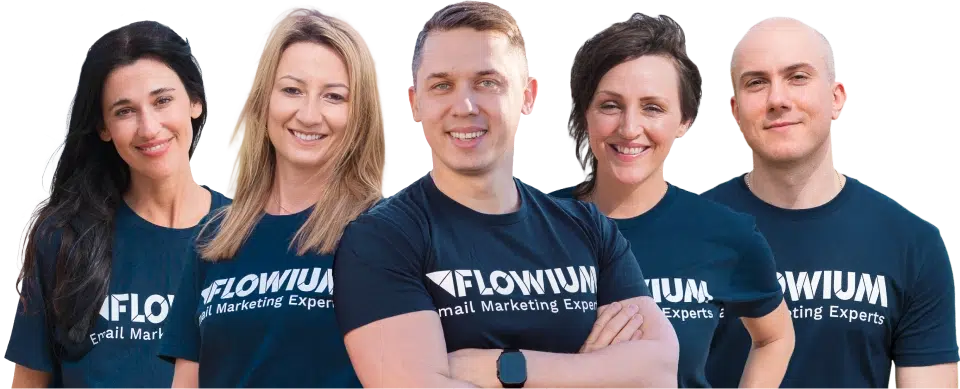
Hello, hello everyone, and welcome back to Email Einstein podcast by Flowium. At Flowium, we are here email marketeers at an agency called Flowium. We are very passionate about email marketing, and because we love what we do, we want to share our insights with you. Delivering the right message to the right person at the right moment. That’s what we do here at Flowium. And I’m super excited about today’s topic because I don’t know, I love a good quiz. And today we will be talking about quizzes. We’ll be talking about AI, which is also a very fun topic to talk about. Even when I was back in high school, quizzes have been a thing on the internet. And I remember spending a lot of time on BuzzFeed website and even those pre-BuzzFeed websites that had pages and pages of quizzes of everything ranging from name every state in the US to which Disney princess are you. And there is something almost addictive about testing your knowledge and discovering more about who you are. And believe it or not, people love the quizzes on your website, on your physical product website, just as much. Not only are these quizzes visually appealing, but they can also help you drive conversion rates. They can help you with the lead capture. They can help you with average order value. And that’s actually what we will be talking about today with Ben Parr from Octane AI. Ben is president and co-founder of Octane AI, the zero-party data marketing platform for e-commerce brands. For those of you guys who never use Octane, you’ve probably seen it on your website, on a lot of websites, but you didn’t know what it is. But Octane basically powers dynamic quizzes and surveys for thousands of Shopify and e-commerce brands that helps them basically personalize marketing channels like email, SMS, and ads, and build even like deeper relationships with their customers. So Ben, say hi. We’re so excited to have you on this podcast today.
Ben: 2:41
Oh, what a lovely and detailed introduction. Greatly appreciate it. Thank you.
Vira: 2:46
It’s going to be, it’s going to be a fun one. Ben, before we go to all of the juicy questions, uh, what Disney princess are you?
Ben: 2:53
What Disney princess am I? I was watching— you know what? Tiana. I was watching.
Vira: 3:01
It’s a good one.
Ben: 3:02
I’ll say a couple of reasons. For Princess and the Frog, for those who haven’t watched, Tiana is an entrepreneur, wants to build her entrepreneurial dream, you know, really, like, driven and really enjoys amazing food and has a mind for herself. I was actually just in New Orleans for a family vacation and I watched it with my 4-year-old niece and 1-year-old nephew, and, uh, it was very awesome to watch that specific movie in the city it’s ba— it’s, it’s based out of.
Vira: 3:36
Nah, she’s a vibe. She’s a vibe, that’s for sure. I do have a few more this or that questions just to get to know you better before we go to all of the serious and juicy AI stuff. So Ben, shopping online, Or shopping offline?
Ben: 3:51
Oh, online. I’m lazy. Driving all the way to the things and places, like, it’s just so much more efficient to search.
Vira: 3:59
I know, I know. And speaking of searching, sorting by price or sorting by relevance?
Ben: 4:04
Ooh, this kind of depends. I start with relevance. I will do both is the honest answer. I can’t make a purchase without doing both.
Vira: 4:12
You’re a research person, right? You’re.
Ben: 4:14
Yes.
Vira: 4:15
Doing it all. Okay, cool. Christmas tree in November or Christmas tree in December?
Ben: 4:22
I am— have no problem with Christmas tree in November. I’m Christmas tree in December, and it’s not because I don’t want to put it up, it’s just because I’m lazy. Uh, and so you’re like, oh, I should probably put it up. It’s like second week. But you know, if like a family member— like some— my— sometimes my family would be like, we’re putting up day after Thanksgiving. Cool, that’s awesome.
Vira: 4:43
Nice, nice. Okay, cool. What was your best Black Friday purchase this year? If any.
Ben: 4:49
Oh, I actually got a lot this year. I had to think about the best one. The thing, it’s not— it was a little bit before Black Friday, but I’ve really enjoyed my Kizik shoes. That’s one of our customers at Octane AI. They’re so, they’re so light, they’re so easy to put on, they’re comfortable. And like, if you haven’t tried a Kizik, they like— you could put your heel in without like, you know, the heel pops right back up. Don’t have to tie anything. It’s a slip-on, but it doesn’t look like one, and they’re fantastic. And I’m going to get like, they look great. I’m going to get like 100 more.
Vira: 5:22
Cool. And I’m sure you used some sort of like size finder quiz or something on their website, the AI, Octane AI. I bet there was some.
Ben: 5:30
Yeah, exactly. I’m using quizzes for all of my customers.
Vira: 5:35
For all of your shopping too. Okay, cool. Yeah, we’ll definitely go back to that. And the last question, but I’m really curious to hear your answer. If there was like a song playing every time you entered the room, what would it be?
Ben: 5:48
Eye of the Tiger.
Vira: 5:49
You didn’t even think about it. You were like, yep, yep, Eye of the Tiger.
Ben: 5:55
You had to understand, my high school was called the Princeton Tigers. I was the drum major. And so every time everyone— we ever came out onto the field, it was that ba-da-da-da-da, bump, bump, bump, bump.
Vira: 6:07
Oh, wow. That’s a good one.
Ben: 6:09
Ba-da-ba. So like, I could play the thing from memory on saxophone, piano, clarinet. And it’s a perfect pump-up song that reminds you to be resilient. So yes, Eye of the Tiger.
Vira: 6:20
It is amazing. It is amazing. Cool. Okay, let’s discuss some serious stuff then. Let’s start from the basics because we were just briefly talking before this call and you were like, let’s discuss what AI is because apparently not everyone knows what it is or not everyone understands like the power of it. So let’s go back to the basics. What is AI and what is Octane AI?
Ben: 6:47
So AI is an umbrella term that covers a set of technologies that really learn from you. So it’s a computer essentially that can learn, if you want my most basic definition. There’s like a couple variations of this. There’s things called like natural language processing, which is, you know, trying to understand what people are saying and respond back to people. But the most recent stuff that’s been super interesting and been in the news the last few weeks, months, has been generative AI. And that is AI that it generates, you know, from scratch. And so there’s a new tool, ChatGPT, from OpenAI, that lots of people have been using to create— like, literally write essays, write novels, write films. I literally did a TikTok series, and my very first TikTok got 1.1 million views in the first 4 days. That’s insane. Because it’s a topic everyone wants to understand. But at the core, AI is, you know, is I think computer adaptability. In the past, it was, you know, computers just doing what you asked it to do. Now a computer can actually learn and can actually create from scratch, which is going to open up a whole new world of possibilities for the public and for brands. You know, I think the brands that are going to embrace, you know, AI use cases, everything from Using AI to analyze your data, to using AI to help you write your content and figure out your marketing. It’s going to be part of everything we do, I think, really rapidly.
Vira: 8:49
Yeah. Yeah. And I mean, a lot of platforms have started introducing AI recently, even Klaviyo that all of our customers are using, like most of our listeners are Klaviyo users as well. But they just recently introduced their AI subject lines writer. So basically you can, you can write subject lines and SMSs using the AI technology now. And it’s pretty cool actually. I, I was actually really surprised by the quality of the content that they pull. It’s, it’s pretty amazing. How do you guys use this technology in, in Octane AI?
Ben: 9:27
So first I’ll say on the Klaviyo side, it’s super cool. Um, and they’re doing some really awesome things over there. I also want to say, You have to always just remember the AI that you’re using today will— is literally the worst it will ever be in human history.
Vira: 9:42
Mm-hmm.
Ben: 9:43
Will only actually get better every single day and every single week to a point that, you know, if you’re already impressed by it now, just imagine what you’ll feel like in a month or in 6 months or 5 years from now. Octane AI, you know, we’re the quiz and AI platform for e-commerce. We help our customers collect this super valuable zero-party data, which is data that is directly volunteered by your customers. And then we’re using AI and especially a cool suite of new tools that we’re testing out to help you leverage that data you collect from quizzes and surveys. And so we’re trying to build a full suite to actually leverage AI for the world of e-commerce. It started out with, you know, helping our customers be like to be the number one place to help collect this data and to help convert your customers using it. You know, we have 3,000+ stores using our quizzes to learn about their customers and then use that data to recommend products and to personalize the emails they send on Klaviyo, personalize the text messages they send out. And it’s just the beginning of our long-term vision, especially the vision that my co-founder, CEO, best friend of a decade, Matt, has laid out since we started the company in 2016.
Vira: 10:58
Yeah. And guys, for those of you who don’t know, just to summarize, historically there has been the first-party data, which is basically based on the behavior of the consumer. So their activity on the website, on the email, maybe some historical transaction data, like purchases, for example. The third-party data that is gathered from websites and sources that are not necessarily yours, like for example, gathering the data from Facebook or Google Analytics or something like that. But the zero-party data, this is the fun one. My favorite kind of data. Zero-party data is actually anything that your customer can intentionally and proactively share with you as a brand. And it can come in many forms, just like Ben mentioned. But Ben, can you give us some examples of this zero-party data that you’re collecting, say, with your brands that you work with? kind of data they’re collecting?
Ben: 11:57
Yeah, so just to like illustrate, and you made a great explanation of the types. Third-party data, data that’s getting scraped by and controlled by other parties. This is like the data that Facebook/Meta owns to help you target ads. You don’t own it, you don’t even get to really see it. They’re scraping it across thousands of other sites and aggregating it. First-party data is data that you are collecting that is, uh, through behavior. So think like Google Analytics, you’re seeing what they’re clicking on, what they’re looking at, how long they’re staying on page. That’s first-party data. Zero-party data is directly volunteered data. That means the customer is volunteering very specific information to you that, you know, there’s no other way to collect. This is things like in the quiz, it’s things like what kind of skin do you have? What kind of colors are you looking for? Any kind of, you know, conditions we should know about for like beauty or like in food, beverage supplements, it might be things like You know, what are your like dietary goals? Do you have any dietary restrictions? For pets, it might be, do you own a cat or a dog? What’s the size of that cat or dog? Do they have any allergies? You can see like very specific kinds of questions you can’t get from third-party or first-party data. You must have zero-party data. And a quiz is by and far the number one way to collect that data from customers online.
Vira: 13:17
Yeah. Yeah. And I like how you have this like really cool resource on your website, basically like AI playbook, it’s called or something. But I really liked how you like summarized all of this information there. And by the way, guys, all of the links that we mentioned in this podcast, they will be shared in the description box. So just scroll down and you’ll find everything that we talk about. You basically call it the rented relationship marketing. And it’s basically when you don’t own that data and you can’t really provide that long-term value of customer relationships develop over the time. And you can’t really foster the brand loyalty when you don’t necessarily owned that marketing when with zero-party data, this is the information that the clients are, or the customers are actually volunteer— voluntarily give you to improve that relationship with the brand. I think it’s super, super powerful.
Ben: 14:10
I’ll just add to that because you made a great explanation of it. You have to, not even like it’s nice to have, it’s a must-have to have your own owned data. You can’t rent the data anymore. We, in the last year, year and a half, Meta has lost a lot of that data because of Apple’s iOS 14.5, iOS 15. The same level of targeting is not possible. We see it across the board, just ad targeting drop. And yeah, like Meta tried to go and repair it, but guess what? It’s going to happen again and again. The brands that are in best, the best position are, have their own data set to use for targeting for Uh, and they collect email and phone number. Like one of our top customers, Jones Road Beauty, they, uh, it’s Bobbi Brown skincare brand. They use TikTok ads. It’s their number one source of customers, but they send it to their quiz because it’s their number one converting page. And it has the highest conversion of getting people to, you know, volunteer their email or phone number because they want to get the results emailed to them. And the result for them is that it generates them 7 figures a month going through that quiz. And it’s been a huge driver of their growth. They were the fastest growing, I believe, e-commerce brand of the last year.
Vira: 15:27
That’s crazy. So basically what you’re saying that you can use these quizzes to basically like the capture, capture customer, capture their data. For what other purposes you can use those quizzes? You have like a ton of really cool Studies, case studies on your website, like for what they can be used and at what point of marketing funnel can this interactive quizzes be used?
Ben: 15:52
Everywhere. At the beginning, the middle, the end. So I think there’s one— there’s like a misconception that quiz is only for maybe a company that has a lot of customers or like a lot of— or a lot of products. But it’s not true. Even we have customers like we have a customer who uses it for like they have one product, but they change their copy and their sales tactics based off of the way you answer questions.
Vira: 16:16
Mm-hmm.
Ben: 16:16
It actually builds confidence in the purchase. It’s a really, I think it’s called Marea. It’s really amazing. You can use it like at every stage. Like we, I was talking about before, we have customers who use it as like their top of ad funnel.
Vira: 16:28
Mm-hmm.
Ben: 16:29
And it’s their way to filter the ad funnel and to convert it. Others use it, you know, like, you know, for different holidays. Like we, like Hello Cake uses like one for gifts and different, makes ones for different holidays. We have others who do it for post-purchase too. So you across the spectrum, you can use an Octane AI quiz at every stage of the journey. You definitely want to have one, you know, like as like on the homepage linked in the top nav bar as you know the like first time someone’s coming to your store because it really does help them make a decision on what to buy and decision fatigue is a huge issue among consumers of e-commerce brands. But overall, we have customers using it across. Verticals, across industries, whether they have 1 product or 1,000 products, and whether they’re using at the beginning of the funnel or at the end of the funnel.
Vira: 17:18
I see. I see. You briefly touched on it, but how do the brands that you guys work with, how do they use quizzes to like educate their website visitors about the products? How do they basically help to find the right product, especially for those brands who have like multiple, multiple SKUs? Like while still collecting data?
Ben: 17:39
So a lot of our customers, you know, they’re going to ask like they ask the questions that you would ask if you were in the store, right? Like there’s certain questions you would ask your customers if you had a big store to help them find the right thing. And you ask those same questions through a quiz. And then on our backend, we have different ways to like, you know, like make the results. You could either like, you know, go nitty gritty and pick like, you know, based off of the way they answer, they get this result based on different rules. We have ones where it can build up on points. And then we have some cool new stuff on the AI side to make it even easier to do it automatically. So I won’t say more except like, come sign up and come find me on Twitter. We could talk about it. But yeah, we’re making it easier and easier so that you don’t have to like think through the logic. Our goal is to make it so that you can get a quiz up in 5 minutes.
Vira: 18:28
Hmm.
Ben: 18:29
And of course, on the flip side though, you’re a bigger brand. We want to make sure that like you have all the tools to make it look and feel like your website, have it connected to your Klaviyo, You know, work with your existing scheme and like make sure that it fits your brand. So some, you know, they take a couple minutes to set up. Others, they decide they want to put in more time because they’re trying to, you know, do something unique and more with it. And it works out great for both.
Vira: 18:53
Yeah. And that like decision fatigue, or how do you call it, that choice of the paradox of choice, basically it’s a big one. And I remember there was like this example in one book I read, uh, why Costco is selling more ketchup than like other, than for example, Walmart, when you come to Walmart, you have like 15 different ketchups to choose from. When Costco, they only carry 2 brands, like one brand that is Costco brand and one like other brand. It’s like their conversions are much higher just because you don’t give them, you don’t give your customers like that many options. So I think it’s a really powerful tool to basically narrow down the products to exactly what your customer need. And it can really help your customers to find the right product while you’re still collecting the data from you that can in the future be used for, for example, Klaviyo segmentation, right?
Ben: 19:47
I mean, you know, think, imagine, for example, you know, you find out someone has dry skin and they buy a product or 2. A couple months later, maybe you come out with a product specifically for dry skin, new moisturizer. Instead of just emailing your entire base, you could really target the emails and be like, I— and personalize it. I know that you have dry skin, you have a dry skin condition. This is a product made just for that. Your conversions will go through the roof. We’ve seen it time and time again, and I’m sure I know you have seen it time and time again too. The more personalized those email flows, the more effective they are.
Vira: 20:19
100%. Yeah. Blasting your entire list with the same message is like so 2000s. Like, seriously, like it’s a really, really bad idea to— it’s basically like showing up to the party and you have some close friend on that party and you also have some people who you’ve never met and you have some people who maybe you’ve seen like once and like talking to them with the same language, sort of like with the same sort of like stories and everything. No, it’s like a different group of people. You want to talk to them differently. You want to have different offers. You want to basically help them find the right product that is like perfect for them specifically. And I think this personalization is super powerful. Let’s talk about other issue that a lot of my clients have, especially people who are working in the fashion industry, reducing returns and exchanges with quizzes, how can you like approach that? Because that’s a big, big issue, especially after the holidays. Like January is crazy, have crazy high like return rates and exchange rates.
Ben: 21:26
It’s interesting because I think when we first started Octane, we didn’t think, oh, we knew that like it would print money for stores. Like we have stores who increase their revenue by 10, 20, 30, some like by like 50% plus when they have a quiz and increases average order value. People tend to buy more when they go through a quiz. But, you know, returns and exchanges, that was like a unique insight for us. I think it was Buckle Me Baby Coats, which is like a Shark Tank brand. They’re amazing. They use a size finder quiz to reduce their returns by 95%, by a giant number. It saved them, you know, hundreds of tens, hundreds of thousands of dollars because you got to get the right size. And so they use the quiz to make sure that you got the right size the absolute first time. And what they found was that by having the customers who went through a quiz ended up doing returns a lot less than the customers who didn’t go through a quiz. And the data like super clearly showed— there’s a case study on our website just about the Bucklebee Baby Coat story. But if they buy the right thing the first time, it works really well. And so like the Bucklebee Baby Coat quiz actually like teaches you how to do the proper measurements so that you get like the right size. So like it shows you like measure from here in the shoulder shoulder to like here on the like, uh, end of like the sleeve to get the right size. And you’re gonna have a much, much, much better chance of getting the exact right size for your kid if you do the quiz. It’s crazy. And that’s like the number one way to reduce returns. So if you have like a high return rate, you’re in like fashion, a quiz is essential. Like you were just— you’re just, you’re just throwing— honestly, you’re just throwing money away if you’re not doing one.
Vira: 23:09
Yeah.
Ben: 23:09
Because it just so much decreases the cost of returns.
Vira: 23:14
Right, right. No, that’s super cool, especially just like, just like I said, in that post-holiday months of January and February when a lot of brands are experiencing that post-holiday sales slump, you know, like how about enhancing the email marketing and capturing more subscribers and zero-party data through this quizzes? Can you guys help with like growing the list? Have you seen any like difference between like the quiz email subscriptions and just like regular email subscriptions?
Ben: 23:51
I mean, the answer is like for sure, yes. That’s one of the big use cases for our product. We have customers where like they add an extra 100,000, 200,000, you know, subscribers. They double the amount of subscribers they get on email and on SMS too. Curlsmith is a good example. They gained 100,000 subscribers on their email list. Uh, once they added a quiz, it like vastly increased their email collection. They even like— that helped him even— they got acquired recently. It was— it’s an amazing, amazing story with a combination of Oxide AI and then sending that data into Klaviyo and sending those emails. Because like, again, I was saying this in the beginning, you’ve got to provide some value for people to give an email address or a phone number.
Vira: 24:31
Yeah.
Ben: 24:32
Usually that’s some kind of discount, which is like fine. But it’s much— it’s transactional versus like, hey, I know you are trying to figure out— you’re trying to, you know, look more youthful. Let me help you with that by giving you a routine that will help your skin. And then you go take the quiz. They’re like, do you want me to email those results to you? Almost everyone says yes. Or like, do you want me to email the results of like, you know, this super customized like baby coats recommendation or this super customized like food regimen?
Vira: 25:03
Mm-hmm.
Ben: 25:05
Like, if you come from the perspective of how, like, this thing can help my customers, how does it help them? And that’s what I’m going to, like, promise when I ask for their email. You’re going to just greatly increase the emails you collect. We have customers across the board where that’s the case.
Vira: 25:19
Yeah. Yeah. And, and there is something like almost addictive about like discovering new things about yourself as well. You know, like, I know what type of skin I have, but yet I’m still every time I’m going to the website, I’m like doing this test to learn something new about myself because it feels so personalized almost. You know what I mean? It feels like, it doesn’t feel like a cookie cutter, that like one size fits all approach. And personalization is what the customers are looking for in 2022 and ’23, right? Right.
Ben: 25:54
They’re seeing it more from their other, the other stores they shop. If you’re not doing it, you’re falling behind.
Vira: 26:01
100%. What sort of like aspects of that customer journey can be personalized with Octane?
Ben: 26:09
I mean, if you’re using Klaviyo, the answer is everything.
Vira: 26:12
Everything.
Ben: 26:13
I mean, everything from the emails you’re sending to the text messages to, you know, you could set— we have like an integration with Zapier or with Alloy Automation. You could send that data into like all sorts of other tools. We have customers who are using it to make product decisions. We have customers who are using that You know, data to like tag customers where you have customers who are using that data to like figure out like what’s right and what’s wrong with like their products and even like understand their overall customer base and build buyer profiles. It goes across the board.
Vira: 26:49
That’s, that’s so cool. Yeah. Well, from your experience and you guys work with a ton of different brands, What are the key elements of like a good product quiz?
Ben: 27:00
A good product quiz, you know, it’s not one size fits all, of course. That’s why you would do a quiz. Haha. But like, not too— like, there’s a couple lessons that I could— like, we see all the time. Not too long and not too short. So like, if you went into a store and you asked it, like the— like you’re trying to buy shoes and someone says, hey, Hey, what color shoes are you looking for? And you said black. They said, I got the perfect shoes for you. You’d be like, no, you don’t even know my size. This makes no sense at all.
Vira: 27:29
Right.
Ben: 27:30
We can— we’re like, don’t worry. Like, you’re like, more questions actually leads to much higher conversions. I usually somewhere, you know, between like 5 and 10 is a really good number. It can be more if it’s a really specific product. It can be less if it’s a really straightforward product. But don’t go like asking 30 questions, but don’t ask 2 or 3. It doesn’t work. We see also like, you know, it’s only as good as like what kind of promotion you put behind it. Use it for your ads, put it on your homepage, make sure to feature it. You know, you gotta like feature that quiz if you want it to like really work well and work on behalf of your brand. You do like some, they put like it like front and center on their website and it just converts for them a lot better for like, you know, figuring out. And then, you know, you know, try out different things. You can build multiple quizzes. You know, I know like Magic Spoon, for example, Huge cereal brand. They use it more for their ads. They use it more like on the fun side to like, you know, ask a single question of their customers at different points when they come in through ads. And that’s worked out really well for them too.
Vira: 28:32
That’s, that’s really interesting. So basically what you’re saying, you can do that quiz as a popup and also you can like embed it somewhere on the page, or like, how does it work?
Ben: 28:42
You, you, when you take, you take a quiz, you just embed it on a page and it just automatically loads up. And like we again make it really easy on the back end to build the quiz and to customize it without coding. You don’t have to know any code to like change the colors and change things like that, and you could place it like anywhere. We even have a feature where you can add it as a pop-up if you want to, where you can have a quiz as a pop within a pop-up to like ask a couple key questions like you know what are you looking for, and then use that to like you know collect email and phone number. We’ve seen that convert really well too.
Vira: 29:13
Really cool. So where, like, who is Octane for and who is it not for, if it makes sense? Like, who are your ideal customer and who are the people who would not benefit from this software?
Ben: 29:30
There’s almost no e-commerce brand that wouldn’t benefit from it. I would say like, if you, I would, if you’re at the very beginning of your journey, you know, in e-commerce and you have no traffic, it’s not going to make you traffic. traffic. It’ll help you convert your traffic though. So if you’re buying ads, you should use it. If you have already some audience, you should use it. If you have more than one SKU, you should definitely use it. And so like, you know, no surprise, some of our most popular verticals are beauty, food, fashion. You know, I think it’s— if every beauty brand on the planet should be using it, but every vertical has a way to go and utilize an Octane AI quiz. to grow their business. And we’ve seen it across the board. So I don’t— I think it’s for almost every e-commerce brand, especially those who’ve like, you know, they’ve started to figure out an audience or they’re like really starting to spend money on ads.
Vira: 30:23
Yeah. And just like you mentioned at the beginning, which was very surprising to me, even the brands who have like one product or like one SKU or a few products, they can still benefit from something like Octane because they can still collect that like zero-party data and maybe use it in the future or just use it to create better segments and basically to deliver the right message to the right person. So that’s pretty interesting. So if people want to learn more about what you guys do or if they want to start using Octane, where should they go?
Ben: 30:59
octaneai.com. O-C-T-A-N-E-A-I.com.
Vira: 31:03
That’s so cool. Yeah, guys, we will link all of the links and all of the case studies because they are really interesting. There are a ton of them on Octane. And yeah, guys, if you’re curious to learn more, go to Octane. If you have any questions, reach out. We’d be happy to share our insights with you because we do have some clients who actually use Octane and they love it. Yeah, cool. Well, Ben, thank you so much. I wish we had more time to discuss all of the juicy AI stuff because that’s a really interesting topic. but thank you so much for coming and doing a little introduction of the world of quizzes and AI to us. Thank you.
Ben: 31:43
No, thank you for having me. We’ll have another time to go and do it and everyone go, go get a quiz.
Vira: 31:49
Go get a quiz and learn what Disney princess you are. Cool, guys. Don’t forget to subscribe and share this podcast with your friends. If you’re interested in getting some more advice on how to establish a solid email marketing strategy for your ecommerce store, definitely go to flowium.com/contact and sign up for a free consultation. And thank you so much for listening. We hope to have you guys here next Tuesday. And yeah, definitely share it with your friends, share it with the people from ecommerce. And thank you so much for listening to our podcast. See you soon. Bye.

Vira Sadlak
Podcast host, marketer, traveller and a life lover from Vancouver, Canada