

Podcast Transcript
Alissa: 0:16
Marketers have found a 760% increase in email revenue from segmented campaigns.
Vira: 0:22
Give readers what they need and what they didn’t know they needed.
Alissa: 0:50
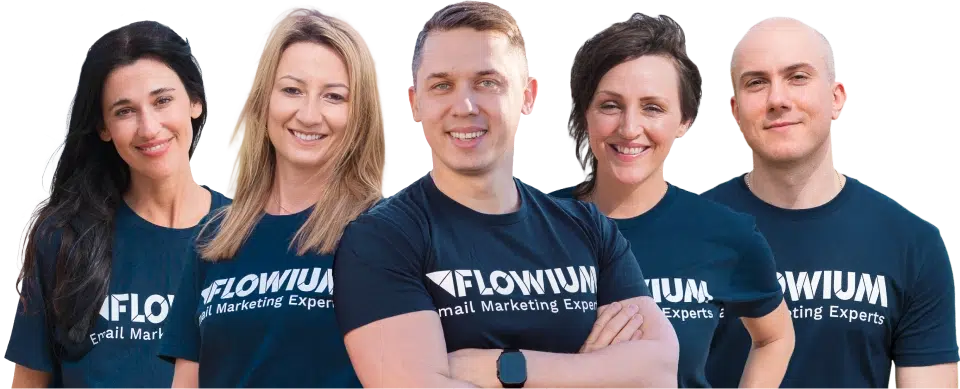
Hey everyone and welcome back to Email Einstein. Vira and Alissa, here we are, two email marketers at an email marketing agency called Flowium. We are so passionate about email marketing and because we love what we do, we want to share our insights with you. Flowium is one of the fastest growing email marketing agencies in the world. We specialize in providing a premium full service e commerce email marketing experience for all of our clients. Our service is tailored specifically for your business and is designed to help increase your online retail revenue by 20 to 50%. We deliver the right message to the right person at the right moment and that is what we are all about. And we are feeling good about today’s episode. So Vira, take it away.
Vira: 1:35
Oh yes, we do feel good about this episode today. One of our favorite topics to talk about newsletters. So it’s a good tradition I guess to start our podcast with like a nerdy numbers or something. So let’s do it again. Alissa, I think we should have some kind of like track or music like nerdy number style, something like that, you know, because we always, always use them. Well anyways, so let’s play this little game. How much time do you think the average person spent in their inbox like at work? Quick note, if the person does not work in the email marketing because obviously in this case you spend your entire time in your inbox. An average office worker, how much time do you think?
Alissa: 2:22
Gosh, I would say probably an hour every morning. So if someone’s working five days a week, I’d say like five hours, maybe like maybe 10. But I’d say closer to like five to like eight hours would be my.
Vira: 2:38
Well that’s what I thought actually that’s what I thought but turned out that the average like US employee spends around like 13 of their working hours in their inbox. And this is just like we are talking just about the working hours not and your work work email basically. And I mean it’s a good, it’s a good news for us as an email marketing, email marketers. But at the same time it’s like a bad news because you can imagine the amount of the information that people are getting through the emails. And because people are spending so much time in their emails, you can really make a great impact or a bad one. Yeah, so here’s another mind blowing number. An average person gets approximately 121 emails per day. Can you imag like that’s, that’s insane and like I’m talking like all kinds of emails, promotional emails, your Facebook notification emails from your grandma and stuff like that. So that’s a lot of emails if you ask me. And if you really want to break through this like a ton of email clutter that your customer is receiving every day, you should get really, really creative and high quality newsletter is actually one of the best way to ensure that your emails are the brightest emails in your customer’s inbox. Good quality newsletter. That’s actually what we will be talking about in today’s podcast. And having seen a ton of good newsletters, we’d love to share our little secrets or a short list of recommendations and how to’s for creating your very own and very best newsletter. So stay tuned. I love to say this like stay tuned. If you’re like a YouTuber or something. Yeah but before we go there, Alissa, what’s the email marketing pro tip for the week?
Alissa: 5:03
So our pro tip for the week is subscribe to your competitors newsletters which I think people who or brands that are in the same industry are like wait, what you want me to what you what? Like, because the thing is is, and I was actually when I was like looking into this a little further, there was a, a Reddit post or something or like a Quora post where someone was asking a question on a forum and they were saying how should I allow my competitors to subscribe to my newsletter list? And people were like getting really nasty in the comments like no, don’t do it. You should create a spoof site and make your competitors sign up there so they’re getting false information Da da da da. Yeah. Which I read and I was like, well, I don’t really love that. We are all about competition here at Flowium and we love being able to share what we do with our competitors. So our competitors can either try and do it better than us, but we also want to know what our competitors are doing too. So that way we can, you know, stay kind of up to date in the industry and, and be able to provide the best service for our clients. And it should be the same across all e-commerce brands. So the reason why we suggest for you to subscribe to your competitors newsletters is to see what they’re doing. What is it that they’re offering, what, what is it that they’re providing information wise? What is it that’s that they’re doing that’s so successful about their brand? It’s not going to always reflect a hundred percent back to your own brand because you have a different mission, you have a different vision, you have different values. So the subscribing to your competitors newsletters is a great idea because essentially what it does is it gives you insight into what they’re doing and will hopefully help be the catalyst for you to start brainstorming about what you should be doing for your own subscribers and your own audience. So it’s something that we do across the board. Whenever we have a new client, we subscribe to all of their competitors so that we can see what they’re doing and just do it better. Essentially.
Vira: 6:58
Yeah, they say good artists copy great artists seals. So.
Alissa: 7:03
Exactly.
Vira: 7:04
I think that’s actually the good, good approach. Like learn, learn from your competitors.
Alissa: 7:09
Exactly.
Vira: 7:10
Like play with open cards. Do you even have this like phrase in English, playing with open cards? Because we have it like in Ukrainian. Oh. Means that you are like very transparent with everything that you’re doing.
Alissa: 7:22
Yeah, I don’t know what exactly the phrase is in English. I think it’s when you lay your cards on the table so that everyone can see what you’re doing or like.
Vira: 7:31
Well anyway, something about the cards.
Alissa: 7:33
Yeah, yeah, yeah.
Vira: 7:35
Well I think it’s actually a great, great pro tip of the week. So guys, go ahead and subscribe to your competitors newsletters and to your competitors emails. And let’s go to the topic of our week. So like what makes good newsletters and good newsletters. So when I say newsletter actually like what words come to your mind? Like when I think about it, when I thought about it before I came into the industry, like associations that I had was like impersonal, formal, boring and unfortunately for many people, these are the first words that come to mind when they think about newsletters. Because historically newsletters have been this like formal letters or formal prints or emails that like brag about internal achievements of the company or like some smooth worthy news and like legal mumbo jumbo, you know. So I believe that like a lot of people have the same, like the same thinking about the emails and we believe that no one wants to have like this kind of newsletters in their inbox. Like I don’t, you, Alissa don’t have them either?
Alissa: 8:44
Yeah, no, no, no.
Vira: 8:44
And probably even like your grandma is only glancing at your memorial news day newsletter because she loves you. But when emails are written with like your own philosophy, with your own like insights, unique thoughts about the industry or about what is happening in the world, about what is interesting to your specific customers. So that’s like the entirely different story. And these are actually the kind of newsletters that we will be talking about. So here are the five or six. Six I don’t remember. Essential tips for writing good email newsletter. So Alissa was the first ingredient of a successful newsletter.
Alissa: 9:24
So our first is to start with your goal for your newsletter in mind. So typically a newsletter is used to widen a brand’s reach. Essentially what it’s supposed to do is it’s supposed to allow your audience to reach a sense of enlightenment about what, what your brand is like really all about what they represent, but then also educate them as well about what’s going on internally, any other insights that you can provide, if you can relieve any pain points or add any value to their life, their lives, and also include updates, promotions, et cetera, things like that. Newsletters aren’t always promotional and actually I think Avere and I would agree with this is that you should probably steer away from including promotional aspects to your newsletter where you’re trying to sell. Again, like I’d mentioned in the first point, you’re, you’re trying to educate and provide insight for your audience that’s going to build credibility with your brand but then also kind of show that you’re the leader in this industry. So for example, if you sell, gosh, water bottles, I’m looking at my water bottle at my desk and you send out a newsletter. Your newsletter isn’t going to just cover, oh well, buy my water bottle. This is why my water bottle is so great. Maybe you’ll do a water bottle review across the industry of different kinds of water bottles and the different things that they provide, the different benefits that they have. Then you’ll also talk about really Great water filters for the water that you’re going to put in. Different features that different kinds of water bottles include. Like things like that. You want to kind of expand what you’re talking about and not just talk about your own brand and your own product because it just again, it’s newsworthy, you know, like no one cares. You have other emails to talk about your product and those are typically found in your automations. Your newsletter is really to make a connection with your people. You know.
Vira: 11:37
There’s only that much you can say about the water bottle.
Alissa: 11:40
Yeah, yeah, the water bottle. The water bottle maybe wasn’t the best. The best.
Vira: 11:45
No, no, it was a good one actually.
Alissa: 11:48
But you know, like that kind of thing where you want to give more than just talking about your product. So typically what brands do is they gather their email list through subscriptions. So whether it’s like an opt in pop up or your footer subscriber on your webpage or whatever it is. So when readers subscribe, they’re typically getting the scheduled emails and when they get these scheduled newsletter emails, they already signed up for them. So it works well because you’re now just providing the information that they kind of opted in to get. And it also makes it easier for your brand and specifically to the marketers of your brand to build relationships and start conversations with your subscribers. So basically what the newsletter does is it’s able to facilitate the transparency and the openness that you have with your subscribers. So now you’re creating kind of this environment of trust, but also establishing a level of authority with your audience, which is huge. You want your audience to trust that you are the leader in the industry and you know exactly what you’re talking about. Newsletters are also really great ways for brands to get involved in what’s being discussed with your demographic that you’re trying to sell to. And Vira will get into this later in the episode. But there are different types of content that you can now start including into your newsletters that are going to be of interest to your subscribers. And typically this information that you’re including is vital. It’s going to highlight shifts in the organizational structure that’s going on for you guys. So if your brand has hired a new kind of key role and you want your subscribers to get to know who this person is, then that person now has the opportunity to write a newsletter. Hey, this is who I am. These are the things that are important and this is what we want to share with you guys, that kind of thing. So again, we’re now getting through the tips of what to do. But what you want to do in order to make the biggest impact with your newsletters is send a newsletter out at least once a month, preferably once a week. But if you’re going to kind of keep it minimal because you don’t want to go crazy, you send it out once a month. And they’re very important. Your subscribers want to hear from you. There’s a reason why they subscribe to your brand. And so they want to hear from you and they want to hear what you have to say. So you have one newsletter shot. Make it count because it’s really, really important. So that’s number one, is making sure that you have a goal in mind for what you’re trying to achieve through your newsletter. But Vira, hit us with number two.
Vira: 14:08
Number two. Number two is a big one actually. Yeah. So number two is give readers what they need and give them what they didn’t know they need. So basically let’s use the Alissa’s, Alissa’s example with a water bottle. So as we mentioned, there’s only that much things that you can say about the water bottle if your company is selling the bottles. But probably your customers would also be interested to know more about the water, about the, like how to, how to clean their water or how much water they need to drink per day or the cities like top 10 cities with the best water quality in the world, whatever. So yeah, like one of the best steps to an excellent newsletter is actually to stop thinking of your this email as a newsletter and start thinking of it as your outlet where you can actually share your unique perspective and thoughts on the business or on the product that you are selling. This is the outlet where you can actually build a relationship. Just like Alissa mentioned, build the relationship with your customers, strengthen your brand and like promote your community. Even if you have like a Facebook group for water lovers or like, I don’t know, whatever. So you can promote your Facebook community or your blog content or your Instagram or stuff like that. So like, what content to share? So here are a few great examples of what we’ve done in the past and what we’ve seen our competitors did. Because we are subscribed to our competitors. So creating an email newsletter free of grammatical errors and broken links is like, important. But providing actionable, helpful information to your subscribers is even more important. So the low hanging fruit. The probably the easiest thing that you can do is to share your blog post because I know that a lot of businesses are doing blog posts and Facebook posts and stuff like that so good for you guys. You are moving in the right direction. SEO is really important. So if you already regularly posting on your blog, be sure to share each of your posts in the newsletter. So remember to encourage your subscribers to share maybe this post on their social media. So you can even include this little share button in your blog. So all they have to do is just click one little button and it will be automatically shared to their Facebook or their LinkedIn or whatever. And there are a gazillion free apps that can do that. So you can do that. Okay, so top 10 lists. This is my personal favorite. I’m a sucker for this top 10 list. So sometimes people come up with really cool ways to use the products or like the tools that you give them so you can do like what we’ve done. So we’ve created this like list, like 10 things to do while in quarantine this weekend. So we send it and it was our head, you know, like we googled the best random top things to do. Or like you can also share some content about the unexpected ways to use your product. So something that we’ve done for one of our skincare clients. So they are basically selling this, like creams and serums and stuff like that. And we’ve sent the newsletter with three ways to recycle, like makeup containers or skincare containers.
Alissa: 17:29
Oh, cool. I like that a lot.
Vira: 17:30
You can make a base, you can like reuse it as a storage or something like that. You can cut it or you can paint something on it. So stuff like that. You would be surprised. But this emails, they pop up in your newsletter because you are not asking your customer to do something. You’re just like giving them the value. I don’t know a. Let’s say if you played this game when you were little, but I remember in the camp we played this game. So come up with like 61 things you can do with an old mismatched sock.
Alissa: 18:02
Oh, my gosh.
Vira: 18:02
Yeah. And we created this, like, it’s such a good game. I mean, I loved it. So we created like this list. Oh, you can use it as a sleeping bag for your hamster or you can do like this awesome stuff. So I mean, it’s a fun little thing. Maybe like come up with a 61 things you can do with your water bottle or whatever.
Alissa: 18:23
A hamster.
Vira: 18:25
I know, right? So cute. I’m still laughing every time. That was not my idea, by the way. I was not like that creative when I was growing up. Yeah. So putting a human face on your business is a big one. And probably Alissa, you know about it because I know you’ve done it with like some of your clients, if, say, if your client has a client or has a customer with like a cool story that they can share so you can like put a human face on your business and make it all real. So customer stories, like, I know that you are doing it. Oh, actually, can you, can you share what you’ve done for one of your clients?
Alissa: 19:02
Yeah, yeah, yeah.
Vira: 19:02
So recently, it’s. It’s amazing. I love what you guys did.
Alissa: 19:06
So. And I think I’ve mentioned this in the past because we’ve talked about utilizing user generated content in one of our previous podcast episodes. I’ll have to remember which one it was. But so the brand that I’m doing it for is lulalu. And so they sell bras for women, but it’s typically bras for smaller chested women. And so one of the things that we are actually going to be doing for October because it’s breast cancer awareness month, is we are actually requesting that women send in their stories about their breast cancer survival if they’re Lu Lalu customers and kind of how their experience with Luhlo has positively impacted if they’ve had to have a breast remove removal surgery or anything like that. So aside from the breast cancer awareness thing, which is kind of like a pending project, one of the really cool things for us is seeing these stories of these women who were either made fun of when they were younger or they had issues or whatever it was, and how finding a brand like Lulalu made them extremely happy. You know, like, it made them feel more feminine and you get this really positive customer feedback. And I was actually talking to the client that we worked with and he was saying, you know, like, owning a business is not easy, especially an e-commerce business. When you get customer feedback like that, it just makes everything completely worth it, you know, knowing that you’ve had some form of an impact in someone’s life and whether it’s not as kind of extreme as, hey, you made me get through my breast cancer survival story, you know, even if it’s not something like that, where it’s something kind of not lesser, but not something as impactful in the sense of like, hey, you know, like your eyelash serum gave me so much more confidence to feel like me and go out, et cetera. So these customer stories are really touching. And sometimes we create these newsletters just purely for the sake of having customer engagement and customer feedback, because it’s important for not only to Kind of maintain the morale of your audience. But also it’s important for you as a business owner to receive these kinds of things and, and see like, okay, it’s worth it. I’m going to keep going, I’m going to set up shop and I’m going to keep running this business, you know. So Lulalu is one of my favorite, favorite, favorite clients to work with. We’ve had a pretty long standing relationship and it’s just so cool to see everything that they’re doing for their customers and how they’re having such a positive impact on the community. So it’s nice to be part of that. I’ll be a very small part of it, but it’s nice to be part of that through email. So it’s cool. And it’s definitely something that, if you’re able to, as an e-commerce business owner, definitely something that I think we would all encourage for you to really try and aim for because it’s, it’s very rewarding on all aspects.
Vira: 21:35
I agree, I agree. Actually they have this really cool feature in Klaviyo where you can see, I think they have this feature in most email marketing platforms where you can actually see where people are clicking in your emails. You can see like what, what links they click and stuff like that. And I work with this, another client of mine and they have this really big and successful supplement brand. So they are usually like selling some supplements for people in their like 50s and 60s and stuff like that. So we are sending this newsletter called Progressive Thursday because the brand name is Progressive Nutracare. So we are sending this newsletter every two weeks, by weekly, Progressive Thursday. And I see every time I’m like reviewing the statistic I see that people click on the, those like slice of life stories the most. So this is where all of our click through rates basically are coming from. We have this little section of the email called Progressive Success Corner where we are actually sharing customer stories. So how they, how they could overcome like a health condition with like a certain, with like a certain supplement or how this brand helped them to live like a full cooler and healthier life and stuff like that. And I was actually surprised when I first started like looking at those numbers. This like slice of life story. They do work and yeah. So definitely reuse them in your newsletter, reuse them in your, in your flows, in your other campaigns. And if you want to hear more about it, we have actually this entire episode about three exciting email marketing trends we’ve seen in 2020. And actually in that episode we talk a lot about like sharing customer story and sharing user generated content. So go back and listen to that one because that is one of my favorite episodes actually.
Alissa: 23:30
Yeah, me too.
Vira: 23:31
I might be biased because I recorded it, but yeah, it’s a good one. So go back and listen now. The next one. The next, like a secret ingredient of a good newsletter is kind of big one. And they say an email that reads well will be well read. So Alissa, bring on the third ingredient of this perfect newsletter.
Alissa: 23:50
I love that saying. An email that reads well will be read well or well read. That’s really cool.
Vira: 23:56
I found it somewhere on the Internet. I didn’t come up with this one, but I like it too.
Alissa: 24:00
It’s the same as the hamster. Hamster sleeping bag is like. I just can’t get over that. It’s so funny.
Vira: 24:06
I know, right? Maybe that should be our new e-commerce gig. Alissa, who needs podcasts? Podcasts are so like 2000s, right?
Alissa: 24:15
Just make. Make an e-commerce business for a hamster sleeping bag.
Vira: 24:21
The richest are in the niches.
Alissa: 24:23
That is true. That is very true. So our third special ingredient for a perfect newsletter is great copy and even better design. So we’ll actually be talking about this in next week’s episode specifically with copy. But I’ll kind of run through a list of like, sort of like kind of like a checklist for both and kind of share a little more information and summarize what I mean by it. But we will eventually get into copy in future episodes and then also design in future episodes because we are email marketers, but we are definitely not the copywriters or the designers when it comes to the emails. There are some experts that we, we love to work with and that we prefer to work with. So we will be referencing them in future episodes. But all right, so for copy things that you want to focus on specifically when it comes to a really good newsletter. So you want to make sure that you have a solid subject line. And that’s, I mean, pretty straightforward. And that’s that that’s applicable for any and all emails that you send. You always want to have a solid subject line when it comes to the newsletter. Depending on how catchy your subject line is, you may just want to reuse it and just kind of update it. For lulalu, the customer story that we feature every month, it’s called Lulalu lady of the Month. And every time we send it out, our subject line is something along the variation of Meet our Lulalu lady of the Month for September. And then you click on the email and then there she is. So you can kind of recycle those subject lines. But again, if you want to get super creative, get creative. Every month or every week that you send out a newsletter, preview text is the next. And that just kind of follows in suit with your subject line. Just make sure it matches up and preview text. I’m not super partial to me personally, but I know it is important and it is that kind of like sneaky little line that you see under your subject line when you’re looking at your inbox. So it’s definitely important to include. The next thing is get personal with your copy. That’s an ingredient all like in and of itself that we’ll talk about later in this episode. But you just want to make sure that you’re personal. So if there’s something that you mentioned in last month’s newsletter, make sure that you mention it again. Or if you’ve managed to segment your newsletters really, really well. Make sure that you are directly addressing the audience that you are sending that email to. There are other ways to get personal, but again, we’ll touch on that a little more later on in the episode. You also want to avoid words that normal people don’t know. So it’s one thing if you sell a water bottle, but now you’re talking about it spout and all these things and all the all the materials that go into creating the water bottle. But you’re going to lose your audience because they don’t work for your brand and they don’t make your water bottle. So use words that everybody knows so you don’t lose them. The excessive jargon isn’t really impressive. It’s more annoying than anything for subscribers. Make sure that you keep your copy short and sweet. Anything that’s super long winded, it just eventually becomes irrelevant and you lose interest of your customers, which is not what you want. You want to make sure that your newsletter is relevant. So if you’re selling water bottles, you don’t want to be talking about, gosh, soy candles, you know, unless you find some wacky way to relate the two. You don’t want to just include random information for the sake of random information. I’m sure that you guys can all guess what’s on my on my desk as I’m recording, this is a water bottle and a soy candle. And then the last point for copy is simple and effective. Call to action. So you always want to include a call to action, some kind of CTA button in your email, but you want to keep it short, sweet and to the point. Whether it’s like, grab this playlist or check out our favorite water sources or whatever, it is something that’s relating to an aspect of the newsletter. I don’t love the idea of calling to action for your customers to go directly to your website because then it’s just kind of an awkward push to sell. You want to call them to action for something that’s valuable and relevant to the newsletter and that’s going to kind of divert their attention from like, oh, they’re, this is a brand that’s just trying to sell me a product. And they’re going to engage with you because you’ve provided some kind of resource for them. Okay, so that’s copy for design. Kind of the same thing, but a little different. So first thing is, you want to make sure that whatever it is that you create is good on desktop and mobile. If it looks amazing on desktop, and then the second you open that email, it looks like a disaster on mobile, don’t even bother sending it. As we mentioned in our very first episode of this podcast, most people are opening on mobile. And so you want to make sure that you’re catering completely to that demographic, if not only catering to that demographic. Like, if it looks phenomenal on mobile and it looks okay on desktop, you could probably get away with it. But for it to look phenomenal on desktop and it just looks like a disaster on mobile, it’s just not worth it. So make sure that you’re checking both and how your email renders on both, make sure that your design stays on brand. So whether that, that’s color scheme, thematically, the fonts that you use, et cetera, you want to make sure that your newsletter looks like something that came fresh off your website or fresh out of your store. Creating these newsletters that they look like they came from a random different company, it’s just, it doesn’t, it doesn’t sit well with your subscribers and you lose that connection of like, wait a second, I thought they looked like this. Are they changing? What is this? You know, it just, it creates confusion. Friendly fonts are your favorite friends. It is so cool. It’s so cool when you have brands that create all these incredible fonts and they’re super special and you can’t find them anywhere and they’re completely designer generated. But I can promise you that if you include them in your email, they are just going to look like Arial or Times New Roman when someone gets it. So make sure that you choose fonts that are accessible by most browsers and accessible with most emails platforms. So that way you’re not completely destroying the look and feel of your email. Because that stinks. I’ve seen that happen all too many times. And what could have been a really phenomenal newsletter just looks like a cheesy document that a third grader wrote up for a school presentation, you know? No. No offense to third graders. Yeah, yeah, yeah, exactly, exactly.
Vira: 30:26
Like grade 11.
Alissa: 30:28
Yeah, it was. Me too. Me too. Okay, the next one. Does this picture say a thousand words? Images are awesome in emails. And actually for one of my clients, we only use image based emails to send out for campaigns. Specifically, I would not recommend it. We have a really solid Klaviyo expert team who quite bluntly, like checks the heck out of that email before it goes out to make sure that the deliverability isn’t affected, to make sure that there’s no spamming involved. Like it’s a solid. So that’s the only reason why I feel comfortable sending out a completely image based email. You want to make sure that you’re not including images for the sake of including them. Like don’t put them in if it’s not necessary or if it takes away from the content that you’re trying to create or that you’re trying to provide to your audience. So just be really, really particular about the images that you select, where they go and if you actually need them or not. Because if they’re just again, taking away from the content, no point. Just get rid of it. It’s trash. Again, keep it short and sweet. So I know we mentioned this in copy, but for design, if there are larger blurbs of copy that just are valuable and relevant, you need to include. Typically what we recommend is for designers to not leave these huge chunks of text because it looks really overwhelming for a reader. But split it up, put some text on an image. You know, kind of find a creative way to include all of the text without it being overwhelming or looking too busy. You also want to make your emails busy, subscriber friendly. What this means is when they look at the email, you want them to have the ability to read in and sit down and spend a few minutes actually reading all the content in your email and your newsletter. Or you want to give them the ability to just scan through, pick out the information that they want, and then keep moving with their day. HTML versus plain text. You want a combo of both. Always you want your HTML emails to be able to render nicely in plain text, but you definitely don’t want to just send out plain text emails because those are boring. You want an attractive cta. So along with it being simple and effective, a simple and effective call to action, you want your CTA button to look attractive and you want it to be kind of clickable, you know, like, oh, wow, I want to click on this. This looks cool. And then the last one is testing, testing 1, 2, 3. You need to test all your emails and make sure that everything is working well. Because, because nothing is worse than when you send out a newsletter. You can’t click on your links, the images aren’t loading, you have broken images, the font looks terrible. I mean, there’s so many things that can go wrong with the design of an email and it just ruins your email quite frankly. You’ll lose subscribers over it. So make sure that you test all your emails multiple times before you go ahead and send them out, especially your newsletters, because those are your big kind of connecting, engaging points for your subscribers. So that is number three, great copy and even better design and we will definitely be creating more episodes around detailed information for copy and then detailed information for email design. So okay, Vira, hit us with number four because this one is a killer for me, but it’s so important so I need to hear it.
Vira: 33:31
Number four. So basically you’ve created this amazing, beautifully looking, well written newsletter. What’s the next step? Who should you send your email to? So probably the biggest mistake that every business can make is to be sending emails to your entire list, your entire database. And we’ve talked about it in our previous episodes a lot, but we will not stop talking about it because this is a big one. Out of 100 marketers, probably 89 are making this same mistake. And honestly, this mistake is giving email marketing a bad name. So newsletters is not exception. Please, please do not send an email newsletter to your entire entire list. Just, just like don’t. What do you think happens when person is getting an email that is not exactly relevant to them? So here are some interesting numbers. So 60% will just delete an email and that’s a, that’s not a bad thing, right? Okay, they deleted the email. They didn’t read it. Oh well, worse when they will unsubscribe from you. So 27% will unsubscribe from the, the brand completely and like around 23% will mark your emails as a spam. And that’s like the big and bad thing that can happen to you. So this good old spray and pray approach, it will not work with newsletters. So segmenting is probably the biggest thing that you can do with your list. So the very least that you can do to be sending your email to your engaged segment. For the most of our clients, we define engaged segment as people who open at least one email from you within the last 90 days or 60 days. So obviously the number of days, it will depend on what industry you are working with. So this definition of the segment will be different for each and every brand. I know, Alissa, that you were working with some kind of farmers brand or like this seeds or something. So probably for them this like engaged segment would maybe be like longer because their sales pretty much happen like once a year. Like, correct me if I’m wrong, but I mean, so you basically need to understand what’s your like cycle of your client. But generally speaking, like 60 to 90 days, it’s something that we recommend. So a bit more advanced scenario is to be sending like different newsletter to different kind of customers or segmenting your list based on interest. Say if you are selling like sport gear. If I’m doing yoga, I will not be interested in boxing gloves. So what you can do, I mean, you might be interested, but the chances are really low. So what you can do and what we’ve been doing for our clients, we basically create this email preference page where the client can go, the customer can go and actually like pick what they want to receive from you. They can say, hey, only send me the ballet lessons promotion, or only send me the newsletters related to boxing and stuff like that. So this is a bit more advanced strategy, but believe me, this works. So again, the very least that you can do is to be sending your emails to the engaged. And you can also segment it based on the product they’ve purchased in the past, based on the interest, based on how often they purchase from you and stuff like that. So this was your number four. So number four, segment your list properly. So tip number five, Alissa, make it personal. Yeah, it’s a big one. You already mentioned it briefly, but let’s talk about it because.
Alissa: 37:10
And it’s great because doing the segmenting is. It’s a good segue into the personalization because segmenting is actually a way that you can personalize, but there are other methods. So as email marketers, we already know that personalization can be very, very helpful and can lead to huge successful emails. So here are a couple of statistics that actually I was pretty impressed with. So emails with personalized subject lines are 26% more likely to be opened. Marketers have found a 760% increase in email Revenue from segmented campaigns, which is like, yeah, that’s, that’s a serious number. 760% increase in email revenue just from segmenting your campaigns. Nuts. So it’s very obvious to us that personalizing emails is beneficial. But there are still email marketers that are making these mistakes of not doing that, and they’re really struggling to find ways to personalize their campaigns and more specifically their newsletters. For example, during the holiday season, only 80% of marketers or 80% of marketers place promotions within their top three email marketing strategies. But only 56% of marketers listed segmentation based targeting as a top tactic. And only 21% we’re leveraging real time personalization or A/B testing, according to Media Post. That is crazy to me because the holidays where tomorrow is the first day of September, we’re already gearing up at Flowium, like, oh my gosh, like, we’re starting to get like a very low level of anxiety, but it will increase very soon because we know what’s coming. Yeah. The fact that people don’t think about personalization is like, yeah, yeah, holidays are coming, winter’s coming. So the fact that marketers aren’t thinking about personalization in the time that it matters most and can have the greatest impact is huge. It’s definitely something that we need to focus on more as email marketers. A lot of marketers do want to personalize, but they don’t believe that they have the tools to do so. So they don’t really know how to segment their database, integrate personalization into their strategy, and really how to just use it to drive more successful email marketing campaigns. So as Vira had mentioned, with segmenting, that is a huge way to personalize your emails because now you’re, you’re basically creating these lists and these segments of people who want to know more about specific bits of information that you’re sending out. So you could effectively create five different newsletters depending on the interest that you cater to. And based on the segments that you create, you can send out a newsletter to segment one, a newsletter to two, three, four, five, and so on. And these newsletters, it’s going to take you a little more time because you’re creating multiple different versions of content. But ultimately you’re going to make your subscribers happier because they’re like, whoa, I’m getting an email about the exact thing that I asked for information about. So it’s huge. And the personalized newsletters, they’re really primarily centered on customer segmentation, which is what we did focus on Earlier. So if you want to dig further into the minds of your customers, you need to know more about them than just their age, gender and job. So ultimately, what you have to start doing is going beyond surface level information. When you collect data from your customers, you have to find ways to ask them about their hobbies, their food choices, personal life, or track their habits. Did they just have a baby? Are they pregnant? How often do they use a particular app? There are so many different things that you can do to create targeted emails and further your segmentation. So ultimately it’s just all about finding as much information as you can as possible about your customers, about your subscribers, and then finding ways to send relevant information to them that has to do with exactly what they’re going through in their life. And there are flows and different automations and things like that that you can put in place to slowly gain the trust of your subscribers. So they want to give you more information about their lives. The personalization thing, I mean, it links directly to the relevance, which is what we’re completely obsessed with. So it’s just a case of making sure that you’re focusing on that and really pressing hard to get as much as possible. So we have our last special ingredient for this recipe for perfect newsletters. Vira number six.
Vira: 41:11
Number six is encourage communication and request feedback. And that’s Alissa. Interesting that you actually mentioned about, like finding the ways to ask your customers about their hobbies, food choices, like life and stuff like that, because I do think it’s super, super important. So our secret ingredient number six is to find the ways to get the feedback. So encourage communication and request feedback. So here’s a good example that I found somewhere on the Internet, so you wouldn’t walk to someone’s home with like a megaphone and start blasting. So don’t do this with your newsletters, don’t do this with your customers inboxes. Instead of like blasting orders, try to start a conversation. Let your customer talk to you, let your customers respond to your emails, ask the questions, find out as much information about their favorite, I don’t know, like, food and hobbies and about their favorite apps and stuff like that. So let your customers do the work for you. So how to do that? Well, you can do as little as like adding a little like a sentence at the end of each and every newsletter saying something like, hey, we hope you found something useful in our newsletter. So don’t be shy, let us know like what you enjoyed and what you didn’t enjoy. Like, what was your favorite part of the Email, you would be surprised how many actually good quality responses you will get. So this is like the easiest and the minimum that you can do. Not only will your subscribers feel as you as if you were speaking directly to them, but their feedback will be like super, super invaluable to your business. Another thing, and I think you’ve done it Alissa, numerous times with your clients and I’ done it with mine. So you can also ask your customers to fill out a quick survey. So we are regularly sending different surveys about the products, about the quality of the emails that we are sending and stuff like that. So we are basically collecting this information piece by piece to make this beautiful portrait of who are we sending this emails to. So think of the emails as the best tool to communicate and hold all the attention of your customers in a distraction free environment. So basically this is the place when you can talk to your clients and when you can actually hear back from them. So encourage communication, request feedback and believe me, this is very, very important and you will be happy with the results. So here you have them, like six essential tips for writing a perfect newsletter. So let’s just quickly go over them once again, just so you remember, what are they? So Alissa, what, what was the first one?
Alissa: 43:49
So number one is to start with your goal in mind.
Vira: 43:53
Number two was give readers what they need and what they didn’t know they needed.
Alissa: 44:01
Number three is great copy and even better design.
Vira: 44:05
Number four, segment your list properly because as we already know, this is huge.
Alissa: 44:11
That’s the biggest one for us.
Vira: 44:13
Probably, probably.
Alissa: 44:13
Number five, make it personal.
Vira: 44:17
And the last one is encourage communication and request feedback.
Alissa: 44:21
Love it. I think this is a pretty good recipe. Maybe we should try and.
Vira: 44:25
Pretty solid recipe.
Alissa: 44:27
Yeah. Yeah, seriously. Okay guys, well don’t forget to subscribe and share this podcast with your friends. If you do have any questions at all that you’d like us to feature on our podcast podcast episodes, make sure that you send them in at flowium.com/ask if you want to get involved in a community of other like minded email marketers. That’s very engaging. People ask questions, people answer. Everyone’s in touch all the time. Join us at flowium.com/community As a note, all the resources that we used to create today’s podcast episode can be found on our website at flowium.com/podcast under each episode’s page. This week was episode number nine, six essential tips for writing the perfect newsletter. If you’re new to Klaviyo or wanting to try any of the suggestions out for yourself, this can be a super helpful resource. But we do also offer a course where we cover everything you need to master Klaviyo. And you can access this course by visiting the products page of our Flowium website. And finally, if you’re interested in getting some more advice on how to establish a solid email marketing strategy, do make sure that you visit flowium.com/contact and sign up for a free consultation. We’ll basically be able to kind of give you an overview of what you’re doing for your e commerce store and any recommendations that we have for you.
Vira: 45:45
Yeah, and next week guys, we will be discussing all the things copy. So we’ve covered it briefly in our episode today, but we are actually working with our Rockstar team of copywriters and they are helping us with the research. So next time we will be talking about the best practices and secrets to copywriting and we will be sharing them with you. So don’t miss it. We’ll provide a lot of cool resources as always, so stay tuned. Invite your friends, invite your grandma. How many times did I mention in this part, play this game, you know, with the shots, every time someone mentions grandma. So stay tuned you guys. It’s gonna be fun. And thank you so much for listening. We’re happy to have you here.
Alissa: 46:33
Thank you guys so much and we will see you next week. Take care.
Vira: 46:37
See you next week. Bye.

Vira Sadlak
Podcast host, marketer, traveller and a life lover from Vancouver, Canada

Alissa Taggart
Alissa is an email marketer that is passionate about relevance!