
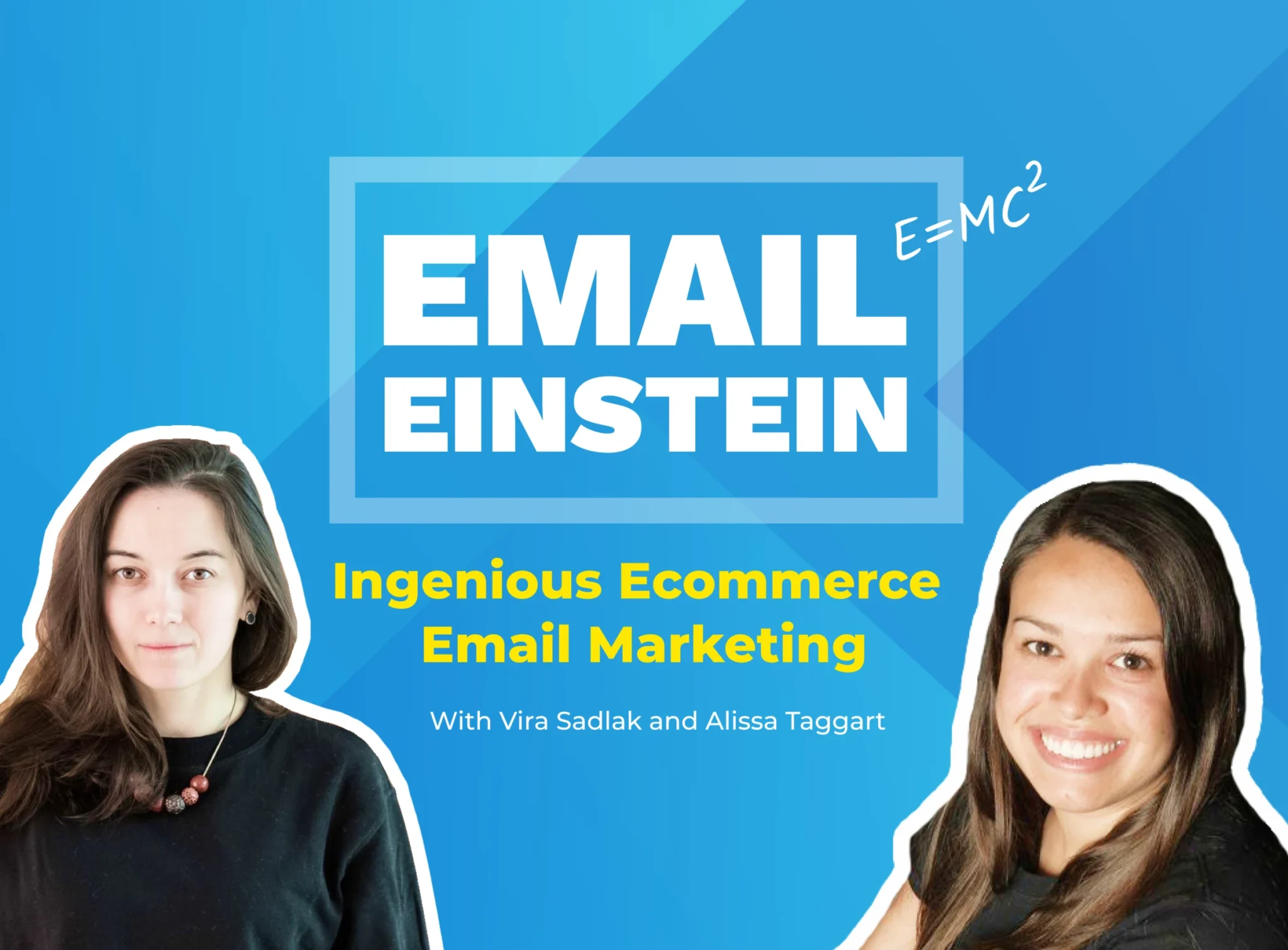


Podcast Transcript
Vira: 0:16
How many people actually abandon their cart? If you use the right words, your click through rates will be through the roof. Call attention to your call to action. Your goal is for your customers to click on that things.
Alissa: 0:55
Hey everyone. Alissa and Vira, here we are two.
Vira: 0:58
Hi everyone.
Alissa: 0:59
We are two email marketers at an email marketing agency called Flowium. We are so passionate about email marketing and because we love what we do, we want to share our insights with you. Flowium is one of the fastest growing email marketing agencies in the world. We specialize in providing a premium, full service, e commerce email marketing experience for all of our clients. Our service is tailored specifically for your business and is designed to help increase your online retail revenue by 20 to 50%. We deliver the right message to the right person at the right moment. That’s what we’re all about. So today we’re actually going to be talking about the infamous abandonment cart email series and four proven tactics that you can use for your future cart abandoners. But before we get started, our quick tip for this week is your emails could be illegal. Okay, what, what does that even mean? So how is it that you could be sending illegal emails? Well, there was a can Spam act that was signed back in 2003 that applies here to the US that actually created legal requirements for commercial emails to follow. We’re obviously not going to read the entire act for you because that’s what Google’s for. But one of the things that we see clients lacking regularly in their emails is including their physical address in all of their that they send to their subscribers. Super important here at Flowium, what we usually do is we include that information in the footer of the email. But you can include it absolutely anywhere you’d like. Basically whenever you send out your emails. These kind of spam bots basically go through the email to make sure that you’re actually including that information. And if you don’t, more often than not, they’ll just send your email into the junk box interestingly enough. So including the address actually helps a lot with deliverability and just generally you want to to be a law abiding email marketer, so make sure that you include that physical address. Obviously if your business is from your house, you don’t want to give your house address out to a bunch of random people. But you do still need to include some kind of address where you can receive mail for your business. So make sure that you get at least a P.O. box or something like that on there. Physical address is super, super important. It’s going to help with deliverability and you are going to be a law abiding email marketer. So keep that in mind. Vira hit us with what we’re actually going to be talking about today.
Vira: 3:42
Oh Alissa, I’m so excited about this topic today because we will be talking about the abandonment cart emails and I know that you guys probably heard about them. You can like them, you can love them, you can hate them, but you certainly can ignore those emails. That’s for sure. Because all of us business owners, e commerce marketers, we all come to that heartbreaking moment when you look into your analytics and compare website visitors to customers and you’re actually seeing this like really, really sad numbers. We’ve all been there. You’re spending like a lot of your hard earned dollars on driving more, more traffic to your store through Google Ads, through Instagra, and yet you are not seeing the revenue. So it’s almost like a leaky bucket. No matter how much water, AKA money you pour into that bucket, if it’s not retaining enough, it means that it’s leaking somewhere. A lot of E commerce businesses and Alissa, correct me if I’m wrong, but I think for a lot of business owners one of the biggest leaks in their sales and funnels and marketing funnels is the shoppers who actually abandoned their checkout. I was surprised when I first started working with email marketing. I didn’t realize like how many people actually abandoned their car. So that’s just like not cart. So study actually shows that. Okay Alissa, let’s play a little game. Like you probably know this number but how do you think, like what is the percentage of the abandonment carts? Like rough number.
Alissa: 5:24
Like what if I had to guess off the top of my head I know what the number is. But just thinking about when I started out with email marketing, I wouldn’t guessed something like 30 to 40% of people, something like that.
Vira: 5:36
Right, right. And I feel like a lot of people thinks like this but actually study shows that 75% of people put items in their online shopping cart only to live it without, like, completing the purchase. And this number is just like. It’s insane. 75 freaking percent. That’s a lot of potential revenue, like, if you ask me. And this cost online retailers, like, a lot of money. I found this fun number. It’s so big that it doesn’t even register in my head. The cost of online retailers, of the money that they are losing is like 260 billion in lost revenue per year.
Alissa: 6:13
Wow.
Vira: 6:13
And it’s like every year. Can you imagine? So, yeah, so like, 75% of people leave the items in their cart and they never return. But that doesn’t mean that you have to admit the defeat. Right. The good news is, even though we can’t eliminate the abandoned cart completely, we can still minimize the likelihood of what happening. And this is actually what we’ll be talking about in this email. But first, Alissa, give us more information, like, what is abandonment cart and why people actually abandon this. They are shopping carts.
Alissa: 6:51
Yeah. I’m still thinking about $260 billion. So that’s 260 with nine zeros after it. I’m like, what is it? What is that number? I think it’s like, it’s 9 0, right?
Vira: 7:04
It’s like a budget of Canada. I’m joking. No offense. Canada, Love this country.
Alissa: 7:09
I mean, that’s a lot of money. It’s a crazy amount of money. And people don’t really recognize how much they’re leaving on the table when they don’t put these into place. So abandoned cart emails are emails that are sent to someone after they abandoned their cart. Okay, Kidding, kidding, kidding, kidding, kidding, kidding. But not really kidding. So I’m going to kind of paint this as, like, a bit of a picture for you, and then you’ll kind of get a better idea. So when you’re online shopping, you find something that you really like, you add it to your cart, and then you decide it’s time to check out. You add your email in, you go to the next page, you begin the process of adding your shipping address, figuring out the taxes, how much it’s going to cost to ship, and then you see that grand total. And then you come to that awesomely fun part where you actually have to pay for the item. You have to put your money where your mouth is and plug in your cart information. And then you think, I’m going to wait. I’m going to hold off. I’m distracted. I don’t know. There’s like, a million reasons that we’ll go over in a little bit. But you kind of forget all about that amazing throw pillow that you’re gonna buy. And then four hours later, ping, you get an email that’s in your inbox and you open it and there it is. It’s that beautiful, amazing throw pillow that’s gonna look so good on your favorite spot on the couch. And the company is telling you we’re holding the item in your cart for you, but you have to act quick because it’s gonna sell out. And then you think, wow, chivalry isn’t dead and people care about me and the throw pillow that I want. So you make the purchase and now you’re happily awaiting your new throw pillow to arrive at your home. And that is an abandoned cart email in action and a successful one in action. So, okay, now that you kind of have this funny little story about what an abandoned cart email is, now you’re wondering, okay, do people actually do this and why do they do it? And like, I would never do that. I know what I want and when I want, I get it, whatever it is. So going back to that statistic that Vira had mentioned, over 75% of people abandon their cart. So it’s very clear to us that over half of the people that will be visiting your e commerce website will most likely abandon their cart. So it’s important to have this in place. And the reason why people abandon their cart is, oh my gosh, I’m looking at like 10 different reasons. So they get distracted for whatever reason, they forget what they’re doing for whatever reason. They have to switch devices, their phone dies when they’re in the process of making a purchase. They get put off by the price of the item, it’s more expensive than what they thought, or the shipping costs a lot, or there’s an issue with the website, or the checkout process is really obnoxious and you’re like, yeah, no thanks. Or they’re looking at the return and exchange policies and they’re a little complicated. Or they think, oh, I saw this pair of jeans on another website, let me go check and see what the price looks like. So they’re going to go and compare. Or if they’re just browsing and kind of playing make believe window shopping where you go to the, you go to the cashier and then you think, I don’t want this anymore, the list goes on. I mean, there are so many reasons why people can actually abandon their cart. And Vira, I know, I know you want to kind of expand on this a little bit too.
Vira: 10:36
Yeah. But the thing is that majority of those people who abandoned their cart usually plan to come back. If you’re not sending them that abandonment cart emails to refresh their memory, you are just like, leave and you will leave the serious money on the table. Even if you only do the very basic abandonment cart flow, it’s still better than nothing. You should begin to see your revenue grow and your return of investment, investment growth, even with like the simplest one email that you will be sending to your customers. And then you can reinvest this additional cash in like, other parts of your business, which is. Which is exciting. So it would partially fix that like, leaking bucket thing, but definitely the abandonment cart process starts even before we get into the email. If you can like smooth the checkout process for your customers, that’s great. If you can, like eliminate those, like, additional costs, that’s great. That would help you with the abandonment cart issue as well. But we will be talking about the emails because, hey, we are emails gig, so we love emails and we’ll be addressing this portion. When the customer actually leave you their email, they put something into the cart they forgot, they leave, and then we start doing our work here. So, Alissa, what is the first and kind of like the biggest recommendation that you can give to the customers about the abandonment cart flow?
Alissa: 12:04
So the first kind of best practice that we always drive home to a lot of our clients, especially because our clients are business owners and they don’t specialize in email marketing. They just have a very broad idea of what it is. They’re really anxious about sending too many emails, which, I mean, we both totally get it. You know, we’ve seen clients who send like five or six emails in one day, and they do that Monday through Friday. But we’ve also seen clients who hold off and are so stringent with how many campaigns they send in a week or in a month that they’ll end up only sending two. And their revenue is like completely on the way down because they’re not doing enough. So with the abandonment cart flow, we strongly, strongly recommend sending multiple emails to engage your shoppers, not just one, where it’s just a quick reminder, because that email tends to have the highest open rate. But you’re not going to see peak revenue being generated from that first email. You actually usually see it on like, the third, sometimes fourth email that you send within that abandonment cart flow. So as an absolute base, two to three emails, minimal. Because one email is just not enough. You’re still leaving a lot of money on the table when you just send one email. Actually, Klaviyo did a study where they basically took all of the abandonment cart emails that all of their clients do and they compared the open rate, click through rate, the revenue per recipient, the total revenue across a three month span between their clients who do one email versus seven emails, and anyone who’s kind of in between. For an abandoned cart series, the clients that kept their abandoned cart emails to about three emails, just as kind of a general best practice across the e commerce world, they actually did a bit better than anyone else because all four metrics so that open rate, click through rate revenue per recipient and the total revenue, they dropped drastically between emails three and four. So that’s not to say that adding more emails is not beneficial, but it’s not always necessary for every single brand. So again, general best practice kind of across the board for most of the e commerce world, two to three are enough. But you do have some instances where four emails is necessary or five, six, seven. You know, here at Flowium we actually have a template that we use for the abandonment cart flow that includes seven emails. But again, not all emails are necessary or even make any sense for all of the clients that we work with. So I have one client who we have seven abandonment cart emails in their flow and then I have another client who has three. So the differentiator between them is the fact that they’re both in different industries within the e commerce world. So you have to just decide what’s right for your brand and what’s right for the audience that you’re trying to reach. So the reason why we have those seven in the template that we use is because they provide ideas for future optimization of abandonment cart flows or just emails in general as we continue in the life cycle of a client between Flowium and the actual client. So it gives it this opportunity for optimization. And we also have the potential to expand those series based on what we think is doing well. So just to kind of give you a quick rundown of what we use, Email number one is just usually a reminder that something’s in the cart. Email number two, we provide reasons that the client or the customer should buy from the brand. Email number three is usually some kind of a discount with a 48 hour deadline. Email four is a reminder of that 48 hour deadline discount. And then the last three emails are completely optional. I mean completely optional. And again, the first four are also optional in the order what you include, what you don’t include, whether your brand offers a discount or not. But the last three are we provide some kind of pre sell content where we provide information, a blog post, an article, something informative, educational, that’s going to add value to the subscriber’s life. About the item that we’re now going to sell in the next two emails. So usually we choose the best seller and that’s a conditional email based on whether the person had added that bestseller into their cart or not. So usually what we like to do is focus on turning them to that bestseller. If for whatever reason they didn’t want to buy that throw pillow, but our best seller is the chair that the throw pillow usually goes on, we’ll sell that chair to the person to get them to at least convert into being a customer. They’re buying our best seller, our most popular item, the item that makes most customers the happiest. And then later on down the line, they’ll come back and they’ll buy that throw, hopefully. So again, the idea behind all these emails is to use what’s absolutely necessary and to ditch what’s not. And the thing to also remember is that you need to get these emails in front of your potential customer ASAP as soon as possible. Because the longer you wait, the less effective the abandonment cart series is. So that’s like the first thing that we just really want to really, really push. You want at least two to three emails in that abandoned cart or else you’re going to still be losing a ton of money right off the bat. Vira, I know that you have a very strong opinion about the next, the next best practice.
Vira: 17:07
Yeah. But before we go to the next best practice, I want to just add a few things. So basically, your abandonment cart is your opportunity to address all of those concerns that your customers have before they purchase the product. If they dropped their cart because the price of the shipping was too big, you can hit them with the discount for the shipping or if they had some kind of questions about the product, you can hit them with FAQ section link or something like that. So this is your, your kind of chance to get to know your customers and to start building the relationship with your customers. So that’s why, Alissa, I like completely agree that one email is not enough. It’s better than nothing. So still, like, if you guys have one abandonment cart email, good for you, because a lot of businesses don’t have it at all. But in this case we do recommend three or more. And yes, Alissa, I do have a strong opinion about the second best practice. So the second best practice for the abandonment cart is to use an incentive temp shoppers back. And there is a lot of like disagreements happening in the industry about the discounts and incentives and stuff like that. And one of the most popular strategies to recover those abandoned cars is actually to include some kind of like discount or some kind of incentives. But because this is such a popular tactic that basically everyone was using at some point, we have conditioned many of our customers to actually expect something from us. And I’m the same, I’m never purchase anything without like the discount. I’m always waiting for this discount in the amendment cart. And we, we talked about it Alissa, with you. But hey, I am one of those people who are conditioned to receive those discounts. The big risk here is that frequent discounts will devalue your product over time. That’s why we don’t recommend giving discounts right away. That’s why we don’t recommend to giving the discount in that very first email of the abandoned cart sequence that you are sending to your customers. You don’t have to sacrifice your profit and margin with a discount like right away. Instead save those discount for your last emails or for emails number three and four or whatever. You should consider like maybe even giving different incentives based on like different cart size and stuff like that. This is a bit of an advanced, like advanced email marketing. But hey, as I said, you don’t have to sacrifice your, your margin and your profit because this is not why we’re here. Right. So one of the tactics that we are using for our clients is that we have this kind of like a VIP customer who has been in for months and then he comes to the website, he abandons a car with a big ticket item. So this guy or this girl should be treated differently from the person who just like placed the gum into their cart and left. So we kind of try to push those guys first and then maybe give some offers to that other customers later. And besides, discounts is not your only option option. So offers such as free shipping and leveraging your loyalty and rewards program. And Alissa, I know you are the pro in everything when it comes to the rewards program. So yeah, rewards programs like free shipping offer, maybe freebie or buy one get one, it’s a good alternative to good old discounts. And humor actually is another good basically good approach that you can use for abandonment cart email. So we had the client who used this title in their abandonment cart. Your shopping bag has abandonment issues. Open rate on that email was like you wouldn’t believe. That was crazy. So this like fun, humorous messages. It’s another way to kind of bring value to your customer. Or one of my favorite is this. Save this items hours of therapy and give them a loving home. I loved it. I loved it. I love this copy. It’s so late, witty, so fun. And that’s another thing that you, that you can use. You don’t have to be giving discounts, but it’s always nice to give them some kind of incentives to continue doing the business with you in a way. So what do you think about this, Alissa?
Alissa: 21:28
Yeah, I love it. That copy is like, I know it would get me. For me, it’s like, I see that and I’m like, yep, that’s funny. I’ll make the purchase as long as it’s a reasonable amount. You know, it’s not gonna break the bank. But it’s true. And a lot of our customers are like, well, I don’t really feel comfortable doing a discount. What else can we do? And that’s where we kind of have to put on our strategist hats and really think about, okay, what is a strategy that’s actually going to work for this brand? And we have to kind of get in the mindset of the Persona that we’re trying to attract to this brand or the customer base that we’re trying to attract to this brand and get an idea of like, okay, what would work for us and if we were in their shoes. And so we have to translate the, that into some form of email marketing strategy, especially when it comes to the abandonment cart, because we want to make sure that all our clients are receiving all the benefits that this flow can bring. So it’s definitely huge. And the incentive side of things is it’s the world we live in, isn’t it? I mean people, people are willing to do stuff as long as you promise something in return, but it just depends on what that promise looks like. So for some people it can be pretty small, but for others they’re expecting like, hey, I want a 50% discount if you want me to purchase this. And that’s not really what we’re trying to achieve for our customers. So the non monetary incentives and it’s something that we account managers at flowiam discuss all the time. And when someone has a good idea, we immediately share it because we know how difficult it is to come up with these, with these different ideas of, of how to get people to come back. And another really good incentive just to think about too is to, to add to the list that Vira gave is to create a level of urgency. I haven’t used this personally, but when you can show people that this item that they’re looking at buying goes out of stock, stock really, really quickly, and it’s a hot ticket item and people want to buy it, you know, it makes people feel like they’re either missing out or on something or, oh my gosh, I got to take advantage of this and get this before other people do. So you almost create this, like, weird customer competition where other customers are almost competing with each other and they’re like, well, I want to get this before someone else does, and that kind of thing. So it’s definitely interesting to add.
Vira: 23:29
Tell us more about the practice number three. I know you are really good with the next thing that we’ll be talking about because you worked with this, like, progress before. So tell us about the good practice number three.
Alissa: 23:41
Yeah, so the third thing that we definitely focus on when it comes to abandonment cart emails is to be personal and relevant. And I don’t know if you guys have noticed yet, but we really love that word relevant. So abandoned cart emails are so personal by nature because you’re basically targeting this potential customer on, on some form of activity that they kind of secretly had on your website, so they didn’t obviously notify you personally. Like, hey, I’m thinking about making this purchase. What do you think? So because you’re reaching out based on activity that they assume that you don’t really know about, these emails do have to be personal or else it’s kind of creepy. So most of the time, our abandonment cart emails have little to no images in them. Why? Because we will always, always, always include a dynamic product block where an image of the item or item items that the subscriber had put into their cart will be featured in that email. So if you put a pair of jeans in your cart, you’ll see that pair of jeans in that reminder email of the abandoned cart email. Without that block, you would basically be telling the customer to just go back to your store to start the process all over again. So it’s kind of like the same idea as putting items on hold at a physical store, brick and mortar store, saying that you’ll be back in 24 hours. And then you go back and they actually just put all your items, items back into the standard inventory of the store. And you’re like, what, what? I asked you to hold this for me. Which, honestly, that’s happened to me before. And I was like, I mean, it’s infuriating because you have to go through that effort of this is what I want this is the size, this is the color you put all that effort in and then they just kind of throw that effort down the drain. So that’s why we personalize these abandonment cart emails. It’s really important for us to remind people of what they’ve previously added into their cart so that it can jog their memory and remind them of why they were interested in the first place. The other thing is sometimes we’ll call people by their first name in these emails. Sometimes we’ll throw in a little discount based on the order value or the item that they’re purchasing. As Vira mentioned, someone who’s buying a $2,000 item is probably going to get treated a little bit differently than someone who’s buying a $1 item. There’s different value to each customer for each brand. And as we had mentioned in our last podcast, some clients even personalize the email template for their abandoned cart emails based on the product. So Roosevelt’s, for example, they send out abandoned cart emails based on the item that the subs popped into their cart. So if you put a spongebob T shirt in your cart, you’re going to get a spongebob email template for your abandoned cart email, which is really cool because it just makes the emails more fun, more personalized, and also makes a recipient feel more special and it’s more relevant to that person. And relevant emails are all about what your subscribers want to see. So that’s definitely something that we really, really strive for, is making sure that these events and cart emails are as personalized as possible, from calling the person by first name to having their items right there for them to see in the size and the color that they chose and everything like that. So that’s really huge for us.
Vira: 26:33
Yeah, I a hundred percent agree, Alissa. And the more relevant the email is, the higher are the open rates, the click through rates. So you’re basically delivering what your customers need. So this is, this is huge. Yeah. And my, my good practice. So the good practice number four is kind of of like linked to that thing that you talked about. So good practice number four is to focus attention on back to cart call to action. So with cart abandonment, the action is pretty clear. Like we want them to finish buying the tricking product. That’s why bold and attractive call to actions are very, very important. So you need to make it easy for your customer to know what they have abandoned and then you need to put like a bold, easy to see call to action. So I like right below that product blog that you mentioned, Alissa. So they know where to click and so they don’t have to go through this shopping process from the very beginning. And the most important call to action deserves the center, center stage. So another call to action that you can also have in your emails may be something related to your support. So maybe you have the page with frequently asked questions so you can also link it or maybe you have some testimonials that you want to link. That’s all good as well. But the center stage is definitely for the link to the abandonment cart. And actually how you phrase your call to action has a big impact on your click through rates as well. If you think about it like asking people to buy from you is probably one of the highest levels of commitment that you can ask from a customer. So this is like a big deal like to ask them, hey, buy from me. So instead of using like good old buy now or shop now, we are trying to be like more creative and we are trying to use something like less aggressive. So something more like a low, low commitment call to action, you know, so something like make this genes yours or reunite with your cart. I love this one by the way. Or save the items hours of therapy. As I mentioned, this is probably by far my favorite. Save this items hours of therapy and give them a loving home. Love it. It’s maybe a bit too long, but yeah, so we are trying to be creative. We are trying not to be like too, too aggressive. But believe me, if you use the right word words, your click through rates will be through the roof. So you can also use something like snag, grab, score, gain, all this like slang words. But just don’t tell your English teacher because he or she will not be happy about it. But hey, it works for us. When you use this like unique word, sake, like this in your call to action, you call more attention to your call to action. Can we say that? Yeah, call attention to your call to action. This is like very repetitive but this is like exactly, exactly what I mean. Your goal is for your customers to click on that thing. So use, use your design, use good wording, use your creativity and don’t be too, too pushy and too, too aggressive. So maybe like stay away from this like buy now and shop now and get creative.
Alissa: 29:45
Yeah, I love that. I love that. Well, there you have it. That is your four proven tactics to creating an abandonment cart flow. Before we go, we do have a community question related to our topic for today, which is great. So the question is from Maddie and she said I use klaviyo for A clothing boutique. Do you recommend an abandoned cart flow and or a browse abandonment flow? This is an awesome question.
Vira: 30:16
That’s a good one.
Alissa: 30:16
Yeah. And it’s so loaded and we could literally go on for days. But I’m going to try to make this really brief. We will eventually go over browse abandonment later on down the line, but we’ve obviously today gone through all the benefits of an abandonment cart flow and it’s rare that you’ll ever hear either myself or Vira tell you to not use an abandoned cart flow. But browse abandonment is similar in the sense that you have someone that’s shown legitimate interest and you now have an opportunity to capitalize on on that. So really briefly, for those that don’t know what it is, a browse abandonment flow is when someone is on your website, in this case looking through your inventory of clothes at your boutique and they happen upon a pair of shorts that they like, for example, they click on that item and they go to the product page that belongs to that pair of shorts. They’ll look, they’ll analyze, they decide they like the shorts, but not enough to actually begin the abandoned cart process or to even begin the checkout process at all. So what they’ll do is they’ll close out the product page and move on to another website and then a few hours later, an email will appear in the that person’s inbox that reminds them that they were interested in those shorts and that they’re still around to be bought. So that’s how it works. It’s very, very useful to have a browse abandonment flow in place. But a few things to note with browse abandonment is it does not work for subscribers that regularly clear their cookies on their browser and it will not work for someone whose profile does not already exist in Klaviyo. So this series is really targeted at people who have subscribed to your email emails at some point and they have an existing profile in Klaviyo. Just really quick stats usually averages on browse abandonment emails look kind of like over a 50% open rate, over 10% click through rate, and usually over about $1 and change in the value per recipient. And just for a little context, the stats that we usually like to look at for emails is over 25% open rate, over 2.5% click through rate, and over 8 cents per recipient. So these browse abandonment emails are huge in the sense that they provide really solid metrics and and really solid revenue generating opportunities. So we don’t usually recommend doing more than like 2 to 3 browse abandonment emails at the most. Because the thing is is this person hasn’t actually started the checkout process. They were just looking at an item. So you don’t want to be too aggressive and go crazy. But they’re excellent. And we would definitely recommend implementing both the browse abandonment and cart abandonment as this is just another easy revenue generating flow to put into place. But I’m sure that if we had to, had to, had to choose just one, we’d probably always go with the abandoned cartoon just because it’s so effective. But. And Vira, I’m sure you’re, you’re with me on that.
Vira: 32:50
Yeah, yeah, totally, totally with you on that one. And they are different. Abandoned cart and browse abandonment. Sometimes people use this words like, like it’s the same word, you know, but in reality it’s like two different flows targeting two different kinds of people. Right. So abandonment cart would work for everyone, for people who purchased before from you, who hasn’t purchased for your Klaviyo subscribers, for people who are not subscribers. And browse amendment is only for that small, small segment who is already your Klaviyo subscriber. So. But great questions, so thank you so much guys. If you have any other questions, send them our way. We will link our contact information in the description box here. So if you have any questions, just post them in the comment to this podcast as well. And by the way, don’t forget to subscribe and share this podcast with your friends, with your family, with your loved ones. It means a lot to us. And this podcast is kind of like an introduction to email marketing. But if you guys have more like technical questions or you want to get involved in the community of advanced evil marketers. Did I just say that? Email marketers join our Facebook group. It’s a really great community. It’s literally called Klaviyo Community. So go there. Join the Klaviyo community if you have any questions. The group is super awesome. Very, very helpful. Just post your question there and these people will be there for you. And if you want to go like one step further and if you want to get professional advice on how to establish a solid email marketing Strategy, just visit flowium.com/contact and sign up for a free consultation and someone from our team will schedule a call with you guys and we’ll help you out with your email marketing strategy. And again, this call is completely free, so we’d be happy to talk to you.
Alissa: 34:39
Awesome. I love it. So now that you have some information to the basic flows. You’ve got tactics on how to really dive into one of those flows. So now what? Who are you going to send these emails to? So next week we’ll actually be talking about how to build your subscriber list from scratch. And this is one that we get so many questions on and you definitely don’t want to miss. So thank you guys so much for listening and we will see you next week.
Vira: 35:04
See you next week. Bye.

Vira Sadlak
Podcast host, marketer, traveller and a life lover from Vancouver, Canada

Alissa Horta
Alissa is an email marketer that is passionate about relevance!